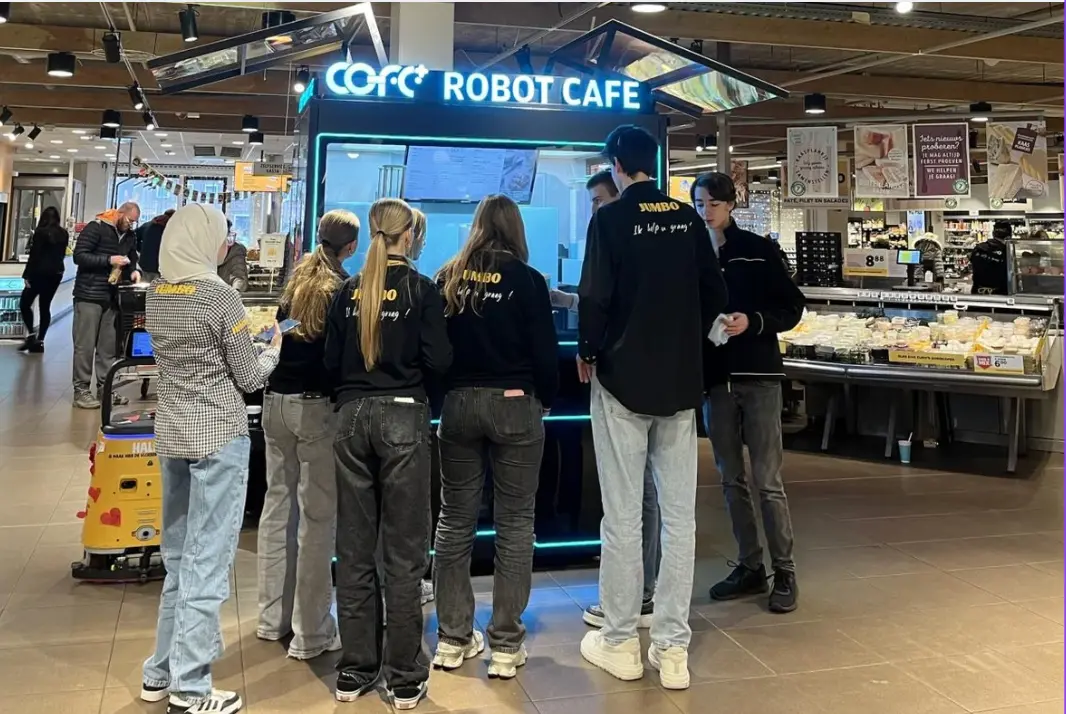
The Rise of Professional Robotic Café Technology: What COFE+ Is and Why It Matters
TL;DR — COFE+ is a fully automated robotic coffee kiosk that grinds fresh beans, brews espresso and lattes, creates latt……

When a theme park’s midday coffee line stretches past the 20‑minute mark, the park loses both revenue and guest patience—every minute spent waiting for a latte is a minute not buying merchandise or riding attractions. A robot coffee kiosk for theme parks flips this by delivering consistent, barista‑quality drinks in under a minute, turning a service bottleneck into an impulse‑purchase engine with per‑cup costs as low as $0.30. Based on our deployments across 35 countries, the real advantage isn’t just labor savings—it’s the ability to capture revenue that human‑staffed stands simply can’t. Instead of just novelty, I’ll focus on throughput, weather durability, and ROI.
Leisure venues concentrate the three things that make automated coffee economically compelling: captive audiences, high‑frequency footfall, and a guest mindset primed for impulse purchases. A family exiting a ride isn’t looking for a third‑wave pour‑over; they want a drink that’s fast, consistent, and adds to the experience. A robotic barista meets that expectation while also becoming part of the entertainment—people stop to watch, film it, and share it. That visibility drives additional traffic to the kiosk without any marketing spend.
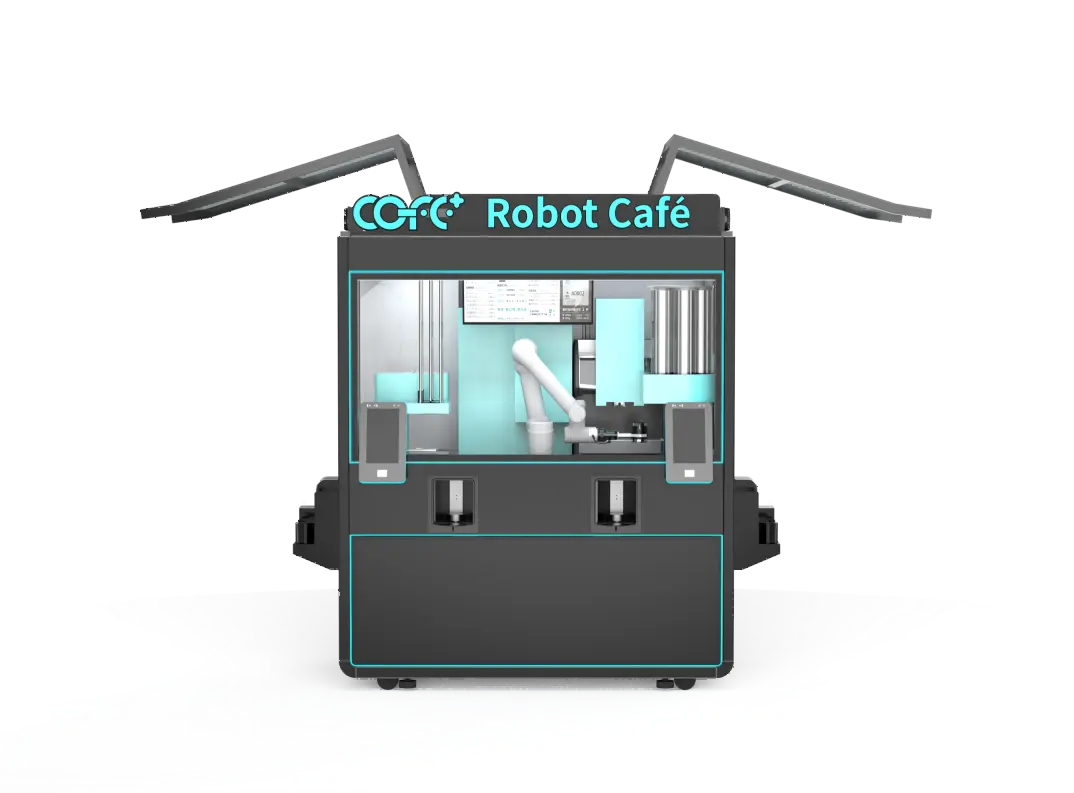
This isn’t theoretical. In venues where we’ve placed kiosks near attraction exits or queue entry points, we’ve seen conversion rates that would be difficult to match with a traditional cart. The machine doesn’t get tired, doesn’t skip a beat during heat waves, and never calls in sick. For a park operator, that reliability is the foundation of a consistent per‑square‑foot revenue stream that operates through every open hour.
A single COFE+ 7th Generation unit produces a finished drink—from grinding to serving—in 43 to 60 seconds, depending on complexity. Over the course of a 12‑hour operating day, that translates to a capacity of roughly 700 to 1,000 cups, assuming average order spacing. During typical post‑ride surges, the kiosk can sustain over 60 cups per hour, a throughput that normally requires two baristas working simultaneously.
| Performance Factor | Robot Kiosk (COFE+ 7th Gen) | Typical Manned Coffee Stand |
|---|---|---|
| Sustained hourly output during peak | 60–100 cups | 30–50 cups (2 baristas) |
| Order-to-serve time | 43–60 seconds | 90–180 seconds |
| 24/7 capability | Yes | No |
| Day‑to‑day consistency | Recipe‑locked, identical every cup | Barista‑dependent |
The speed advantage isn’t only about the machine’s mechanics—it’s about eliminating the transaction bottleneck. At a human‑operated stand, the cashier, order taker, and barista form a cascade of delays. A robotic kiosk collapses ordering, payment, and production into one contactless flow, so the only wait is the drink‑making time itself. For a park that serves 30,000 guests on a busy day, those saved seconds per transaction accumulate into a significant queue‑reduction effect.
If your attraction consistently sees peak‑hour foot traffic exceeding 3,000 guests in a single zone, the throughput math matters. Send your projected peak‑day attendee numbers to sales@hi-dolphin.com and we can model whether a single-unit or multi-kiosk setup fits your flow.
Theme parks are, by nature, outdoor environments, and a coffee kiosk that can’t handle sun, rain, dust, or winter temperatures isn’t an option. The COFE+ outdoor kiosk is engineered for continuous operation from −20 °C to 45 °C, with an IP54‑rated enclosure that keeps out dust and water spray. UV‑resistant body panels prevent color fading and material degradation through summer seasons, while an anti‑condensation system protects internal electronics during rapid temperature shifts.
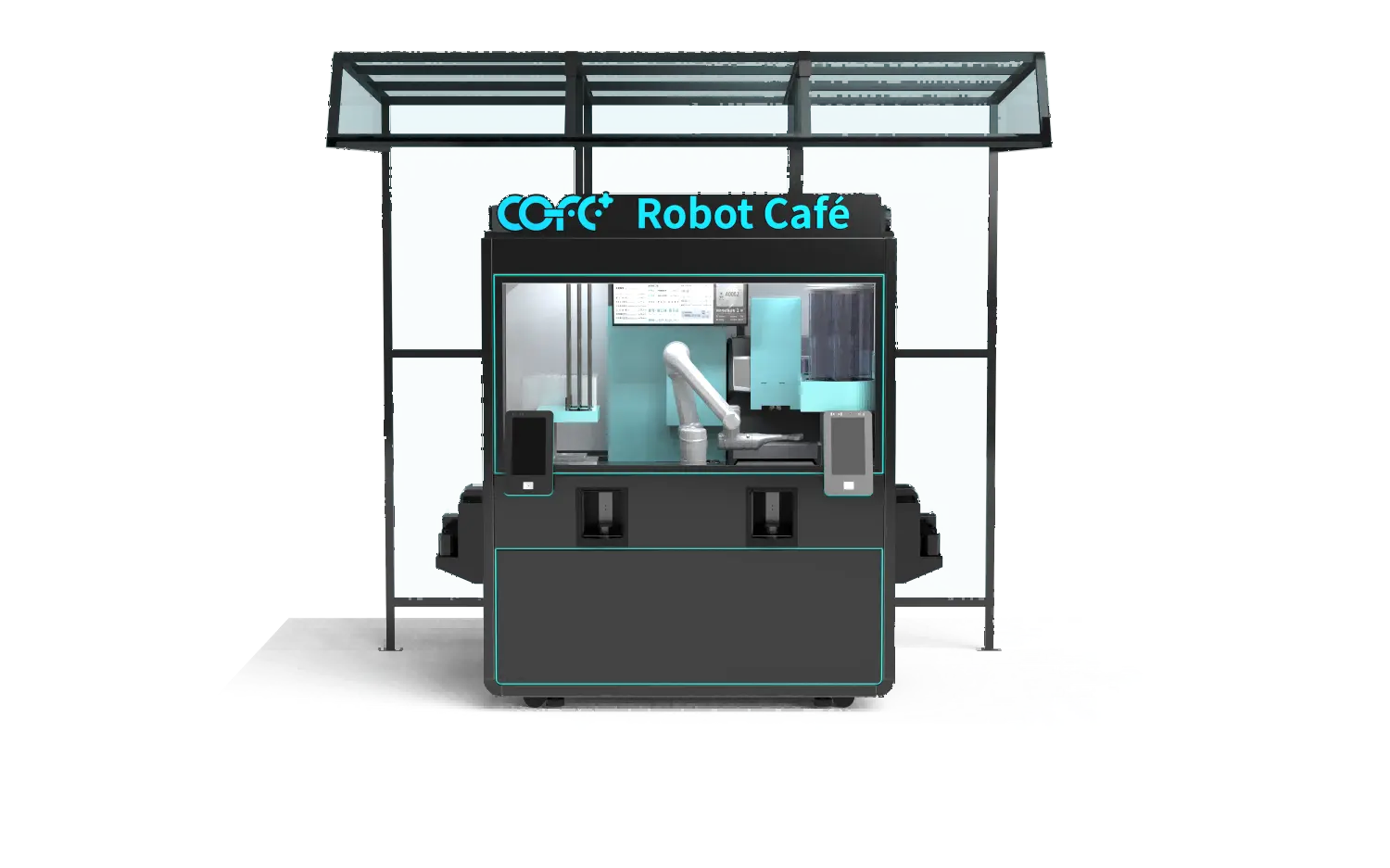
| Environmental Feature | Specification |
|---|---|
| Operating temperature | −20 °C to 45 °C |
| Ingress protection | IP54 (dust‑and‑water spray resistant) |
| UV protection | UV‑resistant body panels |
| Internal hygiene | 85 °C+ auto‑sterilization cycle |
| Design life | 10 years, tested to 500,000+ cups |
In our experience, the more critical concern for parks is not the machine’s ability to survive the weather—it’s maintaining drink quality and hygiene in an open-air environment. The automated 85 °C sterilization cycle runs without staff intervention, and the fully enclosed waste system eliminates spills, odors, and pests that would otherwise require daily attention. Those details make a measurable difference when a kiosk sits unattended in a corner of a water park or a dusty safari zone.
The per‑unit economics of a robot coffee kiosk in a seasonal park come down to three numbers: marginal cost per cup, achievable daily volume during operating months, and the total deployment expense. The COFE+ system runs at roughly $0.30 to $0.70 per cup, including all consumables. In a theme park, a specialty drink can command $4 to $6, leaving a gross margin that easily covers the relatively flat maintenance and financing costs.
The payback period that I’ve seen most frequently for high‑traffic leisure sites falls in the 6‑ to 12‑month range. A park open 10 months a year and averaging 250 cups per day during those months can push through enough volume to recoup the unit cost well within a year, even after accounting for the slower shoulder season. The trick is not trying to spread volume evenly—it’s front‑loading peak‑season revenue, which is exactly where the machine’s throughput pays off.
If your venue has pronounced seasonal swings, we can build a site‑specific model using your actual attendance data. Reach out with your monthly foot traffic estimates and desired drink pricing, and we’ll deliver a payback projection that matches your calendar.
A robot coffee kiosk doesn’t succeed just because it’s placed near people—it succeeds when it’s placed near people with time to notice it. Queue exits, pre‑show holding areas, and rest zones are consistently the highest‑performing spots we’ve observed. These locations intercept guests when they are stationary or moving slowly, which raises discovery and trial.
Power requirements are straightforward: a standard single‑phase 220 V or 110 V supply, with the outdoor unit also needing a stable, level surface. The indoor kiosk occupies just 2.35 square meters, while the outdoor version has a similarly compact footprint. Branding integration is flexible—many operators add park‑specific wraps, while using the digital screen to promote seasonal specialty drinks or loyalty programs. The smart cloud dashboard lets you change menus, track inventory, and pull sales reports remotely, which reduces the need for daily on‑site management.
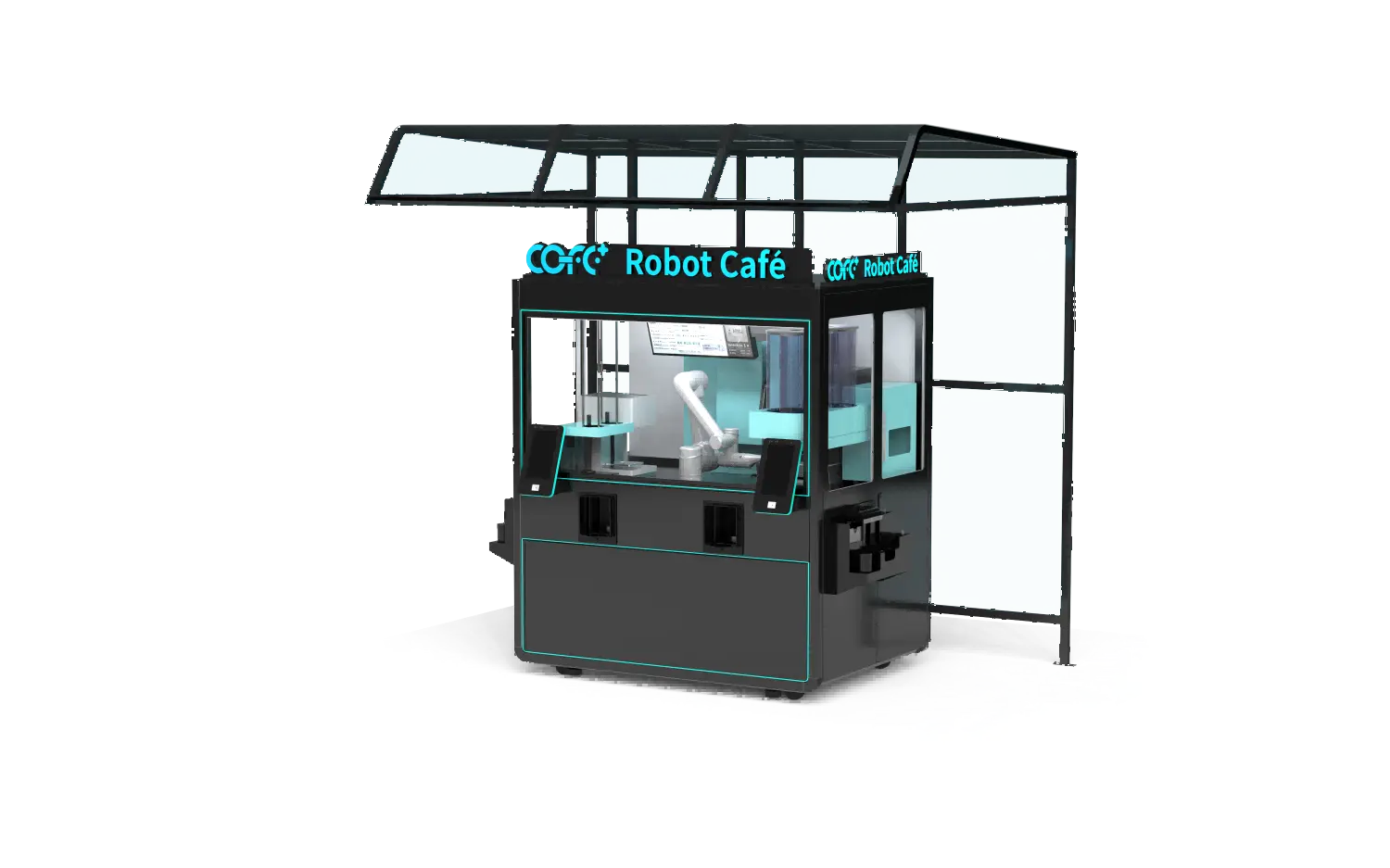
The machine’s throughput doesn’t fluctuate with crowd size. It produces one drink every 43 to 60 seconds, regardless of the queue length. So for a ride that loads and unloads 200 people every few minutes, the kiosk won’t speed up past its fixed cadence—but you can reduce wait time perception by placing the machine so the drink is ready by the time guests walk to it after ordering. In many park layouts, that small shift in placement changes the guest experience more than adding a second unit.
In our deployments, yes—and often with less price resistance than at staffed outlets. The robotic arm, the latte art printing, and the transparent preparation process create a sense of novelty that guests perceive as added value. A coffee made by a human barista is familiar; a coffee finished with a 3D-printed foam logo of the park’s mascot is a souvenir. That willingness to pay a premium is strongest in the first two years of deployment, but it doesn’t vanish when the novelty fades because the speed and consistency remain.
Yes, provided the site selection follows a few guidelines. The outdoor kiosk’s IP54 enclosure and integrated auto-sterilization cover hygiene and weather, while the tamper‑resistant exterior and remote alarm system allow the park’s security team to monitor the unit through the same cloud dashboard used for sales and inventory. In practice, many parks tuck the kiosk into a slightly recessed wall or place it near a security checkpoint to further reduce exposure.
Once the unit arrives on site, physical setup and power connection can be completed in a day. The larger time investment is the front‑end planning: determining the best location, confirming electrical access, and customizing the menu to match the park’s brand and crowd preferences. We’ve seen operators go from contract to live service in as little as three weeks when the location was pre‑wired. If your project has a specific opening date, sharing those timelines early lets us align production and shipping. You can start that conversation at sales@hi-dolphin.com.
Running a theme-park F&B operation means solving a constant equation: serve more guests, faster, without raising labor costs to a point that erodes margin. A robot coffee kiosk built for outdoor, high‑traffic environments addresses both the speed and novelty sides of that equation while generating a predictable per‑cup profit that human‑staffed stands struggle to match. To get a site‑specific evaluation that includes payback modeling, weather suitability, and placement recommendations, email sales@hi-dolphin.com or call +86 131 6630 1290 with your venue details.
TL;DR — COFE+ is a fully automated robotic coffee kiosk that grinds fresh beans, brews espresso and lattes, creates latt……
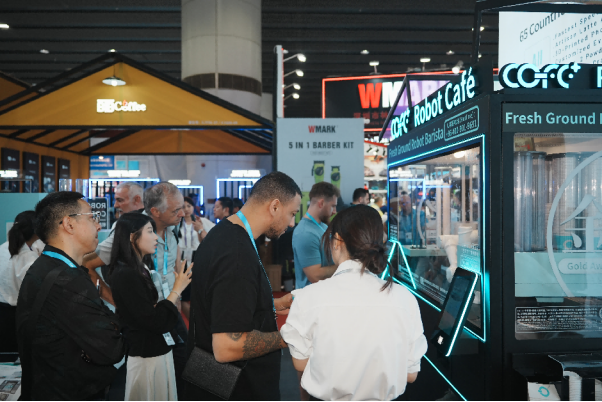
7th-Genertion Smart Robot Coffee Kiosk Arrives at the Belt and Road Core Hub, Ushering in a New Service Era Along t……
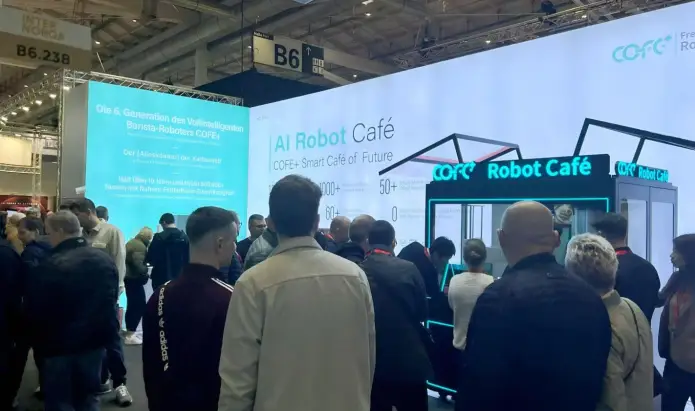
CHICAGO, May 12, 2026 (GLOBE NEWSWIRE) – Shanghai Hi-Dolphin Robot Technology today announced the U.S. debut of its 7th‑……