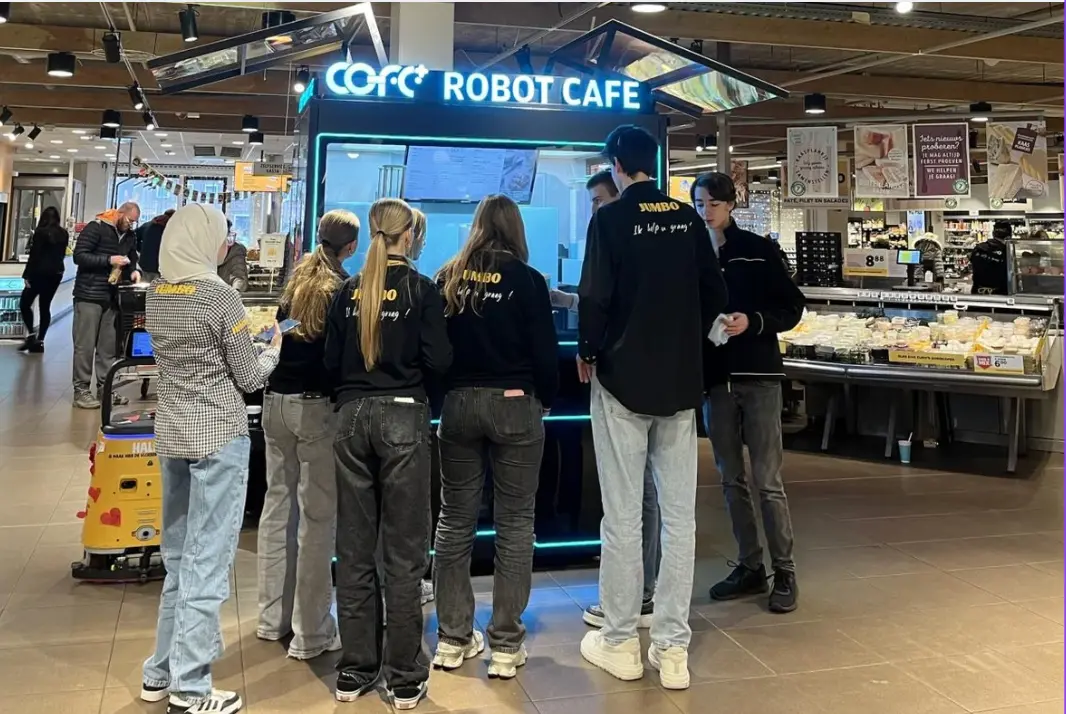
The Rise of Professional Robotic Café Technology: What COFE+ Is and Why It Matters
TL;DR — COFE+ is a fully automated robotic coffee kiosk that grinds fresh beans, brews espresso and lattes, creates latt……

Most station operators I talk to want the same thing: fresh coffee that passengers can grab on the go, without the hassle of managing a full-service cafe. The problem is, traditional coffee outlets demand staff, space, and steady traffic to stay viable — three things that are hard to come by on a train platform. A robot coffee kiosk solves that, but only if it’s built for the realities of transit life: temperature swings, 24/7 demand, and relentless foot traffic. In this article, I’ll walk through exactly what a transit-grade robotic coffee solution needs to deliver, and why we engineered the COFE+ outdoor kiosk specifically for these conditions.
Railway platforms and bus terminals are extreme operating environments. Passengers move in waves: a platform can be empty one minute and packed with 500 people the next. Coffee demand spikes unpredictably, driven by train delays, weather, and seasonal tourism. A conventional café staffed by two baristas can serve maybe 80 drinks an hour before queues become unmanageable; during a timetable disruption, that throughput isn’t enough. Add the cost of staffing a 24/7 operation and the challenge of maintaining consistent quality across three shifts, and it’s clear why station managers are looking for a better model.
Then there’s the physical environment. Open-air platforms expose equipment to rain, dust, freezing temperatures, and direct sun. A machine that works perfectly in a shopping mall corridor will fail quickly on a platform if it isn’t designed for weather, ventilation, and vibration. The coffee service has to be hygienic and tamper-resistant in a public space with minimal supervision. These are not edge cases — they are daily operating conditions, and they define the specification baseline for any robot coffee kiosk intended for transit hubs.
A robot coffee kiosk built for transit can’t just be a standard indoor unit with a canopy. Real outdoor-hardened design goes deeper.
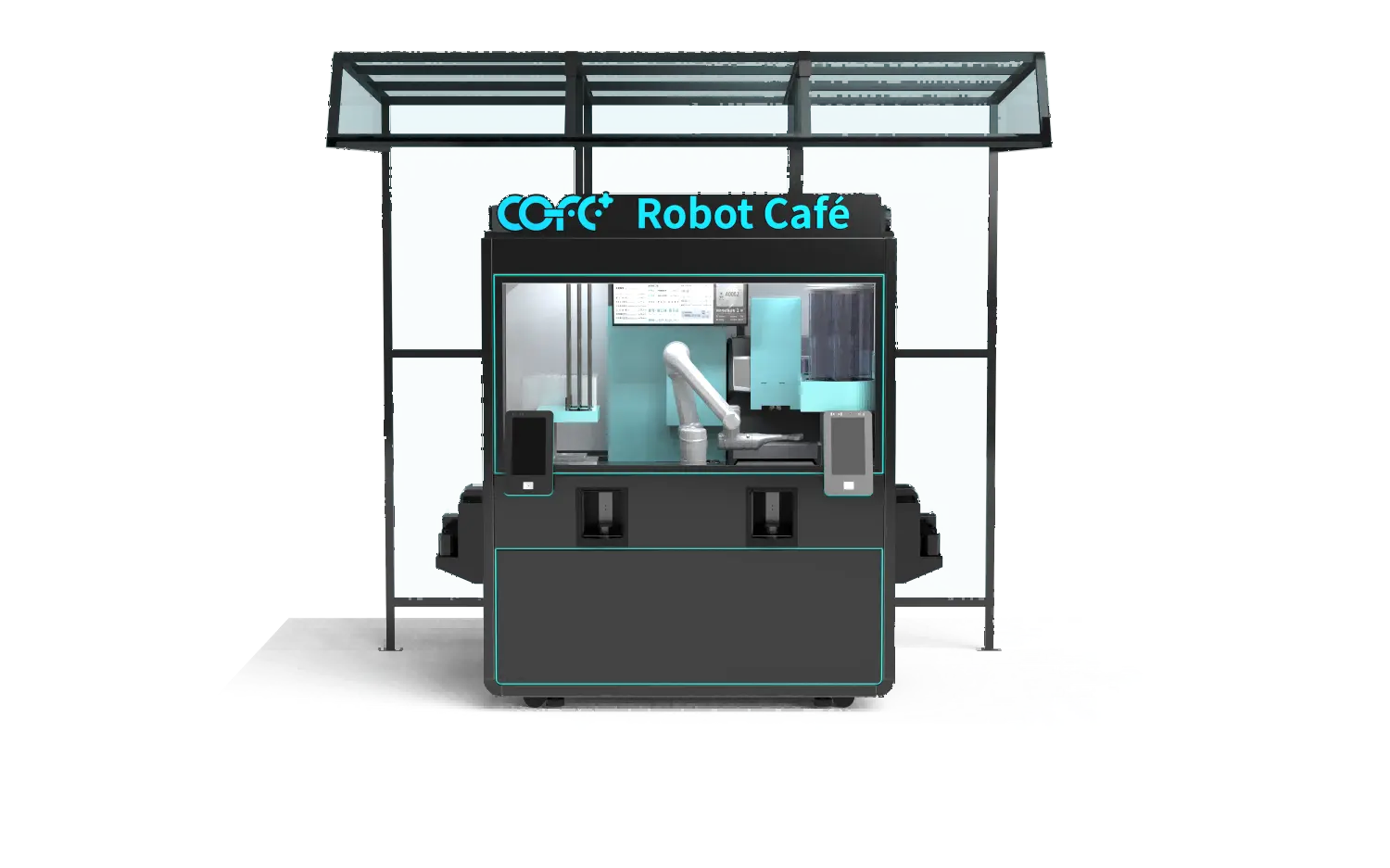
We engineered the COFE+ 7th-generation outdoor kiosk around a set of non-negotiable requirements. The enclosure carries an IP54 rating, meaning it resists dust ingress and water spray from any direction. That matters when a platform cleaner hoses down the area at 4 a.m. or when wind-driven rain hits the unit sideways. The climate control system maintains internal operating conditions from -20°C to 45°C, with active anti-condensation to prevent moisture inside the coffee grinding path. In northern China, I’ve seen units run uninterrupted through a winter week where ambient temperatures never climbed above -15°C. In the Middle East, they hold up through summer afternoons when platform surfaces exceed 50°C. The stainless-steel interior is antimicrobial, and the fully enclosed waste system keeps spills, odors, and pests contained — a genuine necessity when a kiosk sits on a platform that sees tens of thousands of footfalls daily.
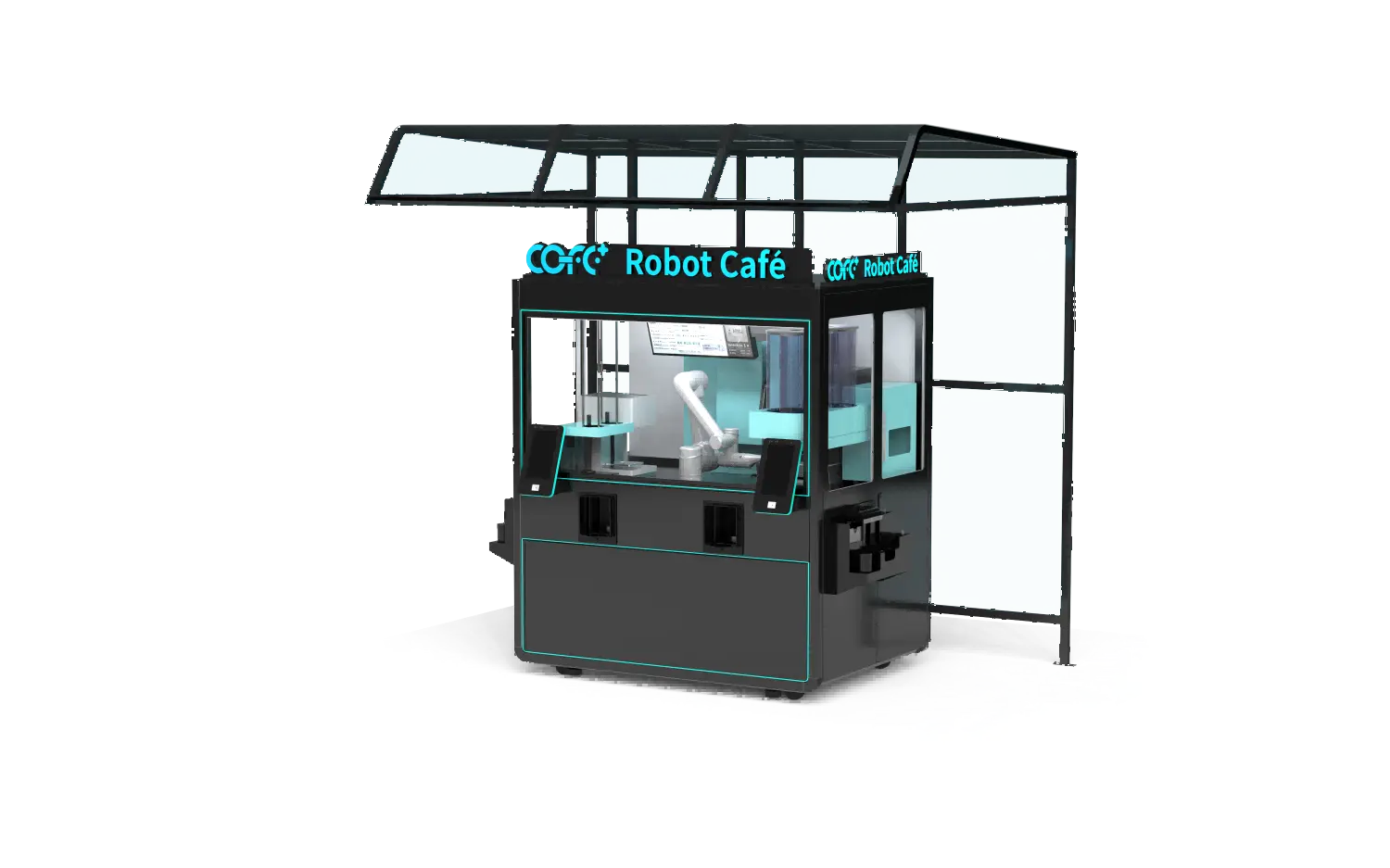
The table below shows how an outdoor-transit specification differs from a typical indoor unit.
| Feature | Indoor Kiosk (Typical) | Outdoor Transit Kiosk (COFE+ 7th Gen) |
|---|---|---|
| Enclosure Protection | Minimal or none | IP54 dust/water resistant |
| Operating Temperature Range | 5°C to 35°C | -20°C to 45°C with active climate control |
| Hygiene System | Manual cleaning cycles | Automatic 85°C+ high-temp sterilization, antimicrobial interior |
| Waste Management | Open drip tray | Fully enclosed, no-odor waste system |
| Remote Monitoring | Basic alerts | Cloud-based diagnostics with auto-repair dispatch |
Throughput is the first question every transit operator asks. The COFE+ outdoor kiosk is specced for consistent 43- to 60-second cup times, giving a theoretical maximum around 1,000 cups per day. Real-world throughput depends on drink complexity — a simple black Americano is faster than a customized latte with 3D printed art — but the machine is designed to sustain its pace across hundreds of consecutive orders without degradation. That’s the difference between a robot barista and a human one: after three hours of non-stop rush, the robot’s shot consistency is identical to the first cup.
Peak surge handling deserves a closer look. The 7th-gen system pre-grinds and doses intelligently based on real-time order queues, and it can buffer multiple orders simultaneously so that a sudden cluster of passengers doesn’t create a backlog. In deployments I’ve followed at transport hubs, we’ve seen throughput hold steady at over 70 cups per hour for extended periods, with average wait times under 90 seconds even when a train disgorges several hundred passengers at once. If your location routinely sees passenger volumes above that threshold, stacking two kiosks side by side effectively doubles capacity without adding staff.
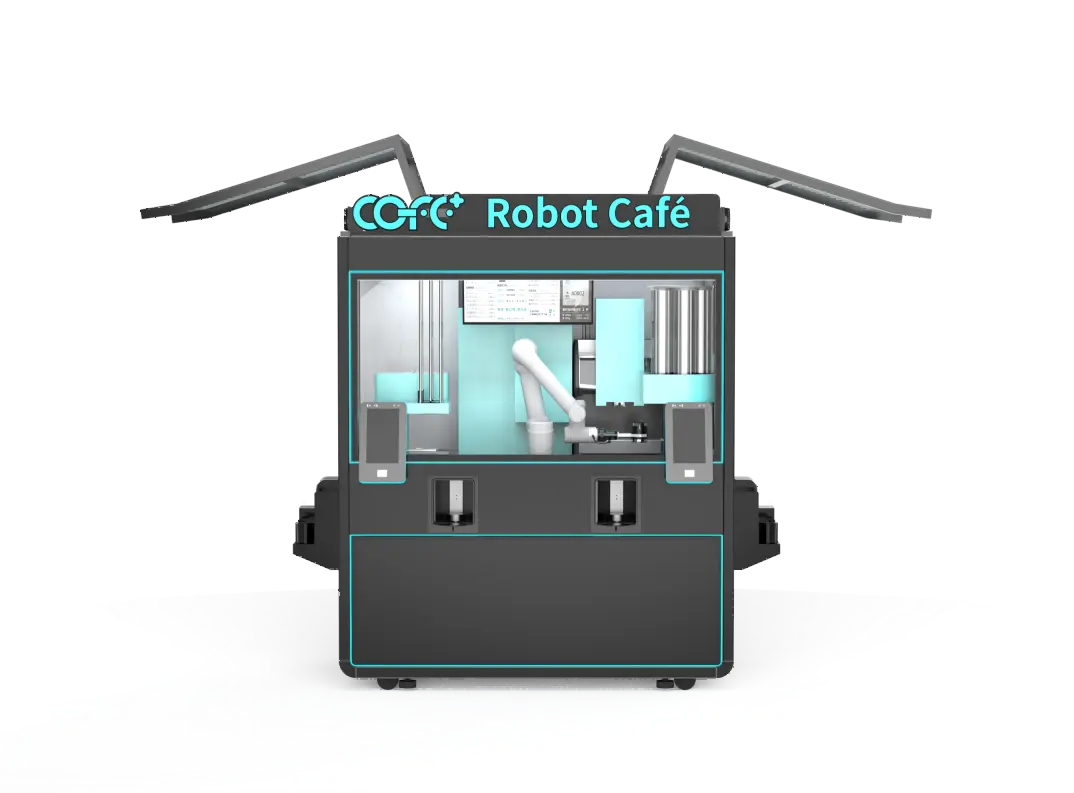
Mid-peak behavior also highlights a material advantage over traditional cafes: the kiosk never takes a break, never calls in sick, and never has a bad day. For a station manager who’s been burned by a barista no-show during the morning rush, that reliability carries real financial weight. If your station’s traffic pattern includes both extreme seasonal spikes and overnight quiet periods, it’s worth confirming the machine configuration that balances speed and menu variety — our team can model this based on your platform layout and expected hourly loads. Reach out at sales@hi-dolphin.com with your passenger flow estimates.
Public health scrutiny of food service in transit stations has only increased. A robot coffee kiosk provides a fundamentally cleaner process than an open café. There are no human hands touching cups, no shared surfaces, and no uncovered ingredient bins exposed to platform air.
The COFE+ system incorporates an automatic 85°C+ high-temperature sterilization cycle that runs on a schedule configurable by the operator. Between servings, the brewing group and steam wand are flushed internally. The exterior touchscreen and payment interface are seamless glass that can be sanitized by station cleaning crews without any special precautions. Critically, the unit has passed FDA, CE, UKCA, KC, and SASO certifications — the kind of multi-jurisdiction compliance that simplifies approval with transit authorities who often have their own food safety overlays on top of national standards.
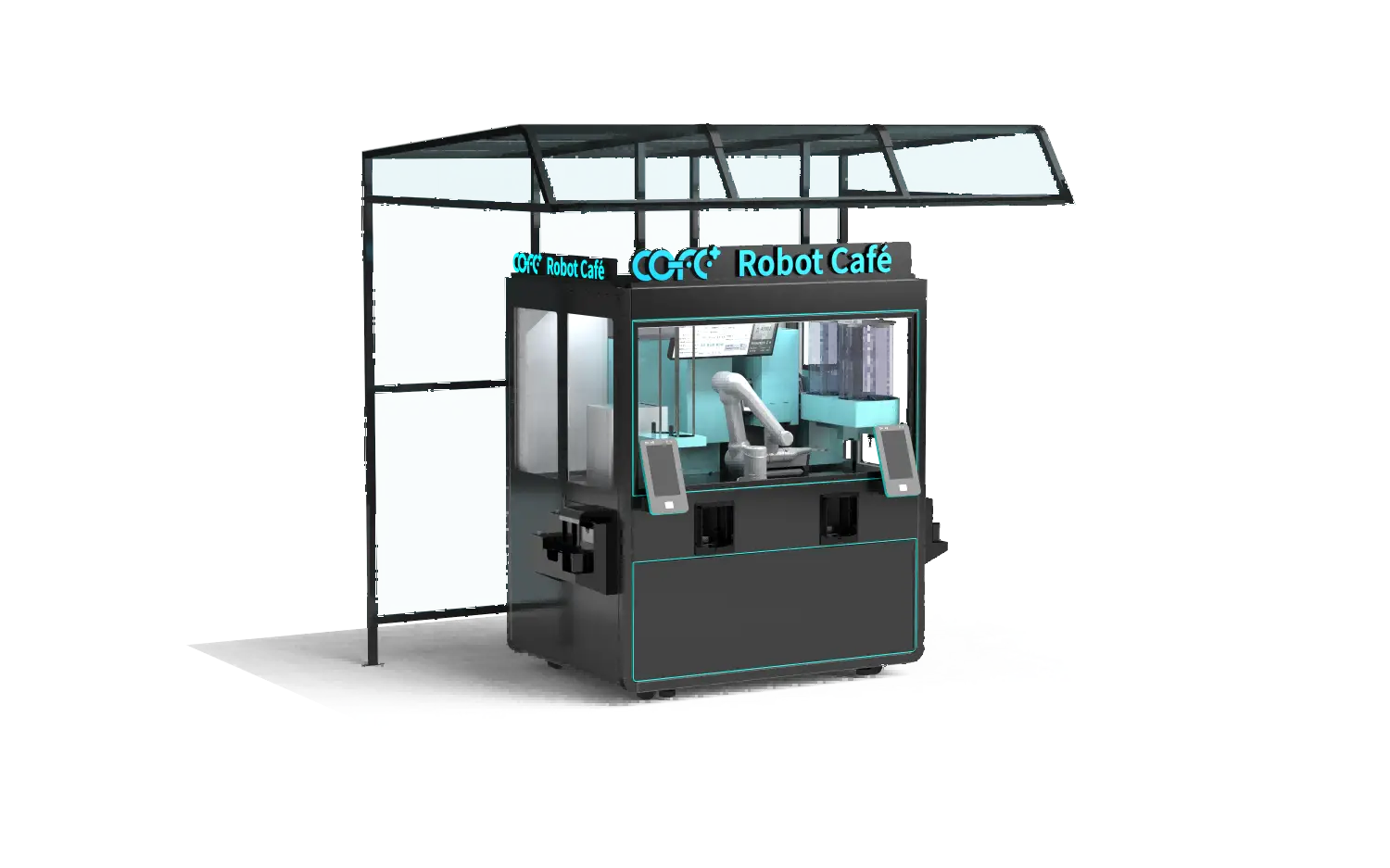
For operators concerned about vandalism or tampering in unsupervised late-night settings: the machine’s shell is solid, the internal mechanisms are fully enclosed, and any attempt to force access triggers an immediate cloud alert. In over 35 countries of operation, hardware security incidents have been rare, and remote diagnostics allow a technician to assess the unit without an on-site visit.
A successful installation depends as much on site preparation as on the machine itself. Three areas need attention early.
Utility connections. The outdoor kiosk requires a dedicated power circuit (110V or 220V, configurable), a fresh water line, and a drainage connection. If a platform doesn’t have water access, a small internal water tank can be installed, but it will require daily refilling during peak season. Our engineering team reviews site plans before shipment to flag any modifications needed.
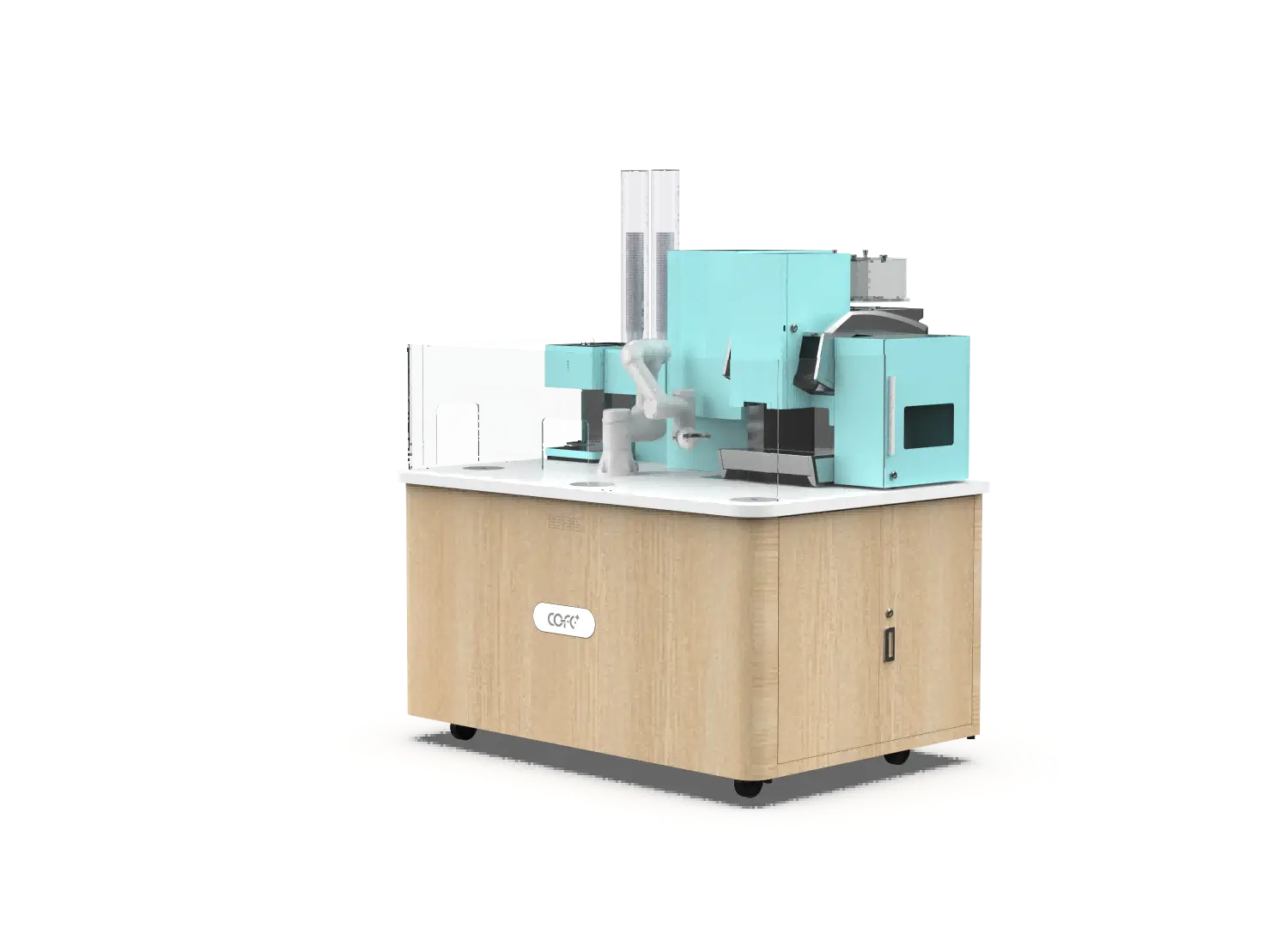
Physical footprint and egress. The outdoor unit occupies a compact 2.35 m² footprint — roughly the same as a standard ticket vending machine. Positioning must not obstruct passenger flow or emergency exits, which means working with the station’s operations team early in the planning process. I’ve found that a mock-up walk-through with a cardboard cutout can resolve layout doubts faster than any CAD drawing.
Permits and contracts. Transit authorities typically have a concession bidding process for commercial units on station property. Documentation requirements include equipment certifications, food safety clearances, and proof of liability insurance. We provide a standardized certification pack — FDA, CE, UKCA, KC, and SASO — that covers most international jurisdictions, but local health department variances occasionally add a step. Getting the paperwork right before the kiosk ships avoids costly on-site delays.
The math for a robot coffee kiosk in a transit environment is compelling once you break it down per cup. Ingredient costs — beans, milk, syrups, cups — run roughly $0.30 to $0.70 per drink depending on recipe and local sourcing. With no barista wages, no shift premiums, and no employer payroll taxes, the per-cup cost stays flat whether the machine sells 100 cups or 800 cups in a day.
Now consider the revenue side. In high-traffic stations, a specialty coffee sells for $2.50 to $4.00. At a conservative $2.50 selling price and 300 cups per day, gross daily revenue is $750. Subtract ingredient costs of $210 (at $0.70 per cup), and gross margin is $540 per day. Over 30 days, that’s $16,200 gross margin per month. Equipment cost (amortized over 10 years for a machine that’s tested for 500,000+ cups) and minimal site electricity typically bring total monthly operating cost well under $500. The result is a payback period that often falls between six and twelve months, after which the kiosk becomes a high-margin revenue engine on a previously underutilized platform corner.
The hidden gain is passenger satisfaction. A coffee kiosk that works reliably at 5 a.m. and 11 p.m. increases dwell-time value and softens the experience of delays. That’s hard to put on a spreadsheet, but station managers who’ve run the pilot programs tell me it shows up in passenger feedback scores.
Your station’s traffic mix, electricity rates, and local bean costs will shift the exact numbers. To get a tailored ROI projection that reflects your specific platform layout and passenger count, send your station details to sales@hi-dolphin.com or call +86 131 6630 1290. We’ll return a cost model that shows payback at your actual expected volumes.
The quick answer is yes, provided the unit is outdoor-rated and purpose-built for unattended environments. The IP54 enclosure and antimicrobial interior address physical and hygiene risks directly. Cloud-based monitoring gives operators real-time visibility into all system states — stock levels, temperature, door integrity, payment reconciliation — from any browser. Any anomaly generates an immediate alert, and in the rare case a component needs attention, remote diagnostics can often resolve it without dispatching a technician.
All food-service equipment, automated or not, can eventually need a repair. The difference is that the COFE+ system detects early warnings — pressure deviations in the espresso pump, a drop in boiler temperature — and can flag them before they become a service interruption. If the unit does go offline, cloud alerts notify the operator within seconds. Most transit deployments we support keep a lightweight service plan with a local technician who can reach the station in under two hours, and remote reboot capabilities handle the majority of software-level incidents.
The physical design does most of the heavy lifting. The kiosk body is constructed with no external openings beyond the drink dispense hatch and the payment interface, both of which are hardened. Internal cash is nonexistent because transactions run entirely through cashless payment. If a passenger tries to tamper with the machine, motion sensors and door sensors trigger an immediate data log and alert. In installations we’ve tracked across over 35 countries, intentional damage events are outliers, not a pattern.
A station café typically carries a labor burden of $0.60 to $1.20 per cup on top of ingredient costs, pushing the total cost per cup well above $1.20 before factoring rent and overhead. The robot kiosk, by eliminating barista labor, keeps per-cup cost to ingredients and a small electricity allocation — typically $0.30 to $0.70. That structural cost advantage isn’t sensitive to minimum wage increases or shift scheduling frictions, which makes long-term financial forecasting more stable. If you’re comparing to a fully staffed café, the robot kiosk can halve the cost base on day one.
Passenger acceptance has been the least difficult part of this equation in practice. Younger demographics in particular treat a robotic coffee experience as a positive interaction — fast, transparent, and consistent. The 3D latte art and customization options turn the purchase into a small novelty that passengers actively photograph and share. Human baristas aren’t being replaced in the specialty third-wave café model, but for the platform scenario, where speed and reliability matter far more than ambiance, passengers I’ve observed consistently choose the robot over a closed café. If you’re assessing acceptance in your specific commuter demographic, share your region and we’ll connect you with reference sites that match your passenger profile.
TL;DR — COFE+ is a fully automated robotic coffee kiosk that grinds fresh beans, brews espresso and lattes, creates latt……
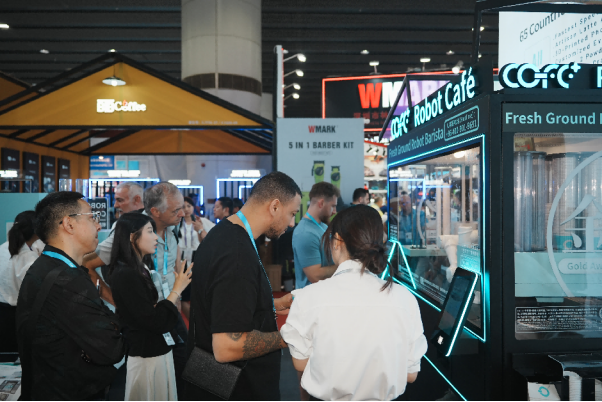
7th-Genertion Smart Robot Coffee Kiosk Arrives at the Belt and Road Core Hub, Ushering in a New Service Era Along t……
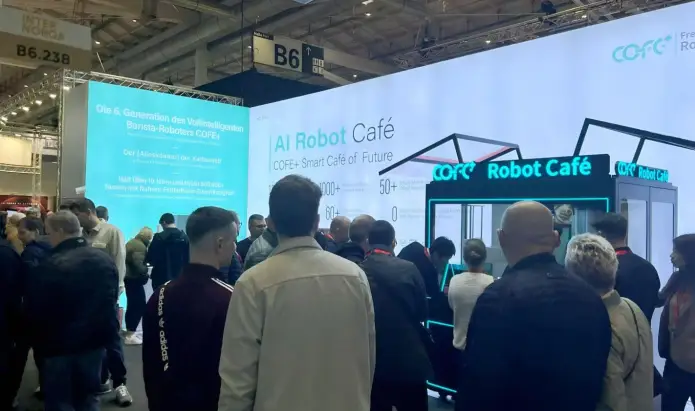
CHICAGO, May 12, 2026 (GLOBE NEWSWIRE) – Shanghai Hi-Dolphin Robot Technology today announced the U.S. debut of its 7th‑……