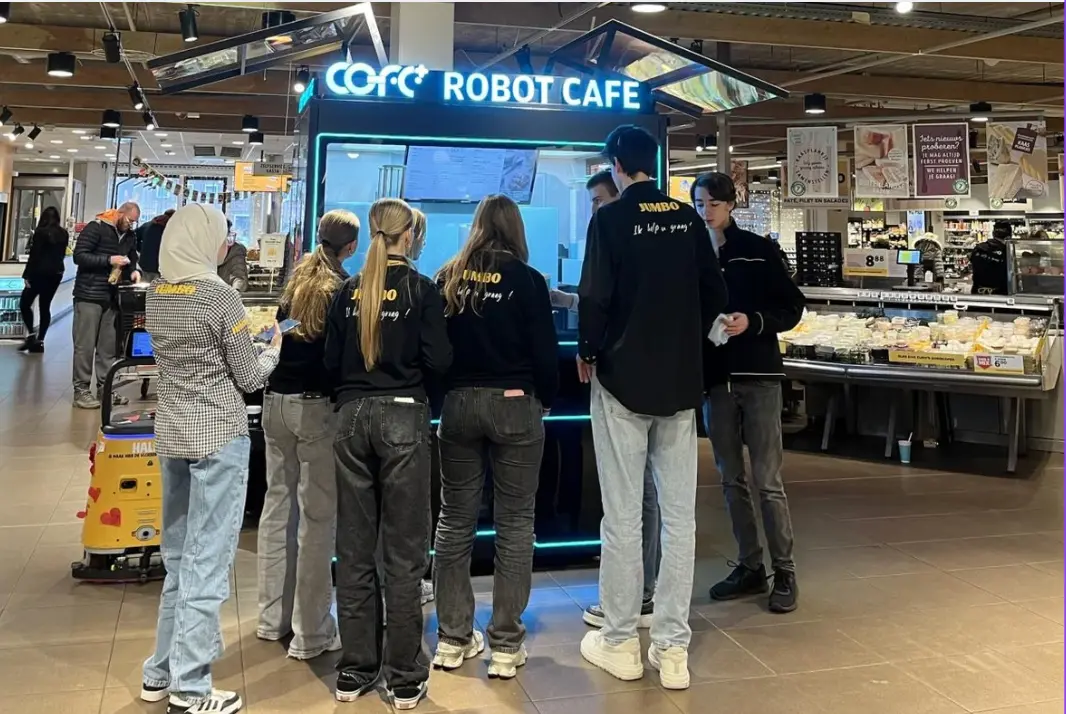
The Rise of Professional Robotic Café Technology: What COFE+ Is and Why It Matters
TL;DR — COFE+ is a fully automated robotic coffee kiosk that grinds fresh beans, brews espresso and lattes, creates latt……

Gas station operators have long struggled to offer fresh coffee without the overhead of a full service counter. Robotic coffee kiosks for gas stations now give owners a 24/7 unattended solution that pours barista quality drinks at margins far beyond what a traditional vending machine can deliver. The real question is not whether a robot coffee kiosk can work, but which model can stand up to fuel station conditions, extreme temperatures, dust, moisture, while meeting food safety regulations. This article walks through what makes a kiosk suitable, how to choose between indoor and outdoor designs, the compliance standards that matter, and the hard numbers behind return on investment, all grounded in our experience deploying autonomous retail systems globally.
A standard coffee robot from a shopping mall food court won’t survive on a busy fuel station forecourt. Gas stations demand equipment that handles outdoor weather, safety regulations, and constant traffic. From our work deploying smart coffee kiosks across 50 countries, we’ve identified four non-negotiable factors: outdoor durability, food safety certification, unattended operation with self-cleaning, and remote monitoring.
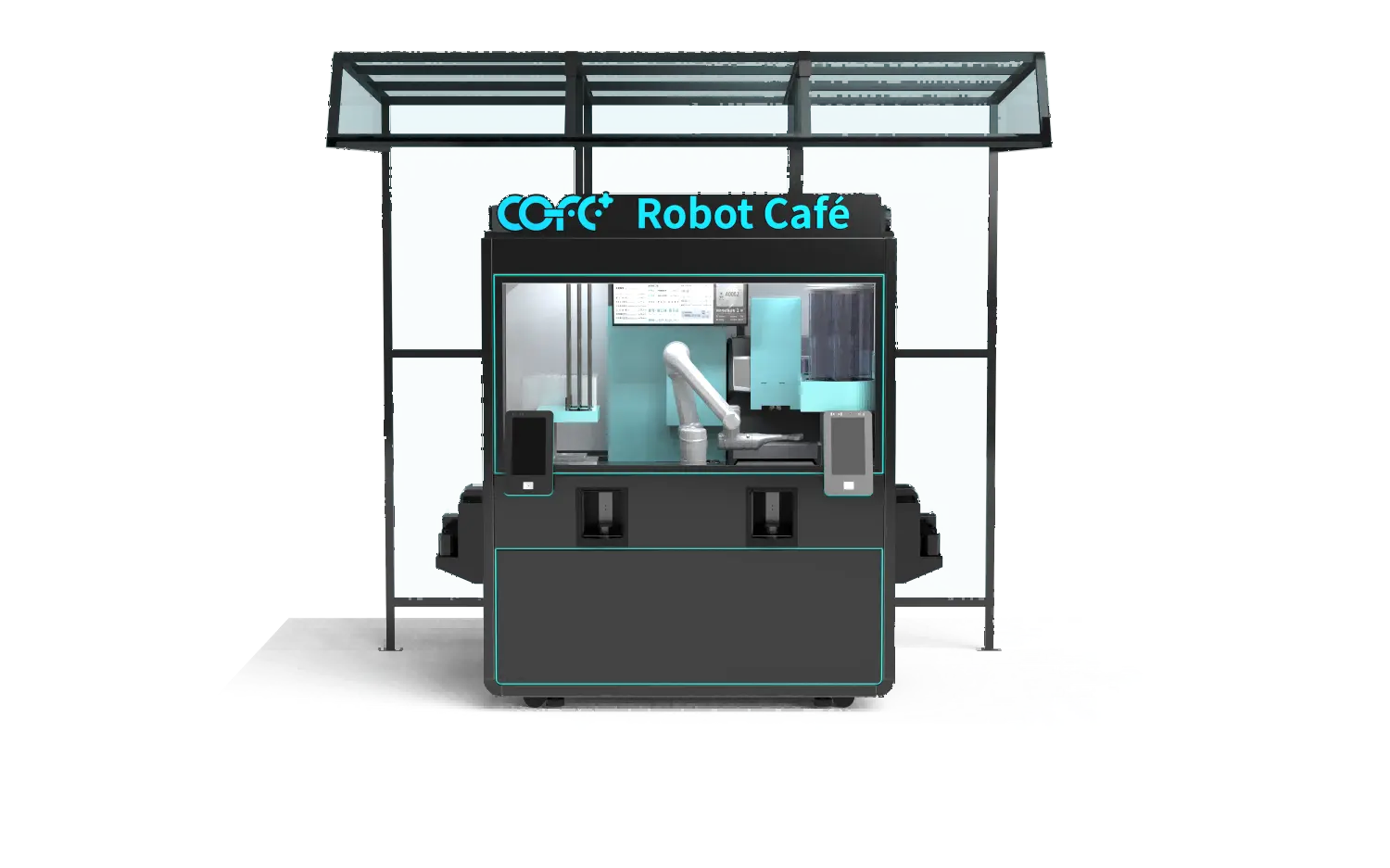
Indoor kiosks lack the IP ratings needed to keep out dust and moisture. They’re not built for sub-zero winters or 40°C summers. The condensation that forms inside an unsealed unit during a rainstorm can short out electronics and contaminate drink ingredients. A fuel station kiosk also needs to be fully enclosed, with waste containment that doesn’t attract pests—something indoor models rarely address. We learned that the hard way during early installations in the Middle East, where midday sun caused internal temperatures inside non-rated units to exceed 60°C. Now we require IP54 as the minimum for any outdoor or semi-outdoor placement.
For outdoor placement, the specification sheet matters more than the marketing pitch. Look for IP54 or higher, an operating range from at least -20°C to 45°C, and active anti-condensation systems. Our outdoor kiosk uses UV-resistant panels and forced-air cooling to maintain internal stability even when ambient temperatures swing wildly.
Gas stations and c-stores often have both indoor and outdoor serving opportunities. An indoor robot coffee kiosk fits neatly inside a convenience store, serving walk-in customers alongside snacks and fuel purchases. An outdoor model placed near the pumps captures drivers who never leave their cars. Choosing the right one means matching the environment to the machine’s rating.
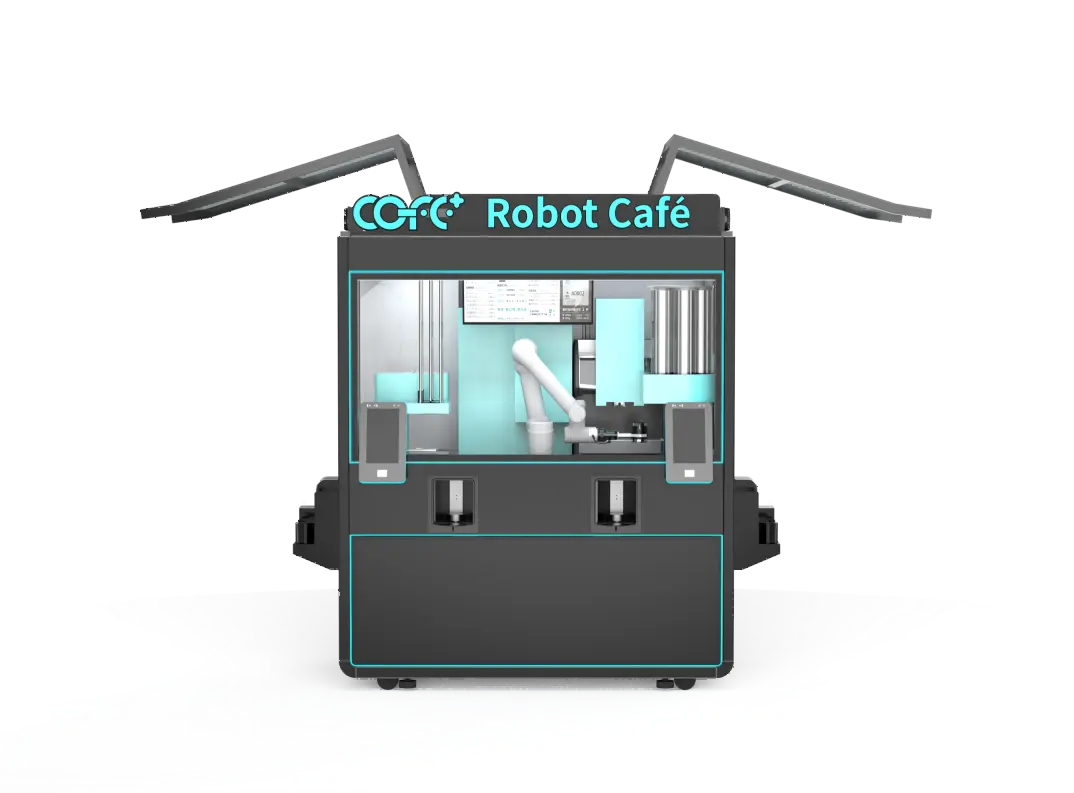
The table below compares the indoor and outdoor specifications of the COFE+ robot coffee kiosk.
| Specification | Indoor Model | Outdoor Model |
|---|---|---|
| Footprint | 2.35 m² | 2.35 m² |
| Temperature range | 5°C to 35°C | -20°C to 45°C |
| IP rating | IP20 (indoor protected) | IP54 |
| Menu capacity | 300+ drinks | 300+ drinks |
| Certifications | FDA, CE, UKCA, KC, SASO | FDA, CE, UKCA, KC, SASO |
| Ideal placement | Inside store, lobby, covered area | Forecourt, open-air, walkway |
Temperature tolerance is the biggest differentiator. If the pod will sit on a concrete pad outside, choose the outdoor kiosk. Its sealed chassis, anti-corrosion materials, and high-temp sterilization system are built for unattended service in tough environments.
Beyond the IP rating, the outdoor model includes a fully enclosed waste system that eliminates spillage and odor. It also has an anti-condensation heater to prevent moisture buildup on electronics and coffee grounds. These features add cost, but they prevent the frequent breakdowns that kill ROI.
Safety at a gas station means more than not spilling fuel. An unattended food machine must pass rigorous health and electrical safety certifications, especially when operating near flammable environments. We’ve invested heavily in certifications because they’re often the first thing a regulatory inspector asks for. I’ve had fuel station operators ask if they can just use an indoor unit and hope for the best—don’t. A single safety violation can shut you down.
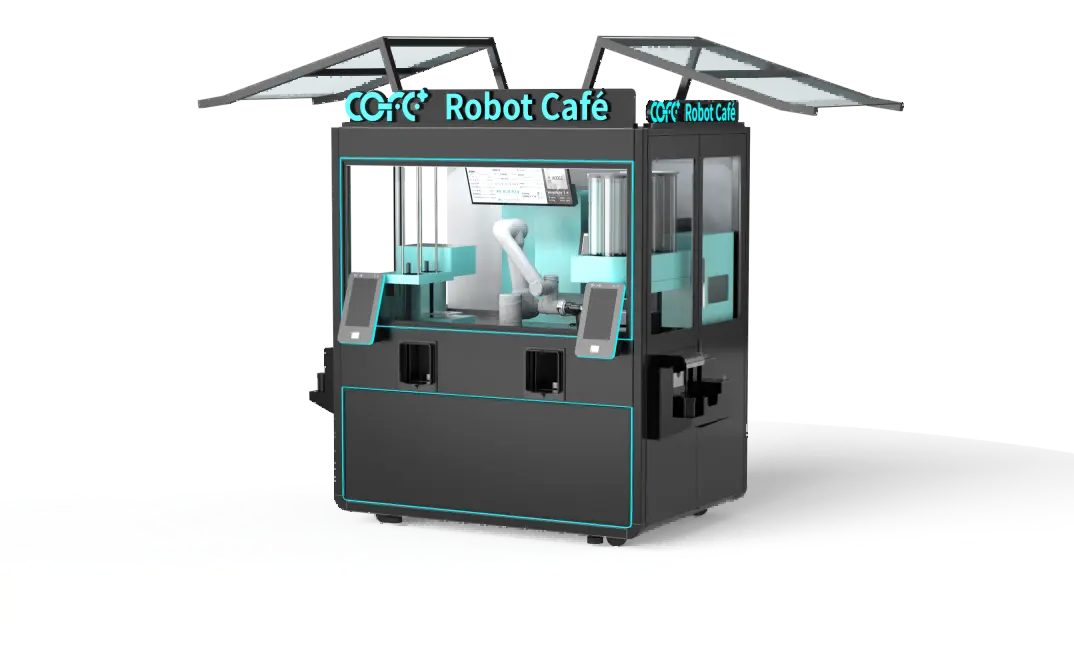
The kiosk platform we deploy holds FDA, CE, UKCA, KC, and SASO compliance, covering the U.S., Europe, the UK, Korea, and the Gulf region. For food contact surfaces, the machine uses stainless steel with an anti-microbial coating. Every four hours, an 85°C+ high-temperature auto-sterilization cycle runs, far above the standard for manual cleaning. The fully enclosed waste bin prevents insects and bacteria growth, a real problem at outdoor fuel stations.
The kiosk’s cleaning routine is entirely automated. After a set number of brews or idle time, it flushes the brewing group, steams the milk line, and heats the preparation area. No staff touch the coffee path. This contactless operation is a critical food safety advantage that manual setups can’t match.
Installing a robot coffee kiosk inside a c-store is straightforward compared to a traditional café buildout. You typically need a standard 220V (or 110V) power outlet, a level floor, and no more than 2.5 square meters of space. The kiosk arrives pre-configured and wheeled into place.
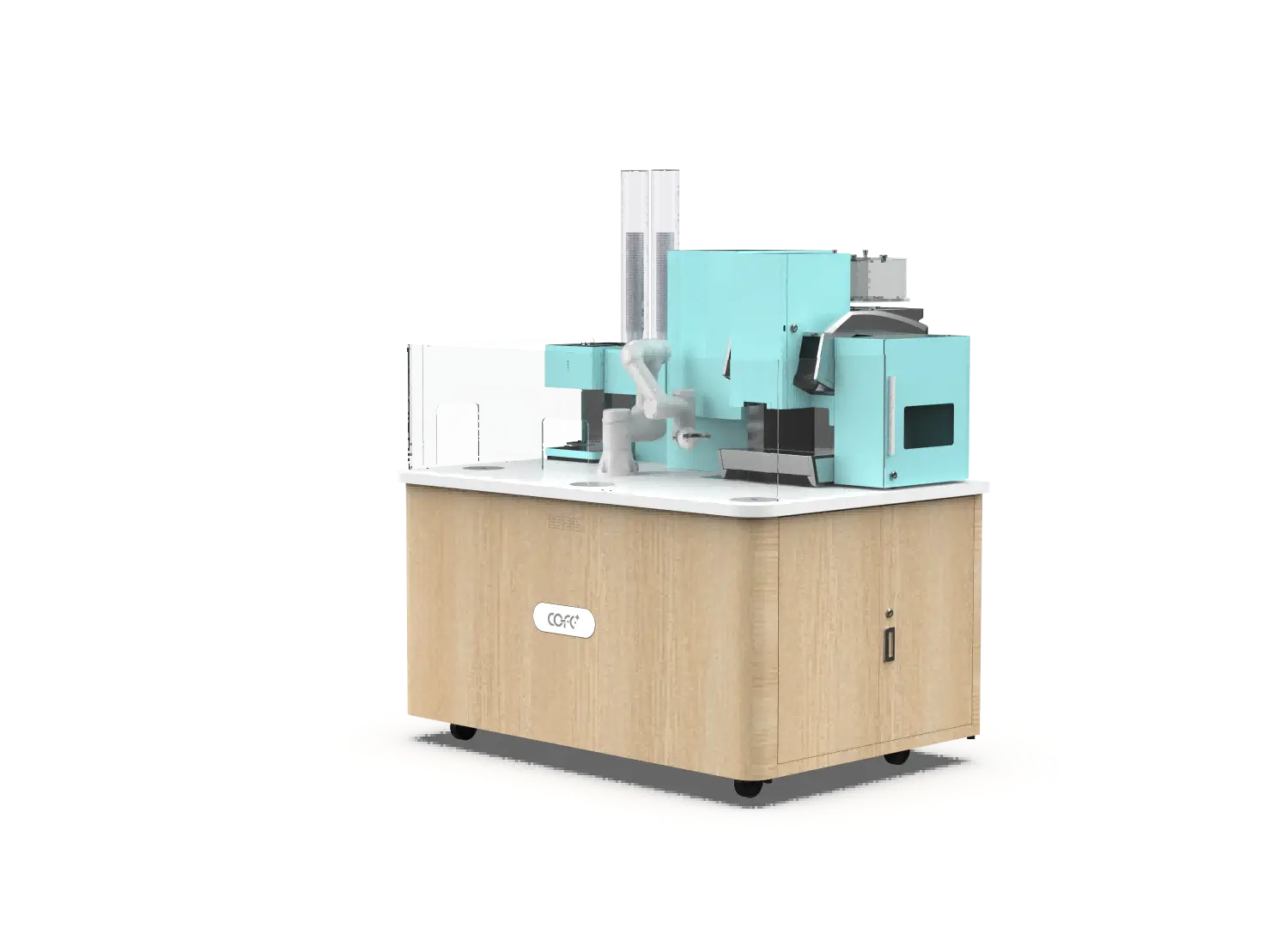
Site preparation involves running power, ensuring network connectivity for cloud monitoring, and clearing the footprint. In most cases, the kiosk can start serving within a day. For gas station networks rolling out multiple units, the cloud-based management system lets operators monitor stock, temperature, and performance from a single dashboard, reducing the cost of on-site visits.
If your location experiences extreme heat, cold, or humidity, the specification details become critical to avoid early failures. Send us your site parameters and expected daily customer count, and we’ll recommend the best kiosk model and deployment plan. Reach out at sales@hi-dolphin.com.
The numbers are straightforward. A traditional coffee counter at a gas station needs at least two baristas per shift to cover 24 hours. Even at minimum wage, that’s over $100,000 per year in labor costs. A robot coffee kiosk eliminates that expense entirely, while producing 300 to 1,000 cups per day.
Cost per cup with the robot averages $0.50, factoring in beans, milk, cups, and electricity. With a typical selling price of $3 to $5, the gross margin per cup is between $2.50 and $4.50. At 200 cups per day, that’s a daily margin of $500–$900.
| Cost Comparison | Staffed Barista | Robot Coffee Kiosk |
|---|---|---|
| Annual labor (24/7) | $100,000+ | $0 |
| Ingredient cost per cup | $0.45–$0.60 | $0.40–$0.60 |
| Equipment lease/amortization | $5,000/yr | $8,000–$12,000/yr |
| Break-even point | Not applicable | 6–12 months |
Operators we work with typically see payback within 8 months. After that, it’s high-margin income with minimal ongoing costs.
With a per-cup margin of $3, you need roughly 30 to 50 cups per day to cover the machine’s monthly cost, depending on lease terms. Most gas stations surpass that within the first few weeks.
A single kiosk moving 200 cups a day can generate annual revenue of $200,000 to $365,000, with net margins of 70–80%. That rivals the profit from fuel sales on the same site.
Not all robot coffee kiosk manufacturers design for the realities of a fuel station. Beyond the machine itself, you need a partner who offers global certifications, remote diagnostics, and a demonstrated track record in outdoor retail. We’ve operated in over 50 countries and hold more than 120 patents, but that’s not a sales line—it’s the backstop you need when a health inspector shows up or a winter freeze hits.
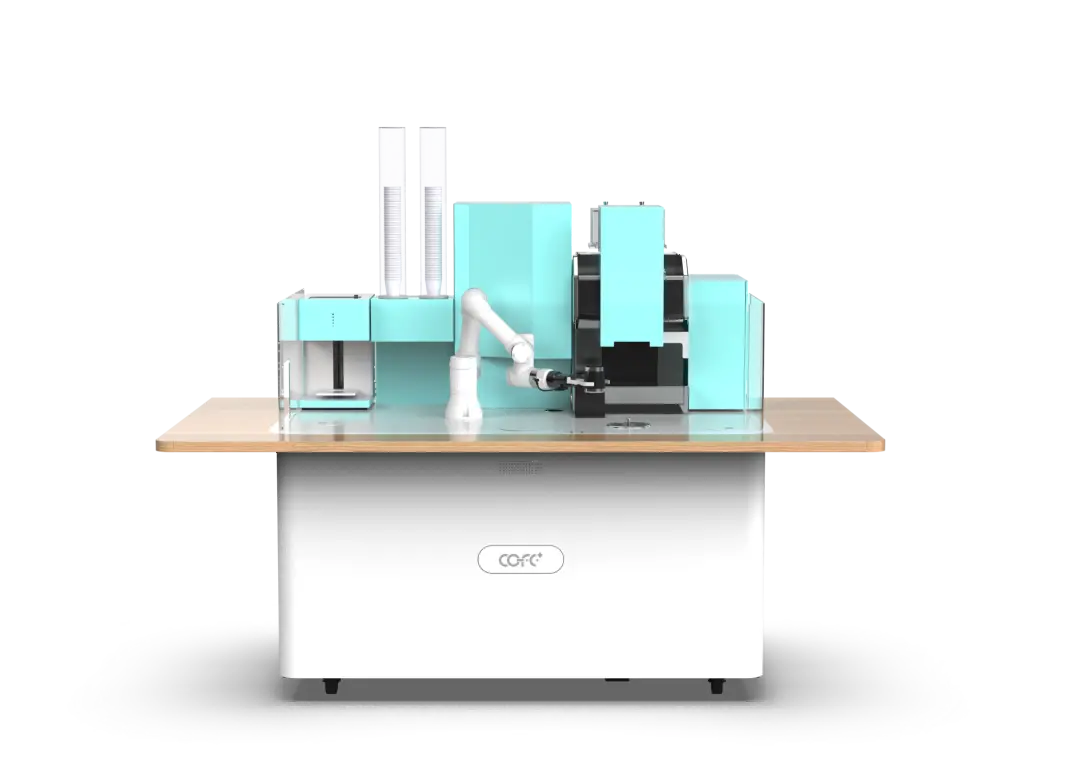
When evaluating suppliers, ask these questions:
1. Does the machine carry FDA, CE, or locally recognized safety certifications?
2. Can it operate in the ambient temperature range of your site, year-round?
3. What automated cleaning and sterilization protocols are built in?
4. Is there a cloud monitoring system that alerts you before components fail?
5. What is the after-sales support structure in your region?
A machine that cannot prove compliance with international food safety standards is a liability, not an investment. Insist on documentation.
Gas stations and convenience stores operate on thin margins where every square foot of space must earn its keep. A robot coffee kiosk does more than fill a gap—it creates a new profit center that works 24/7 without payroll. The key is matching the machine to the environment, not the other way around. If your location involves outdoor exposure, cold winters, or heavy humidity, share those details when you reach out. We can help you select the right model, estimate the revenue based on your traffic, and provide a full deployment plan. Email us at sales@hi-dolphin.com or call +86 131 6630 1290 to start that conversation.
Yes, if it’s built for it. The outdoor COFE+ kiosk is rated from -20°C to 45°C with an IP54 enclosure. It includes an active defrost system and UV-resistant body panels. In desert deployments, we’ve seen sustained operation at 44°C with no quality drop. However, you need to verify the manufacturer’s real-world test data, not just the spec sheet.
Daily: refill beans, milk, cups, and water. The kiosk’s cloud dashboard alerts the operator when stock is low, so you plan visits rather than needing a full-time attendant. Weekly: clean the drip tray and external surfaces. The internal sterilization cycle runs automatically every few hours. No barista-level maintenance is required, which is why the labor savings hold up.
It brews genuine espresso using a commercial-grade grinder and pressurized extraction system. The COFE+ robot uses the same components found in high-end manual espresso machines, and can produce 3D latte art. The robotic arm and precise temperature control actually improve shot consistency compared to human baristas who might rush during a busy period.
Yes, provided the design meets the necessary electrical and fire safety certifications. All COFE+ kiosks are certified by CE and other international bodies, and the fully enclosed waste system eliminates flammable vapor exposure from coffee grounds or milk residue. As with any electrical appliance near fuel, proper installation is critical.
Most sites are up and running within 24 hours after delivery. The kiosk arrives pre-assembled and only needs power and a level floor. Once connected to the cloud, it self-tests and is ready to serve. If you’re evaluating a location, share your site specs and expected daily traffic, and we can provide a timeline and a revenue projection. Contact us at sales@hi-dolphin.com or +86 131 6630 1290.
TL;DR — COFE+ is a fully automated robotic coffee kiosk that grinds fresh beans, brews espresso and lattes, creates latt……
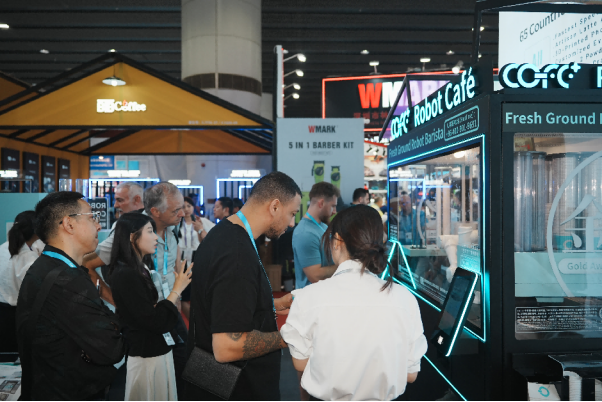
7th-Genertion Smart Robot Coffee Kiosk Arrives at the Belt and Road Core Hub, Ushering in a New Service Era Along t……
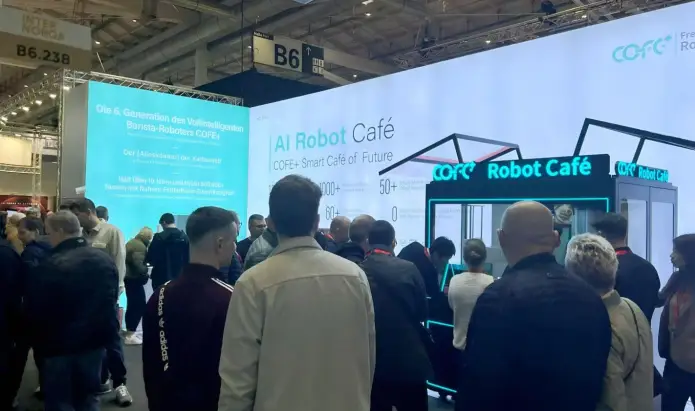
CHICAGO, May 12, 2026 (GLOBE NEWSWIRE) – Shanghai Hi-Dolphin Robot Technology today announced the U.S. debut of its 7th‑……