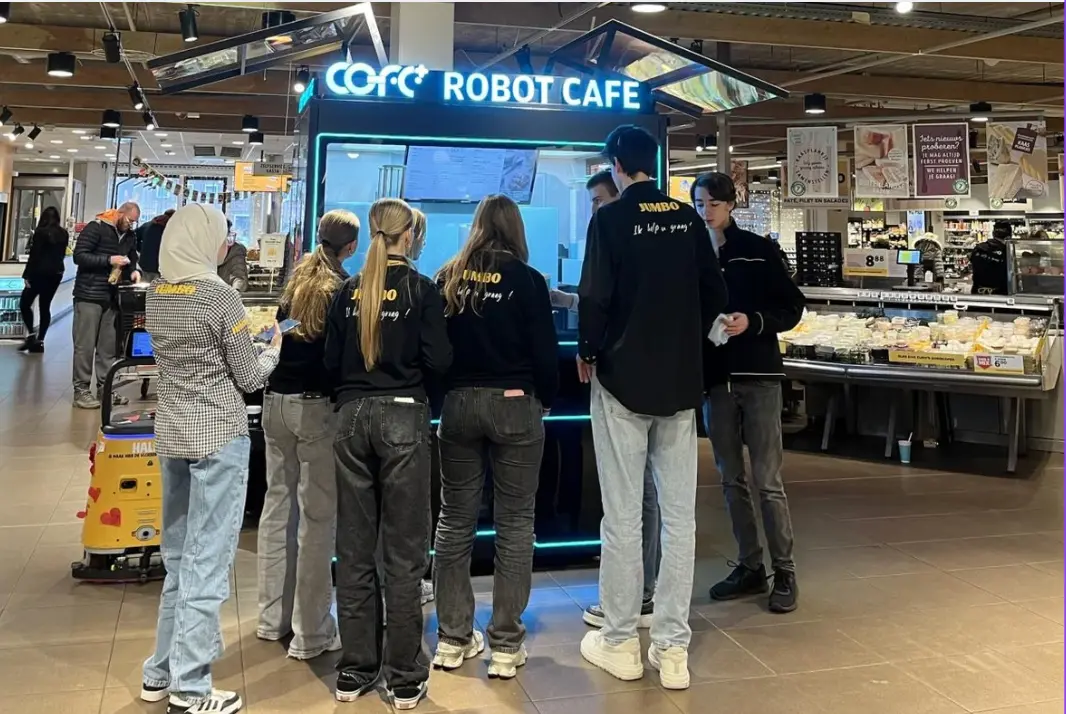
The Rise of Professional Robotic Café Technology: What COFE+ Is and Why It Matters
TL;DR — COFE+ is a fully automated robotic coffee kiosk that grinds fresh beans, brews espresso and lattes, creates latt……

Many operators considering a robot coffee kiosk assume maintenance is a daily hassle. That assumption is wrong. Modern robot coffee kiosk maintenance is shaped by self-cleaning systems, cloud-based diagnostics, and commercial-grade engineering that keeps human intervention to a minimum. Having supported deployments across more than 30 countries, I’ve seen units run for months with little more than ingredient refills and an occasional wipe-down. This guide breaks down exactly what maintenance entails, how the technology handles the rest, and what you should realistically plan for.
Traditional coffee equipment demands regular manual cleaning, backflushing, and mechanical recalibration. Those chores vanish with a well-engineered robot coffee kiosk. The core difference lies in sealed, automated internal systems that isolate consumables and waste while running self-cleaning cycles without operator involvement.
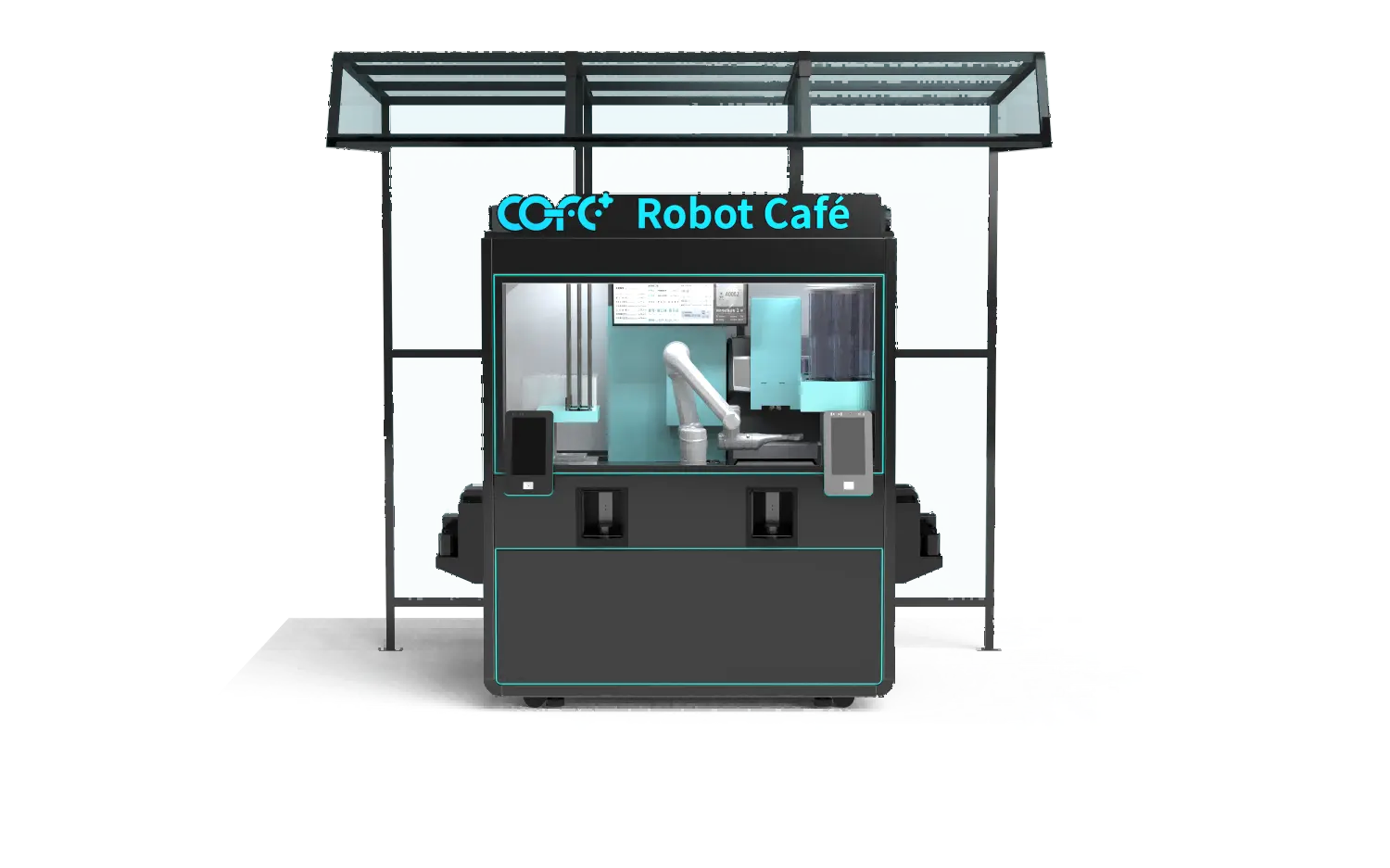
COFE+ 7th generation kiosks, for example, use antimicrobial stainless-steel interiors and fully enclosed waste compartments that prevent spills, odors, and pest intrusion. The outdoor version adds IP54-rated sealing against dust and rain, plus an anti-condensation system that eliminates moisture-related corrosion. These aren’t convenience features; they remove the root causes of most routine servicing. The result is a machine that largely maintains itself between scheduled checks.
| Maintenance Factor | Traditional Machine | Robot Coffee Kiosk (COFE+ 7th Gen) |
|---|---|---|
| Internal cleaning | Manual backflushing & chemical wash | Automatic 85°C+ high-temp sterilization cycle |
| Waste handling | Exposed drip tray & grounds bin | Sealed waste system with sensor-triggered emptying alerts |
| Mechanical wear | Pump seals, group gaskets, valves | Minimal moving parts, robotic arm rated for 500,000+ cups |
| Environmental protection | Indoor only or additional enclosure | IP54 outdoor rating, UV-resistant, anti-condensation |
| Service alerts | Operator inspects | Cloud-based telemetry with proactive fault prediction |
Even the most advanced robot kiosk isn’t completely hands-off. Operators should plan for a short list of low-effort tasks that take no more than a few minutes per day.
Bean hopper and powder canister refills are the most frequent intervention, how often depends entirely on sales volume. A busy unit moving 300 cups per day may need topping up once every 24 to 48 hours. For locations without a direct water line, the water tank needs daily top-up, though many permanent installations opt for a plumbed connection that eliminates this task. Waste bin emptying is similarly volume-driven and the on-screen interface provides a reminder well before the bin reaches capacity. Beyond that, a quick wipe of the external touch panel and cup dispensing area maintains presentation. Internal cleaning and sterilization run on a programmed cycle and require no operator action.
From our operations data, sites that assign a single staff member to these five-minute rounds maintain 99% uptime without technical escalation.
The hygiene routine that eats up barista time in a manual café is entirely robotic in a COFE+ kiosk. After a preset number of servings or at a timed interval, the machine initiates an 85°C or higher hot-water sterilization cycle that flushes internal lines, brew components, and nozzles. The same system auto-cleans the 3D latte art printing head to prevent clogs.
This automated sequence is one reason the platform holds over 50 food-safety certifications recognized internationally, including FDA, CE, UKCA, KC, and SASO. Rather than trusting operator diligence, the machine enforces a hygiene standard that cannot be skipped or rushed. If your deployment must comply with multiple health codes, the built-in documentation of every clean cycle becomes a compliance asset, not an afterthought.
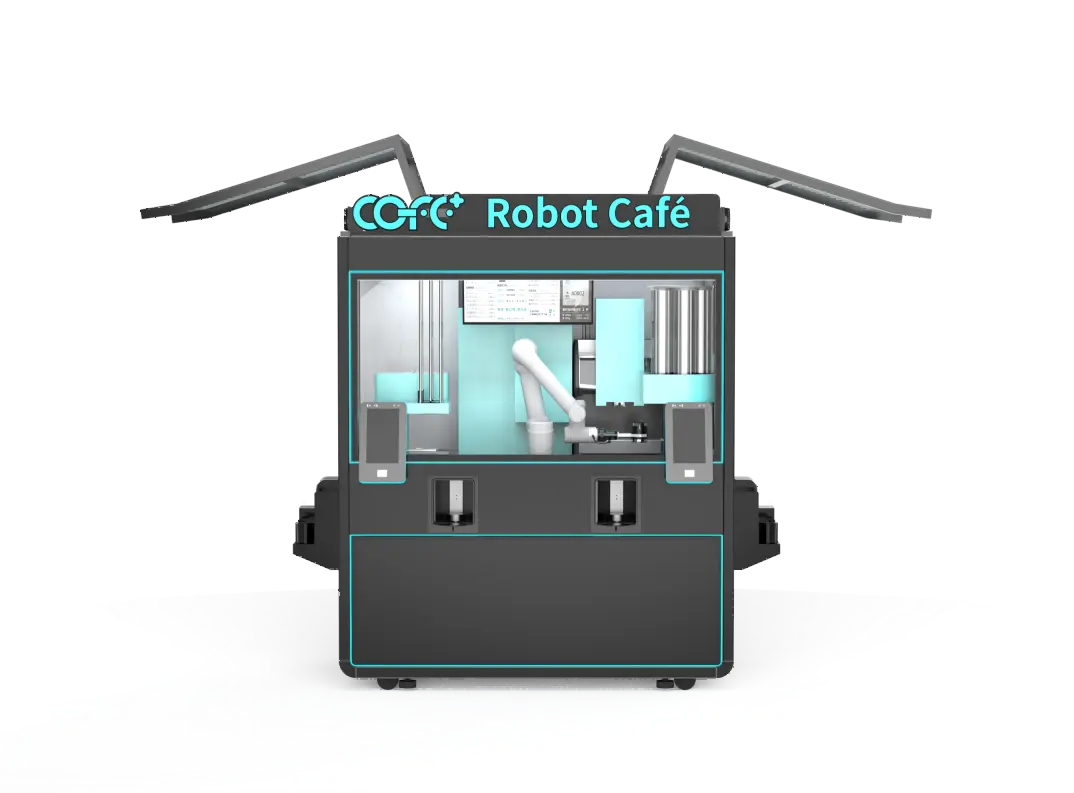
If your environment subjects the kiosk to high dust or humid conditions, it’s still wise to schedule a 15-minute external cabinet inspection every few weeks, but the internal space remains sealed and contaminant-free.
The single biggest maintenance advantage a smart kiosk provides is visibility into its own condition before anything fails. Every COFE+ unit streams real-time data on motor torque, water temperature consistency, ingredient levels, and hardware status to a cloud platform. When a parameter starts trending outside its normal range, the system generates an alert days or weeks before the issue would cause a service interruption.
In practice, this means many potential problems are resolved remotely. A grinder gap adjustment or a temperature offset recalibration often requires no physical visit at all, a technician pushes the fix through the cloud dashboard. If a part does need replacement, the diagnostics pinpoint exactly which component and typically auto-generate a dispatch ticket to a local service partner. For operators running multiple kiosks across a region, this single-pane control turns maintenance from a reactive scramble into a quiet, scheduled activity.
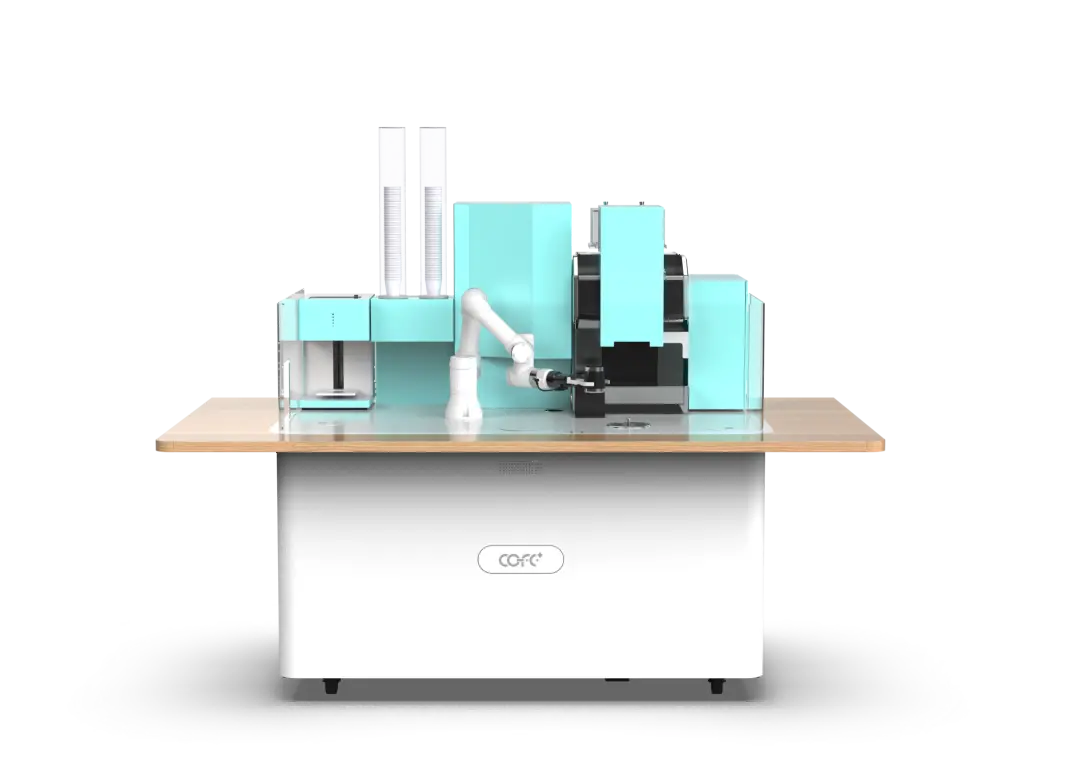
Over a 10-year design life rated for more than half a million cups, predictable replacement of wear components keeps the kiosk running at spec. The robotic arm joints and seals are engineered for extreme duty cycles; field data shows that the most common replacements after several years of heavy use are the bean grinder burrs and water filters, both of which are modular and swappable in under 15 minutes.
Service contracts scale based on kiosk count and geography. Rather than a one-size-fits-all fee, operators select coverage tiers that include parts, remote engineering support, on-site visits, or full concierge service. Having run maintenance planning for installations on four continents, I’ve learned that the cost side is highly predictable: monthly per-unit cost typically sits well under the equivalent of a single part-time barista’s wages. That comparison alone reshapes ROI calculations for most buyers.
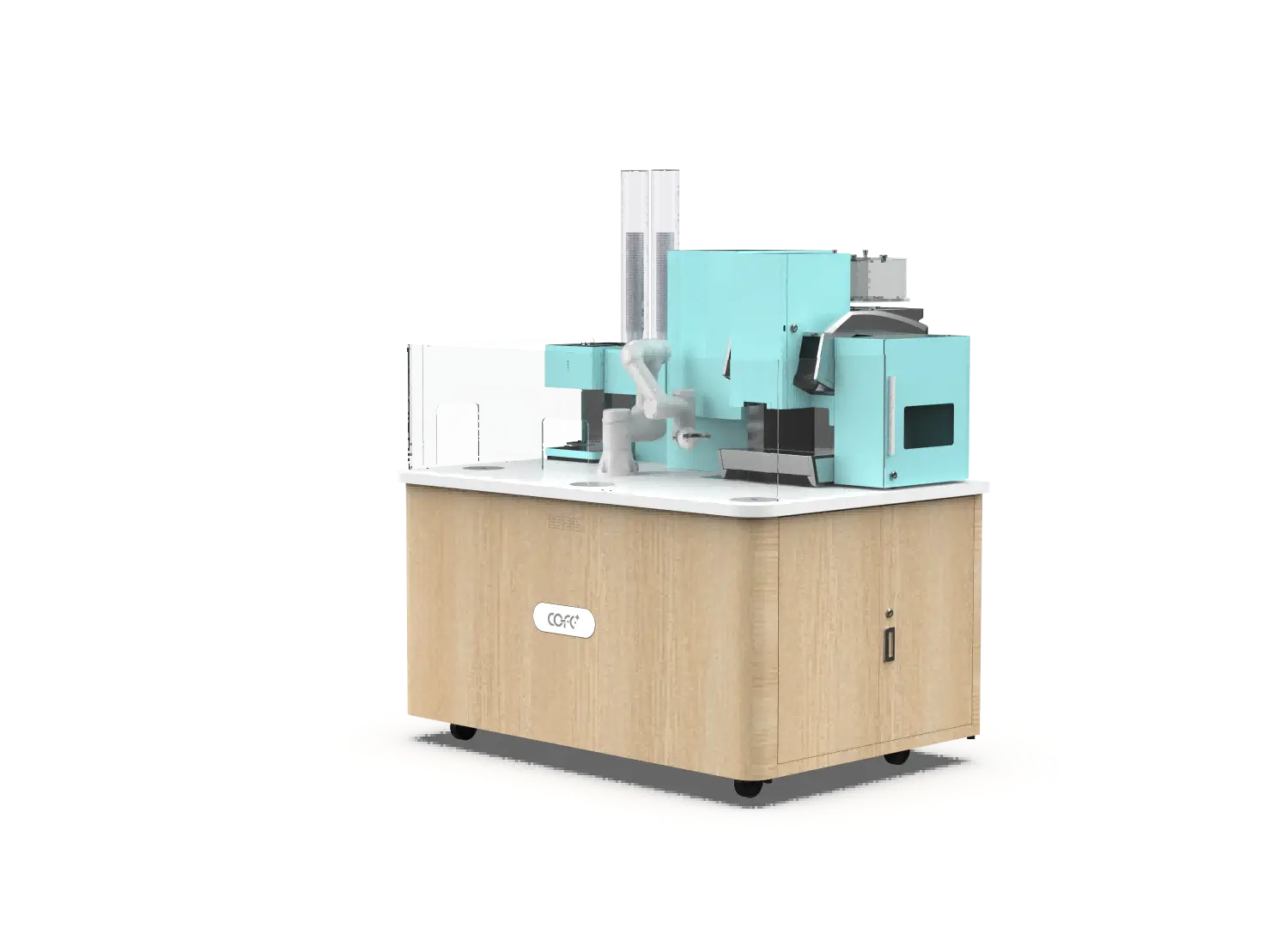
Yes, provided consumables are stocked. Automated cleaning and remote monitoring handle everything else. In our longest continuous runs without a physical visit, outdoor units have operated for over three months with only remote oversight. The operator simply restocked beans and milk powder and emptied waste on a periodic schedule. The machine’s internal diagnostics caught and corrected minor deviations during that entire window.
It is. The 85°C+ high-temp sterilization, combined with the sealed waste path and antimicrobial surfaces, satisfies the requirements of FDA, CE, and multiple other certification schemes. Because the machine logs every cycle with timestamps, audit documentation is effectively automatic. Operators in heavily regulated markets often find this easier to manage than a manual café where staff adherence can vary.
The kiosk continues serving normally using its onboard edge-processing system. All cleaning and brewing cycles run independently of cloud status. The unit stores diagnostic data locally and syncs it automatically once the connection is restored. Intermittent connectivity in basement locations or transit hubs does not trigger a maintenance event.
That depends on the service tier and region. COFE+ maintains a network of trained partners across all operating countries. With remote diagnostics identifying the exact part before anyone travels, first-visit fix rates are high and onboard travel is frequently under 48 hours for critical issues. For operators with a local on-staff technician, many repairs are guided step-by-step over the phone with parts shipped express.
Not in a meaningful way. The robotic system manages any combination of espresso, milk-tea, matcha, chocolate, and plant-based drinks through separate sealed ingredient channels. Cross-contamination between recipes is prevented by the automated line purge between orders. Adding more menu items does not multiply cleaning steps. If your business model depends on offering hundreds of unique beverages, maintenance complexity remains flat. Share your projected menu volume and we’ll provide a customized service projection. You can reach us at sales@hi-dolphin.com or +86 131 6630 1290.
TL;DR — COFE+ is a fully automated robotic coffee kiosk that grinds fresh beans, brews espresso and lattes, creates latt……
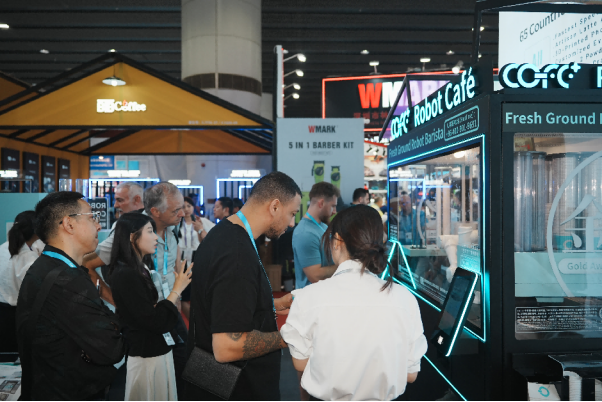
7th-Genertion Smart Robot Coffee Kiosk Arrives at the Belt and Road Core Hub, Ushering in a New Service Era Along t……
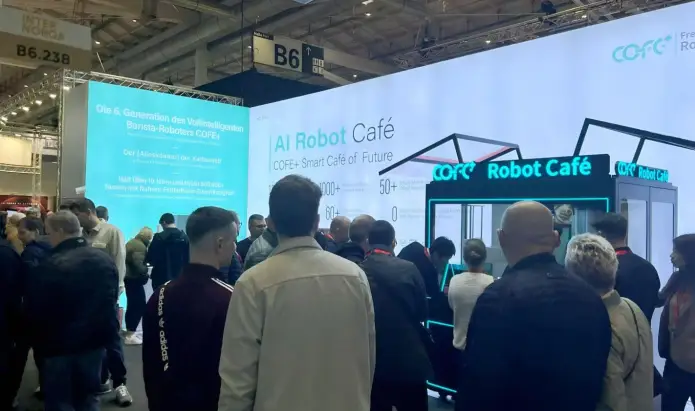
CHICAGO, May 12, 2026 (GLOBE NEWSWIRE) – Shanghai Hi-Dolphin Robot Technology today announced the U.S. debut of its 7th‑……