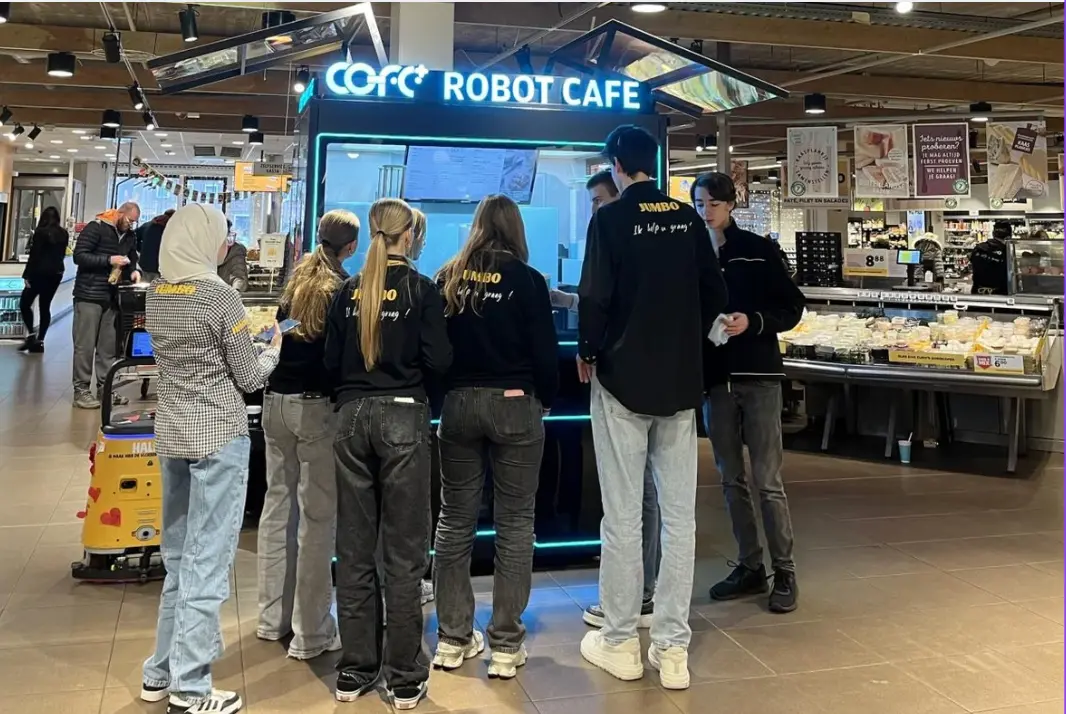
The Rise of Professional Robotic Café Technology: What COFE+ Is and Why It Matters
TL;DR — COFE+ is a fully automated robotic coffee kiosk that grinds fresh beans, brews espresso and lattes, creates latt……

Deploying robot coffee kiosks across 70 countries reveals patterns that no single-market business plan captures. Robot coffee kiosk global deployment lessons emerge from real-world friction — certification bottlenecks, consumer trust curves, and maintenance logistics that shift dramatically across borders. Having supported installations from Southeast Asia to the Middle East to Europe, I have watched operators succeed by treating each market as a compliance and culture puzzle rather than a copy-paste rollout. Here is what the data shows on certification thresholds, localization realities, and the operational variables that determine whether a deployment breaks even in six months or becomes a permanent loss leader.
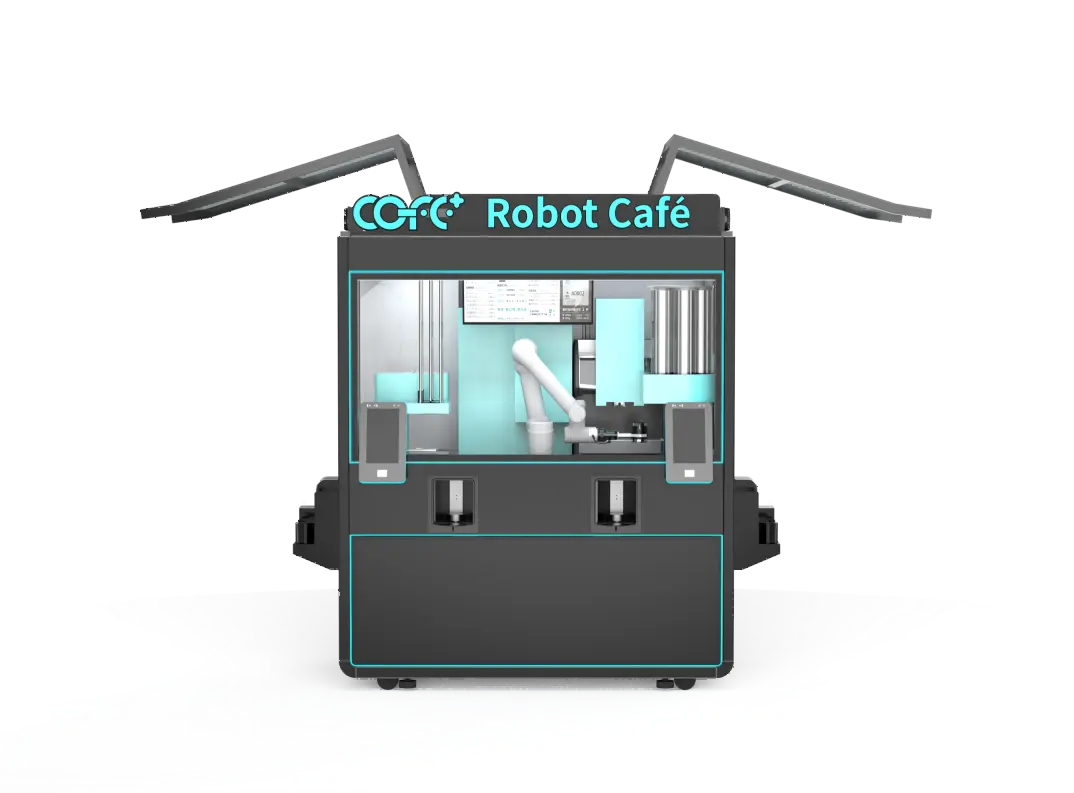
Every operator’s timeline starts with certification, and the gaps between markets are larger than most anticipate. A kiosk certified under CE and FDA standards covers North America and the European Union, but entering Saudi Arabia requires SASO certification, South Korea demands KC marking, and the UK now requires UKCA post-Brexit. These are not administrative formalities. Each adds weeks to deployment and can require hardware modifications.
From our deployment data, operators who submit certification documents in parallel across target markets, rather than sequentially, cut launch delays by roughly 40 percent. The machines that move fastest through approval carry pre-certification across the broadest set of standards. The COFE+ 7th generation kiosk holds FDA, CE, UKCA, KC, and SASO certifications upfront, which removes the single largest timeline variable for operators expanding into the Middle East and Asia. I have watched operators lose entire summer seasons waiting on a single certification they assumed would take two weeks. Food safety documentation benefits from having passed evaluations by international food safety expert organizations before submitting. Regulators respond differently when the technical file already references recognized third-party assessments.
Translating a touchscreen menu into Arabic, Korean, or French is the easy part. The harder work involves recipe adaptation, payment integration, and consumer behavior patterns that differ by region.
In Southeast Asia, iced drink volume runs roughly three times higher than in Northern Europe during the same season. Middle Eastern consumers gravitate toward milk tea and chocolate variants alongside coffee, while Western European markets skew heavily toward traditional espresso-based drinks. A kiosk that only serves hot black coffee underperforms in Bangkok and Riyadh the same way a menu without oat milk options does in Berlin. The COFE+ system supports over 300 drink recipes and 5,000 customization combinations, including plant-based milk, syrup adjustments, roast selection, and cup size, because the alternative is building a different machine for every market. Operators who use the full menu breadth from day one capture adoption rates roughly double those who start with a narrow Western coffee menu and expand later. Local payment integration is the second hidden variable. Markets where QR-code mobile payment dominates need seamless integration on day one, not a patch applied after launch.
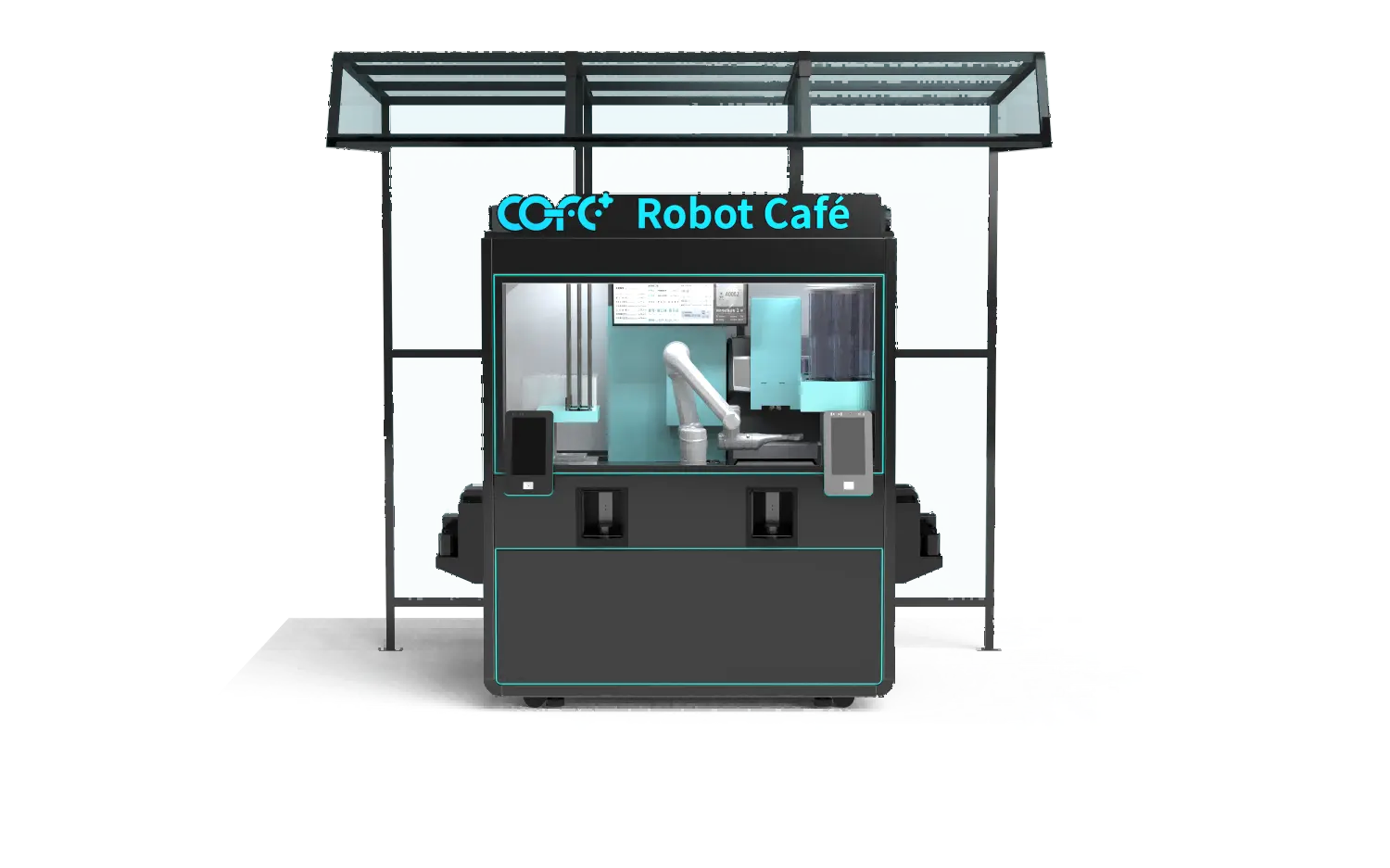
The 24/7 unattended promise of robot coffee kiosks works, but the assumptions about what unattended means change by location. In climate-controlled indoor malls, an indoor kiosk runs reliably with standard remote monitoring. Deploy the outdoor version in a Gulf coastal city during August, and the machine faces 45°C ambient temperature, salt-laden humidity, and UV exposure that degrades unrated components within months. The outdoor kiosk rated IP54 with anti-condensation systems and UV-resistant housing handles this. Operators who deploy indoor-rated machines outdoors, a shortcut some attempt, face component failure rates that erase any initial hardware savings within the first year.
Water quality is another variable that hits operators hard. Machines running on untreated hard water accumulate mineral deposits that degrade boilers and flow meters twice as fast as those on filtered or softened water. Our field data from deployments across 50 countries shows that inline water filtration adds roughly $200 to the per-unit deployment cost and extends component life by 30 to 40 percent. Operators who skip this expense pay for it in maintenance downtime.
If your deployment plan includes outdoor locations in extreme climates or regions with variable water quality, confirming the hardware specifications against local conditions before finalizing your site list avoids costly mid-launch surprises. Reach out at sales@hi-dolphin.com with your target deployment zones and we will cross-check the environmental ratings against your planned locations.
Not every high-traffic location converts to high revenue. The rule emerging from multi-country deployment data is that robot coffee kiosks perform best where three conditions coexist: consistent foot traffic, limited nearby competition, and dwell time, the period during which people are stationary and willing to wait for a fresh-made drink.
Airports and train stations meet the traffic and dwell-time criteria but often have established coffee chains paying premium rents. University campuses and hospitals deliver more predictable margins: they combine high daily traffic, limited overnight food service options, and captive audiences with consistent demand patterns. Shopping malls perform well in Asia and the Middle East, where mall culture drives high weekend traffic, but underperform in parts of Northern Europe where outdoor high-street shopping dominates. Office buildings generate reliable weekday revenue but near-zero weekend income, an important calculation for operators running on fixed lease agreements.
A kiosk capable of serving roughly 1,000 cups per day, with a per-cup cost around $0.30 to $0.70 and no staff cost, reaches breakeven in 6 to 12 months at most viable locations. Operators who select sites without at least two of the three success conditions commonly stretch that timeline past 18 months.
| Location Type | Traffic Consistency | Dwell Time Match | Typical ROI Window |
|---|---|---|---|
| University Campus | High, year-round | Strong | 6–9 months |
| Hospital | High, 24/7 | Moderate | 8–12 months |
| Airport | High, variable | Strong | 10–14 months |
| Office Building | Weekdays only | Moderate | 9–15 months |
| Shopping Mall | Weekend peaks | Strong | 7–11 months |
Maintenance logistics determine long-term profitability more than hardware cost. In markets with dense technician networks, including Western Europe, coastal China, Japan, and South Korea, remote diagnostics combined with local repair dispatch works efficiently. A cloud-monitored kiosk detects a pump issue, triggers an alert, and a technician arrives within 48 hours.
In markets where qualified technicians are sparse or dispersed, the same alert can mean a machine sitting idle for a week or more. The difference in annual uptime between a dense-support market and a sparse-support market commonly exceeds 15 percent. Operators planning multi-country rollouts need to map technician availability before site selection, not after. The machines that perform best in distributed deployments carry modular component design: pump assemblies, grinders, and boiler units that can be swapped by a general technician rather than a specialist. Automatic high-temperature sterilization at 85°C and above also reduces cleaning-related maintenance calls by keeping internal piping and dispense heads free of organic buildup, a variable that matters more in hot climates where bacterial growth accelerates.
For operators expanding into regions without established robot coffee service networks, the most reliable path is partnering with a manufacturer that provides cloud-based remote diagnostics and maintains regional spare-parts depots. Relying on international shipping for every replacement component turns a two-day fix into a two-week revenue gap.
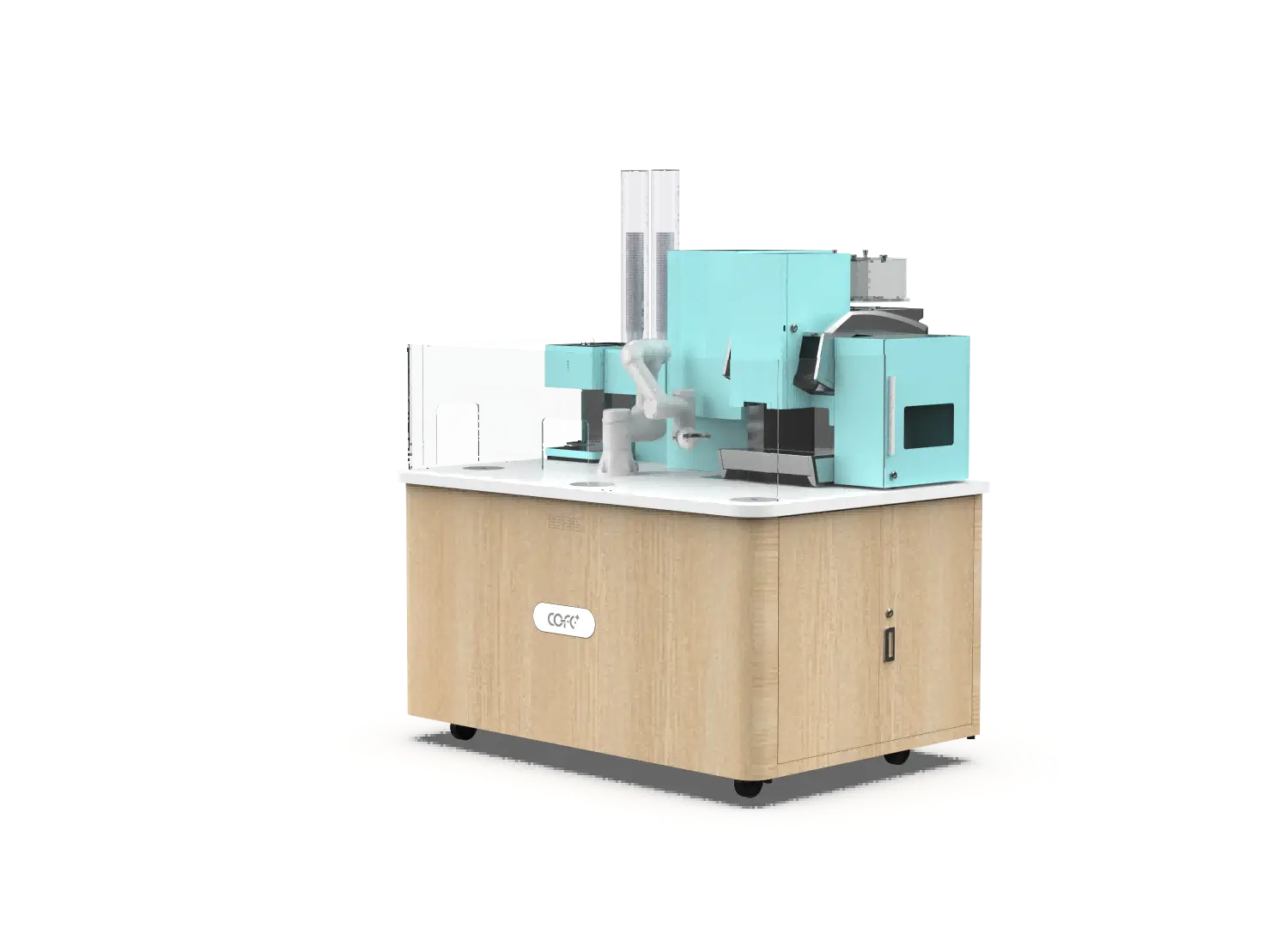
It depends on the hardware rating and the specific climate stress. Indoor kiosks in climate-controlled environments face few thermal challenges. Outdoor kiosks rated IP54 with specified operating ranges from -20°C to 45°C perform reliably across desert, tropical, and cold-region deployments tested over 500,000 cumulative cups. What fails is deploying indoor-rated hardware outdoors, which operators sometimes attempt to save on upfront cost. The failure comes fast: condensation shorts electronics, UV degrades seals and touchscreens, and dust clogs ventilation paths within months.
Trust builds faster than most operators expect, but the pattern varies by market. In technology-forward markets like South Korea, Japan, and Singapore, consumer adoption happens within weeks. In markets where coffee culture emphasizes barista craftsmanship, including Italy, France, and parts of Australia, the adoption curve is slower but still converges when the output quality is consistent. The turning point we observe across multiple country deployments is the third to fifth purchase: once consumers verify that the taste is identical each time, trust stabilizes. Features like 3D latte art printing and robotic-arm foam art accelerate this because they turn the transaction into visible theater rather than a vending-machine interaction.
Underestimating certification timelines and treating localization as a translation step rather than a menu-engineering decision. Operators who plan for three-month certification windows and budget for market-specific recipe configuration enter new markets profitably. Those who assume a CE mark is enough and copy the domestic menu lose months of revenue and miss early-adopter momentum. If your rollout plan spans multiple regulatory regions, parallel certification filing and upfront menu breadth are the two investments that separate profitable global deployments from stalled pilot projects.
There is no universal figure, but per kiosk, operators should reserve roughly 15 to 20 percent of the unit cost for country-specific expenses: certification fees, local electrical and plumbing compliance modifications, payment system integration, and initial consumables inventory. Beyond the kiosk, site lease deposits and initial marketing spend vary by market but typically run $3,000 to $8,000 per location. The operators who succeed globally treat each country as a capital allocation decision with its own timeline, not an incremental line item on the domestic budget. For a deployment scenario matching your specific markets, share your target countries and site types at sales@hi-dolphin.com or call +86 131 6630 1290, and we will walk through the certification path and cost breakdown relevant to your rollout plan.
TL;DR — COFE+ is a fully automated robotic coffee kiosk that grinds fresh beans, brews espresso and lattes, creates latt……
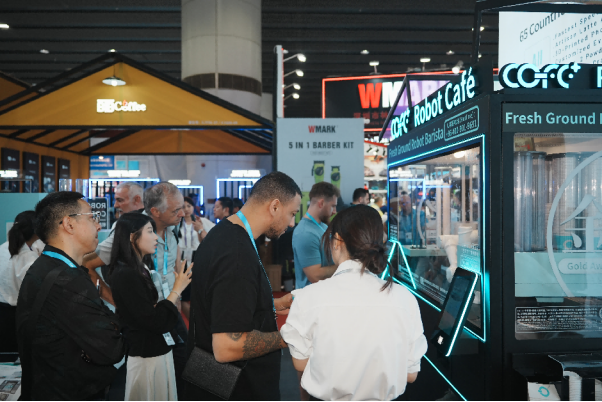
7th-Genertion Smart Robot Coffee Kiosk Arrives at the Belt and Road Core Hub, Ushering in a New Service Era Along t……
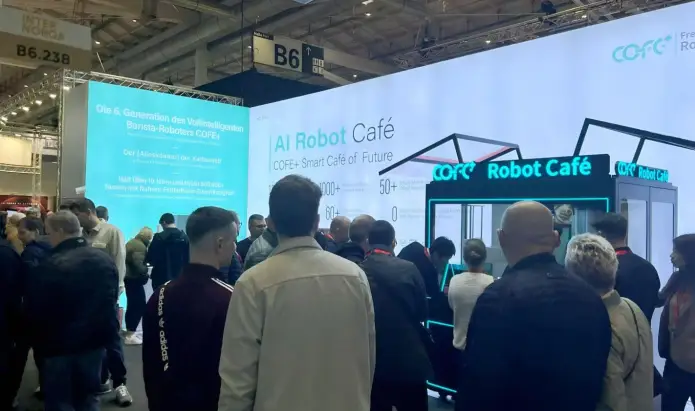
CHICAGO, May 12, 2026 (GLOBE NEWSWIRE) – Shanghai Hi-Dolphin Robot Technology today announced the U.S. debut of its 7th‑……