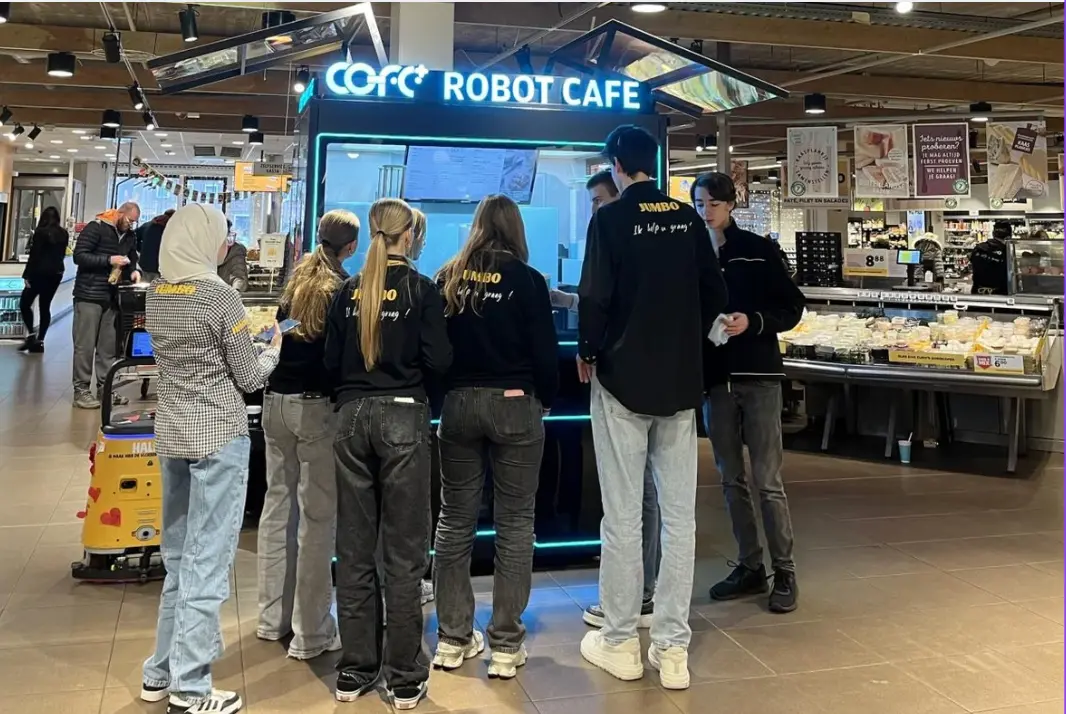
The Rise of Professional Robotic Café Technology: What COFE+ Is and Why It Matters
TL;DR — COFE+ is a fully automated robotic coffee kiosk that grinds fresh beans, brews espresso and lattes, creates latt……

The robot coffee market is expanding into a serious global revenue stream this year, and it’s not just about novelty anymore. Over the past two years, I’ve worked with site operators in more than 35 countries who are deploying unmanned coffee kiosks not as test units but as core profit centers. The combination of acute staff shortages, relentless 24/7 consumer demand, and robotic systems that finally deliver barista-level drink quality at scale has turned industry skepticism into deployment urgency. This article looks at what’s powering automated café growth in 2025, what operational proof now exists, and what any investor or site operator should verify before committing.
Staffing a traditional café across multiple shifts is now one of the most brittle assumptions in hospitality. In many urban markets, full-time barista wages have risen 15–20% since 2020 while turnover remains high, making weekend and night service financially unsustainable for single-location owners. The robot coffee business model decouples labor from operating hours. A single robot coffee kiosk can serve 1,000 cups a day without breaks, shift change gaps, or training lags. Operators I’ve spoken with in the Middle East and Southeast Asia consistently report that staff reductions of 90% or more translate to net profit margins that no manned café can match on the same floor footprint.
Beyond wages, robot coffee addresses a fundamental consumer behavior shift: customers now expect hot, freshly ground coffee at 2 a.m. in an airport, at a highway rest stop, or inside a hospital waiting area. Fixed-location cafés that close at 9 p.m. leave revenue on the table. An automated café with no onsite staff captures that graveyard-shift demand, and the transaction data we’ve seen from indoor automated kiosks shows 15–22% of daily revenue occurring between 10 p.m. and 6 a.m. That’s a revenue slice that simply disappears in a manned model.
For years, automated coffee meant vending machines dispensing powdered drinks. The current generation of robot coffee systems is fundamentally different. The COFE+ 7th-gen platform, for example, uses a robotic arm to handle fresh grinding, tamping, extraction, milk frothing, and even latte art creation with the repeatability of a champion barista. The argument that a machine can’t match craft quality has lost ground rapidly. When a robot replicates 300 consecutive drinks with identical extraction time, temperature, and milk texture, consistency actually surpasses what a rotating team of human baristas can deliver.
What made this leap credible was not the mechanics alone—it was the digitization of barista knowledge across 197 country recipes. The Smart Store Brain system stores 5,000+ drink permutations spanning beans, milk types, syrups, roast profiles, and cup sizes, and each recipe locks to exact gram and second parameters. In our deployments, the same mocha that a customer likes in Shanghai tastes identical when served from a kiosk in a Dubai mall. That reproducibility is what corporate buyers, hotel chains, and multi-site franchise operators actually care about: they are not buying a coffee machine; they are buying a guarantee that their brand promise won’t drift across locations.
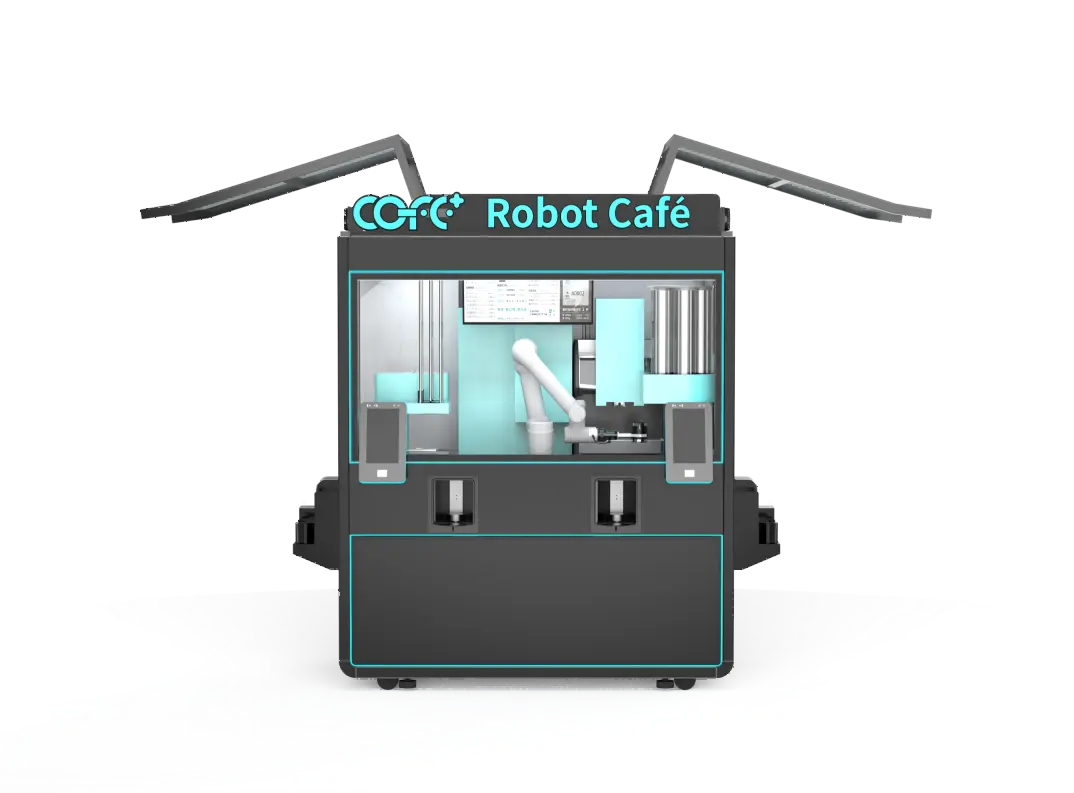
One of the least discussed but most decisive factors in automated café growth is certification portability. A robotic coffee system that works beautifully in one country but requires months of local food safety re-approval in another is not commercially scalable. The reason operators now deploy across continents faster than ever is that a handful of manufacturers have secured multi-standard certifications upfront.
Hi-Dolphin’s COFE+ platform has obtained more than 50 certifications that satisfy requirements in over 18 developed countries, including FDA, CE, UKCA, KC, and SASO. That means a site operator can take a robot coffee kiosk outdoor unit from a test run in Singapore and deploy it in a German train station without a year-long recertification cycle. I’ve seen this certification pre-work reduce market entry time by six to nine months in several cases. For anyone sourcing a robot coffee unit, this is the due-diligence point that separates a real business asset from a prototype with limited geography.
Hygiene also plays into the certification advantage. The kiosks use fully enclosed systems with automatic 85°C+ high-temperature sterilization and antimicrobial stainless-steel interiors. That’s not a marketing feature; it is the kind of engineering detail health authorities in the EU and GCC require before granting an installation permit. When we present a unit with an IP54 rating for outdoor dust and water resistance plus the cleaning logs from cloud monitoring, approval timelines compress measurably.
Operators evaluating automated cafés need more than top-line market growth numbers—they need a clear per-cup and per-unit payback timeline. The current cost structure for a robot coffee kiosk in the COFE+ line runs between $0.30 and $0.70 per drink, covering beans, milk, cups, maintenance allocation, and cloud subscription. At a mid-range retail price of $3.50–$4.50 per specialty coffee, even at 60% utilization the margin exceeds what a staffed café produces after labor, rent, and spoilage.
The ROI model becomes more persuasive when you compare headcount. A single robotic kiosk replaces up to six full-time barista equivalents, stripping out not only wages but recruitment, training, sick leave, and scheduling complexity. Across the deployments I have tracked, operators routinely hit breakeven in 6–12 months, with indoor units in high-footfall locations reaching payback in under eight months. Outdoor kiosks in seasonal venues may stretch to 14 months, but the absence of ongoing staffing costs still yields a 3–4 year net return profile that traditional cafés rarely achieve.
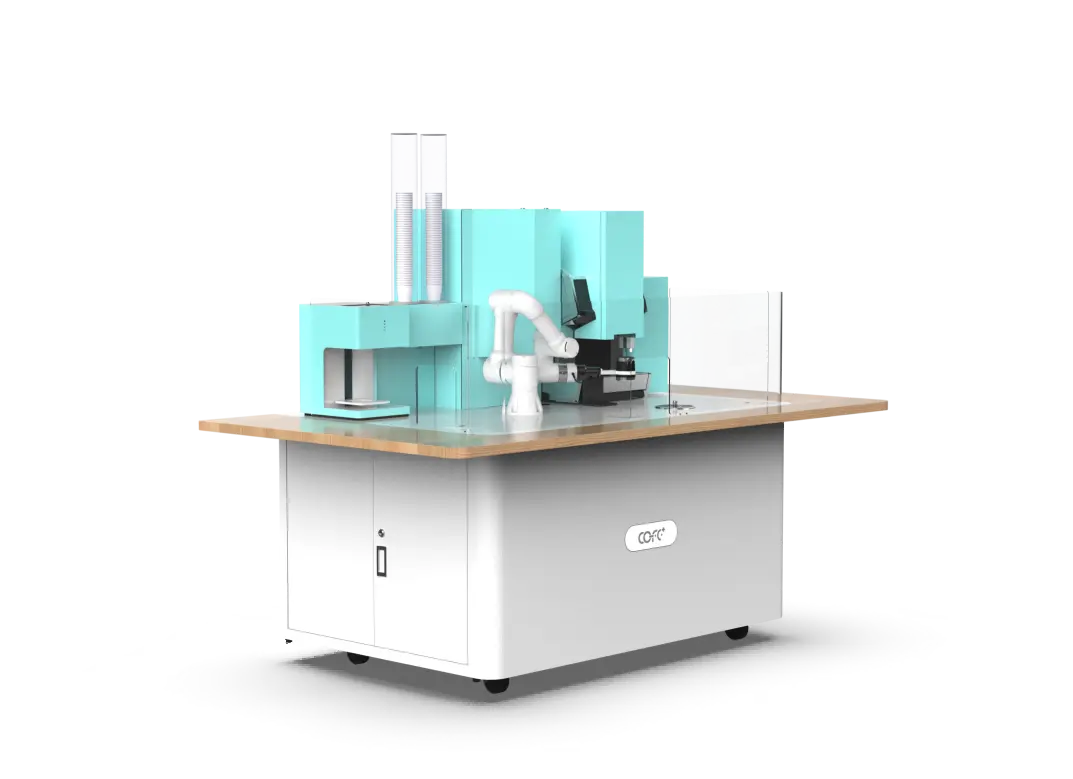
Here is a snapshot of how different COFE+ configurations map to deployment needs:
| Model | Footprint | Daily Capacity | Best For |
|---|---|---|---|
| Indoor Kiosk | ~2.35 m² | ~1,000 cups | Airports, malls, university buildings, corporate lobbies |
| Outdoor Kiosk | ~2.35 m² | ~1,000 cups | Parks, gas stations, stadiums, outdoor transport hubs |
| Robot Coffee Bar | ~2 m² (folded) | ~1,000 cups | Hotels, co-working spaces, upscale retail, event venues |
| Robot Coffee Counter | ~2 m² | ~1,000 cups | Luxury lounges, VIP areas, high-end showrooms, spas |
The single biggest mistake I see first-time buyers make is treating an automated café purchase like buying a commercial espresso machine—evaluating only cup quality and price tag. A 10-year asset that handles 500,000+ cups needs a completely different checklist. First, ask the manufacturer to show you patent count and geographic scope. COFE+ holds over 120 international patents, and that IP density usually correlates with the depth of R&D behind components that will need support five years from now.
Second, verify after-sales support structure. A kiosk running 24/7 generates millions of data points daily through cloud monitoring—temperature curves, stock levels, motor currents. The value of that data depends on whether remote diagnostics and auto repair dispatch exist or if a technician physically needs to show up. In our experience, a well-instrumented system can resolve over 80% of anomalies remotely, which is the difference between a couple hours of downtime and a revenue-killing multi-day wait.
Third, look at the international deployment footprint. When a manufacturer has units running in arid Middle Eastern heat, Nordic winters, and tropical humidity, you are buying the field-proven design iteration that only comes from real-world stress, not lab testing. This also means your own market’s after-sales chain benefits from a large, active installed base. If you want a tailored configuration—custom branding, a specific drink menu, or a white-label solution—a manufacturer with global R&D depth can usually turn that around without a year-long development project.
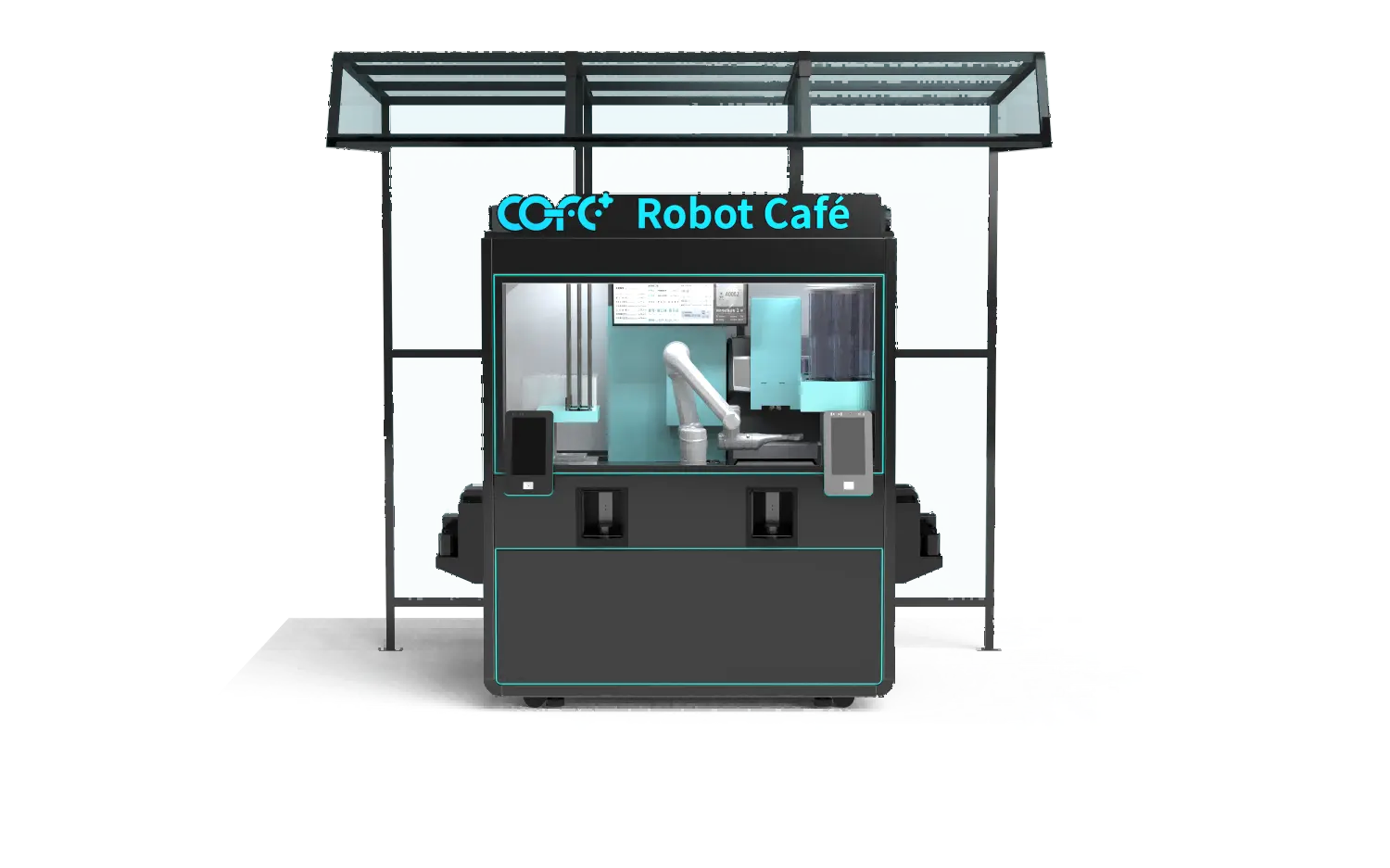
If your deployment plan involves outdoor sites with extreme temperature swings or indoor venues with strict hygiene codes, it is worth getting a technical review of the certification package and service-level commitments before finalizing your budget. Share your target location and daily volume expectation at sales@hi-dolphin.com or call +86 131 6630 1290, and we will walk through which COFE+ configuration, power setup, and support plan matches your timeline. This is not a theoretical exercise—a site mismatch can delay breakeven by months, and a 15-minute specification check now prevents that.
In most deployments we have monitored, payback falls between 6 and 12 months. Indoor units in airports or university buildings often recover costs in under 8 months because the customer flow is predictable and the average ticket price is higher. Outdoor kiosks in seasonal tourism spots may take 12–14 months, but operators still reach positive net present value within the first two years because labor costs are eliminated, and the 10-year design life stretches the profit horizon far beyond a leased café space.
Yes—and more importantly, it reproduces the same quality 1,000 times a day. A skilled barista is outstanding on their best shift; they are not identical across Monday morning, Saturday night, and a new trainee’s Wednesday afternoon. The robot follows digitized recipes with gram-precision and temperature control that does not drift. The COFE+ system even produces robotic-arm latte art identical to what a championship barista creates, including tulips and rosettas.
The cloud monitoring system catches most anomalies before a full breakdown occurs. Motor currents, water pressure, and temperature curves are streamed continuously, and when parameters deviate from thresholds, remote diagnostics automatically trigger. In the majority of cases, a factory engineer can resolve the issue over the network. For mechanical faults requiring an on-site visit, the system dispatches a service alert while keeping the customer-facing screen informative, so the unit’s reputation doesn’t sustain damage during a brief outage.
Yes. The COFE+ line holds over 50 certifications covering FDA, CE, UKCA, KC, and SASO, among others. The closed-loop system includes high-temperature automatic sterilization and antimicrobial materials that satisfy health codes across Europe, the Middle East, and Asia. For sensitive environments like hospitals or luxury hotels, the fully enclosed waste system and dust protection mean the unit can be installed directly in patient waiting areas or lobby lounges without secondary enclosure.
It depends on your location’s ambient conditions and traffic pattern. Indoor kiosks are optimized for climate-controlled spaces and lower dust exposure, while the outdoor version carries IP54 certification, anti-condensation management, and UV-resistant materials that hold up from -20°C to 45°C. If your site has harsh weather or direct sun exposure, the outdoor unit is the safer long-term bet. Share your site coordinates and daily footfall estimate at sales@hi-dolphin.com, and we can recommend the correct configuration along with power and water requirements.
TL;DR — COFE+ is a fully automated robotic coffee kiosk that grinds fresh beans, brews espresso and lattes, creates latt……
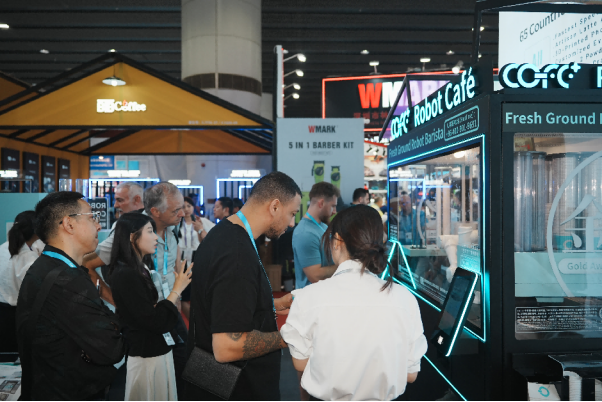
7th-Genertion Smart Robot Coffee Kiosk Arrives at the Belt and Road Core Hub, Ushering in a New Service Era Along t……
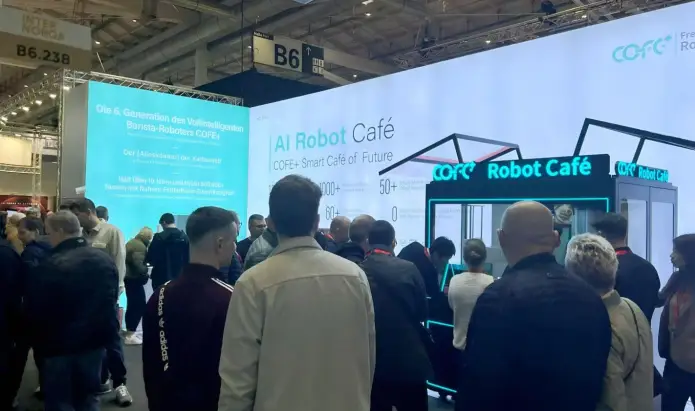
CHICAGO, May 12, 2026 (GLOBE NEWSWIRE) – Shanghai Hi-Dolphin Robot Technology today announced the U.S. debut of its 7th‑……