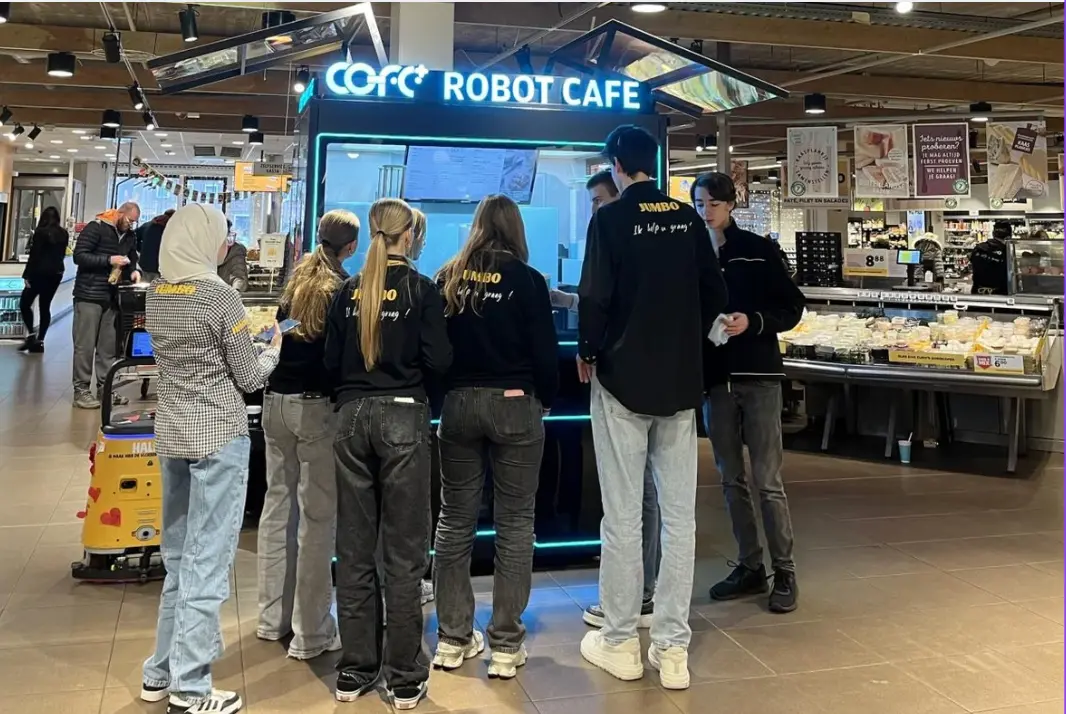
The Rise of Professional Robotic Café Technology: What COFE+ Is and Why It Matters
TL;DR — COFE+ is a fully automated robotic coffee kiosk that grinds fresh beans, brews espresso and lattes, creates latt……

A robot coffee kiosk that cannot dispense coffee is a stranded asset; the difference between profit and deadweight hinges on the robot coffee kiosk after-sales support you secure. Most buyers fixate on cup speed and menu variety, but the support infrastructure behind the machine ultimately determines whether it operates 24/7 or becomes idle. I have observed operators realize too late that their warranty covers hardware while ignoring remote diagnostics, or that regional response times measure in weeks, not hours. The support model you negotiate should be built on predictive IoT monitoring, not break-fix reaction. Start by understanding what comprehensive after-sales support must include.
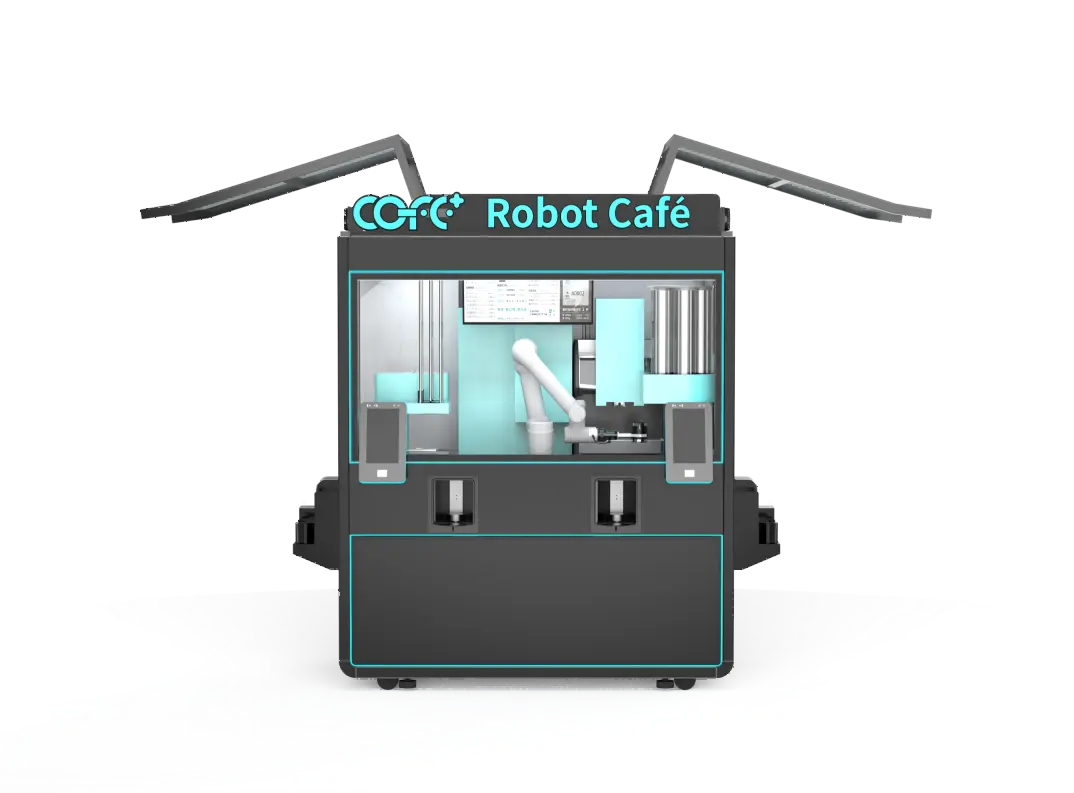
Standard after-sales coverage typically extends from hardware warranty to technical hotline services, but a rigorous procurement checklist should demand more. A well-structured support package includes a multi-year warranty on core components, a clear maintenance schedule with preventive visits, and remote software update capabilities to address evolving system issues. You should also expect a defined spare parts inventory strategy; if the manufacturer cannot commit to shipping critical components within 48 hours, your revenue model faces unnecessary risk. Beyond the basics, demand access to a cloud-based performance dashboard that gives real-time uptime reports, because transparency is the first step toward accountability. Training for your local staff on routine troubleshooting reduces reliance on field engineers for minor issues, and an escalation path that connects you directly to senior technical staff can compress resolution time significantly.
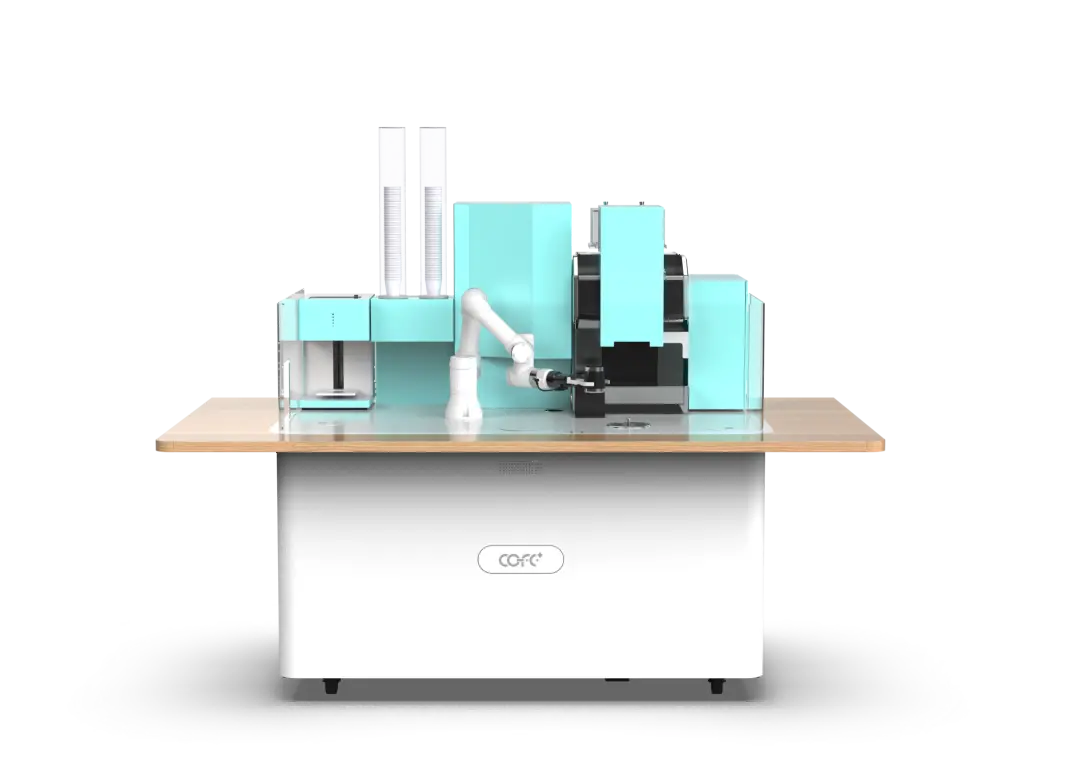
Service level agreements spell out the manufacturer’s promise, and the metrics you accept will define your operational resilience. Key performance indicators to scrutinize are maximum response time for critical failures, target resolution time, and uptime guarantee percentage. A 99.5% uptime commitment may sound impressive, but if the contract excludes remote diagnosis time from the calculation, real-world availability could be far lower. Insist on SLAs that include financial penalties for breach, such as service credits proportional to downtime beyond the threshold. The following table outlines essential SLA dimensions to negotiate:
| SLA Metric | Typical Minimum | What You Should Demand |
|---|---|---|
| Critical Issue Response Time | 4 hours | Under 2 hours with remote triage |
| Resolution Time | 24 hours | Same business day for software, next day for hardware |
| Uptime Guarantee | 99.5% | 99.9% with monthly reporting |
| Spare Parts Dispatch | 72 hours | 48 hours for critical modules |
| Preventive Maintenance | Quarterly | Monthly remote health checks |
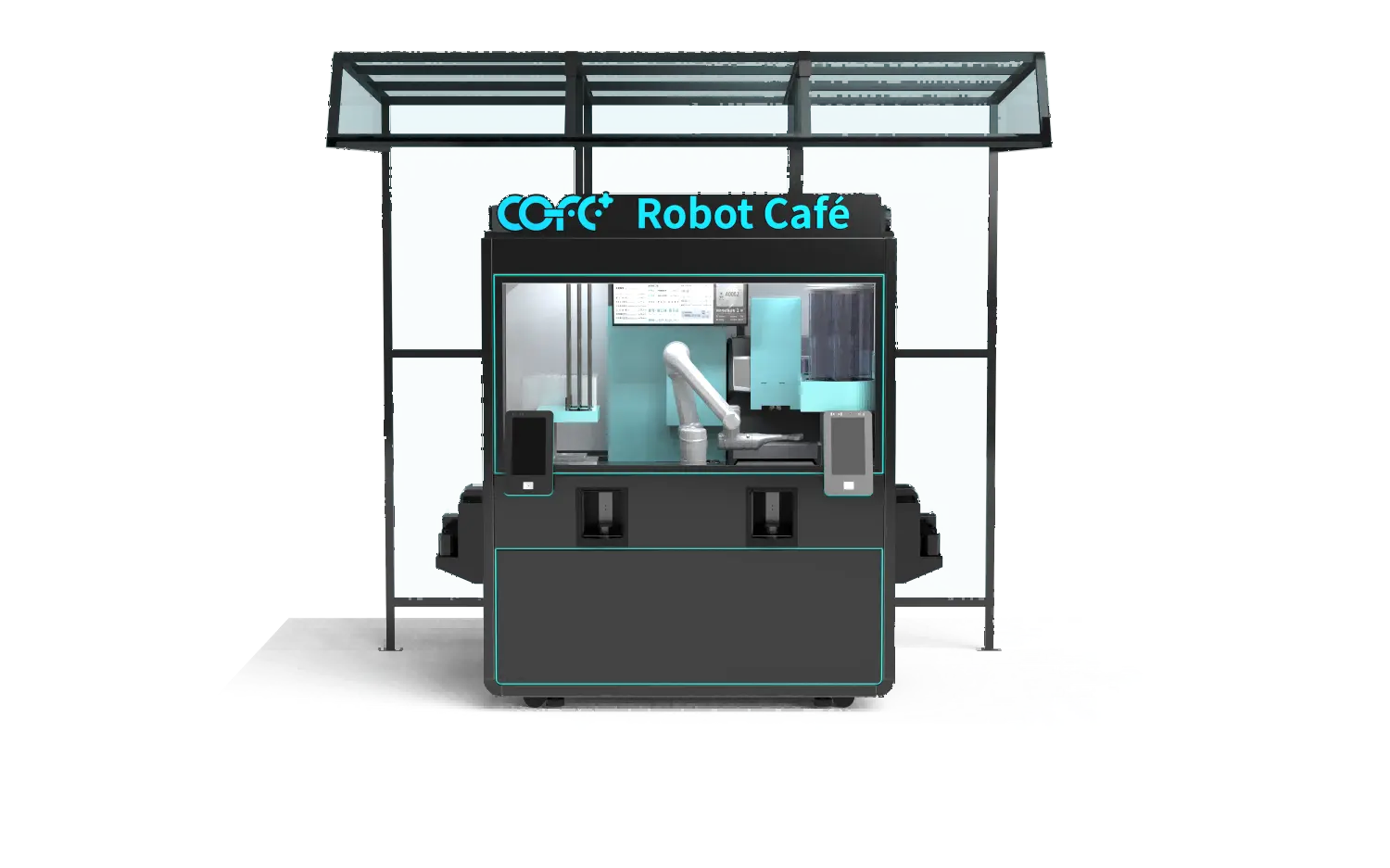
Remote diagnostics transform support from reactive repair into proactive system health management, and a kiosk without built-in self-diagnosis is a black box waiting to fail. Advanced robot coffee kiosks, such as the COFE+ series, integrate cloud-based monitoring that continuously tracks component status, fluid levels, temperature sensors, and mechanical wear. When the system detects an anomaly, it triggers an automatic maintenance ticket and dispatches a technician before the operator notices a problem. This capability is far more valuable than a long warranty because it prevents downtime events outright. From my work with AI-driven retail deployments, I have seen remote diagnostics reduce mean time to recovery by over 40% compared to operators who rely on phone calls and manual inspection logs. The IoT backbone also enables over-the-air software patches, which address many glitches without a site visit. When evaluating support, demand a live demonstration of the manufacturer’s diagnostics portal and ask how anomaly data is correlated with historical failure patterns to predict maintenance needs.
If your operations span multiple countries, confirming that remote diagnostics function reliably under local network conditions is a must-do before signing a purchase agreement. Contact sales@hi-dolphin.com to request validation data and a portal demonstration.
A manufacturer’s support promises are only as good as its local execution. If you plan to deploy across multiple countries, the after-sales infrastructure must include regionally certified service partners, localized spare parts depots, and compliance with local electrical and safety standards. Hi-Dolphin’s robot coffee kiosks, for instance, come with FDA, CE, UKCA, KC, and SASO certifications, which simplifies cross-border servicing because technical documentation and compliance requirements are already aligned. I recommend requesting a list of authorized service locations in your target markets and verifying their average first-time fix rate. Absence of a certified service partner within a four-hour radius should prompt you to negotiate remote-assisted repair and advance spare parts stocking at your own facility. Additionally, confirm that spare parts for critical subsystems like brew units, grinders, and pumps have a guaranteed availability period of at least seven years to match the machine’s typical lifespan.
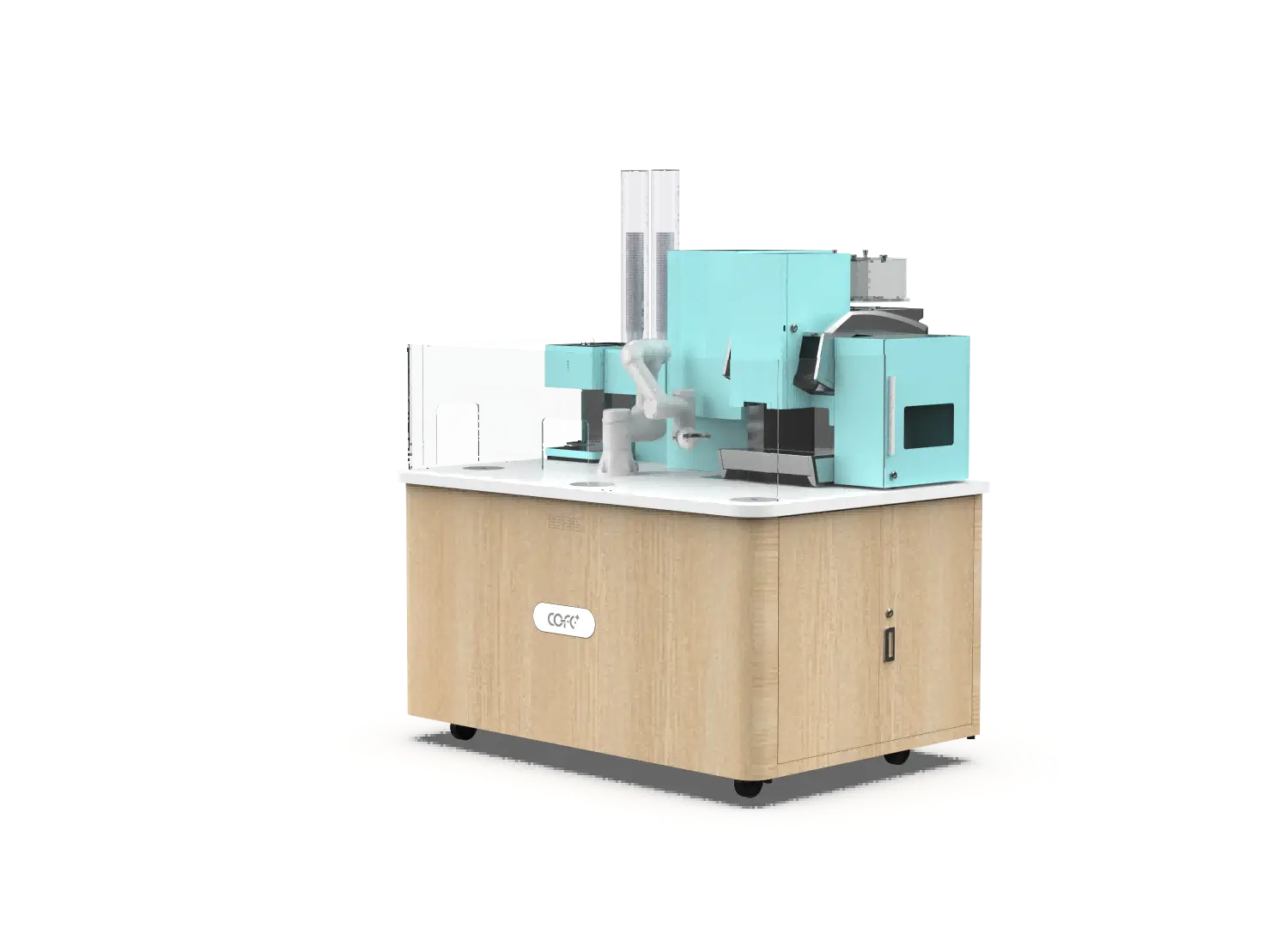
After-sales support is not a cost line item; it is a revenue protection mechanism that directly shapes your total cost of ownership. Consider a kiosk that generates $150 per day in contribution margin. A single 48-hour outage due to slow parts dispatch costs $300 in lost gross profit, excluding brand reputation damage. Over a year, even a 98% uptime rate versus a 99.9% rate could mean seven additional days of downtime, potentially erasing thousands in profit. The cost of a higher-tier support plan with faster response times and preventive monitoring often pays for itself by preventing one major failure. When building your business plan, incorporate the cost of support into the per-cup economics. A well-supported kiosk with a 10-year lifespan and low operating cost per cup, like the COFE+ platform, delivers far better long-term returns than a cheaper unit with minimal support that forces early replacement or chronic downtime.
If your operations span more than two countries, the complexity of after-sales coordination multiplies quickly. Share your deployment timeline and target regions with our team at sales@hi-dolphin.com or call +86 131 6630 1290, and we will detail the after-sales support framework that aligns with your volume and geographic footprint.
Most manufacturers offer 12 to 24 months of standard warranty, but the coverage scope matters more than the duration. Check whether the warranty includes the robotic arm, brew unit, and IoT control board, as these are the costliest items to replace. I recommend extending the warranty to at least three years and bundling it with a preventive maintenance contract to ensure continued software support and performance optimization. Ask if the warranty remains valid when the machine is moved to a new site, because relocation is common in outlet-based business models.
Remote diagnostics do rely on connectivity, but a well-designed system stores diagnostic logs locally and uploads them once the connection is restored. Insist on the kiosk having edge processing capability so that it can detect anomalies and alert locally via display messages even offline. For permanent installations, a 4G or 5G backup module is a cost-effective redundancy; I have seen operators use dual-SIM industrial routers to maintain diagnostic connectivity in areas with unreliable Wi-Fi.
Training programs vary from online video libraries to on-site certification workshops. The most effective approach is a blended model: remote training for routine maintenance tasks, followed by factory-level certification for complex hardware repairs. Demand that the manufacturer provide updated training modules whenever a major software release occurs, and insist on access to a knowledge base with step-by-step repair videos. This drastically reduces your dependency on field service engineers.
This depends on the manufacturer’s regional stocking strategy. If they maintain a parts hub within your continent and dispatch via express courier, critical parts should arrive within 48 hours. For operations in remote areas, negotiate consignment stock arrangements where you keep a small inventory of high-failure items on site. Confirm the process for urgent orders outside business hours, as coffee kiosks often fail during peak service periods. If your expected daily throughput exceeds 300 cups, sharing your location details allows us to confirm the right stocking strategy for your model — reach out and we will provide a targeted parts plan.
TL;DR — COFE+ is a fully automated robotic coffee kiosk that grinds fresh beans, brews espresso and lattes, creates latt……
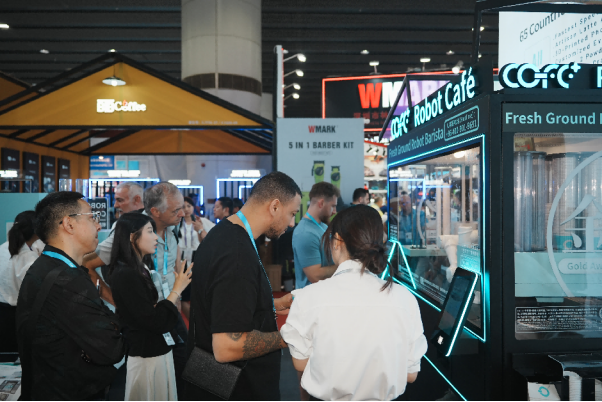
7th-Genertion Smart Robot Coffee Kiosk Arrives at the Belt and Road Core Hub, Ushering in a New Service Era Along t……
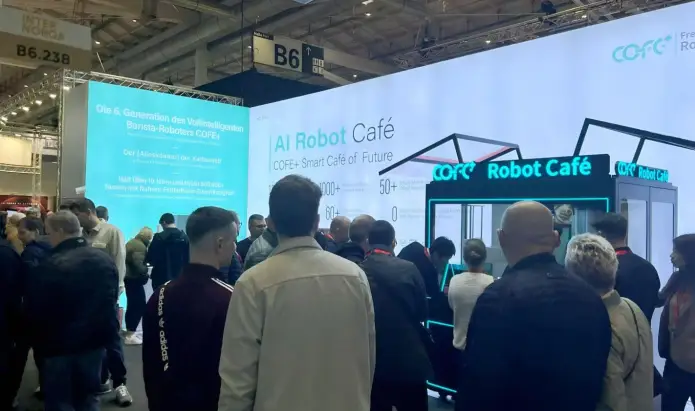
CHICAGO, May 12, 2026 (GLOBE NEWSWIRE) – Shanghai Hi-Dolphin Robot Technology today announced the U.S. debut of its 7th‑……