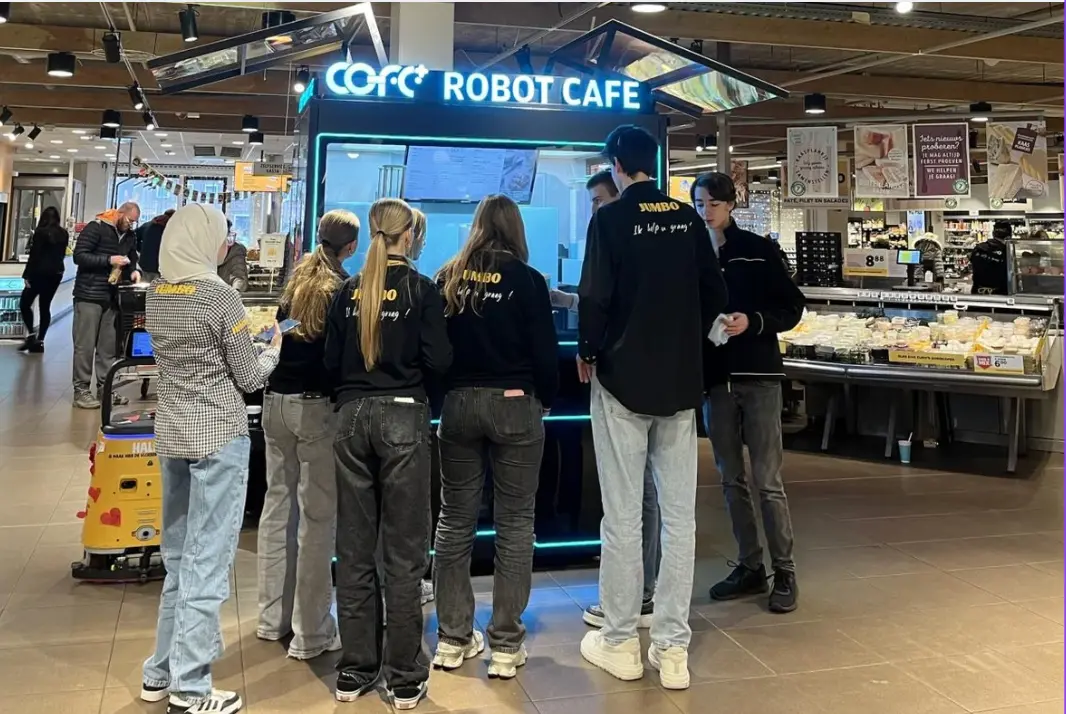
The Rise of Professional Robotic Café Technology: What COFE+ Is and Why It Matters
TL;DR — COFE+ is a fully automated robotic coffee kiosk that grinds fresh beans, brews espresso and lattes, creates latt……

When evaluating a CE-certified robot coffee kiosk, most operators check cups per day, cost per cup, and menu variety. The CE mark, if noticed at all, is treated as a checkbox. That’s a mistake. Food safety certification defines whether a kiosk can legally operate in Europe, protects against liability claims, and signals that the unit’s materials, electrical systems, and hygiene protocols meet EU regulations. For businesses planning unattended coffee service across the EU, certification isn’t a footnote. It’s the foundation that separates a deployable asset from a stranded machine. I’ve seen too many deployment plans stall because the operator assumed all certifications were equal. They aren’t. This article explains what CE certification actually demands of a robot coffee kiosk, where it fits in a wider compliance picture, and how to verify claims before committing capital.
CE marking is not a single test. It’s evidence that the product meets a stack of EU directives. For a robot coffee kiosk, the relevant obligations start with the Machinery Directive (2006/42/EC), which covers mechanical safety, pinch points, and automated moving parts, including the robotic arm. The Low Voltage Directive (2014/35/EU) applies to the electrical system, and the Electromagnetic Compatibility Directive (2014/30/EU) ensures the kiosk does not interfere with nearby equipment and is not disrupted by external signals.
But the part most operators overlook is material safety. The kiosk’s brewing components, tubing, storage tanks, and dispensing nozzles contact food. Under EU Regulation 1935/2004, every material that touches food or beverage must be demonstrably safe: no migration of harmful substances, no alteration of taste, no reaction with acidic drinks. For coffee machines, that means plastic components must be BPA-free, gaskets must be food-grade silicone, and metals must resist corrosion from steam and coffee oils.
Then there’s hygiene design. The kiosk’s internal architecture must prevent cross-contamination, allow cleaning access, and avoid dead zones where milk residue or water can pool. In practice, this translates to features like fully enclosed waste systems, anti-microbial stainless steel interiors, and automated high-temperature sterilization cycles, which I’ll discuss next.
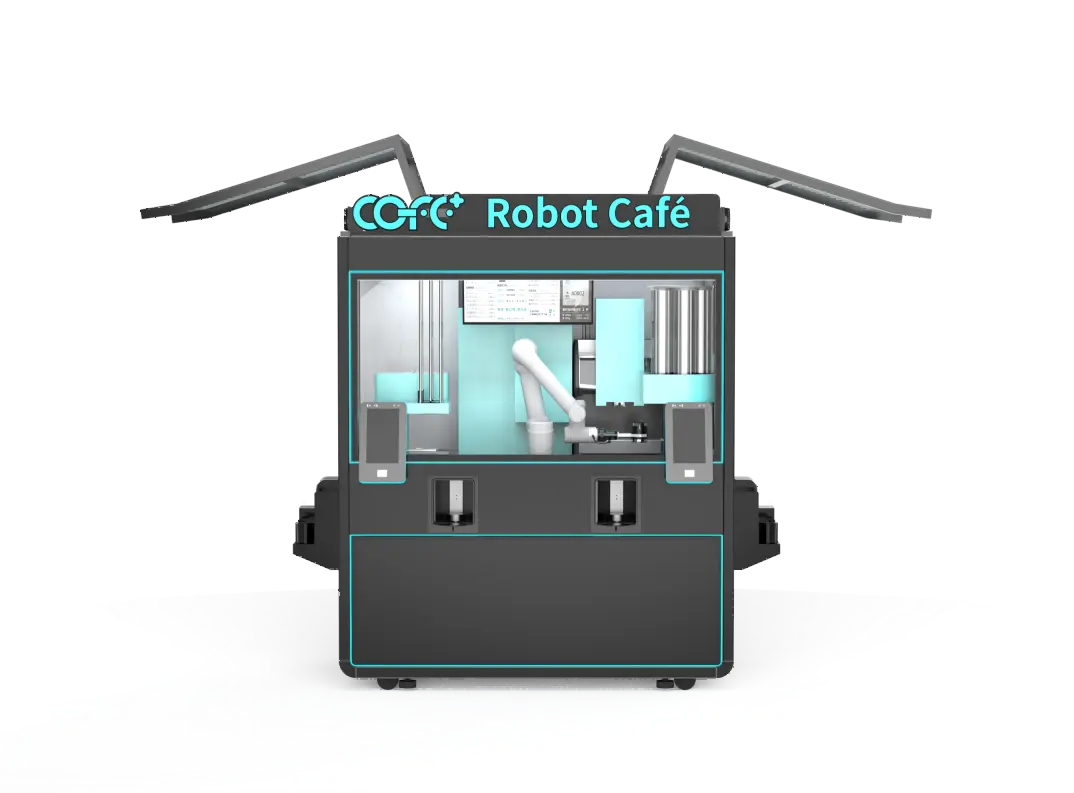
Certification requirements don’t end with a test report; they shape how the machine operates shift after shift. A CE-certified robot coffee kiosk must maintain hygiene without relying on a human attendant. That’s a harder engineering problem than just adding a cleaning button.
The COFE+ 7th generation kiosk, for example, runs an automatic 85°C+ sterilization cycle. That’s hot enough to denature milk proteins and kill vegetative bacteria without chemical sanitizers. The interior is anti-microbial stainless steel, not painted surfaces that can flake or harbour colonies. Waste is captured in a fully enclosed system that seals spent grounds and unused liquids away from the brewing zone, eliminating odours and pest access. These aren’t optional premium features. They are direct responses to the hygiene requirements that CE certification enforces.
Operationally, this means the kiosk can run 24/7 in a public environment like an airport lounge or a hospital lobby without a sanitation break. The machine verifies its own temperature and door seals, logs every cleaning cycle, and can flag anomalies before the next cup is brewed. For the operator, this translates to fewer site visits, lower cleaning costs, and a defensible hygiene record if a local health inspector asks.
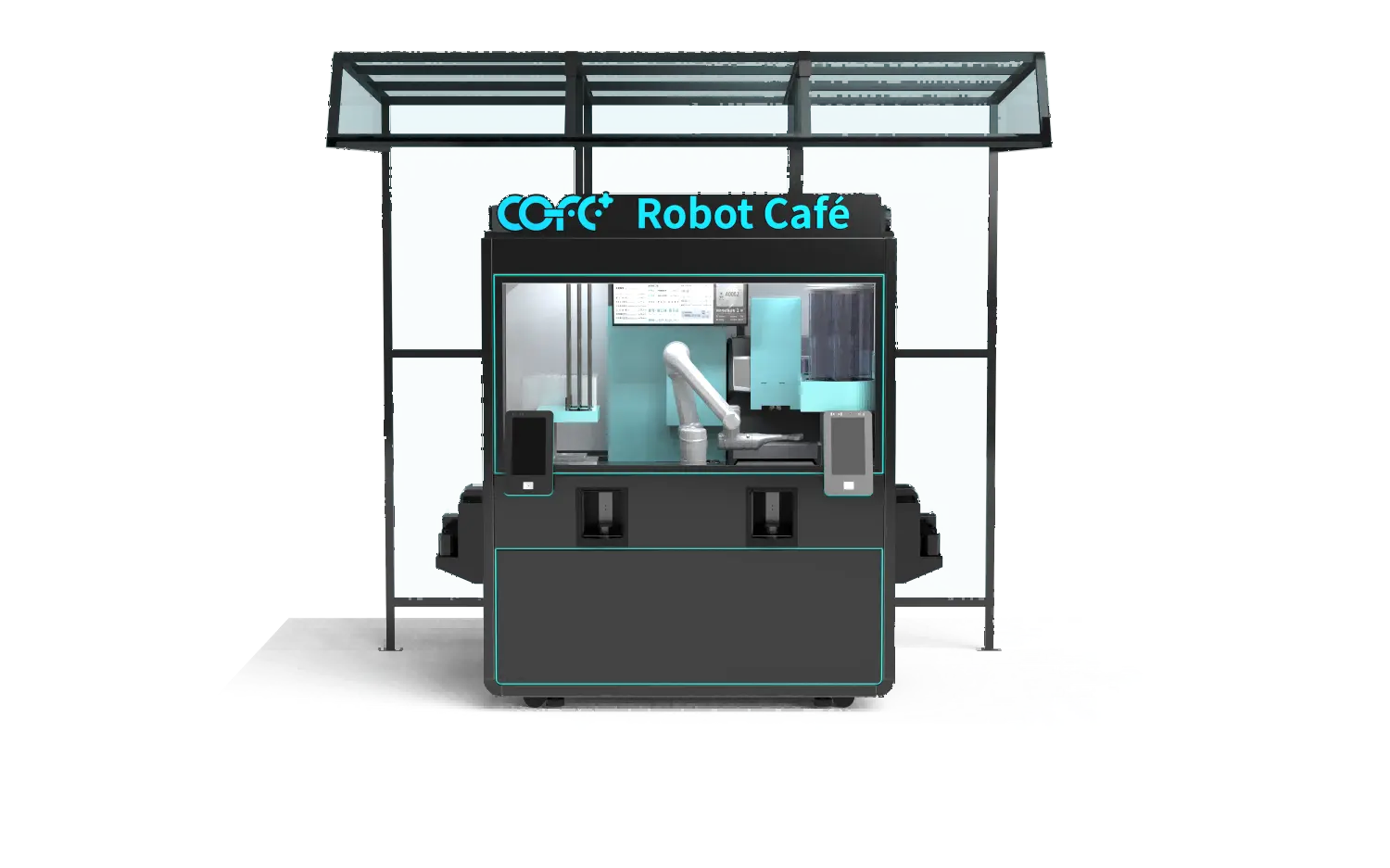
CE is critical for Europe, but most robot coffee kiosks are intended for multi-country deployment. A machine with only CE certification still faces barriers in markets like the United States, South Korea, or Saudi Arabia, each of which has its own regulatory pathway.
Hi-Dolphin’s COFE+ platform carries FDA registration for U.S. food contact compliance, UKCA for post-Brexit Britain, KC for Korea, and SASO for Saudi Arabia. In total, the series has passed evaluations for over 50 certifications spanning more than 18 developed countries. The value of this breadth is straightforward: an operator deploying kiosks across the EU, the UK, and the Middle East can use a single hardware configuration without re-engineering or retesting for each region. The certification overlap also means the kiosk’s baseline safety and hygiene standards are higher, since the strictest requirement in any market tends to pull the whole design upward.
| Certification | Scope | What It Addresses |
|---|---|---|
| CE | EU/EEA | Machinery safety, electrical, EMC, food contact materials |
| FDA | USA | Food contact substance compliance, sanitary design |
| UKCA | UK | Equivalent to CE for Great Britain market |
| KC | South Korea | Electrical safety and EMC for Korean standards |
| SASO | Saudi Arabia | Safety and conformity for GCC import |
Three practical consequences separate a certified kiosk from an uncertified one, and none of them disappear after installation.
First, liability. If a customer becomes ill after drinking from your kiosk, your insurer will ask whether the equipment met the relevant food safety regulation. A valid CE certificate, supported by technical documentation and a notified body opinion, shifts the burden away from you. Without it, you’re left arguing that you acted reasonably, with no independent validation of the machine’s safety.
Second, import clearance. Customs authorities in EU member states can detain equipment that lacks proper CE marking and documentation. A container of kiosks sitting at Rotterdam waiting for a compliance audit is not a revenue-producing asset.
Third, scalability. Corporate clients, airport operators, and hospital procurement teams increasingly require third-party safety certifications as part of their vendor qualification. A kiosk without CE or an equivalent recognized standard may be disqualified at the RFP stage, even if the price per cup is attractive.
If your program involves EU deployment, it is worth confirming that the manufacturer can provide full CE technical documentation and not just a declaration of conformity. Reach out at sales@hi-dolphin.com.
The CE mark printed on a label is just a starting point. I recommend three verification steps that take less time than a site visit and protect against the most common shortcuts.
First, ask for the Declaration of Conformity. This legal document, signed by the manufacturer, lists which directives the product complies with and which standards were applied. A legitimate DoC will reference specific EN standards, for example, EN 60335-2-75 for commercial dispensing appliances. If the manufacturer will not share the DoC or it references only general statements, treat that as a warning sign.
Second, check whether a notified body was involved. For certain aspects of the Machinery Directive or for food contact migration testing, the manufacturer may have used an external notified body. Ask for the notified body number and verify it in the European Commission’s NANDO database. Not every CE path requires a notified body, but when one is used, it adds an independent layer of credibility.
Third, request a sample of the technical file. You don’t need the full proprietary design, but you should see test reports for food contact materials, electrical safety, and EMC. Cross-reference the report numbers with the DoC. Inconsistency here is rare in mature manufacturers but common among firms that purchase CE certificates from consulting mills without real testing.
A thorough certification package does not guarantee a successful deployment, but it eliminates the largest regulatory risks before the first cup is poured. The difference between a machine that passed a real safety review and one that carries a sticker is enormous, and only one of them belongs in a public-serving food business.
Does CE certification cover the coffee beans and milk inside the kiosk?
No. CE covers the machine’s food contact materials and hygiene design, but the ingredients you load are your responsibility. You need separate traceability and cold-chain management for milk and other perishables. The kiosk’s refrigeration and monitoring can help, but certification does not extend to the consumables.
How often does a CE-certified kiosk need to be recertified?
The CE certificate itself does not expire, but the compliance obligation is ongoing. If the manufacturer changes a critical component, such as a pump or a plastic part that touches food, the certificate’s foundation may shift. I recommend operators request a compliance status update with every major software or hardware revision, typically once a year.
Is CE enough for a kiosk located inside a supermarket in France?
CE satisfies the EU-level requirement, but local health authorities may impose additional operational rules, for example, requiring a registered cleaning log or periodic swab tests. CE certification gives you the baseline; local regulations add site-specific obligations. If your deployment plans include France, also verify that the French-language user documentation and local agent requirements are handled.
What if the manufacturer’s CE certificate was issued by a Chinese testing lab?
The location of the lab matters less than whether it is a recognized notified body for the relevant directive. Many Chinese labs are accredited under the IECEE CB Scheme, and their test reports can support CE marking if the manufacturer follows the correct conformity assessment route. The key question is not where the lab sits but whether its accreditation scope includes the specific standards listed in the Declaration of Conformity.
Can I rely on CE certification if I plan to move the kiosk between countries seasonally?
Yes, CE provides market access across all EU and EEA states. But if the kiosk moves between indoor and outdoor environments, verify that the certification covers the IP rating and temperature range for the outdoor conditions. An indoor-only certification will not protect you if the kiosk operates in rain or direct sun. Share your deployment plan and we’ll confirm which model’s certification package fits your specific operating environment. Contact us at sales@hi-dolphin.com or call +86 131 6630 1290.
TL;DR — COFE+ is a fully automated robotic coffee kiosk that grinds fresh beans, brews espresso and lattes, creates latt……
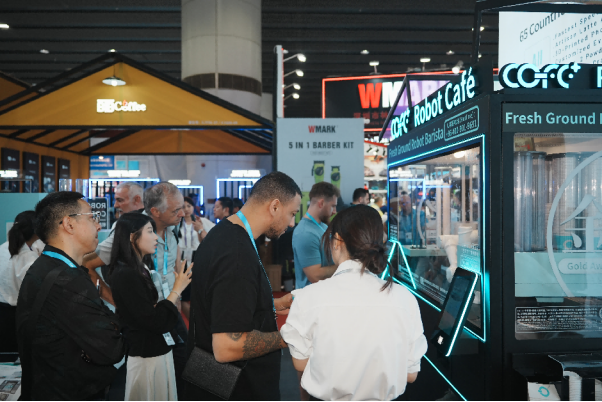
7th-Genertion Smart Robot Coffee Kiosk Arrives at the Belt and Road Core Hub, Ushering in a New Service Era Along t……
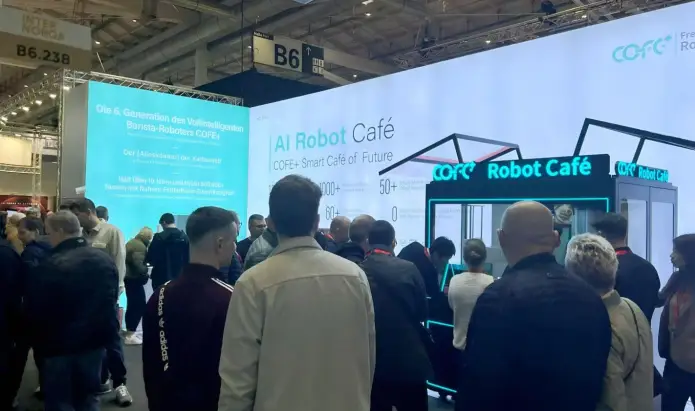
CHICAGO, May 12, 2026 (GLOBE NEWSWIRE) – Shanghai Hi-Dolphin Robot Technology today announced the U.S. debut of its 7th‑……