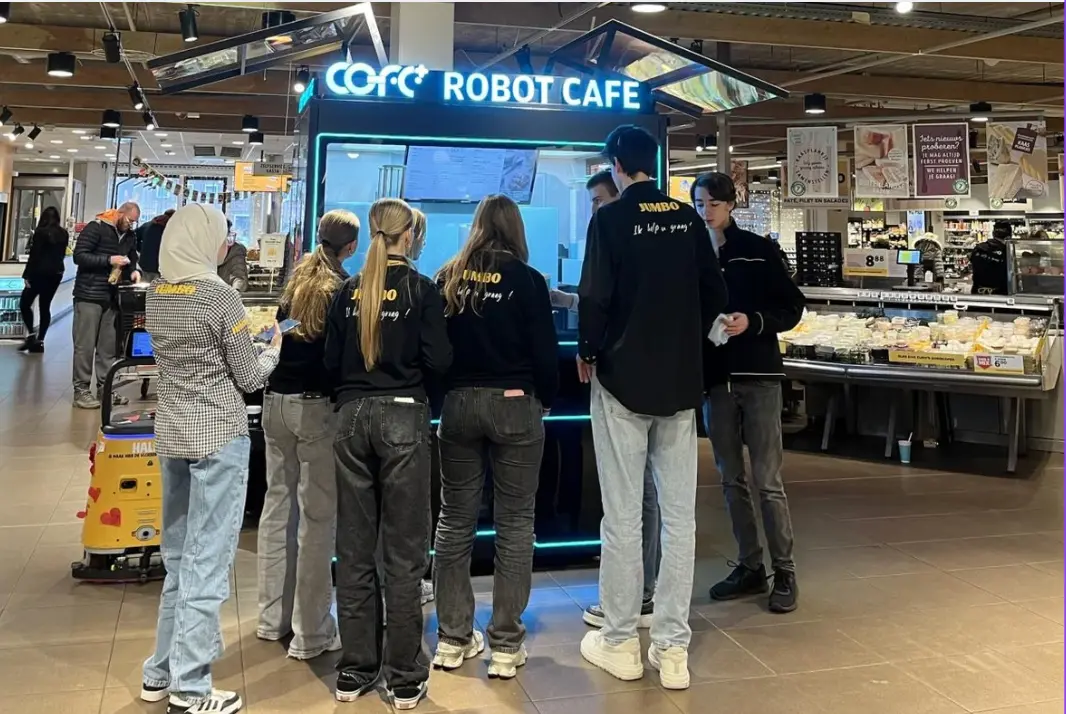
The Rise of Professional Robotic Café Technology: What COFE+ Is and Why It Matters
TL;DR — COFE+ is a fully automated robotic coffee kiosk that grinds fresh beans, brews espresso and lattes, creates latt……

Robot coffee kiosk inventory planning is less about counting stock than matching replenishment to the cup by cup consumption a smart kiosk records. Operators who treat beans, milk, syrups, and cups as one weekly order usually stock out of one item and overstock another. The practical fix is par-level planning built from run rates, menu mix, lead time, and remote alerts. A COFE+ kiosk can serve roughly 1,000 cups per day, so small planning errors compound fast. The same model works across indoor, outdoor, and counter formats.
A kiosk’s cloud order log is the only reliable inventory baseline. Daily cups sold, drink mix, and hour-by-hour demand show how fast each input depletes. Without that data, any order becomes a guess.
For each consumable, take the last 14 days of actual dispensed units and divide by operational days. If a site sells 4,200 cups in 14 days, the run rate is 300 cups per day. Then break that down by recipe. A latte uses milk and a cup; an espresso uses a cup but no milk. The item-level run rate, not the cup count alone, sets the reorder line.
Average sales are not the whole picture. A morning rush can consume more milk in four hours than a quiet afternoon consumes in two days. In most deployments I evaluate, weekday and weekend demand curves are far enough apart that a single average creates buffer gaps. Operators should hold extra stock equal to the difference between the busiest day and the average day, not a fixed percentage.
| Consumable | Daily consumption | Lead time | Target holding days | Par level |
|---|---|---|---|---|
| Beans | 5.4 kg (300 × 18 g) | 3 days | 5 days | 27 kg |
| Milk and plant-based | 36 L (300 × 60% × 200 ml) | 2 days | 3 days | 108 L |
| Syrup | 3.6 L (300 × 40% × 30 ml) | 4 days | 7 days | 25.2 L |
| Cups and lids | 315 units (300 + 5% waste) | 3 days | 5 days | 1,575 units |
Beans are the easiest item to over-order because they stay usable for weeks, and the easiest item to mismanage because oxidation begins after roast. I treat bean inventory as two systems: one for freshness rotation and one for volume coverage.
A standard recipe uses 18 to 20 grams of whole beans per drink, depending on the roast profile and beverage size. COFE+ grinds fresh for each cup, so the kiosk dispenses exact portions and records consumption. Use 20 grams for high-capacity planning if recipes include larger sizes. Keep beans dry, sealed, and away from heat. Rotate by roast date so the oldest stock leaves first. If lead time is three days and average daily use is 5.4 kg, set the reorder point at enough coffee to cover lead time plus the safety buffer, not at an empty hopper.
A practical robot coffee kiosk inventory planning model treats milk alternatives as separate stock items. Dairy milk has the shortest shelf life and must stay in a refrigerated compartment that the kiosk can monitor remotely. Plant-based cartons often last longer before opening, so operators can order them slightly deeper. Once opened, dairy, oat, and almond products behave differently, which is why each should be tracked separately rather than under one milk category. The cloud dashboard should send a refrigeration alert before temperature moves outside the safe range, not after spoilage has already begun.
Milk and plant-based options are the highest stockout risk in unattended coffee. A customer does not negotiate on a missing oat milk; the sale simply disappears. Shelf life, refrigeration load, and menu mix matter more than purchase price.
Syrups are high margin but easy to overstock. A kiosk with 5,000 customization options does not need every syrup variant in stock. It needs the top movers plus seasonal additions.
Treat syrups as A, B, and C items. A items are the five or six flavors that generate most flavored drinks; they get the deepest par levels. B items are regional or seasonal choices with moderate demand. C items are long tail variants that should be ordered only after consistent sales prove demand. Cups and lids are simpler but create the hardest stockout: without a cup, no order can be dispensed. Plan cup sizes from actual menu mix. Most locations perform well with two hot sizes and one iced size. Extra sizes add shelf clutter and refill trips without adding revenue.
If your menu includes region-specific syrups or seasonal limited-time drinks, it is worth confirming the programmable dosing settings with the supplier before finalizing inventory. Send your planned menu mix and daily cup volume to sales@hi-dolphin.com and we will return a stock plan matched to your selected COFE+ model.
Stockouts in unattended coffee are not a warehouse problem; they are a lost-revenue problem. A robot coffee kiosk cannot switch a customer to another size or ask a barista to work around a missing item. The system stops selling that line until the refill arrives.
Send your current site volume, menu mix, beverage sizes, and delivery lead time to sales@hi-dolphin.com or call +86 131 6630 1290. We will return a par-level and reorder-point template built around your kiosk model and traffic pattern.
Start with lead time plus a buffer tied to demand variance. A five-day stock target works for many stable indoor locations, but a high-variance transit hub may need seven days for milk and cups. The number should not be chosen once and left alone; when the kiosk logs show a wider weekend peak, the buffer should widen with it. The goal is to cover the busiest day without tying up shelf space in slow periods.
Many operators assume every milk alternative must be stocked immediately, but that assumption creates waste. Launch with dairy and two plant-based options the local audience already requests. Stocking oat, almond, soy, and coconut from day one adds cold-chain complexity and expiration risk. Most kiosks perform better with a narrow initial milk list that expands after sales data proves demand. Keep one plant-based option as a default; the kiosk logs will show when another alternative has earned shelf space.
It depends on the location, but the most common failure is holding too many cup sizes before demand is clear. A compact kiosk should start with two hot sizes and one iced size. A high-volume outdoor site may add a third size later. Oversizing the cup range forces more inventory, more storage, and more refill trips without increasing revenue. Let the first 30 days of sales data set the size mix.
In the deployments I evaluate, remote alerts are the missing layer. A 24-hour kiosk should not run on fixed delivery schedules alone. The cloud dashboard sends stock and temperature alerts before an item reaches zero, so the operations team dispatches refills only when needed. This keeps labor low while preventing an empty hopper at 2 a.m. For high-volume sites, a daily top-up still makes sense, but the remote alert decides which items and how much. Share your expected daily cup volume and menu mix with sales@hi-dolphin.com, and we will confirm realistic alert thresholds and par levels for your site.
TL;DR — COFE+ is a fully automated robotic coffee kiosk that grinds fresh beans, brews espresso and lattes, creates latt……
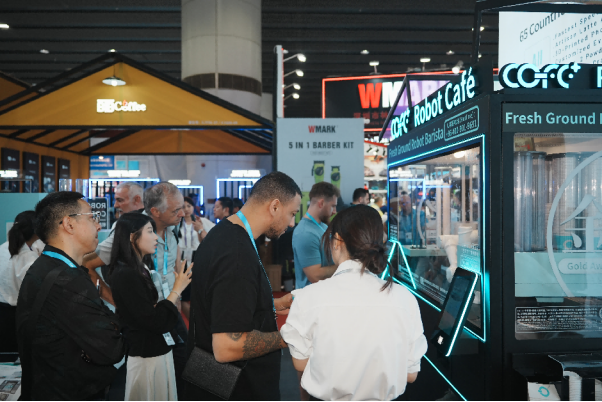
7th-Genertion Smart Robot Coffee Kiosk Arrives at the Belt and Road Core Hub, Ushering in a New Service Era Along t……
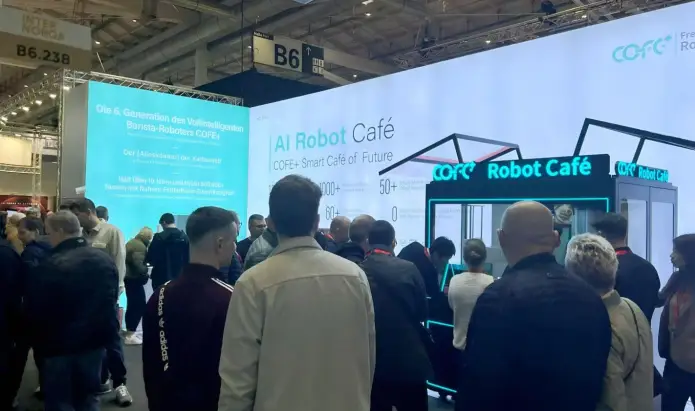
CHICAGO, May 12, 2026 (GLOBE NEWSWIRE) – Shanghai Hi-Dolphin Robot Technology today announced the U.S. debut of its 7th‑……