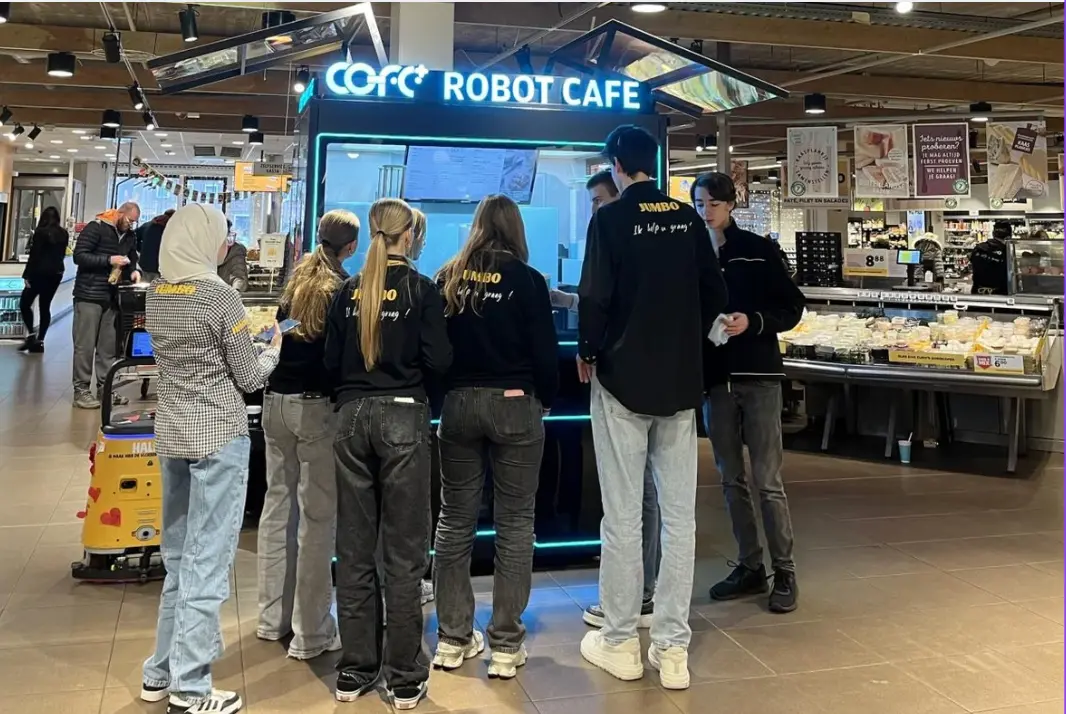
The Rise of Professional Robotic Café Technology: What COFE+ Is and Why It Matters
TL;DR — COFE+ is a fully automated robotic coffee kiosk that grinds fresh beans, brews espresso and lattes, creates latt……

Most gym operators invest heavily in equipment, cleaning, and member acquisition while overlooking a revenue stream that runs parallel to every workout: the coffee cup that members want before they train and the recovery drink they reach for after. A robot coffee kiosk for gyms addresses this gap with 24/7 unattended service that matches the operating hours of fitness centers, serving espresso, protein shakes, matcha, and customized pre/post workout drinks without adding headcount. I have worked with unmanned retail deployments across 35 countries, and the fitness vertical consistently surprises operators because the demand patterns are different from what a traditional café model expects. The peak comes in two waves, the orders are nutritionally specific, and the margin structure favours automation more than most other venue types.
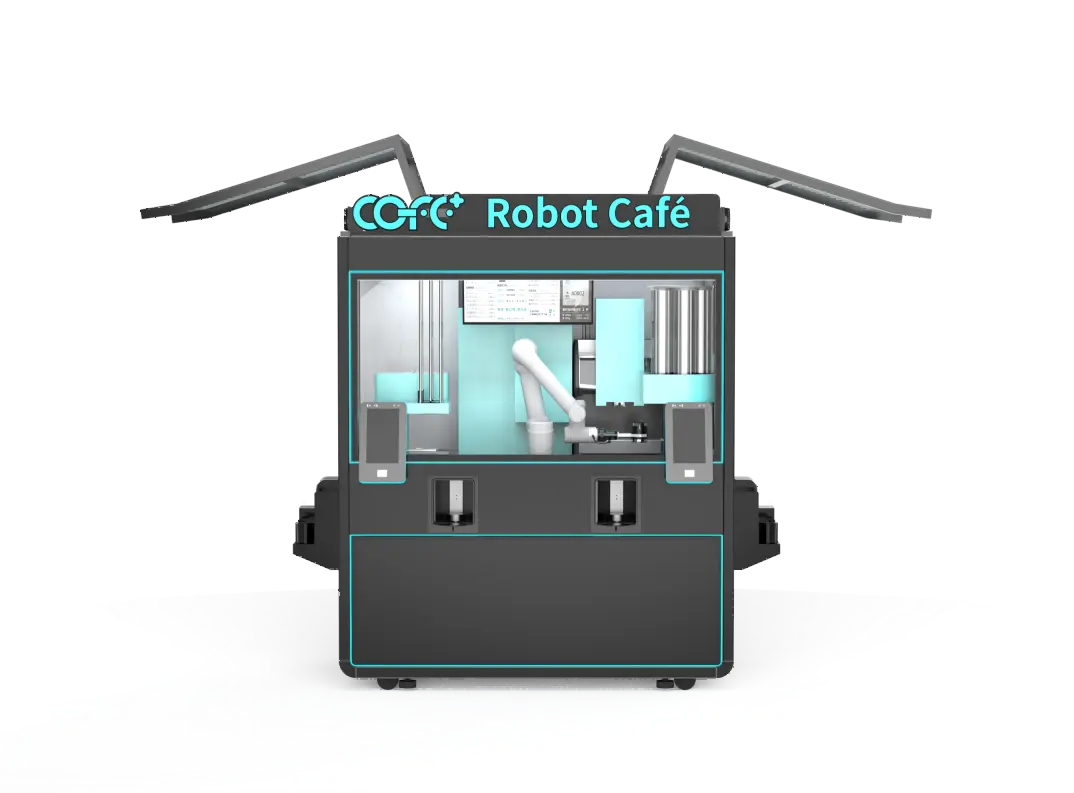
Caffeine timing is not a fringe topic for serious gym-goers. A pre-workout espresso 30 to 45 minutes before training raises perceived energy output and focus, and many members treat it as part of their warm-up routine. After a session, the demand shifts toward recovery: protein-fortified lattes, plant-based milk options, or simply a cold drink that rehydrates without sugar.
A robot barista matches this dual-demand structure because it never closes between the 6 a.m. rush and the 9 p.m. cool-down window. Members who train late at night or early in the morning find the same menu available, made to the same specification every time. The COFE+ 7th generation system stores over 300 drink recipes, including 197 country-inspired formulations, and supports more than 5,000 customization combinations across bean type, milk base, syrup, roast level, and cup size. A member ordering a double-shot oat milk latte before squats and a whey protein blended iced coffee after deadlifts is not two separate business problems. It is one machine handling both without a shift change.
The menu gap in most gyms is real. Vending machines sell bottled drinks with limited customization. A manned café requires labor that kills margin outside peak hours. A robot coffee kiosk sits between the two: fresh-ground preparation with barista-level precision and no staffing requirement.
| Drink Category | Pre-Workout Examples | Post-Workout Examples |
|---|---|---|
| Coffee-based | Espresso, Americano, Cold brew | Protein latte, Mocha with milk |
| Tea-based | Matcha, Green tea | Milk tea with protein, Chai latte |
| Plant-based | Oat milk flat white, Almond latte | Soy protein shake, Coconut iced |
| Custom | Double-shot, Sugar-free syrup | Whey blend, Recovery smoothie |
The customization engine matters because gym members develop strong preferences. One person wants a single-origin black coffee before cardio. Another wants a lactose-free chocolate protein drink after lifting. A human barista can handle this during staffed hours. A robot kiosk handles it at 5:15 a.m. when no barista wants to be on shift, and does so at roughly $0.30 to $0.70 per cup in ingredient cost. For a gym charging $3.50 to $5.50 per drink, the margin per cup is high enough to recover the hardware investment within six to twelve months, based on deployment data from the COFE+ installed base.
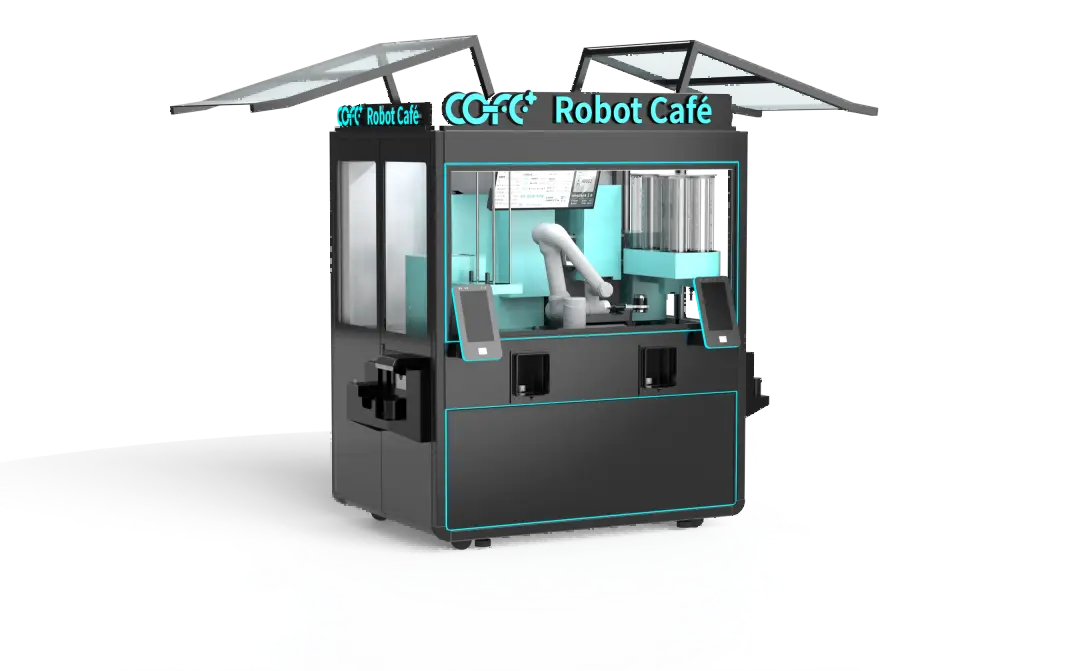
Fitness centers operate on a bimodal traffic curve: a morning peak between 6 a.m. and 9 a.m. and an evening peak between 5 p.m. and 8 p.m. Between these windows, demand drops sharply. A staffed coffee counter loses money during the trough or requires skeleton staffing that fails during the surge.
A robot coffee kiosk produces a cup in 43 to 60 seconds and can run continuously, serving roughly 1,000 cups per day if demand requires it. During the morning peak, members queue at a touchscreen, customize their order in under 30 seconds, and receive a fresh-ground drink in about a minute. No one calls in sick at 5:30 a.m. No order gets rushed and inconsistent because the barista is overwhelmed. The digitized recipe system pulls the same extraction time, milk ratio, and temperature for every cup, which means the 200th latte of the morning tastes identical to the first.
This consistency is not a marketing claim. It is a mechanical consequence of how robotic extraction works compared to manual preparation. A human barista’s output varies with fatigue, rush pressure, and individual technique. A calibrated robotic arm with sealed ingredient chambers and programmed recipes removes those variables. For a gym operator, this translates into a member experience that does not degrade when the facility is busiest.
If your gym runs classes that release 30 members simultaneously into the lobby, the throughput math matters. A single kiosk can clear that surge in under 45 minutes without a second staff member. Share your expected peak-hour volume and floor plan with us at sales@hi-dolphin.com, and we will run a placement and throughput model before you commit to a unit.
Placement determines revenue more than most operators expect. The obvious spot is the lobby or entrance area, where members pass through on arrival and departure. This captures both the pre-workout espresso buyer and the post-workout recovery drink customer with a single machine.
Less obvious locations sometimes perform better. A kiosk positioned near the stretching or cool-down zone catches members during the window when they are most receptive to a recovery drink. A unit placed adjacent to the changing rooms serves members who have finished their session and are transitioning out of the facility. Both placements reduce the friction between wanting a drink and ordering one.
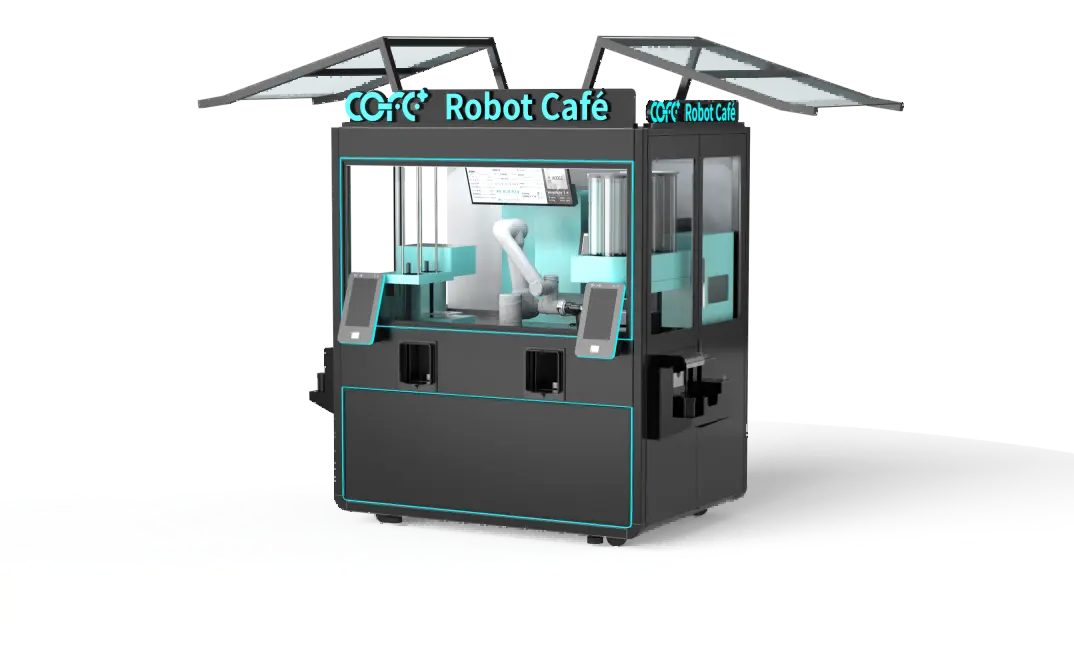
The physical footprint is compact. The indoor COFE+ unit occupies 2.35 square meters, roughly the size of a large locker. It requires a standard power connection and periodic ingredient restocking. There is no plumbing hookup, no exhaust ducting, and no renovation beyond running power to the chosen location. A gym can place a unit on a trial basis, move it between floors, or relocate it seasonally depending on member traffic patterns. Fixed café build-outs do not offer this flexibility. A robot kiosk does.
Gym members who buy a drink at the facility spend more time on-site per visit, renew at higher rates, and report stronger satisfaction scores because the facility feels more complete. This is not a coffee business bolted onto a gym. It is an amenity that changes how members use the space.
From a revenue perspective, the unit economics are straightforward. Ingredient cost runs between $0.30 and $0.70 per cup depending on drink complexity and local supply pricing. Consumer pricing at fitness centers typically ranges from $3.00 to $5.50 per drink. At even 50 cups per day, which is conservative for a 500-member gym, monthly gross margin lands in the range that recovers hardware cost inside a year. The machine carries a 10-year design life and has been tested past 500,000 cups. There is no barista salary, no shift scheduling, no overtime, and no training cost.
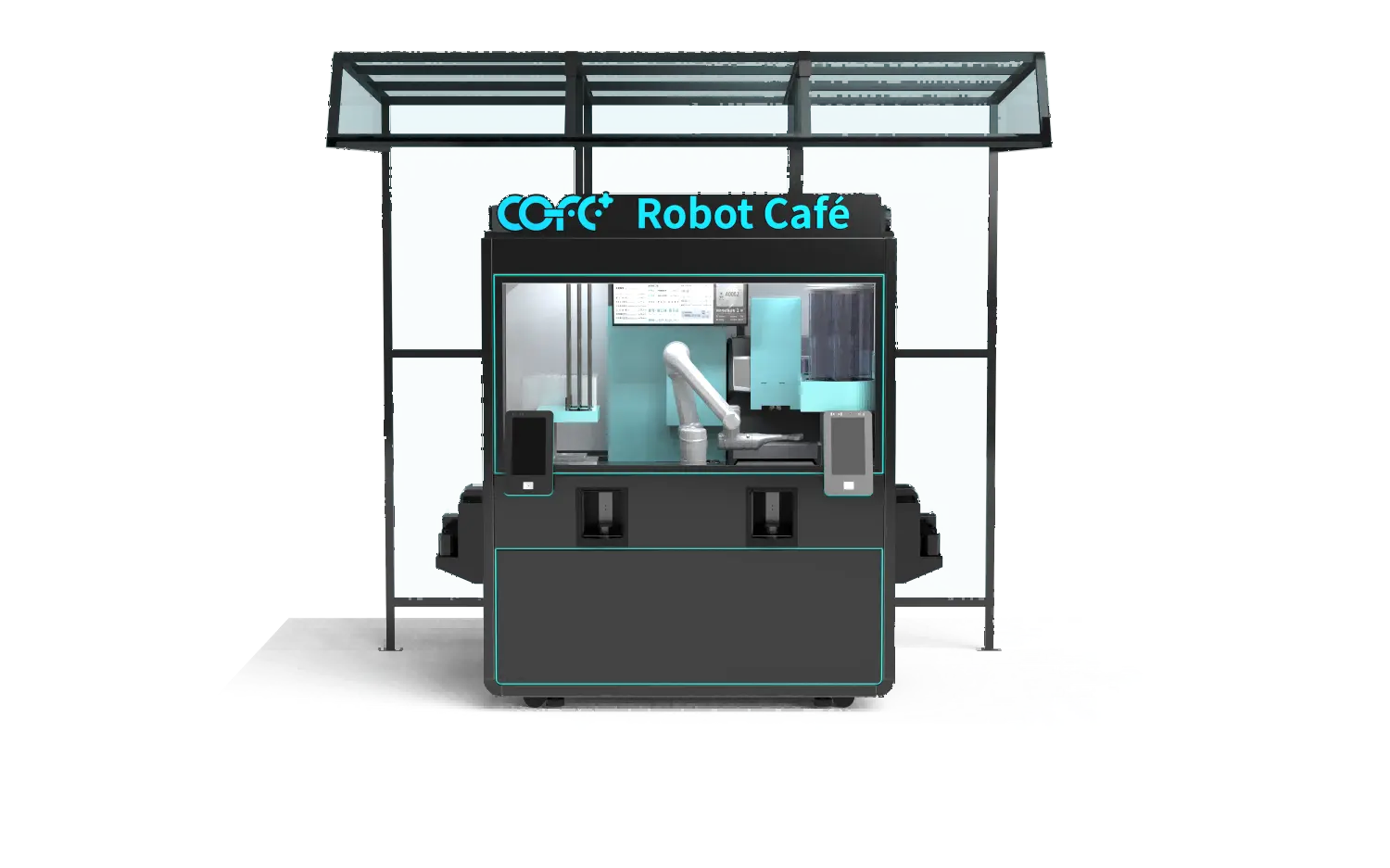
One operational detail that gym operators rarely consider until deployment: the kiosk functions as a member engagement surface. The 3D latte art system prints logos, photos, or custom designs onto foam. A gym that prints its brand logo onto every latte creates a social media shareable that members post voluntarily. This is earned visibility that a traditional café counter does not generate, because no human barista hand-draws a gym logo onto 200 cups a day for free. The robot does.
Yes, and in some respects it exceeds it. The extraction parameters — water temperature, pressure profile, grind size, and shot timing — are digitized and locked, not left to the judgment of a barista who may be on their sixth consecutive shift hour. The bean-to-cup system grinds on demand, which means the coffee is fresher than pre-ground batch brew. Taste tests across multiple deployment sites show members cannot distinguish robot-prepared drinks from skilled barista output once the drink is in hand. The difference is in consistency across volume, where the robot performs better.
The COFE+ 7th generation system supports multiple ingredient canisters including plant-based milks (oat, almond, soy), flavored syrups, and powdered supplements in sealed, refrigerated chambers. Protein powder integration uses a dedicated dispensing mechanism that prevents cross-contamination between ingredients. If your members request a specific supplement brand, that is a customization discussion worth having during the specification phase. The hardware can accommodate it, but compatibility testing is recommended before committing to a particular powder formulation.
The cloud monitoring system detects component anomalies before they cause a service interruption. When a parameter drifts outside tolerance, the system alerts the operator and, depending on the service agreement, can auto-dispatch a technician. Most issues are resolved remotely. For physical interventions — a jammed cup dispenser, an empty ingredient canister — the modular design allows a non-technical staff member to resolve the problem in under five minutes. The machine does not require an on-site technician for routine upkeep.
Adoption follows a predictable curve. In the first two weeks, curiosity drives trial. After the first month, habitual users emerge — typically 8 to 15 percent of active members — and they account for the majority of daily volume. The trigger is usually convenience: a member realizes they can get their pre-workout espresso without stopping at a café on the drive to the gym. Placement near the entrance or changing area accelerates this realization. We have seen gym deployments in multiple markets where daily cup count stabilized between 40 and 80 within 60 days, which is well above the break-even threshold for the hardware. If you would like us to model expected adoption for your specific member count and floor layout, send your facility details to sales@hi-dolphin.com or call +86 131 6630 1290.
TL;DR — COFE+ is a fully automated robotic coffee kiosk that grinds fresh beans, brews espresso and lattes, creates latt……
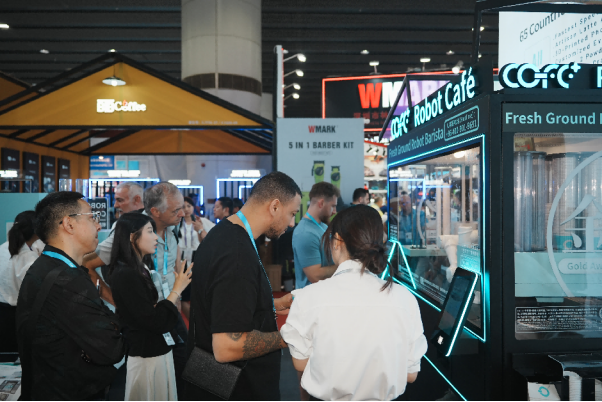
7th-Genertion Smart Robot Coffee Kiosk Arrives at the Belt and Road Core Hub, Ushering in a New Service Era Along t……
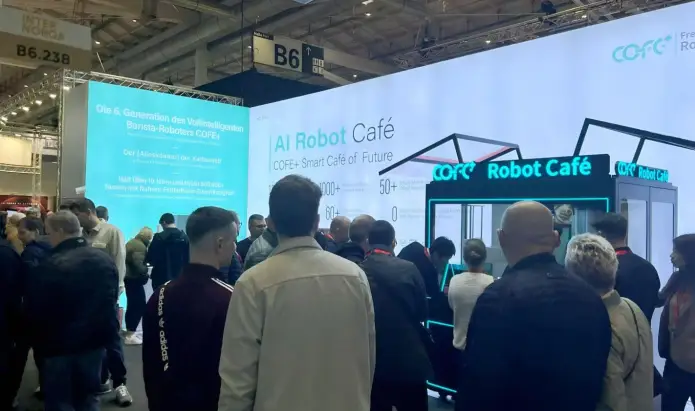
CHICAGO, May 12, 2026 (GLOBE NEWSWIRE) – Shanghai Hi-Dolphin Robot Technology today announced the U.S. debut of its 7th‑……