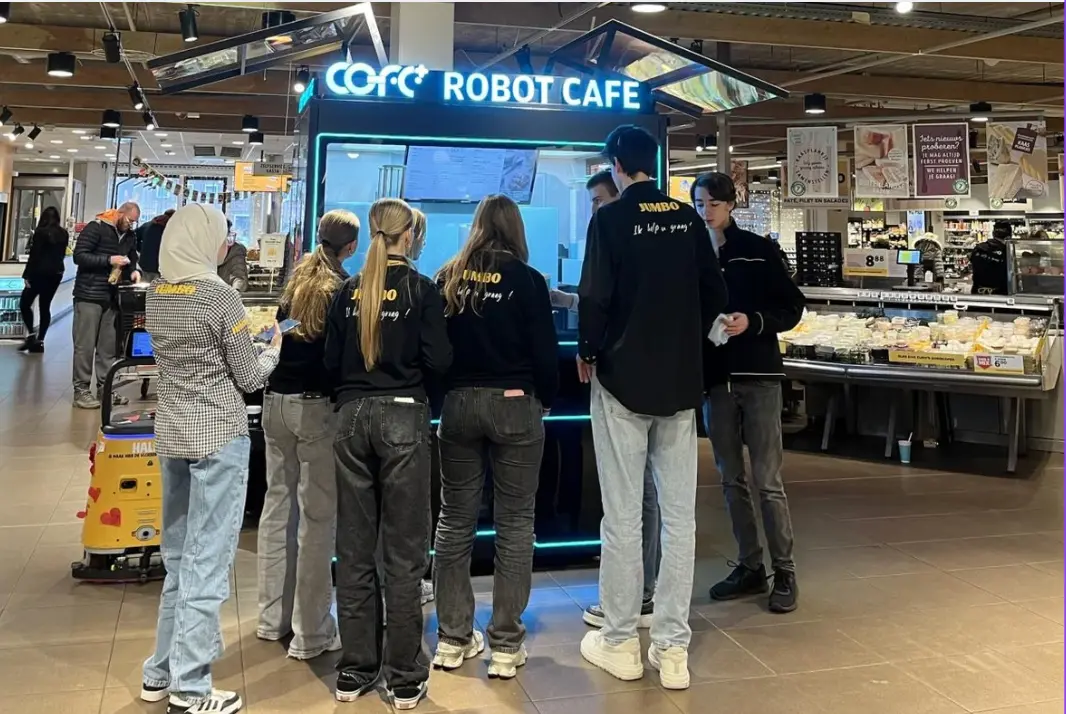
The Rise of Professional Robotic Café Technology: What COFE+ Is and Why It Matters
TL;DR — COFE+ is a fully automated robotic coffee kiosk that grinds fresh beans, brews espresso and lattes, creates latt……

A mini robot coffee shop in a high-traffic commercial street can generate full-café revenue from under 2.5 square meters because automated 24/7 operation captures foot traffic that traditional cafés miss during off-peak hours and staff shortages. Operators evaluating street-front locations face a different calculation than mall or office deployments — pedestrian density, visibility, and continuous access determine whether a compact automated format actually outperforms a conventional lease. I’ve seen deployments where the math surprises even experienced retail operators. This article breaks down what a mini robot coffee shop actually delivers on commercial streets, the revenue drivers, throughput requirements, and what to verify before committing to a location.
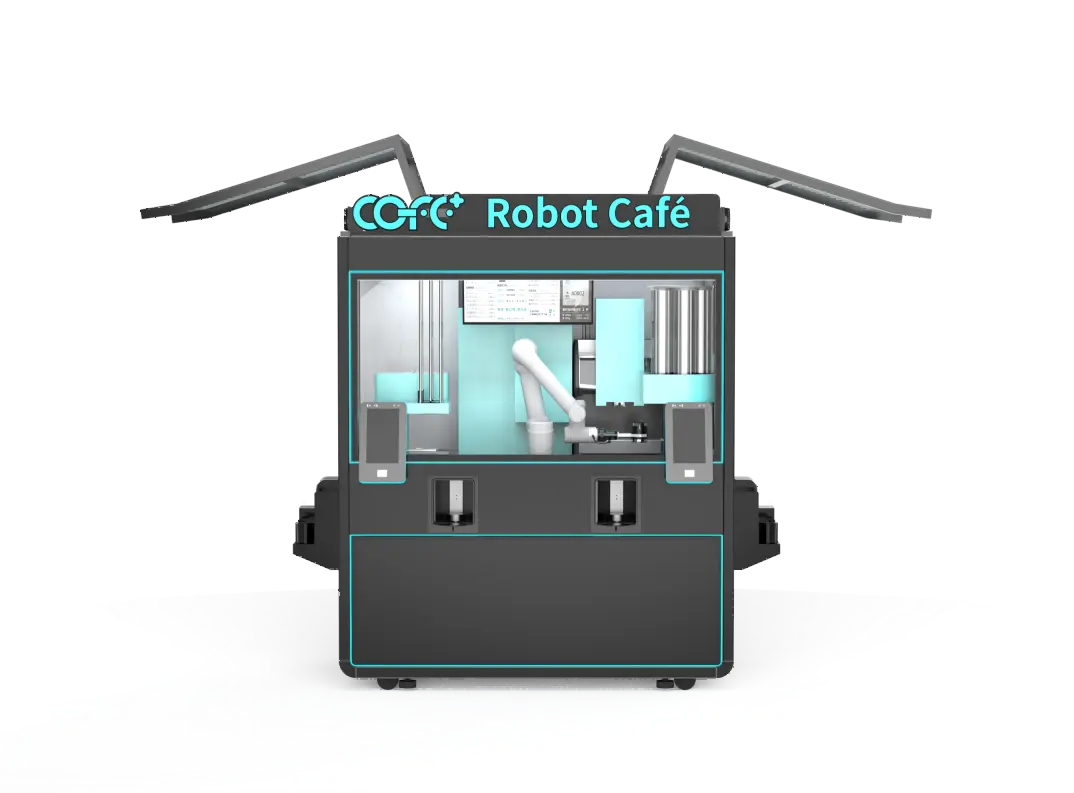
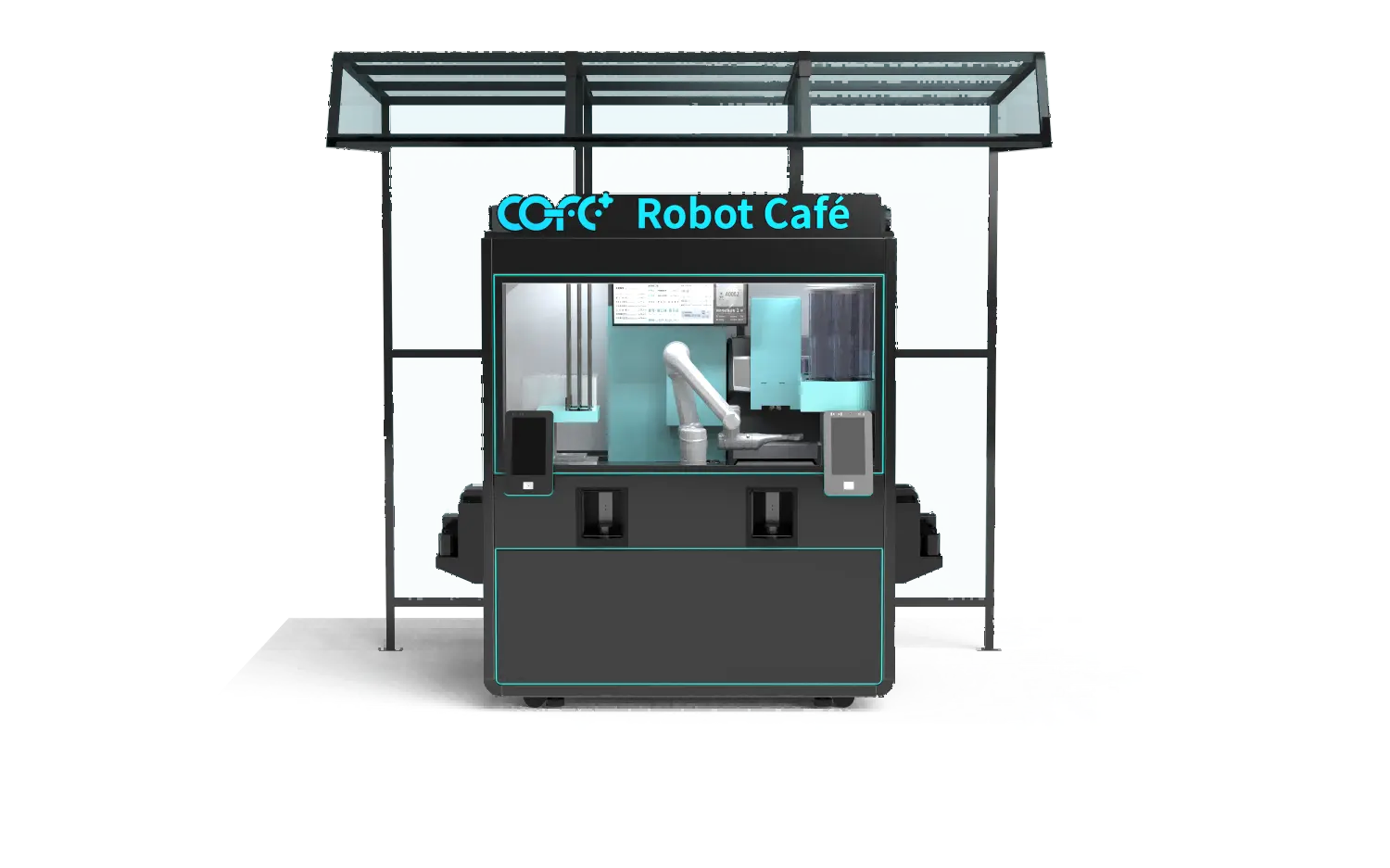
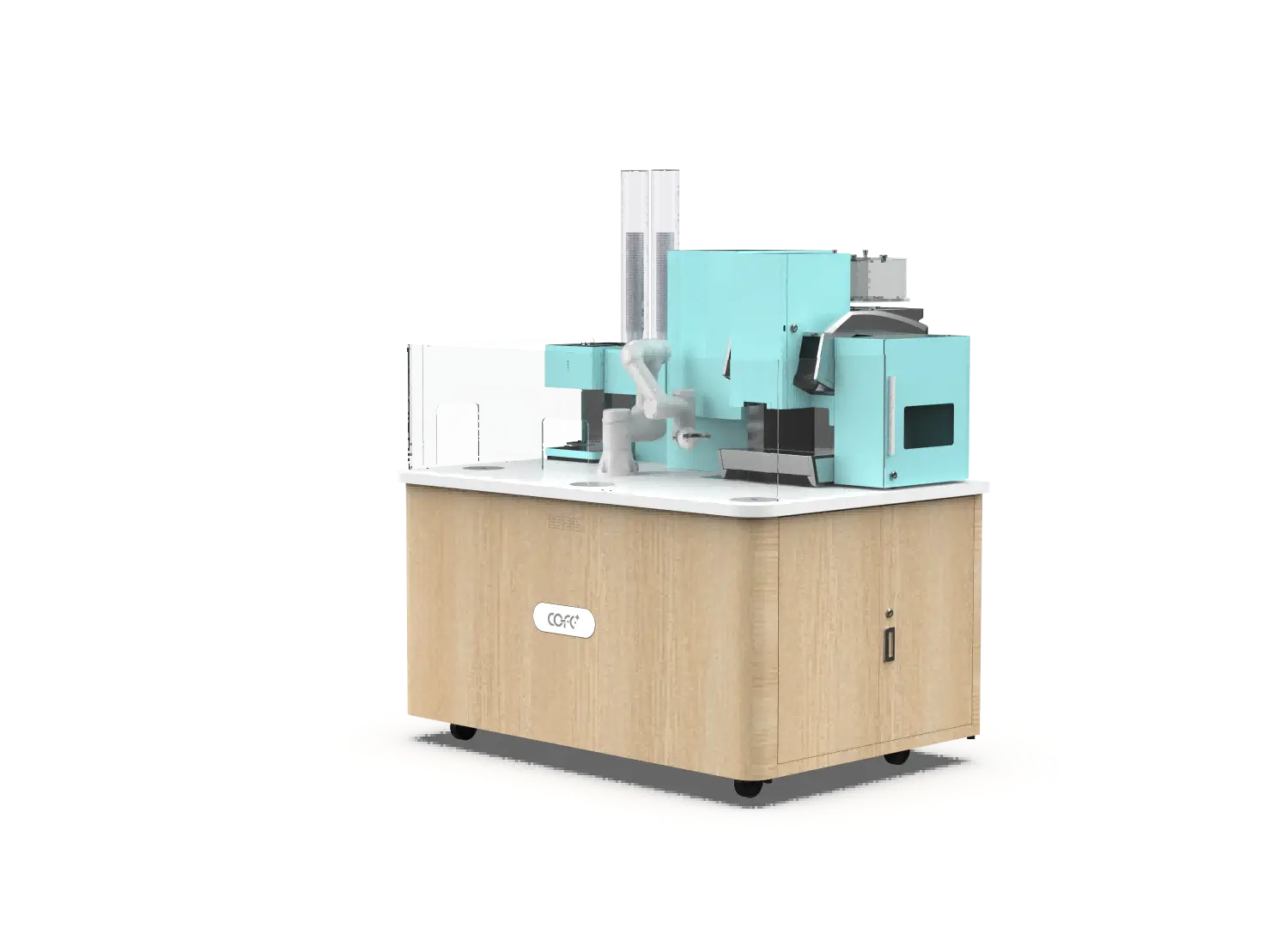
The term gets used loosely, but on a commercial street the definition matters. We are talking about a fully enclosed, self-contained robotic barista unit that occupies roughly 2.35 square meters, about the size of a large vending machine but with the output of a small café. The COFE+ 7th generation indoor kiosk grinds beans, extracts espresso, steams milk, and prints 3D latte art without a human touching any step. On a busy commercial street, that matters because passersby see the robot working through glass panels. The operation itself becomes the storefront’s visual draw.
Unlike a traditional café that needs back-of-house space, seating, and a service counter, a mini robot coffee shop fits into street-level retail gaps that landlords struggle to lease: narrow storefronts, corner alcoves, spaces between larger tenants. The machine handles over 300 drink recipes, from classic espresso to milk tea and matcha, which means the menu depth matches what a staffed café offers but without training cost or turnover risk. A 10-year design life tested across more than 500,000 cup cycles means the asset keeps producing long after the novelty factor fades.
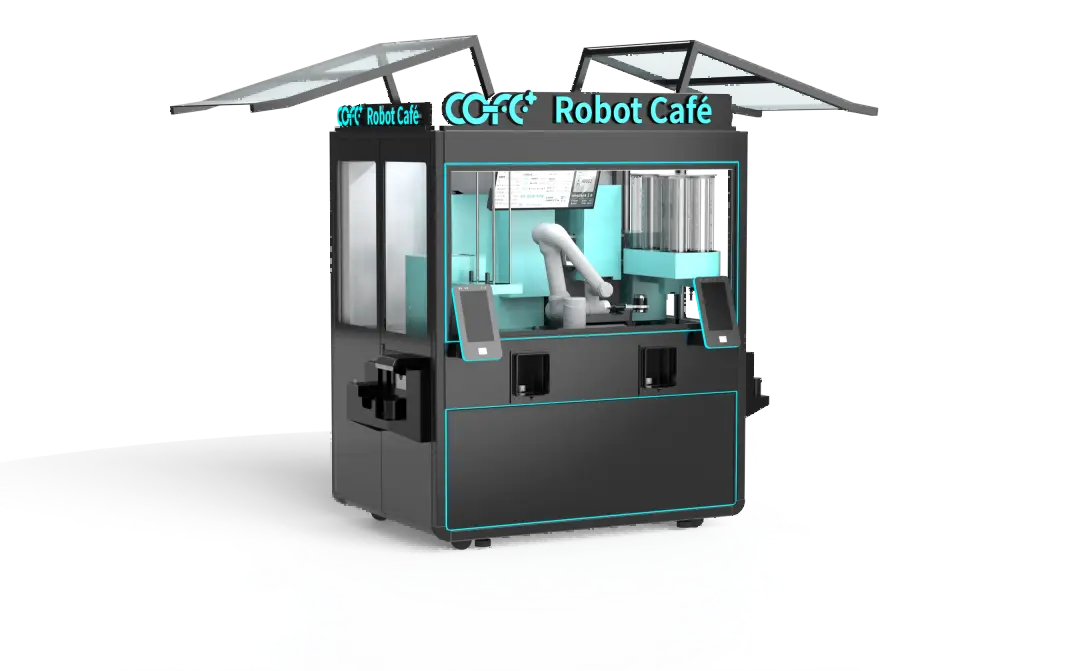
On commercial streets, every square meter costs. Traditional cafés in high-traffic urban corridors typically need 30 to 80 square meters to accommodate seating, storage, prep areas, and customer flow. A mini robot coffee shop running a COFE+ indoor unit operates in 2.35 square meters. That is roughly 90% less space, which directly changes the rent-to-revenue equation.
Footprint is not just about machine dimensions. Operators need a clear approach path so customers can access the touchscreen and pickup window without blocking pedestrian flow. In practice, a 5 to 6 square meter total zone, machine plus standing space, works for most street-front deployments. The unit connects to standard power at 110V or 220V, needs a water line or internal tank, and requires no drainage hookup in most configurations. No ventilation hood, no grease trap, no fire suppression system beyond what is built in. These are the practical differences that turn a six-month café buildout into a one-week installation.
| Factor | Traditional Café (Street-Front) | Mini Robot Coffee Shop |
|---|---|---|
| Floor space | 30–80 m² | 2.35 m² (machine) + 3–4 m² access |
| Buildout time | 3–6 months | 1–2 weeks |
| Staff required | 3–8 employees (shifts) | 0 (unattended) |
| Monthly rent impact | High (prime street frontage) | Low (micro-footprint) |
| Power and utilities | Commercial kitchen grade | Standard 110V/220V outlet |
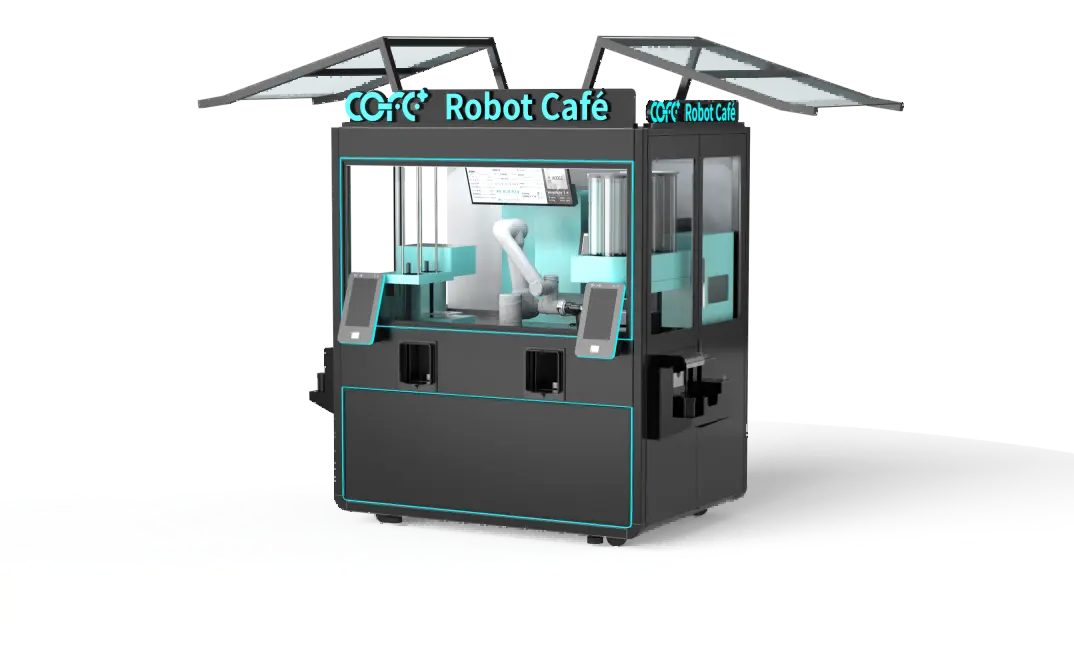
Here is where the mini robot coffee shop format earns its place on commercial streets. A machine capable of producing roughly 1,000 cups per day with a per-cup cost of approximately $0.30 to $0.70, factoring in beans, milk, cups, and consumables, creates a margin structure that traditional cafés cannot match. If the street sees pedestrian counts in the thousands daily and the machine captures even 2% to 3% of that traffic, daily cup sales in the 100 to 300 range are realistic for a well-placed unit.
At an average selling price of $3 to $5 per drink, daily revenue of $300 to $1,500 is achievable, with the variable cost of goods sitting under $0.70 per cup. The absence of barista wages, typically the largest operating expense in a café, means the gross margin flows almost entirely to covering the fixed costs: machine lease or amortization, rent for the micro-footprint, and minor maintenance. I have worked with operators who reached break-even within six months on street-front deployments, and the math holds across different cities because the labor cost elimination is consistent.
If your street location combines morning commuter traffic, lunchtime footfall, and evening pedestrian activity, the 24/7 capability becomes particularly valuable. A staffed café typically operates 12 to 16 hours. The remaining 8 to 12 hours, early morning and late night, represent pure incremental revenue for an unattended unit. On commercial streets near transport hubs or entertainment districts, those off-peak hours can add 20% to 30% to daily cup volume without any additional labor cost.
The 1,000-cup daily capacity sounds impressive on a spec sheet, but peak-hour throughput is what determines whether customers walk away. Each drink takes 43 to 60 seconds from order to pickup on a COFE+ unit. In a peak rush, say 8:00 to 9:00 AM on a commercial street with heavy foot traffic, a single machine processes roughly 60 to 80 drinks per hour.
For most street-front locations, that is adequate. A traditional café with two baristas typically handles 80 to 120 drinks per hour during peak, so a single robot unit operates in the same range. The difference is that the robot does not slow down at hour three of a rush, and drink consistency stays identical from cup one to cup three hundred. Where operators need to think carefully is on streets with extreme peak concentration. If 70% of daily traffic passes between 7:30 and 9:00 AM, a single unit may queue during those two hours. In those cases, the compact footprint becomes an advantage: deploying two units side by side doubles peak capacity while still occupying less space than a single traditional café counter.
The format works, but not every street-front location is ready for it. Based on deployments I have been involved with across multiple countries, here is what separates the placements that perform from those that disappoint.
Power stability comes first. The machine draws modest power by commercial kitchen standards, but a dedicated circuit is non-negotiable. Sharing a circuit with neighboring tenants that cycle heavy equipment can trigger voltage dips that interrupt operation. Second, assess pedestrian approach patterns. The unit needs to be visible from at least 15 to 20 meters of approach distance so foot traffic can see the robot operating and decide to stop. Tucked into a recessed doorway behind a pillar kills the visual draw that makes the format work.
Third, check local regulations for unmanned retail. Most commercial streets in developed markets have no specific prohibition against unattended food service, but some require a responsible party reachable within a set time window for health inspections or incident response. Fourth, confirm internet connectivity. The machine relies on cloud-based remote monitoring for stock level tracking, temperature alerts, and maintenance diagnostics. A stable 4G or Wi-Fi connection is essential. If your location has spotty reception, budget for a dedicated data line.
If your program involves a location with seasonal foot traffic swings or extreme weather exposure, it is worth confirming whether an indoor-only unit is sufficient or if the IP54-rated outdoor variant would be more appropriate. Reach out at sales@hi-dolphin.com with your location specifics and we can walk through the site assessment checklist.
A commercial street location with steady foot traffic, limited space, and the need for consistent output is exactly where a mini robot coffee shop outperforms traditional formats. The economics shift when rent per square meter drops by 90% and labor cost disappears from the P&L, but the location still has to match the format. Foot traffic quality, power access, sightlines, and local permitting determine whether a unit runs profitably from month one or struggles for visibility.
If you have a specific street or district in mind, we can run through the site variables that matter most. Send your target location details and anticipated daily foot traffic to sales@hi-dolphin.com or call +86 131 6630 1290, and we will share deployment examples from comparable commercial street settings and help you evaluate whether the mini format fits your revenue targets.
How many cups does a mini robot coffee shop actually sell per day on a commercial street?
It depends on pedestrian traffic density. On streets with 3,000 to 5,000 daily passersby and decent visibility, 100 to 200 cups per day is a realistic baseline. High-traffic corridors near transit stations or entertainment zones regularly push 300 to 500 cups daily. The key variable is not the machine’s capacity. It is the capture rate, which typically runs 2% to 5% of foot traffic for a well-placed unit with clear sightlines.
What is the typical payback period for a mini robot coffee shop in a street-front location?
In programs we have supported, operators reach break-even between 6 and 12 months on commercial street deployments. The calculation depends mainly on rent, cup volume, and pricing. At 150 cups per day with a $4 average ticket and $0.50 per-cup cost, monthly gross profit runs roughly $15,750 before rent and machine amortization. With a modest street-front footprint rent and a machine lease or purchase amortized over its 10-year design life, the numbers work quickly compared to traditional café economics where labor alone consumes 25% to 35% of revenue.
Does a robot coffee shop need staff on-site?
No on-site barista is required. The machine operates unattended 24/7, handling grinding, extraction, steaming, and serving autonomously. Most operators schedule one visit per day for restocking. Refilling beans, milk, cups, and syrups takes about 15 to 20 minutes. The cloud monitoring system alerts for low stock levels, temperature anomalies, or maintenance needs, so the restocking visit can be combined with routine checks rather than requiring dedicated shifts.
Can the menu match what a traditional café offers on a busy commercial street?
People assume automation means a limited menu. The reality is that the COFE+ system covers over 300 drink recipes, including espresso, lattes, cappuccinos, milk tea, matcha, hot chocolate, iced drinks, and plant-based options, with more than 5,000 customization combinations across bean type, milk choice, syrup flavor, roast level, and cup size. On a commercial street where grab-and-go buyers want speed and consistency, the menu depth exceeds what most staffed cafés can reliably execute during peak hours. The 3D latte art printing and robotic arm foam art also create a novelty factor that drives word-of-mouth in street-front settings.
What happens if the machine breaks down on a weekend?
Most operators worry about this more than they need to. The cloud monitoring system detects faults in real time and triggers remote diagnostics. Many issues, including software glitches and sensor recalibrations, resolve remotely without a site visit. For hardware interventions, the system auto-dispatches a service alert. Machines have been tested across 500,000-plus cup cycles, so unplanned downtime is uncommon, but operators should confirm response-time commitments with their supplier before deployment. Share your street location and expected daily volume at sales@hi-dolphin.com or call +86 131 6630 1290, and we will provide the service-level details relevant to your deployment plan.
TL;DR — COFE+ is a fully automated robotic coffee kiosk that grinds fresh beans, brews espresso and lattes, creates latt……
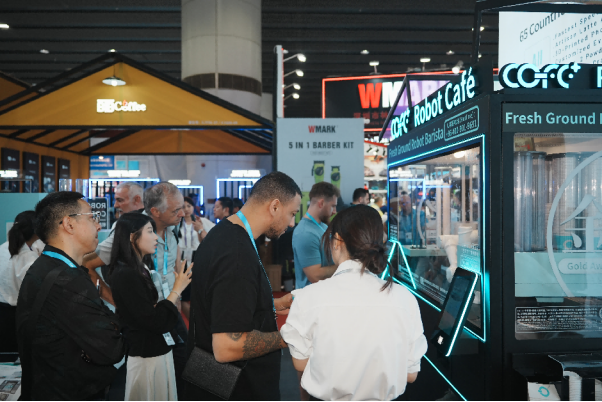
7th-Genertion Smart Robot Coffee Kiosk Arrives at the Belt and Road Core Hub, Ushering in a New Service Era Along t……
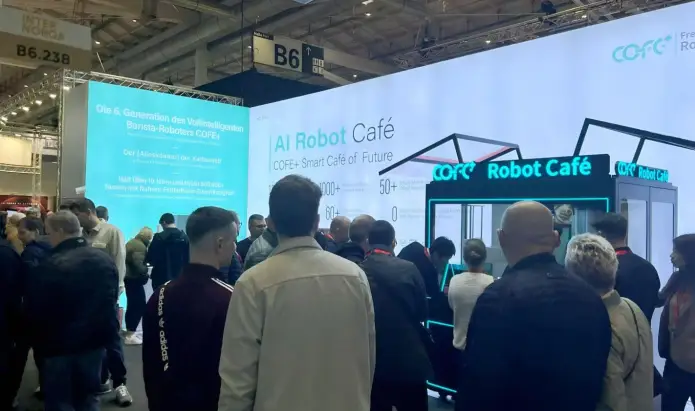
CHICAGO, May 12, 2026 (GLOBE NEWSWIRE) – Shanghai Hi-Dolphin Robot Technology today announced the U.S. debut of its 7th‑……