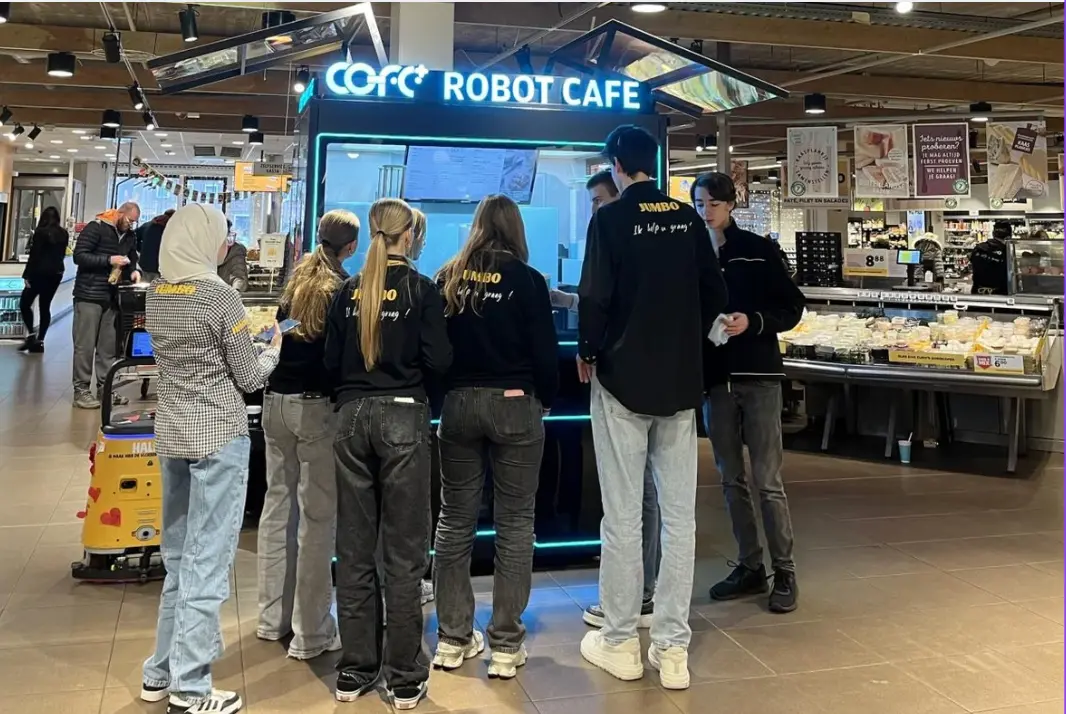
The Rise of Professional Robotic Café Technology: What COFE+ Is and Why It Matters
TL;DR — COFE+ is a fully automated robotic coffee kiosk that grinds fresh beans, brews espresso and lattes, creates latt……

Discussions about robot coffee kiosks usually focus on the physical novelty—the articulated arm pouring milk, the 3D foam printer crafting a selfie. What rarely gets unpacked is the operational intelligence that makes these machines viable as a 24/7 business asset, not just an engineering experiment. Without a central nervous system to manage supply levels, anticipate hardware fatigue, and sync transaction data across continents in real time, even the best robot barista becomes an expensive paperweight. COFE+’s Smart Store Brain solves that problem by integrating AI management directly into the kiosk architecture. It is the difference between buying a machine and deploying a self-sustaining retail node.
The system runs on a two-layer model. Layer one is edge computing housed directly on the machine for mission-critical, low-latency decisions. Every mechanical motion—grinding, tamping, extraction—is monitored by on-board processors that adjust pump pressure and temperature in real time. Layer two is the cloud-based IoT platform, where fleet-wide data aggregates into a single dashboard.
This split is deliberate. If we relied entirely on cloud processing, a busy shopping mall with saturated Wi-Fi would risk latency in drink preparation, causing cup queues. By keeping the motor control logic local, the kiosk executes a 43-second pour consistently, regardless of external bandwidth. The cloud layer handles the slower variables: inventory levels across a citywide network, remote firmware updates, and consolidated daily revenue reports.
The Smart Store Brain also drives the user interface. The touchscreen panel is essentially a visual client for the AI core, dynamically adjusting the displayed menu based on time of day, local climate, and remaining ingredient stock. A machine running low on oat milk near a fitness center in the afternoon will surface protein shakes and plant-based lattes; the same machine in a corporate lobby at 8:00 a.m. prioritizes double-shot espressos.
A common concern I encounter from potential distributors is the taste drift that plagues automated food service machines. With a traditional vending machine selling sealed cans, there is no degradation. With freshly ground coffee, there are hundreds of variables. The Smart Store Brain handles this through a closed-loop quality control protocol.
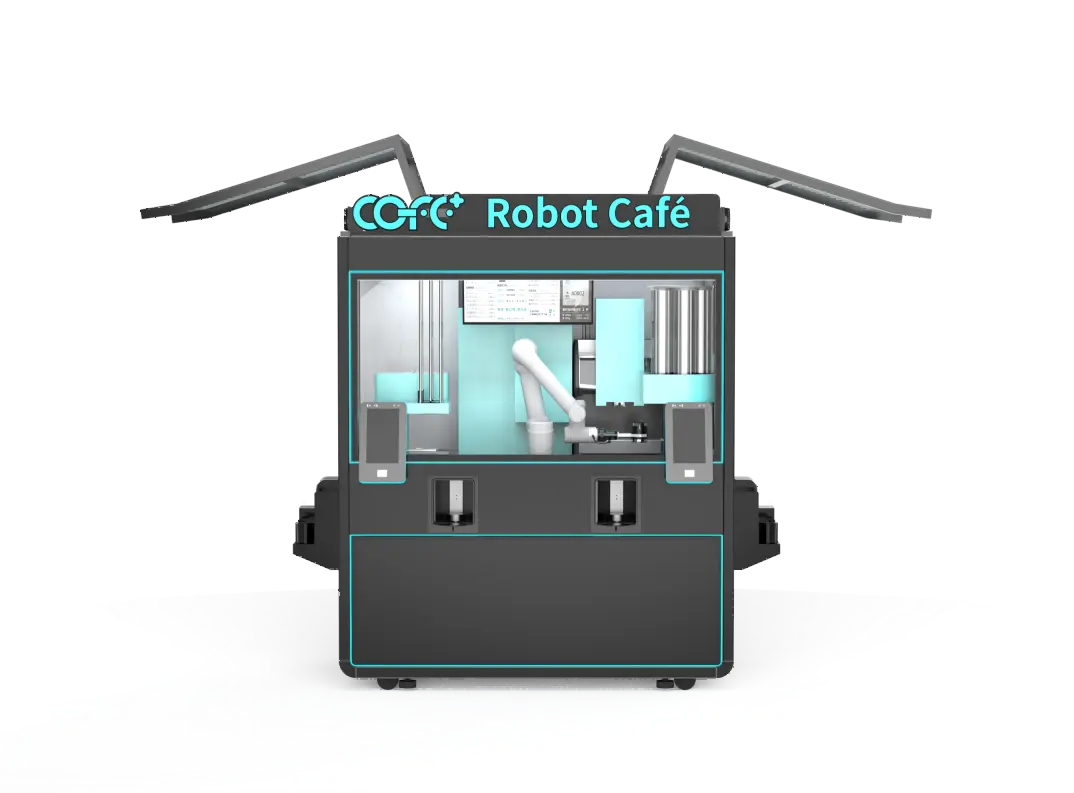
Every recipe—the system carries over 300 drink configurations derived from 197 country-inspired profiles—is digitized as a precise sequence of mechanical parameters: grind size in microns, water temperature in Celsius, extraction pressure in bars, and steam duration in milliseconds. Throughout a service cycle, the machine cross-references the commanded parameters against real-time sensor feedback. If a heating element output drops by even 2°, the edge processor compensates immediately by extending the firing cycle, ensuring cup #1 and cup #500 are chemically identical.
The 3D latte art and robotic barista-style foam designs also run through this verification pipeline. The robotic arm executes a geometric motion path for a tulip or heart, and a high-speed camera validates the foam opacity. If the frothing sequence deviates, the machine flags itself for a recalibration cycle during the next scheduled maintenance window—usually overnight—without interrupting daytime service.
For operators scaling beyond a single unit, the Smart Store Brain becomes primarily a fleet management tool. The administrative portal displays real-time health status across multiple locations: one view for an indoor kiosk in a Shanghai airport, another for an outdoor unit in a Dubai tourism zone, and another for a robot coffee bar in a Singapore co-working space.
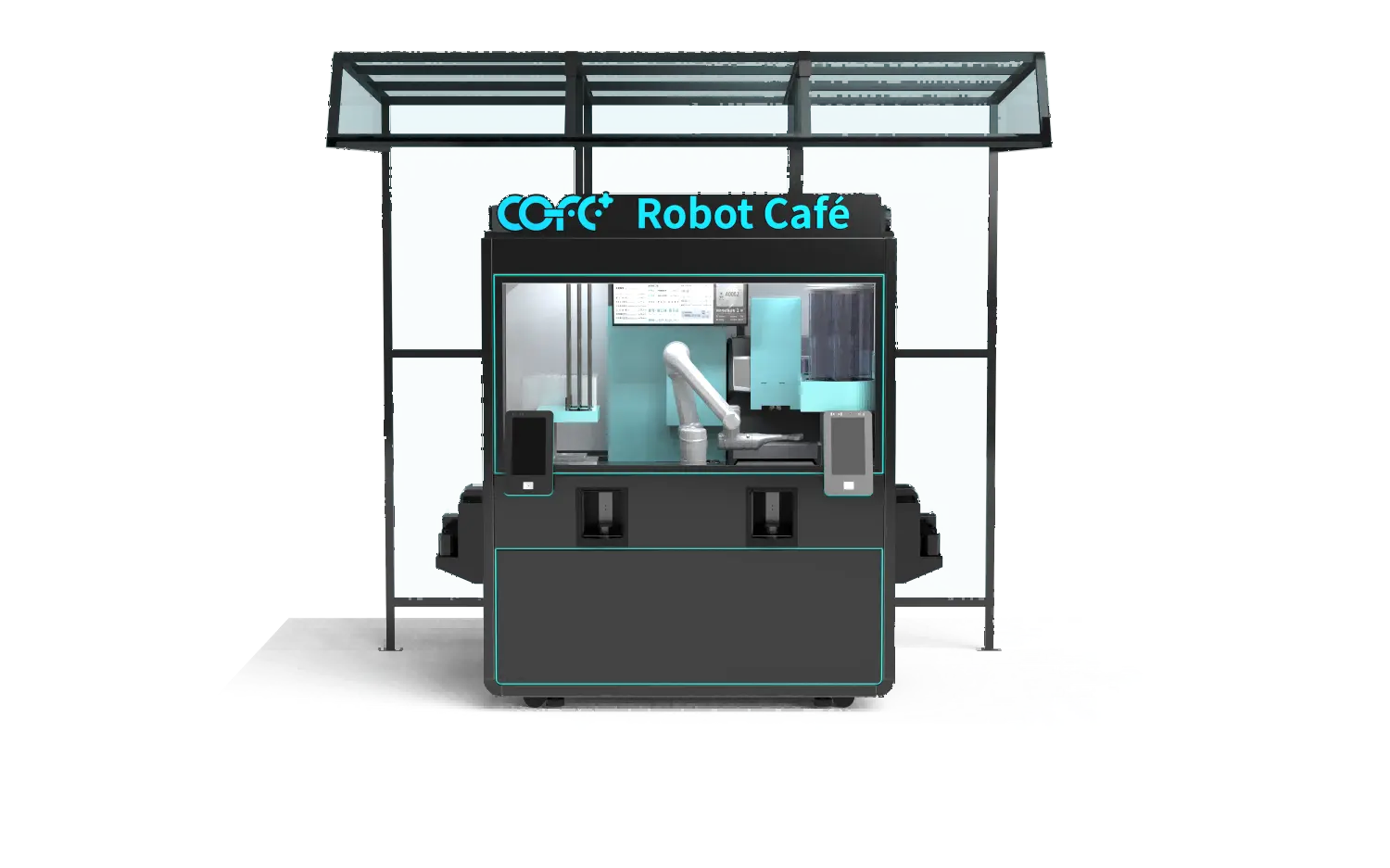
Operators receive push notifications for low-supply events—coffee beans, milk, cup lids—triggered by consumption forecasts, not just remaining weight. The AI analyzes last week’s sales curve and yesterday’s real-time throughput to predict depletion within a four-hour accuracy window, letting operators schedule restocking visits efficiently. This same dashboard supports remote error recovery. If a door is left ajar or a grinder jams, the operator can initiate a remote diagnostic protocol rather than dispatching a technician. In practice, about 70% of software-level anomalies are resolved over the cloud, clearing the error and resuming sales without any on-site presence.
This is where the brain’s long-term value separates it from a standard programmable logic controller. The system generates a digital twin of every mechanical component—pump, grinder, heating element, robotic arm actuator—and logs usage data on a per-actuation basis. The grinder, for instance, has a logged endurance value of 500,000+ cups. The Smart Store Brain tracks incremental wear against this threshold and surfaces a service alert weeks before performance drops become customer-facing.
This is particularly important for outdoor installations. The IP54-rated outdoor kiosk operates from -20°C to 45°C and uses an anti-condensation system and UV-resistant casing to protect the internals. High-temp sterilization cycles run automatically at 85°C+, but the AI also monitors ambient conditions. If dust storm particulates climb above a set threshold in a Middle Eastern deployment, the brain can temporarily increase filter cleaning frequency. Operators don’t configure these rules; they come pre-loaded from the factory’s global deployment data and refine themselves locally over time.
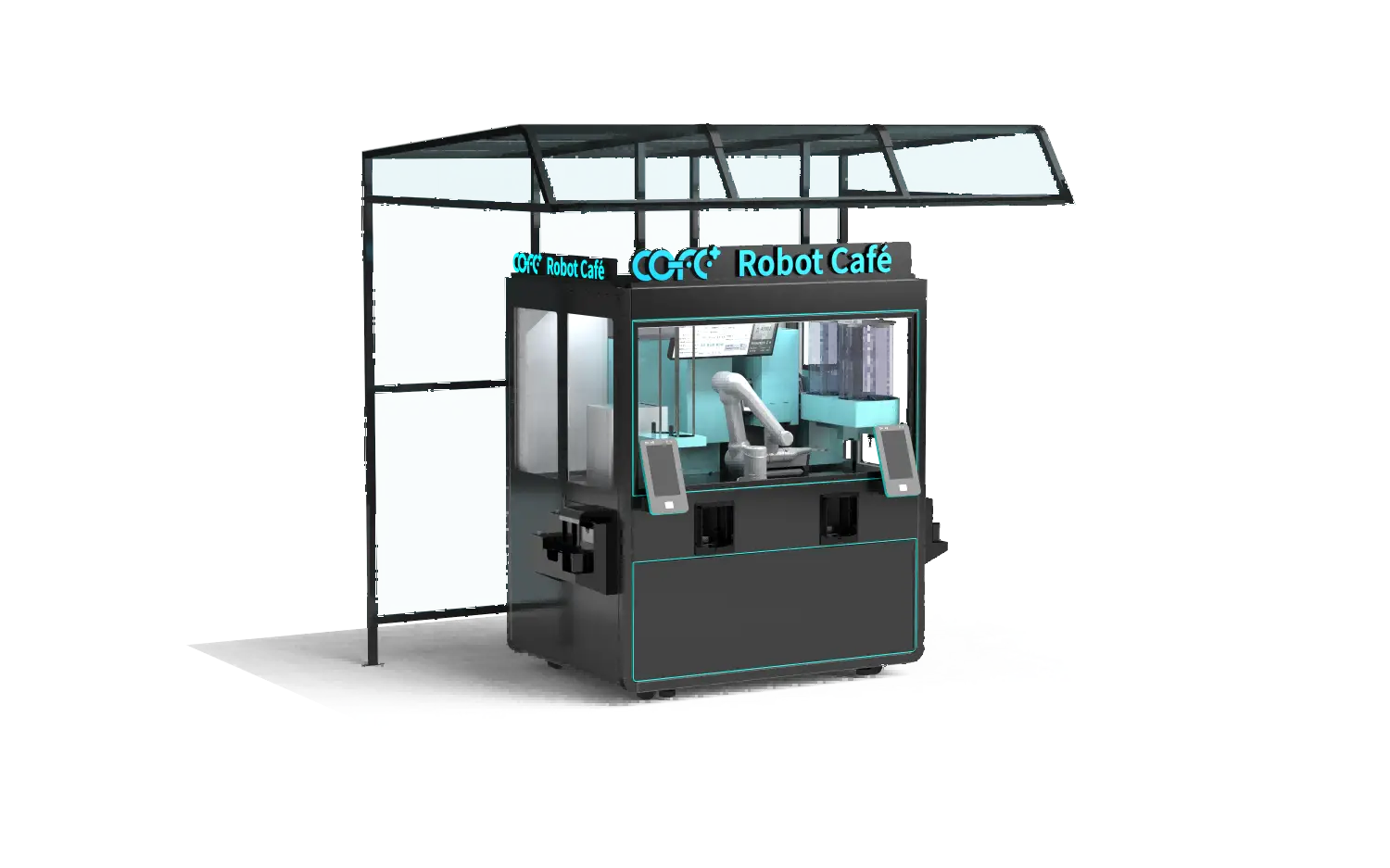
The shift from reactive to predictive maintenance has a direct impact on profitability. At a ~$0.30–$0.70 cost per cup and a machine capable of 1,000 cups a day, a single 8-hour unscheduled stoppage represents a significant revenue gap. The brain’s self-diagnosis capability is designed to sense anomalies—irregular motor current draw, slight temperature overshoot—and schedule a tech visit during non-revenue hours, keeping the machine in service during peak traffic.
The final layer of the Smart Store Brain is the business intelligence engine. Each transaction becomes a labeled data point: SKU, time, payment method, loyalty ID. Over a month, a single kiosk generates tens of thousands of lines of structured behavioral data, and a fleet of 20 kiosks provides a statistically significant sample of an entire city’s coffee consumption patterns.
Early on in our global deployments, we noticed that certain flavors popular in one region never appeared in the top 20 lists of another, even within the same country. This isn’t just demographic trivia; it has inventory cost implications. Carrying ingredients for a drink that constitutes 0.5% of weekly revenue inflates waste. The Smart Store Brain correlates real-time purchase data with local weather forecasts and public holiday calendars to dynamically re-rank the menu display. If a heatwave is predicted for three days starting Friday, the system automatically deducts hot chocolate inventory recommendations and pushes iced Americano and cold brew recipe packs to the top of the suggestion list.
For procurement teams and franchise operators, the Smart Store Brain should be evaluated with the same rigor as the physical hardware. It is not an add-on application; it is the operating system for the robotic café. If your business plan involves 10, 20, or 50 units across multiple cities, the integration of edge computing, cloud orchestration, predictive upkeep, and menu intelligence defines whether you are managing a disconnected collection of boxes or running an integrated unmanned retail network.
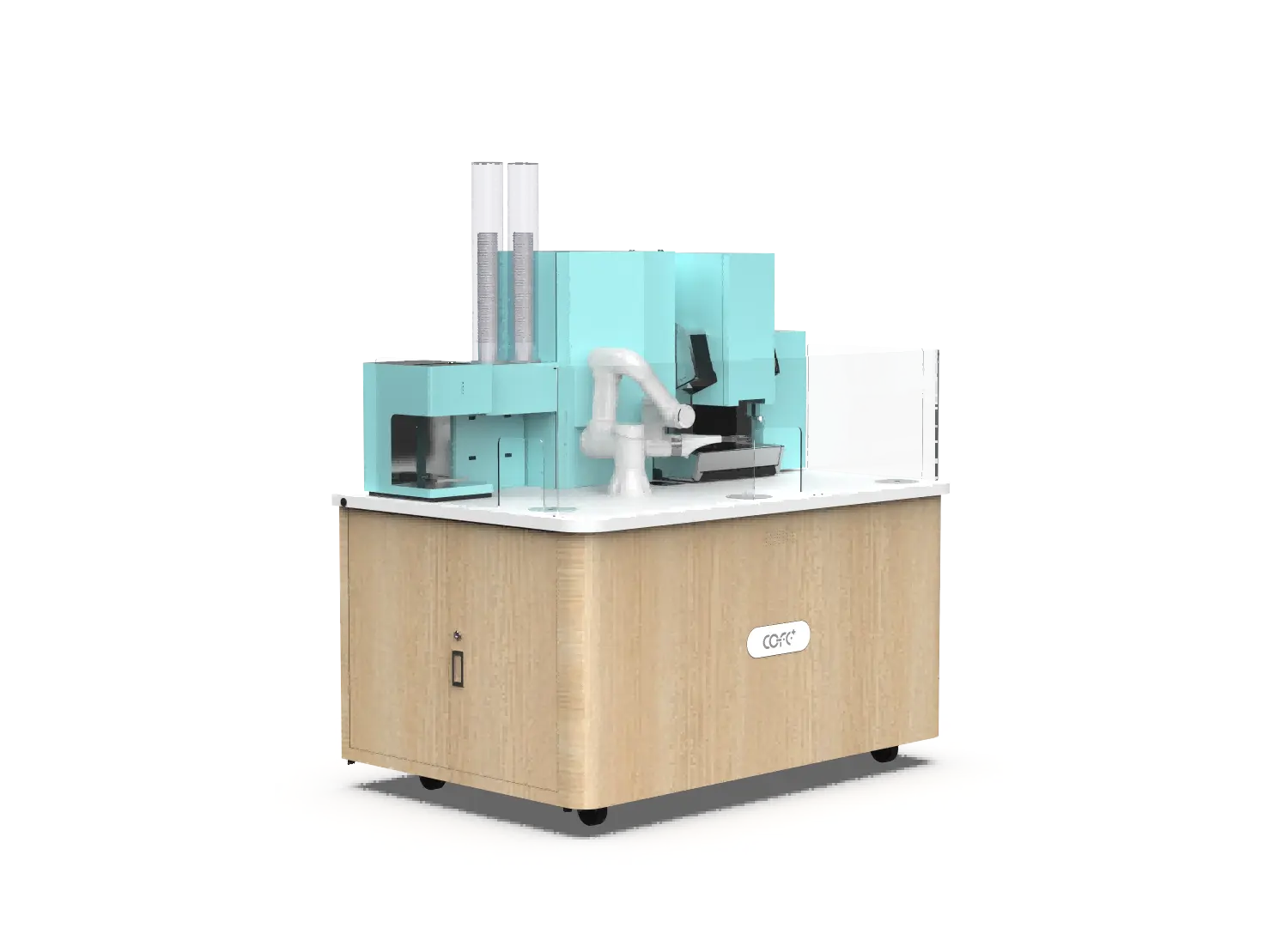
The spec differences between the compact Coffee Counter (~2 m²) and the full Robot Coffee Bar with seating are physical; the underlying management layer is uniform. This means an operator can mix and match form factors—an outdoor kiosk at a gas station, a coffee bar in a hotel lobby—and monitor them all from the same console.
| Model | Footprint | Ideal Location | Brain Management Feature |
|---|---|---|---|
| Indoor Robot Coffee Kiosk | ~2.35 m² | Shopping malls, airports, offices | Full edge-cloud fleet sync; real-time menu adjustment |
| Outdoor Robot Coffee Kiosk | ~2.35 m² | Gas stations, parks, streets, stadiums | IP54-rated; adaptive climate management; remote error recovery |
| Robot Coffee Bar | ~2 m² (folded) | Hotels, co-working, universities, retail | Transformable unit management; dwell-time analytics |
| Robot Coffee Counter | ~2 m² | Luxury hotels, VIP lounges, showrooms | Counter-integrated; visual engagement metrics; premium service loops |
Is the Smart Store Brain a recurring software fee?
The platform is integrated with the machine purchase. There is no separate licensing tier for the AI engine, cloud dashboard access, or predictive maintenance algorithms. Firmware updates that improve recipe accuracy or add new beverage profiles are pushed automatically over the cloud, much like Tesla’s OTA model, included as part of your hardware investment.
What if the kiosk loses internet in an underground location?
The edge computing architecture handles exactly this. All safety-critical and beverage-quality logic runs locally, so the machine continues making coffee normally even during extended internet blackouts. Transactions are cached securely on the PCB and synced to the cloud dashboard—including sales reports, consumption data, and restocking insights—the moment the connection is restored. You don’t lose revenue or a single data record.
Is customer payment data exposed on the cloud?
No. The Smart Store Brain decouples payment processing from cloud analytics. Credit card and mobile wallet transactions are encrypted at the payment terminal and routed directly to the payment processor, never stored in the AI analytics layer. The cloud dashboard sees anonymized transaction IDs and basket compositions—it knows a latte was sold at 10:14 a.m., but it has no access to the purchaser’s identity.
How does the brain account for regional water hardness?
This matters more than most operators realize. The system ships with a conductivity sensor that tests incoming water during install. The brain cross-references this reading against the digitized recipe library and automatically adjusts pump pressure and extraction time to compensate for mineral content, bringing the total dissolved solids (TDS) in the cup into range. If your location shifts between municipal and well water sources, the machine recalibrates without manual intervention.
If you are planning a multi-site rollout and need to validate how the Smart Store Brain maps to your specific operational footprint, share your location profiles and projected volume requirements with our team at sales@hi-dolphin.com. We typically respond with a tailored configuration breakdown and compliance documentation for your region.
TL;DR — COFE+ is a fully automated robotic coffee kiosk that grinds fresh beans, brews espresso and lattes, creates latt……
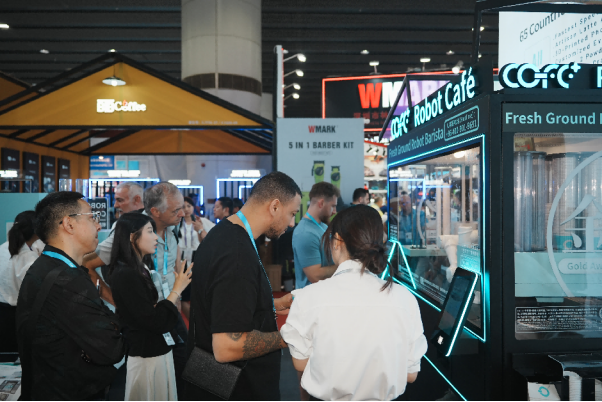
7th-Genertion Smart Robot Coffee Kiosk Arrives at the Belt and Road Core Hub, Ushering in a New Service Era Along t……
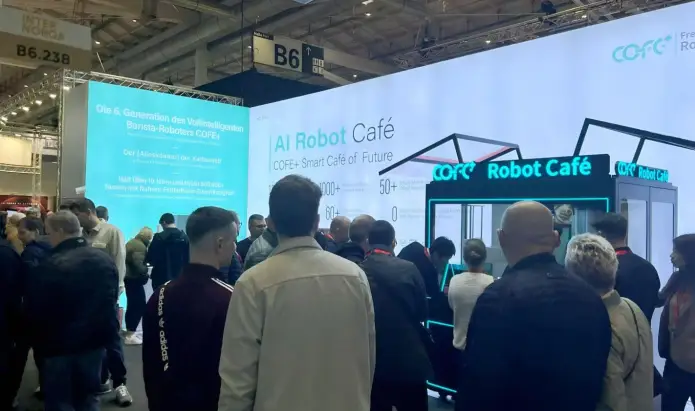
CHICAGO, May 12, 2026 (GLOBE NEWSWIRE) – Shanghai Hi-Dolphin Robot Technology today announced the U.S. debut of its 7th‑……