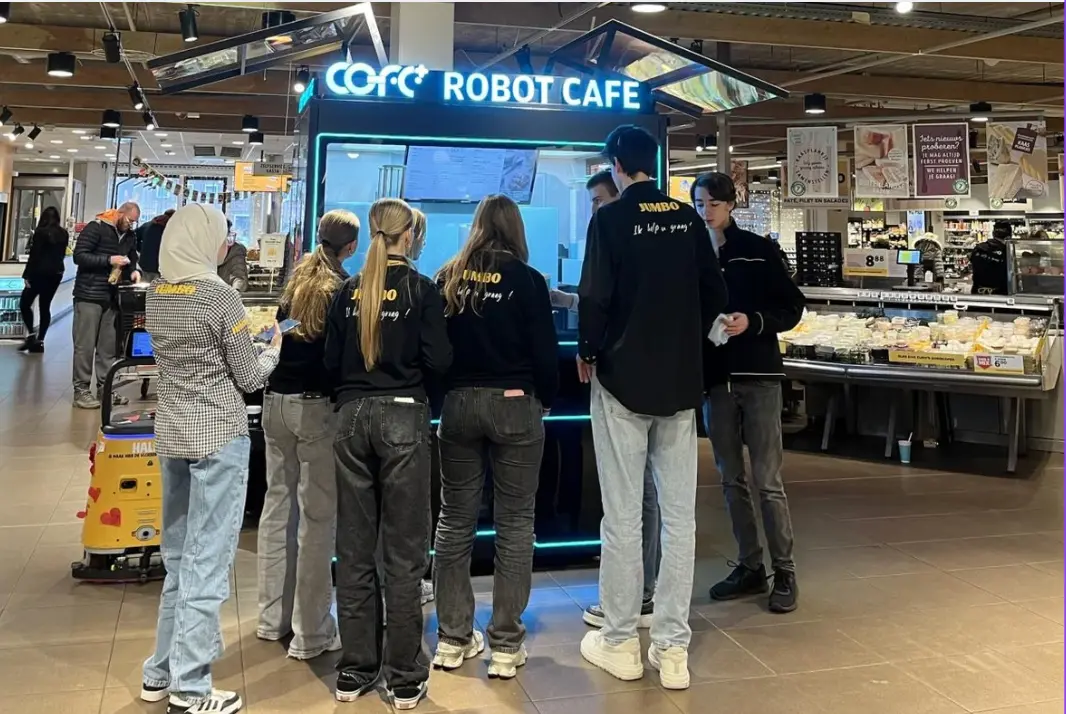
The Rise of Professional Robotic Café Technology: What COFE+ Is and Why It Matters
TL;DR — COFE+ is a fully automated robotic coffee kiosk that grinds fresh beans, brews espresso and lattes, creates latt……

When a single coffee machine claims to serve 350 drink varieties, the question is not whether the machine has a big menu, but whether that variety means anything to the customer standing in front of it at 7 AM. The COFE+ 7th Generation Robot Barista does not just offer more buttons on a screen. It uses a fluid ingredient architecture, recipe digitization, and real-time customization logic to turn a compact robotic kiosk into a personal barista that remembers preferences, suggests variations, and produces consistent results cup after cup. For operators, the 350-flavor headline matters less than what sits behind it: a system that raises average transaction value through personalization while keeping per-cup costs around $0.30 to $0.70.
Most automated coffee machines solve one problem: labor. Remove the barista, cut the cost. The COFE+ 7th Generation platform approaches the problem differently. It asks what happens when the machine is no longer a replacement for a barista but a venue in its own right.
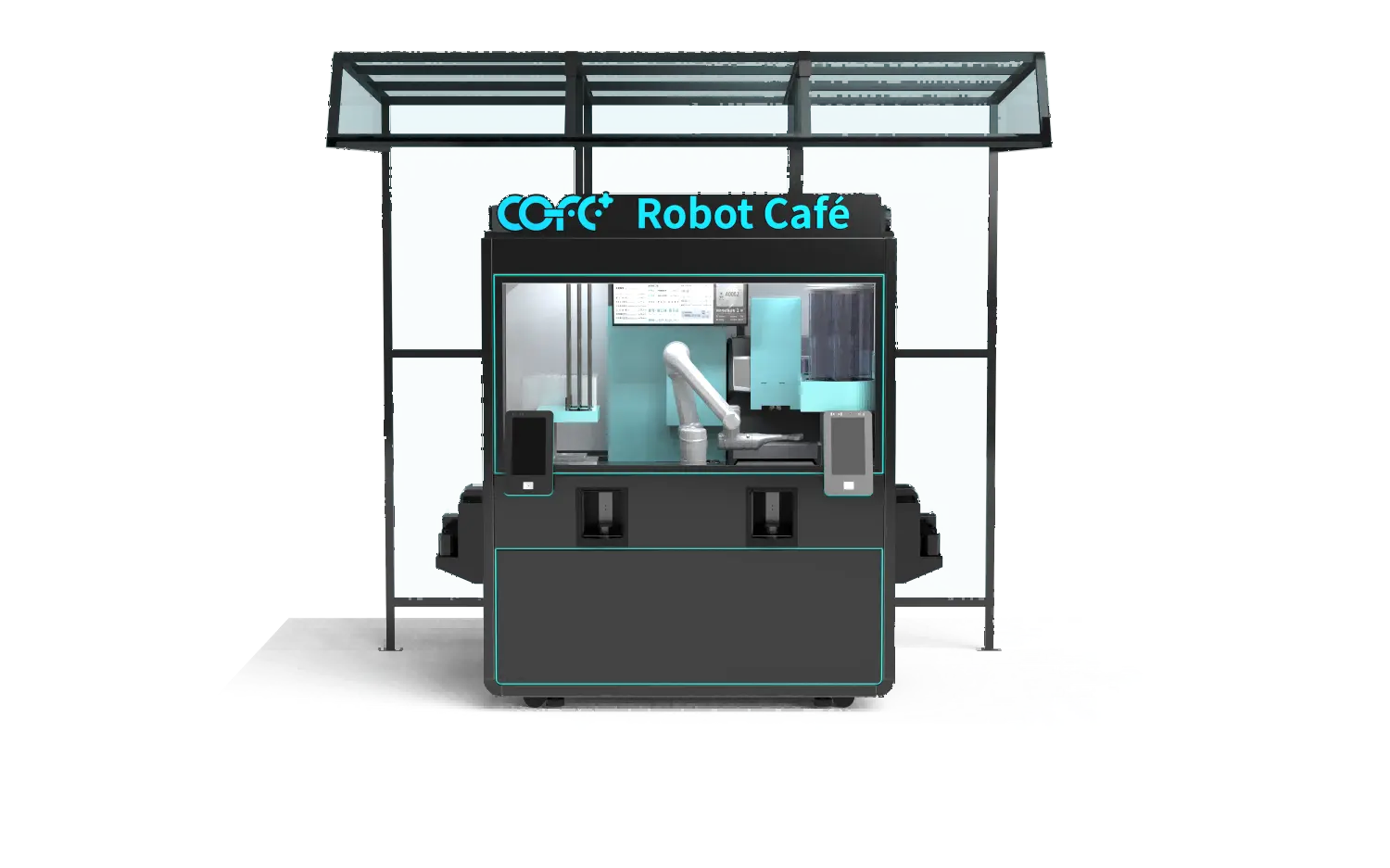
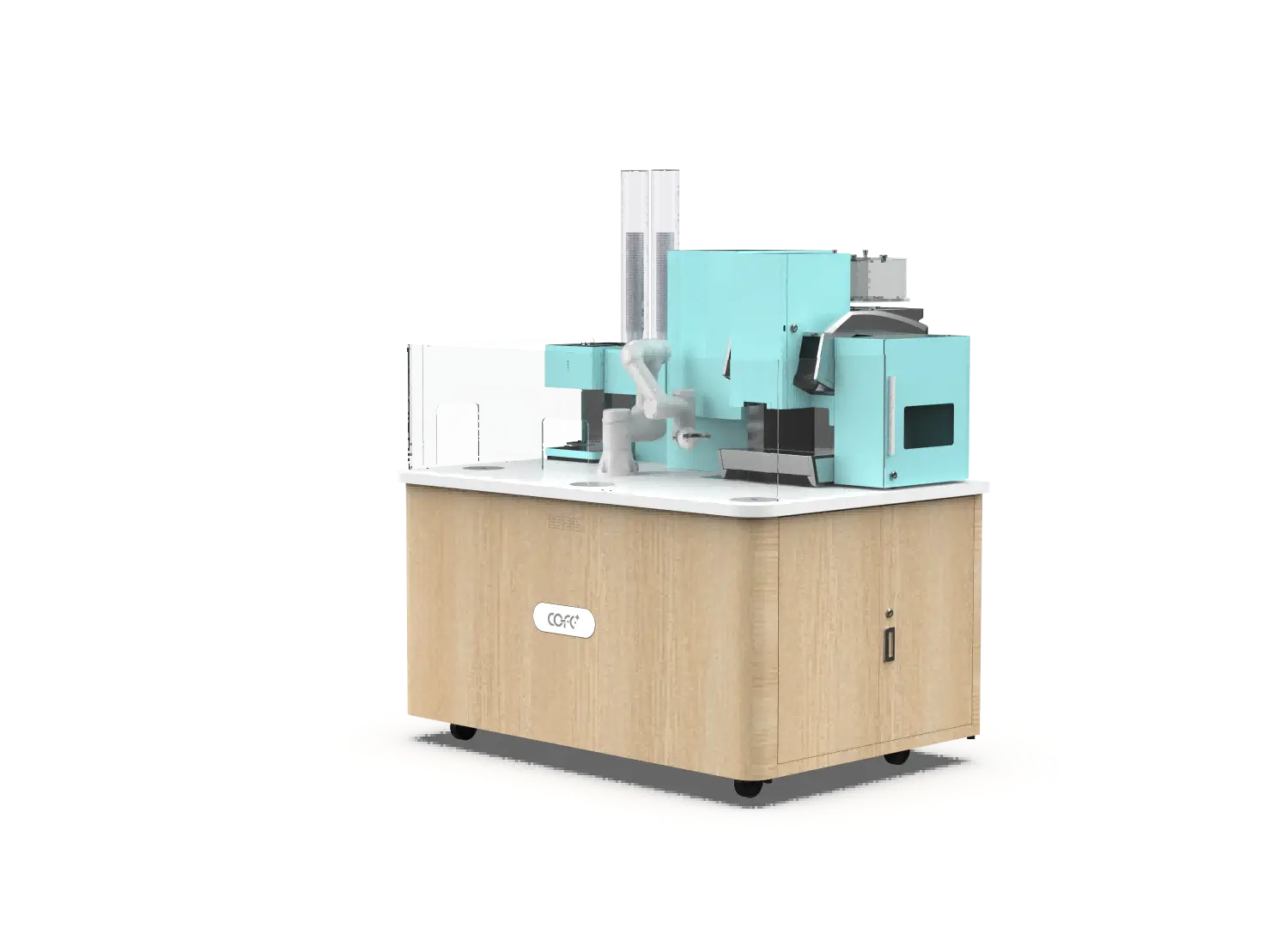
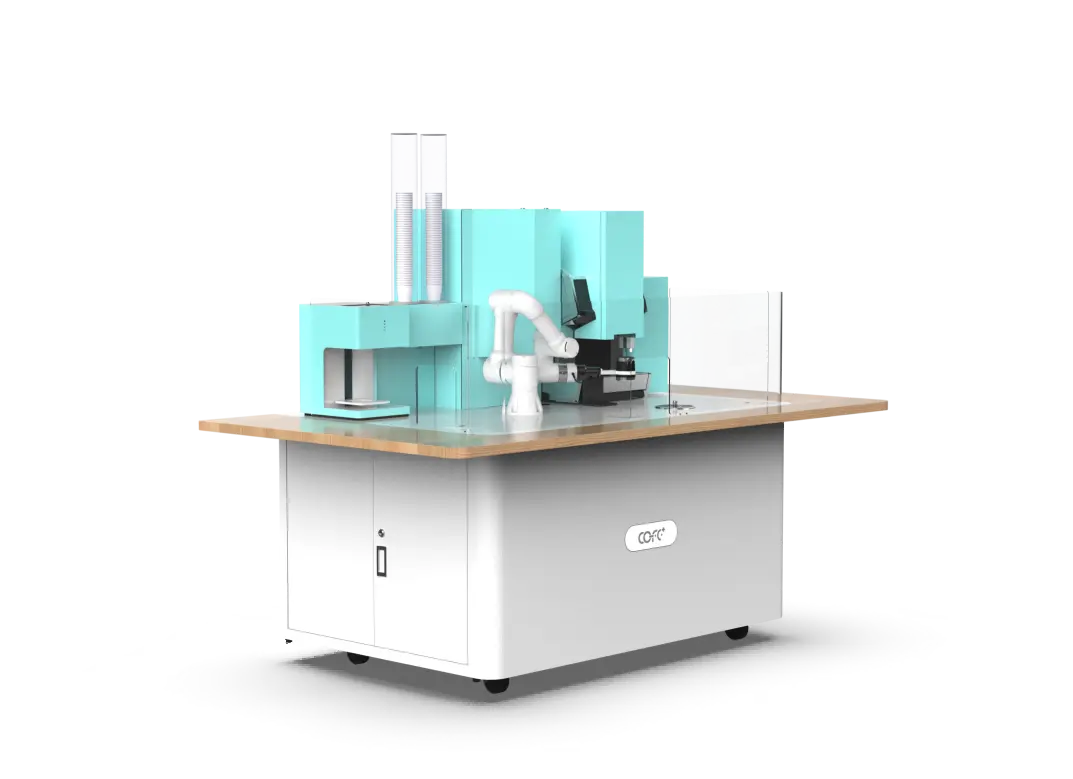
The 7th generation launches across four form factors: the Indoor Kiosk at 2.35 m², the Outdoor Kiosk with IP54-rated all-weather protection, the Robot Coffee Bar that transforms from a counter into a four-seat social space, and the Robot Coffee Counter for built-in premium interiors. Each shares a core platform but addresses a different deployment scenario.
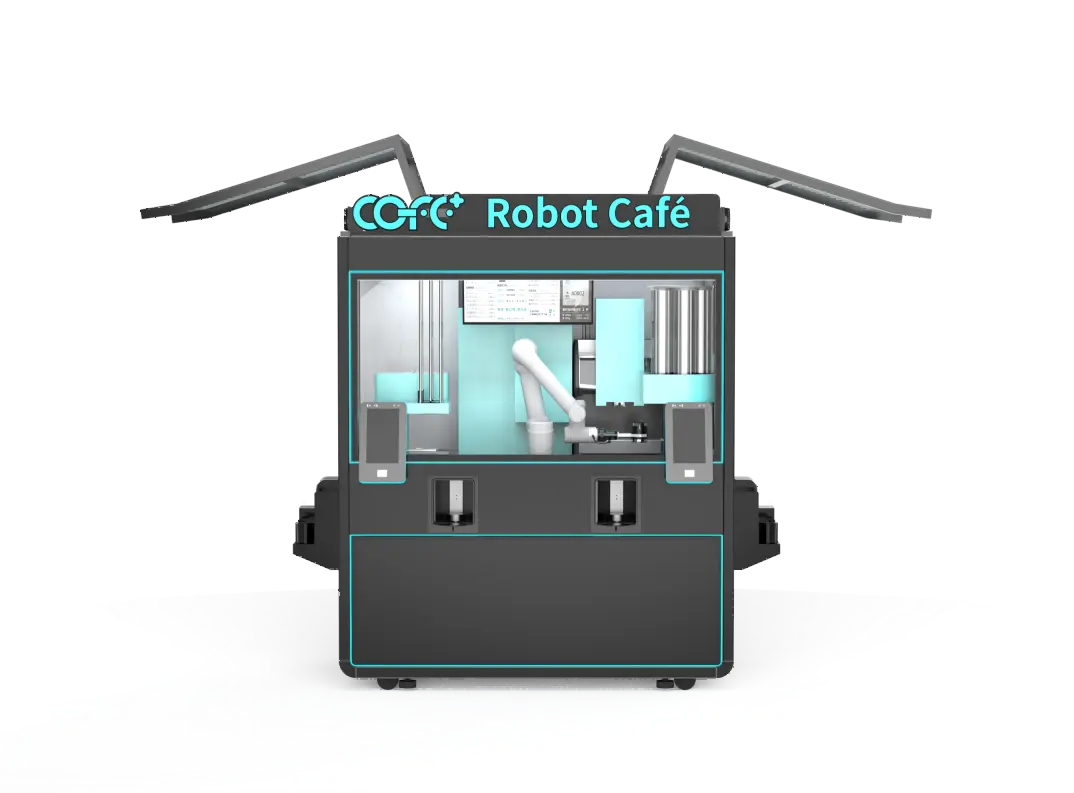
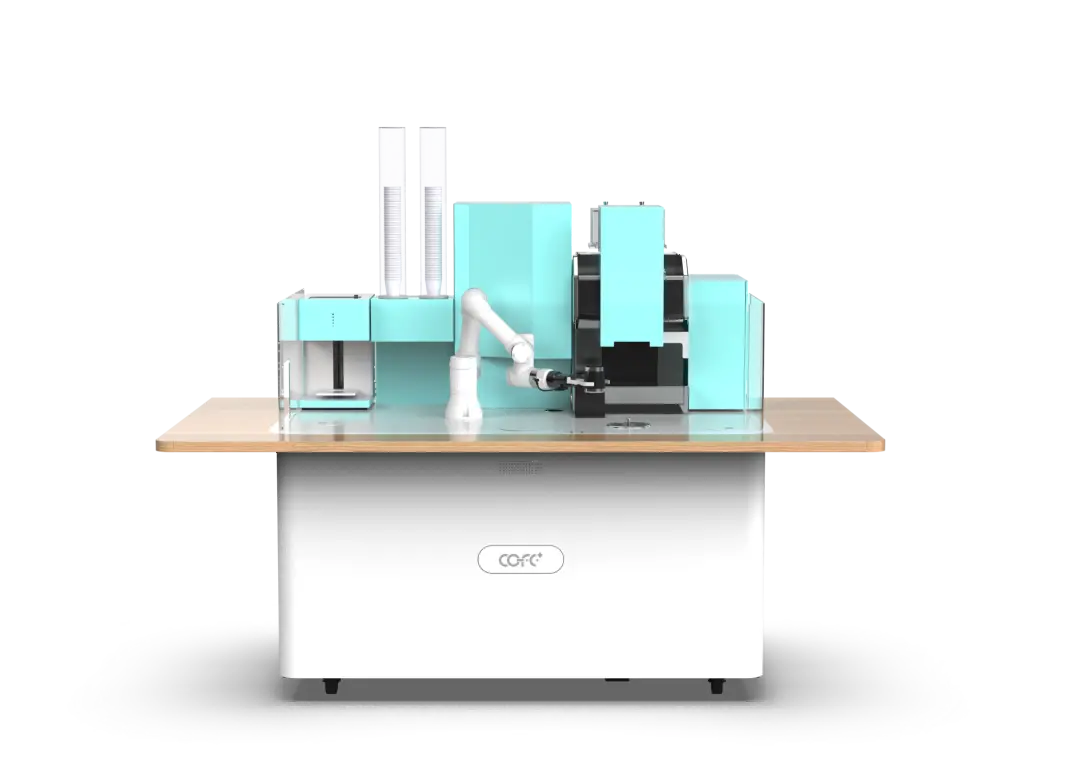
What changed from earlier generations is the ingredient delivery system. Earlier models used fixed syrup and powder channels that limited drink variety to pre-loaded combinations. The 7th gen uses a multi-channel fluidic dispensing architecture that can combine up to 18 base ingredients across 197 country-inspired recipe templates. This is not a bigger menu. It is a different way to build drinks.
For the operator, this changes the revenue model. A traditional coffee kiosk makes money on volume. A machine that remembers that a specific customer orders an oat milk flat white with caramel and a single-origin Ethiopian roast at 8:12 AM every weekday creates attachment. Attachment produces repeat visits, and repeat visits drive lifetime value well past what a generic automated coffee machine can achieve.
We have tracked deployment data across 35 countries and found a consistent pattern: sites where customers discover and save custom drink profiles see 22 to 28 percent higher monthly revenue per machine compared to sites running default menu configurations. The customization system is not a feature. It is the primary revenue mechanism.
A number like 350 can sound like marketing math. In the COFE+ 7th Gen, it is a calculation based on real combinatorial logic.
The machine holds seven base coffee bean types across three roast profiles, six milk and plant-based alternatives, twelve syrup flavors, four sweetness levels, three temperature settings, and size options for hot and iced drinks. The recipe engine does not pre-mix these into 350 named drinks and store them as static buttons. It builds each cup from the ingredient channels at the moment of ordering.
The more important number for operators is 5,000-plus unique combinations. This is the actual customization space when a customer adjusts bean, milk, syrup, roast, and cup size independently. The 350 figure represents the curated recipe library, organized by country of origin. The 5,000 represents the total addressable personalization range.
Why does this matter commercially? A standard coffee shop menu has 30 to 50 items. A customer who wants oat milk in a drink not designed for oat milk either accepts a substitute that does not quite work or walks away. The fluidic system in the 7th gen eliminates this constraint. Any base drink can receive any milk, any syrup, at any temperature, in any size. The machine does not care whether a Turkish coffee with almond milk and vanilla, iced, makes sense on a traditional menu. If the combination is physically possible with the loaded ingredients, the machine produces it.
This also means the machine can serve markets with divergent taste profiles from a single hardware configuration. A kiosk in Jakarta loads palm sugar syrup and coconut milk. A kiosk in Riyadh loads cardamom and camel milk alternatives. The hardware is identical. Only the consumable inventory changes. For a global operator, this standardizes procurement, maintenance training, and spare parts across regions while local flavor adaptation remains possible through consumable changes.
| Model | Form Factor | Best For | Drink Range | Key Differentiator |
|---|---|---|---|---|
| Indoor Kiosk | 2.35 m² standalone | Malls, offices, universities | 300+ drinks, 5,000+ combos | Compact, mobile, cloud-managed |
| Outdoor Kiosk | IP54 weatherproof | Parks, gas stations, tourism sites | 300+ drinks, 5,000+ combos | All-weather, -20°C to 45°C |
| Robot Coffee Bar | 2 m² transformable | Hotels, airports, co-working | 350+ drinks, 5,000+ combos | Folds to counter, opens to 4-seat bar |
| Robot Coffee Counter | 2 m² built-in | Luxury hotels, VIP lounges, retail | 300+ drinks, 5,000+ combos | Counter-integrated, open-view theater |
The gap between what a machine can do and what an operator can sell is where most automation projects fail. A robot barista with 350 flavors that customers never discover is a robot barista with five flavors that happen to sell.
The COFE+ 7th Gen addresses this with a front-end interface designed for discovery, not just transaction. The touchscreen does not present a flat menu. It layers options: quick reorder of saved favorites first, then country-inspired collections, then a build-your-own path. A customer who only wanted a latte sees that the machine remembers their previous oat milk preference, notices a Vietnamese egg coffee they have never tried, and can add it to their rotation.
For operators, monetization happens at two levels. First, customization increases average order value. A base latte at standard pricing plus a syrup add-on and a plant-milk upgrade produces a higher per-cup margin. Second, saved preferences create switching costs. A customer who has dialed in their exact drink on a COFE+ machine is less likely to use a competing coffee option that requires starting from scratch.
We have observed this effect most clearly in office building deployments. When a COFE+ kiosk replaces a traditional office coffee service, initial usage follows a predictable curve. Month one: customers try the machine because it is new. Month two: a subset discovers customization and builds saved profiles. Month three onward: the saved-profile user group generates roughly 70 percent of total revenue despite being only 40 percent of total users. The machine’s capacity to remember and reproduce a specific drink, consistently, across months, creates the kind of loyalty that vending machines and manual coffee bars rarely achieve.
If you are evaluating a robot barista deployment for a site with a fixed user population (office, campus, residential complex), the customization adoption rate in months two and three is the metric that will determine your payback timeline. Send your expected daily foot traffic and user population numbers to sales@hi-dolphin.com and we can share adoption curve data from comparable deployments.
The 7th Gen’s latte art capability sits at an unusual intersection of showmanship and revenue. Robotic latte art, on its face, looks like a gimmick. A machine prints a logo or a photo onto coffee foam. In practice, latte art on a COFE+ machine functions as a social signal that the drink was made by a robot.
This distinction matters because a customer who sees their photo or a rosetta pattern printed on their latte foam has unambiguous proof that the machine is not a conventional vending machine dispensing pre-mixed coffee from a bag. The art communicates freshness, customization, and technological sophistication in a single visual that photographs well. The 7th Gen offers two latte art modes. The 3D printing head renders photos, logos, and custom images directly onto milk foam. The robotic arm produces classic barista-style handcrafted patterns: tulips, hearts, rosettas. Both modes run within the 43-to-60-second production window. Neither adds labor. Both generate the kind of customer interaction that converts a coffee purchase into a brand experience.
For commercial operators placing machines in high-visibility locations (hotel lobbies, corporate event spaces, retail flagship stores), the latte art capability changes the conversation with the venue. The machine is not just a coffee service. It is an attraction. Venues value attractions differently than they value utilities.
The 7th generation platform introduces changes that affect the operational calculus, not just the customer experience. Three shifts matter most for anyone running a P&L on a robot coffee deployment.
First, the cloud management layer. The 7th Gen runs on Hi-Dolphin’s Smart Store Brain, a centralized remote monitoring and diagnostics system. Every machine reports stock levels, system health, sales patterns, and maintenance alerts in real time. For a single-machine operator, this means fewer site visits. For a multi-site operator, it means fleet-level inventory optimization: consumables are ordered based on actual depletion rates across locations, not fixed schedules.
Second, durability testing has reached a threshold that changes the investment case. The 7th Gen is rated for 500,000-plus cups across a 10-year design life. At 1,000 cups per day, that is roughly 500 days of continuous peak operation before major service intervals. Most deployments operate well below peak capacity, which stretches the service cycle further. For an investor calculating payback period, the 10-year lifespan with documented cup-cycle endurance creates a depreciation timeline that earlier-generation robotic coffee systems could not match.
Third, the certification footprint. The 7th Gen carries FDA, CE, UKCA, KC, and SASO certifications, covering compliance requirements across more than 18 developed-country markets. For an operator entering a regulated market (food service in an airport, hospital, or government facility), the certification portfolio eliminates months of local compliance negotiation that would otherwise delay deployment and revenue.
The per-cup economics remain the headline. At $0.30 to $0.70 in consumable costs per cup, with no barista wages, the machine generates gross margins that manual coffee operations cannot approach. But the 7th Gen’s operational improvements (remote management, extended durability, multi-market certifications) change the net margin calculation by compressing the indirect costs: maintenance labor, downtime, compliance delays, and replenishment logistics.
Every deployment starts with a site specification. Power requirements (110V or 220V), water access (line or internal tank), internet connectivity, and physical clearance. For operators evaluating multiple locations, we recommend starting with a single pilot unit to establish local adoption curves and consumable supply chains before scaling. Send your site specifications and deployment timeline to +86 131 6630 1290 or sales@hi-dolphin.com, and we will prepare a full compatibility assessment and landed cost estimate for your market.
The most significant hardware change is the multi-channel fluidic dispensing system that opens up the expanded ingredient combination range. On the software side, the customization memory and user profile system is new to this generation. The 6th gen could produce a large menu. The 7th gen can remember what a specific customer ordered last week and suggest variations based on that history. The durability rating also increased with the 7th gen chassis and component upgrades, moving from a design target to a rated and tested specification.
Each country profile is a curated set of drink templates that reflect regional coffee culture: Vietnamese egg coffee, Turkish coffee, Italian affogato, Thai iced coffee. The recipe files specify ingredient ratios, temperature, and preparation sequence. The machine executes these digitally, meaning a customer in Berlin gets the same Thai iced coffee recipe as a customer in Bangkok. Operators can enable or disable country collections through the cloud dashboard depending on local customer preferences and ingredient availability. The library is updatable over the air, so new recipes can deploy across a fleet without on-site visits.
The ingredient channels use standard-format consumables: coffee beans, milk, syrups, powders. Hi-Dolphin supplies a baseline consumable kit, but the system is open to locally sourced ingredients as long as they meet the viscosity and particulate specifications for the fluidic delivery channels. In most markets, operators source milk and some syrups locally while importing specialty items. We recommend running a two-week compatibility test with your intended local supply chain before finalizing deployment. Share your location and target menu profile with us at sales@hi-dolphin.com and we will send the fluidic specification document for your suppliers.
Daily: refill consumables (beans, milk, syrups, cups), empty waste bins. Weekly: clean the dispensing nozzles and check the milk refrigeration unit. The machine runs automated high-temperature sterilization cycles at 85°C-plus internally, so deep cleaning intervals are measured in months rather than days. The cloud diagnostics system flags anomalies before they become failures, and most issues resolve through remote recalibration rather than on-site repair. Operators who follow the consumable refill schedule typically see fewer than three unplanned maintenance events per year.
Installation and calibration takes roughly four hours for a trained technician. The machine requires a standard power connection (110V or 220V, depending on region), a water line or internal water tank, and internet connectivity for the cloud management system. After physical setup, the technician runs a calibration sequence that tests all ingredient channels, verifies temperature and extraction parameters, and prints a calibration report. The machine can serve customers the same day. For multi-unit orders, Hi-Dolphin runs a train-the-trainer program so your local team can handle subsequent installations independently. If your deployment involves sites with specific power or water access constraints, send the site specifications to +86 131 6630 1290 or sales@hi-dolphin.com and we will confirm compatibility before shipping.
TL;DR — COFE+ is a fully automated robotic coffee kiosk that grinds fresh beans, brews espresso and lattes, creates latt……
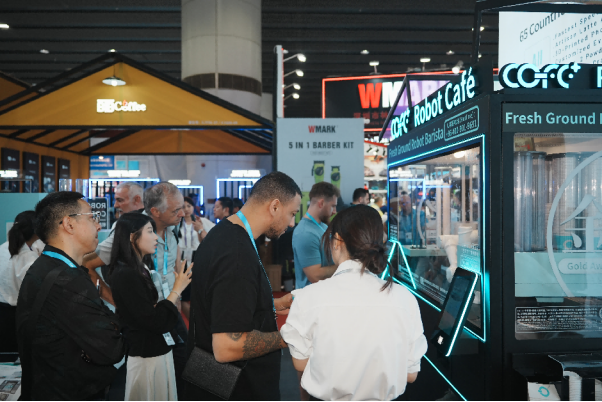
7th-Genertion Smart Robot Coffee Kiosk Arrives at the Belt and Road Core Hub, Ushering in a New Service Era Along t……
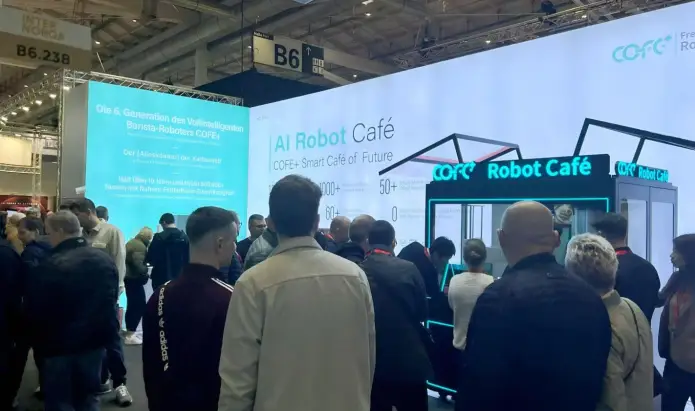
CHICAGO, May 12, 2026 (GLOBE NEWSWIRE) – Shanghai Hi-Dolphin Robot Technology today announced the U.S. debut of its 7th‑……