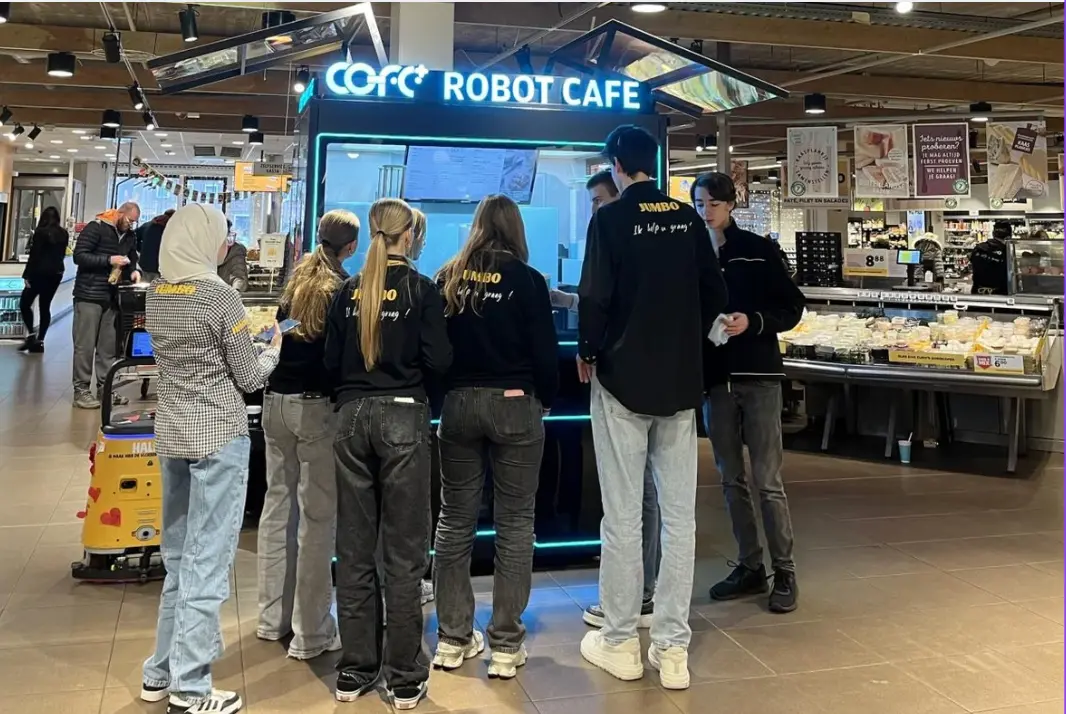
The Rise of Professional Robotic Café Technology: What COFE+ Is and Why It Matters
TL;DR — COFE+ is a fully automated robotic coffee kiosk that grinds fresh beans, brews espresso and lattes, creates latt……

When procurement teams and investors compare robot coffee technologies, the conversation usually starts with throughput, drink variety, or hardware footprint. Those are visible differentiators. What remains invisible until you attempt a multi-country deployment is the intellectual property layer underneath: COFE+ technology’s 120+ international patents that protect core mechanisms, and the 50+ certifications that pre-clear regulatory pathways across 18 developed nations. I have spent years positioning unmanned retail systems for global expansion, and the pattern is consistent. Operators who ignore the IP and certification foundation spend their first year fighting regulatory delays and copycat competitors. Those who prioritize it are generating revenue while others are still filing paperwork.
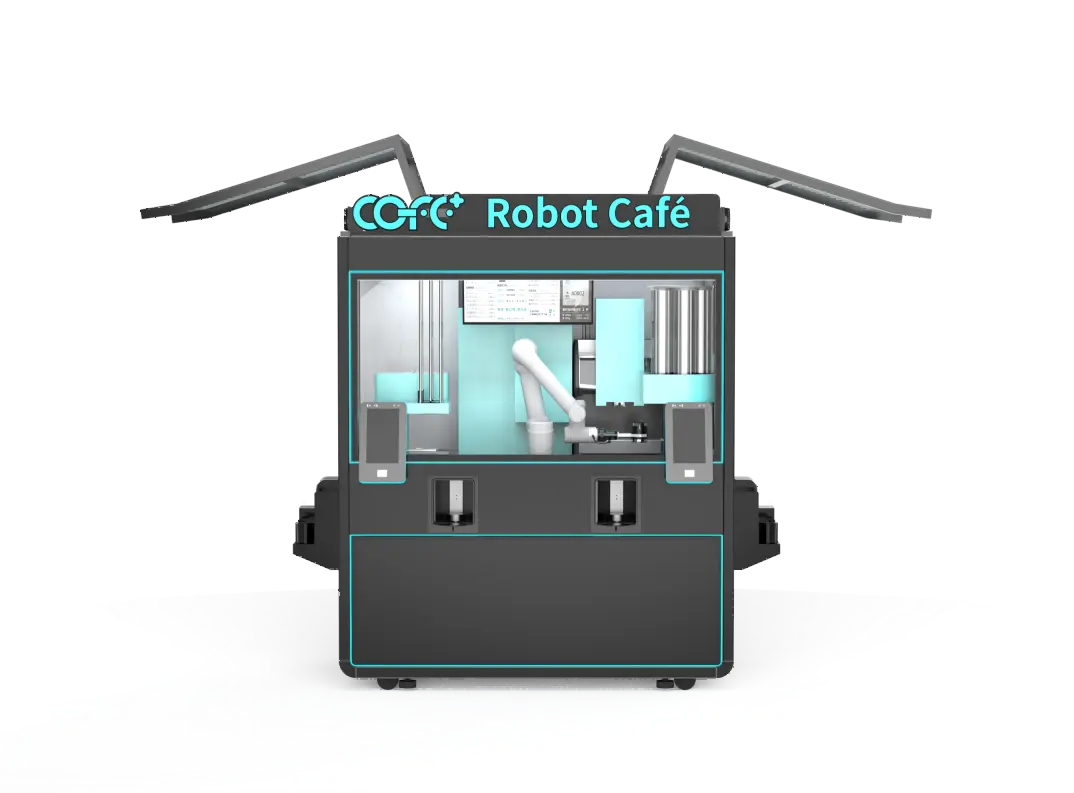
The patent count is not a vanity metric. When a technology stack reaches 120+ international patents, it signals something specific: the core systems are protected deeply enough that competitors cannot engineer around them with minor modifications. COFE+ patents cover the full operational chain, from grinding and extraction mechanics to the IoT cloud infrastructure that enables remote fleet management.
A single patent on a brewing mechanism is easy to challenge or design around. A portfolio that spans grinding calibration, milk foaming dynamics, multi-temperature extraction sequencing, automated cleaning cycles, and cloud-based recipe synchronization creates a defensive web. Competitors might replicate one isolated function. Replicating the integrated system without infringing multiple patents becomes an engineering problem with no clean solution.
This breadth matters most in markets where intellectual property enforcement is active. Operators deploying in North America, Europe, South Korea, and the Gulf region are placing hardware in jurisdictions where patent disputes can halt operations. Running equipment built on a shallow or unexamined IP foundation introduces contingent liability that most business plans ignore until enforcement action arrives. The 120-patent portfolio functions as an operational insurance policy. It deters litigation before it starts because potential claimants see a crowded prior art landscape.
Patents protect the technology. Certifications unlock the market. COFE+ holds FDA, CE, UKCA, KC, and SASO approvals, covering food contact material safety, electrical compliance, hygiene standards, and electromagnetic compatibility across more than 18 developed countries.
For an operator planning a multi-territory rollout, each certification represents months of lead time that has already been absorbed by the manufacturer. A typical path to CE marking for a new electromechanical food device can take four to eight months, assuming no design changes are required. Multiply that by five target regions, and the accumulated delay can push first revenue out by two years. When the certifications are already in place, the deployment timeline collapses to site preparation, shipping, and commissioning.
There is a less obvious benefit. Certifications are not permanent. They require ongoing compliance with updated standards. A manufacturer that maintains 50+ active certifications across jurisdictions is investing continuously in regulatory monitoring, periodic re-testing, and documentation updates. That infrastructure signals to operators that the product will remain compliant as regulations evolve. Equipment that was certified once, three years ago, under a single standard, carries a different risk profile entirely.
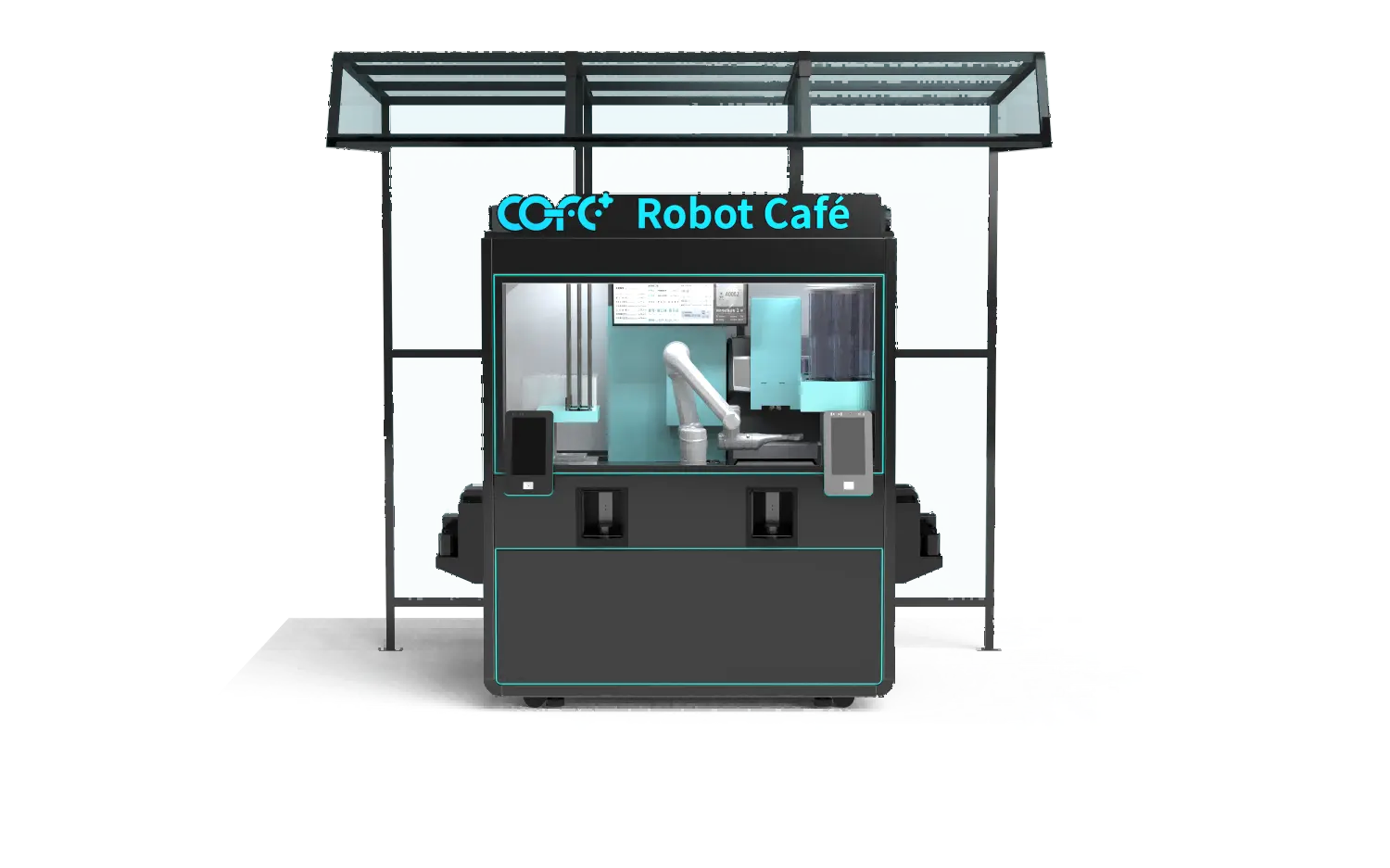
Certification is not just paperwork. It validates engineering. The FDA and CE food safety approvals that COFE+ holds are earned through physical testing: materials analysis, migration testing for food contact surfaces, and microbiological challenge studies on the automated cleaning system.
The automatic high-temperature sterilization cycle operates at 85°C and above, running between servings. This is not a manual wipe-down procedure left to operator diligence. It is a closed-loop system embedded in the machine control logic, and it is one of the mechanisms covered by the patent portfolio. The anti-microbial stainless steel interior, the fully enclosed waste system that prevents spills, odors, and pest access, and the IP54-rated outdoor enclosure on the exterior kiosk model all represent engineering decisions that were tested and certified rather than claimed in marketing copy.
The robotic arm that executes latte art patterns also delivers a measurable consistency benefit: digitized barista-level recipes ensure identical taste across 300 consecutive cups. That claim is testable because the underlying extraction parameters are stored as digital profiles, not left to human calibration. The 500,000-cup durability testing provides a statistical basis for the 10-year design life. Operators evaluating equipment should ask whether durability claims are supported by accelerated lifecycle testing or simply asserted. The certification documentation provides the answer.
If your deployment plan involves outdoor sites with temperature extremes, the certification pathway for the outdoor model is worth understanding in detail before you commit to a site list. The IP54 rating and the tested operational range of -20°C to 45°C are validated under specific test protocols that may or may not match your local climate profile. Confirming that alignment early avoids discovering a gap after installation. Reach our team at sales@hi-dolphin.com with your target locations and we can verify compatibility against the certification test parameters.
The connection between intellectual property and profit margin runs through three channels: competitive insulation, speed to revenue, and residual value.
Competitive insulation is the most direct. When a technology is protected by a broad patent portfolio, the window for copycat entrants narrows significantly. In markets where robot coffee kiosks are gaining adoption, operators running patent-protected equipment face less pricing pressure from imitators entering with superficially similar hardware at lower price points. The imitator’s machine may look comparable on a spec sheet, but it cannot legally replicate the grinding extraction integration or the cloud-based recipe management system without licensing or litigation risk. That protection translates into sustained per-cup margins.
Speed to revenue operates through the certification channel. A COFE+ kiosk deployed in a Saudi Arabian shopping mall or a South Korean university campus arrives with SASO or KC certification already in place. The operator is not funding a local certification process or waiting for a customs hold while regulators review documentation. The machine generates revenue on day one of installation, not month six.
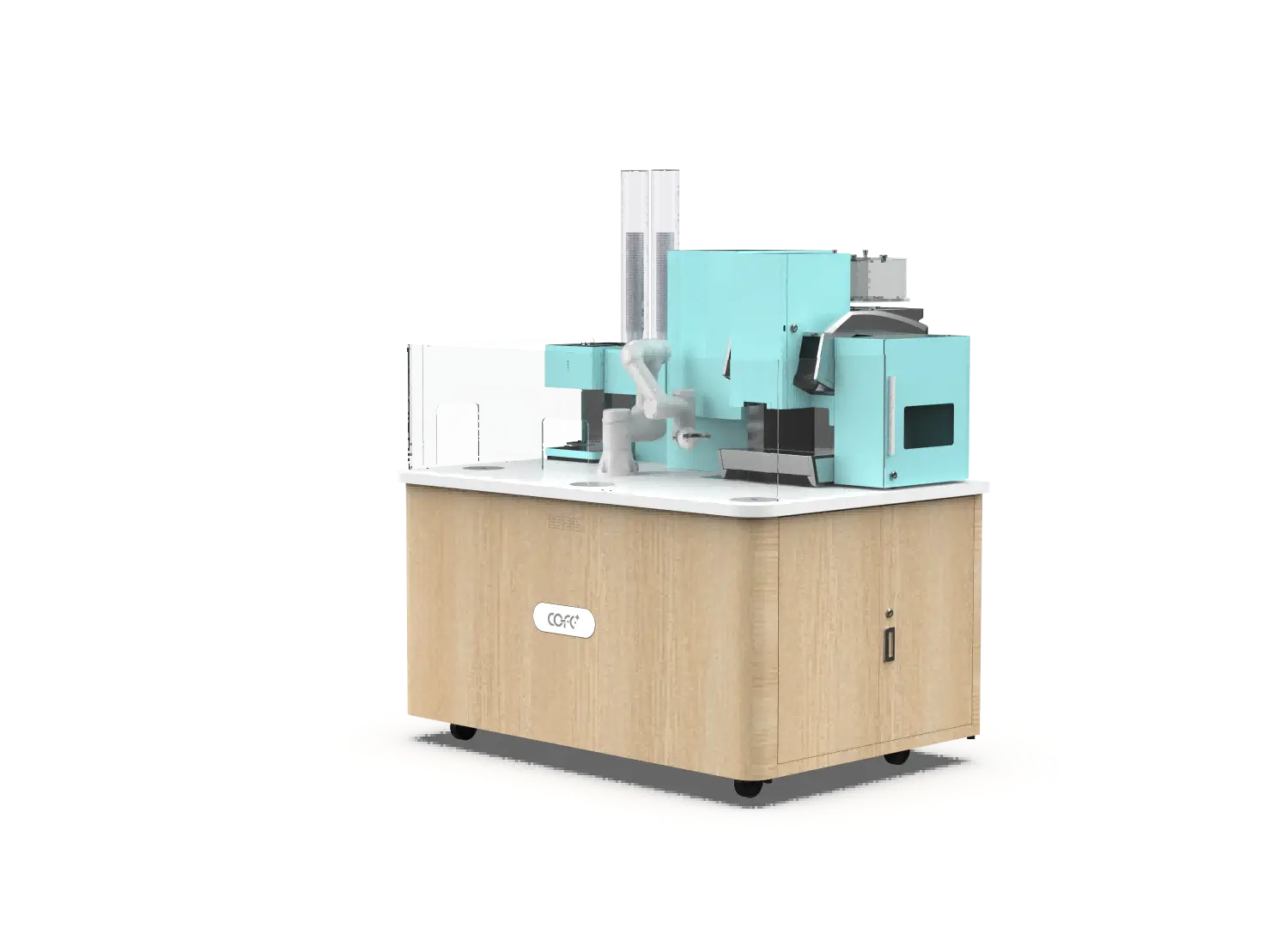
The cost structure reinforces the economics. At approximately $0.30 to $0.70 per cup in consumables and power, and with no barista labor required for 24-hour operation, the margin profile supports a typical ROI window of 6 to 12 months. That timeline assumes the machine is serving customers, not sitting in a warehouse awaiting regulatory clearance. The IP and certification foundation is what prevents the warehouse scenario.
Residual value is the overlooked factor. A 10-year design life backed by 500,000-cup durability testing means the asset has a long depreciation curve. When the technology is proprietary and not easily replicated, the secondary market for used equipment remains viable. Operators who exit a location can redeploy or resell the kiosk rather than scrapping it. Commodity hardware without IP protection depreciates faster because the market is flooded with interchangeable alternatives.
The unmanned coffee retail category is attracting entrants at multiple price points. Some competitors offer automated espresso machines with a touchscreen interface. Others retrofit traditional vending hardware with a robotic arm for visual effect. The differentiation between a genuine robotic barista system and an automated dispenser is not obvious from a photograph or a trade show demo. It becomes obvious after six months of continuous operation, or when the operator attempts to expand into a second country.
The patent portfolio is the structural differentiator. Most hardware entrants in this category hold fewer than ten patents, many of which are design patents covering cosmetic elements rather than utility patents on functional mechanisms. Design patents protect appearance. Utility patents protect how the machine actually works. The COFE+ portfolio is weighted toward utility patents on extraction, milk texturing, cleaning automation, and IoT orchestration. That distinction determines what a competitor can legally replicate and what remains proprietary.
The certification breadth creates a second filter. A manufacturer that has passed FDA, CE, UKCA, KC, and SASO evaluations has been subjected to independent scrutiny by food safety authorities on three continents. This is not a self-declaration. It is documentable, third-party verified compliance. Operators sourcing from manufacturers without this certification record assume the burden of proving compliance in each target market themselves.
| Certification | Region | What It Validates | Operator Impact |
|---|---|---|---|
| FDA | United States | Food contact materials, hygiene systems | Required for U.S. market entry |
| CE | European Union | Safety, health, environmental standards | Mandatory for EU deployment |
| UKCA | United Kingdom | Post-Brexit product compliance | Required for UK operations |
| KC | South Korea | Product safety certification | Korean market access |
| SASO | Saudi Arabia | Gulf region regulatory compliance | Middle East market entry |
The global deployment footprint tells the same story. Equipment operating in more than 65 countries has been stress-tested across voltage standards, climate conditions, and consumer expectations in ways that laboratory testing cannot replicate. An operator inherits that accumulated operational knowledge rather than learning it through their own service calls.
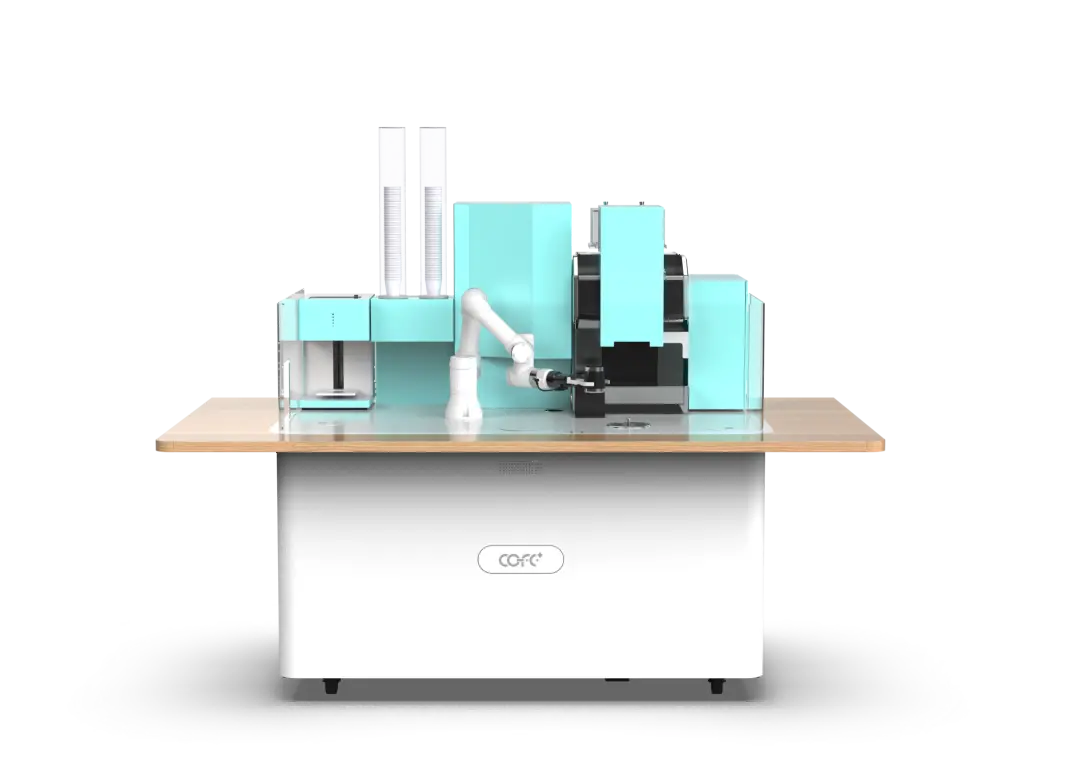
They make it legally and practically difficult to build a machine that replicates the integrated system. A competitor can build a device that grinds coffee. They can build a device that steams milk. They can build a touchscreen ordering interface. What they cannot easily do is combine all three with the same extraction sequencing, the same IoT architecture, and the same automated hygiene cycle without infringing multiple claims across the patent portfolio. The breadth matters more than any single patent.
Certification renewal cycles vary by jurisdiction. CE marking requires ongoing compliance monitoring with periodic re-assessment depending on the directive. FDA registration requires biennial renewal. KC certification involves periodic factory inspections. Shanghai Hi-Dolphin maintains these renewals as part of its regulatory affairs program. Operators receive updated documentation as certifications are renewed or expanded, so the compliance chain remains intact throughout the equipment’s service life.
Yes, and this is where the existing certification portfolio creates leverage. Adding a country with similar regulatory standards to one already certified often shortens the approval timeline because test data from CE or FDA evaluations can support submissions to other regulators. If your expansion plan includes countries not yet covered by existing certifications, the engineering and documentation infrastructure that produced the current 50+ certifications positions the manufacturer to pursue new approvals efficiently. Share your expansion roadmap early so our team can sequence certifications against your deployment schedule.
Because the business model depends on deployed units generating recurring consumable revenue and referral demand, not on selling hardware once and walking away. The patent portfolio protects the technology so that the manufacturer can sustain a global support infrastructure without being undercut by clones. A protected technology creates aligned incentives: the manufacturer invests in support to keep units operational and visible in high-traffic locations, which drives inbound interest from new operators. The 65-country installed base depends on that support being responsive. Reach us at sales@hi-dolphin.com or call +86 131 6630 1290 to discuss your target deployment markets and we can share the specific certification documentation that applies to your planned locations.
TL;DR — COFE+ is a fully automated robotic coffee kiosk that grinds fresh beans, brews espresso and lattes, creates latt……
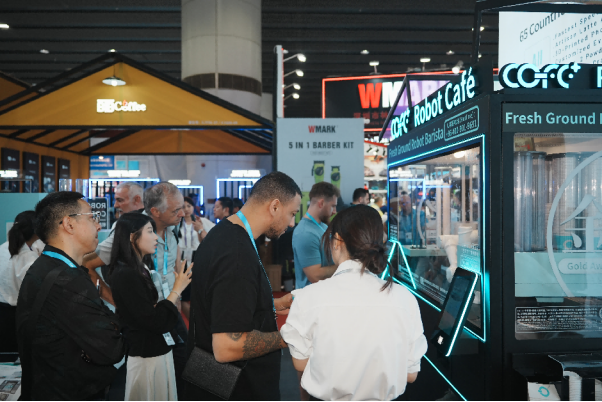
7th-Genertion Smart Robot Coffee Kiosk Arrives at the Belt and Road Core Hub, Ushering in a New Service Era Along t……
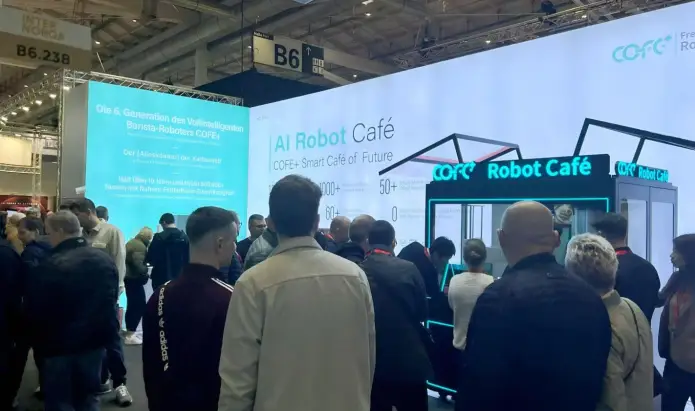
CHICAGO, May 12, 2026 (GLOBE NEWSWIRE) – Shanghai Hi-Dolphin Robot Technology today announced the U.S. debut of its 7th‑……