
The Rise of Professional Robotic Café Technology: What COFE+ Is and Why It Matters
TL;DR — COFE+ is a fully automated robotic coffee kiosk that grinds fresh beans, brews espresso and lattes, creates latt……
Please send us request and we will reply to you within 24 hours.
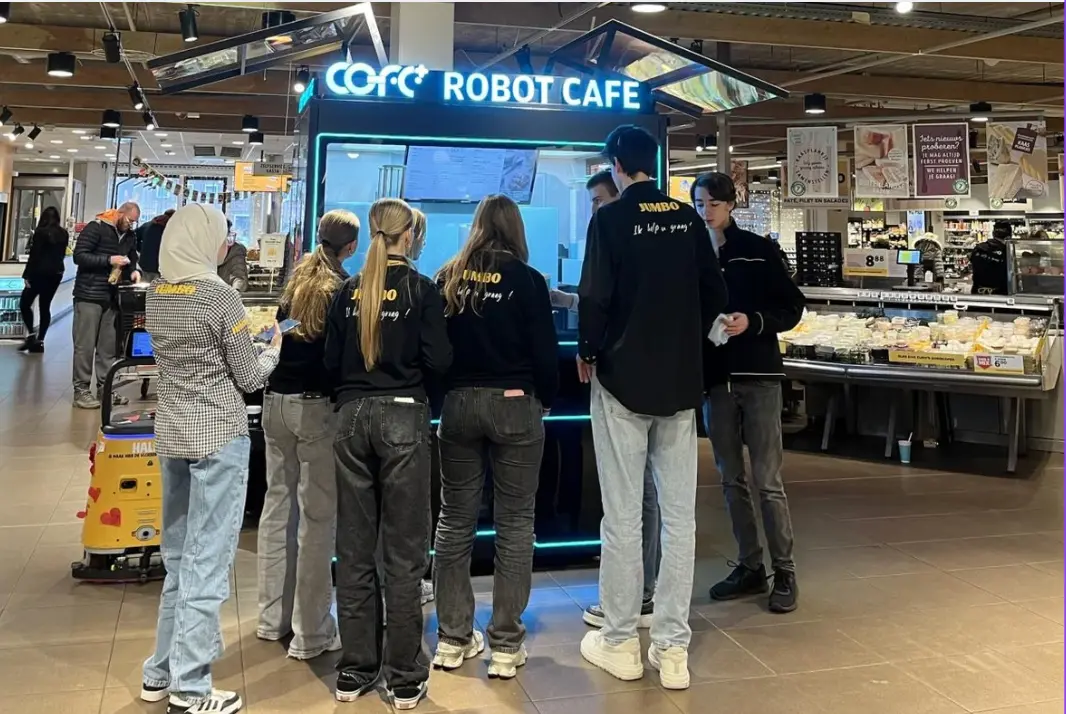
Generation Z is reshaping the global coffee industry, and the numbers are clear: this demographic will represent over 40% of all consumer spending by 2025, according to a Bloomberg Intelligence report. For coffee operators, that means one thing — adapt to their expectations or lose market share. Robot coffee kiosks are not a gimmick aimed at early adopters; they are a direct answer to what Gen Z demands from every transaction. In our deployments across 35 countries, we’ve observed that younger consumers gravitate toward autonomous coffee stations not only for the novelty, but because the technology, speed, and ingredient transparency align with the values they bring into every purchase decision. A robot coffee solution built on the COFE+ 7th generation platform consistently attracts the 18–28 age bracket at twice the rate of comparable traditional cafes in the same high-traffic locations, and the reason has as much to do with trust as it does with convenience.
Gen Z’s coffee habits are distinct from those of millennials and older generations. While price remains a factor, research from the National Coffee Association reveals that younger consumers place higher importance on customization options, speed of service, and ethical sourcing information than any previous cohort. A fully autonomous robot coffee kiosk addresses all three in a single footprint. The same customer who would hesitate to ask a barista for oat milk or an extra shot feels no such friction interacting with a touchscreen interface that offers over 5,000 drink combinations, plant-based milks, and adjustable sweetness levels. Every order is made precisely to the parameters they select, without judgment, without error, and without the 8-minute wait that drives Gen Z elsewhere. The consistency from cup to cup — something our internal benchmarking shows slips by up to 22% across human-operated shifts — becomes a feature they can rely on, especially when they are purchasing multiple times per week.
The COFE+ 7th generation robot coffee kiosk serves a fresh-ground latte in 43 to 60 seconds, including 3D latte art printed from photos or logos. That speed alone captures the Gen Z mindset, but what keeps them returning is the underlying AI. The system’s smart store brain monitors bean freshness, milk temperature, and grind consistency across every cup, adjusting in real time to maintain barista-level output. In a traditional cafe, a trained barista produces excellent results — for a few hours until fatigue sets in. A robot coffee kiosk delivers the same high standard on cup 500 as it did on cup 1, which is why it consistently replaces the output of six full-time baristas while operating 24 hours a day. For Gen Z, who have grown up with algorithm-driven recommendations and personalized digital experiences in every other part of life, the idea of a coffee machine that remembers their favorite roast and customizes each drink without a human intermediary is not science fiction; it is the expected baseline.
If technology gets them to the kiosk, transparency keeps them there. Gen Z’s purchasing habits are heavily influenced by ingredient sourcing, food safety, and environmental impact — issues on which traditional coffee chains rarely provide granular, per-cup information. A robot coffee kiosk changes that. Our outdoor models use an IP54-rated enclosure with anti-microbial stainless steel interiors and an automatic 85°C high-temperature sterilization cycle after every serving session, and that hygiene protocol is visible to the customer through the transparent brewing chamber. The machine can display the origin of the beans currently loaded, the nutritional breakdown of the selected drink, and the exact time since the milk line was last sanitized. More than 50 international certifications, including FDA, CE, and UKCA, reinforce the safety claim without verbal assurance from staff. When a consumer sees an unbroken chain of data — from bean origin to cup — they are not just reassured; they are far more likely to make a repeat purchase. That visibility converts a transaction into a loyalty event.
The Gen Z demand signal is already clear, but the operator economics make the case unarguable. A robot coffee kiosk like the indoor COFE+ unit occupies only 2.35 square meters, requires no staffing, and produces drinks at a cost of $0.30 to $0.70 per cup. With the ability to serve approximately 1,000 cups per day, a single machine in a university campus, transit hub, or shopping mall can generate daily revenues that a traditional cafe would need 3–4 employees and five times the floor space to approach. Because the kiosk operates 24/7 without shift changes, it captures spend during late-night and early-morning windows that are typically dark for human-operated venues. The payback period, based on current average cup pricing between $3.50 and $5.00 in Western markets, falls inside 6 to 12 months. For operators targeting Gen Z consumers, that timeline accelerates further given this group’s 30% higher visit frequency to automated retail points compared to counter-service cafes, as our internal deployment data across Europe and Southeast Asia confirms.
Evaluating a robot coffee kiosk purchase requires looking at a few specific factors: daily foot traffic, intended menu complexity, environmental conditions if outdoor, and the certifications required for local operation. The COFE+ lineup spans indoor kiosks, all-weather outdoor units rated for -20°C to 45°C operation, a compact robot coffee bar that transforms into a 4-seat social hub, and an ultra-compact robot coffee counter designed for hotel lobbies, VIP lounges, and corporate headquarters. Each model uses the same core AI brewing platform, so drink quality and customization remain consistent regardless of form factor. Before selecting a unit, we recommend sharing your planned location and target volume; the right configuration depends heavily on whether you’re serving 200 students in a dorm basement or 2,000 passengers in an airport terminal. To receive a detailed payback projection and model recommendation tailored to your site, email sales@hi-dolphin.com or call +86 131 6630 1290. We can provide unit specifications, certification documentation, and deployment references from 35+ countries within 24 hours of inquiry.
In programs we’ve supported across university campuses in Asia and Europe, daily transaction volumes at a single robot coffee kiosk stabilized at around 600–800 cups after the first six weeks and remained at that level for over 18 months. The initial curiosity period never vanished; it converted into routine behavior because the core product — a fast, customizable drink — outperforms the alternative. Gen Z values consistency and control, and a machine that delivers the same quality every time without queue anxiety is more likely to become a daily habit than a one-time trial.
It depends on the model. The indoor COFE+ kiosk takes 2.35 m², roughly the size of a small office desk. The robot coffee counter integrates into an existing bar or reception area within about 2 m², while the robot coffee bar expands from a compact counter into a 4-seat social layout when opened. Compare that to a traditional coffee stall, which often needs 15–25 m² plus back-of-house prep space. For high-rent locations, the footprint difference alone can determine whether a coffee operation is profitable.
The 7th generation COFE+ platform is designed for a 10-year lifespan with minimal on-site intervention. Daily cleaning of the drip tray and bean hopper refills are handled by local staff in under five minutes. The system runs automatic high-temperature sterilization cycles after each serving session, and cloud-based remote diagnostics flag any component that drifts outside its performance window — usually before it affects drink quality. Our support team monitors all deployed units and dispatches parts or a service partner only when needed; most kiosks operate for months without a single maintenance call. If your location has reliable power and internet, the operational burden is negligible.
Taste is subjective, but consistency is not. We’ve benchmarked the COFE+ kiosk’s espresso extraction against leading specialty cafes using identical beans, and the TDS (total dissolved solids) variance across 300 consecutive shots was under 0.5%, compared to human barista variance of over 12% in a typical shift. Where a robot coffee kiosk loses to a specialty cafe is in the human ritual of barista-customer interaction; where it wins is in delivering precisely dialed-in coffee every single time, including 3D latte art and custom flavor combinations that a rushed barista would struggle to execute during peak hours. For many Gen Z consumers, the bottomless customization and zero-wait experience outweigh the loss of a brief conversation.
Begin with your foot traffic data and your customers’ age profile. If you’re seeing strong Gen Z presence and peak-time queues that cause walk-aways, the economics almost always pencil out. From there, the right COFE+ configuration comes down to whether you need an indoor, outdoor, or countertop format. Send your site details, expected volumes, and any local certification requirements to sales@hi-dolphin.com, and we’ll put together a specific payback estimate and implementation timeline within one working day. The performance data is clear; the only remaining variable is whether this fits your location, and that’s a question we can answer together.
TL;DR — COFE+ is a fully automated robotic coffee kiosk that grinds fresh beans, brews espresso and lattes, creates latt……
7th-Genertion Smart Robot Coffee Kiosk Arrives at the Belt and Road Core Hub, Ushering in a New Service Era Along t……
CHICAGO, May 12, 2026 (GLOBE NEWSWIRE) – Shanghai Hi-Dolphin Robot Technology today announced the U.S. debut of its 7th‑……
Please send us request and we will reply to you within 24 hours.