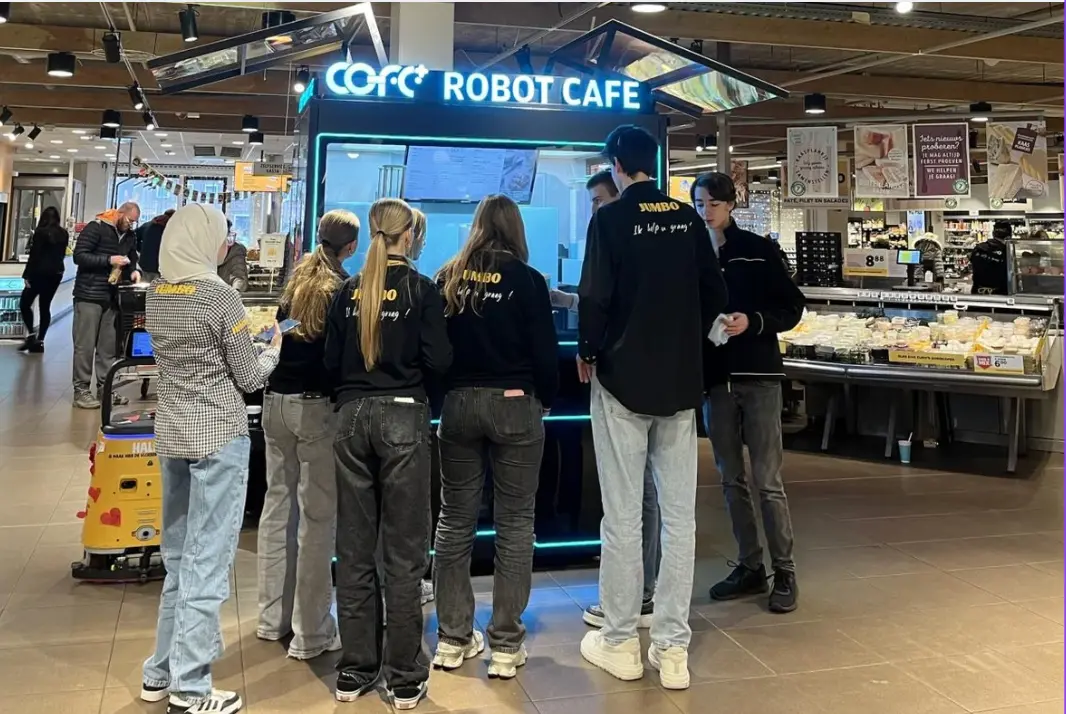
The Rise of Professional Robotic Café Technology: What COFE+ Is and Why It Matters
TL;DR — COFE+ is a fully automated robotic coffee kiosk that grinds fresh beans, brews espresso and lattes, creates latt……

Traditional coffee shops generate significant waste from spent grounds, spoiled milk, discarded packaging, and energy-intensive equipment. Robot coffee kiosk sustainability tackles this problem directly—automated systems like the COFE+ series cut material waste by up to 50% while slashing operational costs. Across 65 countries, operators are finding that precision robotics, IoT monitoring, and 24/7 unattended service don’t just improve margins; they redefine the environmental footprint of coffee retail. For investors and operators, the sustainability case is as compelling as the financial one.
A typical café wastes coffee at multiple points. Barista error and overcautious forecasting routinely lead to 15% to 20% of brewed coffee being discarded. Milk spoilage during storage, combined with rigid inventory cycles, adds to the waste stream. Beyond ingredients, energy consumption from continuously running espresso machines, grinders, and refrigeration creates an invisible but persistent cost. Packaging waste from cups, lids, and sleeves scales with every transaction, and single-use items rapidly accumulate in landfills.
In a manual operation, reducing these waste streams requires constant staff training, precise demand forecasting, and rigorous inventory discipline. Most independent shops lack the data infrastructure to optimize systematically. The result is a baseline loss that operators simply accept as unavoidable.
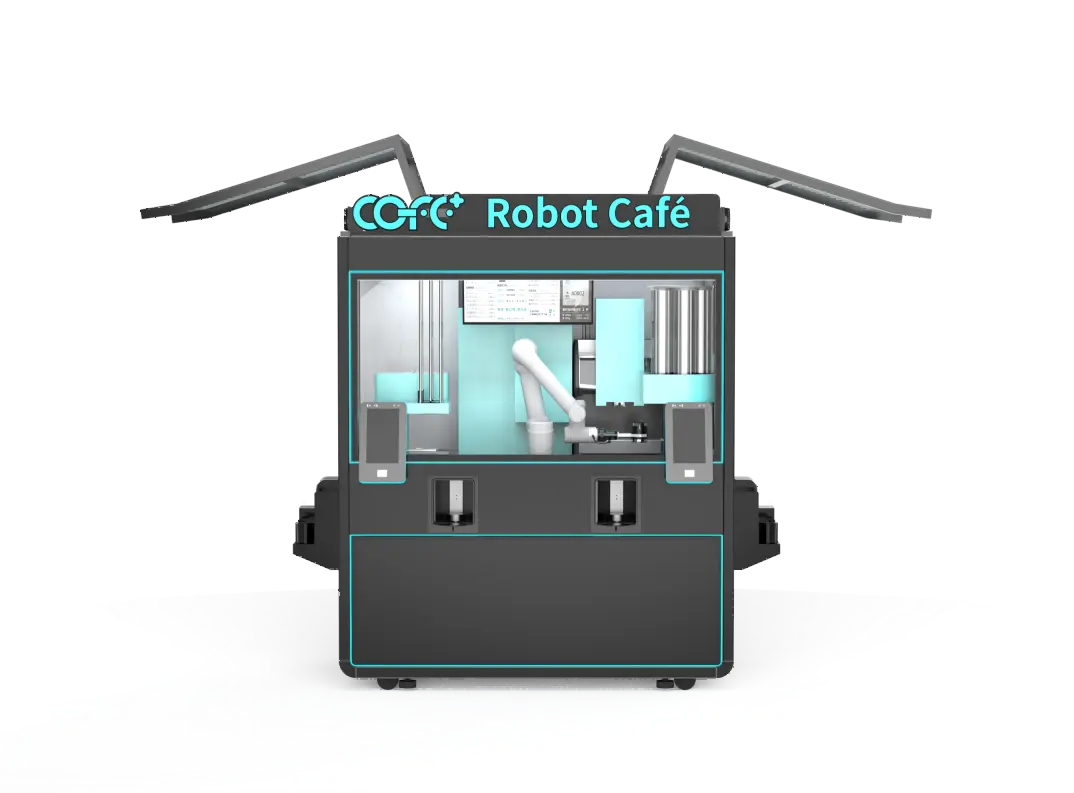
Robot kiosks reverse the waste equation by making every drink on demand. The COFE+ 7th Generation grinds beans per cup, doses ingredients to the gram, and steams milk only when a customer orders. There is no pre-brewed batch, no half-empty pot, and no barista eyeballing the pour. Because the recipe is digitized, the machine never over-pours or mis-mixes, eliminating the most common source of drink rejection.
Milk handling is another breakthrough. COFE+ uses sealed, refrigerated internal storage with real-time temperature monitoring. The system tracks shelf life automatically and can prioritize older stock first. This prevents spoilage that occurs when cafés overstock or lose track of expiration dates. Combined with portion-controlled syrup dispensers, ingredient waste plunges. Across hundreds of deployments, we consistently see material waste reductions of 40% to 50% compared to staffed cafés with equivalent volume.
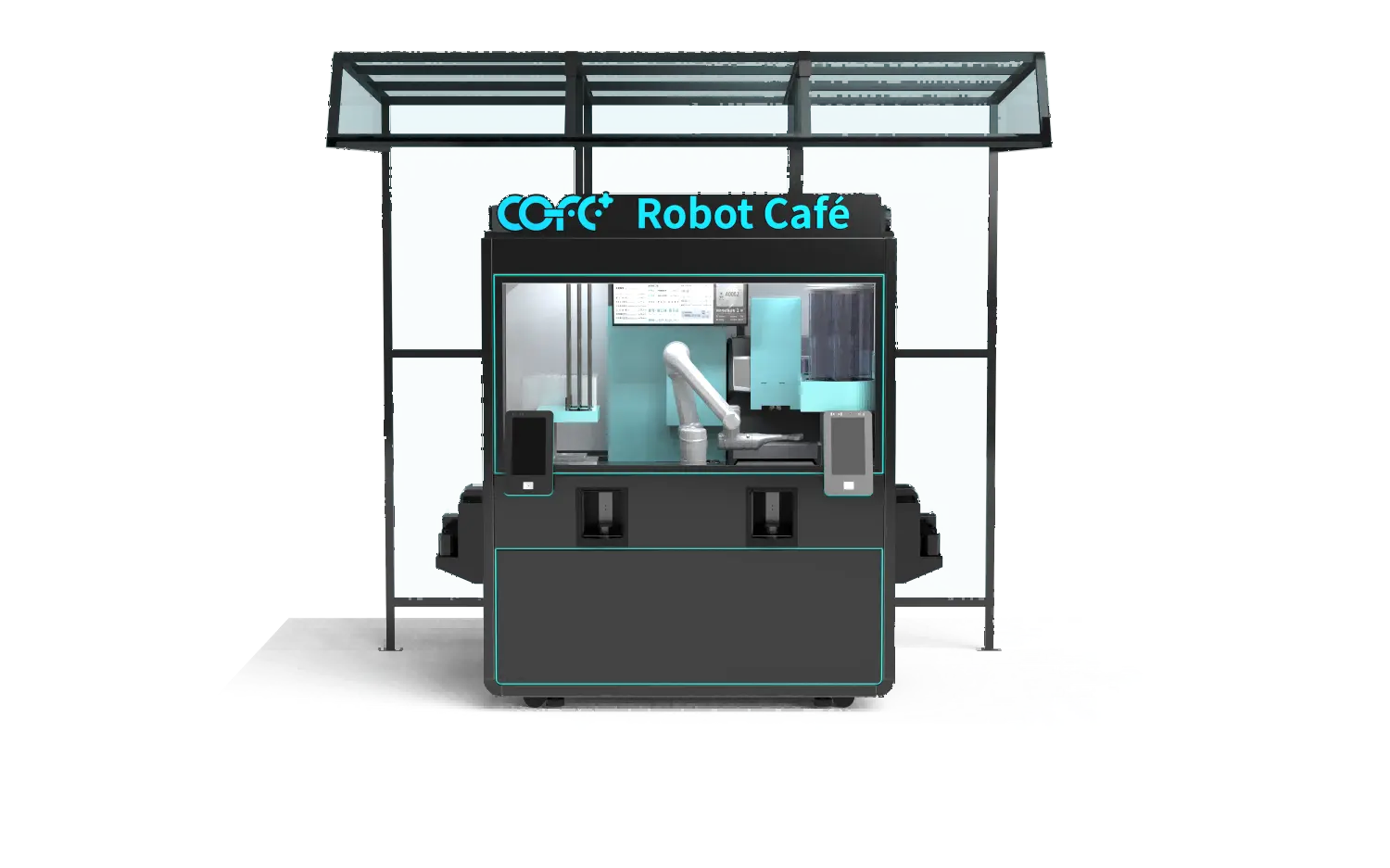
Automated kiosks use energy with tighter precision than a staffed café. The COFE+ system operates only the components needed for the current drink, rather than keeping all machines on standby throughout the day. Heating elements activate on demand, and idle power draw is minimized through IoT orchestration. This yields a per-cup energy profile that is 30% to 40% lower than a conventional café producing the same variety of drinks.
Water conservation is built into the cleaning cycle. COFE+ employs automatic high-temperature sterilization at 85°C+ that requires less water than manual sink-washing and eliminates chemical detergents. The enclosed rinsing system recirculates and filters water internally, reducing total consumption per cleaning event. For operators in regions with high water costs or usage restrictions, this efficiency translates into immediate utility savings.
| Model | Footprint | Key Sustainability Feature | Ideal Deployment |
|---|---|---|---|
| Indoor Robot Coffee Kiosk | 2.35 m² | On-demand heating, minimal idle power | Malls, offices, airports |
| Outdoor Robot Coffee Kiosk | 2.35 m² | IP54 weatherproofing, all-weather auto-cleaning | Streets, parks, gas stations |
| Robot Coffee Bar | 2 m² (folded) | Transformable counter, zero build-out waste | Hotels, co-working, lounges |
| Robot Coffee Counter | ~2 m² | Integrated counter, ultra-low water consumption | Luxury hotels, VIP spaces |
If your site requires an outdoor deployment with IP54-rated protection, contact our team at sales@hi-dolphin.com to confirm the optimal model for your climate. We’ll validate the environmental hardening specs against your location’s temperature range and humidity profile.
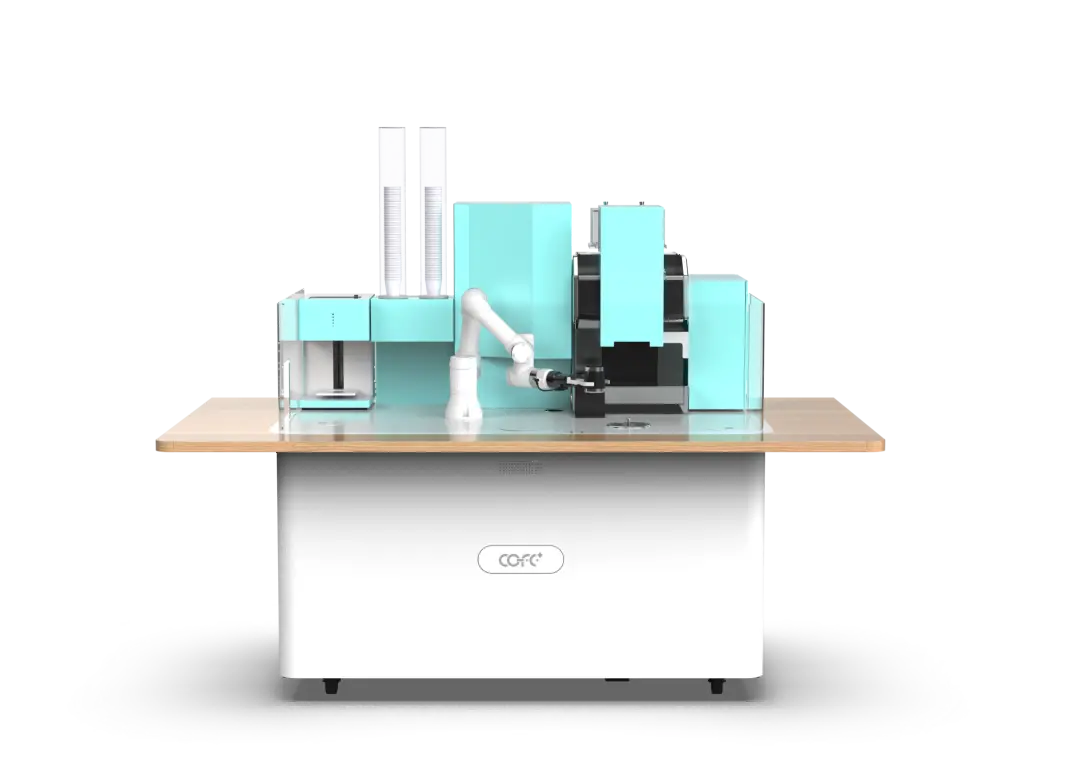
Labor is the largest operational cost in traditional coffee retail. A single COFE+ kiosk replaces the output of approximately six baristas, operating 24/7 without shifts, breaks, or training. Eliminating this labor load reduces not only payroll expenses but also the indirect environmental costs associated with commuting, staff turnover, and physical workspace requirements.
A compact 2.35 m² COFE+ kiosk generates the same daily output as a full-sized café, slashing energy per square meter and eliminating the need for a large back-of-house. When deployed in a shopping mall, airport, or office lobby, the kiosk uses existing infrastructure rather than requiring a dedicated build-out. Lower construction waste, smaller HVAC loads, and zero staffing reduce the carbon footprint of each location launch. For chains scaling rapidly, this accumulated sustainability gain can be reported as a measurable reduction in Scope 3 emissions.
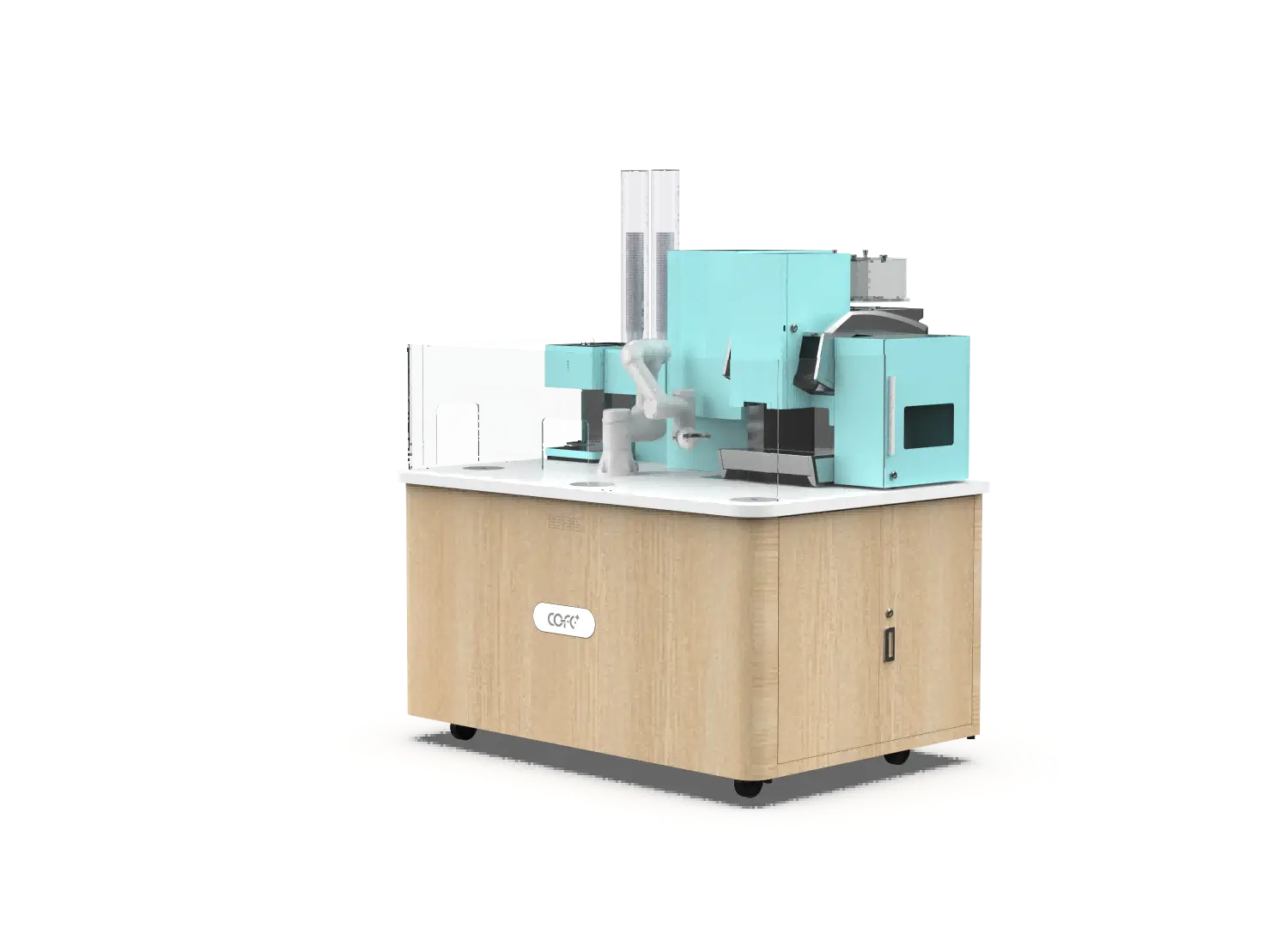
The COFE+ smart store brain is the operational layer that turns individual kiosks into a network of waste-prevention nodes. Real-time telemetry tracks ingredient levels, drink popularity, and environmental conditions across every location. The cloud platform predicts restocking needs before shortages occur and flags slow-moving locations where inventory adjustments can reduce waste. Rather than relying on static par-level ordering, operators can align supply with actual demand patterns.
This data layer also enables continuous recipe refinement. If a particular drink variant rarely sells at one location, the system can deprioritize it in the menu or suggest ingredient substitutions to reduce aging stock. Over time, the learning loop becomes a self-improving sustainability engine that manual cafés cannot replicate. For multi-site operators, the aggregated data feeds directly into sustainability reporting dashboards, providing auditable per-cup metrics on water, energy, and material usage.
The waste built into traditional coffee operations is not inevitable. It stems from the inherent variability of manual processes, the overhead of batch preparation, and the lack of real-time data to guide decisions. Robot coffee kiosks remove those variables and replace them with precision, automation, and continuous optimization. The result is a retail model that generates less waste, consumes fewer resources, and delivers consistent quality around the clock.
To evaluate how a COFE+ robot kiosk can reduce your coffee operation’s waste and lower per-cup costs, connect with us at sales@hi-dolphin.com or call +86 131 6630 1290. Share your target location, expected daily volume, and any sustainability reporting requirements, and we will recommend the configuration that maximizes both environmental and financial returns.
Ingredients typically account for the largest improvement. On-demand grinding, precise dosing, and sealed milk storage cut coffee and milk waste by 40% to 50% compared to a staffed café of similar volume. Because drinks are made correctly the first time, the re-make rate drops to near zero. Operationally, automatic cleaning cycles use less water, and the elimination of paper cups can be achieved if you pair the kiosk with reusable or compostable serving ware. Each deployment’s exact numbers vary with mix and location, but the reduction is measurable from the first week.
It consumes less. A conventional espresso bar runs multiple machines on standby throughout the day, even during idle periods. A robot kiosk activates components only when needed. In the COFE+ system, the per-cup energy draw is 30% to 40% lower than that of a staffed café producing similar volume and drink variety. The difference becomes more pronounced in 24/7 operation, where the robot’s efficient idle state avoids the constant baseline load of a manned shop.
The kiosk runs an automated high-temperature sterilization cycle after each drink sequence, using 85°C+ water to sanitize brewing and steam components. The interior is built from anti-microbial stainless steel, and the waste system is fully enclosed to prevent spills and odors. There is no open drip tray or exposed organic waste. Across 65 countries, this closed-loop hygiene approach has passed FDA and CE certification reviews without the need for on-site cleaning staff.
Yes. The smart store platform exports detailed per-cup data on water, energy, and ingredient consumption, as well as waste diversion metrics. This provides granular, auditable sustainability metrics that are difficult to obtain from manual cafés. Multi-site operators can aggregate data across locations for scope 2 and scope 3 reporting. If your sustainability reporting framework requires custom data exports, contact sales@hi-dolphin.com with your specification—we’ll confirm compatibility with your dashboard and format requirements.
TL;DR — COFE+ is a fully automated robotic coffee kiosk that grinds fresh beans, brews espresso and lattes, creates latt……
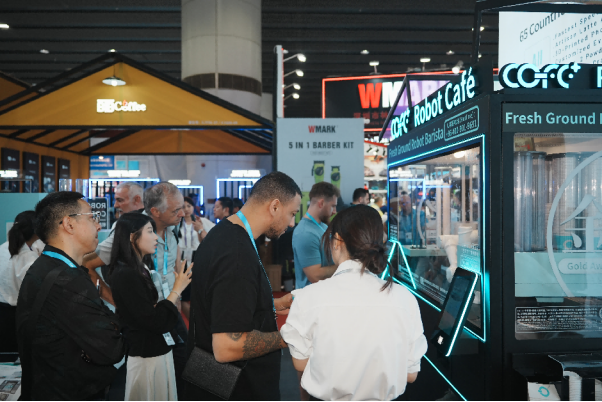
7th-Genertion Smart Robot Coffee Kiosk Arrives at the Belt and Road Core Hub, Ushering in a New Service Era Along t……
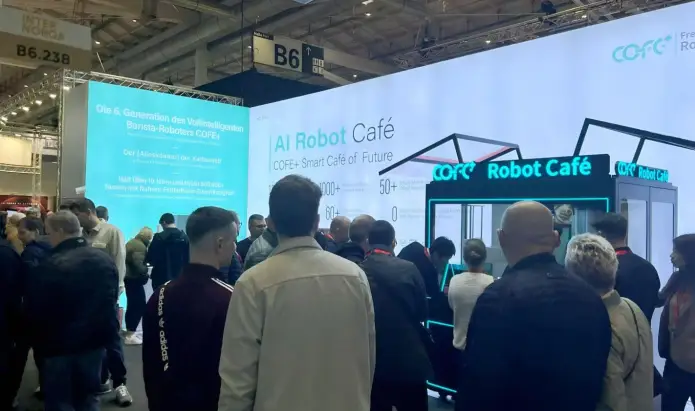
CHICAGO, May 12, 2026 (GLOBE NEWSWIRE) – Shanghai Hi-Dolphin Robot Technology today announced the U.S. debut of its 7th‑……