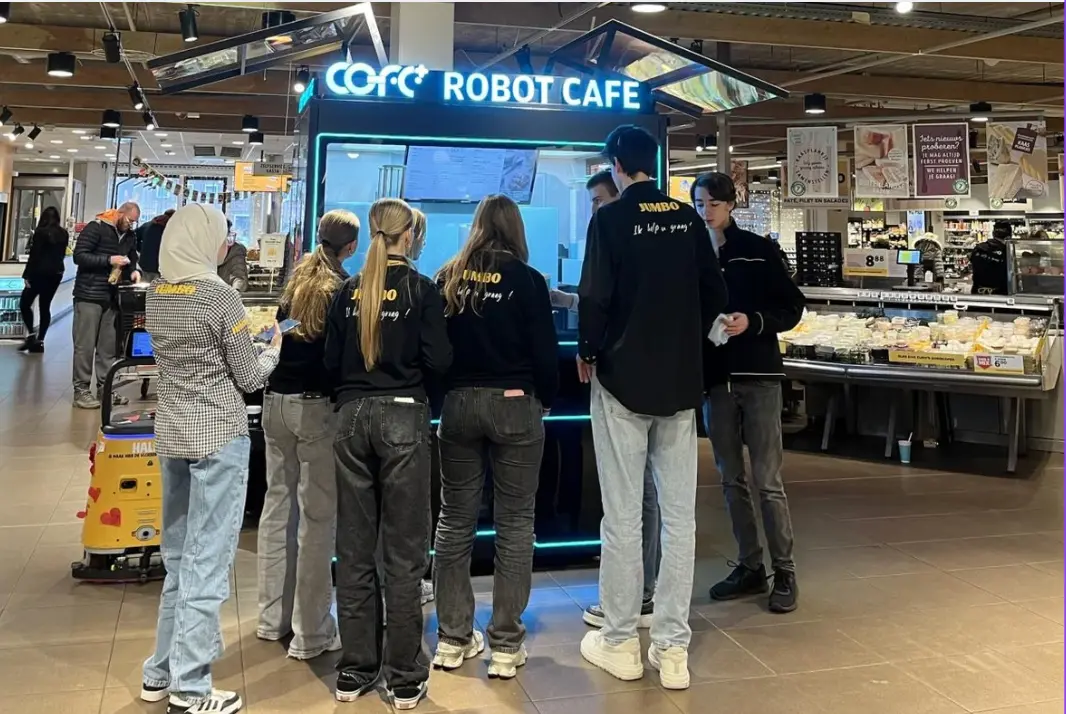
The Rise of Professional Robotic Café Technology: What COFE+ Is and Why It Matters
TL;DR — COFE+ is a fully automated robotic coffee kiosk that grinds fresh beans, brews espresso and lattes, creates latt……

Water may look like a minor building interface, but for an unattended coffee kiosk it determines taste consistency, cleaning reliability, and service uptime. A kiosk without staff still relies on automated water dosing, rinsing, steam generation, and waste handling. If the incoming supply is unstable, too hard, or poorly protected, the result is not just an inconsistent cup—it is scale buildup, blocked valves, leak alarms, and unscheduled downtime.
Potable water is the baseline. In the United States, the kiosk should be connected to a supply that meets the National Primary Drinking Water Regulations [1]; operators should also follow local building and health codes.
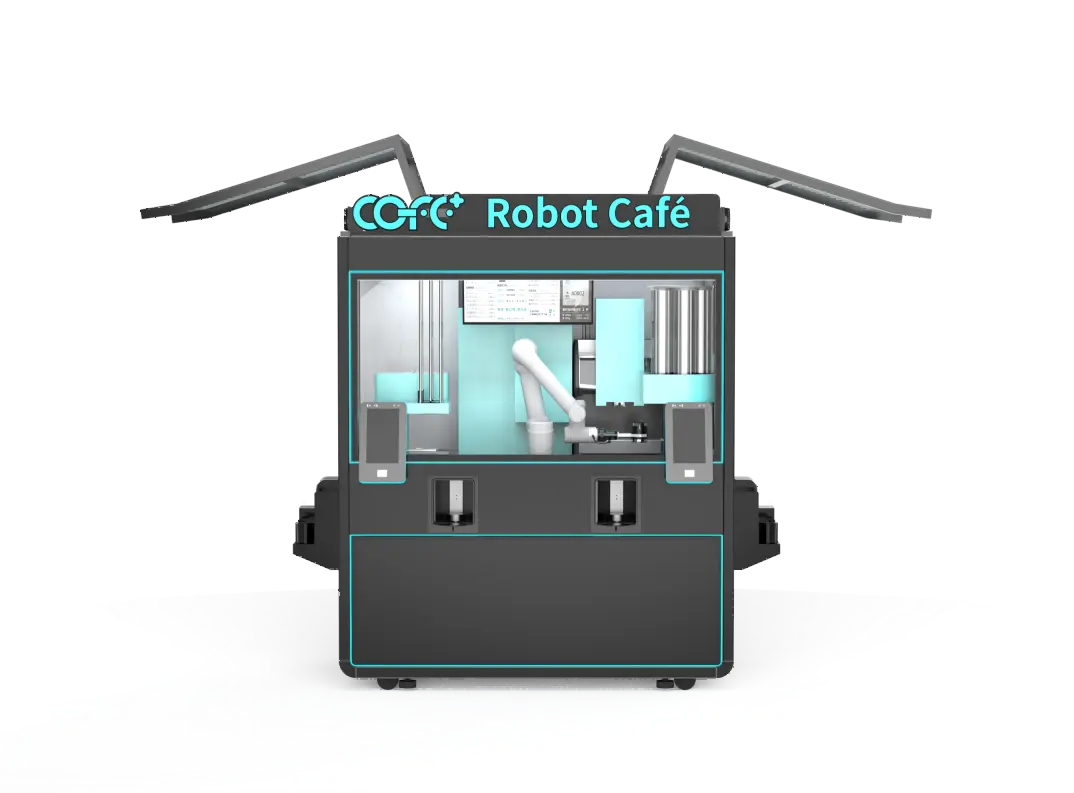
Water service planning starts with one question: is a permanent supply available, or does the kiosk need to carry its own water? There are three common approaches.
| Configuration | Best for | Key planning requirement |
|---|---|---|
| Direct plumbed connection | High-volume, permanent 24/7 sites | Dedicated shutoff valve, pressure regulation, filtration |
| Onboard water tank with refill | Temporary, low-volume, or landmark sites | Food-grade tank, level sensing, scheduled refill access |
| Plumbed supply plus buffer tank | High-traffic sites with fluctuating main pressure | Buffer capacity, overflow protection, level alarms |
The direct plumbed route is usually the lowest-labor option for a mall, hospital, transit hub, or office lobby. A tanked setup is workable but shifts the operating burden to refill frequency—something a remote operations team must monitor. A hybrid buffer tank smooths pressure swings while keeping the system continuously fed.
Deployment format also changes the water plan. <robot coffee kiosk indoor covers indoor utility connections, and <robot coffee kiosk outdoor covers all-weather protection requirements.
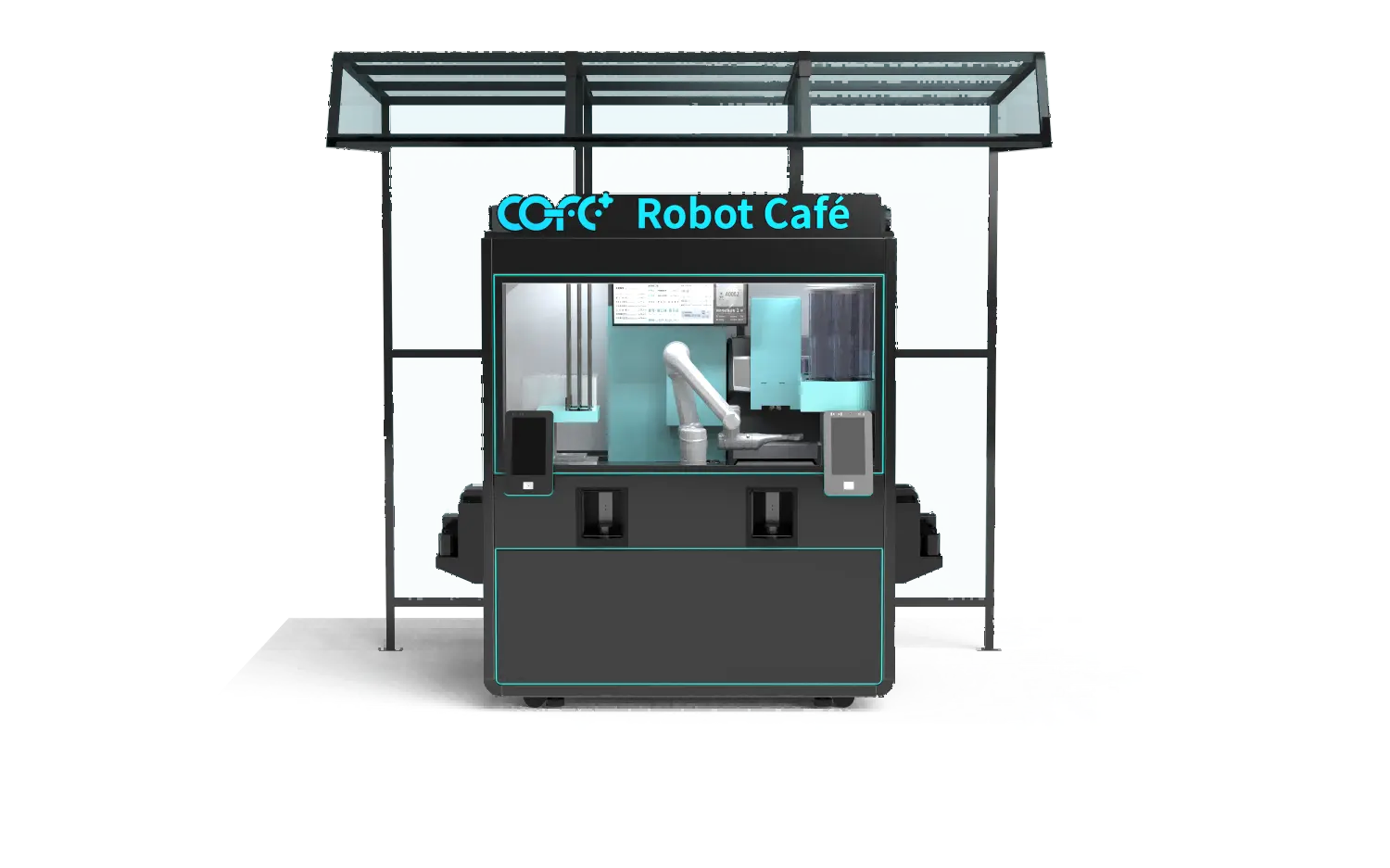
Water chemistry is the second planning layer. The Specialty Coffee Association publishes widely used targets for brew water: total dissolved solids around 150 mg/L, pH 6.5–7.5, total hardness 50–175 ppm as CaCO3, and alkalinity 40–70 ppm as CaCO3 [2]. These ranges help balance extraction, protect espresso equipment components, and reduce long-term scale risk.
| Parameter | SCA target range |
|---|---|
| Total dissolved solids | 75–250 mg/L (target 150 mg/L) |
| pH | 6.5–7.5 |
| Total hardness | 50–175 ppm as CaCO3 |
| Alkalinity | 40–70 ppm as CaCO3 |
In addition to taste parameters, the water must meet drinking-water safety requirements. The World Health Organization provides international health-based guidance for microbial, chemical, and radiological quality [4]. Point-of-use treatment components that contact drinking water should be certified to NSF/ANSI/CAN 61 or an equivalent standard [3].
Most sites benefit from at least sediment filtration and activated carbon to protect solenoids and reduce chlorine. Hard water should use ion-exchange softening or a scale-inhibition system. Reverse osmosis is best used with remineralization so the finished water does not become corrosive.
Plumbing detail matters before the machine arrives. The manufacturer’s specification sheet defines the exact inlet pressure, flow rate, pipe diameter, and drain requirement. As a planning guideline, the supplier should confirm minimum inlet pressure, simultaneous flow capacity, and whether a pressure regulator is required for stable operation.
Drainage should use an indirect connection with a visible air gap to prevent backflow [5]. Local plumbing codes such as the International Plumbing Code require air gaps for beverage equipment waste. Plan for condensate, drip tray overflow, cleaning-cycle discharge, and accidental leaks.
A floor drain or pumped drain within reach of the installed drain line is essential. Install a leak sensor at the inlet connection and under the water tank, and tie it to automatic shutoff. Unmanned operation makes leak detection critical because no staff member is present to notice a slow drip.
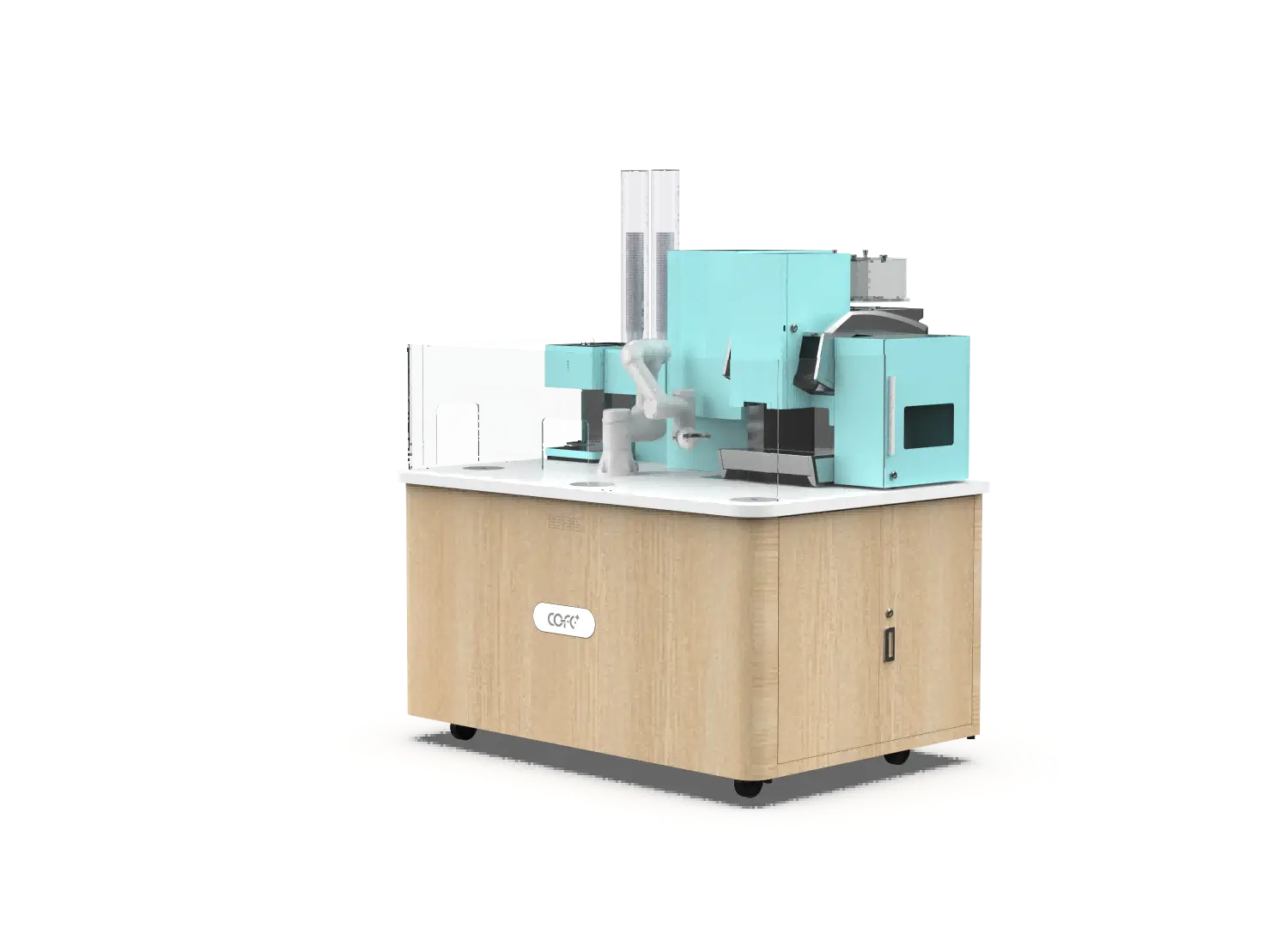
Before a lease or renovation is finalized, collect actual site data. Email sales@hi-dolphin.com with the incoming pressure range, pipe diameter, drain location, and a photo of the proposed placement. The engineering team can confirm the correct configuration and filtration package for your site.
Outdoor kiosks face freezing risk at the utility interface. The machine’s all-weather enclosure can protect internal components, but the external water feed, drain line, and filtration package must still be protected from frost. Use heat tracing and insulation below the local frost depth, and avoid running water lines through unheated spaces.
In high-traffic locations, consider a buffer tank so peak demand does not cause inlet pressure dips. One practical reference is the COFE+ outdoor kiosk, which is rated for operation from -20°C to 45°C and includes an enclosed waste system. Even with that protection, the incoming site-level water line still needs frost protection.
Before installation, validate the following items:
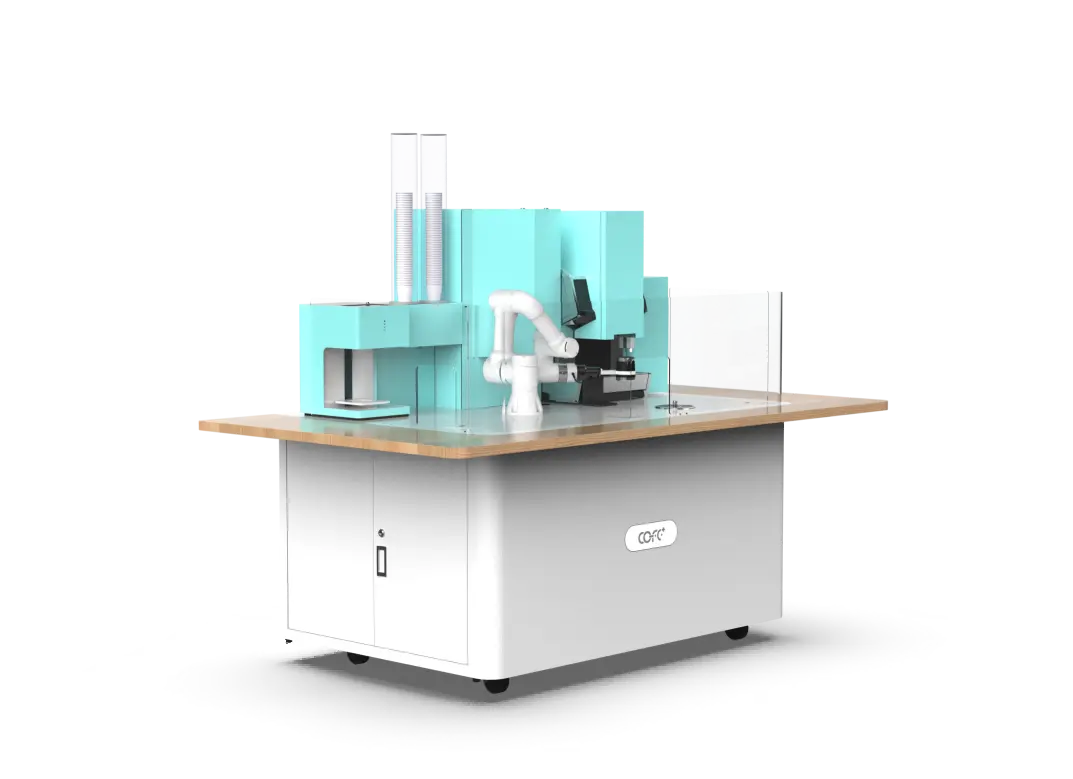
Water supply planning is most accurate when site data and machine specification are reviewed together. Send the following to sales@hi-dolphin.com for a water utility review:
The application team will respond with a water interface checklist matched to the kiosk model you are evaluating.
Water use depends on cup volume, cleaning cycles, and waste rinsing. A plumbed connection simplifies high-volume sites, while tanked systems should be sized from the manufacturer’s daily consumption estimate and the expected cup count.
Yes, but bottled water should be treated as a temporary solution. Food-grade containers, level monitoring, refill scheduling, and contamination control are required. Bottled water adds operating labor and cost, so it is usually reserved for short-term activations or locations without plumbing rights.
A dedicated line with its own shutoff valve is strongly recommended. Sharing a line with other equipment can create pressure drops when nearby equipment activates, especially during peak demand.
A properly planned kiosk should have inlet monitoring or low-water level alarms that stop the brew cycle and send a remote alert. Without a supply, the kiosk should fail safe rather than continue brewing with air or running components dry.
Test for total dissolved solids, pH, hardness, alkalinity, chlorine, and any site-specific contaminants. Compare the results with the kiosk manufacturer’s water specification and the SCA brew-water targets [2].
Softening addresses hardness but does not remove all dissolved solids or off-flavors. Reverse osmosis produces very low-mineral water that should be remineralized for coffee quality and equipment protection. The right treatment depends on the incoming water report.
[1] U.S. Environmental Protection Agency, “National Primary Drinking Water Regulations,” 40 C.F.R. Part 141, current edition.
[2] Specialty Coffee Association, Water Quality Handbook, SCA, 2018.
[3] NSF International, NSF/ANSI/CAN 61: Drinking Water System Components — Health Effects, current edition.
[4] World Health Organization, Guidelines for Drinking-water Quality, 4th ed. with first and second addenda, Geneva, 2022.
[5] International Code Council, International Plumbing Code, 2021.
TL;DR — COFE+ is a fully automated robotic coffee kiosk that grinds fresh beans, brews espresso and lattes, creates latt……
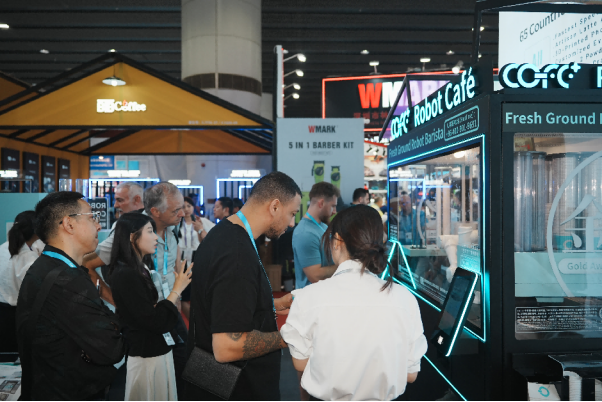
7th-Genertion Smart Robot Coffee Kiosk Arrives at the Belt and Road Core Hub, Ushering in a New Service Era Along t……
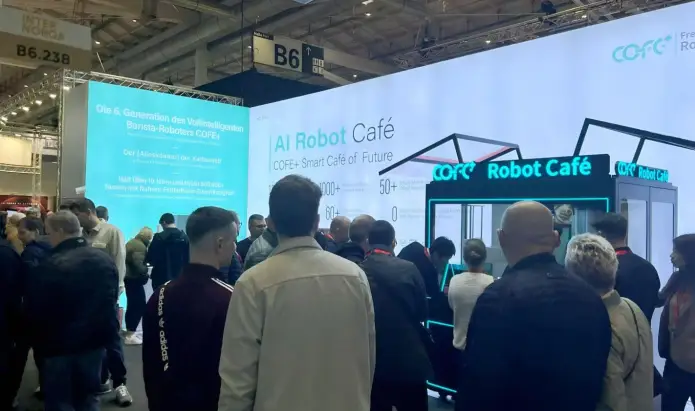
CHICAGO, May 12, 2026 (GLOBE NEWSWIRE) – Shanghai Hi-Dolphin Robot Technology today announced the U.S. debut of its 7th‑……