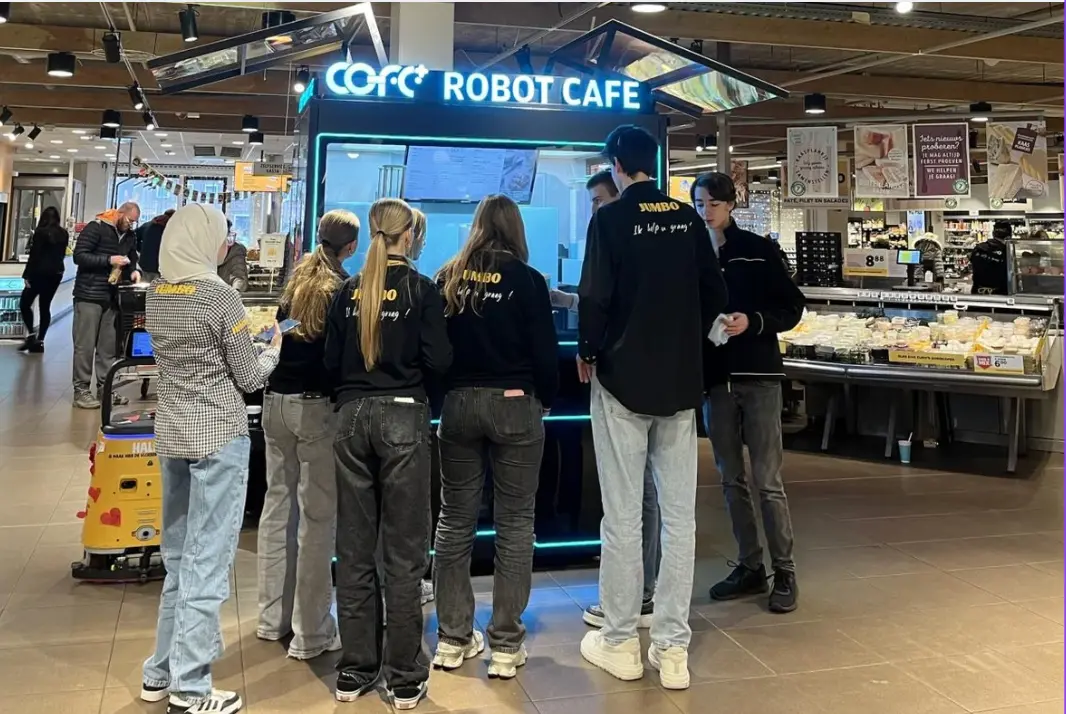
The Rise of Professional Robotic Café Technology: What COFE+ Is and Why It Matters
TL;DR — COFE+ is a fully automated robotic coffee kiosk that grinds fresh beans, brews espresso and lattes, creates latt……

Robot coffee kiosks change how industrial park operators think about employee amenities, because a good campus plan treats coffee service as a distributed utility rather than a single café. When a park spans multiple buildings and runs morning, swing, and night shifts, the real constraint is not whether a machine can make a cup well. It is whether the machine sits close enough to the people who actually need it. This article sets out the demand patterns, placement logic, utility requirements, and operating model we use when advising industrial park teams on unmanned coffee service, so facility managers can plan a network instead of buying a novelty.
Industrial parks do not have one demand curve. They have three or four overlapping ones. A manufacturer running 6am to 2pm and 2pm to 10pm shifts produces a surge before each shift begins, a smaller bump at lunch, and almost no traffic overnight. An office-heavy campus peaks between 8am and 10am, then again after lunch. A distribution hub with continuous loading docks can generate steady demand at 3am because night crews take breaks just like day crews.
This matters because a single coffee counter in the main entrance building captures only the employees who pass it on their commute. Anyone working in building C at the far end of the campus will not walk eight minutes for a coffee on a 15 minute break. In our planning conversations, I ask facility managers to map not just headcount but shift start times and walking distance from each building to the nearest break area. Those two variables explain most of the variance in daily cup volume.
A robot coffee kiosk is well suited to this pattern because it can operate 24/7 without staffing and hold a menu large enough to serve different tastes across shifts. The COFE+ indoor model we position for industrial campuses produces a cup in 43 to 60 seconds and can handle roughly 1,000 cups per day. That output is enough for most mid-sized parks when placement is right. The machine does not get tired on the third shift, and it does not close between buildings.
Yet capacity on paper does not translate automatically into cups sold. Employees only change their behavior when the machine is visibly close and reliably stocked. I have seen operators put a kiosk with high capacity in a central cafeteria and then wonder why night shift sales are weak. The reason is usually simple: the cafeteria closes at 8pm, and the kiosk sits behind a locked door. Demand in an industrial park is a function of access hours, not just total headcount.
The first decision is whether to install one robot coffee kiosk in a central hub or place smaller units inside multiple buildings. A compact park with buildings around a shared canteen can start with a single central unit. A campus where buildings are separated by roads, warehouses, or security gates will underperform with one central machine, because distance and gate access discourage walking.
We use four variables before recommending a count: the number of employees per building by shift, whether each building has a usable break room or lobby, walking time from the furthest workstation to the proposed kiosk, and access hours. If the walk exceeds three minutes, most employees will skip it on a short break. If the lobby locks after 6pm, the kiosk serves only one shift.
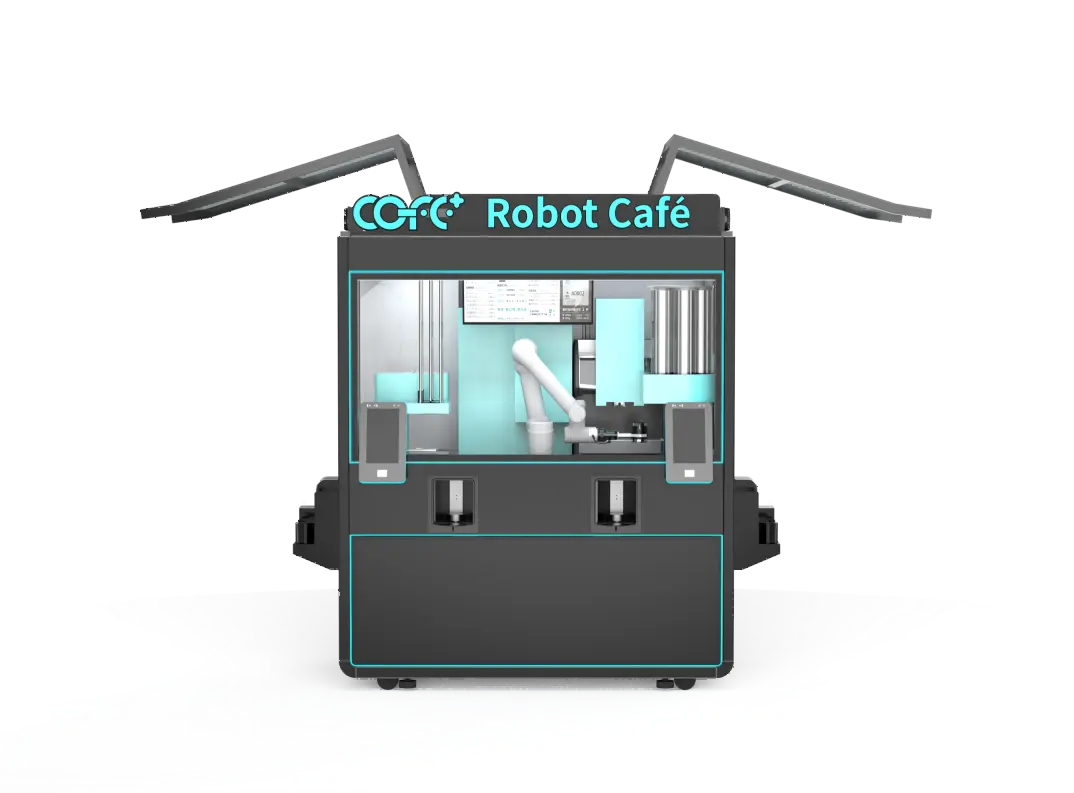
A distributed network often works better for parks with more than three occupied buildings. Instead of forcing everyone to the cafeteria, the operator places one robot coffee kiosk in the two or three buildings with the highest shift headcount and leaves lower-density buildings served by the nearest unit. This keeps each machine busy enough to justify its space and consumables while cutting walking time for the largest employee groups.
The table below compares the two approaches for typical industrial park conditions.
| Factor | Central Kiosk | Distributed Kiosks |
|---|---|---|
| Best for | Compact campuses, shared canteen | Spread-out campuses, locked buildings |
| Walking time | Longer for far buildings | Shorter for most shifts |
| Consumables management | One restock point | Multiple restock points |
| Machine utilization | High if canteen access is long | Even across shifts |
| Typical fit | Under about 1,500 employees, one central hub | Over about 1,500 employees or three plus shift waves |
Shift timing changes the math. A building full of office workers may not need a dedicated machine if they all arrive at 9am and can walk to the central unit during normal hours. A building with a 4pm to midnight operations team needs a nearby kiosk more, because that team cannot leave the building while the line is running. In these cases I recommend placing the robot coffee kiosk inside the building or directly at the staff entrance rather than at a shared amenity area.
Placement is easier to correct before installation than after. Concrete work, power drops, and water connections cost real money to move. When I walk a site with an operator, I ask them to stand at the proposed location during a shift change and count how many employees actually pass within sight of the spot. That ten-minute observation usually changes the recommended wall or corner more than any floor plan.
If your park includes buildings with different shift schedules or restricted access, the placement decision is easier to settle before any site work begins. Send your building count, shift times, and a simple floor plan to sales@hi-dolphin.com, and we will confirm the kiosk configuration and count that fits your employee flow.
Industrial buildings usually have the power and water a robot coffee kiosk needs, but not always in the right place. Facility teams should confirm four utilities before signing a site plan: power, water, drainage, and internet. The COFE+ indoor kiosk runs on standard 110V or 220V systems, which covers most industrial parks in Asia, Europe, and North America. A dedicated circuit is preferable because the machine heats water and runs components on a repeating cycle. Sharing a circuit with heavy production equipment can cause voltage drops that trigger faults.
Water needs to be clean and connected to the machine inlet. Drainage matters more than most operators expect, because every cup, rinse cycle, and cleaning pass produces liquid that must go somewhere. Sites without a floor drain can still work if the machine sits near a sink line or an existing utility chase, but adding drainage after installation is expensive. Internet is the fourth requirement. The kiosk uses cloud monitoring for stock levels, temperature, system status, and remote diagnostics, so a stable connection is needed. In facilities with metal-clad walls that block signals, a wired drop is the safer choice.
Space is usually the easiest part. The indoor kiosk occupies about 2.35 square meters, roughly 25 square feet, and fits in a lobby, break room, or covered walkway. The outdoor robot coffee kiosk is built for all-weather operation from minus 20 degrees Celsius to 45 degrees Celsius, with an IP54 rating for dust and water resistance. An industrial park with outdoor loading areas may prefer the outdoor unit so truck crews and yard workers can get coffee without entering a controlled building.
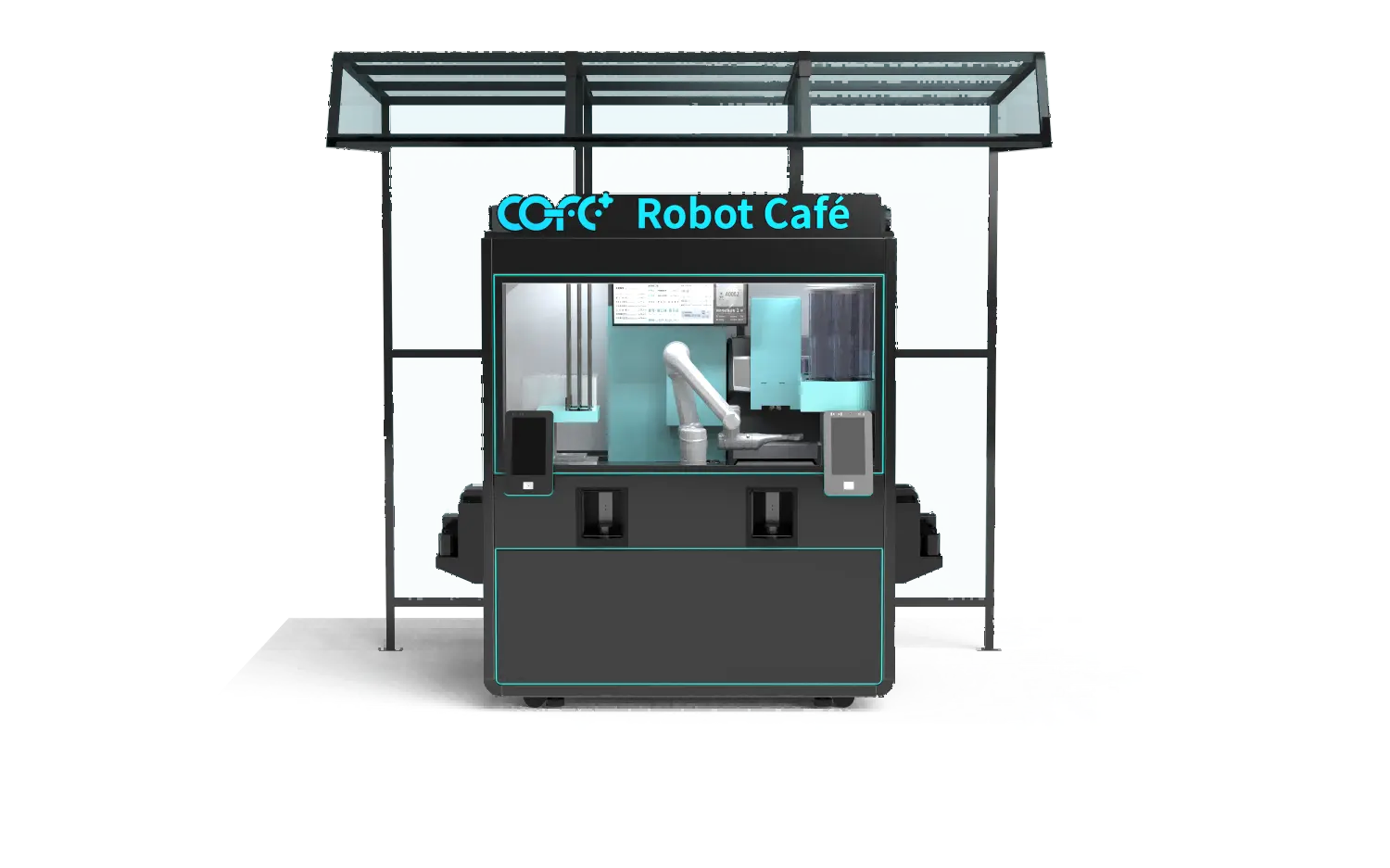
The site checklist I return to is short: verify a dedicated power circuit, confirm water pressure at the point of connection, identify a drainage path, test internet signal strength, and measure the final footprint with surrounding clearance. Missing any one of these turns a two-day installation into a two-week delay.
Once a park has more than one robot coffee kiosk, the operating question shifts from daily barista tasks to fleet management. Cloud monitoring reports stock levels, temperature, and system status, and the machine sends alerts before ingredients run out. That means a single operations team can manage several machines from one dashboard and schedule refill visits by priority instead of driving a fixed route.
The alerts worth acting on immediately are ingredient shortage, water or drainage faults, and module errors. Temperature alerts also matter because milk and other perishables need stable storage. Remote diagnostics resolve many software and calibration issues without a site visit, which reduces service cost and downtime. For hardware faults, the system can dispatch a technician with the correct spare part already identified.
On-site work falls into two categories: restocking and cleaning. Restocking follows consumption data rather than guesswork. A kiosk with high volume near a production line may need beans, milk, cups, and syrups refreshed daily. A unit with lower volume in an office building may run on a two-day cycle. Cleaning frequency depends on location and traffic. An indoor machine in a clean lobby needs less frequent service than an outdoor unit near a loading dock. The outdoor model includes automatic high-temperature sterilization at 85 degrees Celsius or higher, which handles hygiene between manual cleanings. Even with automation, a weekly physical cleaning pass is the baseline for high traffic sites.
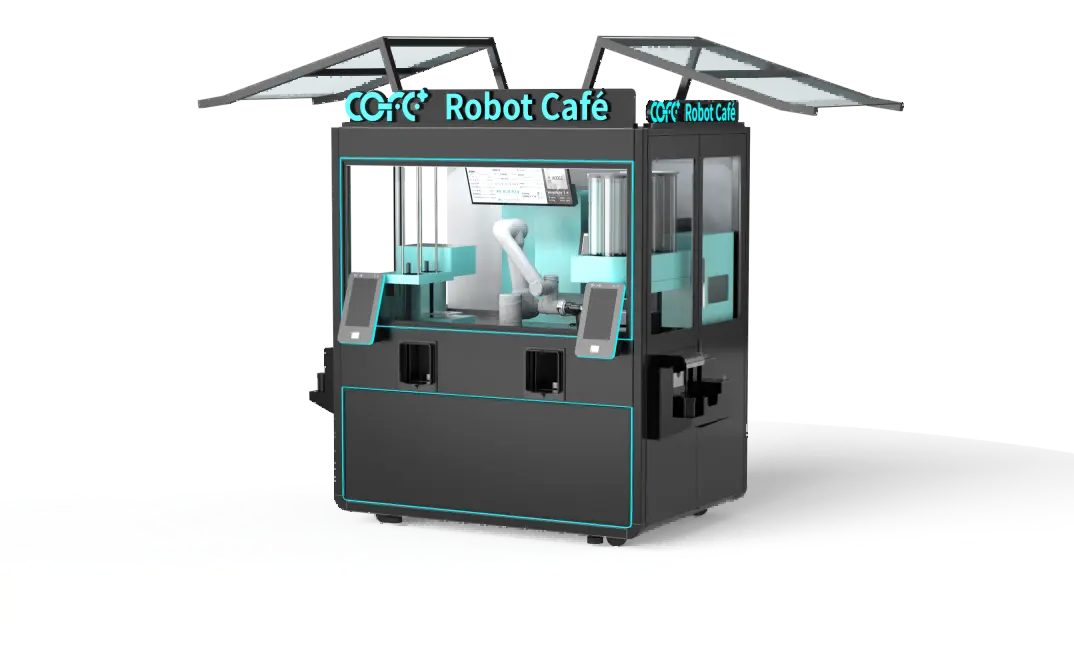
The financial case rests on two numbers: cost per cup and labor avoided. The robot coffee kiosk operates at roughly 30 to 70 cents per cup in ingredients and consumables, depending on drink mix and local milk prices. That leaves room for pricing employees accept while still generating margin. Because no barista is needed, the machine removes the largest fixed cost in a traditional café. One robot coffee kiosk can replace up to six baristas, which changes payback for a park that would otherwise run a staffed cafeteria counter.
Payback periods for well-placed units run about six to twelve months. The variance comes from daily cup volume, not from the machine itself. A robot coffee kiosk near a 300-person production line with three shifts recovers investment faster than a unit in a 60-person office lobby. Placement is the financial variable that matters most: a machine selling 80 cups a day earns a different return than one selling 300, even if both cost the same to install.
Buyers should also account for the value of employee time saved. When workers no longer leave a building for coffee, they return to their line or desk faster. That benefit is hard to put in a spreadsheet, but park managers feel it in shift productivity and fewer gate interruptions. Menu depth also drives repeat purchases. The system holds more than 300 drink types and thousands of custom combinations across coffee, milk tea, matcha, and chocolate, so one robot coffee kiosk can serve a varied workforce without menu fatigue. Large touchscreen ordering and cashless payment reduce friction at shift change peaks, which turns the machine into a daily routine instead of a novelty.
Planning coffee service across multiple buildings is less about the machine and more about the campus. Walking distance, shift schedules, gate access, and utility locations decide whether a robot coffee kiosk becomes a daily habit or an underused corner unit. The operators who get this right treat their first installation as a test of employee flow, not a finished amenity.
If you are evaluating a robot coffee kiosk for an industrial park, share your building count, shift times, and the utility points you already have. We will specify the indoor or outdoor configuration, the number of units, and the placement plan before you commit to any site work. Contact Jason Liu at sales@hi-dolphin.com or call +86 131 6630 1290 to start that conversation.
Most parks need fewer kiosks than headcount alone suggests, usually one per high-density building or shift cluster. A compact campus under 1,500 employees with a shared canteen can start with one central unit. A spread-out campus with more than three occupied buildings and multiple shifts usually performs better with two or three machines distributed where walking time exceeds three minutes. The deciding variables are shift timing, building access hours, and walking distance from workstations to the nearest break area, not total employees.
One machine can serve multiple buildings, but only if the buildings are close and the machine stays accessible during all shifts. The common assumption is that a central kiosk in the main lobby covers the whole park. In practice, employees at the far end of a campus will not walk eight minutes for coffee on a 15 minute break, and locked office lobbies after hours cut access for night crews. Placing the kiosk near the highest shift headcount or at a staff entrance between buildings produces far better utilization.
It depends on whether the robot coffee kiosk stays accessible. If the machine sits in an unlocked break room or covered outdoor area, it can keep selling through the night because it operates 24/7 without staff. If it sits behind a locked lobby, night shift sales collapse even when demand exists. Low-traffic periods do not shut the machine down; they simply reduce ingredient consumption. Operators should place at least one unit where third-shift workers actually take breaks, then set restocking schedules around shift data rather than a fixed daytime route.
In the site projects I have reviewed, a standard indoor installation takes two to five days once utilities are confirmed. The robot coffee kiosk itself is compact and mobile, but the schedule depends almost entirely on site readiness. If power, water, drainage, and internet are already in place at the chosen spot, connection and commissioning are quick. If the facility team has to run a new circuit or add drainage first, the project stretches. Operators should complete the utility checks before ordering, because that alone removes most delay.
The more useful question is how much on-site time each machine needs, and the answer is surprisingly little. The robot coffee kiosk runs unattended for sales, grinding, extraction, and payment. Staff time goes to restocking, cleaning, and occasional hardware service. One trained person can handle several machines on a single campus, and remote diagnostics cut many service visits entirely. If your park wants coffee service without adding headcount, the operating model works. Share your building layout and shift count at sales@hi-dolphin.com and we will lay out the restocking schedule and service coverage for your site.
TL;DR — COFE+ is a fully automated robotic coffee kiosk that grinds fresh beans, brews espresso and lattes, creates latt……
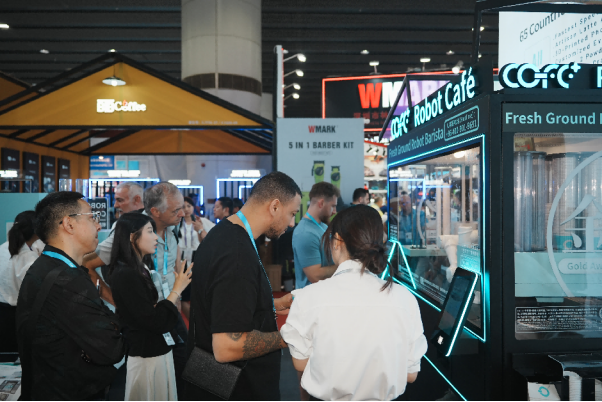
7th-Genertion Smart Robot Coffee Kiosk Arrives at the Belt and Road Core Hub, Ushering in a New Service Era Along t……
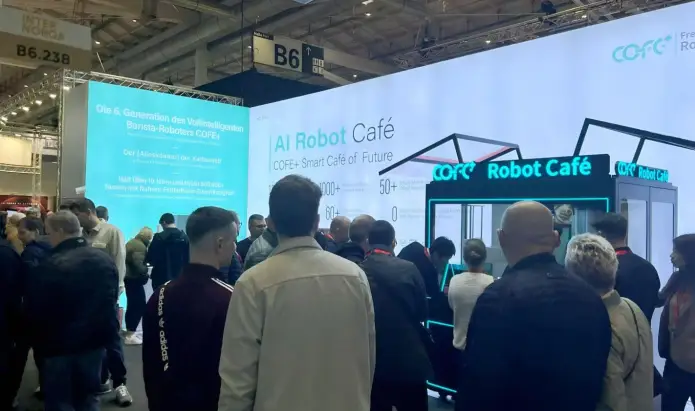
CHICAGO, May 12, 2026 (GLOBE NEWSWIRE) – Shanghai Hi-Dolphin Robot Technology today announced the U.S. debut of its 7th‑……