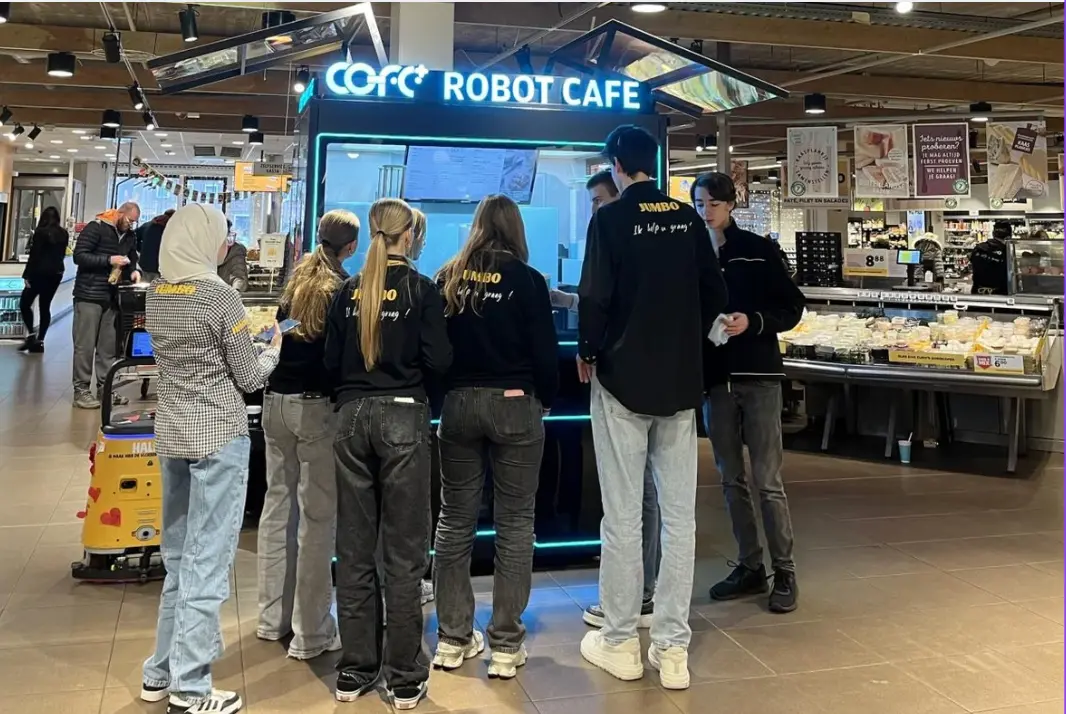
The Rise of Professional Robotic Café Technology: What COFE+ Is and Why It Matters
TL;DR — COFE+ is a fully automated robotic coffee kiosk that grinds fresh beans, brews espresso and lattes, creates latt……

Plant managers keep discovering the same gap. The 2:30 a.m. shift canteen is dark, the vending machine is out of order, and the only fresh coffee option is a car ride to a 24 hour convenience store. A robot coffee kiosk for factory workers changes that by matching service to shift schedules instead of forcing workers to fit retail coffee hours. At Hi-Dolphin, we have seen factory buyers overinvest in break room equipment and underinvest in shift-aware service design. The return comes when kiosk placement, menu limits, and payment access follow the actual movement of workers across three shifts.
Staffed canteens operate for the day shift because that is when labor is available and when the caterer can spread fixed costs. Production, however, does not stop at five. A three-shift plant runs coffee demand across 24 hours, with intense bursts at 06:00, 14:00, and 22:00 rather than a smooth retail curve. Vending machines fill the gap with instant powder and canned drinks, which workers learn to ignore after the first month. A traditional coffee bar is worse at 02:00. Keeping one barista on site for an overnight shift costs more than the coffee revenue it generates, and the service still slows down when a machine fault requires attention.
Most factory coffee planning treats the break room as a static amenity. It should be treated as a production support system. The peak is not a lunch hour. It is a 15 minute interval between lines stopping and lines restarting. If the service cannot complete most orders within that window, workers walk away empty-handed or stop coming.
This early failure mode is invisible in monthly sales reports because the lost transactions never register. The kiosk only records the people who stayed, not the ones who saw the queue and left.
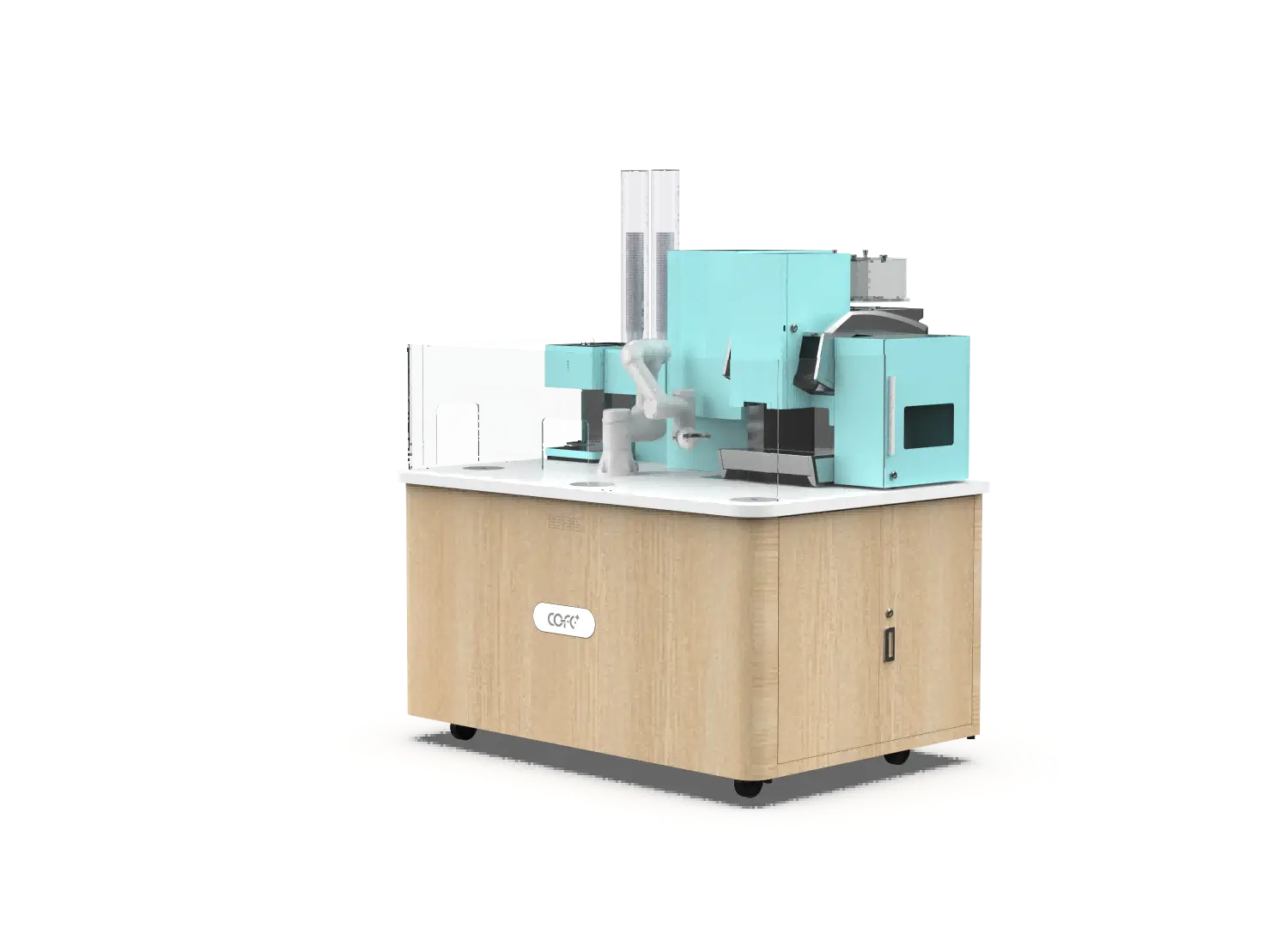
A robot coffee kiosk for factory use removes the staffing constraint from every shift boundary. The COFE+ 7th generation indoor kiosk serves a cup in 43 to 60 seconds and operates continuously for roughly 1,000 cups per day. That capacity maps more closely to shift-based demand than to high street retail. Instead of opening and closing around employee availability, the machine follows the production calendar.
| Factory pattern | Coffee demand shape | Kiosk service match | Staff required |
|---|---|---|---|
| Two-shift operation | Two sharp peaks at 06:00 and 14:00 | Continuous service with remote stock alerts | None on site |
| Three-shift operation | Third peak at 22:00 to 02:00 | 24/7 unattended serving | None on site |
| Weekend maintenance shift | Small, scattered demand | On-demand serving without opening a canteen | None on site |
The key number is not daily output. It is the completion rate inside a compressed break window. A 60 second cup time means a single kiosk can clear roughly 45 to 60 workers in a 20 minute break if the queue area is wide enough and the menu is not overloaded. Plants with more than 120 workers per shift and a single 15 minute break should plan two kiosks or split placement between opposite ends of the line. This is the operational judgment that separates a working amenity from a novelty. The indoor kiosk carries more than 300 drink recipes and 5,000 plus combinations, so the menu can adapt to regional and seasonal worker preferences without changing hardware.
Factories are not shopping malls. The best location is usually near the main shift entry route or the junction between production and the canteen, not tucked inside an underused recreation room. Workers will not walk 150 meters across a dark yard for coffee at 02:00. Placement should follow the same logic as a safety station: visible, repeatable, and on the natural path between clocking in and the line.
Utility preparation creates more delay than equipment installation in most factory projects. Every indoor kiosk needs a dedicated power supply compatible with 110V or 220V, a potable water connection, drainage, and a stable internet link for cloud monitoring and remote diagnostics. The machine does not require a full kitchen extraction system, but enclosed plant rooms and heat-heavy areas need ventilation confirmation. Hi-Dolphin technical teams review floor load, ambient temperature, and access for ingredient refills before the site survey closes.
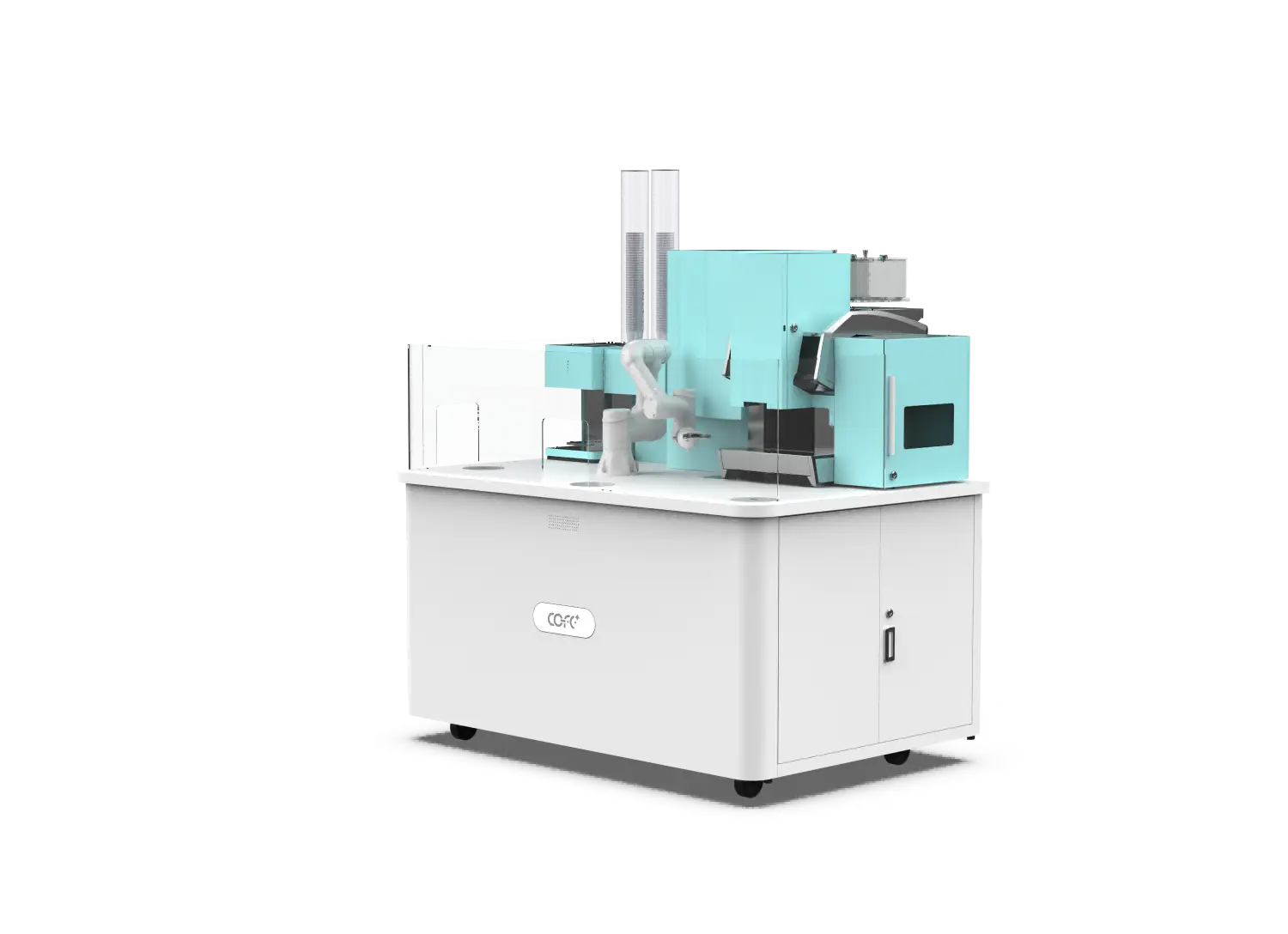
Placement near production also means thinking about contamination and cleaning. The indoor kiosk is built with an antimicrobial stainless steel interior and automatic high temperature sterilization, which matters when the same facility produces dust, oil mist, or food-grade components. Certifications such as FDA, CE, UKCA, KC, and SASO are useful starting points, but the plant team still needs to confirm local food safety rules and any union or canteen licensing requirements for unmanned food service.
The menu that works in a factory is not the menu that works in a shopping mall. Shift workers tend to order fast, repeat, and avoid long decision trees. A short menu of 30 to 50 core drinks with three bean options and a few milk choices performs better than a 300 item catalog buried in a touchscreen. The kiosk can hold 300 plus recipes, but the operator should surface only the 20 highest demand drinks on the first screen. Additional items remain available under search or seasonal tabs, so menu depth does not create queue friction.
Payment integration deserves more attention than cup design. If the plant uses employee badges, canteen cards, or payroll-linked mobile wallets, the kiosk should be configured to accept those credentials from day one. Retrofitting payment integration after commissioning is slower and creates a second onboarding barrier. For plants with cashless policies, QR payment and card rails cover most workers, but the access method must be tested on a night shift, not only in the general manager’s office.
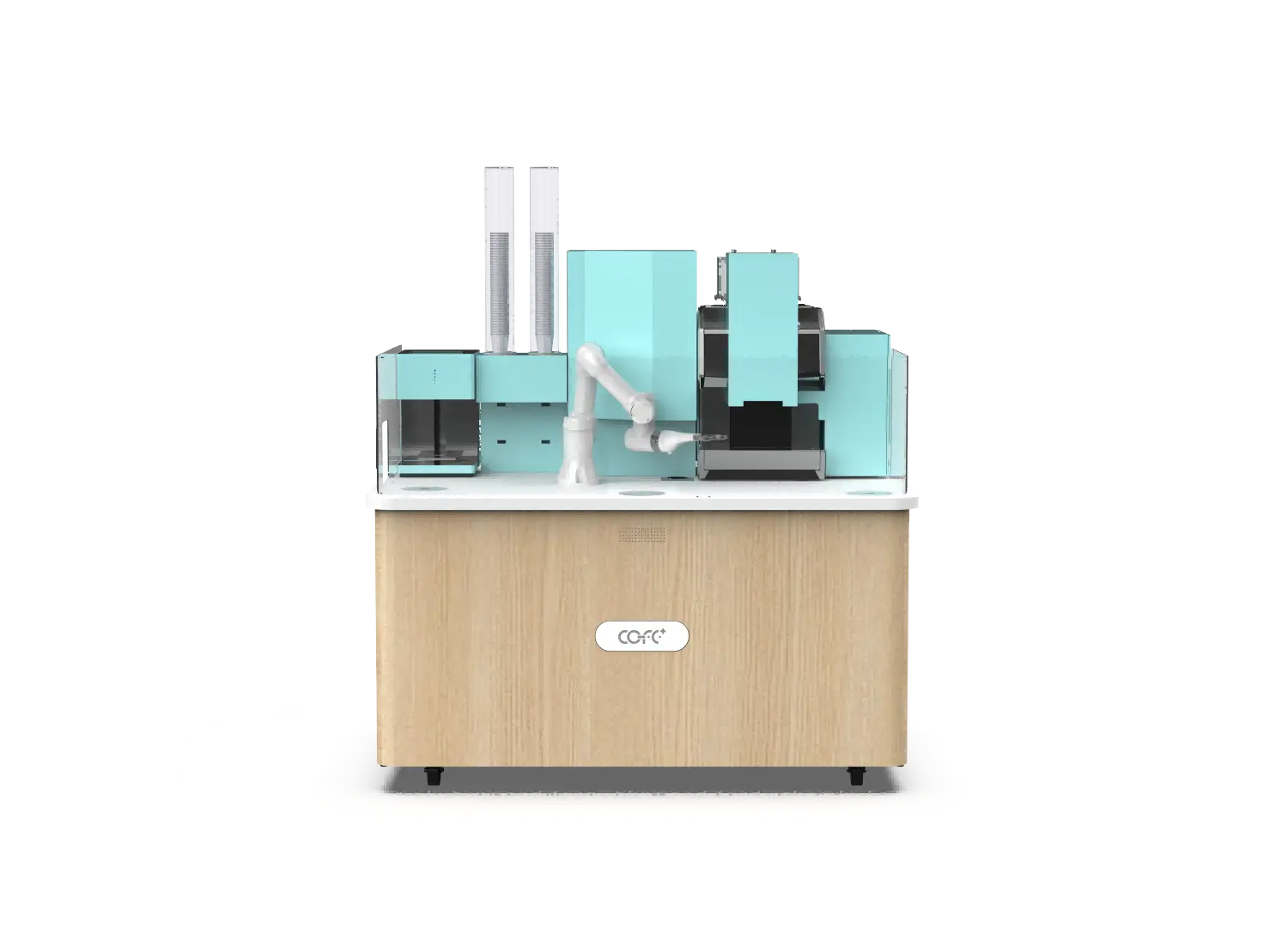
Worker adoption follows the same pattern as any production tool. If the first interaction is fast and the drink is consistent, repeat use stabilizes within two to three weeks. If the first interaction fails to read a badge or makes the worker wait behind a complex customization screen, the kiosk becomes a break room ornament.
If your factory runs a three-shift schedule with break windows under 20 minutes, it is worth confirming peak throughput and queue layout before finalizing the kiosk site plan. Send your shift pattern and canteen footprint to sales@hi-dolphin.com and we will check the demand assumptions with you.
The most common factory buying mistake is using retail-style foot traffic to estimate revenue. Factory demand is binary across the day: near zero between breaks and extremely concentrated during shift handovers. The business case should therefore be built on shift schedules, headcount per shift, break length, and the distance from the production floor to the proposed kiosk location. Cup price and cost per cup still matter, but they are inputs into the model, not the model itself.
COFE+ indoor kiosk operating cost sits around $0.30 to $0.70 per cup before location overhead. A machine that replaces around six baristas removes the single largest variable cost from factory coffee service. Payback in six to twelve months is a reasonable planning range, but only when the location converts break window demand. A kiosk placed far from the line or hidden behind a canteen wall will not hit those numbers regardless of the coffee quality.
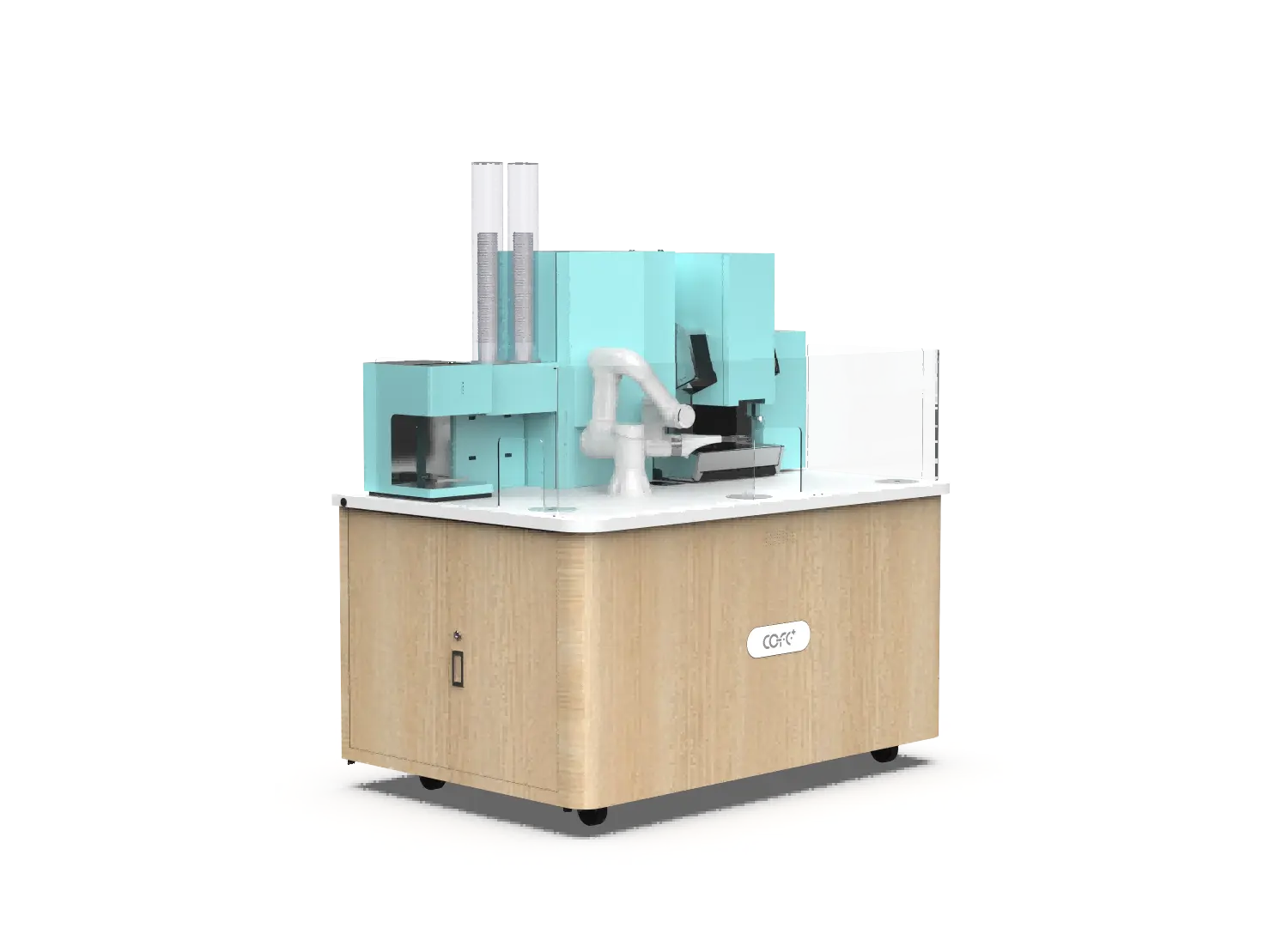
If you are evaluating a factory kiosk deployment, start with the shift roster, not the equipment list. Send your three-shift headcount, break windows, and a simple floor plan to sales@hi-dolphin.com or call +86 131 6630 1290. We will map the expected cup conversion against the kiosk capacity and tell you honestly whether one machine or two makes sense for your site.
A single COFE+ indoor kiosk can complete most orders for a shift of 45 to 60 workers in 15 minutes, assuming a wide queue area and a simplified first screen. The 43 to 60 second cup time is the limiting factor, but the real constraint is usually selection time rather than brewing speed. For shifts above 120 workers, plan two kiosks or position one kiosk at each end of the main break corridor. The exact number depends on menu length, payment method speed, and whether workers pre-order from a mobile device.
A common assumption is that any food service in a plant needs a human on site. That is not the case for the COFE+ kiosk. The machine operates unattended through cloud monitoring, automatic cleaning, and remote diagnostics. Ingredient refills and preventive service follow a scheduled route rather than a fixed on-site shift. What the factory still needs is a named local contact for cleaning verification, waste removal, and emergency access. Most sites schedule one short daily check against a standard checklist, which is a fraction of the labor a staffed coffee bar requires.
It depends on whether the kiosk is placed indoors in a canteen or near a production line. A standard indoor installation requires dedicated power compatible with 110V or 220V, potable water, drainage, and a stable internet connection. A heat-heavy or enclosed plant room may need additional ventilation confirmation. The site survey should also check floor load and access for ingredient restocking. Preparing these utilities before delivery shortens the timeline from site approval to first cup and avoids the most common cause of delayed factory pilots.
In deployments we have planned, the fastest validation is a four-week pilot in the busiest break path rather than a low-traffic corner. Track repeat use by shift, night shift conversion, queue abandonment, and ingredient refill cadence. Those four numbers reveal whether the location, menu, and payment method fit real worker behavior. Share your shift schedule and site constraints with sales@hi-dolphin.com and we will confirm the pilot scope and the data you need to collect.
TL;DR — COFE+ is a fully automated robotic coffee kiosk that grinds fresh beans, brews espresso and lattes, creates latt……
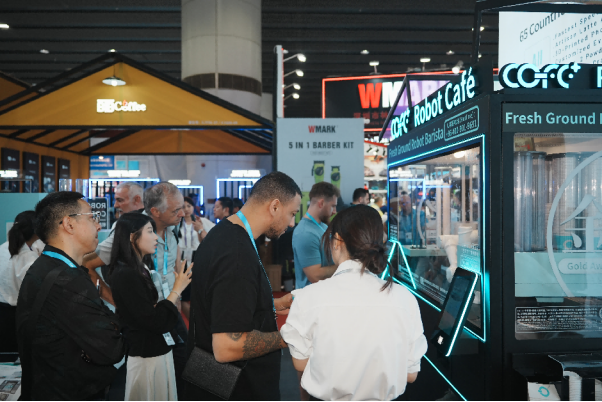
7th-Genertion Smart Robot Coffee Kiosk Arrives at the Belt and Road Core Hub, Ushering in a New Service Era Along t……
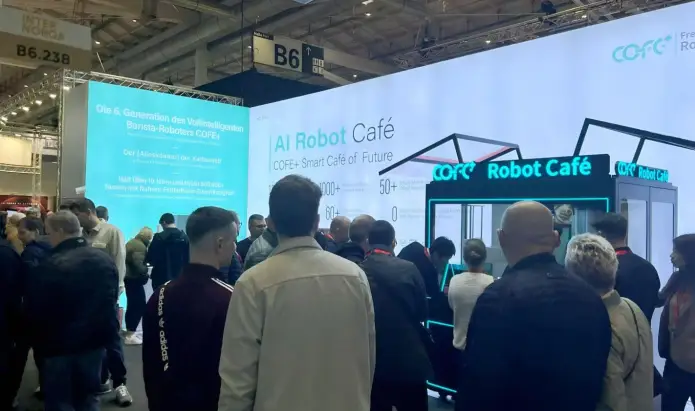
CHICAGO, May 12, 2026 (GLOBE NEWSWIRE) – Shanghai Hi-Dolphin Robot Technology today announced the U.S. debut of its 7th‑……