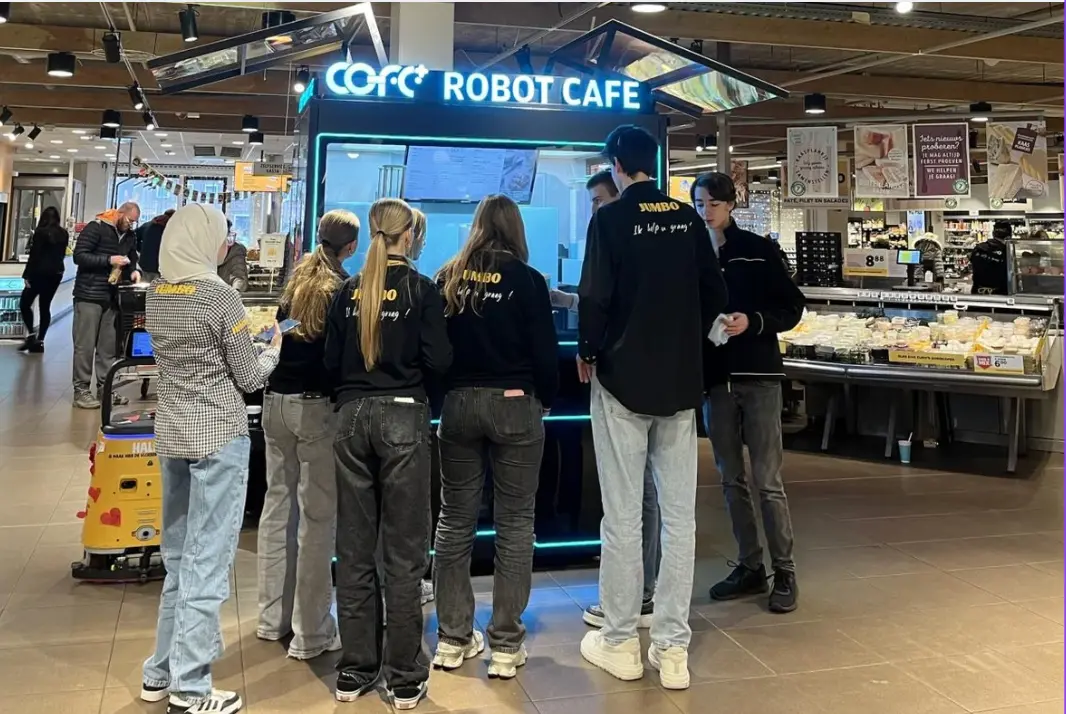
The Rise of Professional Robotic Café Technology: What COFE+ Is and Why It Matters
TL;DR — COFE+ is a fully automated robotic coffee kiosk that grinds fresh beans, brews espresso and lattes, creates latt……

Traditional coffee shops live or die by location. A miscalculated lease, an underperforming corner, a neighborhood that shifts demographics mid-contract: these site selection failures account for a significant portion of café closures within the first three years. Robot coffee kiosks fundamentally change this equation. With a 2.35 m² footprint, plug-and-play deployment, and the ability to relocate within hours rather than months, operators can test locations with minimal capital exposure, then scale what works and abandon what doesn’t. I’ve watched operators pivot a single COFE+ unit across three venues in one quarter, something impossible with a fixed café locked into a five-year lease. The mobility itself becomes the risk mitigation strategy.
The traditional café model treats location as a permanent bet. Operators sign multi-year leases based on foot traffic studies, demographic projections, and competitor mapping, all of which assume static conditions. Reality rarely cooperates. A new metro exit redirects pedestrian flow. A corporate tenant vacates the anchor building. A competing chain opens across the street with deeper pockets for loss-leader pricing.
The sunk costs compound quickly. Lease deposits, renovation expenses, equipment installation, and staff training all precede the first cup sold. When the location underperforms, operators face a brutal choice: absorb losses for years hoping conditions improve, or pay substantial penalties to exit early. Neither option preserves capital for the next attempt.
I’ve seen operators spend six months and significant resources on site selection analysis, only to discover within weeks of opening that the morning rush they projected never materializes because the adjacent office building shifted to hybrid work schedules. The analysis wasn’t wrong at the time; the conditions simply changed faster than a fixed asset could adapt.
A robot coffee kiosk operates on fundamentally different economics. The COFE+ 7th Generation unit requires roughly 2.35 m² of floor space, draws standard 110V/220V power, and needs no plumbing renovation or kitchen exhaust systems. Deployment takes days, not months.
| Factor | Fixed Café | Robot Coffee Kiosk |
|---|---|---|
| Typical footprint | 40–100 m² | 2.35 m² |
| Lease commitment | 3–5 years | Month-to-month possible |
| Relocation timeline | 3–6 months (if possible) | 24–48 hours |
| Renovation cost | $50,000–$200,000+ | Near zero |
| Staff requirement | 4–8 full-time | Zero on-site |
This portability transforms site selection from a high-stakes gamble into an iterative experiment. Operators can deploy a unit in a shopping mall food court, measure actual sales data for 60 days, then decide whether to expand, relocate, or renegotiate terms based on verified performance rather than projections.
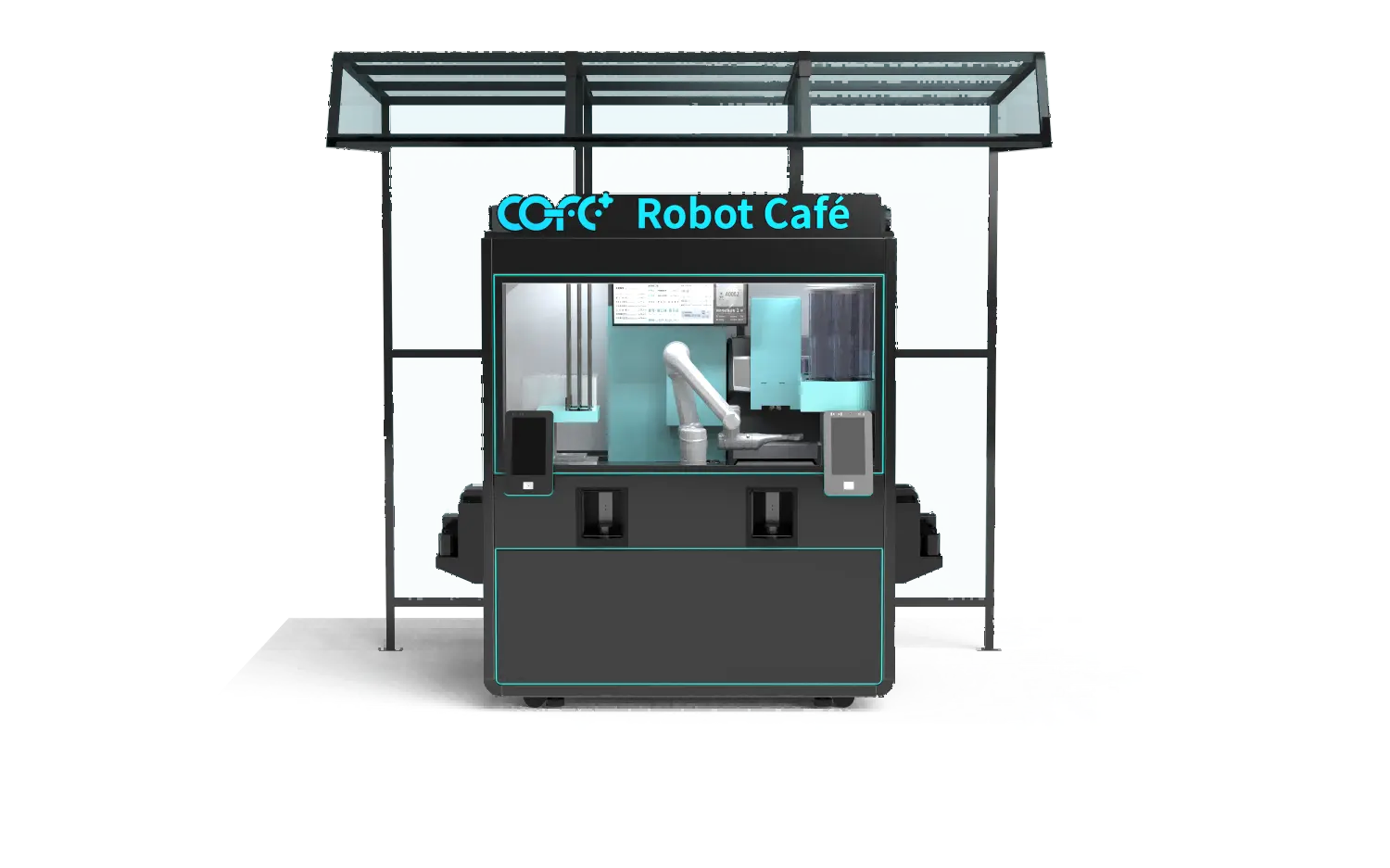
The outdoor-rated COFE+ variant extends this flexibility further. Operating from -20°C to 45°C with IP54 protection, it opens locations previously impossible for traditional cafés: outdoor plazas, transit station perimeters, festival grounds, and seasonal tourist areas. A beach boardwalk that generates strong summer traffic but dies in winter becomes viable when the unit can relocate to an indoor mall for the off-season.
When a traditional café fails due to poor site selection, the losses extend far beyond the initial investment. Operators typically face lease termination penalties ranging from several months to the full remaining term. Equipment purchased for that specific buildout often sells at significant discounts on secondary markets. Staff severance and unemployment insurance claims add further costs. The reputational damage with landlords and investors makes securing the next location harder and more expensive.
Robot kiosk operators face none of these structural penalties. A unit that underperforms in one location retains its full value when moved to another. The same machine that struggled in a quiet office lobby might thrive in a university student center. The capital remains productive rather than trapped in a failed fixed asset.
I track operators who run multiple COFE+ units across different venue types specifically to diversify their location risk. When one site underperforms, the portfolio absorbs it while they test alternatives. This approach is structurally impossible with fixed cafés, where each location represents an isolated, illiquid bet.
The most sophisticated robot kiosk operators treat their first deployment in any new market as a paid pilot rather than a permanent installation. They negotiate short-term agreements with venue owners, often structured as revenue shares rather than fixed rent. Both parties benefit: the venue gets a coffee amenity with zero capital outlay, while the operator gets real sales data before making any long-term commitment.
This pilot approach reveals information that no amount of pre-opening analysis can provide. Actual purchase patterns by hour and day. Real customer preferences from the 300+ drink menu. Peak capacity utilization rates. Maintenance requirements in that specific environment. After 90 days of operation, the operator knows exactly what that location is worth and can negotiate accordingly, or walk away with the unit intact.
The COFE+ cloud monitoring system accelerates this learning curve. Operators can compare performance across multiple test locations in real-time, identifying which venues justify expansion and which should be abandoned before losses accumulate. Traditional café operators wait months for financial statements to reveal what robot kiosk operators see in their dashboards daily.
Certain high-value locations simply cannot accommodate traditional cafés. Hospital corridors where 24-hour service matters but kitchen facilities are prohibited. Corporate lobbies where landlords refuse food-service tenants due to pest and odor concerns. Transit stations where every square meter commands premium rates. Theme parks where portable concessions must relocate based on crowd flow patterns.
Robot coffee kiosks access all of these. The fully enclosed waste system eliminates the hygiene objections that block traditional food service. The compact footprint fits spaces that would never support a café buildout. The 24/7 unattended operation serves demand patterns that no staffed café could economically cover.
| Venue Type | Fixed Café Viability | Robot Kiosk Viability |
|---|---|---|
| Hospital corridors | Rarely permitted | Ideal (contactless, 24/7) |
| Corporate lobbies | Often rejected | Welcomed (no kitchen) |
| Transit platforms | Space prohibitive | Compact fit |
| Outdoor plazas | Weather dependent | All-weather rated |
| Event venues | Temporary only | Permanent or mobile |
I’ve positioned COFE+ units in locations where traditional cafés failed specifically because those failures created openings. Venue owners who experienced the headaches of a café tenant, the grease trap maintenance, the staff turnover, the operating hour disputes, often welcome a robot alternative that eliminates those management burdens while still providing the amenity their visitors expect.
Every operator eventually faces a location that doesn’t work. The question is what that failure costs.
For a fixed café, exiting a bad location is a project measured in months and tens of thousands of dollars. Lease negotiations, equipment liquidation, staff transitions, and contractor coordination all consume time and capital. Many operators simply absorb losses rather than face the exit costs, hoping conditions improve. They rarely do.
A robot kiosk exit takes a day. Disconnect power, load the unit onto a truck, deliver it to the next location. The same machine that generated losses yesterday can generate profits tomorrow in a different venue. No lease penalties. No equipment write-offs. No severance packages.
This exit optionality changes how operators think about risk. When failure is cheap and reversible, experimentation becomes rational. When failure is expensive and permanent, operators become conservative in ways that often prevent them from finding the best opportunities.
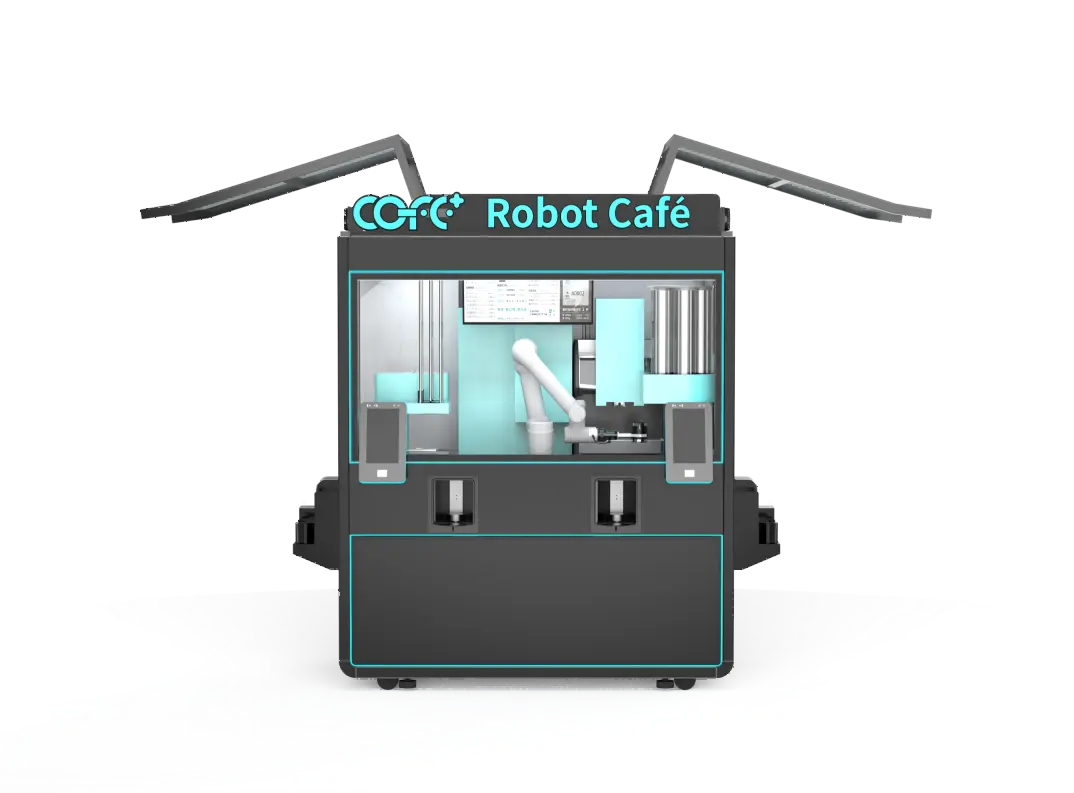
COFE+ offers four distinct formats, each optimized for different location profiles. Selecting the right format for each venue maximizes revenue while minimizing the footprint premium operators pay in high-value locations.
The standard indoor kiosk suits high-traffic retail environments where visibility and speed matter most. Shopping malls, airport terminals, and university common areas represent the core use case. The 43–60 second service time handles queue volumes that would overwhelm a traditional counter during peak periods.
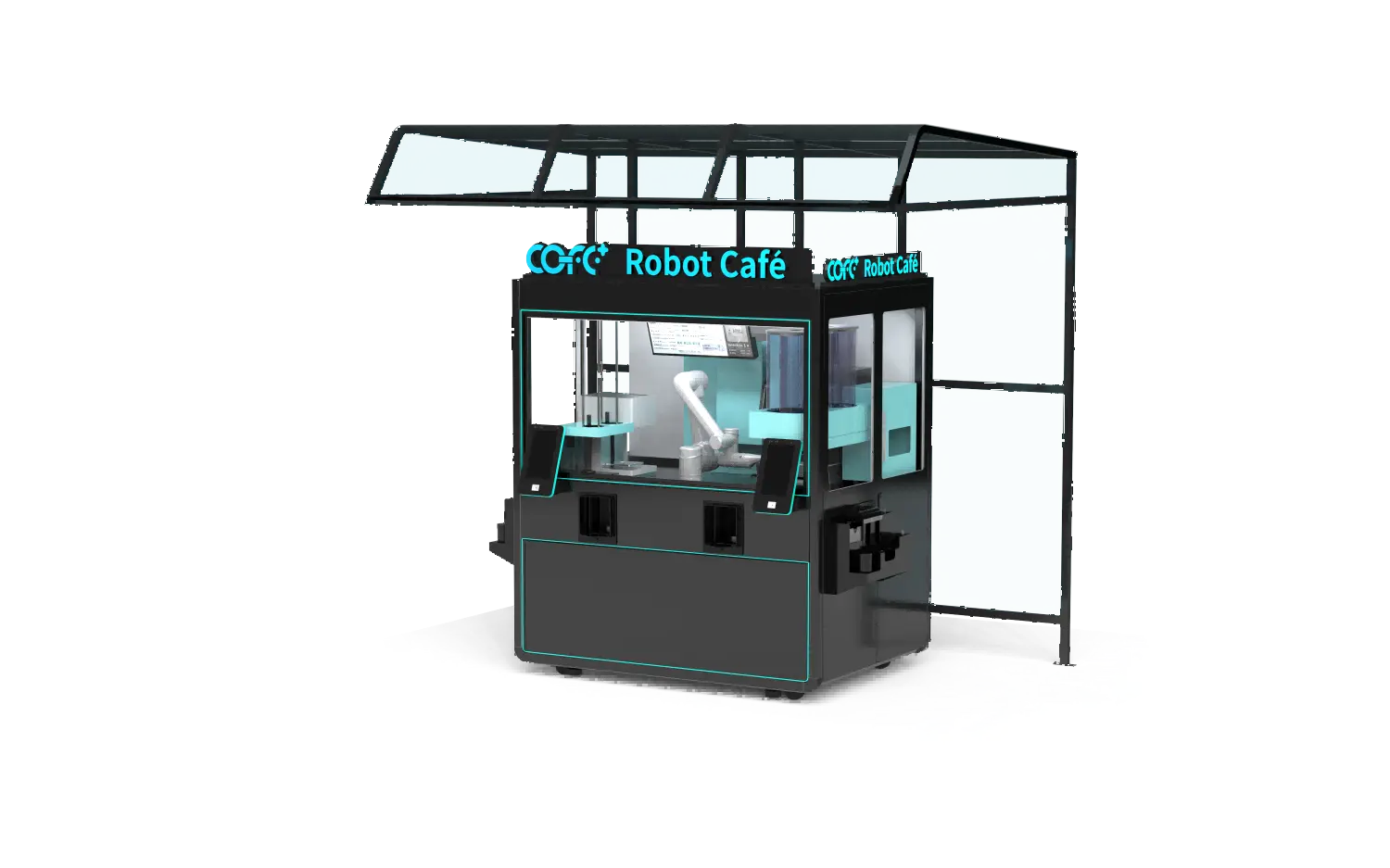
The outdoor kiosk extends the location universe to plazas, parks, gas stations, and transit station exteriors. The all-weather rating means no seasonal shutdowns, no weather-related revenue losses, and no climate control costs.
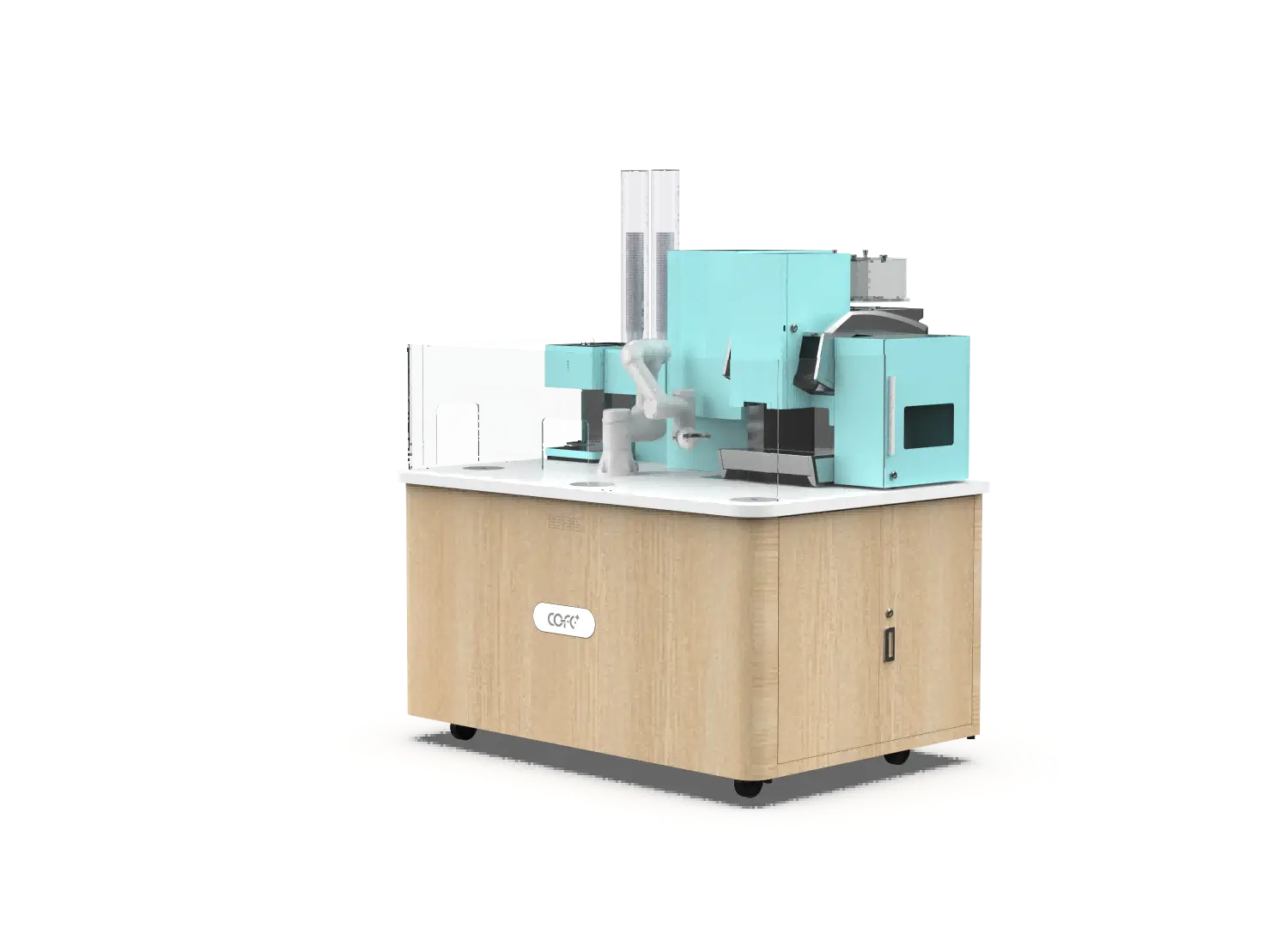
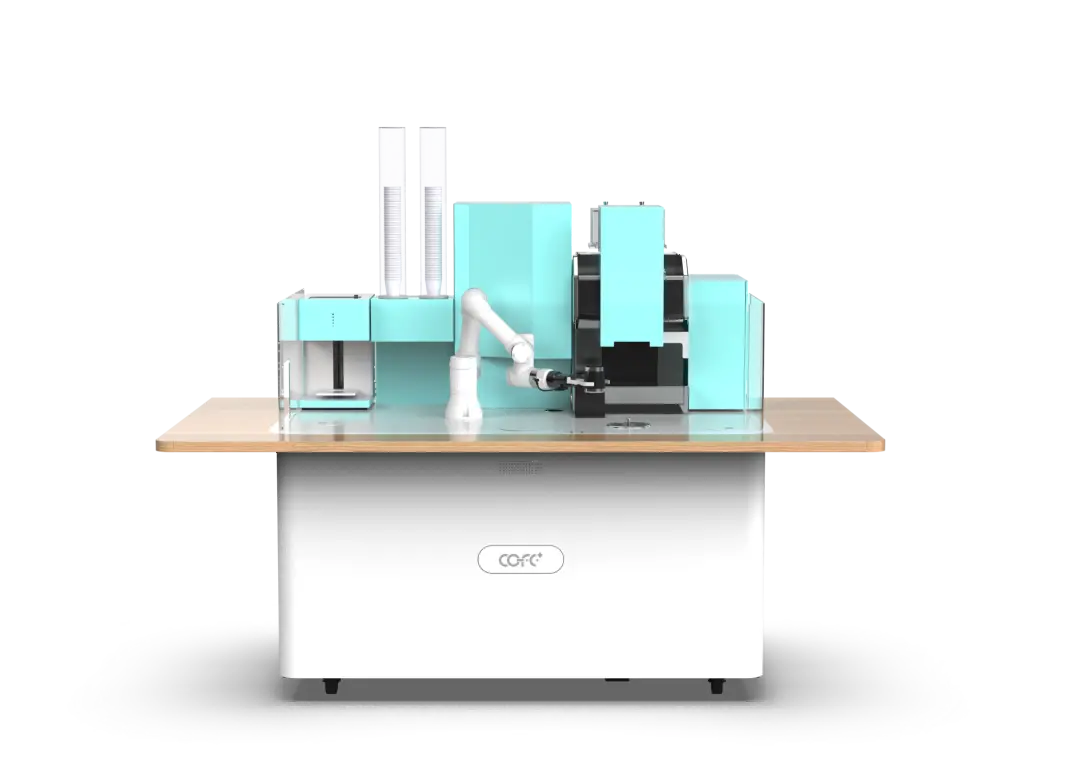
The robot coffee bar transforms from a compact counter into a four-seat social space, ideal for hotel lobbies, co-working spaces, and premium retail environments where dwell time matters. The robot coffee counter integrates into existing bar or lounge designs, turning dead space into a revenue-generating amenity without the visual disruption of a standalone unit.
If your target venues span multiple categories, it is worth discussing which format combinations optimize your portfolio before committing to a single configuration. Reach out at sales@hi-dolphin.com or +86 131 6630 1290 with your venue list and we can map the right units to each location.
The physical move is straightforward: disconnect power, secure internal components, transport, reconnect at the new site. The COFE+ 7th Generation requires no plumbing and runs on standard electrical, so there’s no infrastructure teardown. What takes longer is the administrative side, negotiating the new venue agreement, updating business licenses if jurisdictions change, and reconfiguring the cloud management system for the new location. Operators who maintain relationships with multiple venue owners can execute the full transition in 24–48 hours. Those starting from scratch on the new site should budget a week for paperwork.
High foot traffic with limited dwell time produces the strongest unit economics. Transit hubs, mall corridors, hospital lobbies, and university buildings all fit this profile. Locations where people want coffee but won’t wait in a traditional café line, or where no café exists due to space constraints, represent the clearest opportunities. Outdoor placements work well in climates where foot traffic remains consistent year-round, or where the unit can relocate seasonally. If your target location falls outside these categories, share the specifics and we can assess whether the traffic pattern supports the investment.
The 24/7 unattended operation means the unit captures demand whenever it occurs, not just during staffed hours. A location with unpredictable peaks, say a convention center that’s empty most days but packed during events, still generates revenue during those bursts without requiring operators to staff up for uncertain schedules. The cloud monitoring system tracks hourly sales patterns, allowing operators to identify whether inconsistent traffic is truly random or follows predictable cycles that can be optimized. For locations with genuinely low baseline traffic, the relocation option remains available.
Unit economics vary by local pricing and cost structure, but as a rough benchmark, locations generating 50–80 cups per day typically reach profitability given the low operating costs. The COFE+ can serve up to 1,000 cups daily, so the ceiling is high, but the floor is lower than most operators expect because there’s no staff cost to cover during slow periods. Locations that would be marginal for a staffed café often work well for a robot kiosk. If you’re evaluating a specific site, send your foot traffic estimates and local pricing assumptions to sales@hi-dolphin.com and we can run the numbers together.
COFE+ units are designed for mobility, and the warranty covers the machine regardless of location within the operator’s territory. The cloud-based remote diagnostics system works identically whether the unit sits in a mall or a parking lot. Maintenance schedules are usage-based rather than location-based, so moving the unit doesn’t reset or void any coverage. Operators who relocate frequently should confirm their service agreement includes the new region if they’re crossing into different distributor territories.
TL;DR — COFE+ is a fully automated robotic coffee kiosk that grinds fresh beans, brews espresso and lattes, creates latt……
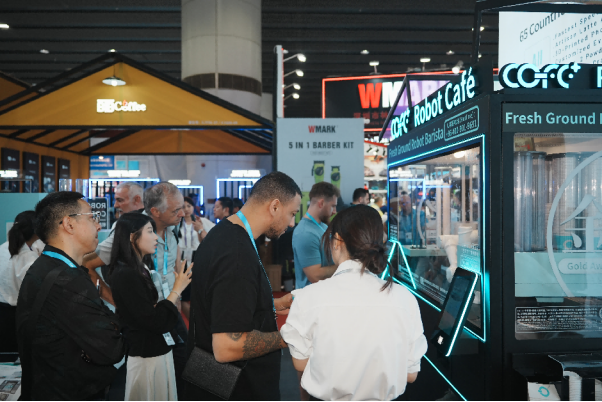
7th-Genertion Smart Robot Coffee Kiosk Arrives at the Belt and Road Core Hub, Ushering in a New Service Era Along t……
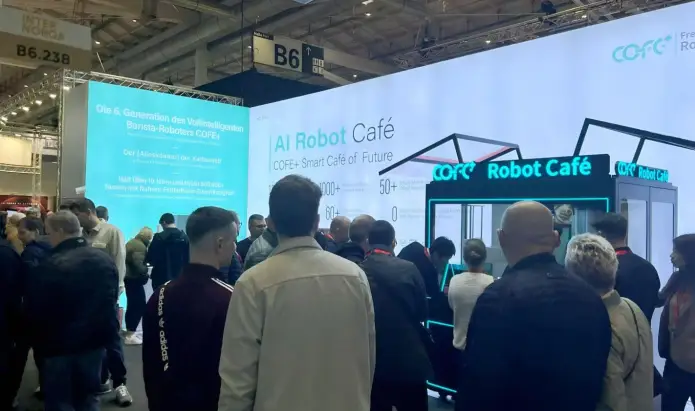
CHICAGO, May 12, 2026 (GLOBE NEWSWIRE) – Shanghai Hi-Dolphin Robot Technology today announced the U.S. debut of its 7th‑……