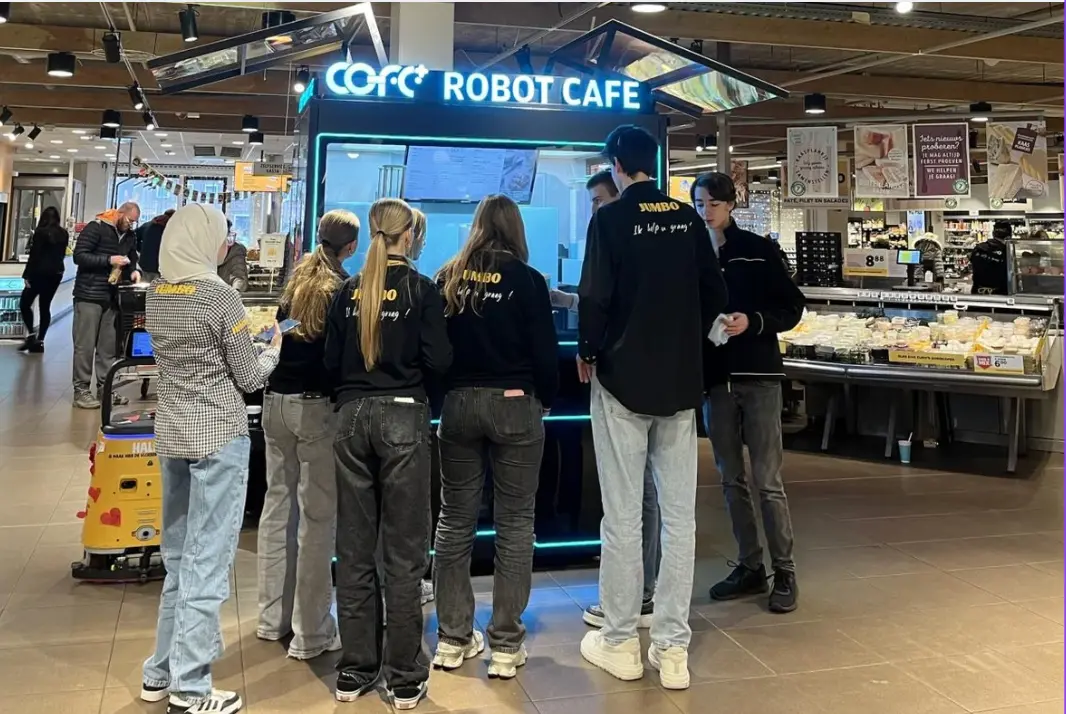
The Rise of Professional Robotic Café Technology: What COFE+ Is and Why It Matters
TL;DR — COFE+ is a fully automated robotic coffee kiosk that grinds fresh beans, brews espresso and lattes, creates latt……

Most robot coffee kiosk operators spend their energy chasing foot traffic, while the fastest path to higher revenue sits inside the machine: syrups and toppings. A robotic barista heats water and grinds beans with near-zero labor, but the same machine can also push a caramel latte instead of a plain one—often for an extra dollar or more. That difference, repeated several hundred times a day, turns a decent location into an exceptional one. The lever is not the robot’s arm; it is how you structure the syrup and topping offer so customers reach for it without prompting.
A human barista can suggest an extra shot or a flavor pump at the counter. A robot kiosk has no barista to make that suggestion, so the upsell has to be built into the order flow itself. When the machine does the work, the add-on margin flows almost entirely to the bottom line. A caramel syrup pump costs around $0.10 to $0.15 in consumables and can be sold for $0.50 to $1.00, which means the syrup alone often carries a higher margin than the base coffee.
Across the COFE+ network, operators who actively tier their syrup offers—free classic syrup included in the base price, premium seasonal flavors as paid add-ons—consistently see average order values lift by 20 to 35 percent compared to locations that only offer plain drinks. The math is simple: if a kiosk serves 400 cups per day at an average ticket of $4.50, a 25 percent AOV increase from syrups and toppings adds roughly $450 in daily revenue without adding a single customer.
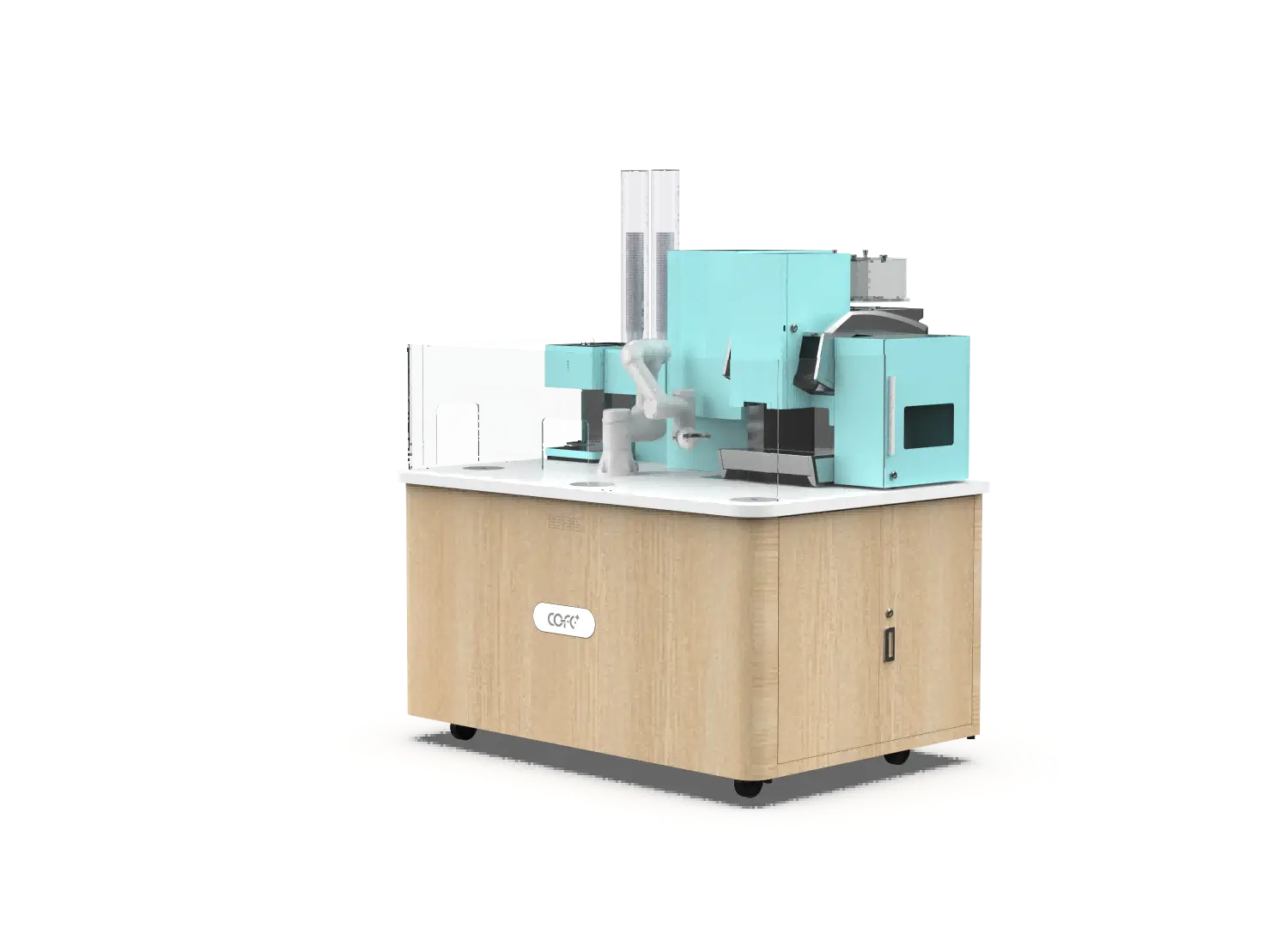
Not every topping that works behind a manual counter translates to an unmanned machine. A robot coffee kiosk relies on sealed cartridges, peristaltic pumps, and refrigerated compartments to handle syrups, sauces, and powders. Shelf-stable liquid syrups—vanilla, hazelnut, caramel—pose the fewest operational challenges. Thicker sauces like chocolate or white mocha require temperature-controlled lines and periodic cleaning cycles. Dry toppings such as cinnamon powder or cocoa dust can be dispensed from sealed canisters, but whipped cream and fresh fruit are typically not feasible without adding a dedicated cooling module and frequent service visits.
| Ingredient Type | Robot Kiosk Compatible | Operational Notes |
|---|---|---|
| Liquid syrup (vanilla, caramel, hazelnut) | Yes | Pump-based, minimal maintenance |
| Thick sauce (chocolate, white mocha) | Yes, with temp control | Requires heated line; clean weekly |
| Powder topping (cinnamon, cocoa, matcha) | Yes | Sealed canister; monthly refill |
| Whipped cream | Limited | Needs separate chilling unit; high waste risk |
| Fresh fruit / berry | No | Rapid spoilage; not robot-compatible |
Our field data shows that operators who limit the add-on menu to the three most compatible ingredient types—liquid syrups, thick sauces, and powders—achieve the highest uptime and the lowest complaint rate. Adding a fourth category usually introduces a maintenance burden that eats into the margin gain. The winning lineup for most indoor kiosks is two classic syrups, one premium seasonal syrup, one chocolate sauce, and one dry topping.
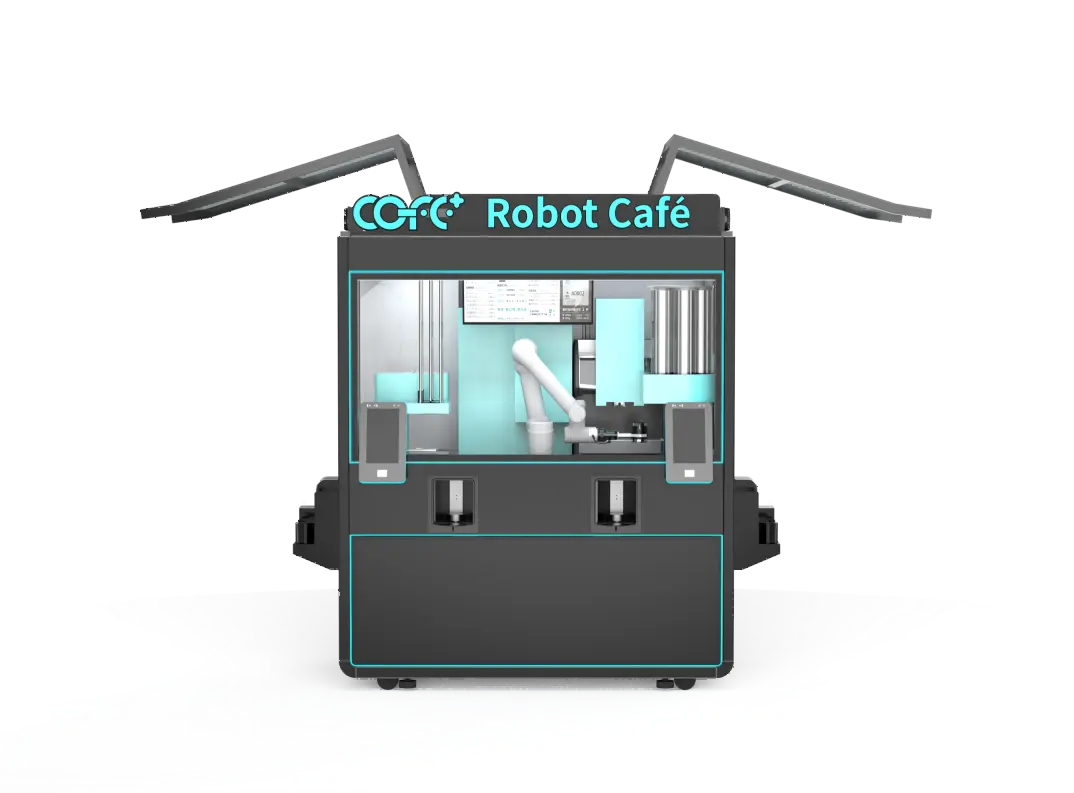
Where a human barista asks “Would you like any syrup with that?” at the end of an order, a kiosk screen has to place the question at exactly the right moment. Most unsuccessful menus bury syrups and toppings in a customization sub-menu after the customer has already committed to the drink. By then, the decision is made and the customer is moving toward payment. The effective alternative is to surface the add-on choice immediately after drink selection but before cup size confirmation.
We tested several flow sequences on COFE+ 7th-gen kiosks across shopping mall and university sites. When the screen offered “Make it a Caramel Latte?” as a single-tap upgrade right after the customer chose a latte base, add-on conversion ran above 40 percent. When the same prompt appeared three taps deep in a flavor modifier menu, conversion dropped to around 12 percent. The takeaway: treat the upsell as part of the main order path, not a buried extra.
A second layer that works well is a one-tap combo upsell—for instance, “Large + Syrup Shot for $0.70 extra” bundled into a single button. Bundling removes the mental arithmetic and often lifts take rates by another 10 to 15 percent over a two-step a la carte offer.
If your program involves highly seasonal or local ingredients, the screen logic also needs to be updatable remotely. A dynamic menu backend that pushes a “Summer Mango Latte” button during hot months and removes it in winter keeps the upsell relevant without a site visit. This is where tightly integrated IoT control makes a practical difference, and it is worth confirming cloud menu editing capability before finalizing your kiosk model. Reach out at sales@hi-dolphin.com if you are evaluating platforms that need frequent menu rotation.
Every topping you add to the menu brings a storage requirement and a spoilage window. A syrup bottle in a refrigerated compartment inside a kiosk can last two to three weeks after opening, depending on foot traffic and ambient temperature. A chocolate sauce line, however, may need flushing if the machine sits idle for more than 48 hours. Operators sometimes load five or six syrup flavors to project a “coffee shop feel,” only to find that two of them expire before the first bottle is finished.
Our operational baseline for indoor locations is to start with three syrup SKUs total: one universal flavor (vanilla), one regional favorite (caramel in most markets), and one seasonal rotator. That keeps the weekly refill cycle manageable and nearly eliminates waste from slow movers. The refill planning can be handled by the same remote inventory dashboard that tracks bean and milk levels, so the topping management doesn’t require a separate workstream.
There is a narrow window where the add-on price feels automatic. Too low and you leave money on the table. Too high and the customer skips it, which is worse because you also lose the habit of choosing extras. Across the COFE+ install base, the syrup upsell price that maximizes revenue per transaction sits between 15 and 25 percent of the base drink price. For a $4.00 latte, that means $0.60 to $1.00. At the high end of that range, about 30 percent of customers still add the shot, which yields more total profit than a lower price with higher uptake.
The same principle applies to dry toppings: a $0.40 cinnamon dust upcharge on a $4.00 cappuccino feels almost invisible to the customer and can generate an extra $100 per day at a moderately busy location. Few operators track topping-level P&L separately, but the ones who do are usually surprised by how much of their monthly profit originates from a $0.15 ingredient sold for $0.60.
Once the menu and flow are live, the key metric is not simply AOV—it is net profit per cup. An effective syrup upsell strategy adds cost in three places: ingredient consumption, slightly longer drink preparation (a pump of syrup adds about 3–5 seconds to a 45-second cycle), and additional cleaning duty cycles. The question is whether the revenue offset justifies all three. In every COFE+ deployment where we isolated the data, it does, and by a comfortable margin. A kiosk that averages 400 cups per day with a 25 percent add-on rate and a $0.70 average upsell price clears over $70 in extra daily profit after deducting all incremental costs, which translates to roughly $25,000 a year per unit.
The lift tends to be highest in transit and office locations where customers are in a hurry and appreciate a one-tap upgrade. University and leisure sites, by contrast, see slightly lower add-on rates but higher premium topping attachment when seasonal flavors are available—think pumpkin spice in October, mint in December. In those settings, the upsell income becomes a predictable seasonal spike rather than a steady line, and the menu rotation calendar becomes as important as the base pricing strategy.
Yes, but only if the machine is engineered for it. The COFE+ 7th-gen platform runs heated sauce lines with automatic purge cycles during idle periods. Machines without that design will clog within a few days, especially in warm environments. Before launching a sauce upsell, confirm the model’s heated line specs and the recommended cleaning interval. If you are comparing kiosk models, ask whether the sauce module is field-replaceable without a technician.
Start with three. Pick a universal flavor like vanilla, a local favorite like caramel or hazelnut, and one seasonal rotating flavor. This keeps the refill cadence manageable—usually once a week—and nearly eliminates expired inventory. Operators who launch with five or six flavors almost always end up consolidating within the first quarter after seeing waste reports.
The time impact is small. A single syrup pump adds roughly 3 to 5 seconds to a 45-second drink cycle. Even with every customer adding a syrup, the daily cup capacity might dip from 1,000 to about 900, but the revenue per cup rises enough to more than offset the lost volume. In most cases, the extra revenue from a 20 to 30 percent AOV increase dwarfs any throughput loss.
In our deployments, yes. A single kiosk adding $0.70 per transaction at a 25 percent attach rate on 400 daily cups generates over $70 in extra profit per day after ingredient and minor maintenance costs. That adds up fast—more than $25,000 per year per location. The additional inventory work is light because syrups and dry toppings are shelf-stable and the remote monitoring dashboard tracks levels alongside beans and milk. The real operational shift is in the initial menu design, not in daily restocking.
We usually recommend running an A/B test for the first two weeks: one week with the add-on prompt immediately after drink selection, the next week with it before size selection. The kiosk’s cloud dashboard captures per-drink customization data, so you can directly compare add-on rates. Transit locations often perform best with the early prompt; leisure sites sometimes do better with a bundled combo offer. The numbers will tell you. Share your site type and expected volume, and we can walk through which flow sequence typically works—email sales@hi-dolphin.com or call +86 131 6630 1290.
TL;DR — COFE+ is a fully automated robotic coffee kiosk that grinds fresh beans, brews espresso and lattes, creates latt……
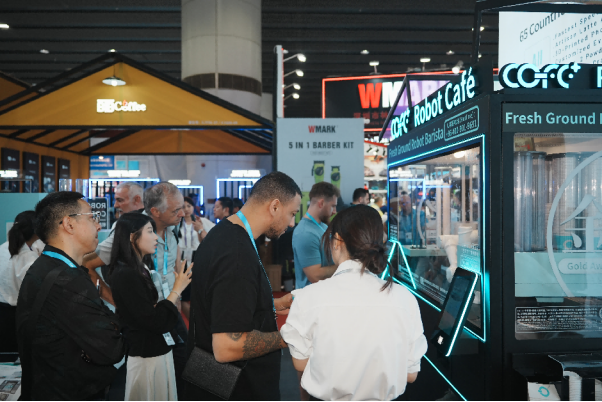
7th-Genertion Smart Robot Coffee Kiosk Arrives at the Belt and Road Core Hub, Ushering in a New Service Era Along t……
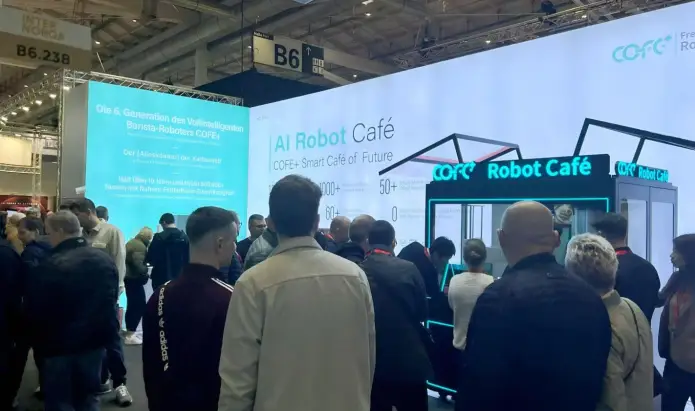
CHICAGO, May 12, 2026 (GLOBE NEWSWIRE) – Shanghai Hi-Dolphin Robot Technology today announced the U.S. debut of its 7th‑……