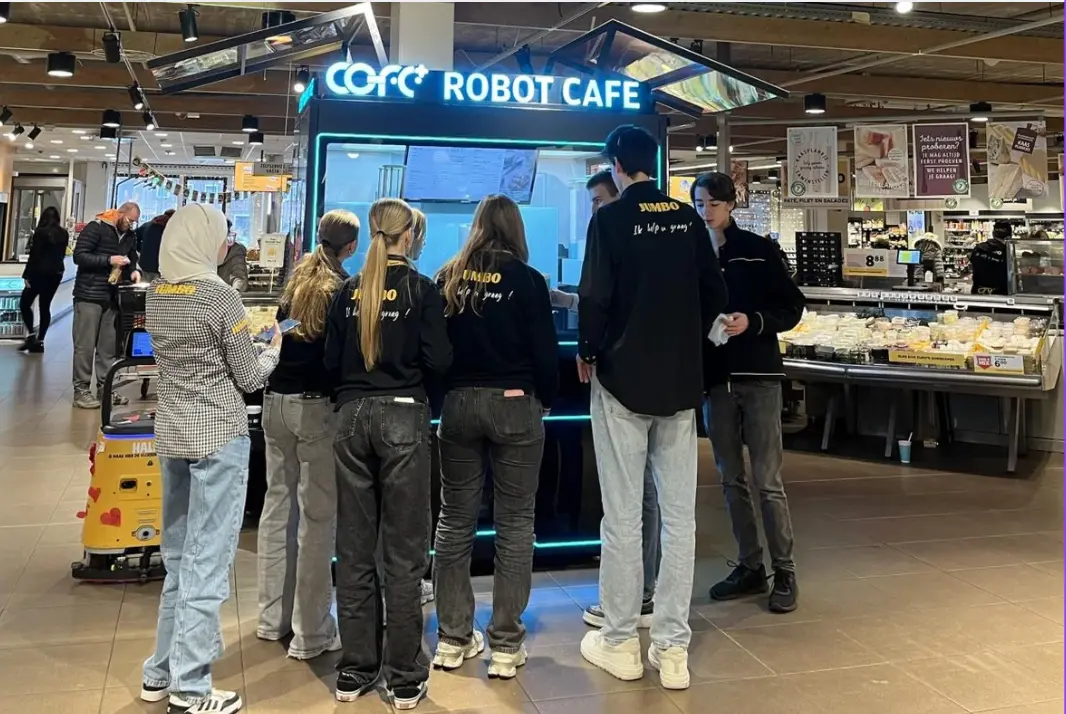
The Rise of Professional Robotic Café Technology: What COFE+ Is and Why It Matters
TL;DR — COFE+ is a fully automated robotic coffee kiosk that grinds fresh beans, brews espresso and lattes, creates latt……

A robot coffee kiosk specification sheet is not a marketing brochure. It is the document that tells a facility manager, landlord, franchise operator, or distributor whether a machine can handle the site’s foot traffic, power capacity, water access, sanitation requirements, and service expectations. B2B buyers who treat the spec sheet as a compliance filter usually avoid the most expensive procurement mistake: approving a unit that fits the budget but fails the location.
The best comparison process separates fixed requirements from optional features. Fixed requirements include electrical load, water supply and drainage, operating temperature range, enclosure protection, food-contact material safety, and daily throughput. Optional features include branding, menu depth, latte art capabilities, and payment integrations. A disciplined buyer evaluates fixed requirements first, because those determine whether an installation can open at all.
Recognized safety and hygiene benchmarks provide a useful baseline. For example, the U.S. Food and Drug Administration Food Code establishes food-contact and equipment cleanliness expectations for commercial food service [1]. In parallel, international standards for enclosure protection and food safety management help buyers compare equipment claims across different regions [2][4]. The specification sheet should be read against these references rather than against supplier language alone.
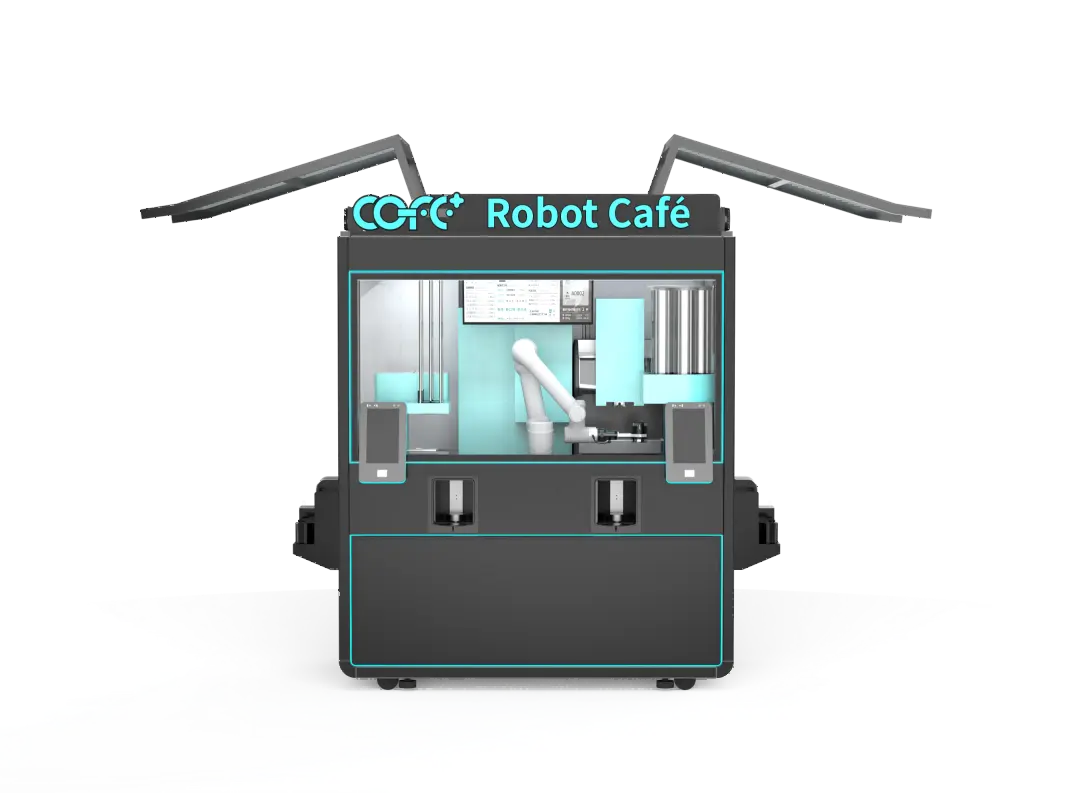
The first block of any robot coffee kiosk specification sheet should describe what the machine can produce in a defined period. Buyers should compare three numbers together: cups per day, cycle time per drink, and peak-hour recovery. A unit that serves 1,000 cups per day but slows dramatically during a morning rush may still miss revenue targets.
Cycle time matters differently by location type. In a transit hub, a 43-second espresso is a meaningful advantage over a 60-second specialty drink because queue length drives conversion. In a business lounge or hotel café, a slightly longer cycle time may be acceptable if visual drink quality and customization increase dwell time. The key is to match cycle time to the queue pattern of the site.
Menu capacity should also be read carefully. A machine may list hundreds of recipes, but the buyer should ask how many can be stored, updated, and served without requiring daily ingredient changes. A spec sheet that lists 300 drinks with five base syrups and two cup sizes is operationally different from one that lists 300 drinks requiring 30 separate consumables.
The COFE+ 7th Generation robot coffee kiosk, for example, lists a cycle time of approximately 43–60 seconds per cup, a daily capacity of about 1,000 cups, and more than 300 drink recipes supported by 197 country-inspired recipes and over 5,000 customization combinations. These figures are useful only when compared against the peak-hour demand of the target site.
If you are comparing formats for a fixed indoor location, floor space and queue flow matter as much as cup count. <Robot Coffee Kiosk Indoor> covers the indoor model’s footprint and integration details.
Site requirements are where specification sheets separate workable deployments from expensive renovations. The three most important physical constraints are footprint, floor load, and clearance around the unit. A compact kiosk may require only 2.35 m², but that measurement often excludes the service access zone, queue area, and ventilation clearance needed for safe operation.
Electrical load must be confirmed before ordering. Buyers should ask for voltage compatibility, rated current, and standby power draw. The COFE+ seventh-generation platform supports 110V and 220V systems, which simplifies placement across markets, but the facility team still needs to verify whether the dedicated circuit can support peak start-up load. Water supply and drainage are equally decisive. Indoor units may connect to building water lines, while outdoor units may use enclosed waste management systems to avoid spills, odors, and pest access.
Outdoor specification sheets should include an enclosure rating such as IP54 and a stated operating temperature range. The International Electrotechnical Commission IP Code defines protection against dust and water, so the rating should be treated as a measurable claim rather than a general quality signal [2]. A unit rated for -20°C to 45°C opens up more deployment types than one limited to climate-controlled interiors.
Connectivity is the final fixed site requirement. Cloud monitoring, remote diagnostics, inventory alerts, and payment processing all depend on stable internet access. Buyers should ask whether the machine supports wired Ethernet, Wi-Fi, or cellular backup, and whether the system can continue serving orders during a brief network interruption.
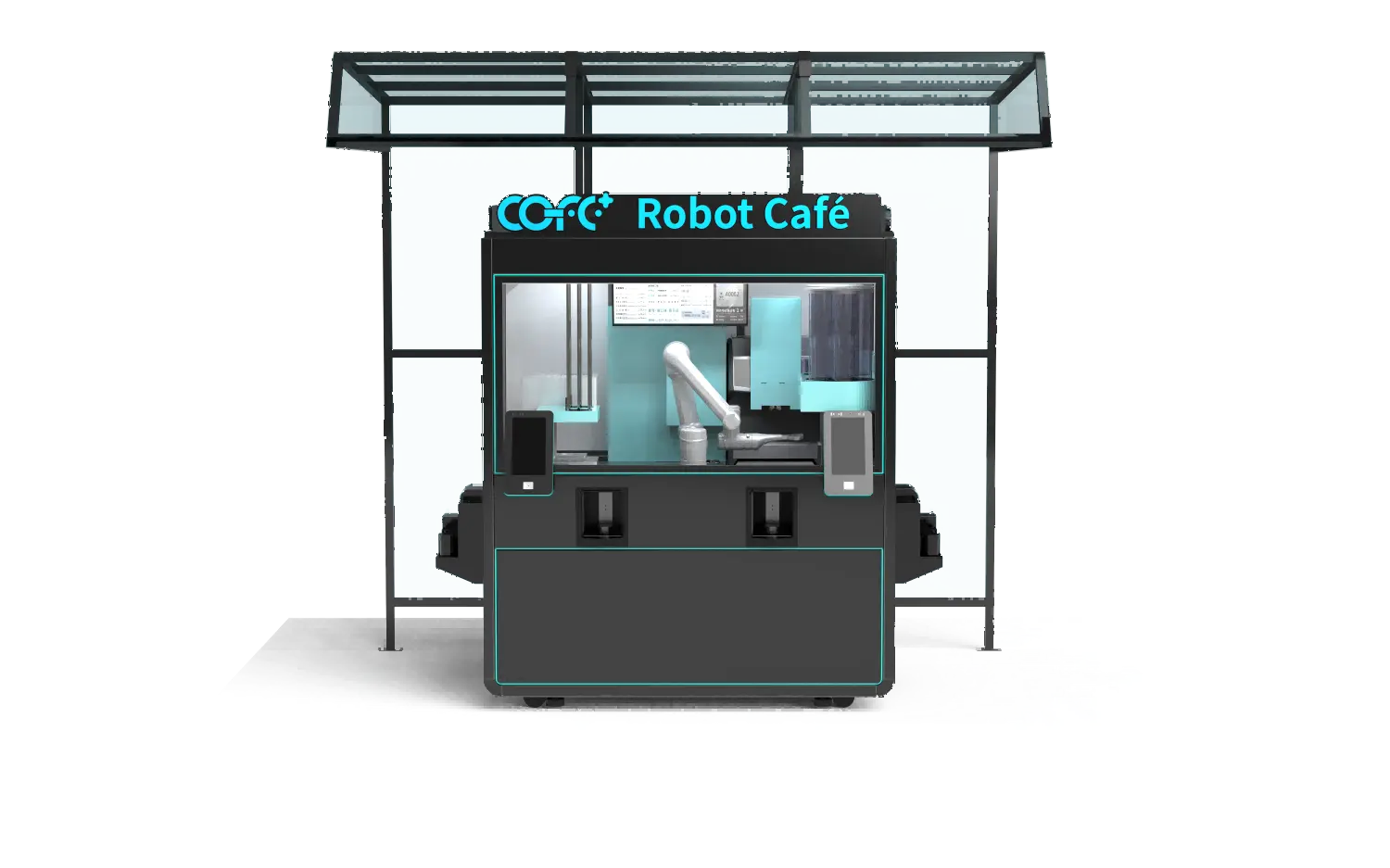
Matching the enclosure rating to the actual environment is the fastest way to avoid an early rejection. <Robot Coffee Kiosk Outdoor> covers all-weather operation and outdoor-specific design requirements.
For unattended coffee service, hygiene performance is a specification, not an afterthought. Buyers should look for automated cleaning, high-temperature sterilization, and food-contact materials that meet the destination market’s regulatory framework. ISO 22000 provides a food safety management system reference for organizations in the food chain [4]. Regional food-contact material rules, such as European Commission Regulation (EC) No 1935/2004, set additional material safety expectations [6].
A useful specification sheet will state how the machine handles milk, syrup, water, and waste between servings. The COFE+ platform lists automatic cleaning and hot-water sterilization at 85°C or higher, along with an antimicrobial stainless steel interior. In a 24/7 unattended model, these functions are as important as brewing speed because they determine how often a human technician must visit the site.
Certification claims should be verified by document request, not by logo alone. Common markings for this category include CE for the European market, FDA-related assurance for U.S. deployment, and additional marks such as UKCA, KC, and SASO in specific regions. Buyers should ask for the certificate scope, issuing body, and whether the certification applies to the exact model and configuration being quoted.
A robot coffee kiosk is a capital asset with a long operating life, so reliability specifications deserve close attention. Buyers should compare rated lifespan, tested cup volume, and the maintenance schedule required to keep the unit in compliance. The COFE+ seventh-generation platform, for example, specifies a 10-year design life and testing beyond 500,000 cups. Those figures should be mapped against expected daily volume and total cost of ownership.
Remote management differentiates a single kiosk from a scalable network. The specification sheet should describe alert types, including ingredient shortage, temperature deviation, module failure, payment interruption, and water or waste status. It should also state whether the system supports remote diagnostics, automatic service dispatch, and multi-site dashboards.
One practical rule is to match service response to site importance. A downtown flagship kiosk may need a four-hour technician response target, while a low-traffic library unit may accept next-day service. Buyers should write this response expectation into the RFQ and compare it against the supplier’s local service network.
Remote diagnostics are only useful when the data reaches the operator team quickly. <Smart Store Brain> covers the cloud management layer behind multi-site operations.
Before requesting final quotations, confirm that the site’s power, water, drainage, and connectivity details are documented. For a specification-matching walkthrough or a COFE+ datasheet, contact sales@hi-dolphin.com or call +86 131 6630 1290.
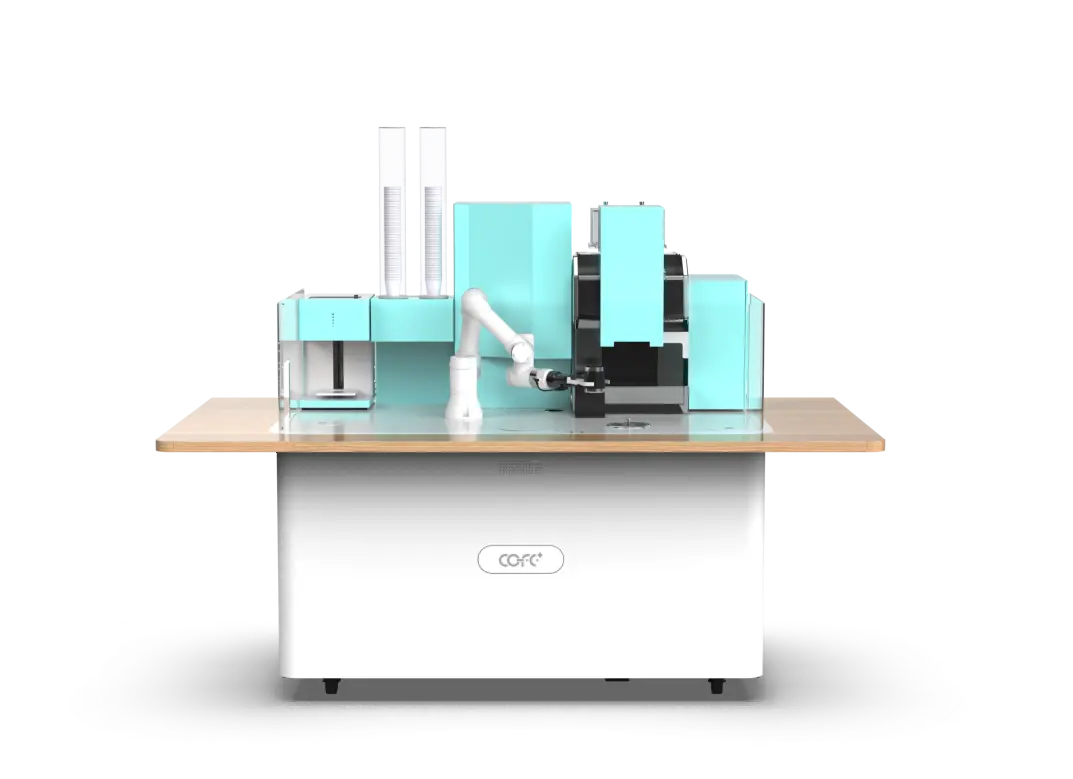
Use a table like the one below to compare shortlisted machines. The COFE+ column reflects the seventh-generation indoor and outdoor platform as an example; buyers should replace it with the exact configuration quoted for their market.
| Specification | What to Compare | COFE+ 7th Generation Example |
|---|---|---|
| Daily throughput | Peak-hour capacity, not only daily total | Approximately 1,000 cups per day |
| Cycle time per cup | Espresso, milk-based, and custom drink times | 43–60 seconds |
| Footprint | Machine area plus service and queuing clearance | Indoor kiosk about 2.35 m² |
| Menu capability | Drink recipes, custom combinations, seasonal updates | 300+ drinks, 197 country-inspired recipes, 5,000+ combinations |
| Power supply | Voltage compatibility and peak load | 110V/220V support |
| Enclosure protection | Outdoor dust and water resistance | IP54-rated outdoor model |
| Operating temperature | Minimum and maximum ambient range | -20°C to 45°C outdoor platform |
| Hygiene system | Cleaning automation and sterilization method | Automatic 85°C+ high-temperature sterilization |
| Connectivity | Cloud monitoring, remote diagnostics, offline behavior | Cloud monitoring with remote diagnostics |
| Durability | Design life and validated cup volume | 10-year design life, 500,000+ cups tested |
Before you speak to a supplier, send an RFQ that includes these details:
A supplier that can respond to each line with a clear specification is usually better positioned for a multi-unit rollout. Request the full COFE+ specification sheet at sales@hi-dolphin.com or call +86 131 6630 1290 to match the right kiosk format to your first site.
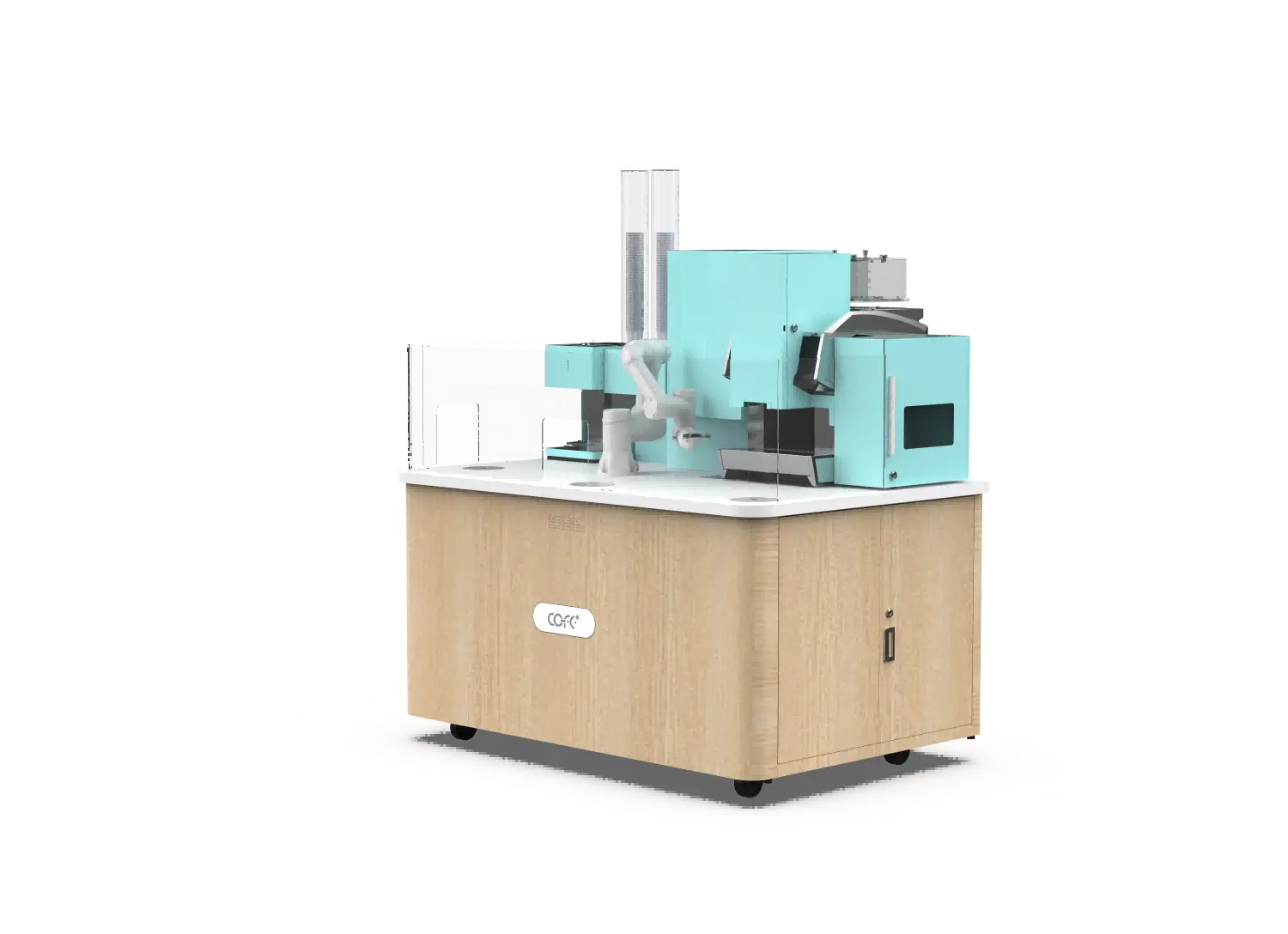
Compare the site-critical specifications first: power, water and drainage, operating temperature, enclosure protection, and daily throughput. These determine whether the kiosk can be installed without major infrastructure changes. Menu features and branding should be evaluated only after the unit passes the site filter.
Request a copy of the certificate from the issuing body or supplier, confirm that the exact model and configuration are covered, and check that the certification is recognized in the destination market. Do not rely on a logo in a brochure as sufficient evidence.
Daily throughput measures total cups in 24 hours, while peak-hour capacity measures how many cups can be served during the busiest 60-minute period. A site with strong morning commuter traffic needs strong peak-hour capacity, not just a high daily total.
Outdoor deployments require an appropriate IP rating, a wide operating temperature range, UV and moisture resistance, enclosed waste management, and remote monitoring for weather-related or stock-related alerts. The COFE+ outdoor platform, for example, specifies IP54 protection and operation from -20°C to 45°C.
A focused RFQ should include around eight to twelve measurable specification points plus commercial terms. The most important are daily throughput, cycle time, footprint, power, water and drainage, connectivity, certifications, hygiene system, durability, and service response.
No. Cost per cup should be compared with revenue per cup, service frequency, consumable waste, and local service cost. A machine with a slightly higher ingredient cost may produce a lower total operating cost if it has better reliability and remote diagnostics.
References
[1] U.S. Food and Drug Administration, Food Code, 2022. [Online]. Available: https://www.fda.gov/food/fda-food-code
[2] International Electrotechnical Commission, IEC 60529:1989+AMD1:1999+AMD2:2013 CSV, Degrees of protection provided by enclosures (IP Code).
[3] European Commission, CE marking — Machinery Directive 2006/42/EC. [Online]. Available: https://single-market-economy.ec.europa.eu/sectors/mechanical-engineering/machinery-directive_en
[4] International Organization for Standardization, ISO 22000:2018, Food safety management systems — Requirements for any organization in the food chain.
[5] International Electrotechnical Commission, IEC 60335-1:2020, Household and similar electrical appliances — Safety — Part 1: General requirements.
[6] European Commission, Regulation (EC) No 1935/2004 on materials and articles intended to come into contact with food. [Online]. Available: https://food.ec.europa.eu/food-safety/food-contact-materials_en
TL;DR — COFE+ is a fully automated robotic coffee kiosk that grinds fresh beans, brews espresso and lattes, creates latt……
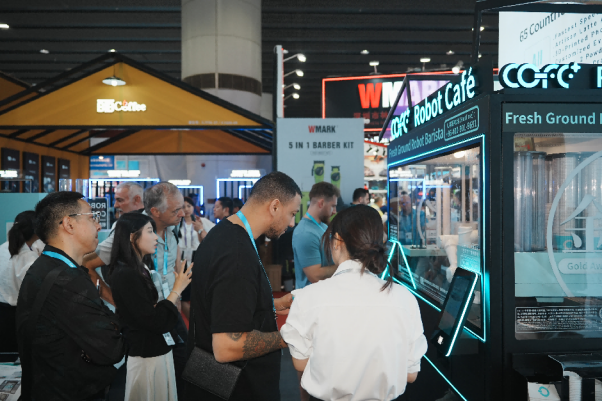
7th-Genertion Smart Robot Coffee Kiosk Arrives at the Belt and Road Core Hub, Ushering in a New Service Era Along t……
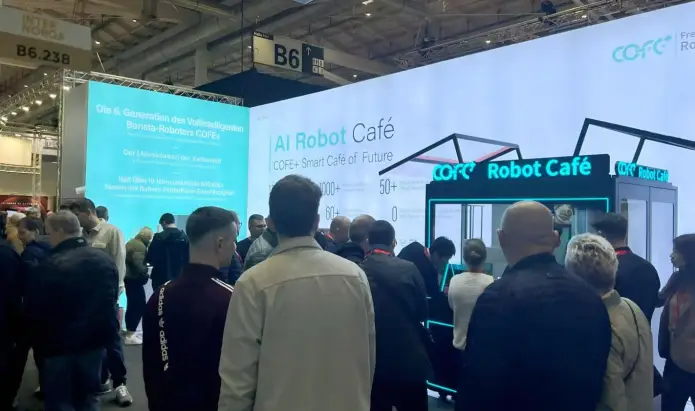
CHICAGO, May 12, 2026 (GLOBE NEWSWIRE) – Shanghai Hi-Dolphin Robot Technology today announced the U.S. debut of its 7th‑……