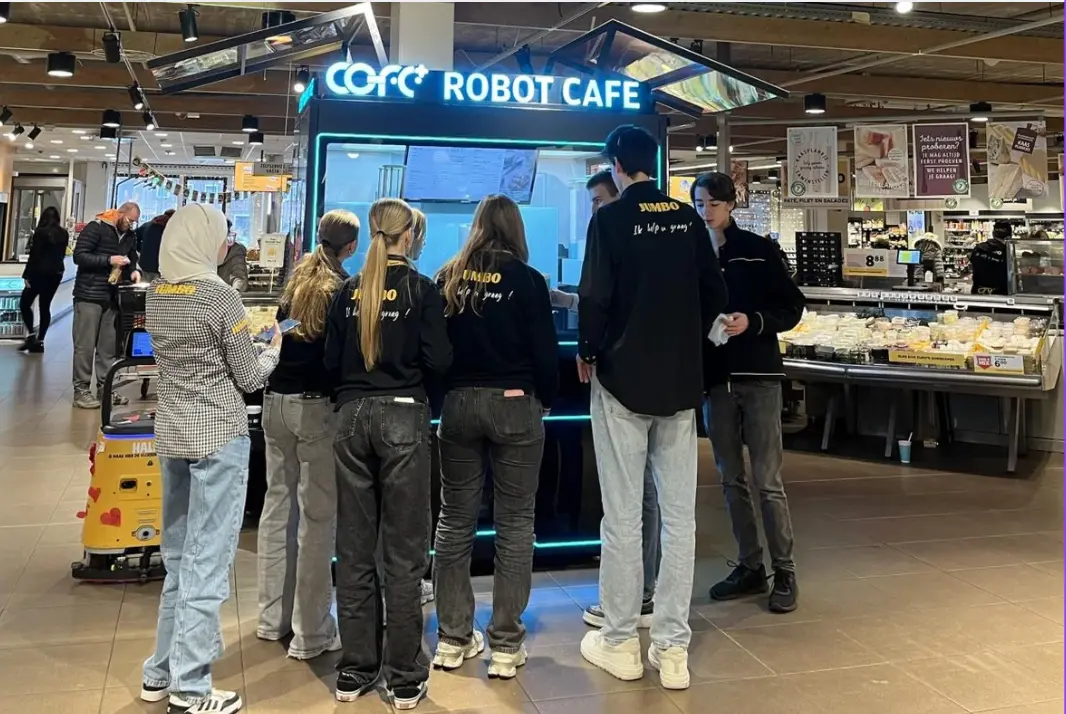
The Rise of Professional Robotic Café Technology: What COFE+ Is and Why It Matters
TL;DR — COFE+ is a fully automated robotic coffee kiosk that grinds fresh beans, brews espresso and lattes, creates latt……

Price is the easiest number to compare, but it is rarely the number that determines whether an unmanned coffee operation succeeds. Two robot coffee kiosks can have similar upfront pricing and very different long-term costs once certification gaps, service delays, software limitations, utility requirements, and menu rigidity are counted. For operators, shopping center landlords, distributors, and multi-site chain buyers, supplier evaluation should weigh the total cost per served cup and the machine’s ability to stay in service across its full working life. The ten factors below move the conversation beyond price.
A low purchase price can hide the heaviest costs in unattended coffee retail: ingredient spoilage, site downtime, service travel, missing compliance documents, and a machine that cannot adapt to local tastes. The relevant metric is not the invoice; it is the fully loaded cost per cup over three to five years.
Two machines with the same sticker price can differ sharply in cup cost if one needs more frequent cleaning, less efficient ingredient usage, or more expensive proprietary parts. A cheaper unit that produces inconsistent drinks or fails during peak hours also loses revenue that no upfront discount can recover. The evaluation should therefore start with operational evidence, not only commercial leverage.
A robot coffee kiosk combines food preparation, water handling, electrical systems, and payment terminals, so it sits under several regulatory frameworks at once. A credible supplier should provide a compliance matrix that maps each subsystem to the applicable standard. Verify the scope of every certificate: a certificate issued for a subassembly is not the same as approval for the complete kiosk.
CE marking demonstrates conformity with the applicable European Union health, safety, and environmental requirements [2]. UKCA, KC, and SASO show market-specific conformity for the United Kingdom, South Korea, and Saudi Arabia respectively, but the documented scope must cover the coffee kiosk itself. Buyers targeting the United States should also compare the food-contact and sanitation design against the principles in the FDA Food Code [3]. For food safety management claims, ISO 22000 provides a recognized framework, though the audit scope matters more than the logo [4].
A kiosk serving milk-based drinks needs automated cleaning rather than manual-only cleaning. Several important checks are:
One manufacturer’s seventh-generation platform, for example, lists an automatic 85°C+ high-temperature sterilization cycle, an anti-microbial stainless-steel interior, and a fully enclosed waste system. These specifications are only meaningful if the supplier can show how often the cycle runs and what happens when cleaning is interrupted.
Throughput claims need context. A machine that can technically serve 1,000 cups per day is not the same as a machine that can sustain repeated peak hours without overheating, refill interruption, or cleaning conflicts. Ask for tested output, duty cycle data, and wear-related testing.
Claimed daily capacity should be supported by long-run testing. A specification of 500,000+ tested cups and a 10-year design life is more useful than a single daily cup count because it reflects component wear across drink types, milk systems, and cleaning cycles. Production speed around 43–60 seconds per cup is common in advanced robotic kiosks, but the better question is whether that speed holds at the fiftieth drink of the morning rush.
Indoor and outdoor models are not interchangeable. An IP54 rating under IEC 60529 means the enclosure is protected against limited dust ingress and water splashes, not submerged cleaning or high-pressure washdown [1]. Outdoor units should also specify ultraviolet resistance, condensation control, and operating temperature range. For example, one outdoor seventh-generation kiosk is specified for operation from -20°C to 45°C. Choose the rating based on the worst month at your site, not the mildest month.
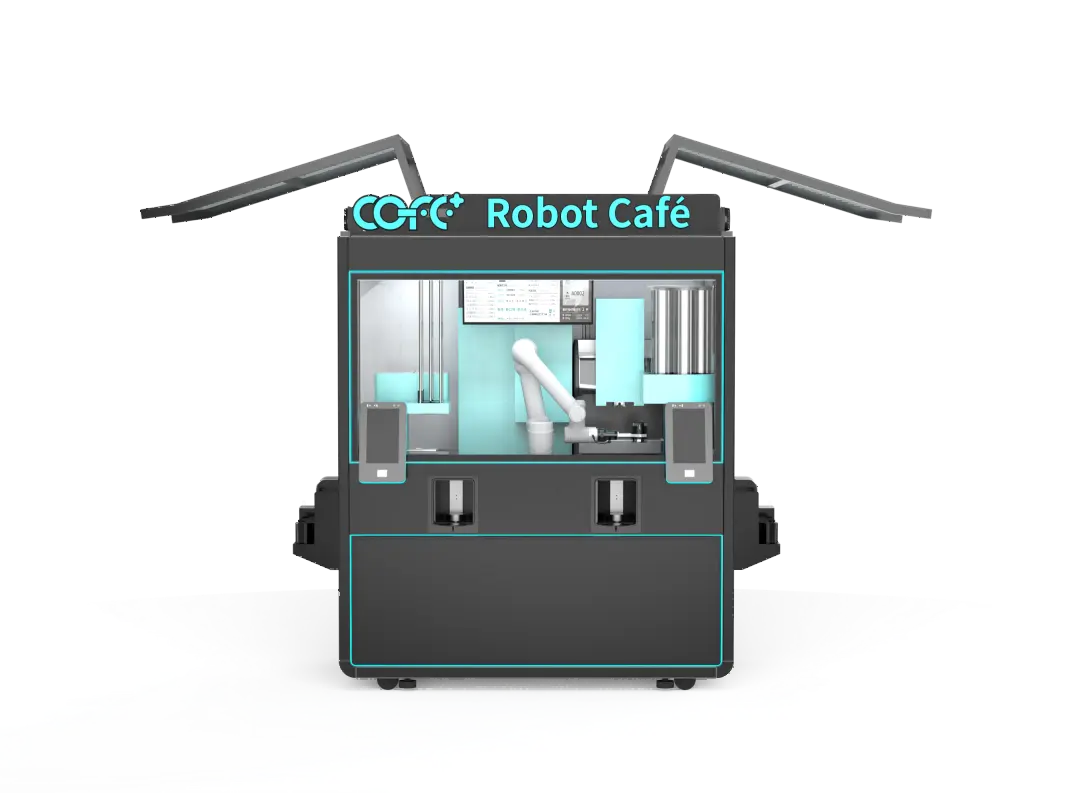
For controlled indoor sites, the physical requirements differ from outdoor enclosures in ventilation, electrical load, and floor space. <robot coffee kiosk indoor> covers the indoor model’s footprint, placement, and facility-preparation considerations.
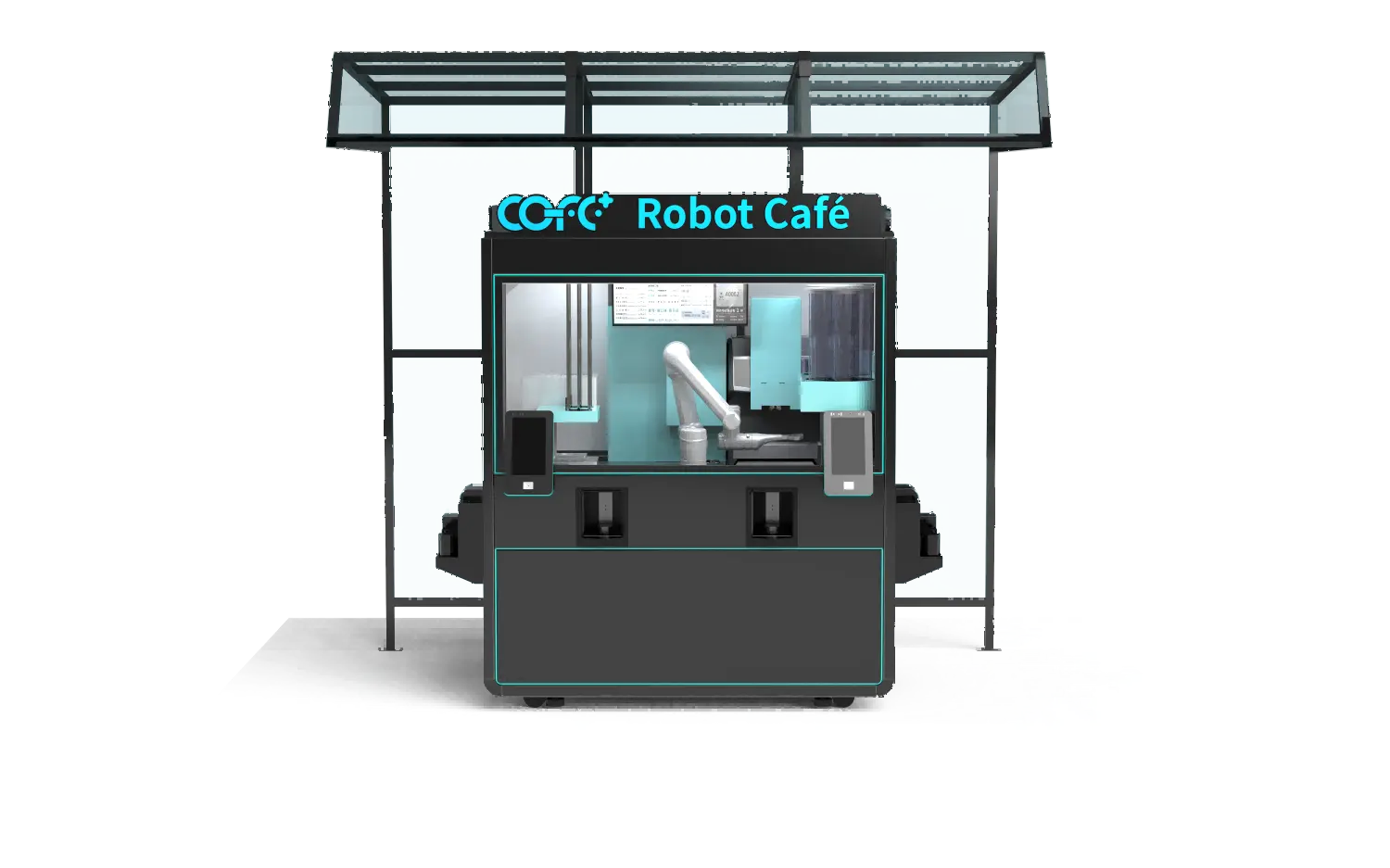
For open-air locations, the enclosure rating and seasonal temperature range should be verified against the site’s actual exposure. <robot coffee kiosk outdoor> covers the all-weather outdoor version’s IP54 protection, operating temperature range, and public-space requirements.
Taste consistency is partly a recipe problem and partly a mechanical problem. A supplier should be able to prove that the same drink is produced with the same extraction time, milk ratio, temperature, and syrup dosage across consecutive cups and across different cities.
Request a demonstration in which the same drink is dispensed many times in sequence, then evaluate variation in volume, temperature, foam, and taste. A supplier that can show stable output over 300+ consecutive cups is offering better evidence than a marketing video. If the recipe library is digitized and managed centrally, updates should carry the same profile to every site without manual adjustment.
Menu flexibility should also be tested. A machine with 300+ drink recipes and 5,000+ custom combinations is valuable only if the operator can control beans, milk type, syrup dosage, cup size, and roast level without a service call. The control layer matters as much as the drink count.
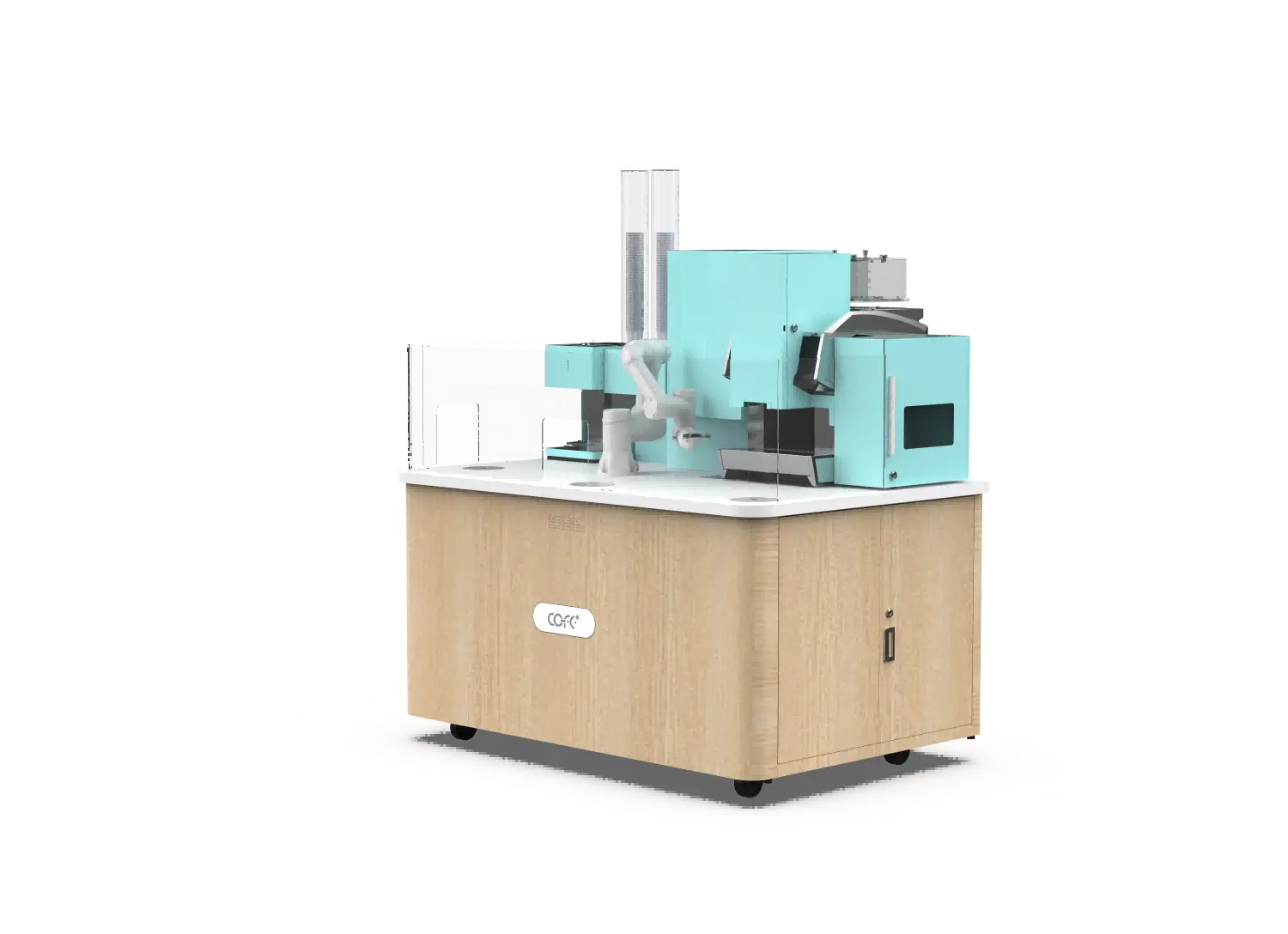
Hardware uptime is limited by the operator’s ability to see problems before they interrupt service. A strong supplier evaluation includes the management software, not just the physical robot.
A kiosk that processes payments and stores customer behavior data needs encryption, access control, audit logs, and a defined patching process. ISO/IEC 27001 provides a useful reference framework for an information security management system, but buyers should still review the actual payment architecture, card data handling, and multi-country data retention rules [5].
One operations team should be able to monitor stock, temperature, cleaning status, error codes, and sales across all sites from a single dashboard. Ask what happens when milk runs low at 2:00 a.m., when a module fails, or when a payment terminal loses connectivity. The alert flow should distinguish critical failures from refill warnings and route each one to the correct person.
If your operating team will oversee several unmanned locations, centralized management should be evaluated as its own lane, separate from hardware quality. <smart store brain> covers AI-driven remote monitoring, inventory alerts, and multi-site operations dashboard logic.
Before sending a formal request for quote, ask for a live dashboard demonstration rather than static screenshots. Provide your site’s weekly traffic estimate, peak-hour profile, and payment method mix. Ask the supplier to simulate a stock-out, a connectivity loss, and a scheduled cleaning cycle. For a direct technical walkthrough, email sales@hi-dolphin.com.
A machine may be reliable in a test lab but difficult to keep running in your country if spare parts are slow, local technicians are unavailable, or import documents are incomplete. The final stage of evaluation should focus on service, parts, warranty, and total cost per cup.
Request a recommended spare parts package, part lead times, warranty scope, and the factory acceptance test checklist before shipment. If importing, confirm that the supplier provides customs documentation, local electrical approval guidance, and installation support. A defined service-level agreement is more valuable than a long warranty with vague exclusions.
A practical shortlist can score suppliers on these ten checks:
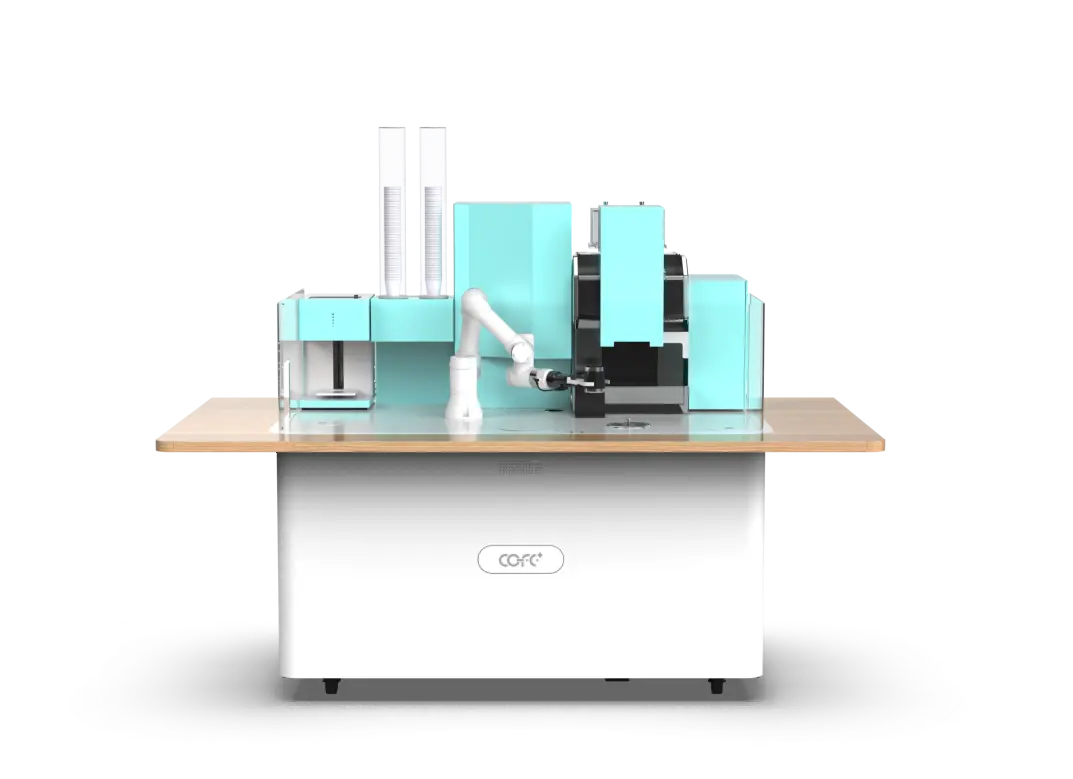
For a site-specific evaluation, the next step is not a general brochure but a structured request for quote. Send your site type, expected daily cup volume, utility conditions, payment methods, and target certification market. Ask the supplier to return a compliance matrix, service SLA, spare parts package, installation timeline, and a cash-flow model built for your assumptions. For technical support and a direct supplier evaluation, contact Shanghai Hi-Dolphin Robot Technology Co., Ltd. at sales@hi-dolphin.com or +86 131 6630 1290.
At minimum, request CE marking scope, food-contact material documentation, and the market-specific approvals relevant to your operation, such as UKCA, KC, or SASO. Confirm that each certificate covers the kiosk as a whole rather than an isolated subassembly [2].
Long-run wear testing is more informative than a maximum daily output number. Machines tested to 500,000+ cups across different drink types and cleaning cycles offer more evidence of component durability than a unit quoted only by theoretical cups per day.
Consistency is more likely when recipes are digitized and ingredients are mechanically controlled. Cloud-updated recipe libraries, calibrated grinders, temperature-controlled milk systems, and dose-level controls reduce the variability that manual on-site adjustments create.
Ask for payment encryption, telemetry encryption, role-based access control, audit logs, remote diagnostic isolation, and a defined patching process. ISO/IEC 27001-aligned practices are a useful reference, but the payment architecture and data retention rules should be reviewed for each target market [5].
Payback depends on daily cup volume, average ticket size, rent, utility costs, ingredient costs, and downtime. Some supplier models show six to twelve months under high-traffic conditions, but those figures should be rebuilt using your own site data and conservative downtime assumptions.
Request a factory acceptance test plan, certificate scope list, spare parts package, warranty terms, utility requirements, installation timeline, and local service contact. For international shipments, also confirm customs documentation and local electrical approval support.
[1] IEC 60529, Degrees of protection provided by enclosures (IP Code), International Electrotechnical Commission, 2013.
[2] European Commission, CE marking, official product requirements guidance.
[3] U.S. Food and Drug Administration, Food Code, latest edition.
[4] ISO 22000:2018, Food safety management systems — Requirements for any organization in the food chain.
[5] ISO/IEC 27001:2022, Information security, cybersecurity and privacy protection — Information security management systems — Requirements.
TL;DR — COFE+ is a fully automated robotic coffee kiosk that grinds fresh beans, brews espresso and lattes, creates latt……
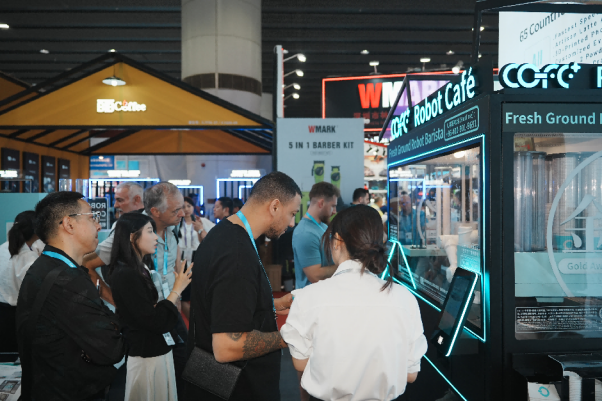
7th-Genertion Smart Robot Coffee Kiosk Arrives at the Belt and Road Core Hub, Ushering in a New Service Era Along t……
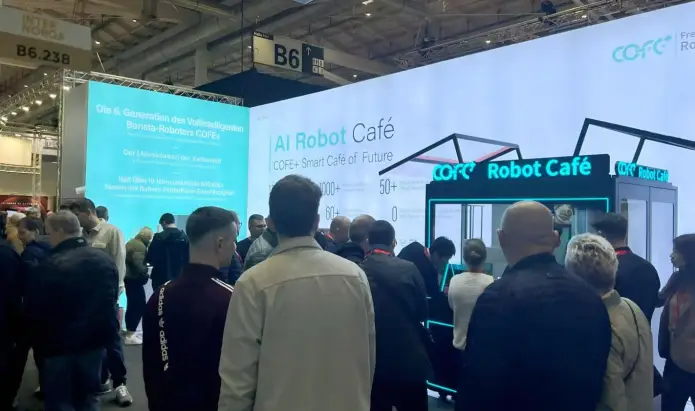
CHICAGO, May 12, 2026 (GLOBE NEWSWIRE) – Shanghai Hi-Dolphin Robot Technology today announced the U.S. debut of its 7th‑……