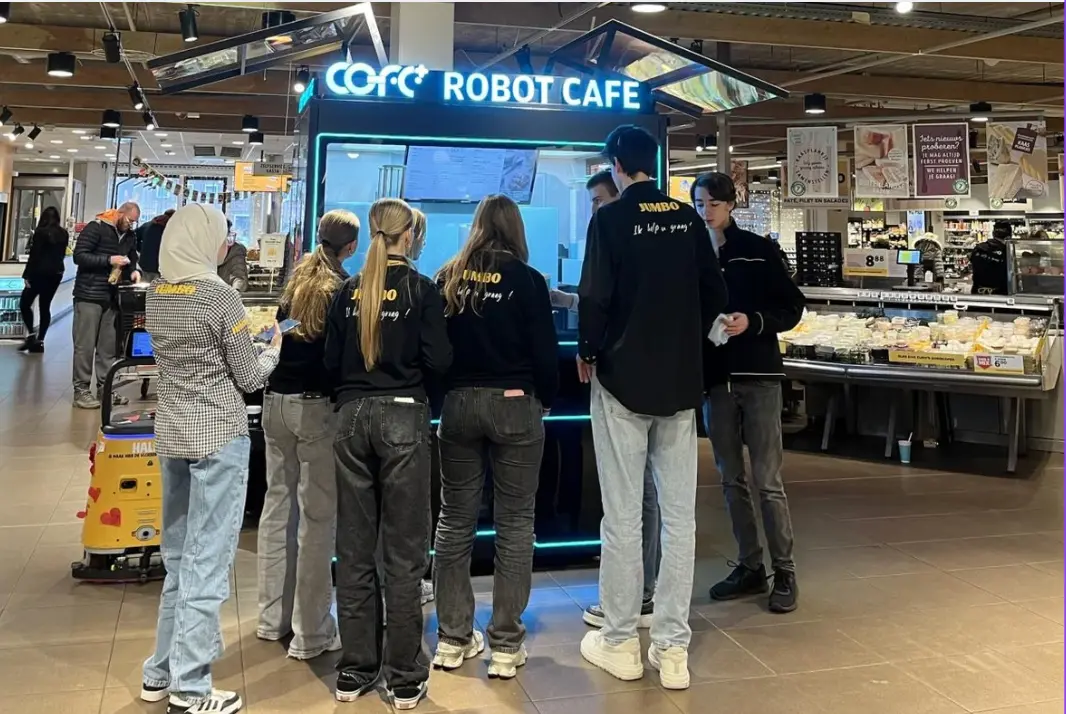
The Rise of Professional Robotic Café Technology: What COFE+ Is and Why It Matters
TL;DR — COFE+ is a fully automated robotic coffee kiosk that grinds fresh beans, brews espresso and lattes, creates latt……

A robot coffee kiosk is only as reliable as the site around it. We have seen promising locations delay launch because a drain line sat too far from the plumbed point, or because the electrical panel could not accept the kiosk’s load on the same circuit as the tenant’s HVAC. A robot coffee kiosk site survey checklist removes that uncertainty by forcing you to verify utility access, clearance, load capacity, and landlord requirements before installation begins. The eight checks below are the ones we run with every project that moves from a signed proposal to first cup.
A site survey is not a quick measurement of floor space. It is the set of checks that determines whether the kiosk can operate without an attendant standing next to it, and whether the landlord will still accept the work after the unit arrives. For the COFE+ 7th Generation indoor model, the kiosk occupies 2.35 m², about 25 sq ft, but the operating envelope is larger once you add access clearance, queue space, and the service path for ingredient refills.
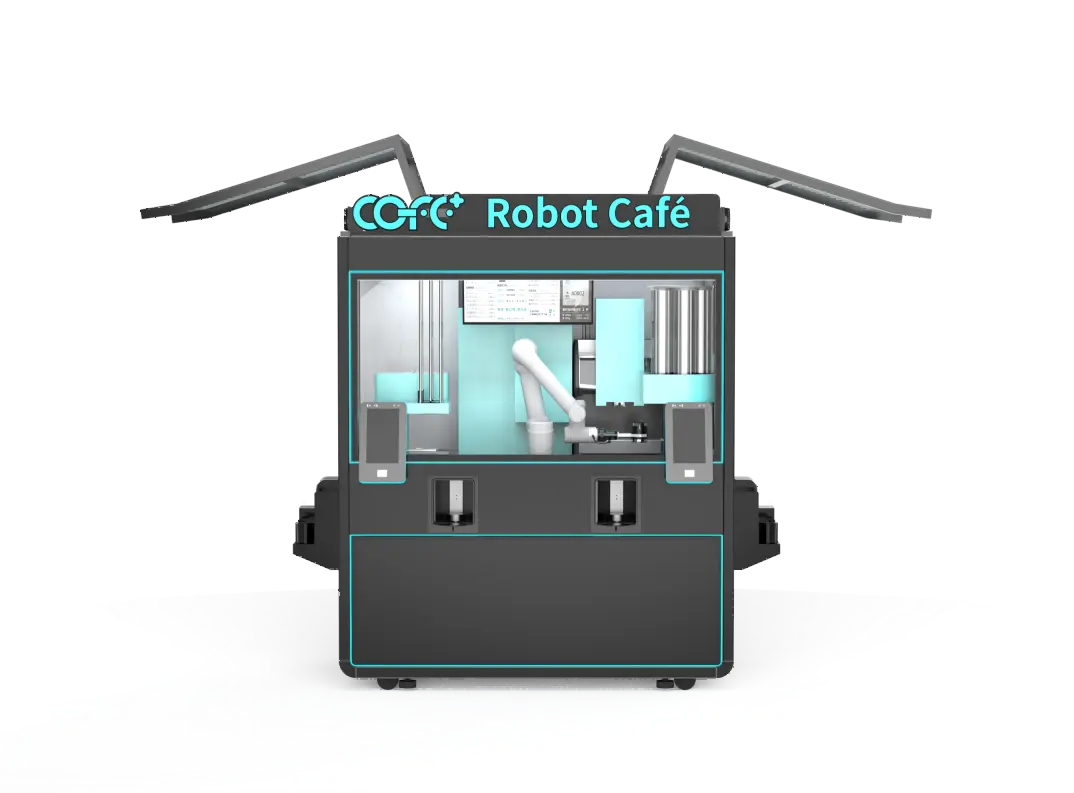
Power and drainage are the two checks that most often fail a location. The kiosk can accept a 110V or 220V supply depending on the market, but it should not share a circuit with variable loads such as a chiller or an espresso machine from an existing café. In one site that was proposed as a fast launch, the project stalled for four weeks because the panel had spare capacity only on a lighting circuit, and the landlord would not approve a shared connection.
| Check | Indoor requirement | Outdoor requirement |
|---|---|---|
| Power | 110V or 220V dedicated circuit | 110V or 220V weather protected connection |
| Water | Potable feed with accessible shut-off valve | Potable feed with freeze protection in cold climates |
| Drainage | Gravity drain or pump option, landlord permit | Enclosed waste system with service access |
| Network | Wired or 4G/5G connection, signal test | Wired or 4G/5G connection, outdoor signal test |
Internet access is not a utility in the traditional sense, but an unmanned coffee kiosk depends on cloud monitoring, payment confirmation, and stock alerts. A single site survey should include a signal test at the exact installed position, not just at the mall entrance. We have watched operators approve a site from a smartphone at the leasing office, then discover the kiosk sits inside a dead zone.
The machine footprint solves one part of the problem; the service envelope solves another. A 2.35 m² kiosk still needs side or rear access for ingredient refills and preventive maintenance. If the unit sits flush against a wall, every restock becomes a slow extraction job, and the service technician loses working time the operator pays for. We ask operators to mark three zones on the floor plan: the machine footprint, the service access path, and the customer queue buffer. The queue buffer is the one most tenants leave out.
Queue depth should be planned for peak demand, not average demand. A kiosk that completes a cup in about 60 seconds during a lunch wave may need standing room for 8 to 12 customers, otherwise the line spills into the pedestrian walkway and the landlord’s objections start before installation finishes.
Wall-side placement works when the service side can be turned toward the back corridor. Island placement opens access from more than one side but usually requires utility supply through the floor or a bollard. Corner placement hides the service side but can reduce sightlines from the main entrance.
If your location involves an island or corner placement with competing circulation paths, it is worth confirming the required service clearance and queue depth before you sign the work letter. Send your dimensioned floor plan to sales@hi-dolphin.com and we will check the geometry against the COFE+ 7th Generation clearance envelope.
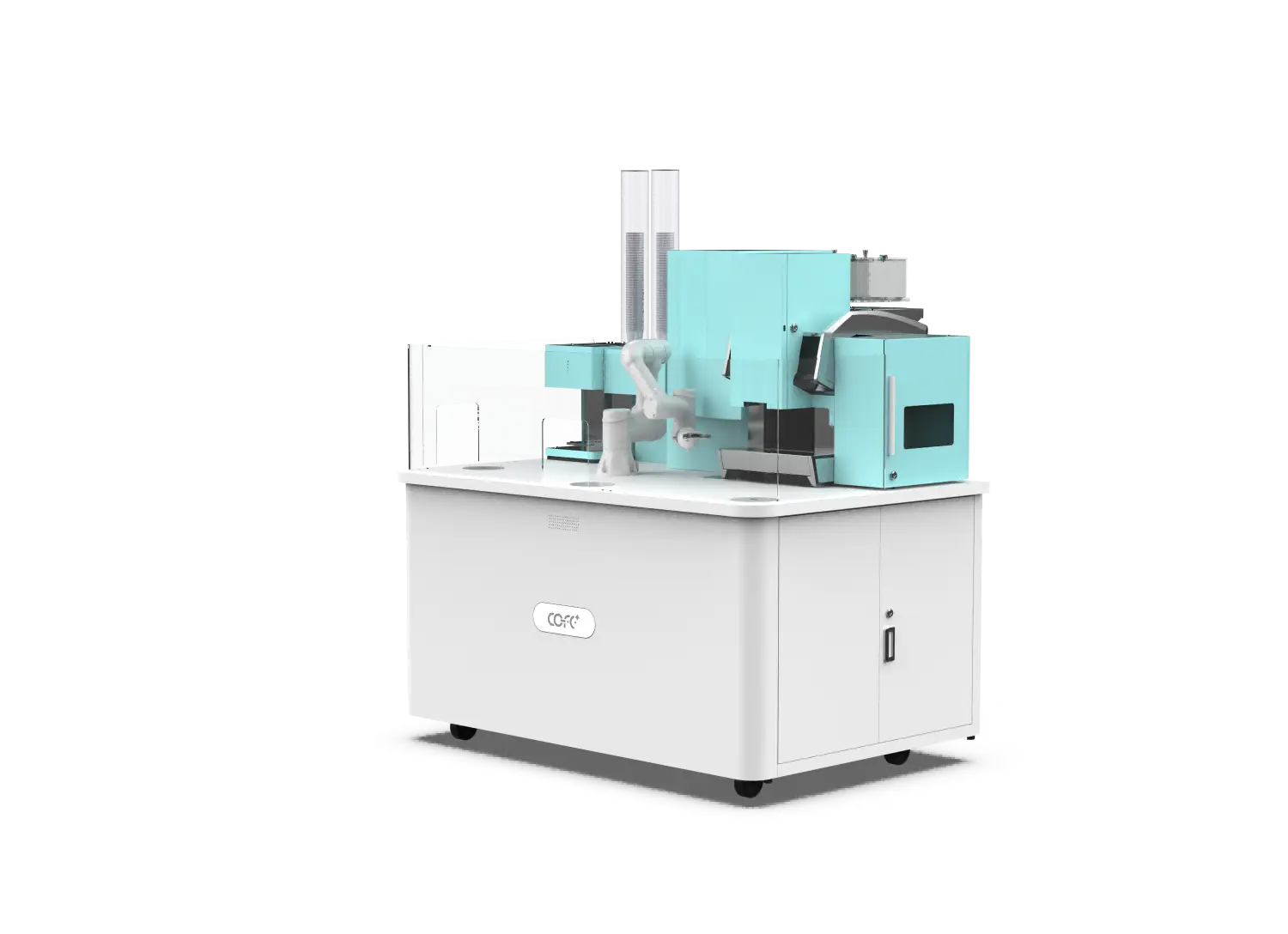
Temperature is the first environmental filter. The COFE+ 7th Generation outdoor model operates from -20°C to 45°C and carries an IP54 rating for dust and water resistance. Indoor sites behind a glass storefront can top that range in summer, especially when the kiosk faces an east or west window. We specify site temperature logging before installation in those conditions because a screen that overheats becomes unreadable, and a customer who cannot read the menu will not wait for the machine to recover.
Humidity and condensation work the same way. Outdoor units include an anti-condensation system, while indoor units depend on the building’s HVAC and should not sit directly under an exhaust vent or next to a bakery oven. Ventilation also removes the heat the machine generates during continuous operation, so a sealed alcove can turn a compact kiosk into a hot box. Lighting is the last check: a bright storefront may reflect off the ordering screen and reverse what looked like a high visibility corner during the lease tour.
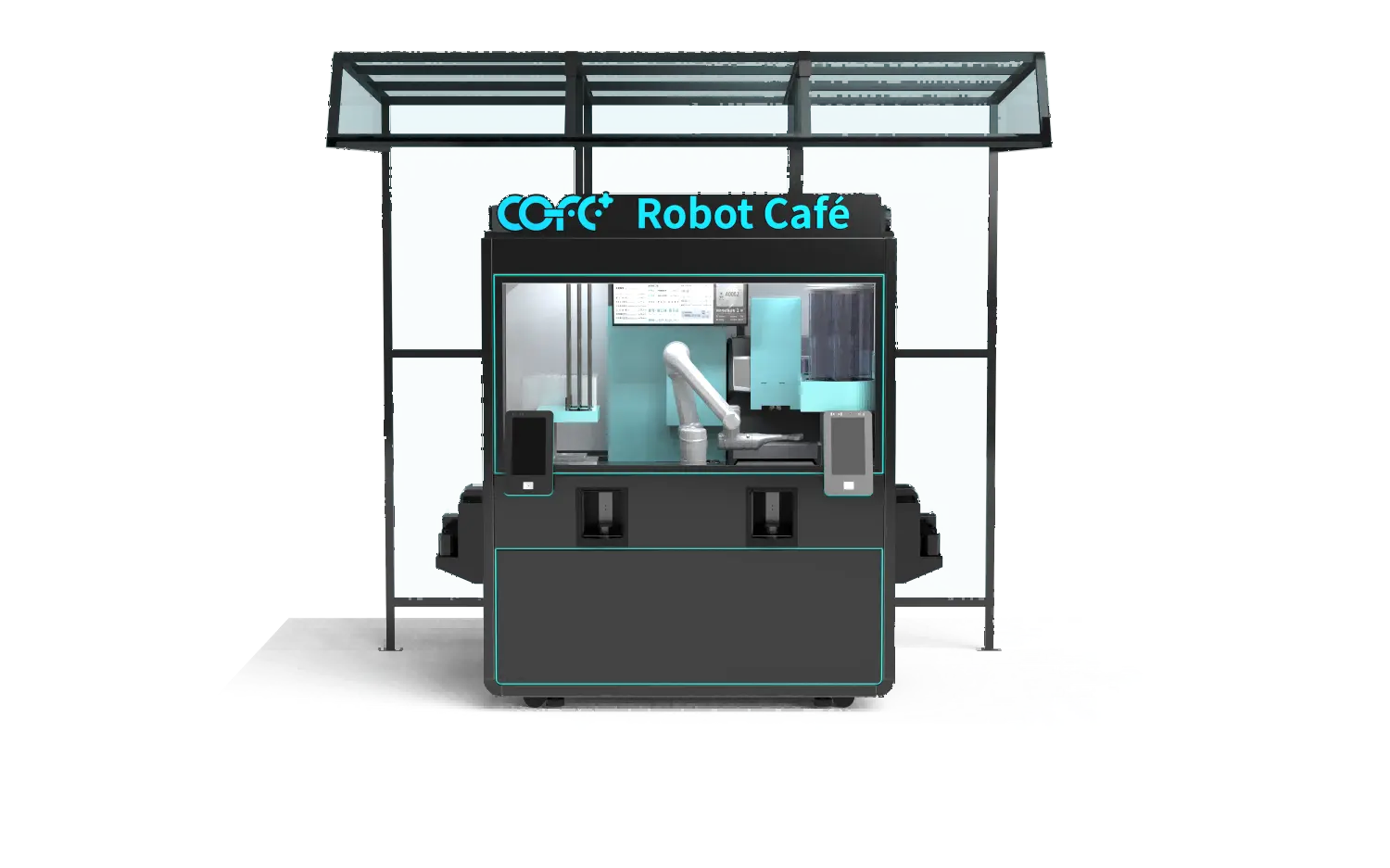
A completed survey is not finished until the landlord has seen the same drawing the installer will use. We ask operators to capture the site in three formats: a dimensioned floor plan, a photo set of the utility points and delivery path, and a written list of landlord restrictions. Missing one of these formats is the most common reason a site approval stalls at the property management desk.
The gap between a promising site and an installable site usually comes down to one of three things: circuit capacity, drain fall distance, or service access. Each one is easy to check early and expensive to fix after the kiosk arrives.
Once those checks are complete, send your checklist and site photos to sales@hi-dolphin.com or call +86 131 6630 1290, and we will confirm the correct COFE+ 7th Generation model, utility compatibility, and the estimated path from landlord approval to first cup.
A usable survey takes two to four hours on site, plus one round of landlord coordination. The field time covers measurement, photo capture, utility access, and a signal test at the final position. The landlord round adds time only when the site requires floor penetrations, a new circuit, or an external discharge point. If the property manager can walk the route with you, the survey can be completed in a single visit.
It depends on the model and the landlord’s rules. A nearby drain simplifies cleaning and waste handling, but a pump route or an enclosed waste system can resolve short distances when the main line is not reachable. The real constraint is liquid waste volume during the cleaning cycle, so the drainage route must be confirmed before the kiosk is positioned. If the site is on a carpeted floor or above a finished ceiling, the landlord usually requires a waterproof membrane and written approval before work starts.
In projects we have supported, the survey only becomes useful when the landlord walks the same route. A tenant can prepare a perfect plan and still miss a loading dock restriction, a fire egress rule, or a limitation on work outside normal hours. The site survey should produce a document the property manager can sign, not just a set of notes for the installer. This step is often the difference between a two-week approval and a month of repeated requests.
People assume outdoor sites are harder, but the more accurate distinction is exposure. An outdoor kiosk with the correct IP rating, temperature range, and enclosed waste system can clear approval faster than an indoor site that sits behind a glass storefront in direct sun. The harder part is usually utility routing: power, water, and drainage often have to travel farther outdoors, and the landlord will ask about freeze protection in cold markets. If your site has outdoor exposure or an unusual utility layout, share the address and a few photos with sales@hi-dolphin.com and we will confirm which checks apply.
TL;DR — COFE+ is a fully automated robotic coffee kiosk that grinds fresh beans, brews espresso and lattes, creates latt……
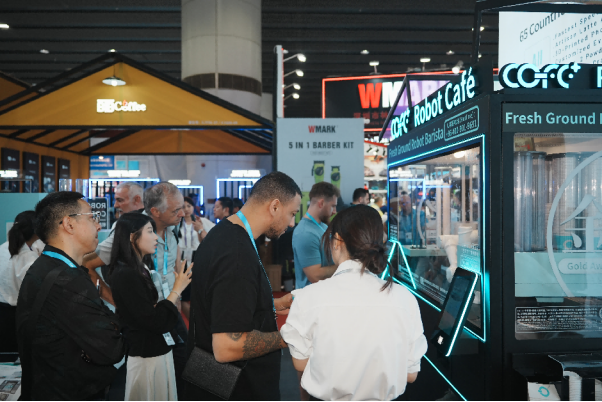
7th-Genertion Smart Robot Coffee Kiosk Arrives at the Belt and Road Core Hub, Ushering in a New Service Era Along t……
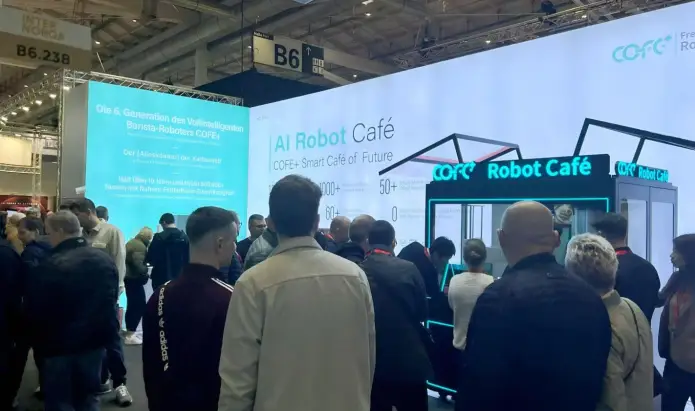
CHICAGO, May 12, 2026 (GLOBE NEWSWIRE) – Shanghai Hi-Dolphin Robot Technology today announced the U.S. debut of its 7th‑……