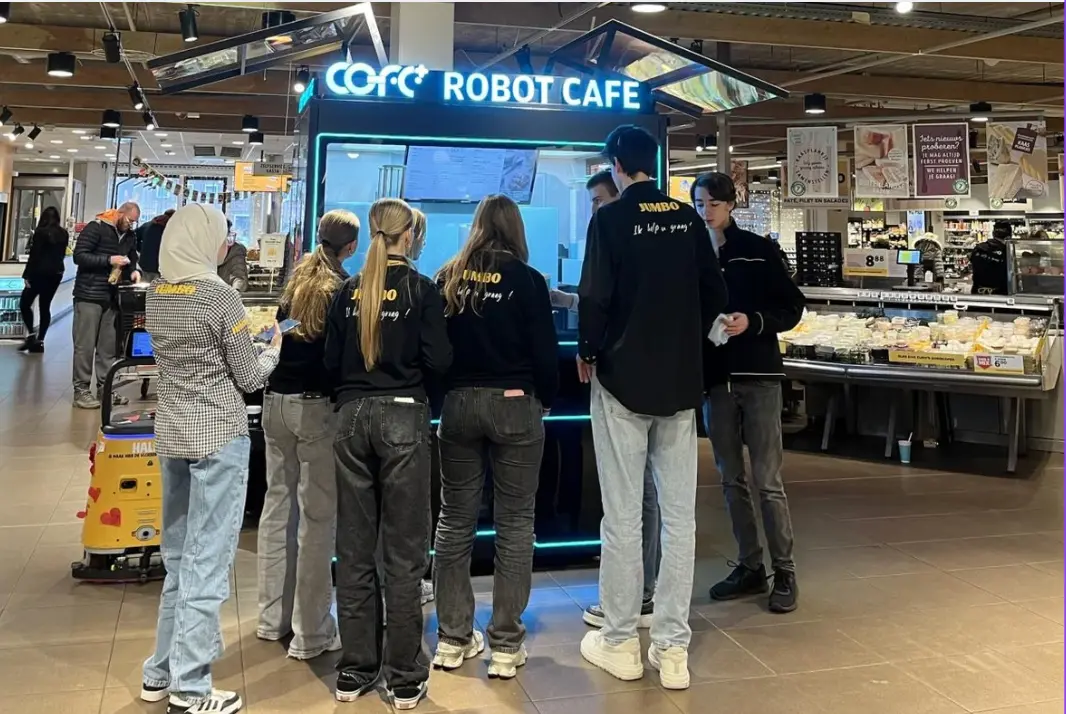
The Rise of Professional Robotic Café Technology: What COFE+ Is and Why It Matters
TL;DR — COFE+ is a fully automated robotic coffee kiosk that grinds fresh beans, brews espresso and lattes, creates latt……

A robot coffee kiosk in a business lounge has to do more than replace a barista. It has to protect the room’s calm, match the speed guests expect before a flight or meeting, and carry the lounge’s service standard without a trained operator on site. In the lounge projects I have scoped, the deciding question is not whether the equipment can pour coffee. It is whether the deployment will feel like a service upgrade. A robot coffee kiosk can hold that standard when the placement, menu, and operating plan are treated as part of the design.
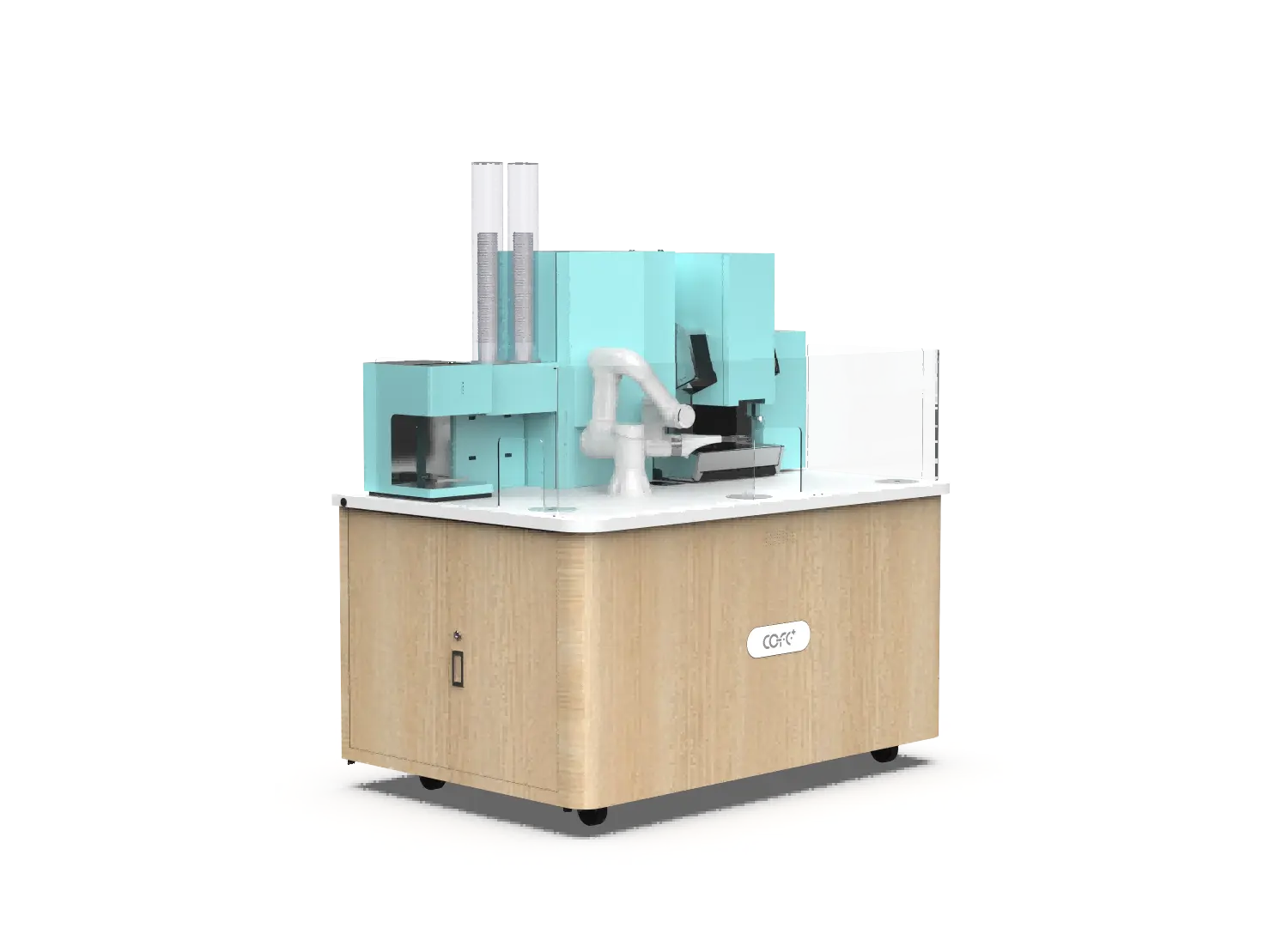
Business lounges and VIP waiting areas run on a difficult staffing model. The peak is short, but guest expectations stay high across 18 or 20 hours. A staffed coffee point in these rooms often gets pulled between meal service, desk duties, and clearing. A robot coffee kiosk removes that conflict because it holds a stable output curve through quiet afternoon and late boarding windows. The COFE+ indoor kiosk produces a fresh ground cup in 43 to 60 seconds and can run around 1,000 cups per day. That output matters in a lounge because the guest is not waiting behind five other people.
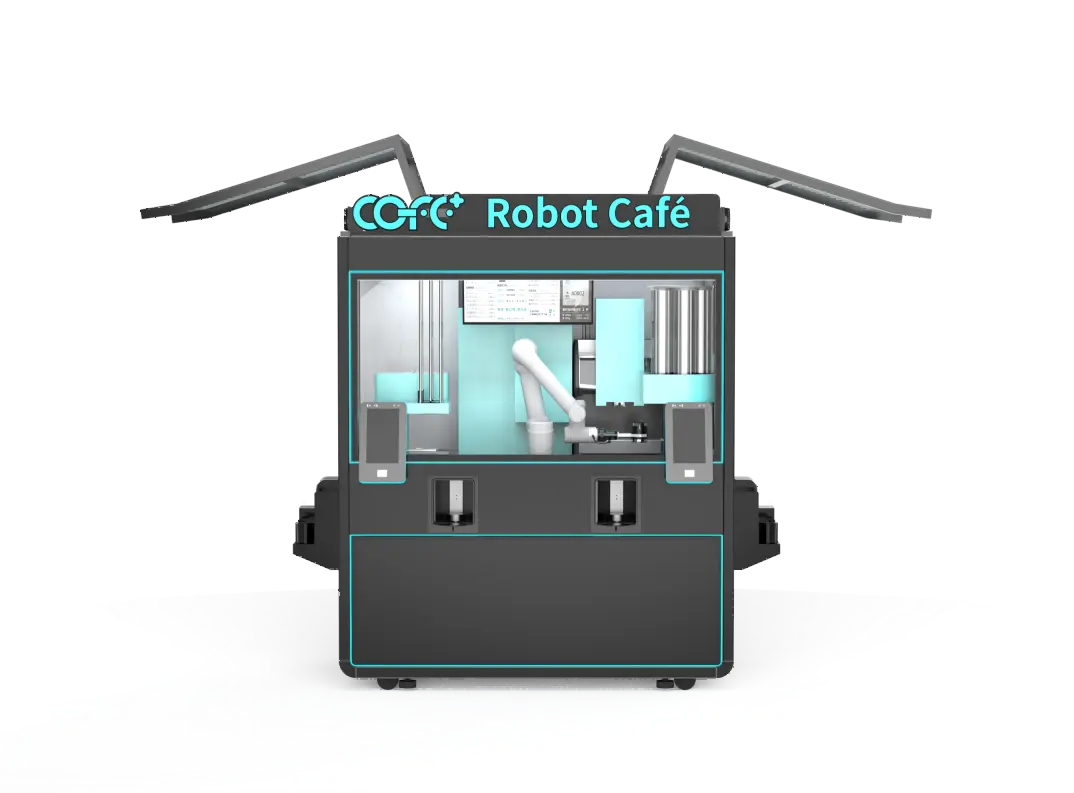
Premium rooms also carry a design risk. If the coffee point looks like a dispensing machine, it can lower the perception of the space. That is why a robot coffee kiosk needs the right format as much as the right extraction quality. The counter version takes about 2 m² and can be built into an existing bar or reception line, so guests watch the arm grind, pour, and finish the drink. That open view turns coffee service into a small piece of theatre. The 3D foam printing adds another layer: a lounge can print a logo, a guest name, or a welcome message on the drink.
In the lounge briefings I have run, the conversation changes once operators see printed latte art. They stop asking about the cost per cup and start asking where the unit should sit. That is the right shift. A business lounge does not buy a robot coffee kiosk to save labor first. It buys one to keep service consistent in rooms where a missing barista is immediately visible. At a cost of $0.30 to $0.70 per cup and no barista salary, the 6 to 12 month payback window is a secondary benefit, not the lead argument in a premium setting.
The most common mistake is placing the equipment where traffic accumulates: directly beside the entrance, next to gate announcements, or against the main buffet line. A robot coffee kiosk has grinders, pumps, and cup handling, so it carries sound. In a VIP waiting area, that sound has to be placed against soft seating and away from phone-call zones. Wall-side and corner positions generally work better than island positions because they reduce walk around noise and give the equipment a visual anchor.
| Format | Footprint | Best Lounge Position | Guest Experience |
|---|---|---|---|
| Robot Coffee Kiosk (indoor) | 2.35 m² | Against a service wall or soft seating | Fast self-service with a full menu |
| Robot Coffee Counter | About 2 m² | Built into an existing bar or reception | Open-view coffee theatre |
| Robot Coffee Bar | About 2 m² folded | Lounge corner or social alcove | Robot service plus seating |
For a robot coffee kiosk in a VIP waiting area, space is not the only site check. Lounge managers should confirm water, drainage, and a stable data connection before drawings are fixed. The indoor kiosk runs on 110V and 220V systems, but power load and water lines still need to pass the facility’s approval cycle. Treat the equipment as a fixed food service point, not as a portable appliance wheeled in after design is complete.
A robot coffee kiosk menu has to cover more ground than a street cafe menu. Early departures need black coffee and espresso. Afternoon guests often want iced options, decaf, or tea. International passengers may look for oat or soy milk, lower sugar choices, or a familiar regional flavor. That is why a broad recipe library matters. The COFE+ system carries more than 300 drink combinations, with recipes drawn from 197 countries and more than 5,000 customization paths for beans, milk, syrup, roast, and cup size.
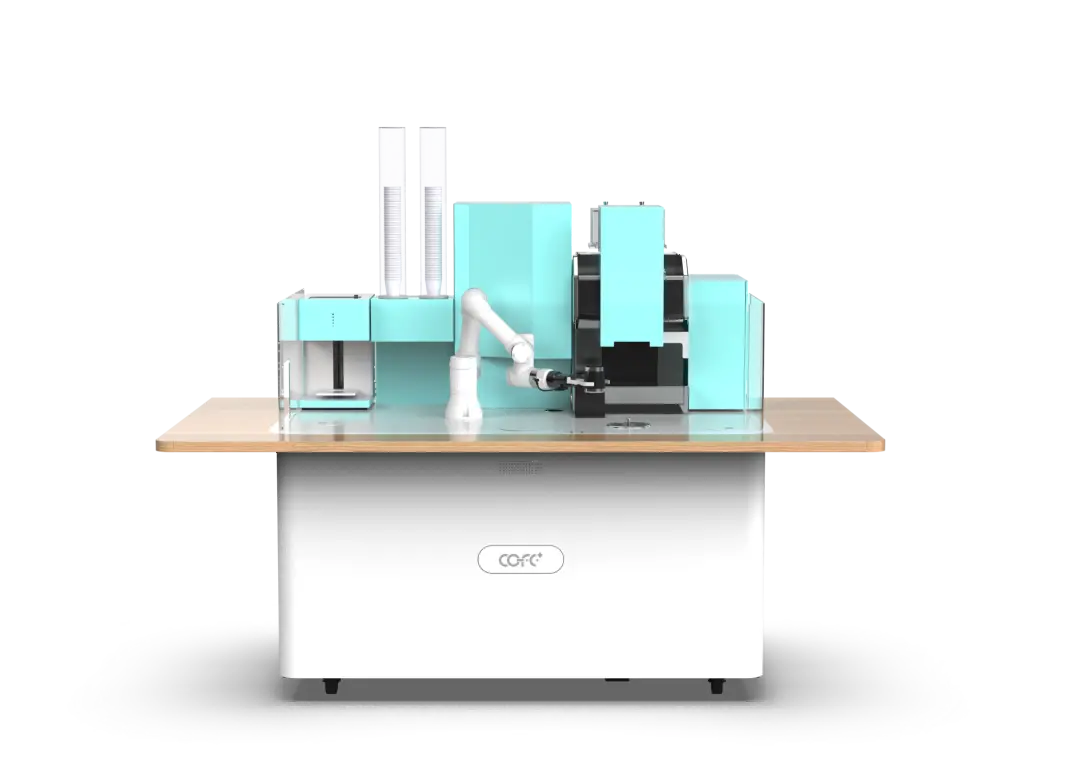
The visible menu should stay short and familiar: espresso, americano, latte, cappuccino, flat white, and black coffee. One chocolate or mocha, one matcha, and one tea line are usually enough. Decaf, plant based milk, and lower sugar options sit one level below the first screen. Markets with hot daytime temperatures do better with iced latte and iced tea options placed where guests can see them without scrolling.
Limit the first screen to six or seven choices and keep deeper options behind a single additional tap. A guest in a lounge should be able to order in under 30 seconds. If a touchscreen shows 300 drinks at once, the machine looks impressive but the service feels slower. The right structure is a narrow visible menu backed by a broad library, not the other way around.
If your lounge serves frequent international travelers, the most important pre-purchase step is to match the menu to the passenger mix and the local approval rules. Send the key guest profiles and your proposed menu set to sales@hi-dolphin.com and we will confirm which equipment configuration covers that mix without adding clutter.
The weakest part of a robot coffee kiosk is not the coffee. It is the response when something drifts. A lounge cannot wait for a guest complaint. The system has to flag low milk, low cups, a temperature error, or a failed module before service drops. Cloud monitoring covers stock levels, temperature, and system status. Remote diagnostics can issue a repair dispatch without a manager being on site, which shortens downtime in rooms that operate across multiple shifts.
Hygiene has to be visible but not disruptive. The closed waste system prevents spills and odors in carpeted lounges. The stainless interior and automatic high temperature sterilization above 85 °C keep the water path clean without a daily chemical routine. That matters for a robot coffee kiosk in a VIP room: the cleaning process should not look like a back of house chore happening beside guests.
The alert that matters most is stock out risk during a departure wave. Thirty empty cups at 6 a.m. creates a visible service failure because the next guest sees a problem instead of a service. After that, water pressure, temperature excursion, and module faults deserve priority. A good alert plan separates remote-resolvable errors from dispatch-level events so the operations team is not reacting to every minor flag.
For groups operating several lounge locations, the dashboard becomes the real staffing model. One central team can watch milk levels, temperature logs, and error codes across ten or fifteen sites without walking the floor. The hardware’s 500,000 cup durability and 10 year design life only matter if the operating routine uses that data. Most operators underinvest here. The machine is ready; the response plan has to be.
The last thing a business lounge wants is a coffee point that becomes a steady maintenance distraction. A robot coffee kiosk in a premium room exposes every missed refill and every error screen. That concern is valid, and the fix is to treat procurement as a compliance and integration decision, not a price-per-unit decision.
For a lounge installation, confirm the certification set your market requires, the power and water interface, the menu profile, and the remote monitoring scope before you sign. The COFE+ 7th generation robots hold FDA, CE, UKCA, KC, and SASO certifications and run on 110V and 220V systems, which reduces the friction in rollouts across multiple countries.
If you are now comparing a kiosk against a staffed coffee point for a lounge or VIP waiting area, the next step is to test the layout against your room conditions. Send your floor plan, expected daily traffic, and utility details to sales@hi-dolphin.com or call +86 131 6630 1290 and we will confirm which model, counter format, or bar setup fits the space and the approval path.
Yes, when the machine is specified for fresh grinding and digital recipe control. The limiting factor is usually bean quality and milk handling, not the robot. Digitized barista-level recipes keep extraction consistent across 300 consecutive cups, and the arm reproduces latte art shapes. A staffed bar can always improvise. A robot coffee kiosk’s advantage is that it does not drift from the approved profile during a long service window. For a business lounge, that consistency is often more valuable than improvisation.
A common assumption is that unmanned means zero staff time. The truth is closer to a few minutes per day for visual checks and ingredient restock, plus scheduled deep cleaning. The machine handles dose, extraction, steam, and cup handling, and the auto-clean cycle runs on its own. Milk, beans, syrup, and cups still need replenishing. In a lounge, one front of house person can usually own that task alongside existing duties, but the roster should name that person.
In the lounge projects I have reviewed, noise complaints usually trace back to placement, not the machine itself. When the unit sits against a service wall away from phone desks, grinders and pumps fade into the background. When it is placed beside a seating cluster or a corridor, the same sound becomes intrusive. The practical rule is to keep the machine out of the first three meters around quiet work zones and to test the room with the actual unit before the opening date.
The real question is not whether an error can happen, but how fast the system flags it. A sudden cup or milk shortage matters most in the 30 minutes before a departure wave, because visible stock out becomes a guest experience failure. Cloud alerts and remote diagnostics send the specific fault to the operations team. For multi-site operators, that means one person can redirect service or dispatch a local technician without walking the floor.
It depends on where the kiosk will be placed and which approval body governs the building. In most international lounge projects, the baseline checks are food contact safety, electrical certification, and any local hygiene requirements for unattended dispensing. The COFE+ 7th generation robots hold FDA, CE, UKCA, KC, and SASO certifications. Before you finalize, share your market and facility requirements with sales@hi-dolphin.com and we will confirm the relevant compliance set.
TL;DR — COFE+ is a fully automated robotic coffee kiosk that grinds fresh beans, brews espresso and lattes, creates latt……
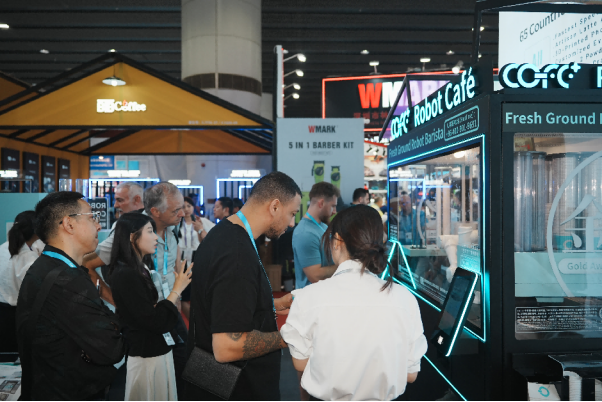
7th-Genertion Smart Robot Coffee Kiosk Arrives at the Belt and Road Core Hub, Ushering in a New Service Era Along t……
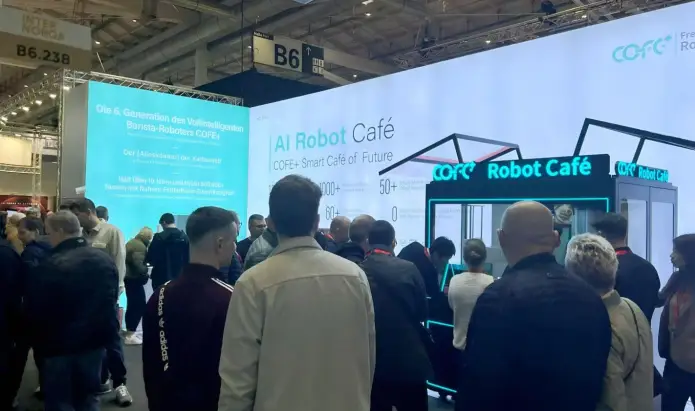
CHICAGO, May 12, 2026 (GLOBE NEWSWIRE) – Shanghai Hi-Dolphin Robot Technology today announced the U.S. debut of its 7th‑……