The Rise of Professional Robotic Café Technology: What COFE+ Is and Why It Matters
TL;DR — COFE+ is a fully automated robotic coffee kiosk that grinds fresh beans, brews espresso and lattes, creates latt……

Most site approval checklists for robot coffee kiosks are written from the operator’s perspective: what the vendor needs to get their machine running. Landlords get a secondhand version, with key risks filtered out. The reality is that a poorly prepared site wastes months, creates liability for the property owner, and erodes the revenue share that makes the deal worth doing. From our work with shopping centers, transit operators, and office landlords, the approval process fails most often on a small number of predictable points — power not matching the actual continuous load, drainage assumptions that don’t hold up, and placement locations that look good on a floor plan but create dead zones for customer flow.
This article walks through the site readiness factors that property teams should confirm before signing a placement agreement. We will cover utility requirements, space and placement rules, the compliance documents worth asking for, and the operations setup that prevents friction after the kiosk goes live.
Landlords are typically given a single number for electrical load, but that number can be misleading if it represents peak draw or nameplate capacity. What matters for site readiness is the continuous operating load and the inrush current when the machine’s boiler, compressor, and robotic arm initialize simultaneously.
For a kiosk like the COFE+ 7th generation indoor unit, the continuous draw sits in the 3–4 kW range once the boiler is hot and the refrigeration circuit is at steady state. However, the startup sequence can pull significantly more for 15 to 30 seconds. If the circuit is already serving other tenants or shared lighting, that spike may trip a breaker that a static load calculation would not predict. We require a dedicated 20A or 25A circuit depending on local voltage standards, and we ask facility teams to measure actual available capacity at the point of connection rather than relying on panel labels.
The second point that gets missed is voltage stability. The internal control PC and the articulating arm servos are sensitive to voltage sag. In older buildings with unregulated supply, a 10% dip during peak floor demand can cause the robot to abort a drink cycle. If the facility manager cannot confirm voltage regulation within ±5%, we recommend adding a small online UPS or voltage stabilizer ahead of the kiosk tap.
Water and drainage are where indoor and outdoor site approvals diverge completely. Indoor sites in a shopping center food court or office lobby can usually tap into an existing plumbing stack. The kiosk needs a 3/4-inch cold water supply line with a shutoff valve within 5 meters, and the machine’s internal pump handles line pressure from 1.5 to 4 bar. That is straightforward.
Drainage causes more rejections than water supply. A robot coffee kiosk produces roughly 1 to 1.5 liters of wastewater per drink — from drip tray purge, automatic cleaning cycles, and the grounds bin wash station. That is not a huge volume, but it releases intermittently. If the drain line is not sloped correctly or shares a stack with high-volume fixtures, backflow becomes a real contamination risk. We always require a dedicated 50 mm drain connection with a P-trap and a minimum 2% slope. In basements or below-grade spaces, a small lift pump may be needed.
Outdoor sites change the equation entirely. A standalone outdoor kiosk typically operates with an onboard water tank and a wastewater holding tank because trenching a permanent connection is rarely approved by the landlord. The COFE+ outdoor model runs on two 19-liter fresh water canisters and collects waste in a 25-liter greywater tank. The landlord’s site approval needs to confirm that someone will refill and empty these tanks on schedule, not just that the machine can hold them. In hot climates, the fresh water tank can develop biofilm within 48 hours if not used, so a daily flush protocol becomes part of the operations plan that the landlord should review before approving the placement.
Most robot coffee kiosks can connect over Wi-Fi, but site Wi-Fi is the number one cause of payment failures and diagnostic gaps in the first month. Public mall Wi-Fi often requires browser-based login pages, rotates IP addresses, or drops packets during peak foot traffic. When the kiosk loses connectivity for more than 30 seconds, it cannot process card payments, sync inventory alerts to the cloud, or receive remote commands.
We specify a dedicated 4G/5G router with an Ethernet fallback as the preferred setup. The kiosk’s internal router uses a standard SIM card slot, so landlords simply need to confirm cellular signal strength at the planned location. If the site is in a basement or a steel-framed building with poor reception, an external antenna can be mounted above the kiosk and cabled in. On sites where the landlord insists on wired internet, we ask for a static IP, an open port for the cloud management protocol, and a minimum 2 Mbps upload speed — video feeds from the internal cameras use most of that bandwidth, but the transaction and telemetry data are negligible.
If your building has a guest network with a captive portal, the kiosk will not work on it. That is the single most common false start we see during commissioning.
Robot coffee kiosks are not heavy — a fully loaded indoor unit weighs around 350 to 400 kg — but the load is concentrated on four leveling feet. A typical mall corridor tile floor handles that without any structural reinforcement. The condition to check is floor flatness: if the leveling feet need more than 20 mm of adjustment, the robotic arm’s calibration drifts because the machine frame is slightly twisted. That causes drink consistency problems that no remote software update can fix. A quick check with a 2-meter straightedge across the proposed footprint is enough to confirm.
Placement is the bigger revenue lever. A kiosk pushed against a back wall in a dead-end corridor will generate a fraction of the sales that an island or corner placement achieves, even if both sites have the same foot traffic count. We consistently see 30 to 50% higher cup sales when the machine is visible from two approach angles and has at least 1.5 meters of clear queue depth in front. Landlords should insist on a sightline check from the main pedestrian flow before locking the location. If a tenant leasing manager places the kiosk where no other tenant wanted to rent, the revenue share will reflect that compromise.
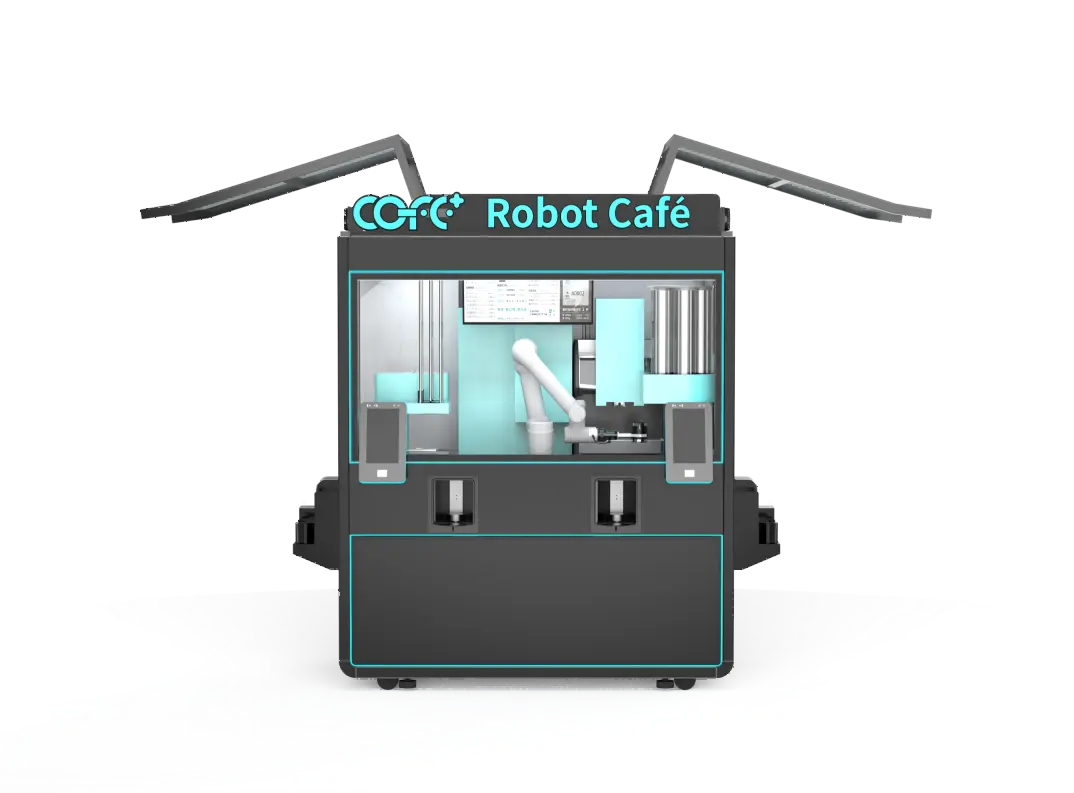
The table below summarizes the main placement configurations and their typical performance profiles from our installations across shopping centers and transit hubs:
| Placement type | Space needed | Pedestrian visibility | Typical daily cup range |
|---|---|---|---|
| Wall-side alcove | 2.5 m² | One approach, limited queue | 40–70 |
| Corner (two approaches) | 3.0 m² | High from two sides | 80–140 |
| Island (open all sides) | 4.0 m² | Maximum visibility | 120–200 |
| Narrow corridor inline | 2.0 m² | Good flow-through but no dwell | 60–100 |
For sites with high ambient noise like transit concourses or event venues, add 0.5 m to the depth because customers need to get closer to the touchscreen to read the menu. That extra half meter dramatically reduces order abandonment.
The paperwork review is where landlords can either establish a defensible position or accept a stack of marketing brochures that provide zero legal protection. We recommend requesting three specific document categories before any placement agreement is countersigned.
First, electrical safety and EMC certifications. For a kiosk entering the EU or UK, this means a CE or UKCA declaration of conformity with the applicable directives — Low Voltage Directive 2014/35/EU, Electromagnetic Compatibility Directive 2014/30/EU, and the Machinery Directive 2006/42/EC if the robotic arm is classified as partly completed machinery. The declaration should reference the specific harmonized standards tested, not just state compliance generically. We make this distinction because some landlords accept a supplier’s self-declaration that does not name the test lab or the standard version, and that document will not satisfy their own insurer’s risk engineer when the equipment is audited.
Second, food contact materials documentation. The internal brew group, milk lines, and syrup paths are in continuous contact with consumables at temperatures up to 85°C during the sterilization cycle. The supplier should provide test reports for all food contact components against EU Regulation 1935/2004 or FDA 21 CFR parts 174–178, depending on the jurisdiction. Certifications that cover the assembled kiosk as a whole appliance, not just individual raw materials, carry more weight. The COFE+ unit carries FDA, CE, UKCA, KC, and SASO certifications, and we supply the full technical file index with the test lab names and accreditation scopes when a landlord’s risk management team asks for it.
Third, public liability insurance and installation method statements. The operator should carry product liability and public liability coverage that names the landlord as an additional insured for the term of the placement. The installation method statement should describe how the machine is lifted, positioned, leveled, and connected without damaging the floor or adjacent structures. This is not bureaucratic — we have seen a freight elevator door frame get gouged during delivery because the rigging plan assumed a clearance that did not exist.
A robot kiosk eliminates the staffing variable, but it introduces a different set of operational touchpoints that the landlord’s facility team will interact with. The two that most often create friction are restocking access and cleaning cadence.
Restocking is the more visible one. A high-volume kiosk selling 150 cups a day will burn through about 2 kg of coffee beans, 12 liters of fresh milk, and a full set of syrup bottles every 24 to 36 hours. The operator needs to schedule a restocking window, typically early morning or late evening, and the procedure takes about 20 minutes if the operator is trained. Landlords should confirm that the service corridor or passenger elevator is accessible during those hours and that the restocking cart does not need to cross a public concourse during peak trading. If the only access path is through the main entrance, the restocking schedule needs to be locked into the placement agreement so the operator is not negotiating access every week with the duty manager.
The cleaning cycle is subtle but can become an issue if the landlord’s cleaning crew is not informed. The kiosk runs an automatic high-temperature sterilization cycle at preset intervals, usually once every four hours. This cycle dumps about 200 ml of 85°C water through the brew head and drip tray. If the drain connection is not properly trapped, or if the drip tray overflows because it was not emptied on schedule, the puddle looks like a leak and someone will file a maintenance ticket. We include a one-page “what to expect” sheet for the facility team so they know the difference between normal purge water and an actual fault.
Four to six weeks if the utility connection points are already within 5 meters of the proposed footprint. A site survey takes one morning. The longest variable is getting a dedicated electrical circuit pulled if the existing panel is full, which can add three to four weeks depending on the building’s electrician schedule. The kiosk itself commissions in under a day once the connections are live, so the power cable run usually gates the timeline.
Not on any standard commercial floor slab or suspended tile system rated for 500 kg/m². The fully loaded indoor unit exerts a distributed load well under that threshold. The floor flatness matters more than strength — if the surface varies by more than 20 mm across the 2.35 m² footprint, the leveling feet cannot compensate enough to keep the robotic arm calibration stable. We check this with a straightedge during the survey and flag it if grinding or a leveling pad is needed. In 95% of indoor sites, no floor work is required beyond cleaning the area.
The internal pump can draw from a line as low as 1 bar, which covers almost all municipal supply scenarios except gravity-fed rooftop tanks with insufficient head. If the building’s booster pump fails, the kiosk will pause drink production and flag a supply fault on the cloud dashboard. A small onboard buffer tank of 5 liters keeps the cleaning cycle running for about two hours without line pressure, so there is no immediate shutdown unless the outage extends through a peak period. For buildings with known pressure instability, we recommend installing a compact pressure accumulator on the supply line.
Payment processing fails immediately — the card terminal cannot reach the acquirer, so the transaction is declined at the terminal. Any drink in progress will complete because the recipe and motion sequence are stored locally on the kiosk’s PLC, not streamed over the network. The cloud dashboard will show the unit as offline, inventory data will backlog and sync once connectivity returns, and the error log will record the outage timestamp. A 4G failover router eliminates this risk almost entirely and adds roughly $15 to monthly operating cost per site.
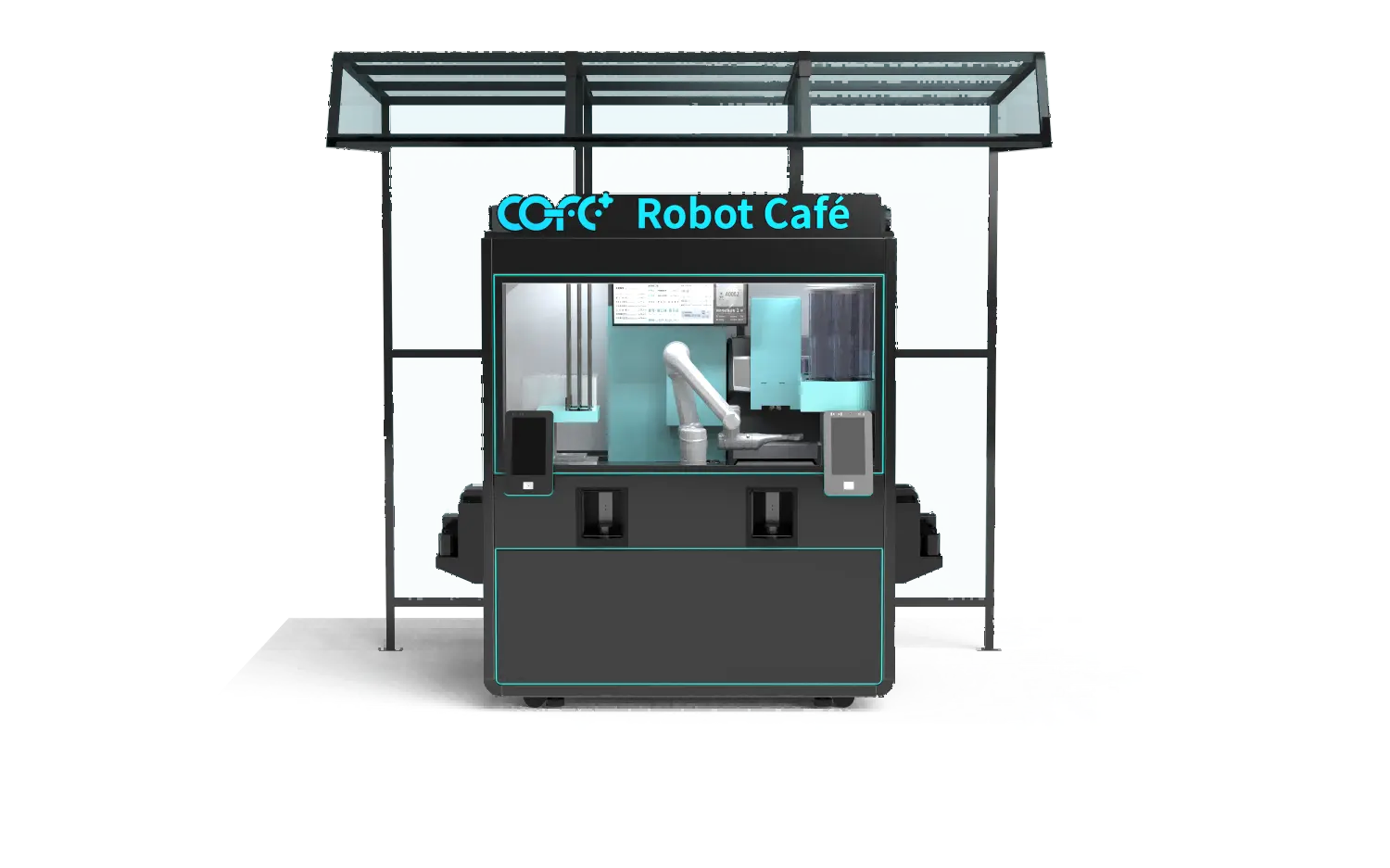
The approval checklist is longer but the fundamentals are similar. The outdoor unit is self-contained for water and waste, so the landlord does not need to provide plumbing connections — that simplifies one aspect. The additional steps are confirming the concrete pad or plinth meets the footprint with a 200 mm margin on all sides, verifying the canopy or shade structure provides protection from direct afternoon sun on the touchscreen, and checking that the cellular signal is usable with the stainless-steel enclosure fully closed. If those three items pass, the outdoor approval is often faster than an indoor one because no internal utility rough-ins are needed. For sites with specific environmental concerns like coastal salt spray or freeze-thaw cycling, share your location details with us at sales@hi-dolphin.com or +86 131 6630 1290 and we can confirm whether the standard outdoor kiosk configuration covers those conditions without modification.
TL;DR — COFE+ is a fully automated robotic coffee kiosk that grinds fresh beans, brews espresso and lattes, creates latt……
7th-Genertion Smart Robot Coffee Kiosk Arrives at the Belt and Road Core Hub, Ushering in a New Service Era Along t……
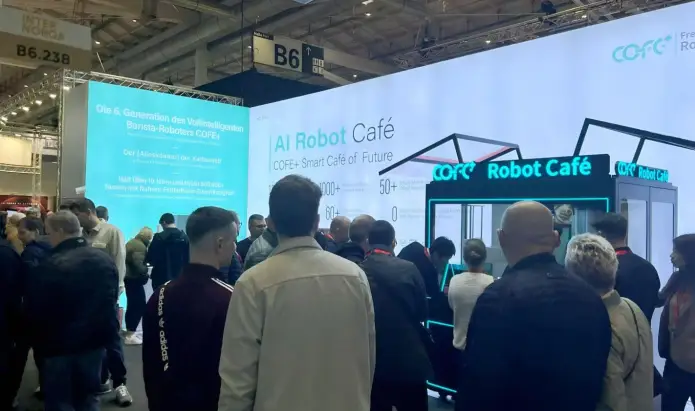
CHICAGO, May 12, 2026 (GLOBE NEWSWIRE) – Shanghai Hi-Dolphin Robot Technology today announced the U.S. debut of its 7th‑……