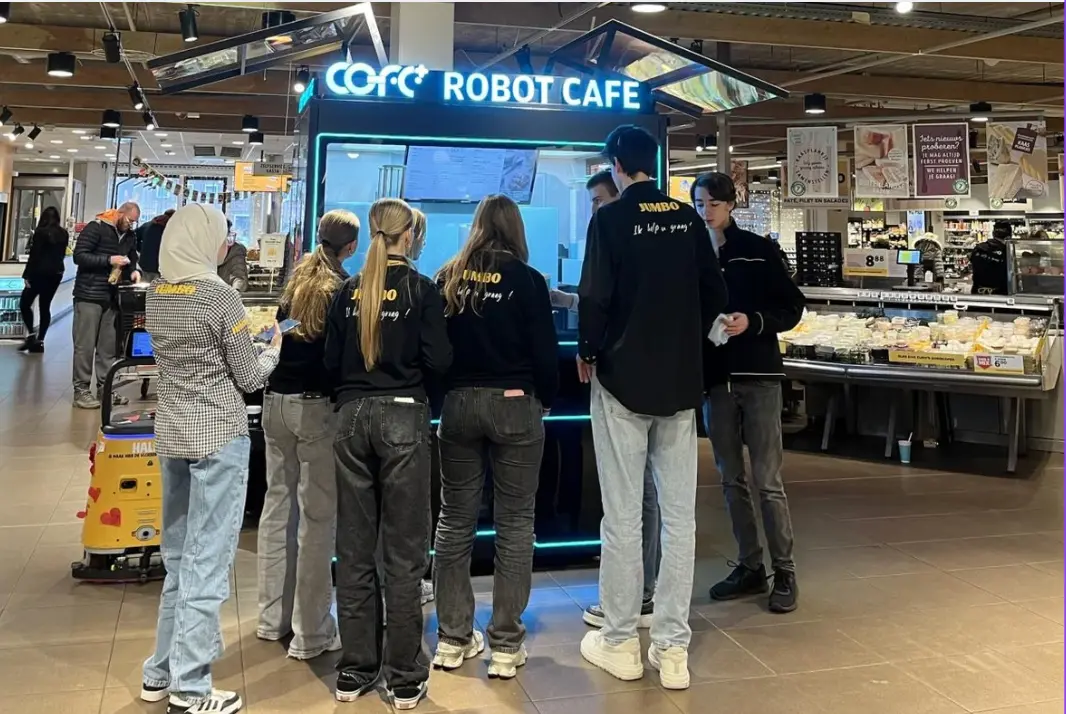
The Rise of Professional Robotic Café Technology: What COFE+ Is and Why It Matters
TL;DR — COFE+ is a fully automated robotic coffee kiosk that grinds fresh beans, brews espresso and lattes, creates latt……

Few things stall a robot coffee kiosk launch faster than an installation bottleneck that could have been spotted weeks earlier. While the appeal of 24/7 unmanned operation draws operators and property managers alike, the pre-launch phase—utility coordination, landlord approvals, and model selection—often reveals common robot coffee kiosk installation problems that even experienced teams overlook. This article draws on lessons from global deployments to highlight these pitfalls and the pre-installation moves that prevent them.
Selecting an indoor robot coffee kiosk for a covered but unheated outdoor corridor is a recurring error I see in early stage deployments. The indoor unit lacks the IP54 dust-and-water resistance, UV shielding, and condensation management built into its outdoor counterpart. Fit the model to the actual environment, not the architectural label. A site with frequent temperature swings or direct afternoon sun sitting under an awning is, in practice, an outdoor installation.
| Site Requirement | Indoor Robot Coffee Kiosk | Outdoor Robot Coffee Kiosk |
|---|---|---|
| Temperature range | Stable indoor environment recommended | -20°C to 45°C rated operation |
| Enclosure protection | Standard interior build | IP54, UV-resistant, anti-condensation |
| Drainage | Basin connection or tank | Must handle rainwater runoff plus machine output |
| Certifications | FDA, CE, UKCA, KC, SASO | Same, plus additional weather-related compliance tests |
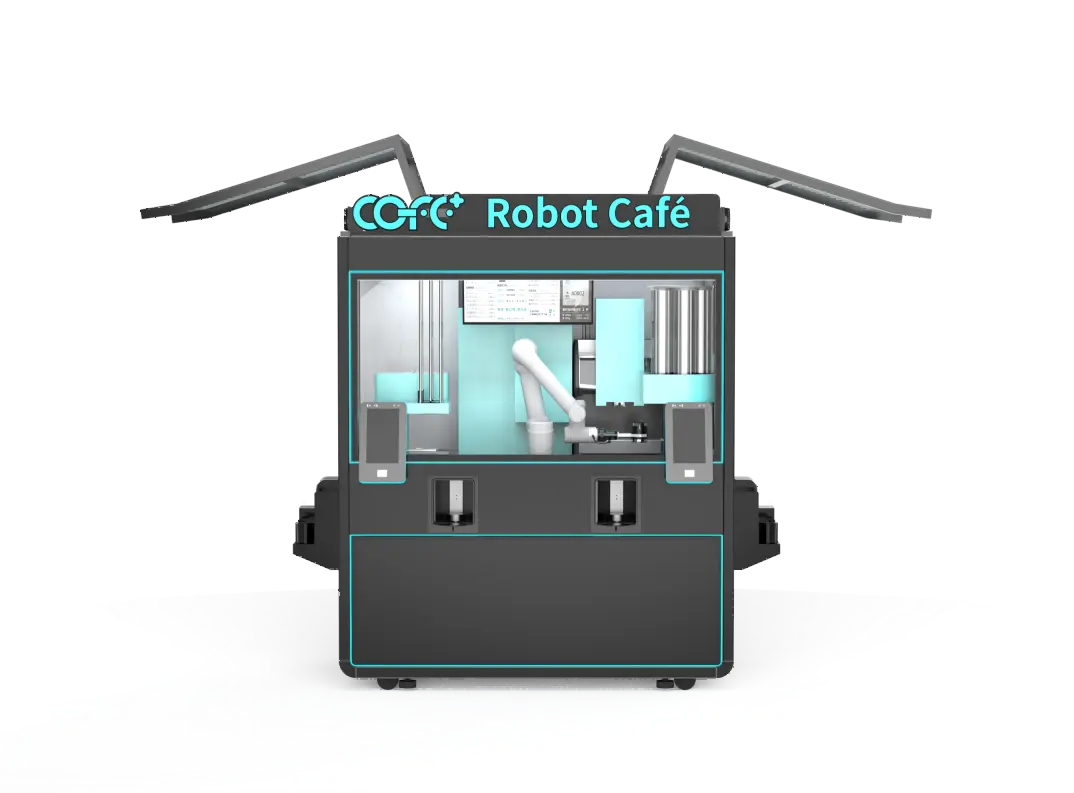
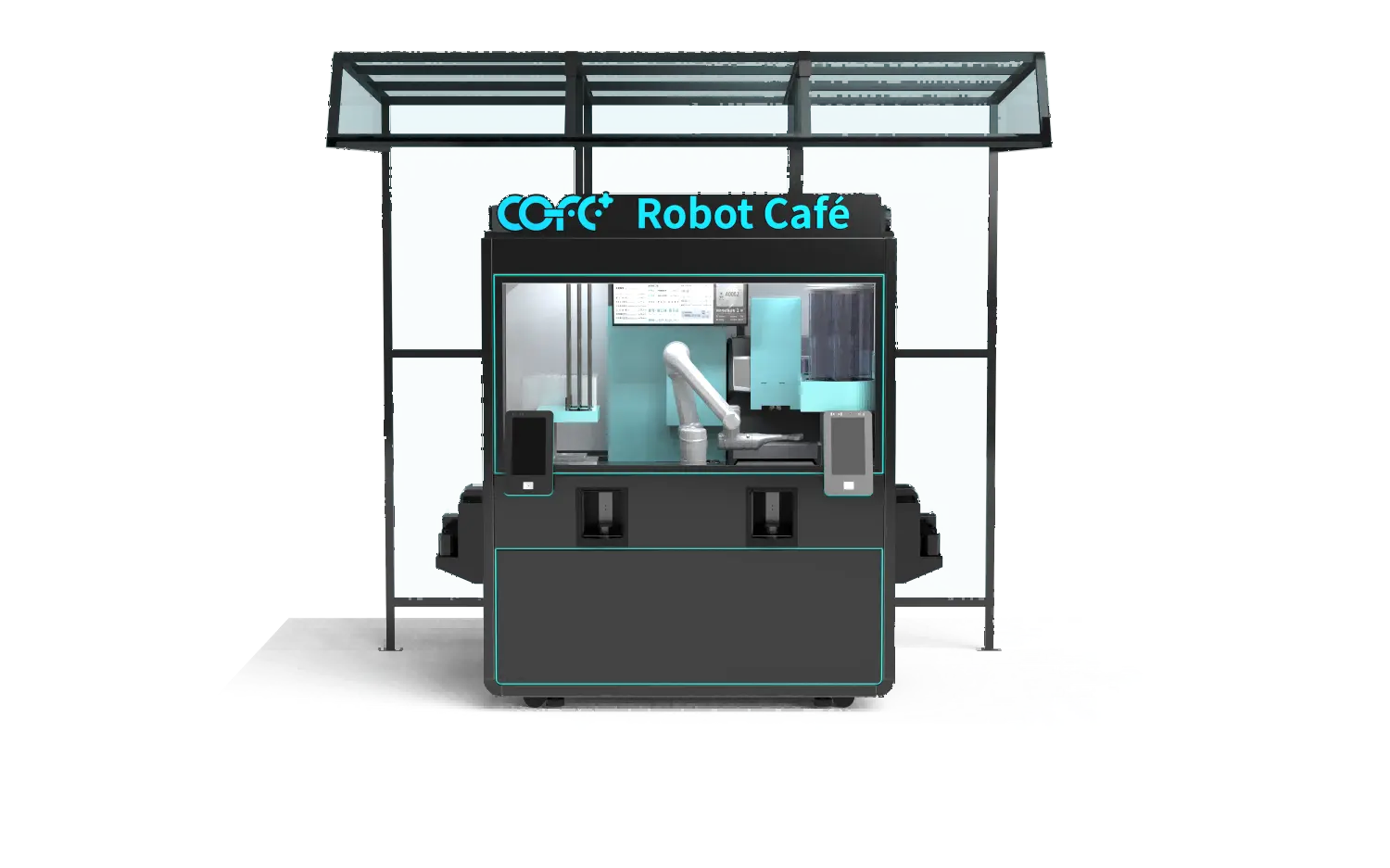
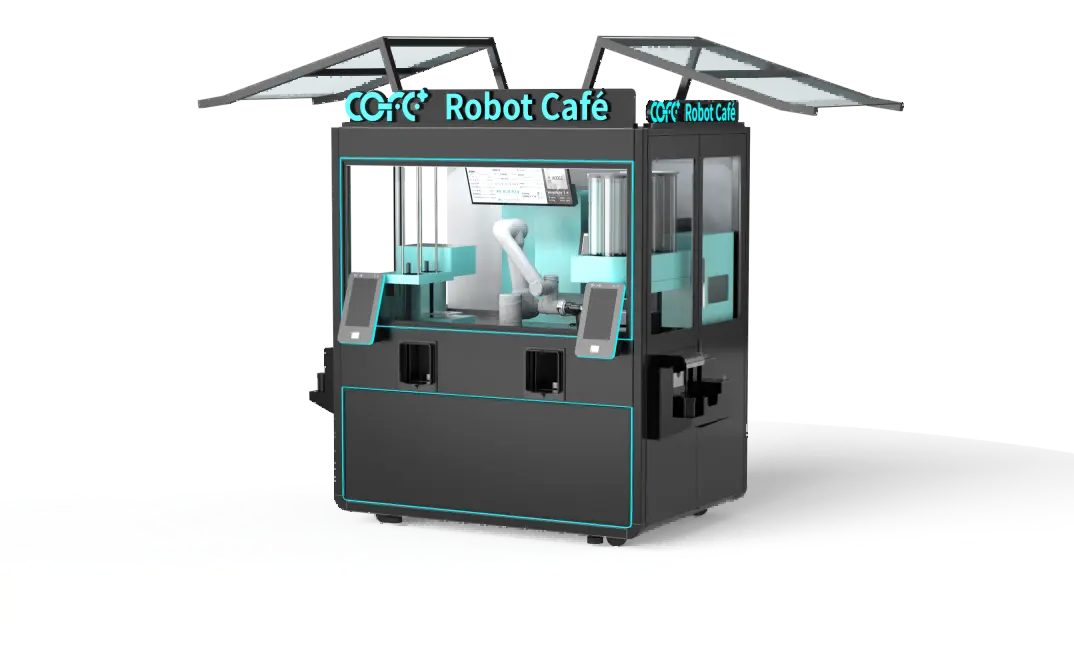
Beyond weather, the kiosk variant also changes utility pathways. Coffee counters and robot coffee bars have different plumbing chases and clearance envelopes. Matching the form factor to the space avoids forced retrofits.
A distributor once told me their 220V line was dedicated. In reality, the circuit was shared with three vending machines. The weekday morning rush tripped the breaker, leaving the robot coffee kiosk offline during peak sales. Confirm not just the voltage but the amperage and whether the line is exclusive to the machine. The COFE+ seventh generation units require a stable power supply without load sharing.
Internet performance is another silent failure mode. Wi-Fi in crowded shopping malls, underground transit hubs, and reinforced concrete buildings degrades. A dedicated 4G router as primary or failover is not optional for unmanned revenue—it keeps transactions flowing and remote monitoring active.
Water supply and drainage present their own surprises. I have seen teams discover that a drain point exists on the floor plan but sits several meters away, requiring a pump or floor channel work. For indoor sites without nearby drainage, integrated fresh water and waste water tanks solve the problem but demand a daily service visit. That trade-off must be part of the installation decision.
If your intended site has unconventional power, network, or plumbing conditions, confirm compatibility with the supplier before finalizing the lease. Send your site details to sales@hi-dolphin.com and we will evaluate the feasibility.
Landlords and facility managers are often unfamiliar with robot coffee kiosks, and the approval timeline can stretch from two days to six weeks depending on how well you frontload documentation. Present the kiosk’s food safety certifications (FDA, CE, UKCA, KC, SASO are already held by Hi-Dolphin units), its physical footprint, and a mock site layout at the first meeting. The less the landlord has to research, the faster the sign-off.
Liability clauses in lease agreements also stall installations. Many property owners want explicit coverage for water leaks, electrical faults, and patron interaction. Operators should have a prepared response detailing the machine’s leak detection sensors, automatic shutoffs, and the remote alerting system that triggers service calls. A one-page safety overview document often unblocks negotiations faster than back-and-forth legal edits.
A robot coffee kiosk draws better revenue when customers can see it clearly and queue without blocking walkways. The COFE+ indoor unit has a 2.35 m² footprint, but I recommend a total floor area of at least 6 m² to accommodate a three-person queue, maintenance access from the rear, and ventilation clearance. For outdoor models, add sheltered waiting space, especially in rainy or sun-exposed locations.
Signage height matters: the kiosk menu screen should be visible above head height in a crowd. In a transit hub, placing the machine in a recess off the main artery without directional signage reduces discovery. In many successful installations, a simple illuminated suspended sign perpendicular to foot traffic triples walk-up rates.
Queue management varies by model. A robot coffee bar, which can seat four guests around the unit, creates a different flow pattern than a standalone kiosk. Plan the space so the bar’s social seating does not block the ordering interface during rush hours. That detail is routinely missed on floor plans.
Once the robot coffee kiosk is physically installed, run a full service simulation over two days before opening to the public. This means producing 100+ cups across the menu, monitoring waste container fill rates, and deliberately triggering ingredient-low alerts. The goal is to surface any mechanical, software, or network issues when no revenue is at stake.
Remote monitoring is not a nice-to-have; it is the operational backbone of unmanned sites. The COFE+ cloud dashboard tracks stock levels, temperature, and system health in real time. Set alert thresholds for milk inventory below 20%, cooling system temperature drift, and payment gateway failures. Without these, a kiosk can sit idle for an entire shift without anyone knowing.
Spare parts availability deserves equal planning. For international operators, I advise stocking a circuit board, a pump assembly, and a touchscreen module locally. Even with remote diagnostics, the fastest fix is having the part on hand. A technician can then be dispatched with exact replacement instructions, shrinking downtime from days to hours.
What is the minimum floor space needed for a robot coffee kiosk?
The COFE+ indoor kiosk occupies 2.35 m² but we recommend a total site footprint of 6 m² for queueing, rear access, and ventilation. Outdoor installations benefit from additional covered waiting area.
Can a robot coffee kiosk run without a direct water line?
Yes, integrated water and waste tanks allow operation without plumbing. However, for high volume locations, a fixed connection reduces service visits. The right configuration depends on your daily cup target and service schedule.
How long does a typical installation take?
Physical setup is often one to two days once the machine arrives. The full timeline, including site survey, utility upgrades, and landlord approval, usually runs two to four weeks. Landlord negotiation is the most variable phase.
What happens if the internet connection drops?
The kiosk can continue dispensing using cached recipes, but payment processing may pause until connectivity returns. A dedicated 4G failover router is the best insurance. With the COFE+ remote system, you also receive an instant outage alert.
Do I need special certifications to install a robot coffee kiosk?
As an operator, you normally do not need a personal certification. The machine itself must carry regionally accepted food contact safety marks, which Hi-Dolphin units already possess (FDA, CE, and others). Some municipalities require a local health department inspection for unmanned food equipment. Share your region’s requirements with us and we will confirm documentation readiness before shipment.
The difference between a smooth launch and a weeks-long delay sits inside the pre-installation site review. We work with you to match the right robot coffee kiosk model to your environment, build a utility checklist that reflects your actual site conditions, and provide landlord-ready compliance documentation. Send your site specifications to sales@hi-dolphin.com or call +86 131 6630 1290 to start your installation planning.
TL;DR — COFE+ is a fully automated robotic coffee kiosk that grinds fresh beans, brews espresso and lattes, creates latt……
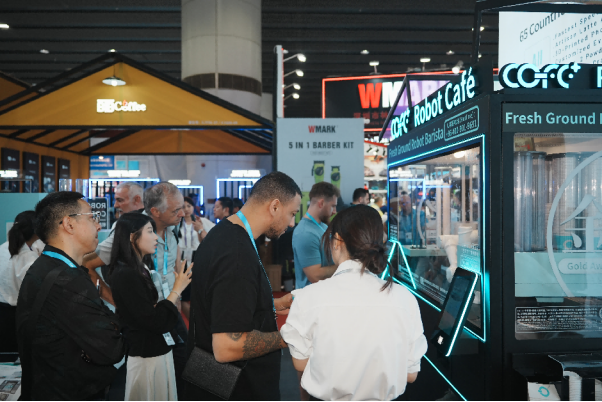
7th-Genertion Smart Robot Coffee Kiosk Arrives at the Belt and Road Core Hub, Ushering in a New Service Era Along t……
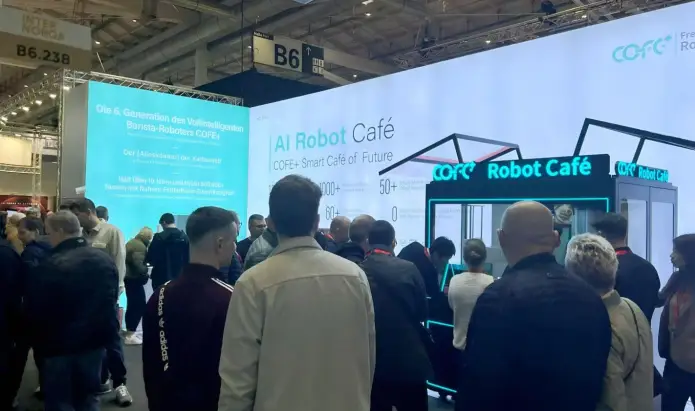
CHICAGO, May 12, 2026 (GLOBE NEWSWIRE) – Shanghai Hi-Dolphin Robot Technology today announced the U.S. debut of its 7th‑……