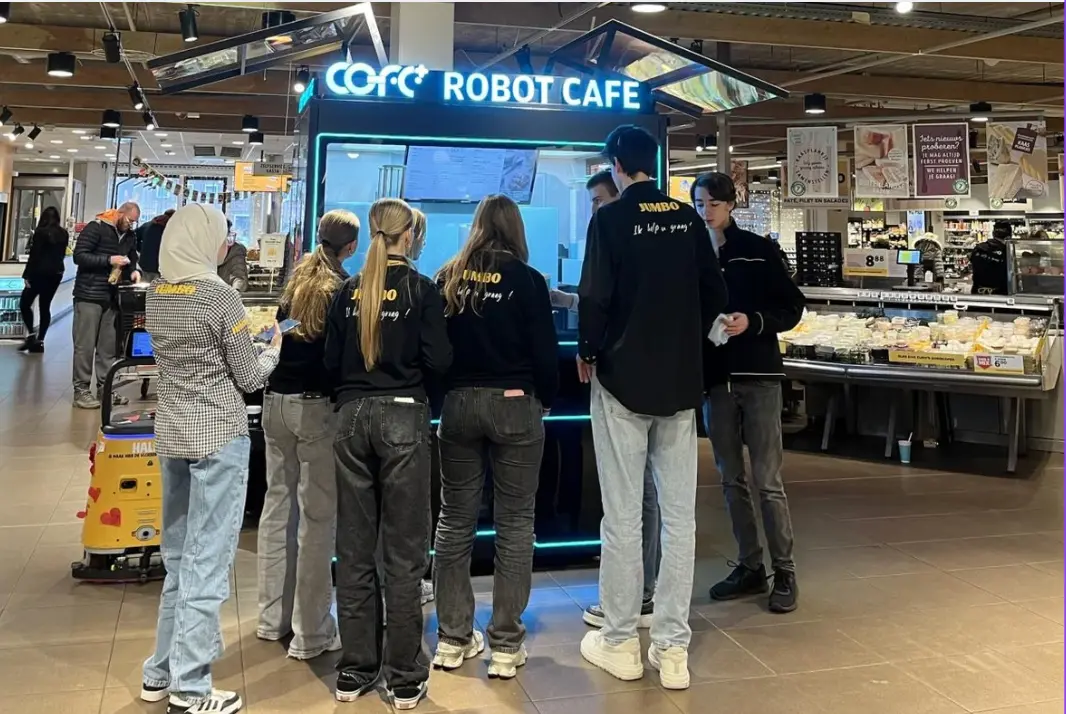
The Rise of Professional Robotic Café Technology: What COFE+ Is and Why It Matters
TL;DR — COFE+ is a fully automated robotic coffee kiosk that grinds fresh beans, brews espresso and lattes, creates latt……

A kiosk can sit in a high-traffic venue and still miss most of its sales because the machine’s position shapes who sees it, how long the queue blocks circulation, and whether service access stays practical. Robot coffee kiosk placement is a revenue decision before it is a technical one, and the choice among wall side, island, and corner positions sets the pattern for every hour of operation. In site work I have done across shopping malls, transit concourses, and office lobbies, corner placement usually produces the strongest consistent capture rate because it opens two approach sides and gives the queue a natural spill space. Matching the position to the utility access and the queue path matters as much as the machine itself.
Wall side keeps the machine against a wall, which puts power, water, and drainage rough-ins behind or below the unit without crossing the customer path. That is the simplest install for a narrow corridor, but the queue forms in front of the screen and can block circulation when the line exceeds the available depth.
An island position sits in the open with approach from all four sides. Visibility improves from every direction, and that matters in an atrium or plaza where customers arrive from several entries. The tradeoff is physical: water and drainage usually need a floor trench or service pit, which means cutting into the slab and coordinating with the landlord before installation starts.
A corner position uses two walls, so the machine gets two public sides and two service sides. The queue can wrap along one wall instead of pushing back into the main walkway, and the approach sightline runs longer than a wall side unit because customers see the kiosk earlier from the cross path.
| Placement | Best for | Visibility profile | Queue behavior | Main risk |
|---|---|---|---|---|
| Wall side | Narrow corridors, hallways | Single front view, short sightline | Single file, blocks path if long | Walkway congestion at peak |
| Island | Atriums, open plazas | Four-side visibility | Two queues can form, needs floor space | Floor trench for utilities |
| Corner | L-shaped junctions, entries | Two approach sides, long sightline | Queue wraps along one wall | Fire egress and neighbor entry clearance |
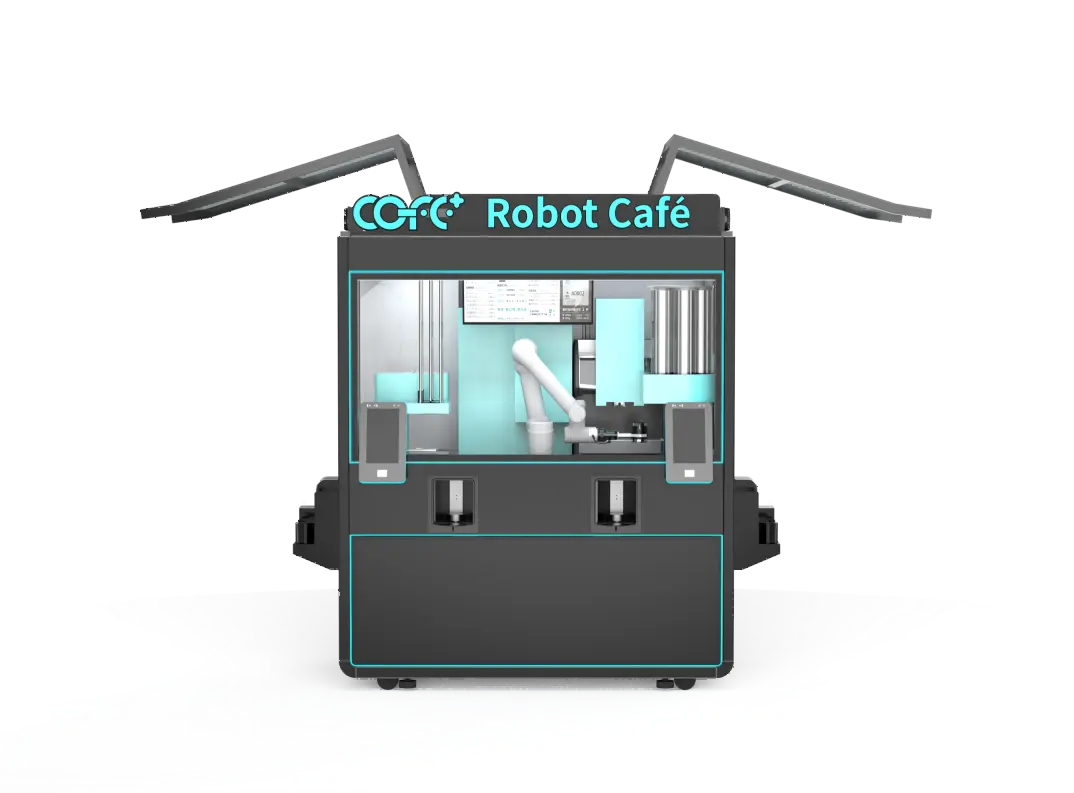
The indoor kiosk needs only 2.35 m², but that machine footprint is not the full site footprint. Robot coffee kiosk placement has to add queue depth and service clearance before you compare the three positions.
Use an island only when foot traffic approaches from at least three directions and the floor slab already has, or can accept, a utility trench. Airport departure halls, exhibition atriums, and large rail concourses fit this pattern. A wall side unit in the same space gets lost because half of the passing flow never crosses into its single sightline.
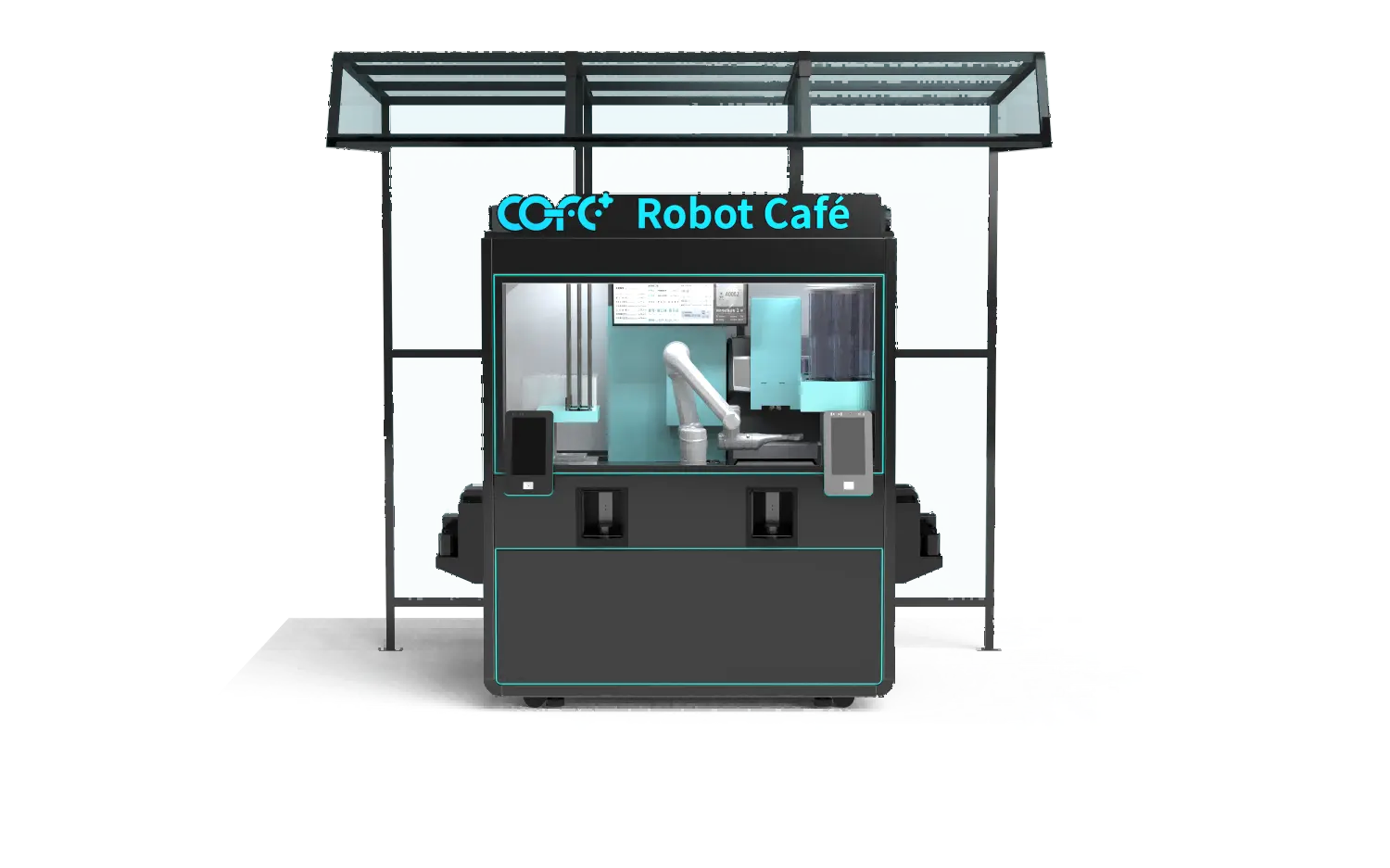
The island layout also changes queue behavior. With two faces open, customers can line up on either side, but that freedom cuts both ways: without a defined rail or floor marking, two short lines form and merge at the pickup point, which slows service. I have watched this happen in open plazas where a wall side unit would have produced a neater single-file flow.
If your chosen site appears to require an island position but the slab has no existing drainage line, confirm the routing before you finalize the layout. Send the floor plan and marked utility points to sales@hi-dolphin.com and we will identify any trenching constraints.
A corner placement captures the most consistent walk-by traffic because the kiosk is visible from two approach paths and sits where two flows converge. The queue can wrap along the adjacent wall, so the main circulation lane stays clear even at peak. That combination is why I treat a corner as the default recommendation when a venue offers one.
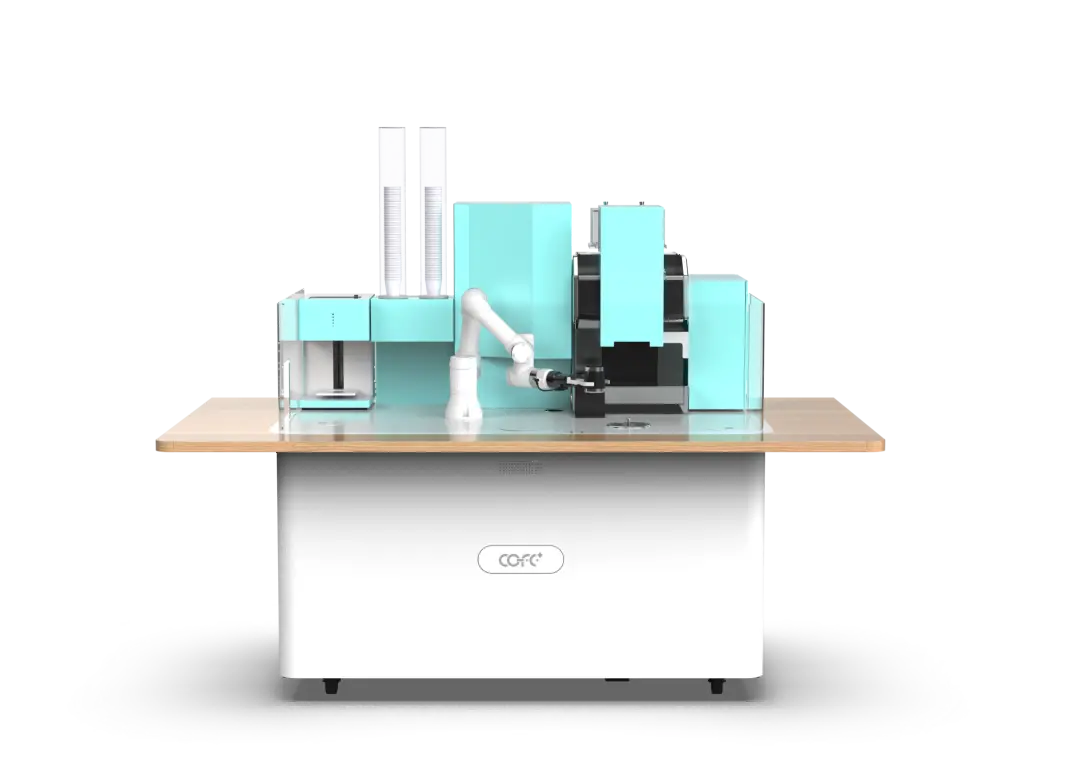
Peak behavior matters at the throughput level. A 7th gen COFE+ kiosk serves a cup in 43 to 60 seconds and can handle roughly 1,000 cups per day, so the machine itself rarely becomes the bottleneck. The bottleneck is almost always the queue strip in front of the screen. A corner position lengthens that strip without extending the queue into the path of neighboring tenant entries.
Sightline works as an ordering trigger. A customer who sees the robotic arm preparing a drink from 10 or 12 meters away has time to form the decision before reaching the screen. Wall side units compress that distance: the first full view often happens at 4 or 5 meters, which is too late for a hesitant customer to commit. The result is fewer impulse orders and a longer pause at the screen while the customer decides.
Placement locks in more than the customer view. Once the machine is set and the utilities are connected, moving it means disconnecting water, drainage, and power, then redoing the rough-ins. Run the following checks in the site plan phase, not after the first service call.
The certified kiosk versions are built to FDA, CE, UKCA, KC, and SASO standards, but the site itself still has to satisfy the venue’s own safety and egress rules. A placement that maximizes visibility can also make service access harder. When a wall side position shortens the utility run but limits sightline, and a corner extends sightline but adds a longer drainage route, compare both before you commit.
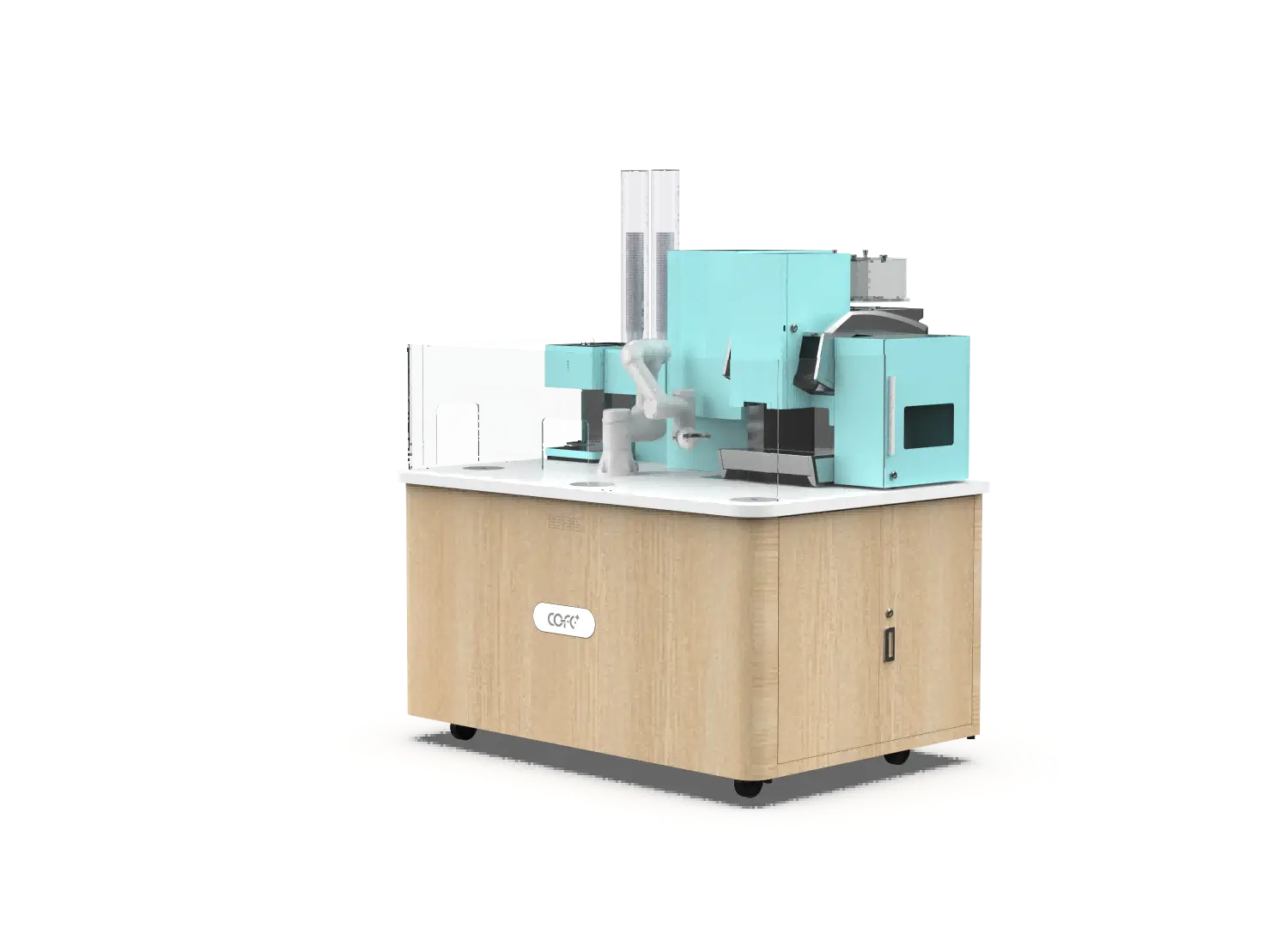
Choosing between wall side, island, and corner feels like a small layout decision until utilities and queue behavior are added together. After the slab is cut and the lines are set, repositioning becomes a construction project with downtime.
A compact kiosk footprint reduces but does not remove that risk. The COFE+ 7th gen unit takes up 2.35 m², yet the winning position still depends on sightline length, queue spill space, and how far the water and drainage lines have to run.
Send your floor plan, daily footfall estimate, and marked utility points to sales@hi-dolphin.com or call +86 131 6630 1290. We will mark the wall side, island, and corner options on your plan with the queue depth and service clearance each one needs, so you can sign the site agreement with the placement question already resolved.
A wall side kiosk needs roughly one meter of clear space at the service panel, plus at least 1.5 meters of front depth for the queue. The exact number shifts with door swing, waste bin removal, and whether the lock sits at the back or on one side. Check those details at the site survey stage, because once the unit is pushed against the wall, a tight service side turns routine refills into a problem.
Many operators assume the kiosk is permanent once it is installed. In practice, the machine can be moved, but only at a real cost once the utilities are in place. Wall side units with rear connections are the easiest to shift; island units with floor trenches are the hardest. Confirm the rough-in layout before installation, and a later relocation stays a one-day adjustment instead of a multi-day interruption that pauses service and revenue.
It depends on where the weather exposure and foot traffic come from. A covered corner near a building entry works for most outdoor kiosks because the building shields the machine from sun and rain while two walkways feed the queue. An open island works on a plaza where the unit can sit center stage, but it needs the IP54-rated outdoor kiosk with drainage for condensation and storm runoff. Wall side works under a colonnade or canopy where the rear wall carries the utility lines.
In transit concourses I have reviewed, corner placement usually wins because two sides face the arriving passenger flow and the queue wraps against a wall instead of competing with gate queues. An island can work in a large open ticketing hall with controlled entries, but the utility trench becomes the deciding factor. Once the slab is opened, the lease may limit how deep and how far the cut can go. Share your concourse plan and passenger flow data, and we will confirm which side captures the most footfall before you sign the site agreement.
TL;DR — COFE+ is a fully automated robotic coffee kiosk that grinds fresh beans, brews espresso and lattes, creates latt……
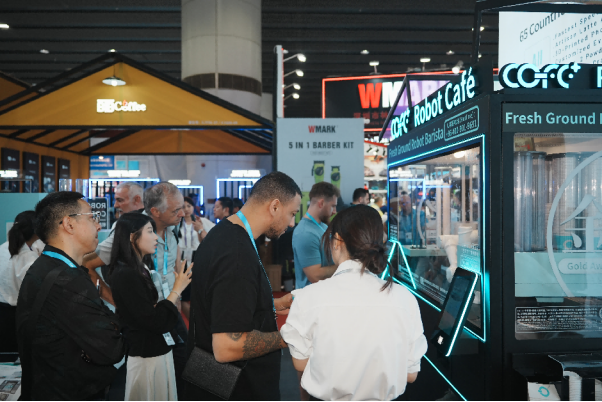
7th-Genertion Smart Robot Coffee Kiosk Arrives at the Belt and Road Core Hub, Ushering in a New Service Era Along t……
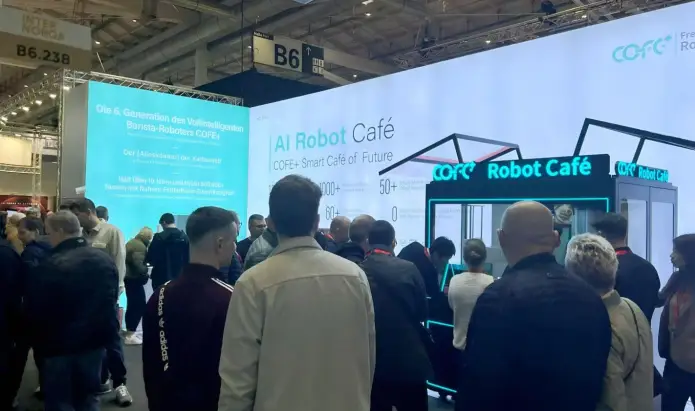
CHICAGO, May 12, 2026 (GLOBE NEWSWIRE) – Shanghai Hi-Dolphin Robot Technology today announced the U.S. debut of its 7th‑……