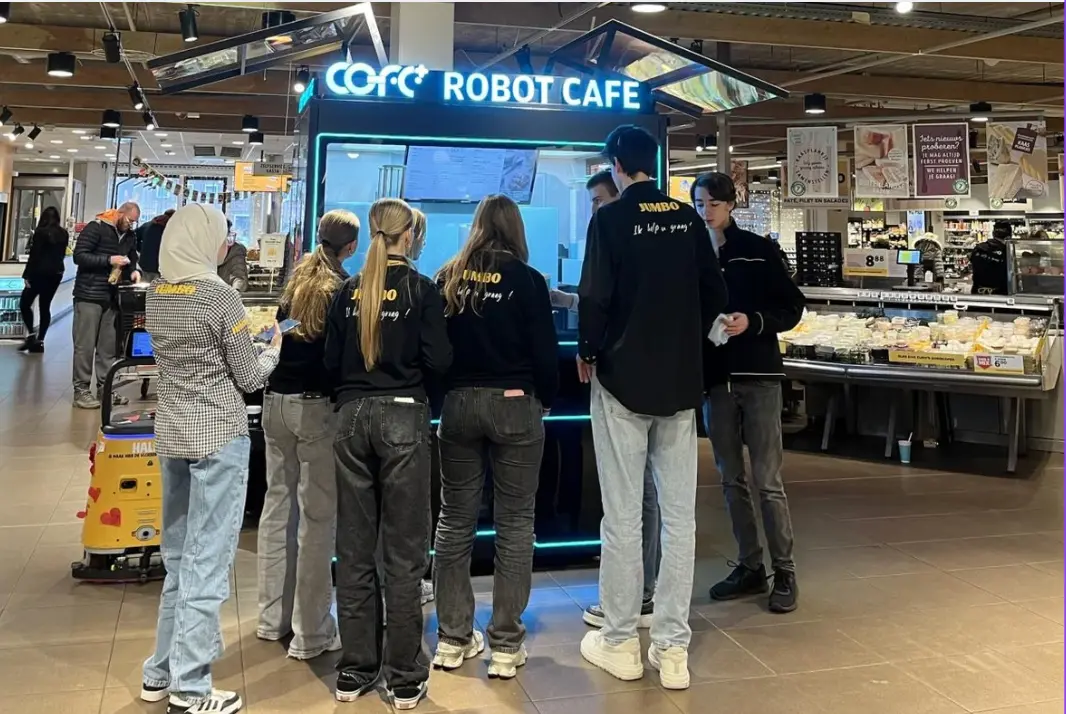
The Rise of Professional Robotic Café Technology: What COFE+ Is and Why It Matters
TL;DR — COFE+ is a fully automated robotic coffee kiosk that grinds fresh beans, brews espresso and lattes, creates latt……

Multi-location coffee chains face a fundamental tension: growth demands more outlets, but each new site adds the complexity of recruiting, training, and retaining skilled baristas. In the current labor market, that model breaks. Robot coffee kiosk scaling offers a different path, one where consistent, high-quality coffee service can expand across locations without the staffing bottleneck. As a strategist who has worked with unmanned retail systems across more than 35 countries, I have seen how the right automation infrastructure changes chain economics entirely. This article walks through the operational, technical, and financial dimensions of deploying robot coffee kiosks across multiple sites, so you can see if the model fits your next growth phase.
When a coffee chain operates two or three locations, it can absorb the cost of barista turnover, training, and the occasional bad hire. Push that to ten, fifty, or a hundred sites, and the structural cracks become impossible to ignore. Each new unit needs at least three to five baristas, and in markets where the hospitality workforce is shrinking, hiring them becomes the main constraint on expansion. Even when you do find people, consistency across sites rarely survives. One barista pulls shots correctly; another lets the extraction run long. Across dozens of locations, that variance erodes the brand.
The deeper problem is that barista hiring doesn’t scale linearly. It compounds. Management overhead grows faster than revenue per outlet. Scheduling conflicts multiply. Training costs expand as new hires cycle through. For chains that want to expand from a dozen stores to a hundred, the barista model stops being an asset and starts being the primary risk factor. Removing that dependency is not just a labor-saving move; it’s a prerequisite for sustainable multi-site growth.
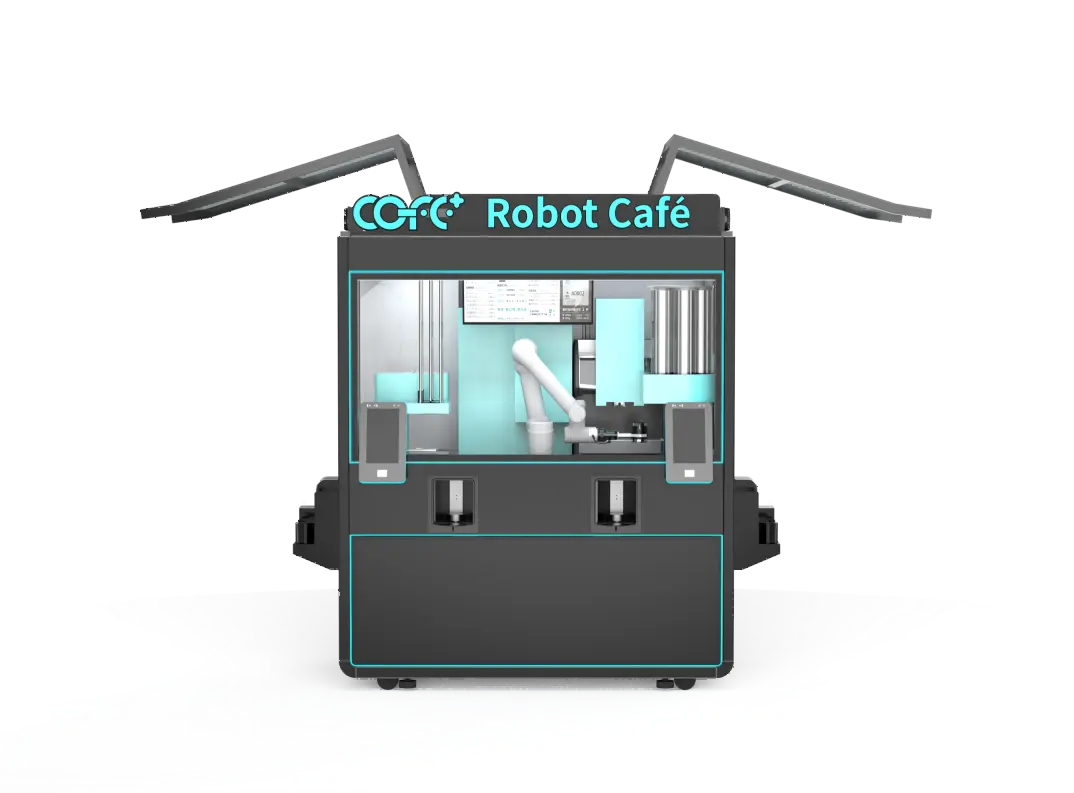
A robot coffee kiosk doesn’t have a bad day. It pulls every shot to a digitized recipe that doesn’t drift. The COFE+ 7th generation system, for example, runs 300+ drink recipes with 5,000+ custom combinations, each executed identically whether it’s the first cup of the morning or the 300th in a row. That kind of repeatability is impossible with human baristas and defines the chain scaling advantage.
What matters more than the number of recipes is the architecture that enables consistency. The machine grinds fresh beans per cup, controls water temperature to within half a degree, and applies the same extraction profile every time. Because the recipes are stored in the cloud rather than in someone’s head, a new kiosk in one city delivers exactly the same latte as the original unit. That removes the largest variable in multi-site coffee operations: the human.
Certifications are the other piece. The COFE+ indoor and outdoor kiosks carry FDA, CE, UKCA, KC, and SASO approvals, so they slot into food safety frameworks across most developed markets. For a chain entering new territories, having pre-certified systems cuts regulatory lead time from months to almost nothing. Automatic high-temperature sterilization at 85°C also eliminates the hygiene drift that local health inspectors catch across multiple sites.
Once you move past three locations, the operations burden shifts from making coffee to managing machines, inventory, and customer flow. This is where robot coffee kiosks diverge from traditional equipment. Each kiosk connects to a cloud platform that reports real-time data on stock levels, component health, and sales patterns. One operations dashboard can monitor fifty kiosks across five cities, flagging which units need a milk refill before they ever run out.
The practical change is that the central team, not each store manager, owns inventory planning. When the system sees that a high-traffic airport kiosk consumes oat milk at twice the rate of a campus unit, it adjusts the replenishment schedule automatically. The local staff doesn’t need to count cartons or remember to place orders. For chains that previously relied on store-level judgment, this shift alone eliminates a major source of out-of-stock revenue loss.
Remote diagnostics cut service costs further. Instead of rolling a technician to every site, the platform identifies failing modules, runs self-repair routines where possible, and dispatches only when necessary. Across a thirty-site network, that can reduce on-site maintenance visits by half. The kiosks themselves are built for durability: 10-year design life, 500,000+ cups tested, and proven in extreme environments from desert heat to sub-zero cold.
If your chain spans multiple climate zones or building types (offices, hospitals, transit hubs), confirm during the procurement phase that the kiosk models you’re shortlisting carry IP54 ratings for dust and water resistance and can operate from -20°C to 45°C. Not all robot coffee systems do. At Hi-Dolphin, we require those thresholds as a baseline for outdoor units because we learned through early deployments that environmental stress is the number one source of multi-site service calls.
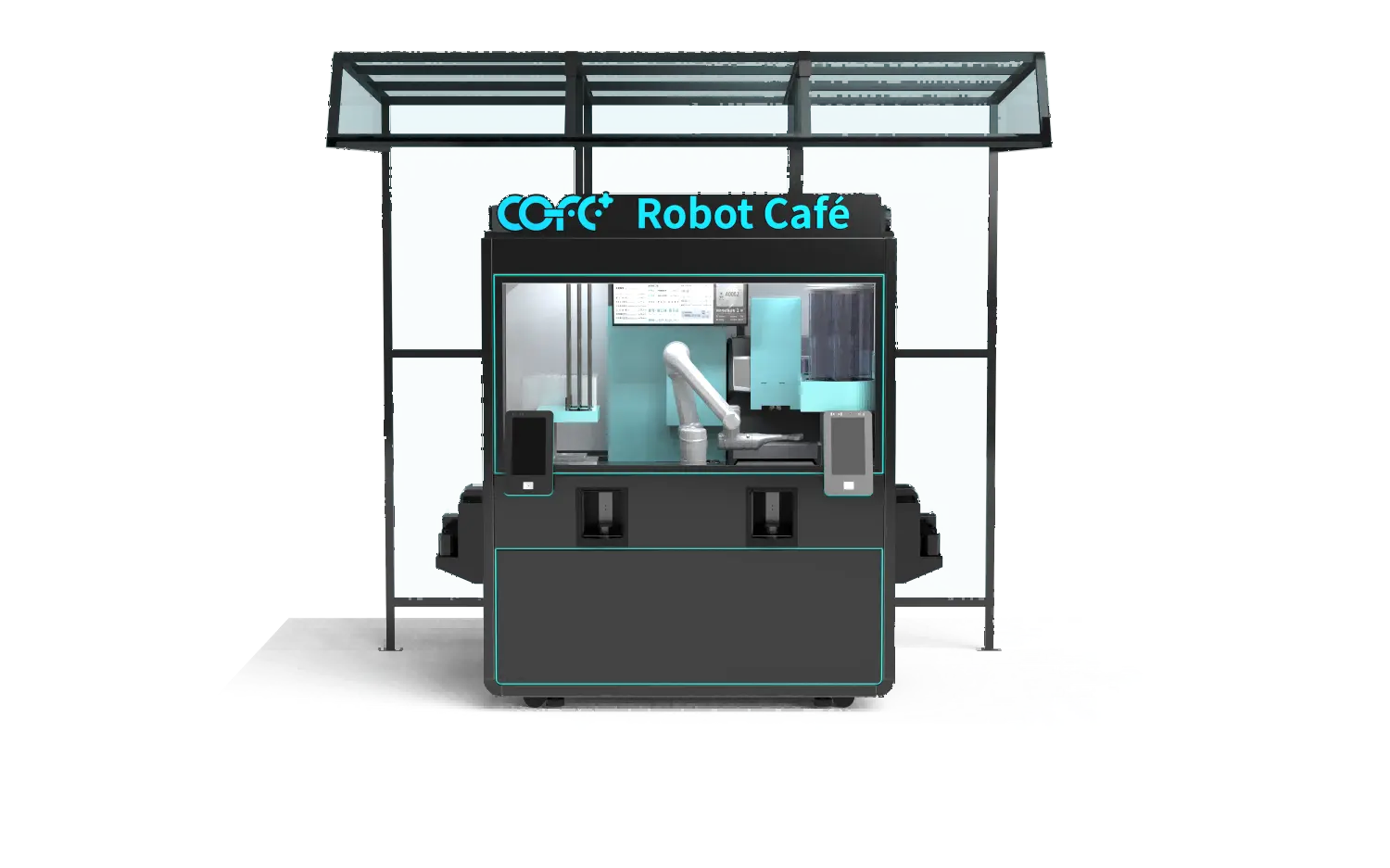
The per-cup cost of a robot coffee kiosk sits between $0.30 and $0.70, covering beans, milk, cups, electricity, and water. Compare that to a traditional café where barista wages alone typically add more than $0.80 per cup, and the margin advantage becomes clear even before accounting for rent and management overhead. One kiosk can replace the output of six baristas, which means a chain deploying twenty kiosks avoids the cost of 120 full-time employees. The numbers stack up quickly.
The ROI trajectory is consistent because the cost structure is fixed. A well-placed kiosk in a shopping mall or airport can pay back the initial investment in six to twelve months. The key variables: daily cup volume, average selling price, and consumable costs. Because the machine runs unattended 24/7, a unit in a high-traffic corridor can serve close to 1,000 cups per day. Those volumes drive the per-cup cost down, not up.
Here is how the core COFE+ unit types map to typical chain deployment scenarios:
| Model | Best Use | Footprint | Capacity | Key Feature |
|---|---|---|---|---|
| Indoor Kiosk | Malls, offices, universities | 2.35 m² | ~1,000 cups/day | 300+ drinks, latte art |
| Outdoor Kiosk | Parks, airports, gas stations | 2.35 m² | ~1,000 cups/day | All-weather, IP54 rated |
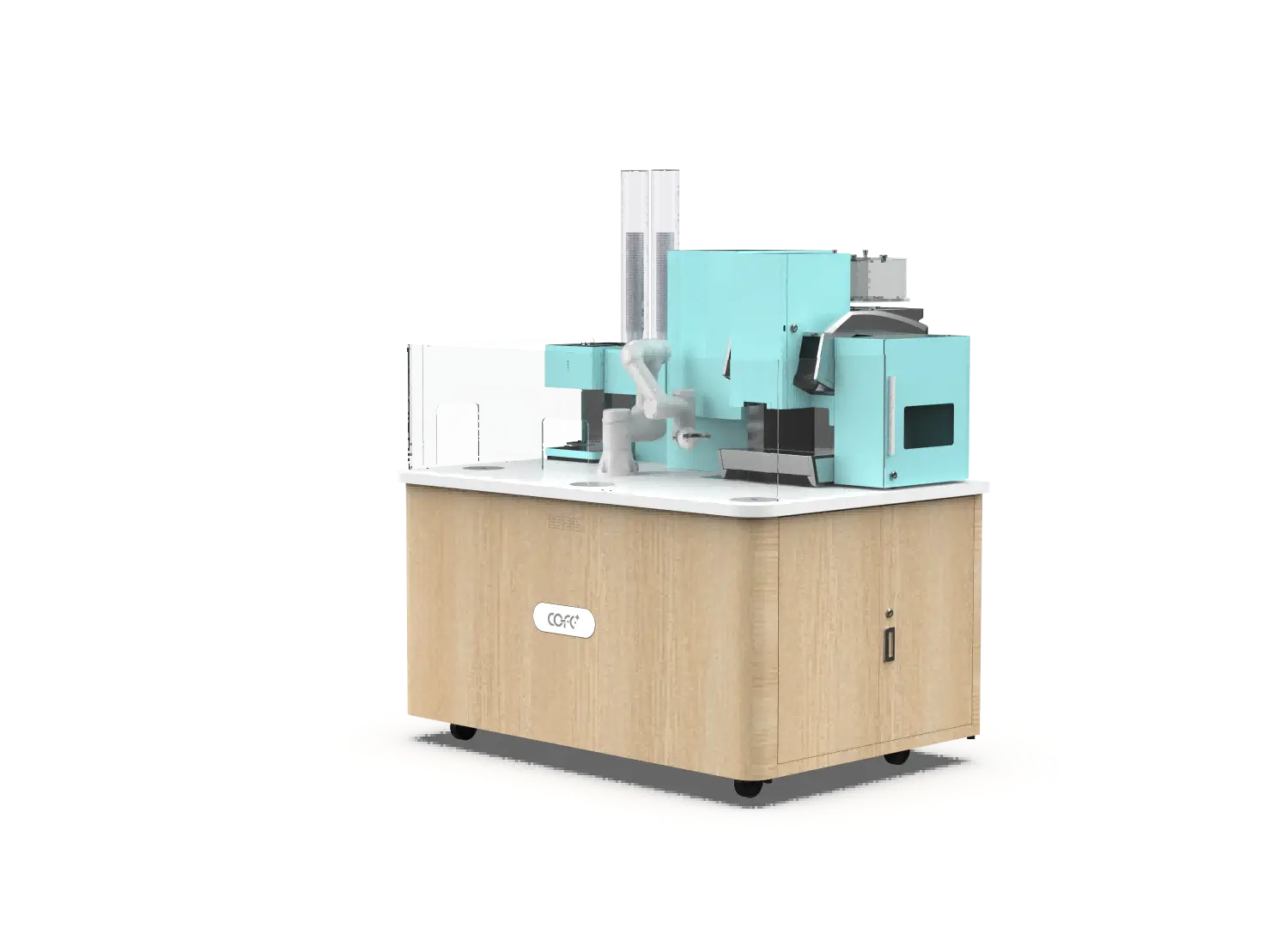
| Robot Coffee Bar* | Hotels, lounges, events | ~2 m² (folded) | 300+ drinks | Seating area, social hub |
| Robot Coffee Counter | VIP lounges, retail stores | ~2 m² | 300+ drinks | Built‑in, premium view |
*Transforms from a self‑service counter to a four‑seat coffee bar.
A common mistake chain operators make is jumping from a single test unit to a ten-site order. The better sequence starts small but with the right density: deploy three initial kiosks in different location archetypes (high-traffic indoor, outdoor public space, and a captive audience venue like a hospital or factory) and run them for 60 to 90 days. The goal is not to prove the machine works; it works. The goal is to capture the operational data that tells you how the network should scale: which site types generate the highest cups-per-hour density, what the average restock interval is, and how much local support each site actually needs.
After the pilot, standardize the site preparation package. Every location will need power, water, drainage (or a tank), and internet connectivity. The COFE+ units run on 110V or 220V and have flexible drainage configurations, but the site readiness checklist should be locked so that new locations don’t delay launch because of missing utility specifications. We’ve seen that a pre-agreed site requirement document shared with landlords and facility teams shortens the average deployment timeline by two weeks.
The rollout scale curve should match the support infrastructure, not the sales pipeline. If your central operations team can comfortably monitor 20 kiosks, don’t install 25. Validate the remote management layer before accelerating. Chains that skip this step end up with phantom costs: surprised stockouts, overlooked maintenance alerts, and eventually trust erosion with landlords.
How do robot coffee kiosks handle peak hour demand?
The kiosks operate continuously, so there is no shift change or barista fatigue to constrain output. A single indoor COFE+ unit can produce a drink every 43 to 60 seconds, sustaining around 1,000 cups per day. During peaks, the queue moves at the machine’s speed, not a human’s. If a site regularly exceeds that daily ceiling, adding a second kiosk next to the first immediately doubles throughput without additional staffing.
What certifications should a multi-location buyer demand?
At minimum, the system should meet the dominant food safety standards in each target market. For US and EU operations, FDA and CE marks are table stakes. We also carry UKCA, KC (Korea), and SASO (Saudi Arabia), which are critical if your expansion plan crosses regions. Certification documents should be current and cover both the machine and its food-contact materials. Request them before signing a purchase agreement.
Can robot kiosks maintain the personal connection customers expect?
The coffee experience changes but doesn’t have to disappear. Our 7th-generation kiosks include robotic arm latte art (tulips, hearts, rosettas) and a 3D foam printer that can place a customer’s photo or a chain’s logo on top of the drink. For Gen Z and millennial customers, that visual element often generates more social sharing than a handwritten name on a paper cup.
Is the upfront investment recoverable in a typical chain expansion timeline?
Payback periods for robot coffee kiosks range from six to twelve months depending on location traffic and retail price. Because the primary operating cost is consumables, not labor, the unit economics stay favorable even as you scale to dozens of sites. The machines are designed for a 10-year service life and tested to half a million cups, so capital recovery happens well within the equipment lifespan. If you’re evaluating a specific site matrix and want to model the numbers against your retail pricing, send your location profiles and average cup target to sales@hi-dolphin.com or call +86 131 6630 1290. We run custom ROI projections for multi-site operators as part of the pre-procurement process.
TL;DR — COFE+ is a fully automated robotic coffee kiosk that grinds fresh beans, brews espresso and lattes, creates latt……
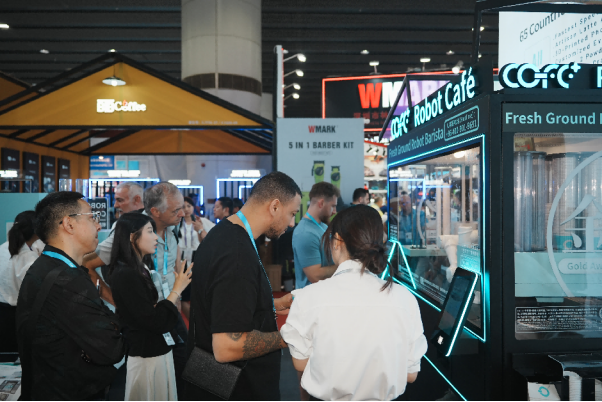
7th-Genertion Smart Robot Coffee Kiosk Arrives at the Belt and Road Core Hub, Ushering in a New Service Era Along t……
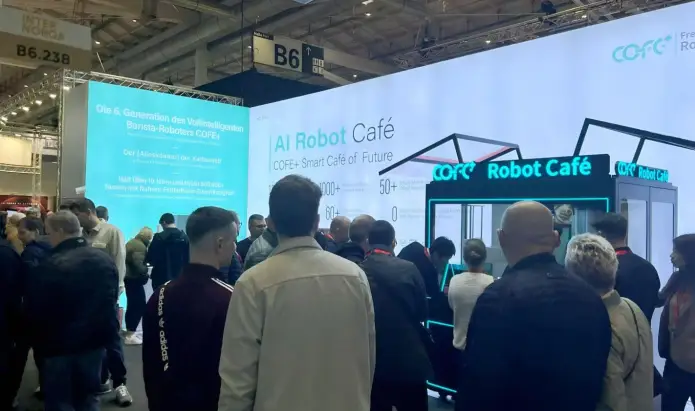
CHICAGO, May 12, 2026 (GLOBE NEWSWIRE) – Shanghai Hi-Dolphin Robot Technology today announced the U.S. debut of its 7th‑……