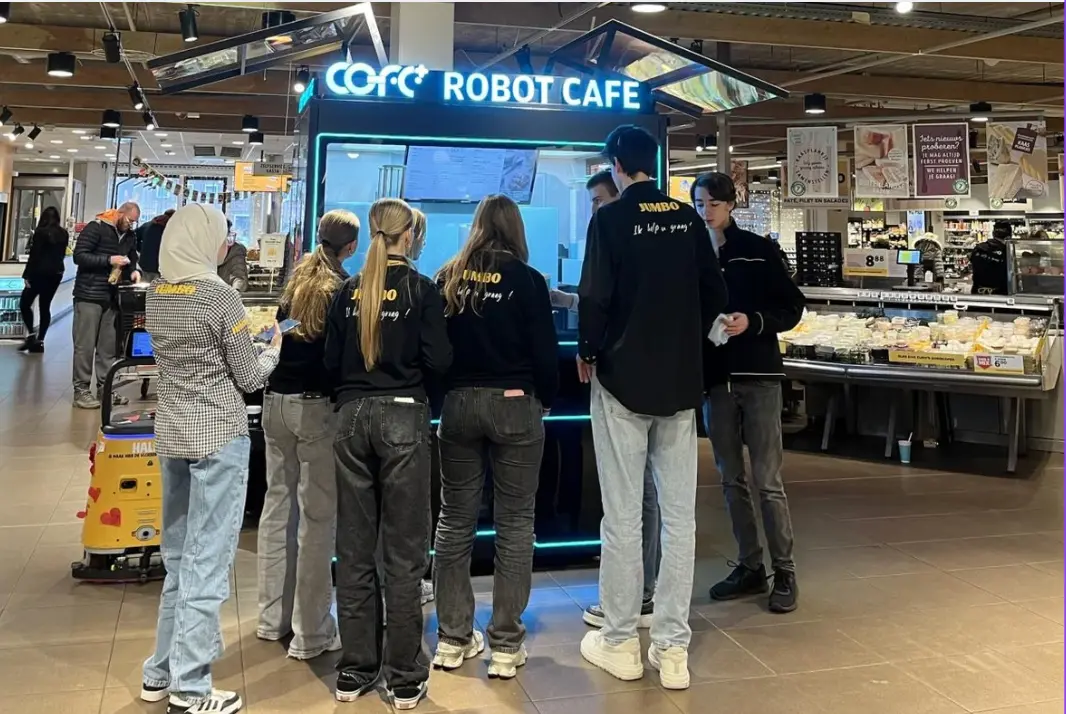
The Rise of Professional Robotic Café Technology: What COFE+ Is and Why It Matters
TL;DR — COFE+ is a fully automated robotic coffee kiosk that grinds fresh beans, brews espresso and lattes, creates latt……

Robot coffee kiosk pricing strategy cannot follow a single formula across all venues. An airport passenger hurrying to a gate, an office worker on a break, and a university student between classes have different price sensitivities, consumption frequencies, and expectations. Most kiosk operators underestimate how much location type alone changes what customers will pay. From direct experience across installations in 65+ countries, we’ve seen that matching the price to the venue’s foot traffic pattern, captive demand level, and competitive environment is the single biggest profit lever, more impactful than menu variety or marketing investment. This guide moves beyond generic markups and explains how to build a location-based pricing model that uses your kiosk’s own data to set and adjust prices for maximum revenue.
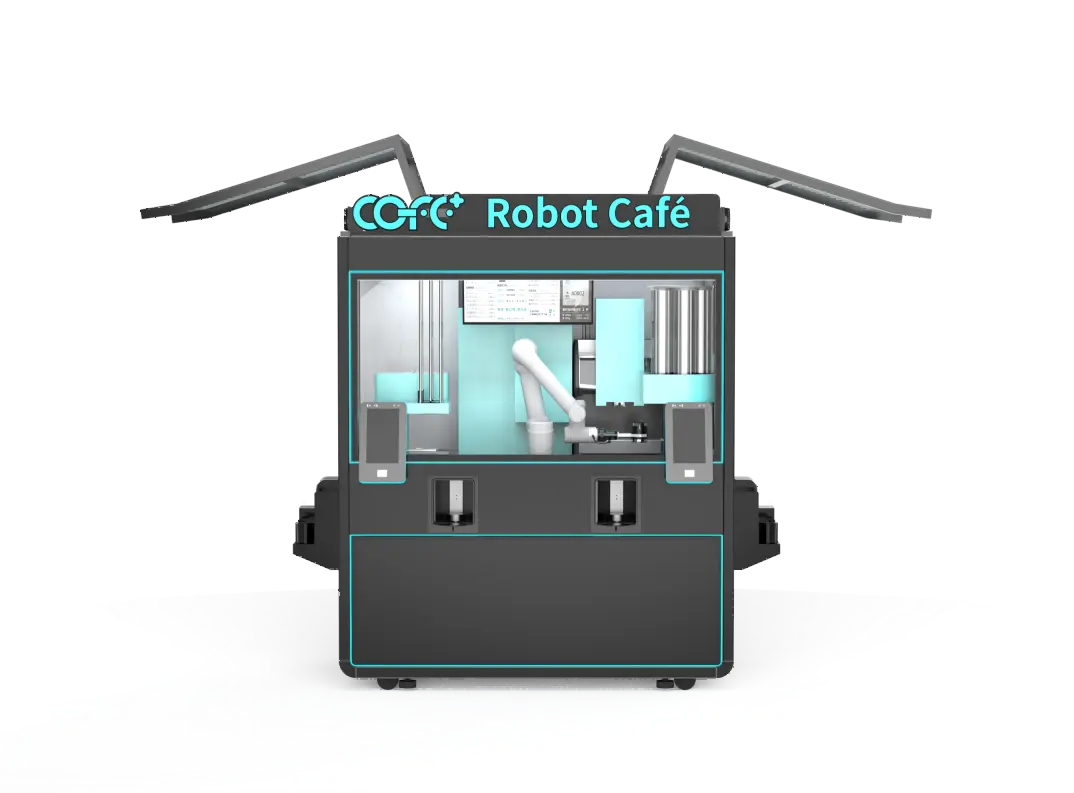
The same robot coffee kiosk that pours a $2.50 latte on a university campus can sell the identical drink for $5.00 or more in an airport concourse. The hardware cost per cup remains roughly $0.30–$0.70 across both sites, so the price difference flows almost entirely to margin. What changes is the customer’s willingness to pay. A traveler with a delayed flight values hot coffee immediately and has few alternatives. A student walking past three other coffee options will compare prices. Location type dictates not just the price ceiling but how the venue’s traffic pattern, dwell time, and competitive density translate into sales volume. Before setting a single price, operators need to classify the site on two axes: footfall quality and captive demand intensity. High-traffic hubs with captive audiences support premium pricing. High-traffic sites with many nearby competitors need competitive pricing. Low-traffic captive settings, like office gyms, need a price that matches convenience value without exceeding what the user would pay to walk outside. We typically run a 30-day data collection period after installation to map the actual demand curve at a new location before finalizing the permanent price tier.
Airports, train stations, and metro hubs represent the highest-price environment for a robot coffee kiosk. Passengers are time-pressed, often willing to pay a significant convenience premium, and the alternative options are limited behind security checkpoints. In these settings, we advise pricing between $4.00 and $6.50 per drink, depending on local purchasing power. The rationale is straightforward: a well-placed kiosk near a departure gate can push 800–1,000 cups per day when running 24/7 at 43–60 seconds per cup. Even at the higher production levels, the machine’s decade-long design life and tested 500,000-cup durability mean the unit economics hold up.
However, transit pricing is not a simple “set it high and leave it” formula. We factor in three variables: proximity to gates (the closer, the higher the price), time of day (a 20–30% surcharge during the 5–8 a.m. rush is easily absorbed), and local cafe benchmarks inside the terminal. If the kiosk is placed landside rather than airside, the price must drop to compete with street-level cafes. One consistent finding across our airport installations is that offering a smaller “express” size at a slightly lower price point catches spillover demand from passengers who want coffee but balk at the full-size price. The table below shows typical pricing benchmarks across transit subtypes.
| Location Type | Daily Footfall Estimate | Suggested Drink Price Range | Projected Monthly Revenue (100 cups/day) |
|---|---|---|---|
| Airport (airside) | 20,000–60,000 | $4.50–$6.50 | $13,500–$19,500 |
| Airport (landside) | 10,000–25,000 | $3.00–$4.50 | $9,000–$13,500 |
| Central train station | 30,000–80,000 | $3.50–$5.00 | $10,500–$15,000 |
| Metro/subway entrance | 15,000–40,000 | $2.50–$3.50 | $7,500–$10,500 |
Note that these revenue figures assume constant 100-cup daily volume; in high-traffic airside positions, 300–500 cups per day is realistic, multiplying the revenue proportionally. Operators considering a transit hub deployment should evaluate whether the unit will operate 24/7 or only during terminal operating hours, because nighttime service without staff is one of the kiosk’s strongest value propositions in these venues.
Locations where the customer has to leave the premises to buy an alternative coffee create a captive demand environment. Office towers, university libraries, corporate gyms, and hospital waiting areas all fall into this category. The pricing strategy here is not about maximum willingness-to-pay but about embedding the kiosk so deeply into the daily routine that it becomes the default choice. For these venues, we recommend setting the base price 10–15% below the nearest walk-in cafe, typically in the $2.20–$3.80 range. The lower margin is offset by volume stability and repeat purchase frequency.
In office deployments, we’ve integrated the kiosk payment system with building access cards and employer subsidy programs. When the employer covers 30-50% of the drink cost, the end-user price drops to $1.50–$2.00, but the operator receives the full listed price. That arrangement doubles the daily sales volume because price resistance disappears. Universities work similarly through meal plan integration. Gyms and fitness centers present a different dynamic: the customer values a post-workout protein shake or cold brew, but the purchase window is very narrow. Pricing there should focus on add-on bundles. For example, a “shake + espresso shot” combo at a $0.50 discount lifts the average ticket value without requiring a menu redesign.
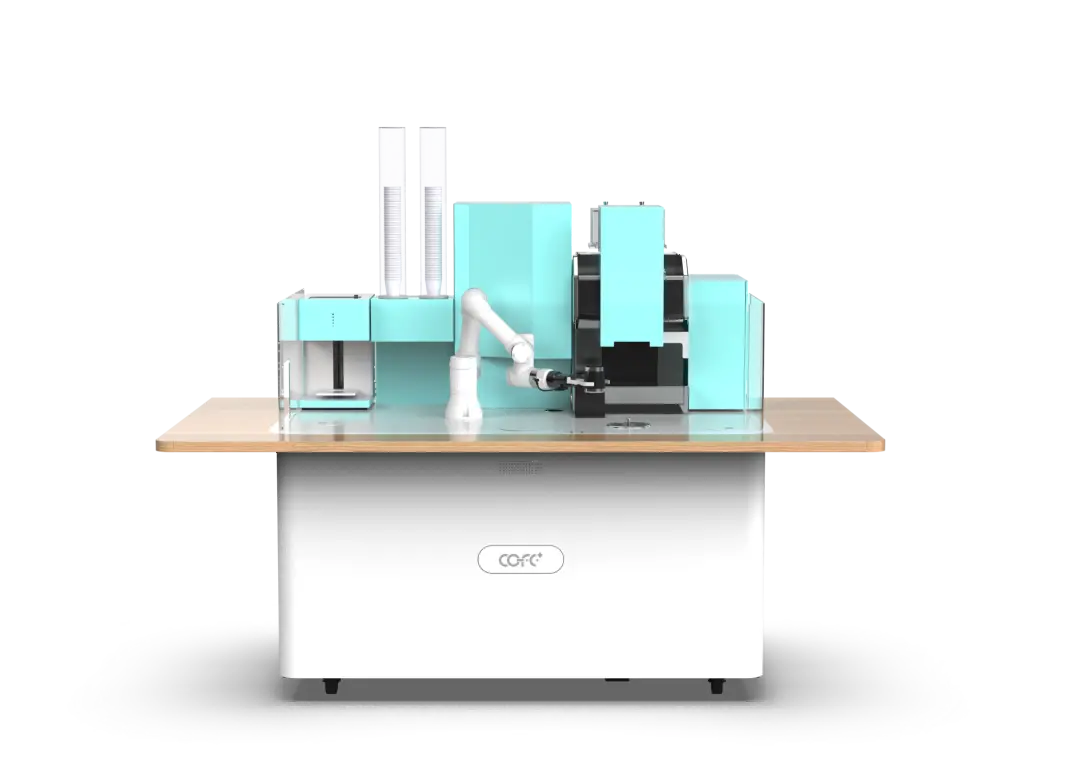
From installations across South American and Southeast Asian campuses, we’ve observed that a $0.20 price reduction during exam periods triggers a 30–40% volume spike, more than compensating for the lower unit margin. The kiosk’s compact 2.35 m² footprint makes it feasible to place one unit on each floor of a multi-story office, removing the walk-time barrier. Captive venue pricing succeeds when the operator views the machine as a long-term amenity revenue stream rather than a transactional vending point. If your site involves mixed-use traffic such as an office tower with ground-floor retail, the mid-article inquiry below applies directly to the pricing split.
If your deployment spans venues with both captive and transient traffic, the pricing model needs a two-tier logic. Share your site layout at sales@hi-dolphin.com and we’ll recommend a segmentation strategy.
A traditional cafe changes prices once a year, if at all. A robot coffee kiosk with cloud-connected smart store brain technology can adjust prices hourly based on real-time demand signals. The 7th-generation system logs every transaction, maps foot traffic by time block, and tracks ingredient consumption rates. This data allows operators to implement time-of-day pricing, weather-based adjustments, and inventory-driven promotions automatically.
We advise starting with three time bands. Morning rush (6–10 a.m.) commands a 10–15% premium; customers are purchase-ready and price insensitive. The midday dip (2–5 p.m.) typically benefits from a 20% price reduction or a “free size upgrade” promotion to stimulate demand. Late-night (10 p.m.–4 a.m.) in 24-hour venues like hospitals and airports can either carry a convenience surcharge or a discount to clear expiring milk inventory, depending on real-time stock data. The kiosk’s remote diagnostics feed means an operator managing 20 units across a city can push a new price band to all machines in under three minutes from a single dashboard.
Beyond time-based pricing, the system enables event-triggered promotions. When a nearby flight is delayed by more than two hours, an airport kiosk can automatically push a “delayed traveler” discount notification to the display screen. We’ve run tests where targeted discounts during inbound passenger surges lifted hourly sales by double-digit percentages without eroding the average price of non-discounted transactions. The key is that the discount is offered only to customers who would otherwise walk away, not to every buyer. Dynamic pricing in unmanned retail is not about squeezing every cent from each cup; it’s about matching the price to the customer’s immediate willingness-to-pay so that no empty cup opportunity is lost. Operators new to this approach should run a one-week price elasticity test: vary the base price by 10% up and down on alternating days and measure the volume response. The results typically differ sharply by location type, which is why a single corporate price list cannot work.
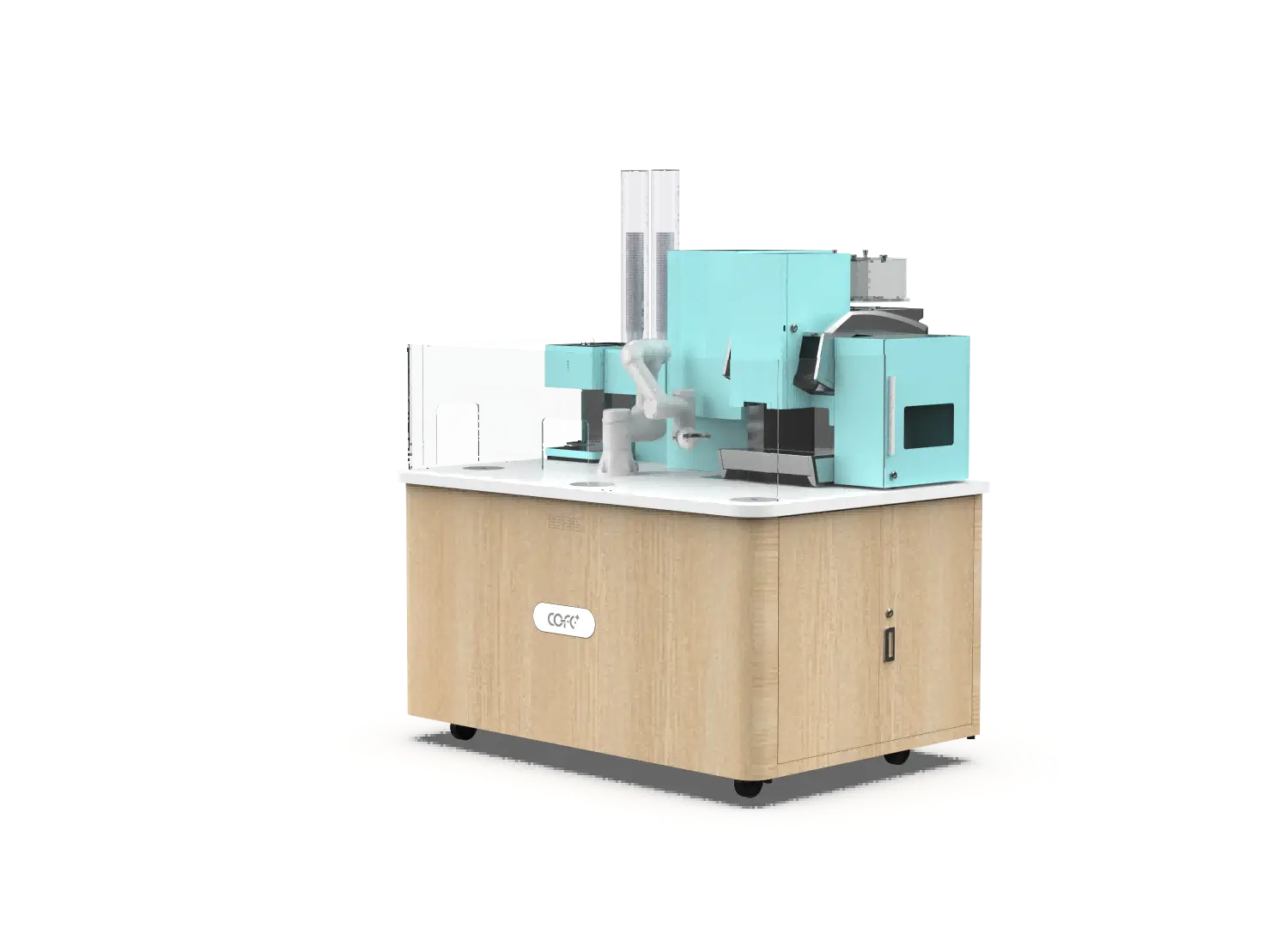
Price strategy cannot ignore the rent model. Many high-traffic sites derive income from a percentage of the kiosk’s revenue rather than a fixed monthly rent. The revenue share rate is negotiable and location-dependent. Shopping malls often ask for 12–18% of gross revenue. Airports and train stations, due to their captive audience and high volume, command 15–25%. Office buildings and universities, where the kiosk is an amenity rather than a primary profit center for the landlord, typically settle at 8–12%. Gyms, hospitals, and industrial parks may go as low as 5–10% because the kiosk serves a small, fixed population.
The table below provides a starting-point range for revenue share discussions. Note that these figures are observed across our global installations and should be adjusted for local market conditions, exclusivity clauses, and utility cost responsibilities.
| Venue Type | Typical Revenue Share Range | Notes |
|---|---|---|
| Shopping mall | 12–18% | Higher for atrium placement vs. side corridor |
| Airport (airside) | 18–25% | Often requires minimum monthly guarantee |
| Office tower | 8–12% | Lower if employer subsidizes drinks |
| University | 10–15% | Campus exclusivity may justify higher share |
| Hospital/gym | 5–10% | Lower volume predictability |
When negotiating, push for a tiered model where the percentage drops after hitting a volume threshold. This aligns both parties’ incentives: the landlord wants maximum traffic, and the operator wants to reinvest the incremental margin into promotional pricing during slow periods. The kiosk’s data logs provide transparent daily sales reports, which builds trust with landlords accustomed to opaque cafe revenue. If the landlord insists on a fixed rent instead of revenue share, calculate the implied commission rate based on conservative sales projections. A $1,500 monthly flat rent equals a 10% commission only if monthly revenue hits $15,000. If one of your sites is underperforming after 90 days, the revenue share structure protects you in ways a fixed lease cannot.
Pricing a robot coffee kiosk by location type is a function of customer demand, competitive density, and the landlord partnership structure. The most profitable operators treat pricing as a dynamic system, not a static list. The three key actions are: classify the venue on footfall quality and captive demand before deployment, use the kiosk’s cloud monitoring to test price elasticity by time band for at least 30 days, and lock in a revenue share agreement that scales with volume. If the data shows consistent excess capacity at the current price, the answer is rarely to cut the base price across the board. Instead, target the low-demand window with a time-limited promotion while holding the peak price steady.
We work with operators across six continents to model venue-specific pricing before the first unit is shipped. Send your intended location type, expected daily footfall, and local cafe price benchmark to sales@hi-dolphin.com or call +86 131 6630 1290. We will return a data-backed pricing tier recommendation calibrated to your market so you can finalize the business case with confidence.
Yes. The smart store brain lets you change drink prices, launch promotions, and adjust time-band rules from a web dashboard or mobile app. Changes take effect in seconds across all connected kiosks. If you manage multiple units, you can set global pricing rules or override individual machines for a specific venue. This capability is what makes location-based pricing achievable without an on-site manager.
A cafe prices a latte at $3.50–$5.00 to cover barista wages, rent, and waste. A robot kiosk can offer the same drink at $2.50–$4.00 while maintaining a higher margin because labor is removed and ingredient waste is reduced to under 2% through precision dispensing. The price passed to the customer can be lower, but in high-convenience locations, it should not be. The kiosk captures the full gap between its $0.30–$0.70 cup cost and the venue’s maximum acceptable price.
When no direct competitor exists, the benchmark becomes the customer’s transportation cost or time cost to reach the nearest alternative. A kiosk in a remote industrial park where workers have a 15-minute drive to the nearest cafe can price at the high end of the office building range or even higher. Run a 14-day elasticity test starting at a conservative price and lift it by 5% each week until you see a volume drop. The sweet spot is usually just below that drop point.
Absolutely, and we recommend it. Time-of-day pricing is one of the most underused revenue levers in automated retail. Set a morning premium, a midday discount, and a late-night surcharge or clearance price based on actual traffic data. The kiosk’s display automatically shows the current price, and customers accept dynamic pricing when it is consistent and transparent. Many of our top-grossing airport units run five time bands daily.
Transaction fees of 2–3% per card swipe do eat into margin on a small cup, but robot kiosks handle this in two ways. First, you can set a small fixed surcharge for card payments, which is legal in many markets, or you can embed the fee into the listed price. Second, integrate with stored-value campus or office cards where processing fees are lower or bundled. The kiosk supports NFC, QR code, and closed-loop wallet systems, giving you flexibility. If your payment fee structure for a particular market is unclear, share your expected average ticket size with our support team and we’ll recommend the lowest-cost processor configuration.
TL;DR — COFE+ is a fully automated robotic coffee kiosk that grinds fresh beans, brews espresso and lattes, creates latt……
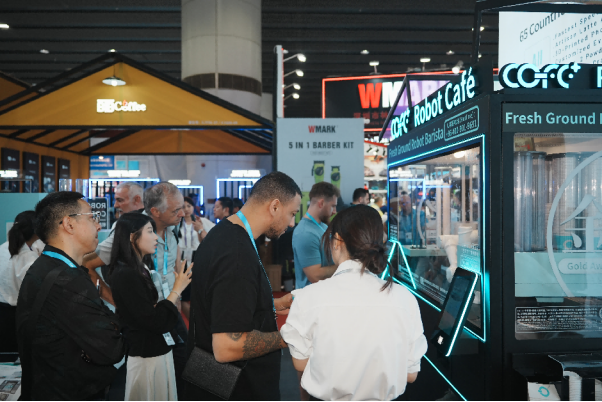
7th-Genertion Smart Robot Coffee Kiosk Arrives at the Belt and Road Core Hub, Ushering in a New Service Era Along t……
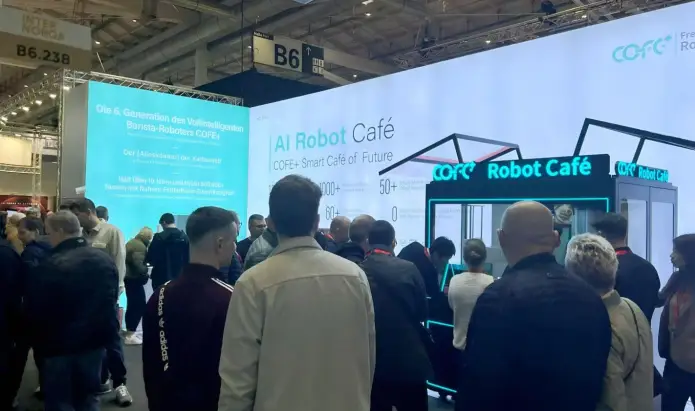
CHICAGO, May 12, 2026 (GLOBE NEWSWIRE) – Shanghai Hi-Dolphin Robot Technology today announced the U.S. debut of its 7th‑……