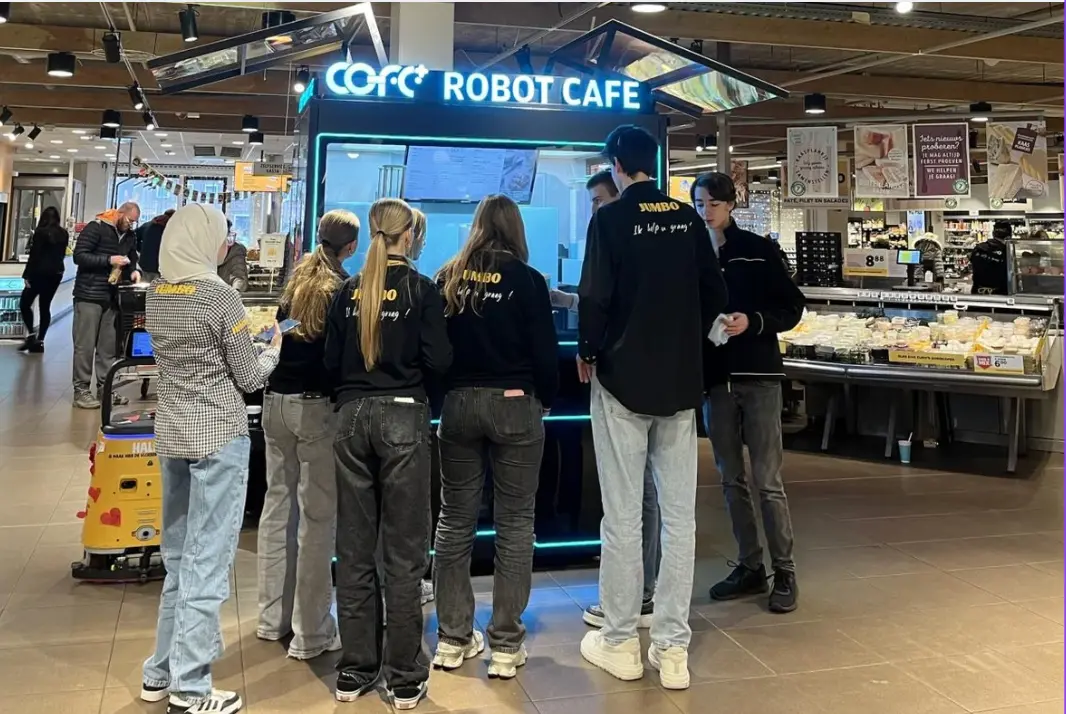
The Rise of Professional Robotic Café Technology: What COFE+ Is and Why It Matters
TL;DR — COFE+ is a fully automated robotic coffee kiosk that grinds fresh beans, brews espresso and lattes, creates latt……

Robot coffee kiosk price is not a single figure you’ll find on a product page. The cost of an automated coffee system depends on the specific model, certifications required for your market, and the complexity of installation — and a meaningful quote starts with a clear picture of how and where you’ll operate it. As a procurement manager or business owner evaluating unmanned retail solutions, you’re likely comparing ROI claims and spec sheets. But most articles on pricing skip the real variables that shift the bottom line by tens of thousands of dollars. This article breaks down the cost drivers and explains what you need to prepare before requesting a quote from a supplier, so you can negotiate from a position of clarity.
The base cost of a robot coffee kiosk is built from the hardware that replaces a full barista station. A 7th-generation system like the COFE+ integrates a precision grinder, high-pressure extraction unit, automated milk frother, robotic arm for latte art, and a refrigerated ingredient storage module — all controlled by onboard AI. The engineering effort behind 120+ international patents and a 500,000-cup durability target is reflected in the unit price.
Specifications that directly raise the cost include the number of simultaneous recipes the system can handle, the speed from order to cup (43–60 seconds per serving is typical of top-tier machines), and whether the robotic arm supports hand-crafted foam art styles. A system that produces only black coffee will sit at a different price point than one delivering 300+ drink types with 5,000+ customization combinations.
Component quality and build standards are not cosmetic. A kiosk built for 10 years of continuous 24/7 operation requires industrial-grade milling and brewing mechanisms, medical-grade water lines, and stainless-steel food-contact surfaces, all of which push the bill of materials above what a vending machine manufacturer would use.
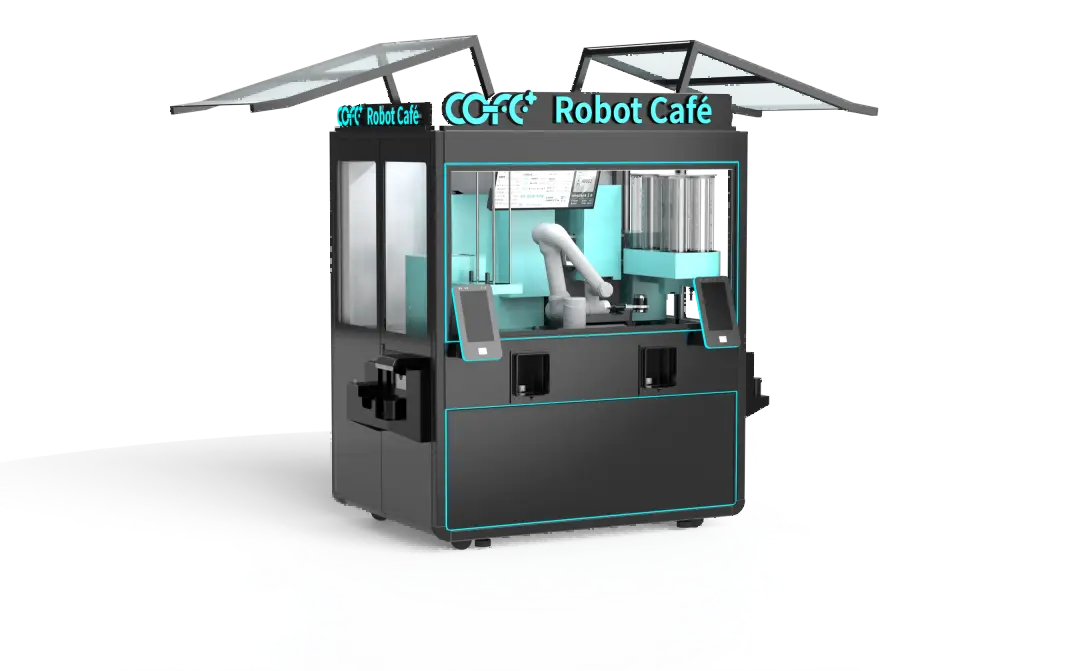
Not all robot coffee systems cost the same, because not all serve the same purpose. Hi-Dolphin’s model line divides into four formats, each with its own cost structure driven by mechanical complexity, environmental hardening, and deployment context.
| Model | Typical Use | Indicative Price Level | Primary Cost Drivers |
|---|---|---|---|
| Indoor Kiosk | Malls, offices, campuses | Mid-five figures | Enclosed brewing system, touchscreen UI, moderate throughput |
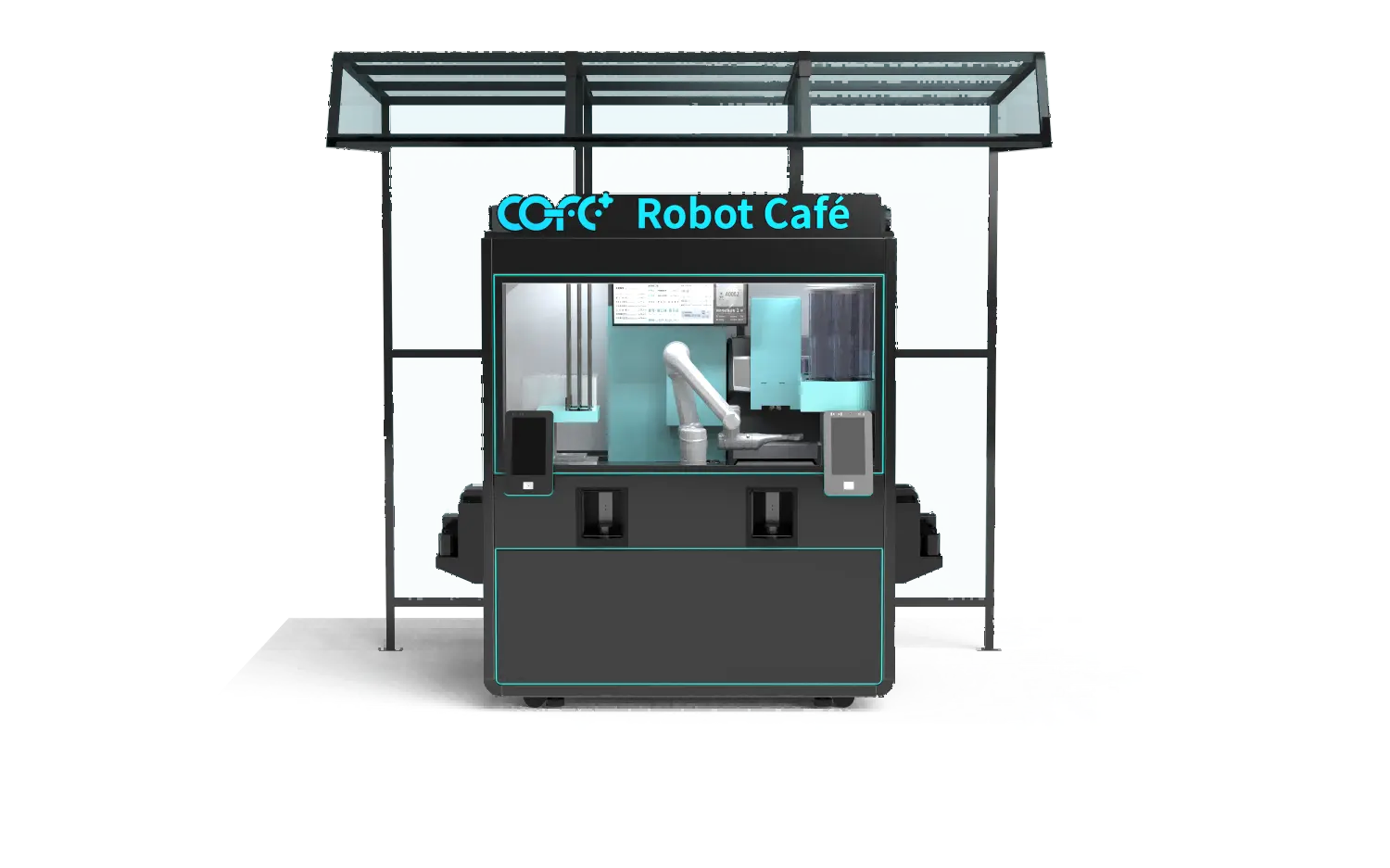
| Outdoor Kiosk | Parks, gas stations, transit | Upper-five to low-six figures | IP54 weather sealing, -20°C to 45°C operation, UV resistance, anti-condensation |
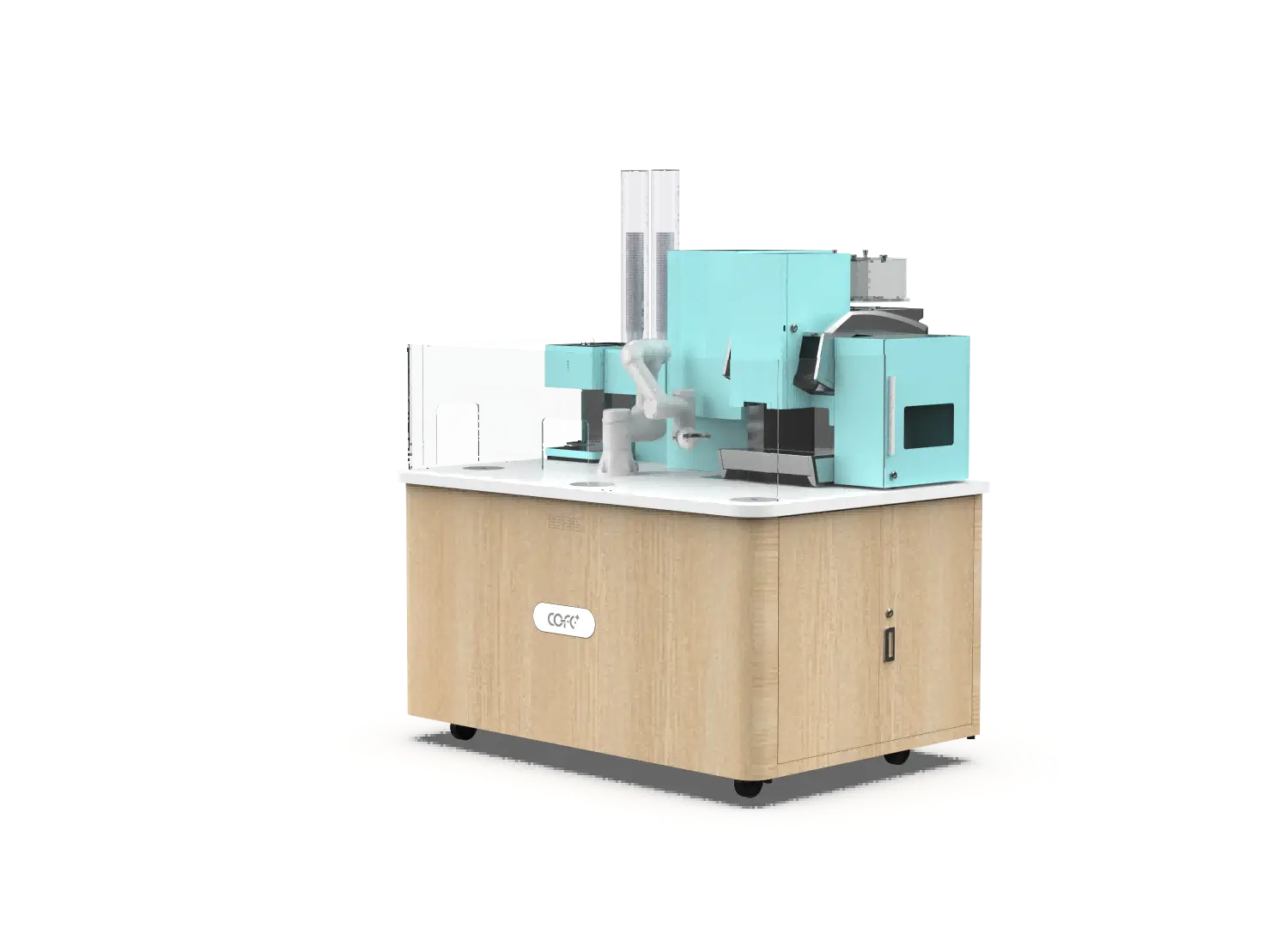
| Robot Coffee Bar | Hotels, airports, co-working | Upper-five figures | Transformable counter-to-bar mechanism, 4-seat social layout, enhanced latte art |
| Robot Coffee Counter | Luxury retail, lounges, showrooms | Mid-five figures | Ultra-compact built-in design, premium finishes, visual coffee theatre experience |
An indoor kiosk with a 2.35 m² footprint is the most cost-effective entry point for a high-traffic indoor location. The outdoor version adds roughly 50–100% to the hardware cost to achieve IP54 protection and reliable operation in desert heat or freezing conditions. The robot coffee bar and counter models, while physically smaller, include mechanical transformation systems and premium materials that shift the cost toward the upper end of the indoor range.
One of the largest pricing gaps between quotes comes from certifications. A robot coffee kiosk that will operate in the United States needs FDA food-contact compliance and electrical safety testing, while a machine bound for the Middle East may need SASO certification, and one for Korea requires KC marking. Each certification scheme has its own test cycle, component modification cost, and documentation overhead.
Hi-Dolphin has already passed more than 50 certifications across 18 developed countries, including CE, FDA, UKCA, KC, and SASO. If your target country is already in our certified portfolio, the per-unit certification burden is largely absorbed. If you need a new certification, that incremental cost becomes part of your quotation and can add a meaningful sum to the bottom line.
Shipping from China to your destination port is another material cost, particularly for the outdoor kiosk, which is heavier and requires reinforced crating. Import duties and local clearance fees depend on your country’s Harmonized System classification for automated food preparation equipment. Installation on site typically requires a local technician to connect power (110V or 220V), water, and internet, plus a one-time calibration run. Budget roughly $2,000–$5,000 for a standard indoor installation and more for outdoor units that need weatherproofed connections.
If your deployment involves a mix of indoor and outdoor locations, the certification matrix becomes critical. Share your planned site list and we can confirm which certifications apply and their cost impact. Reach out at sales@hi-dolphin.com.
The purchase price of a robot coffee kiosk is only part of the financial picture. Operations run on a cost-per-cup model that is remarkably low compared to a staffed café. Our units consume approximately $0.30–$0.70 in ingredients and consumables per cup, factoring in coffee beans, milk, syrups, cups, and lids. Electricity adds about $0.02–$0.04 per cup, and water usage is negligible. Cloud monitoring and software license fees are typically structured as a modest annual subscription.
Labor savings are the single largest ROI driver. A single kiosk can handle the output of up to six baristas, operating 24 hours a day with no breaks, sick leave, or training costs. A site selling 300 cups per day at an average ticket of $3.50 generates roughly $383,000 in annual revenue. Subtract ingredient costs at $0.50 per cup and fixed operating costs, and net margins often reach 70–80%. This is why many operators see a break-even in 6–12 months, even with a higher upfront investment.
The 10-year design life and half-million-cup durability ensure that the hardware cost is amortized over a much longer period than most food-service equipment. Maintenance is mainly preventive — replacing burrs, seals, and tubing at scheduled intervals — and a strong after-sales support contract keeps unplanned downtime minimal.
An accurate quote is not a single number; it’s a structured proposal that breaks out hardware, certifications, shipping, installation, and after-sales support. Based on how we work with operators and distributors worldwide, here is the information a supplier needs to return a quote you can actually build a business case around.
First, specify your deployment location and expected daily cup volume. A kiosk in a Bangkok shopping mall has different requirements than one in a Chicago train station. Volume affects consumable supply chain planning and may influence the recommended model. Second, identify which model fits your space: indoor kiosk, outdoor kiosk, coffee bar, or counter. If you’re unsure, sharing photos and rough dimensions of the intended site helps us advise.
Third, list any mandatory certifications for your market. We can cross-reference against our existing certification matrix and tell you immediately which are covered and which would require additional work. Fourth, confirm power availability — 110V or 220V — and whether a dedicated water line and drain are accessible. Fifth, decide whether you need a turnkey installation or only the equipment. Turnkey includes shipping, customs clearance, local installation, and initial calibration. Finally, ask for a line-item breakdown: unit cost, certification surcharges, freight, installation, first-year cloud subscription, and recommended after-sales package. This transparency lets you compare quotes apples-to-apples and avoid surprises.
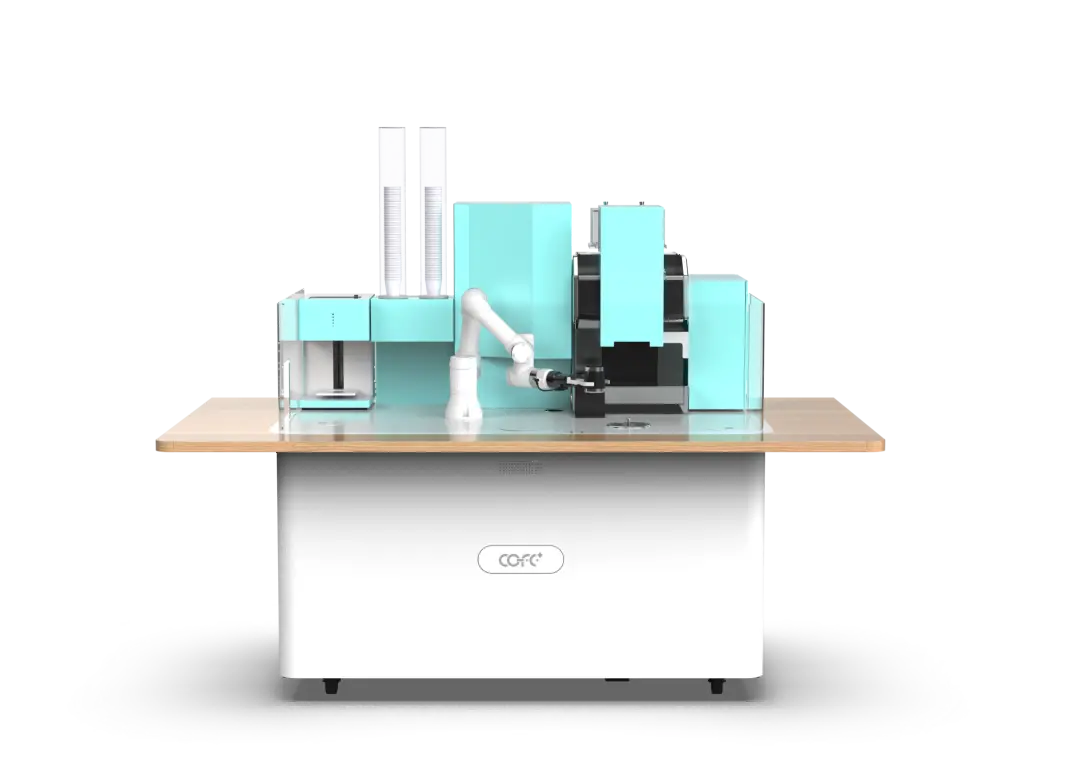
An average price is misleading because the configuration spread is wide. An indoor kiosk typically starts in the mid-five figures, while an outdoor unit with IP54 rating and extreme-temperature capability can reach the low six figures. The coffee bar and counter models sit in the upper-five-figure range due to their mechanical design and premium finishes. Rather than shopping for a ballpark, request a quote based on your deployment plan.
Requirements vary. Europe generally requires CE and may ask for additional food-contact documentation. The United States requires FDA compliance and possibly UL electrical safety. Korea requires KC, Saudi Arabia requires SASO, and other countries have their own regimes. Hi-Dolphin already holds over 50 certifications covering major developed markets, so check with us before assuming you’ll need a new test cycle.
If you provide the five pieces of information described above, we typically return a detailed proposal within two business days. Incomplete requests, especially those missing certification requirements, add time because we need to verify compliance scopes with our regulatory team.
Maintenance is typically offered as a separate after-sales package, not bundled into the unit price. We recommend a service contract that covers scheduled preventive maintenance, remote diagnostics, and priority parts dispatch, because it minimizes the risk of unplanned downtime and keeps your cost-per-cup consistent. If you’re not sure which level of support fits your operation, share your daily volume and location and we’ll suggest an appropriate plan.
Cost clarity starts with a thorough project brief. Rather than working from generic price lists, we build every quotation around your site, your volume, and your market’s regulatory reality. Send your location details, expected daily cup volume, and certification requirements to sales@hi-dolphin.com, or call +86 131 6630 1290 to speak with our global project team. We’ll return a line-item proposal that separates hardware, certification, logistics, and support so you can plan with confidence.
TL;DR — COFE+ is a fully automated robotic coffee kiosk that grinds fresh beans, brews espresso and lattes, creates latt……
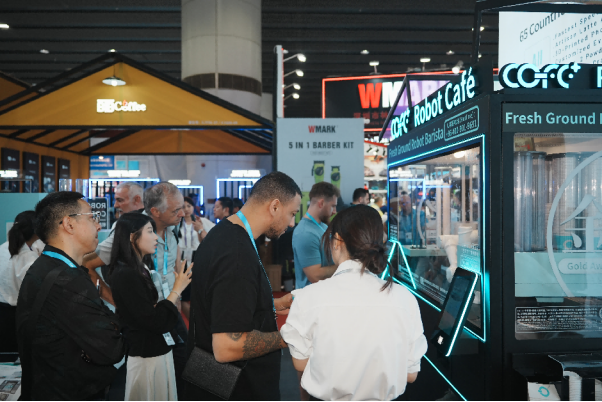
7th-Genertion Smart Robot Coffee Kiosk Arrives at the Belt and Road Core Hub, Ushering in a New Service Era Along t……
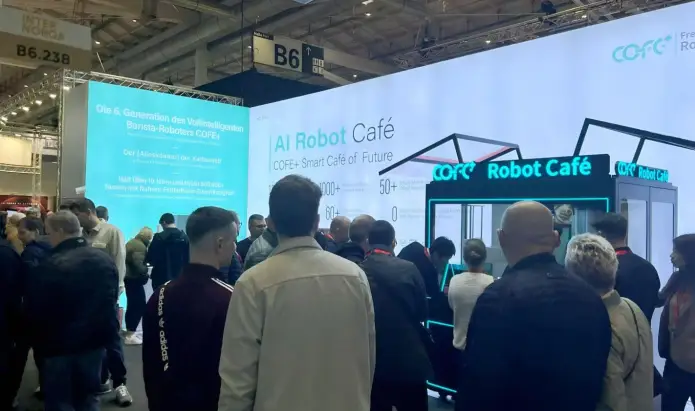
CHICAGO, May 12, 2026 (GLOBE NEWSWIRE) – Shanghai Hi-Dolphin Robot Technology today announced the U.S. debut of its 7th‑……