The Rise of Professional Robotic Café Technology: What COFE+ Is and Why It Matters
TL;DR — COFE+ is a fully automated robotic coffee kiosk that grinds fresh beans, brews espresso and lattes, creates latt……

Most robot coffee kiosk buyers start by comparing cup capacity and price per unit. I’ve seen operators in 35 countries make the same mistake: they treat the purchase like buying a vending machine when it’s closer to commissioning a micro-manufacturing line for beverage service. A robot coffee kiosk sits at the intersection of mechanical engineering, food safety regulation, IoT infrastructure, and customer-facing retail, and the evaluation criteria that matter most are the ones you won’t see in a spec sheet. This article covers the four areas every buyer should pressure-test before committing capital: physical format, compliance coverage, real-world throughput under continuous demand, and manufacturer capability beyond the sale.
The form factor you choose determines your revenue model more than any single spec. I’ve watched operators put indoor kiosks outdoors because the price was lower, then spend the difference on repairs within six months. The physical configuration is the first filter.
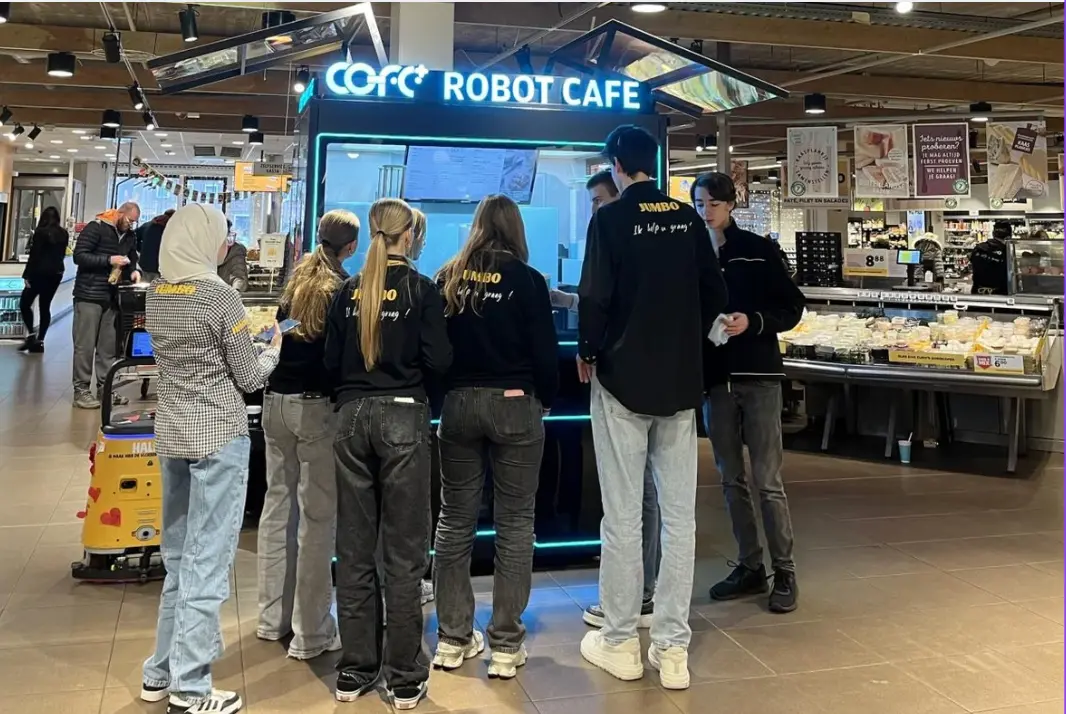
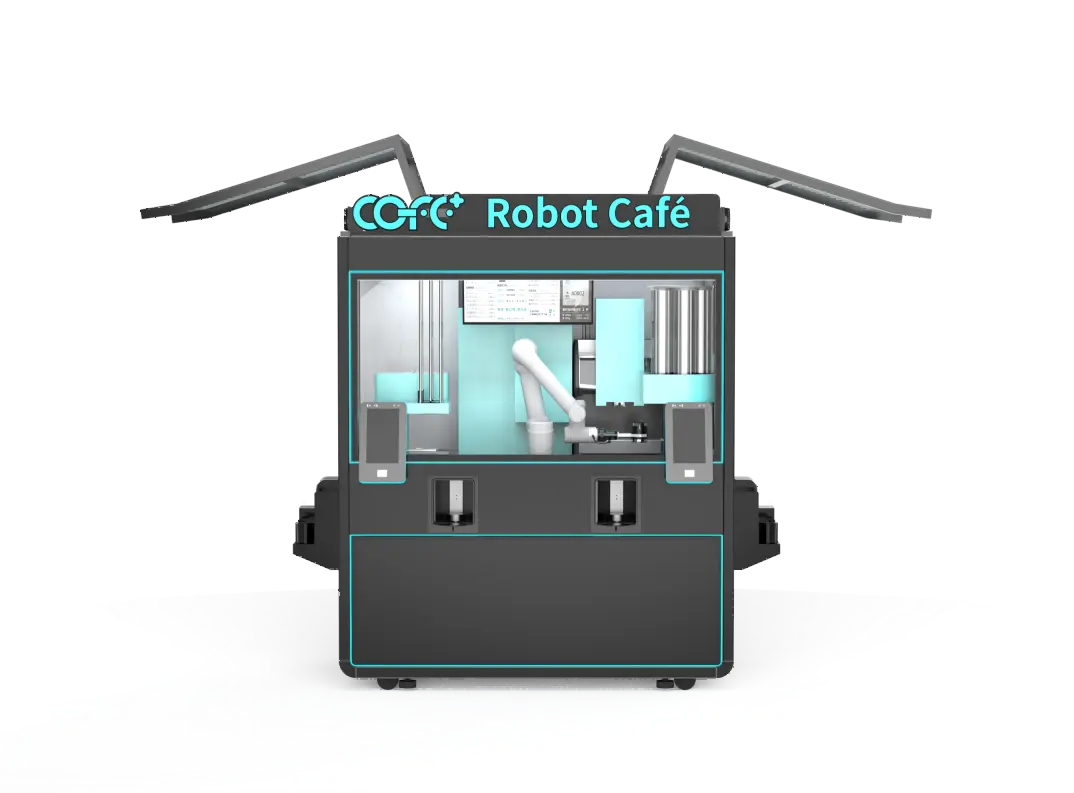
A standalone robot coffee kiosk, whether indoor or outdoor, is a self-contained revenue unit. Indoor versions like Hi-Dolphin’s 7th-gen kiosk occupy roughly 2.35 m² and plug into standard power. Outdoor kiosks add IP54-rated enclosures, UV resistance, and hardened climate control systems that hold operation steady from -20°C to 45°C. If your site has roof coverage, indoor is fine. If it’s a park, gas station forecourt, or stadium concourse open to weather, outdoor rating is non-negotiable.
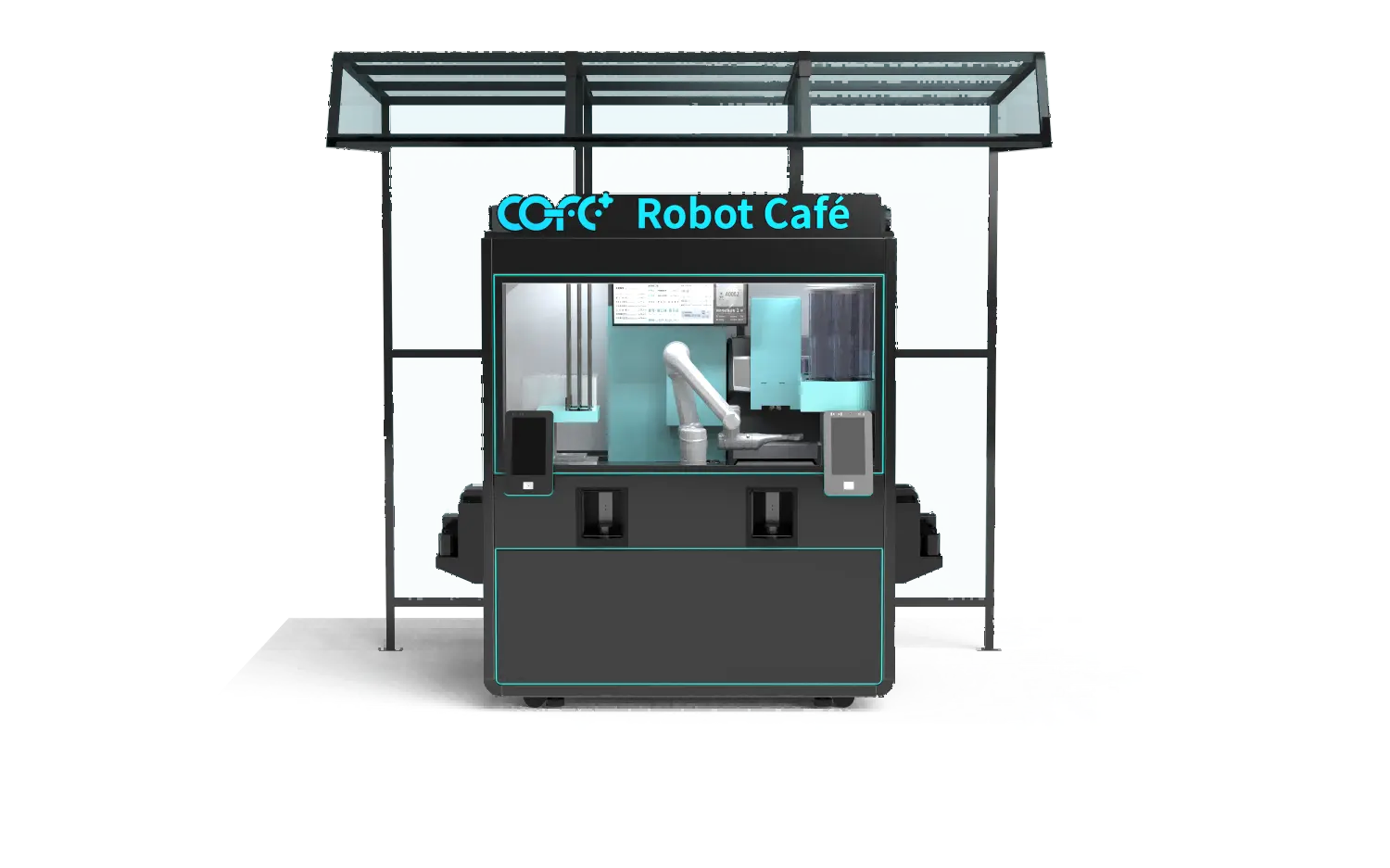
Then there are built-in formats. A robot coffee counter slides into an existing bar, hotel lobby, or corporate reception at about 2 m². It turns dead space into a coffee service point without requiring a dedicated footprint. I’ve seen corporate campuses in China where counters serve 300 employees from a corridor alcove that previously held a water dispenser.
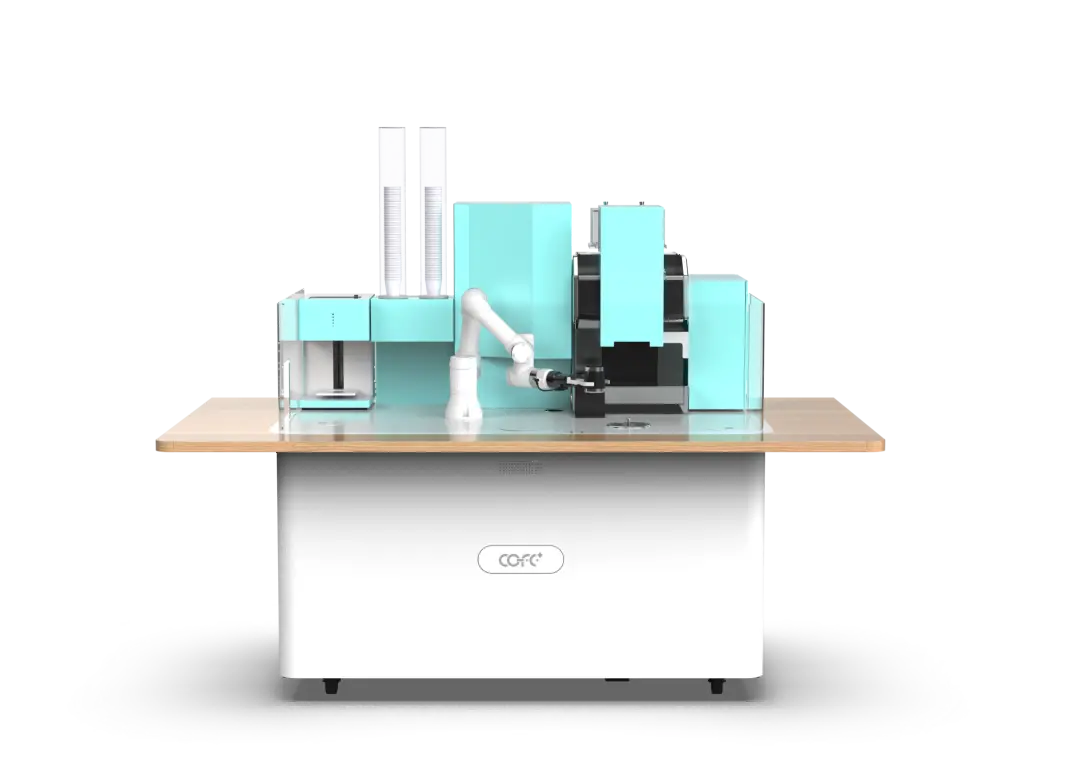
A robot coffee bar takes a different approach. It folds into a compact counter when quiet and opens into a four-seat social bar when deployed, making it the only format that adds dwell time rather than just throughput. Hotels and co-working spaces use this to keep guests on-site longer. The mini robot coffee shop goes further, under 5 m², and replicates a full café including customer-facing interaction space for high-traffic commercial streets.
The form factor decision should precede the spec comparison. An outdoor kiosk in a shopping mall atrium wastes the IP54 premium. An indoor kiosk on a beachfront boardwalk won’t survive the first rainy season.
This is where I see the most expensive oversights. A robot coffee kiosk serves food. It handles liquids, dairy, high-temperature extraction, and waste. Every country you plan to deploy in has its own regulatory framework, and “CE certified” doesn’t cover Saudi Arabia, Korea, or the UK.
When we at Hi-Dolphin prepared for global deployment, the certification process became the gating item, not the engineering. Our systems hold more than 50 certifications across over 18 developed countries including FDA, CE, UKCA, KC, and SASO. The number matters less than the match: ask the manufacturer to show certificates for the specific countries in your rollout plan. Not “we can get certified,” but “here is the certificate number.”
Beyond electrical safety and EMC, food-contact certifications matter. The internal surfaces of a robot coffee kiosk contact milk, syrups, and coffee grounds continuously, hour after hour. Anti-microbial stainless steel interiors and automated high-temperature sterilization cycles at 85°C+ are not premium features. They’re baseline hygiene requirements that separate food-grade equipment from modified vending machines. If the manufacturer cannot produce a food safety audit report from an accredited body for your target region, treat that as a stop signal. No price advantage recovers the cost of a regulatory shutdown.
Spec sheets quote maximum theoretical capacity. I’ve learned to ask a different question: what does the machine produce during hour seven of a continuous shift?
A robot coffee kiosk rated for roughly 1,000 cups per day at 43 to 60 seconds per cup sounds straightforward until you factor in restocking intervals, cleaning cycles, and peak-hour queuing. The COFE+ 7th-gen systems we deploy run 24/7 with cloud-based stock monitoring that predicts refill timing. When bean hoppers, milk reservoirs, and cup stacks are sized correctly for the location’s demand curve, continuous operation holds. When they’re undersized, the 1,000-cup rating becomes a 400-cup reality because someone has to open the machine every three hours.
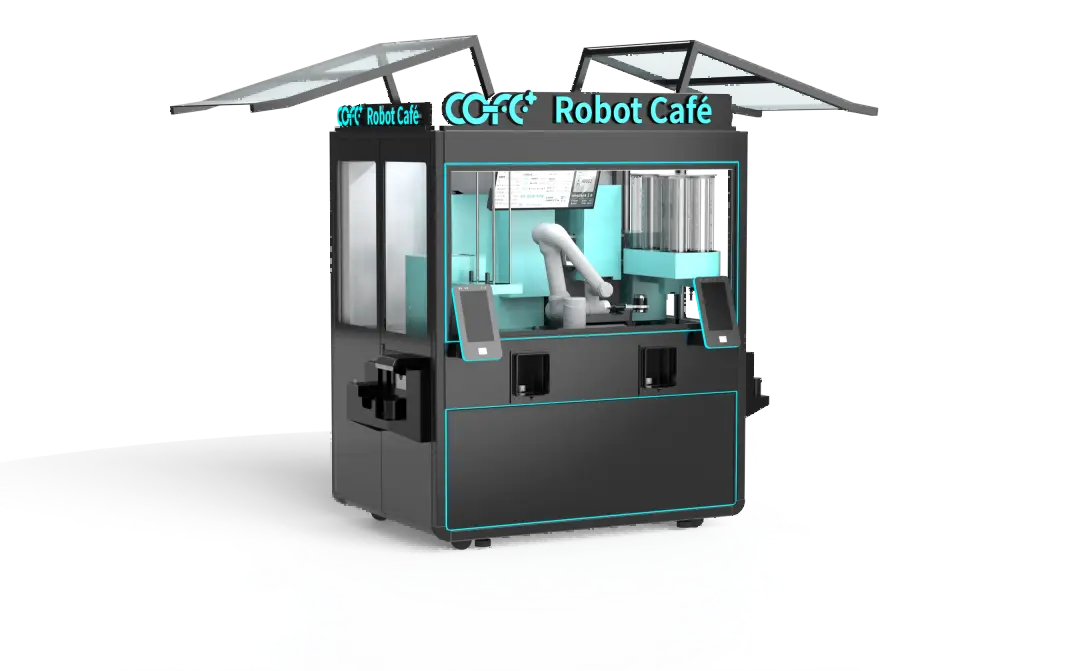
Consistency across consecutive cups is the harder specification to verify. A robot that pulls excellent shots for the first 50 customers and then drifts as components heat-soak will generate complaints faster than a slower machine that holds its parameters. We test to 500,000-plus cups across the design life and measure extraction consistency in 300-cup sequences. Before buying, ask for the coefficient of variation across a continuous 100-cup run, not just the single-cup quality.
Menu depth also interacts with throughput. A machine offering 300-plus drink types and 5,000-plus customizations sounds impressive, but if ingredient handling slows to half speed on plant-based milk alternatives or layered drinks, your peak-hour throughput degrades. Test the machine on your expected top five SKUs, not the full menu.
If your location has a specific peak-hour pattern or you’re evaluating machines for multiple sites with different demand profiles, it’s worth confirming throughput under your actual operating conditions before finalizing a shortlist. Send your expected daily volume and peak window to sales@hi-dolphin.com and we can share benchmark data from deployments in similar environments.
A robot coffee kiosk has a design life of 10 years. The manufacturer needs to be there for all 10 of them.
Start with patents. Hi-Dolphin holds more than 120 patents across the core technology stack: grinding, extraction, robotic arm motion control, IoT cloud architecture, and automated cleaning. Patent count is a rough proxy for whether the company builds its own technology or assembles components from third parties. The difference shows up in year three when a subsystem needs a firmware update and the original supplier no longer supports it.
Global deployment footprint is the second filter. Operating across 35 countries and 15 Chinese provinces means the manufacturer has solved logistics, voltage compatibility across 110V and 220V systems, and remote diagnostics across time zones. A company with installations in one or two countries may not have the support infrastructure for your market.
After-sales structure should be verified contractually. Cloud monitoring with remote diagnostics and automatic repair dispatch means most issues resolve without a site visit. When physical service is needed, ask for guaranteed response times in your location, not the manufacturer’s headquarters city. The 10-year design life and 500,000-plus cup durability testing we publish are backed by service-level commitments. Ask any manufacturer to match that standard in writing.
The unit price of a robot coffee kiosk is the smallest number in the equation. Operating cost per cup determines whether the business works.
A well-designed robot coffee kiosk runs at roughly $0.30 to $0.70 per cup in consumables: beans, milk, syrups, cups, and lids. That’s the direct cost. There is no barista wage, no shift scheduling, no sick leave coverage, and no training cycle. A single machine replaces about six baristas across a 24-hour cycle, and the labor savings alone typically drive a 6-to-12-month ROI.
But three variables shift the payback period dramatically. Location rent, local coffee bean pricing, and the local retail cup price determine the margin. A kiosk in an airport charging $4.50 per latte with $0.50 cup cost recovers investment faster than a university deployment at $2.00 per cup. Run the model on your actual numbers, not the manufacturer’s median case.
Maintenance cost over 10 years should be forecasted, not assumed away. Machines with automated cleaning cycles and sealed waste systems reduce daily intervention. Outdoor units in high-dust or high-humidity environments need filter changes and seal inspections. Ask for the scheduled maintenance parts list and labor estimates upfront. A manufacturer that won’t share these numbers is pricing the machine to sell, not to operate.
The advantage most buyers miss is revenue from 24/7 availability. Traditional cafés close. A robot coffee kiosk captures the 2 a.m. airport traveler, the 5 a.m. shift worker, and the midnight student. Those hours have zero additional labor cost and convert directly to margin. The payback calculation should include off-peak revenue that a staffed operation cannot economically capture.
Buying a robot coffee kiosk is a sourcing decision with operational consequences that span a decade. The four areas covered here — form factor, compliance, real throughput, and manufacturer depth — form a framework that catches most of the failures I’ve seen in global deployments.
If you have a specific location type and target market in mind, share your rollout plan with us. We can confirm which certifications your markets require, recommend the form factor that fits your site conditions, and provide a full operating cost model based on your local input prices and target cup pricing. Send your requirements and deployment timeline to sales@hi-dolphin.com or call +86 131 6630 1290.
A coffee vending machine dispenses pre-ground instant coffee or basic espresso from sealed cartridges with minimal fresh preparation. A robot coffee kiosk grinds whole beans to order, steams fresh milk, and uses a robotic arm to replicate barista techniques including hand-crafted latte art. The output difference is equivalent to the gap between a microwave meal and a restaurant kitchen. The investment difference reflects the engineering: a robot kiosk is a precision food manufacturing cell, not a dispenser.
Yes, white-label customization is standard in the category, including exterior branding, UI skinning, and custom drink recipes. At Hi-Dolphin we develop branded flavor profiles and menu designs for distribution partners. Confirm with the manufacturer whether branding is a factory option or a post-delivery retrofit — the finish quality differs significantly between the two paths.
A cloud-connected robot coffee kiosk with remote diagnostics identifies most faults before the customer notices. Automated cleaning and self-test cycles run between service intervals. The real question is response time: when physical intervention is needed, does a technician arrive in hours or days? Verify the guaranteed response window in your specific city, including off-hours coverage, before purchasing. This detail is often absent from standard sales agreements and needs to be added contractually.
A self-contained robot coffee kiosk typically commissions in one to two days once power, water, and drainage connections are in place. Built-in formats like counters and bars may require additional millwork coordination with the venue. The longer variable is regulatory clearance, which depends on local food service permitting and electrical inspection timelines. Confirm the manufacturer provides installation support documentation that satisfies your local inspection requirements so the permitting process doesn’t stall the launch.
Distribution terms vary by manufacturer and territory, and the minimum order quantity is rarely the right starting point. At Hi-Dolphin we structure distributor partnerships around market size, exclusivity scope, and after-sales capability rather than a fixed unit threshold. If you’re evaluating distribution as a business model, share your territory plan and projected rollout cadence with our team at sales@hi-dolphin.com. We can confirm what a partnership structure would look like for your specific market and volumes.
TL;DR — COFE+ is a fully automated robotic coffee kiosk that grinds fresh beans, brews espresso and lattes, creates latt……
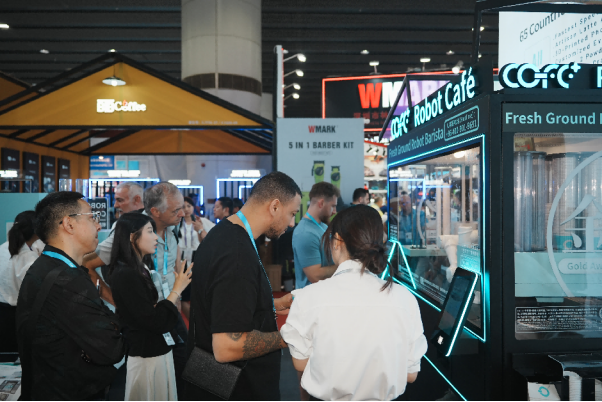
7th-Genertion Smart Robot Coffee Kiosk Arrives at the Belt and Road Core Hub, Ushering in a New Service Era Along t……
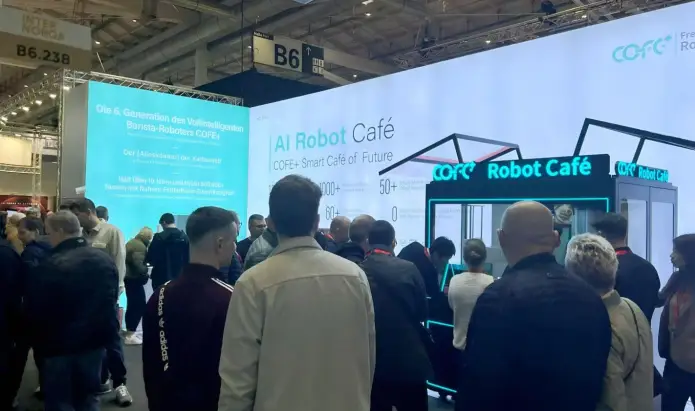
CHICAGO, May 12, 2026 (GLOBE NEWSWIRE) – Shanghai Hi-Dolphin Robot Technology today announced the U.S. debut of its 7th‑……