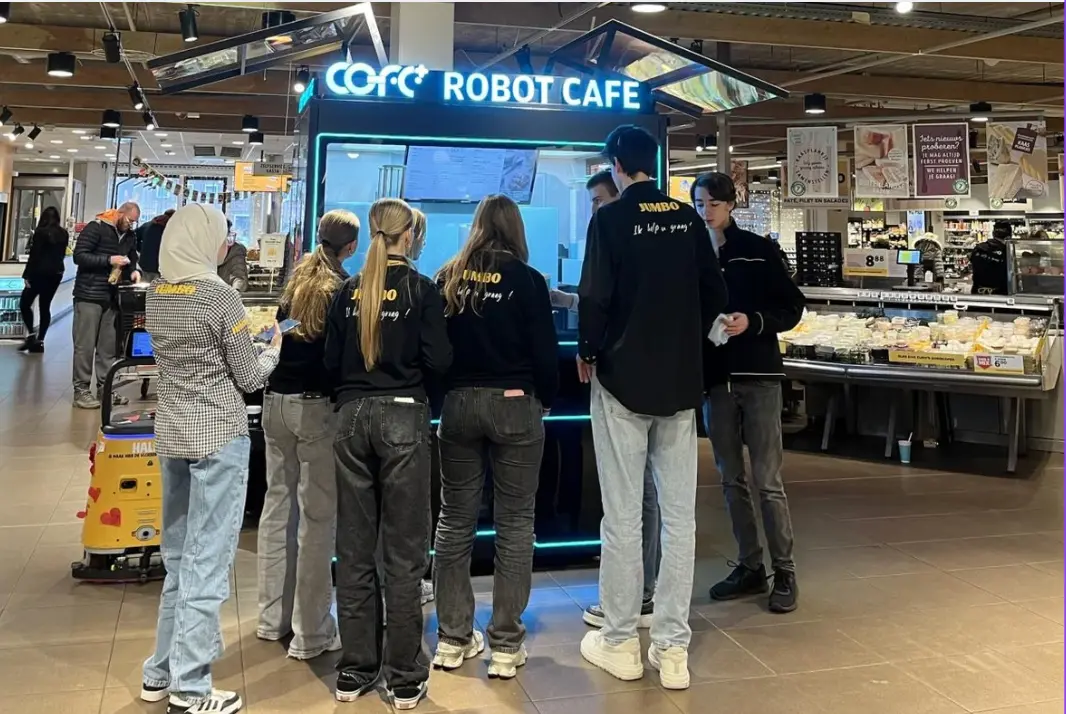
The Rise of Professional Robotic Café Technology: What COFE+ Is and Why It Matters
TL;DR — COFE+ is a fully automated robotic coffee kiosk that grinds fresh beans, brews espresso and lattes, creates latt……

Smart city public service areas are not ordinary retail locations. A civic center, library, mobility hub, cultural venue, or public health facility must balance accessibility, safety, staffing limits, and long operating hours. A robot coffee kiosk fits that environment when it is treated as small public infrastructure rather than as a traditional café.
Grand View Research describes the smart city market as continuing to expand at a double-digit compound annual growth rate through 2030, driven partly by automation in public-facing services [4]. That growth is pushing more city authorities and facility operators toward unattended food-and-beverage service. The practical question is not whether automation belongs in public space, but how to deploy it so that it improves service without creating a maintenance, hygiene, or security burden.
Public service areas have three pressures that a conventional coffee counter rarely faces. First, demand is uneven. A service hall may be quiet for hours and then busy for forty minutes when a training session, document window, or public event releases. Second, staffing is usually fixed and allocated to core citizen services, not to refreshments. Third, operating hours are often longer than the hours a concession can viably staff.
An unattended robot coffee kiosk addresses these pressures by serving during all open hours and off-peak periods. Hi-Dolphin’s COFE+ 7th Generation machine is designed for 24/7 operation, with a stated capacity of about 1,000 cups per day. For a city service area, that means the machine can handle early commuter traffic before counters open, midday queues, and late-evening use without additional labor.
The placement objective is also different from a mall or airport. In a public service area, the kiosk should be visible but not obstructive, accessible to people with reduced mobility, and close enough to seating or waiting zones to support dwell time. If it is hidden in a corridor, it adds little value. If it blocks a queue, it creates a facilities-management problem.
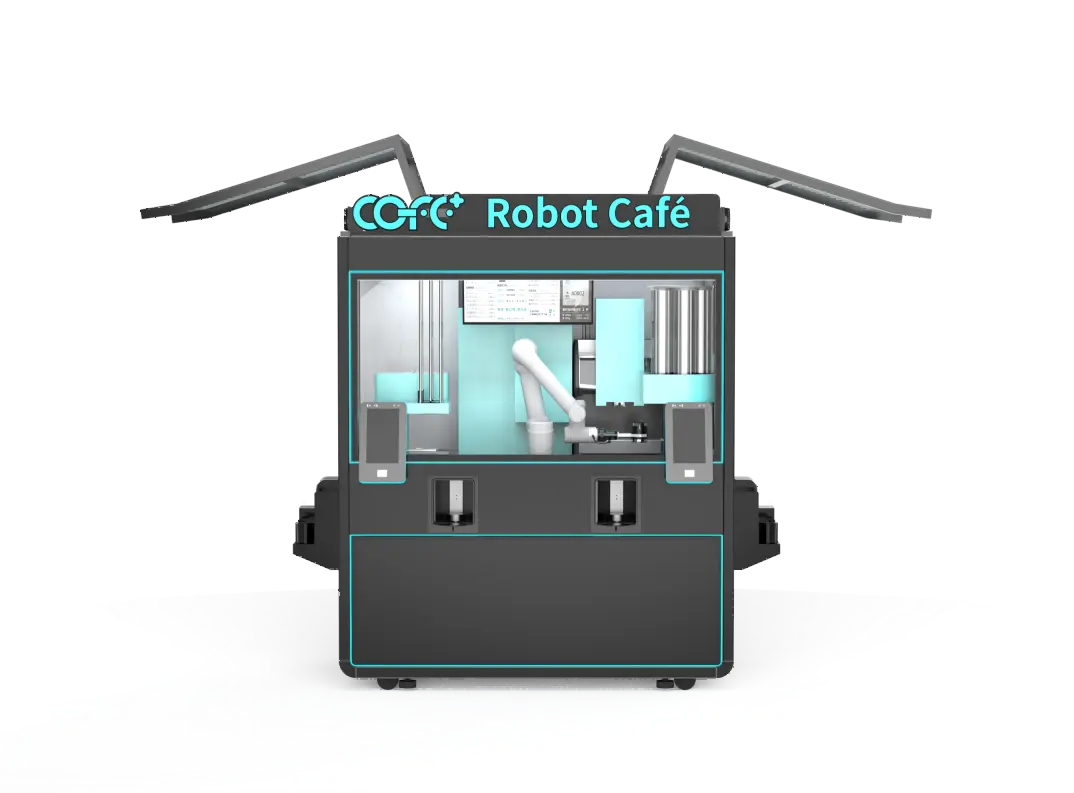
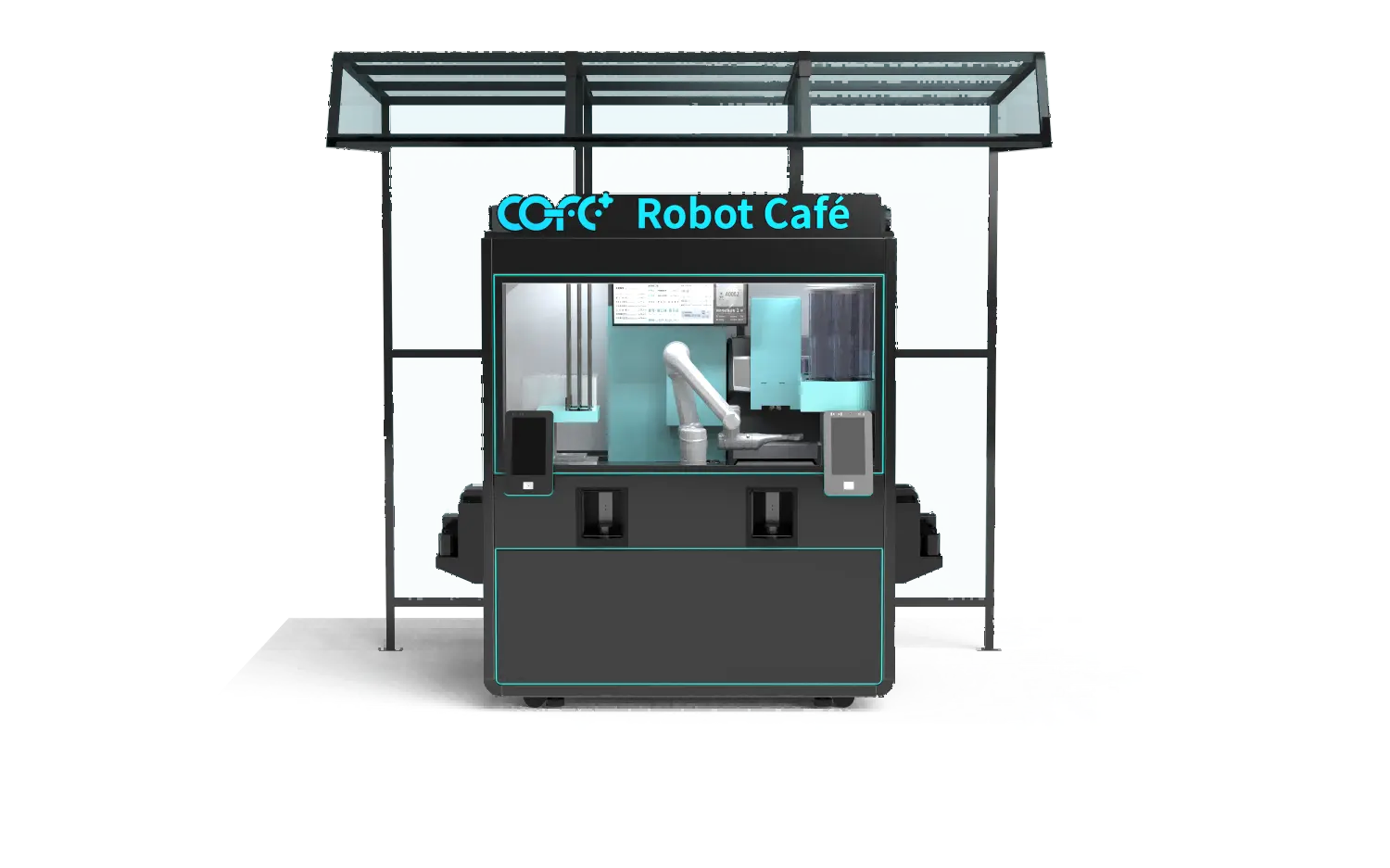
Public buildings often need both an indoor solution for foyers and a weather-protected option for plaza or bus-interchange zones. <Indoor robot coffee kiosk> covers the compact, climate-controlled cabinet most often placed inside civic centers, libraries, and service lobbies.
If you are evaluating a site, begin with pedestrian flow, power access, drainage, and network coverage. Have your project team confirm those four points before comparing machine specifications. For a tailored review of a specific public service site, contact Shanghai Hi-Dolphin Robot Technology at sales@hi-dolphin.com or +86 131 6630 1290.
Public service areas include several distinct formats. A central library, a district service center, a cultural hall, an outdoor smart-city plaza, and a transit information point each create different requirements for footprint, weather protection, and queue management.
The COFE+ line separates these needs into indoor and outdoor cabinets, a robot coffee bar, and a built-in robot coffee counter. The indoor kiosk footprint is approximately 2.35 m², compact enough for a lobby without major renovation. The outdoor version adds an IP54-rated enclosure, UV resistance, anti-condensation design, and operation from -20°C to 45°C, which is relevant for public squares, park service buildings, and transport forecourts.
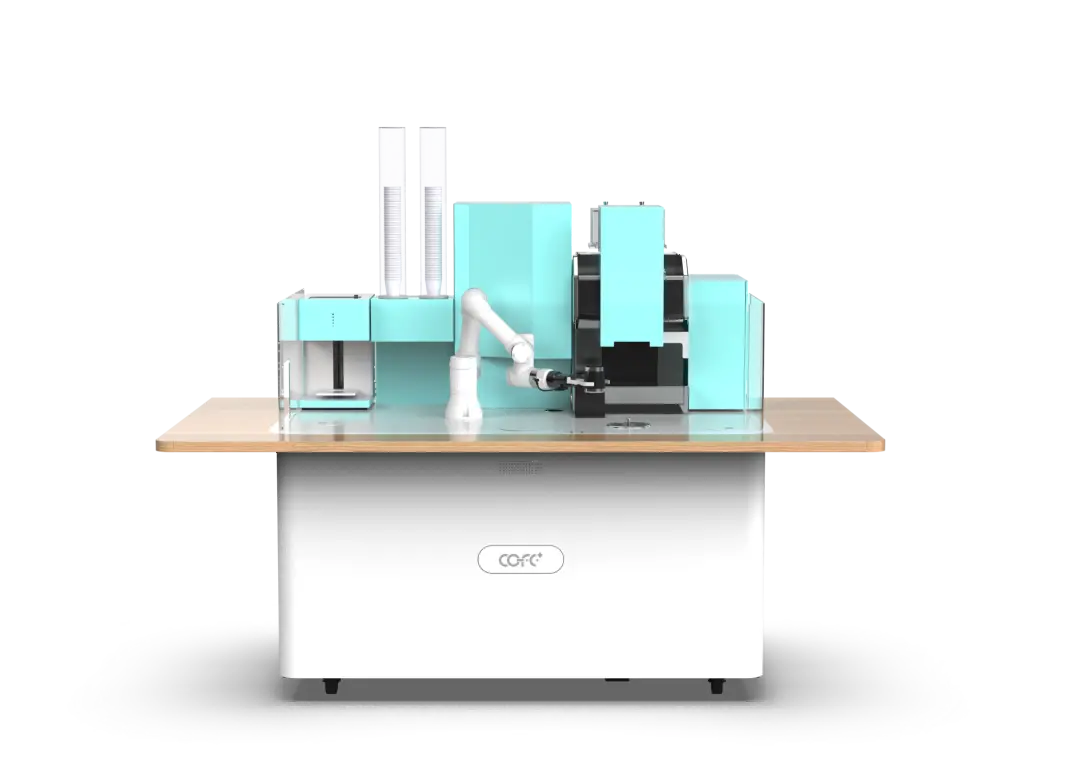
For a premium public reception area or a business lounge inside a civic building, the robot coffee bar creates a sit-down point that can increase dwell time without staffing a café. For a museum lobby or VIP waiting space, the robot coffee counter integrates into an existing reception surface and turns coffee preparation into a visible service experience.
Selection should follow a simple hierarchy: indoor climate-controlled space first, outdoor or semi-exposed space second, and format flexibility only where the venue needs social seating or visual theater. Avoid choosing the most feature-rich machine if it exceeds the space and utility constraints of a typical public counter. The most reliable smart city deployment usually starts with the smallest format that can serve the expected peak.
A smart city kiosk is still a food service operation. It needs water, drainage, power, internet, and a cleaning schedule. Public authorities should treat installation like a fixed utility connection rather than a temporary vending placement.
Power and water demand depend on the selected format. An indoor coffee kiosk needs a dedicated circuit sized according to the manufacturer’s electrical specification, a potable water inlet, and a drain path. Outdoor sites require additional review of freeze risk, condensation, and access for waste removal. The COFE+ outdoor cabinet includes a fully enclosed waste system and an anti-microbial stainless-steel interior, but the surrounding site still needs routine inspection.
Food safety is governed by the operator’s local code. ISO 22000:2018 provides an internationally recognized framework for food safety management in the chain from ingredient intake to final cup [1]. For public-sector procurement, a machine with third-party certifications helps demonstrate that the system has been assessed beyond the manufacturer’s claims. Hi-Dolphin states that its kiosks carry FDA, CE, UKCA, KC, and SASO certifications, and that the company has obtained more than 50 certifications accepted across more than 18 developed countries.
Materials that touch milk, coffee, and water must comply with applicable food-contact regulations. In the European market, Regulation (EC) No 1935/2004 sets the general safety requirement for food contact materials [3]. Buyers should ask for documentation showing that tubing, seals, boilers, and dispensing parts meet the relevant material standards for the deployment country.
The World Health Organization’s five keys to safer food remain a useful operational benchmark: keep clean, separate raw and ready-to-eat ingredients, cook to safe temperatures, hold food at safe temperatures, and use safe water and raw materials [2]. For an automated machine, that means verifying the cleaning cycle, temperature holding, and water filtration before placement.
| Requirement | What to confirm before installation |
|---|---|
| Power | Dedicated circuit, voltage, and load margin for peak use |
| Water | Potable supply and accessible shut-off valve |
| Drainage | Gravity or pump route away from public walking paths |
| Network | Stable internet for payments, telemetry, and remote support |
| Access | Front service clearance and rear maintenance clearance |
| Hygiene | Local food-business registration and waste disposal schedule |
A missing drainage plan, for example, can turn an indoor placement into a spill hazard during peak service. Facility teams should resolve these points as part of the site approval checklist, not after delivery.
The operational advantage of a robot coffee kiosk in a public service area is consistency. The machine repeats the same recipe sequence without the drift that occurs when multiple part-time staff rotate across shifts. Hi-Dolphin specifies digitized barista-level recipes for 300+ drinks, including coffee, milk tea, matcha, chocolate, and plant-based options, with more than 5,000 customization combinations.
Citizen experience also depends on payment and interface design. Public users expect card, mobile, and contactless options. Payment data must be protected under the applicable cardholder data security rules; PCI DSS v4.0 is the relevant payment security standard for card transactions [5]. Buyers should not treat the payment terminal as a standalone accessory. It must be integrated with the kiosk’s security architecture.
Remote monitoring changes how a city operates the machine. Instead of daily manual checks, the operator can monitor stock levels, temperature, cleaning status, and module errors through a cloud dashboard. COFE+ machines support cloud monitoring, remote diagnostics, and automatic repair dispatch. That capability matters in smart city settings because service teams may be responsible for several buildings across a district.
Central monitoring is what makes multi-site operation practical for a public authority or facility group. <Smart store brain> covers the cloud management layer for stock, temperature, and remote diagnostics.
For citizens, the strongest adoption signal is visual trust. A clean, well-lit machine with visible ingredient handling and automatic cleaning reassures users more than signage alone. Queue area design should also allow one user to order while another waits without blocking a building entrance or elevator bank.
Public service areas do not need to be profit-first to justify a robot coffee kiosk. The machine can recover cost through cup margin, reduce the need for a loss-making manned concession, and improve the citizen experience. The stronger public-sector argument is usually cost-to-serve and service continuity, not retail revenue alone.
Hi-Dolphin reports a cost per cup of approximately $0.30–$0.70 for the 7th Generation systems. If the venue prices a standard coffee at a level consistent with nearby convenience retail, the margin can support equipment financing, ingredients, maintenance, and cleaning over time. Payback varies by volume, price point, rent, and service cost, so a pilot should measure real transactions before scaling.
The operating model should name the responsible party for each task: ingredient refill, cleaning, waste removal, payment reconciliation, and repair. In many smart city contracts, the equipment vendor or distributor handles technical service, while the facility operator manages daily consumables and housekeeping. Without that split, small tasks accumulate and reduce machine availability.
A monthly operations review should track transactions, peak hours, stock-out events, failed payments, cleaning cycle completion, and service tickets. These metrics identify whether a site needs a second machine, a different menu mix, or a moved position far earlier than a revenue-only report would show.
If you already operate a public service building and want a remote-friendly operating model, request a demonstration account or a live dashboard walkthrough. Contact Hi-Dolphin at sales@hi-dolphin.com to review operational data, service workflows, and integration with your facility team before procurement.
The safest way to enter a smart city rollout is a pilot. A pilot should be long enough to capture weekly demand variation, service interruptions, and citizen feedback. Six to eight weeks is often sufficient for a building with stable weekday traffic, but a seasonal public square may need longer to observe weather and event effects.
The pilot should include a defined success threshold, such as transaction volume, machine uptime, stock accuracy, and user satisfaction. A public agency can then compare that result against the cost of a manned kiosk or no service at all. This evidence-based step is particularly important when funding comes from a city innovation budget or a public-private partnership.
Procurement should separate the machine purchase from the ongoing service contract. The machine may be bought or leased, but the more important item is after-sales support: spare parts, software updates, remote access, and emergency response. Buyers should ask for local technician coverage, response-time commitments, and a spare-parts plan before shipment.
For public-sector distributors and facility operators, the route to market usually starts with a demo site and a local service capability. <Distributor wanted> covers territory and partnership considerations for building that local support layer.
The specification sheet should include footprint, utility demand, capacity, certifications, food-contact documentation, payment standards, and telemetry. A B2B buyer should compare these items across suppliers rather than selecting on price alone.
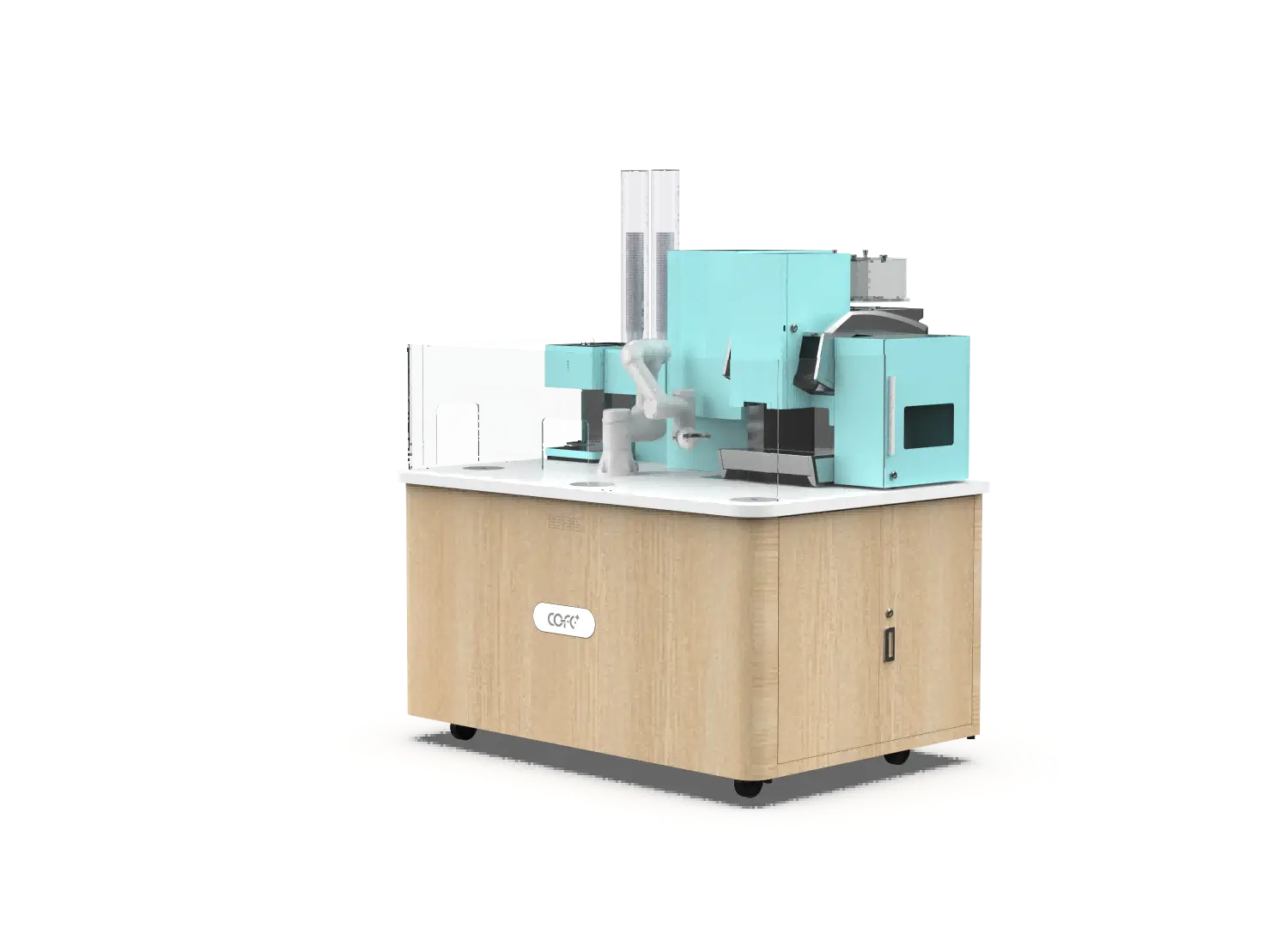
A robot coffee kiosk in a smart city public service area works when the site plan, food-safety process, operating model, and service contract are aligned before the first cup is served. The machine is the visible part; the supporting infrastructure determines whether it remains reliable over years of public use.
For a site-specific evaluation, technical specification review, or distributor discussion, contact Shanghai Hi-Dolphin Robot Technology Co., Ltd. at sales@hi-dolphin.com or +86 131 6630 1290. The team can provide model comparisons, utility requirements, and pilot planning support for public-sector deployments.
The built-in robot coffee counter and the indoor robot coffee kiosk are the most space-efficient choices. The indoor kiosk footprint is approximately 2.35 m², while the counter format is designed to integrate into an existing reception or service counter surface.
Yes, if the outdoor model is selected. The COFE+ outdoor kiosk is specified for operation from -20°C to 45°C, with IP54-rated dust and water protection and UV resistance. The indoor model is intended for climate-controlled spaces.
The system should use certified food-contact materials, automatic cleaning, and temperature holding. Hi-Dolphin states that the 7th Generation machines use an automatic 85°C+ high-temperature sterilization process, an anti-microbial stainless-steel interior, and internationally recognized certifications.
Hi-Dolphin specifies a capacity of about 1,000 cups per day for the 7th Generation systems, with a stated serving speed of 43–60 seconds per cup. Actual throughput depends on menu complexity, cup size, payment behavior, and queue flow.
[1] ISO 22000:2018, Food safety management systems — Requirements for any organization in the food chain, International Organization for Standardization, 2018.
[2] World Health Organization, Five Keys to Safer Food Manual, WHO, 2006.
[3] Regulation (EC) No 1935/2004 on materials and articles intended to come into contact with food, European Parliament and Council, 2004.
[4] Grand View Research, Smart Cities Market Size, Share & Trends Analysis Report, 2023.
[5] PCI Security Standards Council, PCI DSS v4.0, 2022.
TL;DR — COFE+ is a fully automated robotic coffee kiosk that grinds fresh beans, brews espresso and lattes, creates latt……
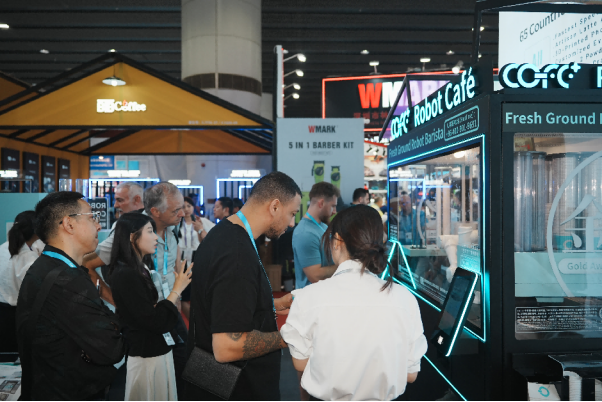
7th-Genertion Smart Robot Coffee Kiosk Arrives at the Belt and Road Core Hub, Ushering in a New Service Era Along t……
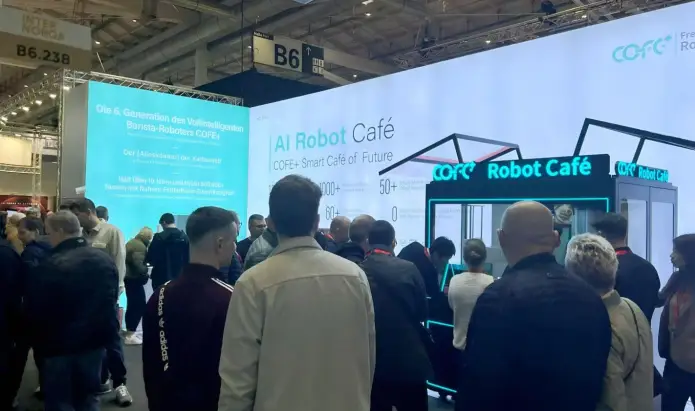
CHICAGO, May 12, 2026 (GLOBE NEWSWIRE) – Shanghai Hi-Dolphin Robot Technology today announced the U.S. debut of its 7th‑……