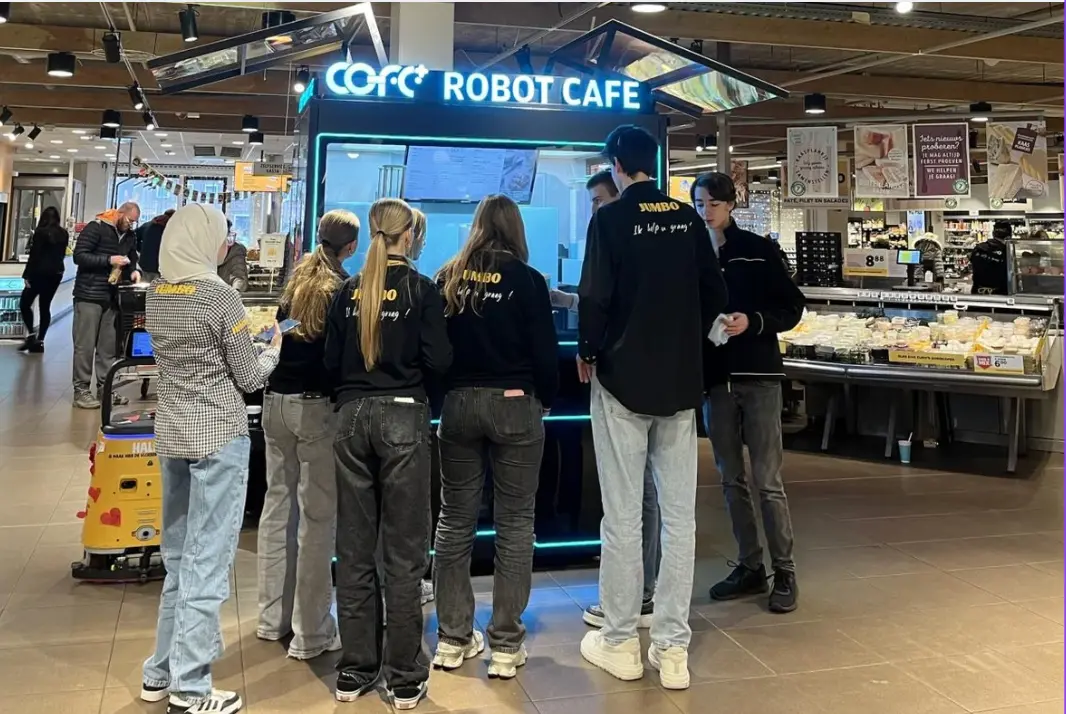
The Rise of Professional Robotic Café Technology: What COFE+ Is and Why It Matters
TL;DR — COFE+ is a fully automated robotic coffee kiosk that grinds fresh beans, brews espresso and lattes, creates latt……

Night economy districts concentrate spending after conventional business hours, but the support services around them often run on daytime economics. A barista at 11:30 p.m. is hard to staff, expensive to keep, and unreliable in a tight labor market. A robot coffee kiosk for night economy districts removes that constraint by offering continuous, contactless service without shift premiums, sick days, or a closing sign. For property managers, entertainment venue operators, and multi-location investors, the practical question is no longer whether automated coffee works at night—it is where to place it, how to protect it, and how to turn late-night foot traffic into predictable revenue.
Most night economy districts depend on bars, restaurants, live performance venues, late-night retail, and street food. Coffee demand does not disappear after dinner; it shifts toward iced drinks, energy-focused orders, and low-friction service. A traditional café can capture some of that demand, but only by paying for a manager, a barista, security, and utilities through low-volume hours. A robot coffee kiosk restructures that cost base: the machine does not collect overtime, does not call in sick, and does not need a break at 2 a.m.
Manufacturer specifications for the outdoor COFE+ 7th Generation unit list a daily capacity of approximately 1,000 cups and a direct ingredient cost of roughly $0.30–$0.70 per cup, depending on recipe and local input prices. That cost structure creates room for night-district pricing that absorbs higher utilities or revenue-sharing fees while keeping payback windows relatively short.
Night-district site selection should not copy daytime retail logic. A corner that works at noon may be dead at midnight. The strongest locations combine continuous evening footfall, visible lighting, safe queue space, and access to power, water, and drainage.
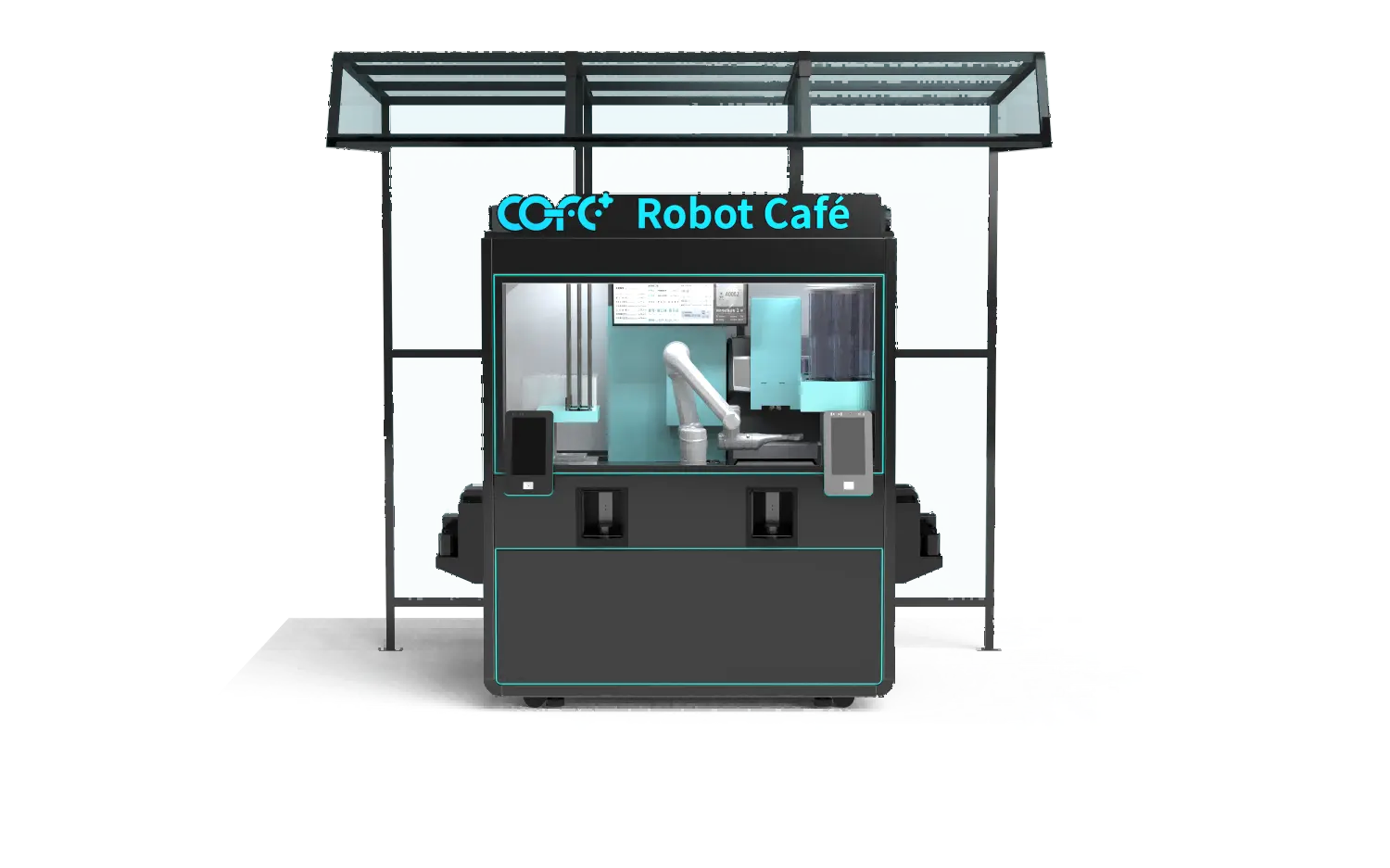
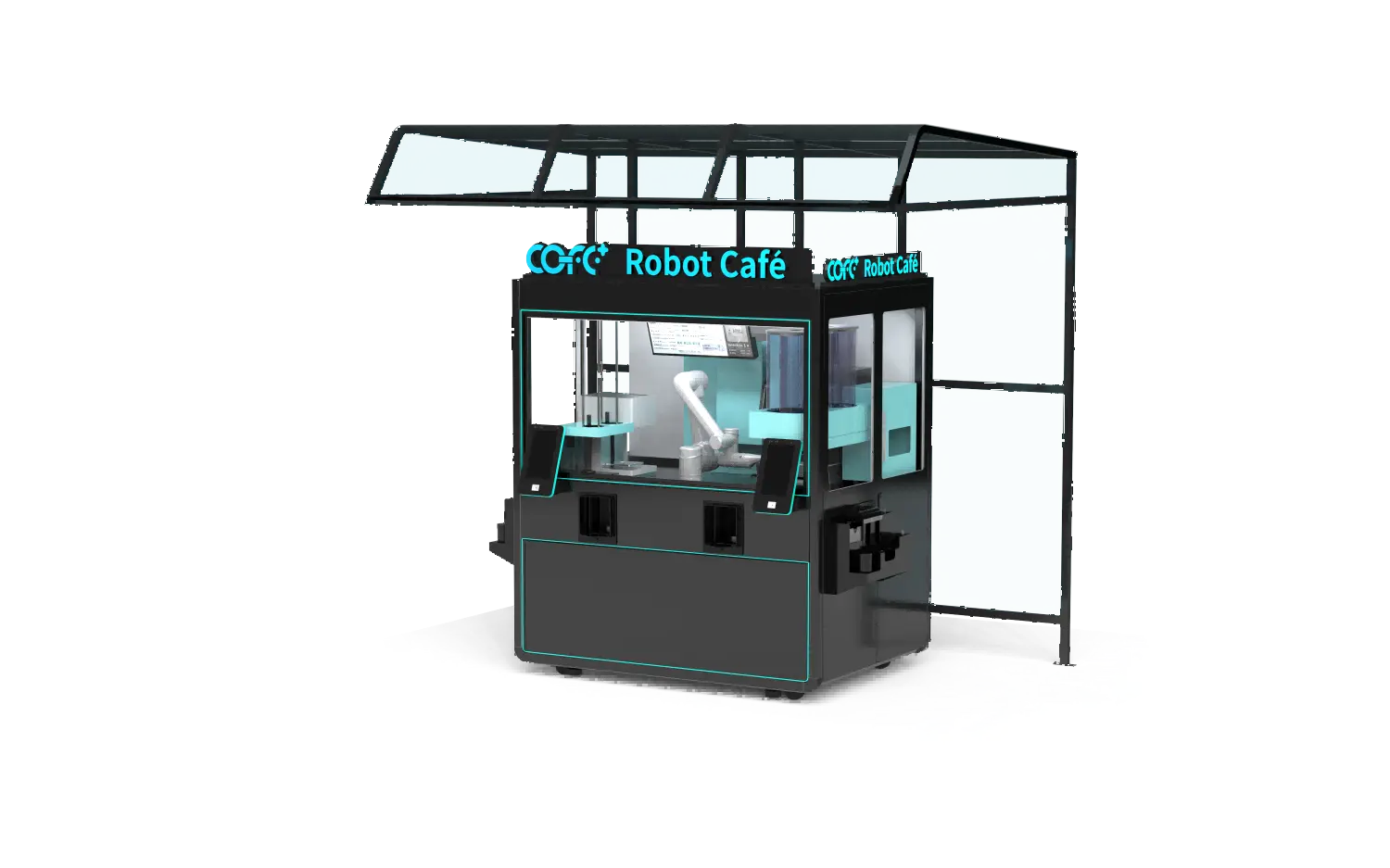
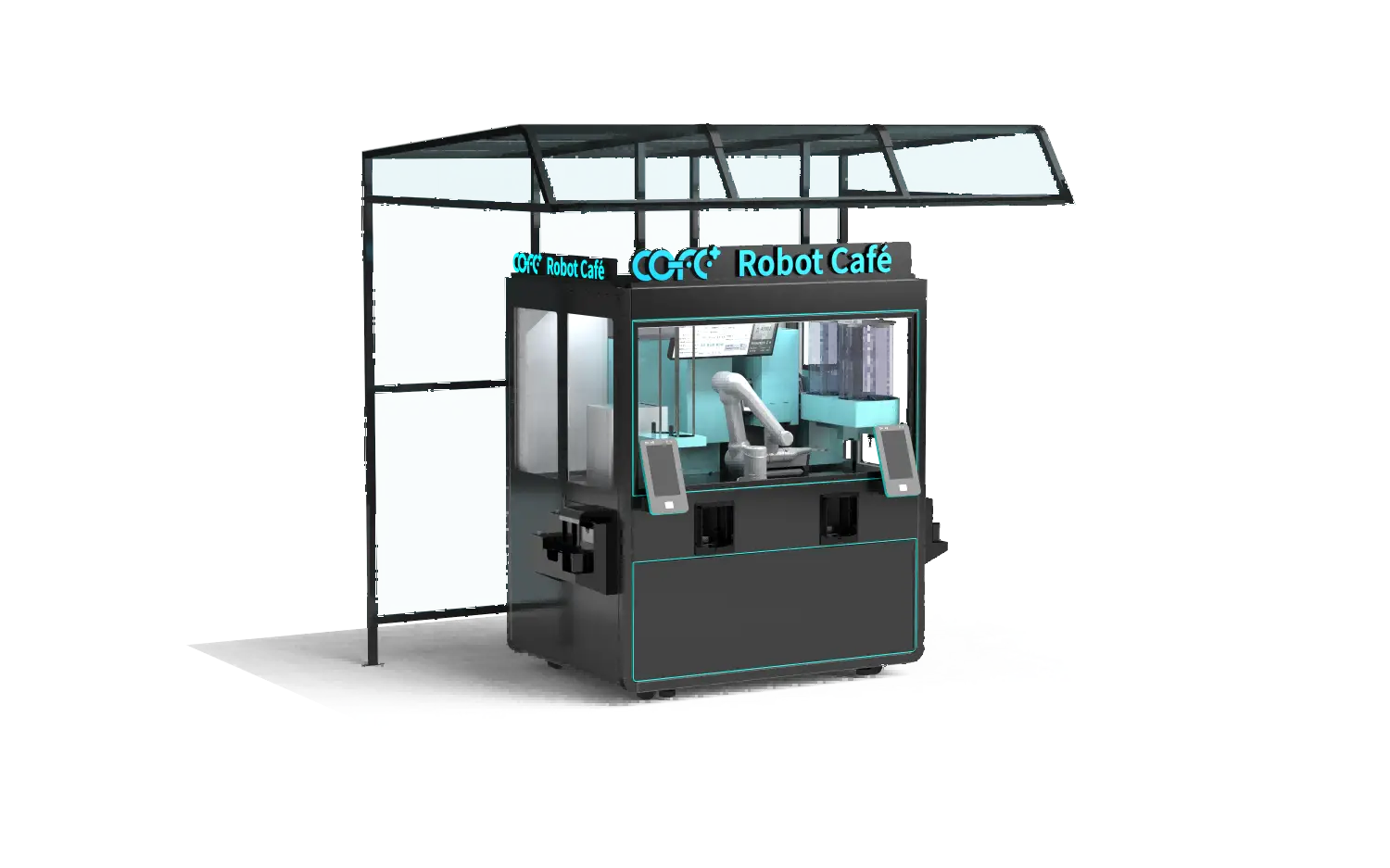
When evaluating a night district site, operators should verify site conditions against the specific demands of after-dark service rather than assuming a kiosk will perform because the area is busy.
| Site Factor | What to Verify | Night Economy Target |
|---|---|---|
| Footfall pattern | Counts at 18:00–02:00, not daily averages | Consistent evening peak plus late-night residual flow |
| Power and water | Stable supply, drainage, freeze protection | Uninterrupted operation without manual checks |
| Lighting and visibility | Front-facing LED, site lighting, clear sightlines | Customers can see and use the kiosk safely |
| Weather protection | IP54-rated enclosure, temperature range, drainage | Outdoor units remain clean and operational |
| Queue area | Space for 4–6 people without blocking walkways | Short wait times during post-event surges |
| Security | CCTV coverage, anchors, anti-vandalism design | Reduced theft, tampering, and damage risk |
| Permitting and noise | District rules, late-hour operating permissions | Launch without rework or shutdown risk |
| Competition | Distance from other coffee and vending options | Strong demand without overlapping sellers |
Night-district placement pushes a kiosk harder than a lobby or office location. <robot coffee kiosk outdoor> covers the IP54-rated enclosure, operating temperature range, and remote monitoring features that matter for street-side 24/7 service.
Night customers do not always order the same menu as morning commuters. In entertainment zones, iced coffee, cold brew, matcha, chocolate drinks, and plant-based alternatives often perform well because they are refreshing, easy to carry, and compatible with a social atmosphere. Kiosk menus should also make upgrades visible: extra syrup, toppings, larger cup sizes, and limited-time drinks can lift average order value without adding operational complexity.
The visual element matters at night. 3D printed latte art and watchable robotic arm movements turn a coffee transaction into a social moment, which can increase repeat visits and spontaneous purchases in districts where people are already taking photos and sharing experiences.
Late-night menus and peak traffic patterns vary by district, so deployment context matters more than a single venue format. <scenarios> covers how robot coffee units are adapted to transit hubs, entertainment zones, retail corridors, and other high-traffic environments.
Before you finalize a site, ask your supplier for a payback model using your actual nightly traffic band, not a generic daytime average. If you would like a location-specific ROI calculation for a night economy district, email sales@hi-dolphin.com with the expected daily footfall and planned average ticket.
Night operation increases the importance of hygiene and security because there is no employee on site to notice spills, expired ingredients, or unusual system behavior. A well-designed kiosk should reduce these risks through automated cleaning and monitoring.
The outdoor COFE+ 7th Generation unit includes an anti-microbial stainless-steel interior, automatic high-temperature sterilization at 85°C or above, and a fully enclosed waste system to limit spills, odors, and pests. Enclosure protection follows the IP54 rating defined by the ingress protection standard [1]. Food-contact and automated dispensing processes are evaluated under food safety management principles aligned with recognized international standards [2]. Payment and store data should be protected through encrypted pathways and disciplined access controls under an information security management framework [3].
Remote monitoring is the operational backbone for unmanned night service. Operators can track ingredient levels, temperature, water supply, and system status from a central dashboard. When an exception occurs, the system can trigger an alert and a targeted service dispatch instead of requiring regular on-site inspections.
A single night-district kiosk can validate demand, but the greater opportunity is network scale. Operators who prove unit economics in one entertainment zone can replicate the model across night markets, waterfront promenades, stadium districts, and other late-hour destinations.
The manufacturer lists a design life of roughly 10 years and durability testing beyond 500,000 cups, with an estimated ROI of about 6–12 months depending on location and local pricing. These figures are product-level reference data and should be tested against an operator’s real traffic, rent, utility, and revenue-sharing conditions. The most reliable approach is to pilot in three locations, compare actual daily cups and gross margin across venues, then expand into the sites with the best repeat-purchase behavior.
Scaling a night-economy network requires more than buying hardware; it depends on territory support, service coverage, and local go-to-market alignment. <distributor wanted> covers distribution rights, training, and the partner model for multi-site expansion.
Shanghai Hi-Dolphin Robot Technology Co., Ltd. supports operators in evaluating site feasibility, comparing indoor and outdoor models, and planning multi-location night-district deployment. To discuss a pilot, request technical specifications, or receive a location-specific review, contact sales@hi-dolphin.com or call +86 131 6630 1290.
Earnings depend on footfall, pricing, menu mix, and site costs. Manufacturer reference data puts ingredient cost at roughly $0.30–$0.70 per cup, with typical ROI estimates of 6–12 months. A site-specific model should use actual 18:00–02:00 footfall, average ticket, and any rent or revenue-sharing fees.
The most common mistakes are selecting a site based on daytime traffic, placing the kiosk in a poorly lit area, ignoring drainage and weather exposure, and allowing queue space to block walkways. Sites near security cameras, visible from main pedestrian paths, and adjacent to late-night food or entertainment tend to perform more consistently.
The kiosk automates much of the daily hygiene work, including sterilization and waste containment. Ingredient refills and preventive maintenance are managed remotely through cloud monitoring, with alerts for low stock, temperature changes, or system faults. A local service partner or operator schedules refills during low-traffic windows to minimize lost sales hours.
[1] IEC 60529:1989+AMD1:1999+AMD2:2013 CSV, Degrees of protection provided by enclosures (IP Code). International Electrotechnical Commission; 2013.
[2] ISO 22000:2018, Food safety management systems — Requirements for any organization in the food chain. International Organization for Standardization; 2018.
[3] ISO/IEC 27001:2022, Information security, cybersecurity and privacy protection — Information security management systems. ISO/IEC; 2022.
TL;DR — COFE+ is a fully automated robotic coffee kiosk that grinds fresh beans, brews espresso and lattes, creates latt……
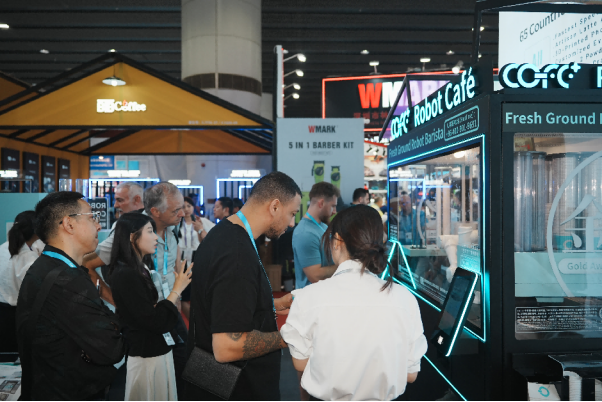
7th-Genertion Smart Robot Coffee Kiosk Arrives at the Belt and Road Core Hub, Ushering in a New Service Era Along t……
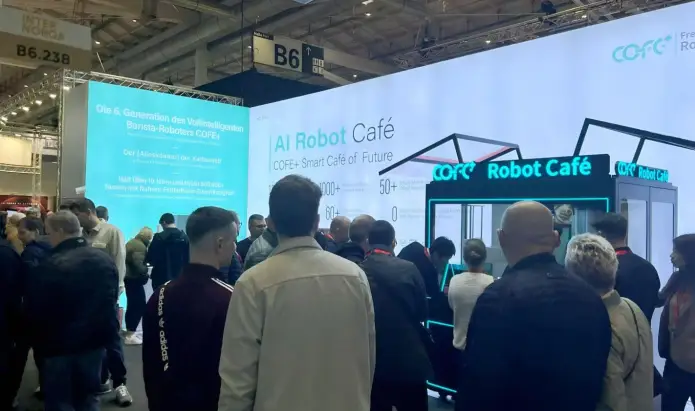
CHICAGO, May 12, 2026 (GLOBE NEWSWIRE) – Shanghai Hi-Dolphin Robot Technology today announced the U.S. debut of its 7th‑……