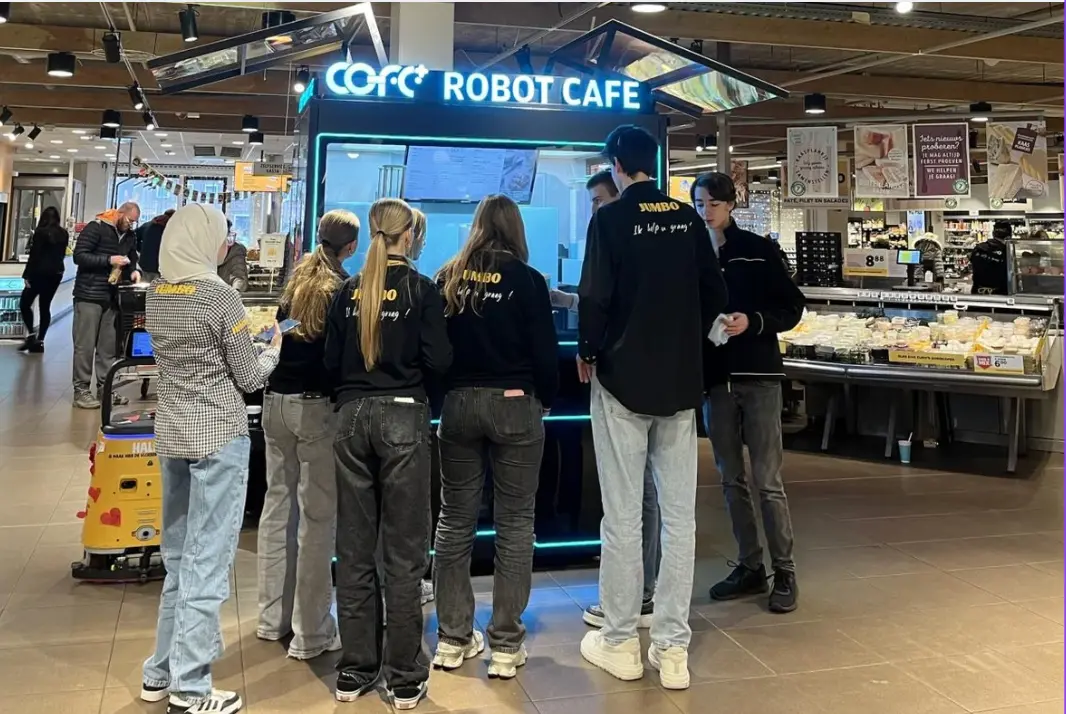
The Rise of Professional Robotic Café Technology: What COFE+ Is and Why It Matters
TL;DR — COFE+ is a fully automated robotic coffee kiosk that grinds fresh beans, brews espresso and lattes, creates latt……

Airport coffee concessions face a persistent catch‑22: passengers expect fast, quality coffee at all hours, but labor shortages and high turnover make consistent 24/7 service nearly impossible to staff. A robot coffee kiosk for airports addresses both sides, slashing labor dependency while maintaining barista‑grade consistency through automated precision. In my work with global retail automation, I’ve seen these kiosks transform underused terminal spaces into reliable revenue centers, serving passengers at any gate, any time, without the operational downtime that plagues staffed cafés.
Terminal coffee service depends on shift workers who call out, quit, or cannot keep up during peak deplaning rushes. When a flight lands at 2 a.m., the branded coffee stall is usually closed; the only alternative is a vending machine dispensing stale brews. Passengers remember that. Airport operators I speak with consistently rank food‑and‑beverage reliability as a top guest‑experience metric, right behind security throughput. A robot coffee kiosk closes the reliability gap. It never clocks out, serves a fresh cup in under a minute, and keeps running during weather delays, holiday surges, and early‑morning long‑haul arrivals. The unit also removes the overhead of recruiting, training, and retaining baristas in a labor market that makes airport staffing particularly expensive and unpredictable.
The COFE+ 7th‑generation platform we deploy in high‑traffic venues reaches 1,000 cups per day while maintaining 43–60‑second cycle times per order. The system grinds beans on‑demand, extracts espresso digitally to a pre‑programmed recipe, and froths milk with robotic precision; every cup matches the last, no matter how long the queue. Because the kiosk stores over 300 drink recipes and allows 5,000‑plus customizations, it satisfies the broad passenger palette—from a double espresso to a matcha latte with oat milk—without requiring a human to remember modifications. For an airport gate area, that variety and speed mean fewer passengers skip the coffee purchase because the line is too long.
A trained human barista typically takes 60–120 seconds per beverage during peak hours, with consistency falling as fatigue sets in. The robotic kiosk stays at 43–60 seconds across all hours; the digital recipe library eliminates variation from pour speed, milk temperature, or rush judgment. In a terminal where 300 passengers might want coffee in a 20‑minute window, that consistency translates directly into higher throughput and fewer abandoned sales.
Yes. Ordering runs through a touchscreen interface with visual drink previews and multilingual support. Payment is contactless, and the machine handles everything from cup placement to lid closure. In dozens of global deployments, we’ve found that first‑time users complete their order in under 90 seconds without any external help. A brief instructional sticker on the unit is usually all the “staff” that’s required.
Airport terminals are not typical retail spaces. They have restricted access, limited floor load, specific power‑and‑water supply routes, and tight clearance from security checkpoints. The COFE+ indoor kiosk’s 2.35 m² footprint means it can tuck into gate waiting areas, between retail columns, or inside existing lounge footprints without costly renovation. Connectivity uses standard airport Wi‑Fi, and the unit’s cloud monitoring allows remote diagnostics, stock alerts, and automatic maintenance dispatch, so physical technician visits are rare.
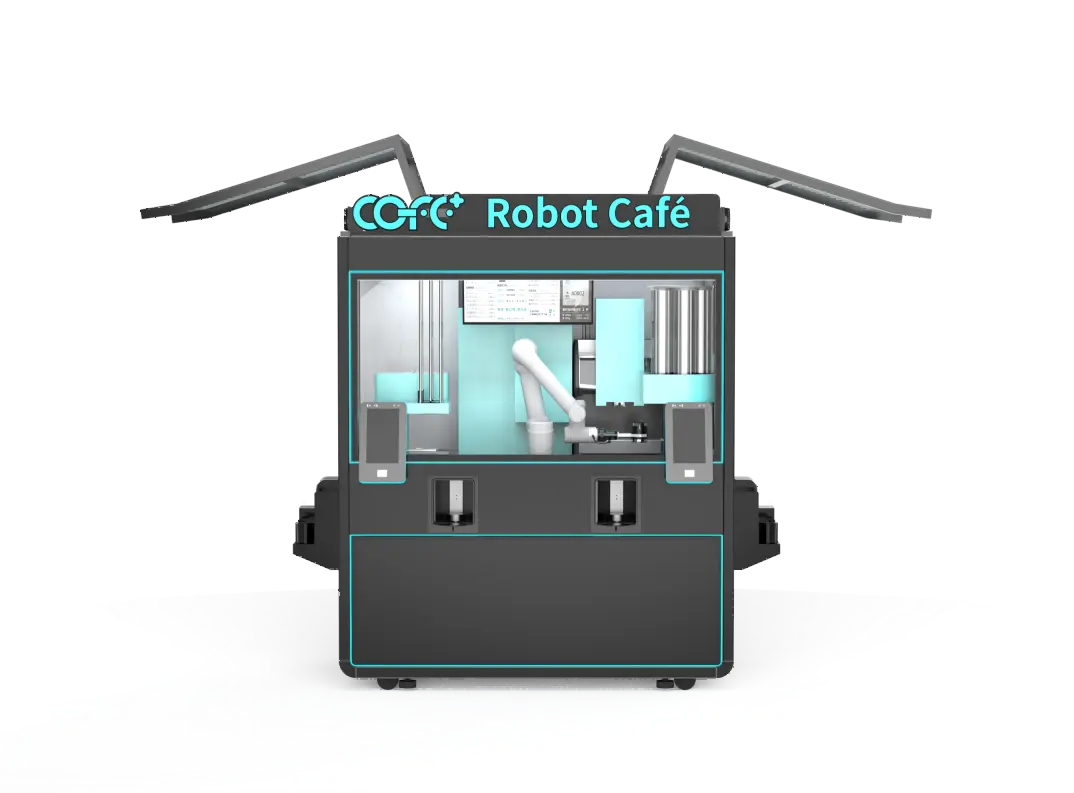
For outdoor and semi‑exposed locations such as terminal forecourts, parking structures, or curbside pickup zones, the outdoor‑rated version adds IP54 dust‑and‑water protection, a ‑20°C to 45°C operating range, and anti‑condensation systems. The table below illustrates the two models side‑by‑side for common airport deployment scenarios.
| Specification | Indoor Kiosk | Outdoor Kiosk |
|---|---|---|
| Footprint | ~2.35 m² | ~2.35 m² |
| Environmental rating | Standard interior | IP54, UV‑resistant |
| Operating temperature | 10–35°C (climate‑controlled) | ‑20°C to 45°C |
| Waste system | Enclosed container | Fully enclosed, pest‑proof |
| Automatic sterilization | High‑temp 85°C+ cycle | High‑temp 85°C+ cycle |
| Ideal airport placement | Gate‑side, security checkpoint, lounge | Forecourt, parking, curbside drop‑off |
The indoor and outdoor units both use single‑phase power compatible with 110V or 220V systems; peak draw is similar to a large commercial espresso machine. Water can be supplied via direct plumbed line, which most terminal back‑of‑house areas can accommodate, or via an internal tank system that requires intermittent refilling. In many airports we’ve worked with, a small under‑counter water reservoir with a quick‑connect line is sufficient.
Clearance depends on the airport’s own permitting process, but the kiosk’s compact, self‑contained design simplifies approval. The machine arrives as a pre‑assembled unit that does not require structural modification to the terminal. We provide full schematics and material safety data sheets to airport engineering teams, and because the kiosk lacks any explosive, pressurized, or classified components, security review typically focuses on physical location rather than content. Our deployment team has handled clearance in airports across Asia, Europe, and the Middle East without incident.
If your terminal has unique power‑access constraints or a floor plan that doesn’t match standard retail bays, our systems team can run a compatibility check using your site drawings. Send the specifics to sales@hi-dolphin.com and we’ll confirm which model fits.
Airport health authorities impose some of the strictest food‑safety protocols in the industry. A contactless robotic kiosk inherently reduces contamination vectors: no bare hands touch the cup, milk, or espresso stream. The COFE+ units seal the entire beverage pathway and run an automatic high‑temperature sterilization cycle after predetermined intervals, eliminating bacterial build‑up without manual intervention. The waste container is fully enclosed, so odors and pests are not issues—a frequent complaint with open‑bin airport cafés.
The kiosk carries FDA, CE, UKCA, KC, and SASO certifications, which together meet the food‑equipment safety requirements of most national aviation authorities. During inspection, airport health officers typically review the grease‑trap design, hot‑water backflow prevention, and surface‑material certificates. Because Hi‑Dolphin maintains certification documentation for each component, we can supply the full compliance packet to your airport’s environmental health team within a few business days.
The operational math shifts quickly when labor is removed from the equation. With a per‑cup cost of roughly $0.30–$0.70, the margin at standard airport coffee pricing is substantial. A single kiosk can displace up to six full‑time barista positions while keeping the location open 24 hours, which immediately saves on wages, benefits, and night‑shift premiums. We typically see full payback within six to twelve months at airport traffic volumes, and many operators report a positive cash flow by the second quarter of operation.
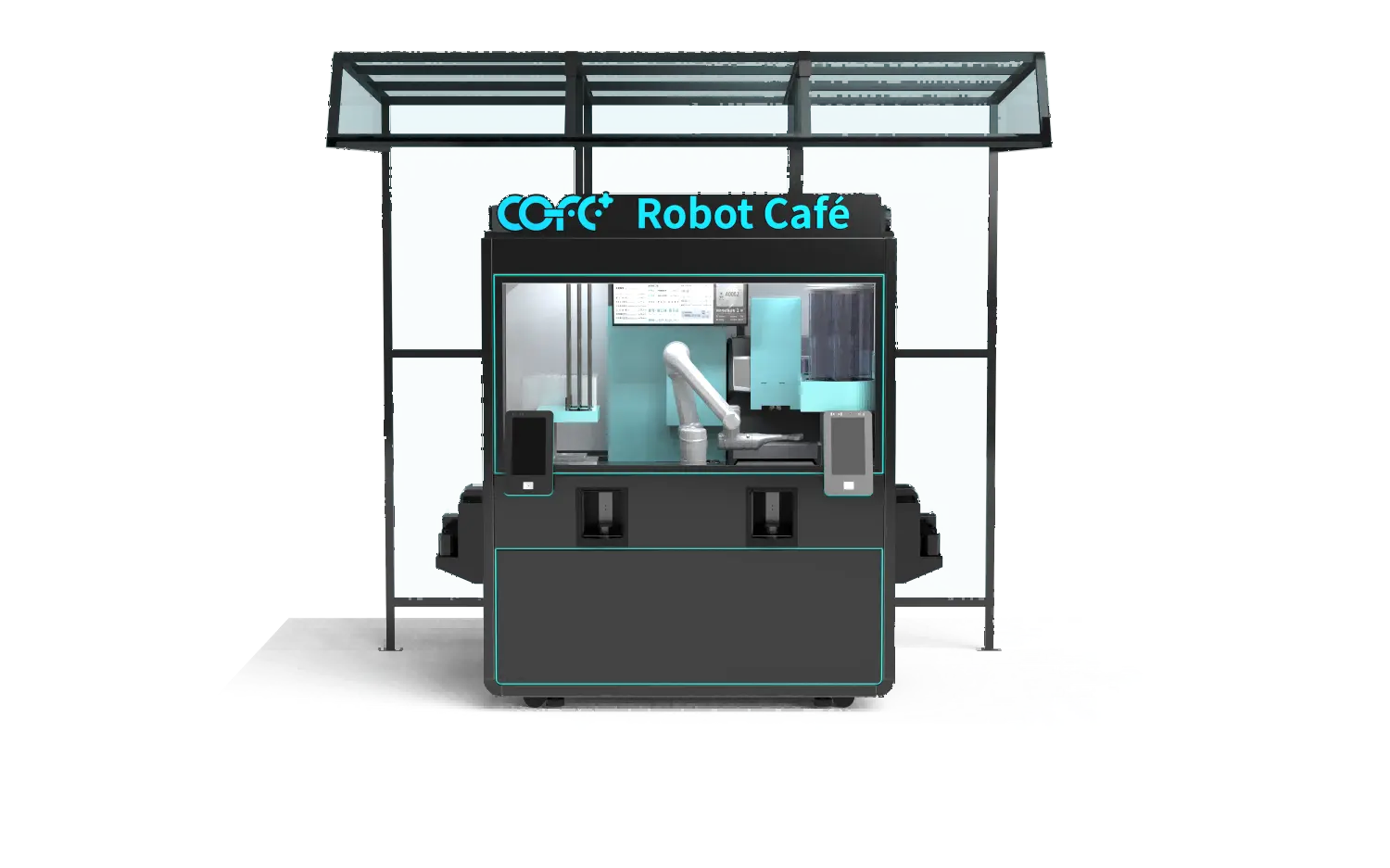
Actual payback depends on cup volume, pricing, and the specific concession fee arrangement, but the 6‑ to 12‑month range holds across most high‑footfall airport sites. Two factors accelerate the timeline: the elimination of labor cost, and the ability to operate during hours when fixed‑cost cafés are closed. Even a modest 200‑cup daily average at $4–$5 per cup generates revenue that covers the unit cost within a few months.
Airport authorities typically structure food‑and‑beverage deals as either a fixed‑rent lease plus a percentage of gross revenue, or a pure revenue‑share model. Because a robot kiosk has low operating overhead and predictable costs, it makes the financial projections easier to model than a staff‑heavy café. We work with operators to provide cup‑volume and item‑mix data from comparable airport deployments, which can be plugged directly into the airport’s concession RFP response.
Start by identifying two or three high‑traffic zones where current coffee service falls short or closes overnight. We can run a site‑suitability assessment from your terminal map to confirm power, water, and Wi‑Fi readiness and suggest the optimal model. The installation itself takes less than a day once the pre‑decided utility point is connected, and our cloud‑based remote management means daily oversight is close to zero. Staff training is minimal—usually a short session on how to reload coffee beans, milk, and cups—which airport facilities teams handle easily. From initial inquiry to first cup served, the timeline often runs four to six weeks, depending on the airport’s approval cycle.
The whole point of deploying a robot coffee kiosk in an airport is to close the service gap that frustrates travelers and leaves revenue on the table. If you’re ready to add a reliable 24/7 coffee solution to your terminal, reach out to us at sales@hi-dolphin.com or call +86 131 6630 1290. Share your terminal’s layout and passenger volume, and we’ll return a deployment plan with a pro‑forma P&L tailored to your airport’s fee structure.
We engineer the platform for 500,000‑cup durability and continuous 24/7 duty cycles, but if a fault occurs, the cloud‑based “Smart Store Brain” sends an alert to both the local operator and our remote diagnostics team. Most software issues are resolved remotely within minutes. For hardware faults, a service partner can dispatch; the modular design means most components are swappable on‑site without unloading the machine.
Not for daily operation. Passengers interact with the kiosk entirely through the touchscreen, and payment is contactless. The only staff task is restocking beans, milk, cups, and syrups roughly once or twice a day depending on volume, a task that an existing facilities crew member can perform in under ten minutes.
The front panel opens to reveal labeled, color‑coded hoppers for coffee beans, milk, syrups, and cups. The machine displays real‑time stock levels on the fleet dashboard, so restocking can be scheduled rather than done on a fixed timetable. Airports we work with often align replenishment with the overnight cleaning shift, so no additional staff trips are required.
Yes, the outdoor‑rated model is purpose‑built for exposed airport zones such as taxi stands, pickup areas, and parking structures. It is IP54‑rated against dust and rain, UV‑resistant for direct‑sun installations, and tested from ‑20°C to 45°C ambient conditions. We’ve deployed it in desert heat and sub‑zero winter climates without interruption.
In the locations we’ve monitored, usage rates climb quickly after the first week as travelers learn the interface and see the speed advantage. The ability to watch the robotic arm prepare the coffee—including printing latte art—turns the kiosk into a small terminal attraction, which actually drives trial. Repeat purchase rates on subsequent visits are consistently high. If your airport wants to validate passenger adoption before full rollout, share your target gate zones and passenger demographics with us at sales@hi-dolphin.com and we can model an initial pilot with measured results.
TL;DR — COFE+ is a fully automated robotic coffee kiosk that grinds fresh beans, brews espresso and lattes, creates latt……
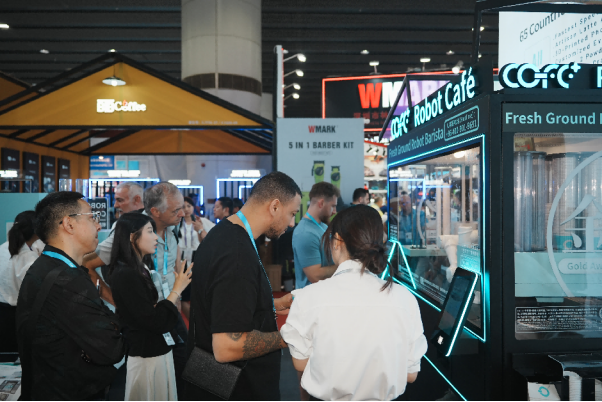
7th-Genertion Smart Robot Coffee Kiosk Arrives at the Belt and Road Core Hub, Ushering in a New Service Era Along t……
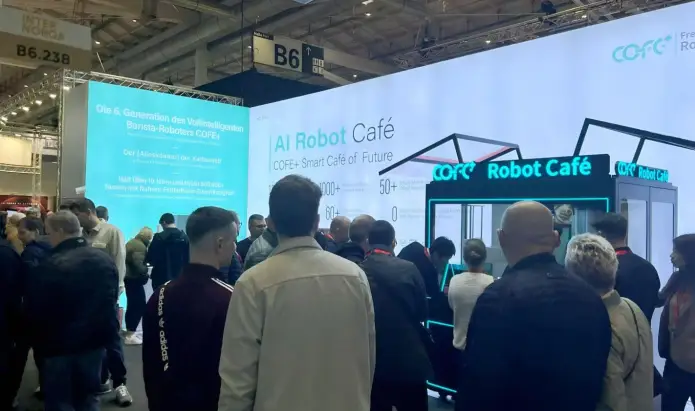
CHICAGO, May 12, 2026 (GLOBE NEWSWIRE) – Shanghai Hi-Dolphin Robot Technology today announced the U.S. debut of its 7th‑……