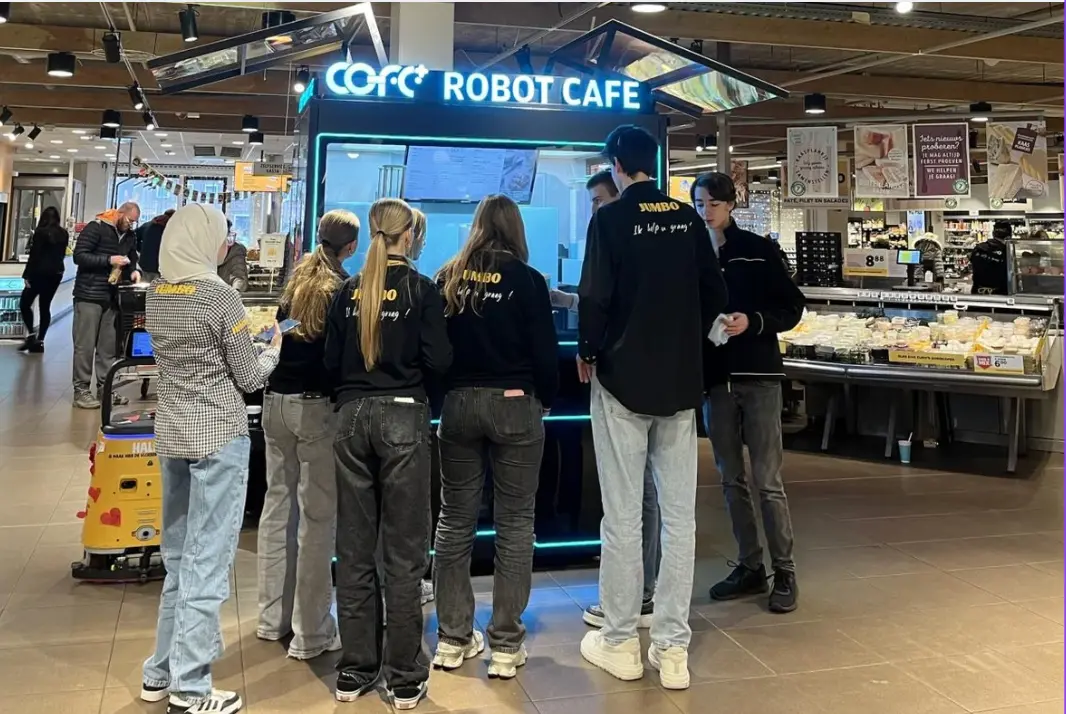
The Rise of Professional Robotic Café Technology: What COFE+ Is and Why It Matters
TL;DR — COFE+ is a fully automated robotic coffee kiosk that grinds fresh beans, brews espresso and lattes, creates latt……

Office coffee programs break down in predictable ways. The machine jams at 9:15 AM with twelve people waiting. The bean supply runs out midweek because no one tracks inventory. The quality swings from acceptable to undrinkable depending on who last cleaned the group head. Facility managers end up fielding complaints about something that is supposed to be a perk. Jason Liu, who leads global strategy at Shanghai Hi-Dolphin Robot Technology, puts it directly: “We have watched companies invest in premium espresso machines and bean subscriptions only to see the experience collapse under inconsistent maintenance and peak-hour bottlenecks — the problem was never the equipment cost, it was the human dependency.”
A robot coffee solution for office buildings eliminates the dependency. The machine handles grinding, extraction, milk steaming, and even latte art without human intervention, serving 300-plus drink combinations at roughly one cup per minute. This is not a vending machine that dispenses powder into hot water. It is a self-contained robotic barista that uses whole beans, fresh milk, and real syrups, producing quality that stays identical from cup to cup and day to day.
Most corporate coffee failures share the same root cause: reliance on a person to do something reliably. Whether that person is an employee, a rotating cleaning crew, or a vendor who visits once a week, the gap between “should be maintained” and “is maintained” creates the complaints.
The three patterns we see across deployments in 35-plus countries: First, peak-hour queuing. A manual espresso machine operated by employees can produce maybe 20 to 25 drinks per hour with consistent quality. A 200-person office needs roughly 80 to 120 drinks between 8:30 and 10:00 AM. The math does not work. Second, hygiene drift. Without a documented, automated cleaning cycle that runs on schedule, milk residue builds up, steam wands clog, and the taste degrades gradually enough that no single person flags it until someone complains. Third, supply inconsistency. Manual inventory tracking means the oat milk runs out, someone substitutes whole milk, and the lactose-intolerant employee who relied on that option has no coffee.
These are not equipment quality problems. A good espresso machine and grinder, properly maintained, makes excellent coffee. The problem is that office environments rarely sustain the operational discipline required.
A robot coffee kiosk in an office building operates on a fundamentally different model. The COFE+ 7th generation indoor unit, as one example built for this use case, produces a drink in 43 to 60 seconds and can serve continuously without a break. At the upper end, that means roughly 60 to 80 drinks per hour without any degradation in speed or quality between cup one and cup eighty.
The mechanism that makes this possible is digital recipe execution. Every drink parameter — grind size, dose weight, water temperature, extraction time, milk temperature, milk-to-coffee ratio — is stored as a precise digital profile and executed by the robotic system. There is no learning curve, no variation between operators, and no slowdown when demand spikes because the machine does not get tired or make mistakes.
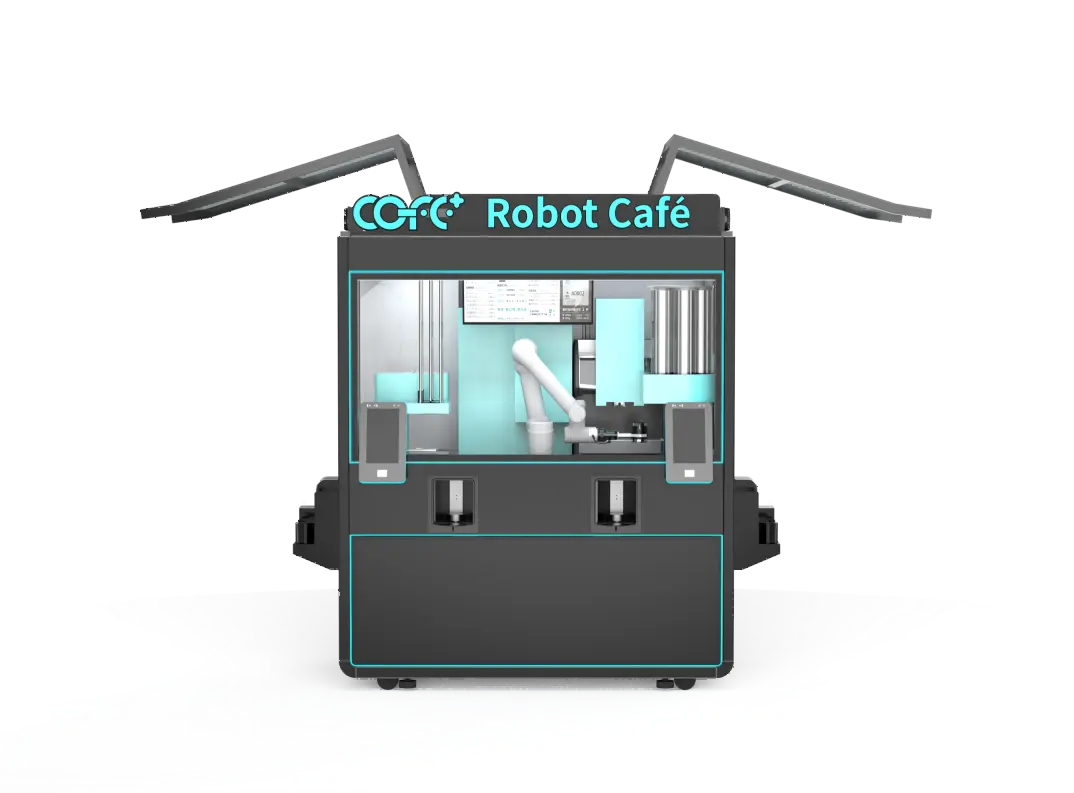
The practical impact for an office building is straightforward. Employees order on a touchscreen or mobile app, the robot makes the drink exactly the same way every time, and the queue moves at a steady predictable pace. No one needs to learn how to pull a shot, steam milk to the right texture, or clean a steam wand. The machine runs its own cleaning cycles at preset intervals and performs high-temperature sterilization that keeps the internal surfaces clean.
Office coffee costs break into four categories: equipment lease or purchase, consumables (beans, milk, syrups, cups), labor for maintenance and restocking, and the invisible cost of lost productivity when employees leave the building to buy coffee elsewhere.
A traditional office espresso setup with a commercial machine and a dedicated vendor service typically runs between $2,500 and $4,000 per month for a mid-size office once equipment, beans, milk, maintenance visits, and consumables are fully loaded. The labor component — whether a dedicated barista, rotating staff, or vendor technician — accounts for a significant portion because someone has to show up, clean, restock, and maintain the machine.
A robotic coffee solution collapses the labor cost. The per-cup cost for a robot coffee kiosk runs approximately $0.30 to $0.70 depending on the drink complexity and local ingredient pricing. The machine restocks from internal hoppers and refrigerated compartments that hold enough ingredients for hundreds of servings. When the coffee supply drops below a threshold, the cloud monitoring system alerts the responsible person — not a guess, not a schedule, but an actual measurement.
The table below compares the cost factors directly.
| Cost Factor | Traditional Office Espresso Bar | Robot Coffee Kiosk |
|---|---|---|
| Equipment monthly (lease or amortized) | $400–800 | $500–900 |
| Consumables per drink | $0.40–0.80 | $0.30–0.70 |
| Labor (cleaning, restocking, operation) | $1,500–2,500/month | Near zero (staff handles occasional restocking) |
| Employee off-site coffee trips (lost productivity) | 15–30 min per trip per employee | Eliminated for most users |
| Cleaning compliance | Manual, inconsistent | Automated, documented, verified |
The labor savings alone can recover the equipment cost within six to twelve months for offices with 100 or more employees. Beyond pure cost, there is an availability advantage: a robot kiosk serves coffee at 7:00 PM for the team working late, at 6:30 AM for the early arrivals, and on weekends without scheduling or overtime pay.
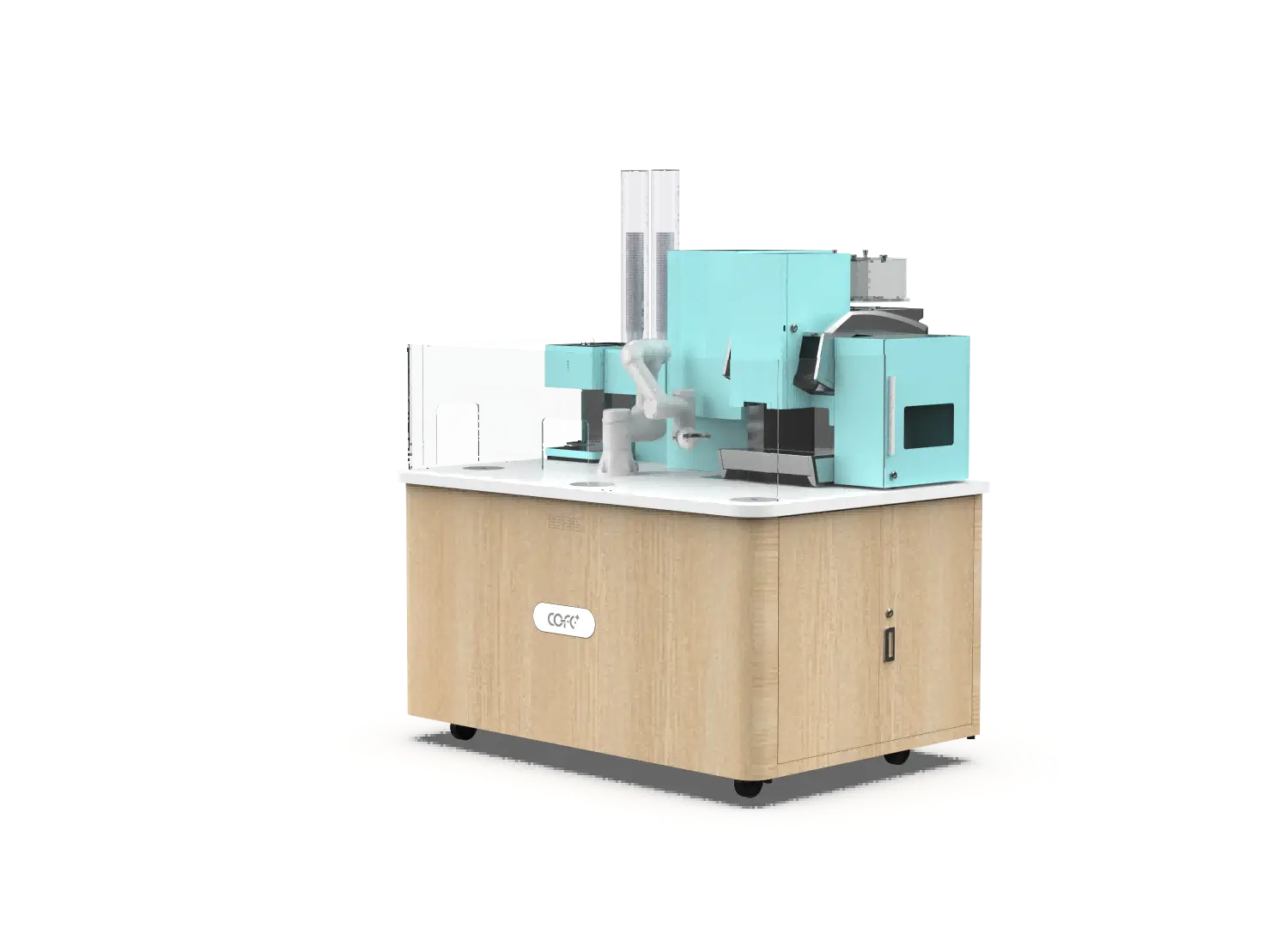
If your office layout involves a dedicated café zone or a lobby installation, the unit configuration matters. A compact indoor kiosk fits into roughly 2.35 square meters and plugs into a standard power supply, so there is no plumbing renovation or dedicated water line required in most installations. For offices that want the coffee service integrated into an existing counter or reception area, the counter format slides into the same footprint without looking like a standalone machine. Getting these details right early avoids budget surprises during installation — reach out at sales@hi-dolphin.com with your floor plan and we can confirm which format suits your space.
The biggest concern facility managers raise is whether employees will accept a machine making their coffee instead of a barista or a traditional espresso machine. The data from office deployments points in one direction: employees care primarily about speed, consistency, and customization.
A robot coffee kiosk serving 300-plus drink combinations from 197 country-inspired recipes offers more variety than a manual setup where someone has to learn each drink. The touchscreen lets users adjust bean type, roast level, milk option, syrup flavor, sugar level, and cup size — 5,000-plus possible combinations. The machine remembers individual preferences if the office configures user accounts, so repeat orders take seconds.
The visual experience plays a role that surprised us in early deployments. The robotic arm producing latte art — tulips, rosettas, hearts — draws a small crowd during the first weeks. It fades into background after that, but the initial engagement drives trial and adoption faster than a hidden machine in a break room. The 3D foam printing feature, which can print a company logo or a photo on the coffee surface, turns the coffee break into something people photograph and share. That social signal, in our observation, is what makes the machine feel like a deliberate benefit rather than a cost-cut.
The quality consistency matters more over time. When employees know that every latte will taste the same at 9:00 AM on Monday and 4:30 PM on Thursday, they stop thinking about the coffee and just get their drink. That absence of frustration is the actual benefit — not the novelty of a robot making coffee, but the reliability of getting what you ordered every single time.
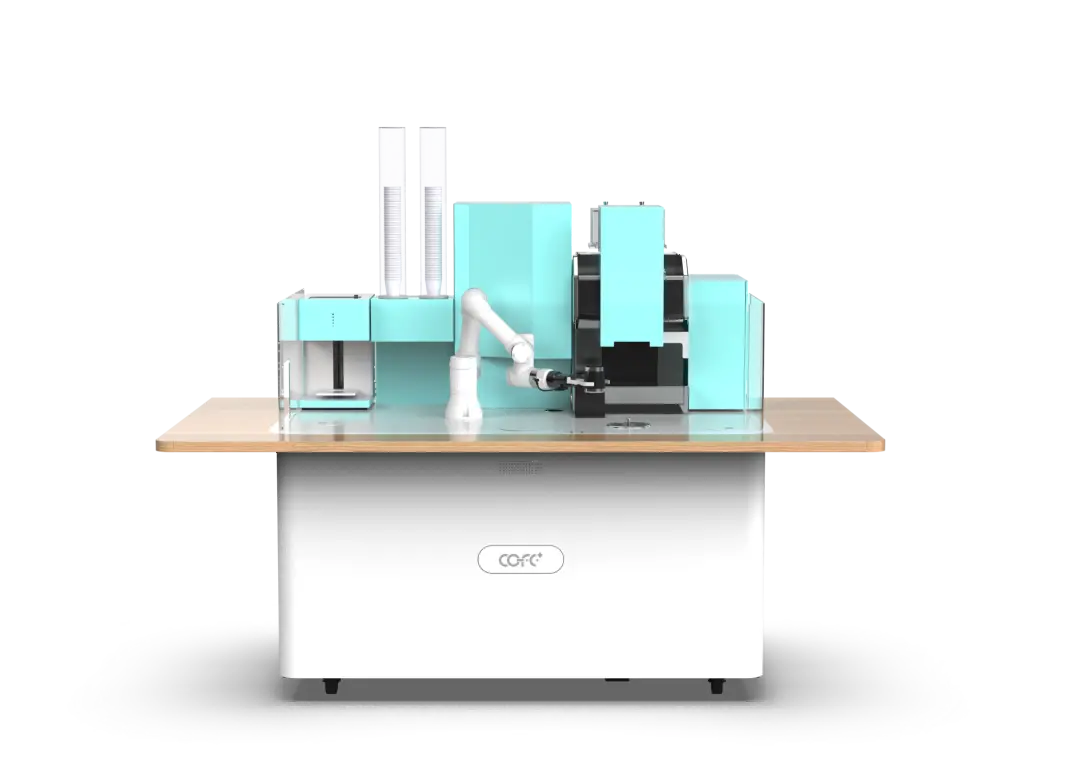
Office buildings vary in layout, foot traffic, and available space. A headquarters office with 500 employees and a dedicated cafeteria zone needs something different from a co-working space with 80 members or a corporate lobby that serves visitors alongside staff.
The indoor robot coffee kiosk is the most common choice for office deployments. Its 2.35-square-meter footprint fits into a break room corner, a hallway alcove, or a lobby without requiring structural changes. It operates as a self-contained unit with an internal water tank, ingredient storage, and waste system, so installation is closer to placing a large appliance than building out a café.
For premium office lobbies or executive floors, the robot coffee counter format integrates into existing built-in cabinetry and runs as an open-view setup where guests watch the robot prepare drinks. The visual effect is different — it reads as a design feature rather than a utility machine. The counter format also works well in co-working spaces where the aesthetic matters for member experience.
The robot coffee bar is worth considering for offices that want to create a social hub. When open, it transforms from a compact counter into a four-seat coffee bar. A tech company with an open-plan workspace, for example, might use the bar format to create a gathering point that does not require staffing.
If your office has both indoor and outdoor spaces — a courtyard, a rooftop terrace, or a smoking area — the outdoor robot coffee kiosk operates from -20°C to 45°C with IP54-rated dust and water protection. It handles humidity, temperature swings, and continuous outdoor exposure while maintaining the same drink quality as the indoor units.
Most indoor installations complete within one to two days. The unit ships pre-assembled and requires a standard power outlet, level flooring, and roughly one meter of clearance on all sides for access. No plumbing work is necessary because the machine uses an internal water tank and a self-contained waste system. The initial calibration and recipe loading takes about half a day, and the machine can serve drinks on day two.
Cloud monitoring tracks every consumable level — coffee beans, milk, syrups, cups — and sends alerts when anything drops below a threshold. You decide who receives the alerts and at what level. Routine restocking takes roughly 15 minutes and involves opening the access panel, refilling hoppers and the refrigerated compartment, and closing it. The system runs automated cleaning cycles including 85°C-plus high-temperature sterilization without staff involvement. If a mechanical issue arises, remote diagnostics identify it and dispatch a technician. In our experience across 35 countries, most issues resolve through remote intervention without an on-site visit.
The comparison is about capacity, not headcount. A robot kiosk can serve roughly 1,000 cups per day in 24-hour operation. A human barista making specialty drinks to the same quality standard can handle roughly 150 to 200 cups in a shift. The machine does not replace six specific people — it provides the throughput equivalent without the scheduling complexity, training cost, turnover risk, or quality variance that comes with a human-operated coffee program. For an office building that currently runs a staffed café with baristas, the robot can reduce staffing needs while maintaining or expanding service hours.
Adoption depends on quality and convenience, in that order. If the coffee is bad, convenience does not matter. If the coffee is good but the queue is long, the coffee shop wins. The robot kiosk addresses both: the quality is consistent and calibrated to professional barista standards, and the speed stays steady regardless of demand. In office deployments we have observed, usage settles into a pattern within three to four weeks. Most employees who previously bought coffee off-site at least twice a week shift some or all of those purchases to the in-office kiosk once they trust the quality. The ones who keep going out are typically doing so for the walk or the social aspect, not because the coffee is better.
The COFE+ units carry FDA, CE, UKCA, KC, and SASO certifications and have passed evaluations by domestic and international food safety organizations. The internal surfaces use anti-microbial stainless steel, and the automated high-temperature sterilization cycle runs at 85°C or above at preset intervals. The milk system uses a refrigerated compartment that maintains temperature below 4°C until dispensing. Because the cleaning and sterilization are automated and logged, facility managers have documented compliance records without relying on staff to follow procedures. If your organization requires specific certification documentation for food and beverage installations, send your requirements to sales@hi-dolphin.com and we can confirm what is available for your region.
Robot coffee technology changes what is possible for corporate beverage programs, but the right format and the right deployment plan depend on your specific floor layout, employee count, and service expectations. We have helped offices across 35 countries move from complaint-prone manual setups to automated systems that employees treat as a genuine benefit. If you want to walk through the options for your building, send your floor plan or square footage estimate to sales@hi-dolphin.com or call +86 131 6630 1290. We can confirm which format fits, what the installation timeline looks like, and what the per-cup economics will be in your market.
TL;DR — COFE+ is a fully automated robotic coffee kiosk that grinds fresh beans, brews espresso and lattes, creates latt……
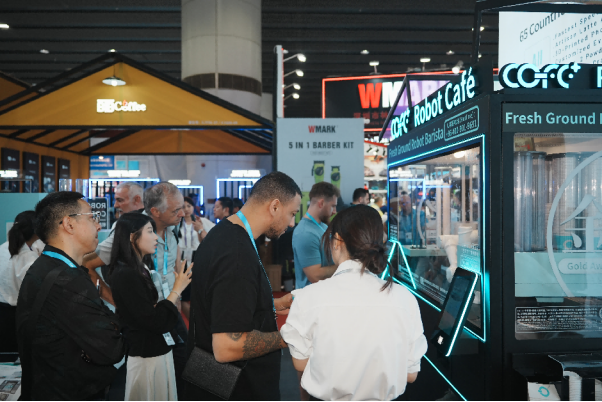
7th-Genertion Smart Robot Coffee Kiosk Arrives at the Belt and Road Core Hub, Ushering in a New Service Era Along t……
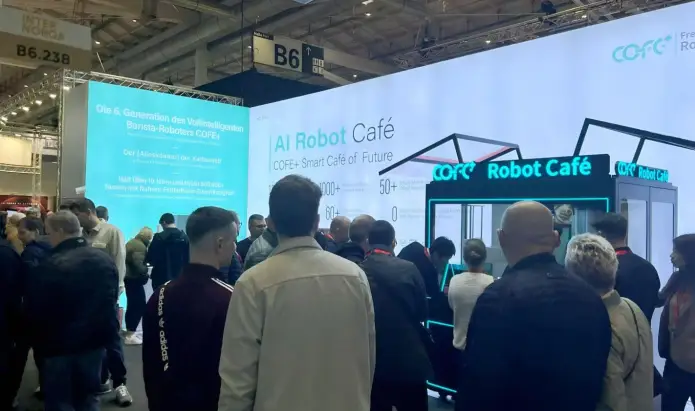
CHICAGO, May 12, 2026 (GLOBE NEWSWIRE) – Shanghai Hi-Dolphin Robot Technology today announced the U.S. debut of its 7th‑……