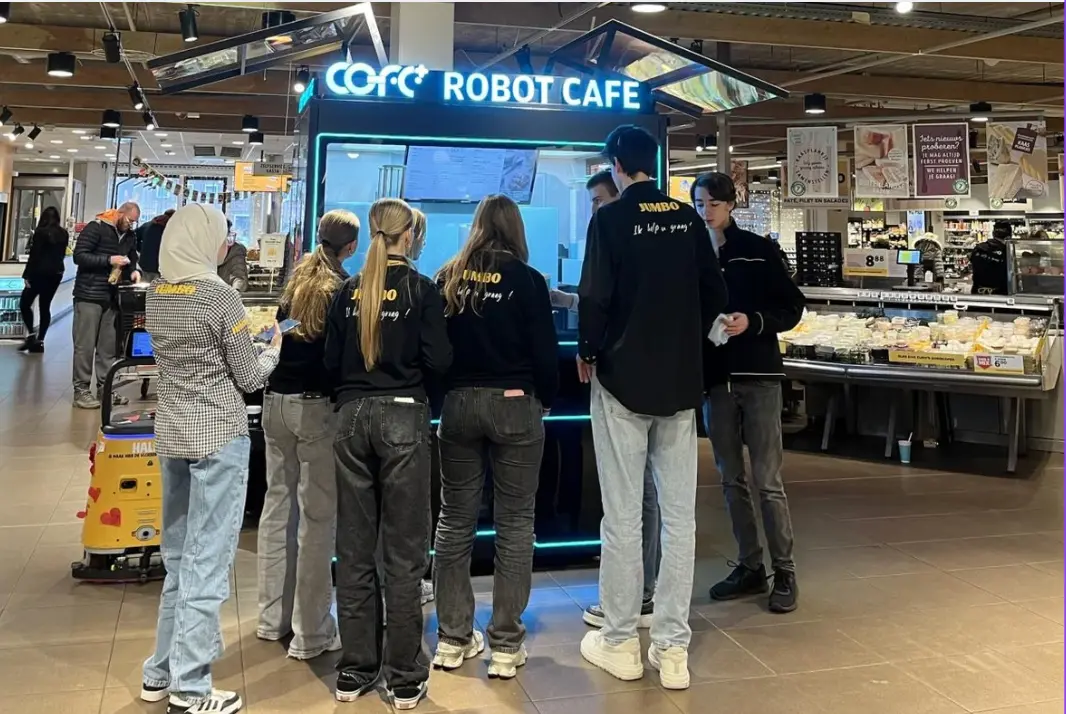
The Rise of Professional Robotic Café Technology: What COFE+ Is and Why It Matters
TL;DR — COFE+ is a fully automated robotic coffee kiosk that grinds fresh beans, brews espresso and lattes, creates latt……

When facility teams plan for a robot coffee kiosk, the electrical load is often underestimated, causing last-minute panel upgrades and installation delays. I’ve seen too many sites where the existing circuit could not support the continuous power draw of a commercial-grade robotic coffee system, forcing costly electrician callouts. A robot coffee kiosk electrical load typically matches that of a high-end espresso machine, requiring a dedicated 20-amp circuit. Before committing to a location, it is essential to obtain the exact electrical specifications from the manufacturer and have a licensed electrician verify the available capacity. This pre-installation step, though simple, prevents the most common source of launch-day disruptions.
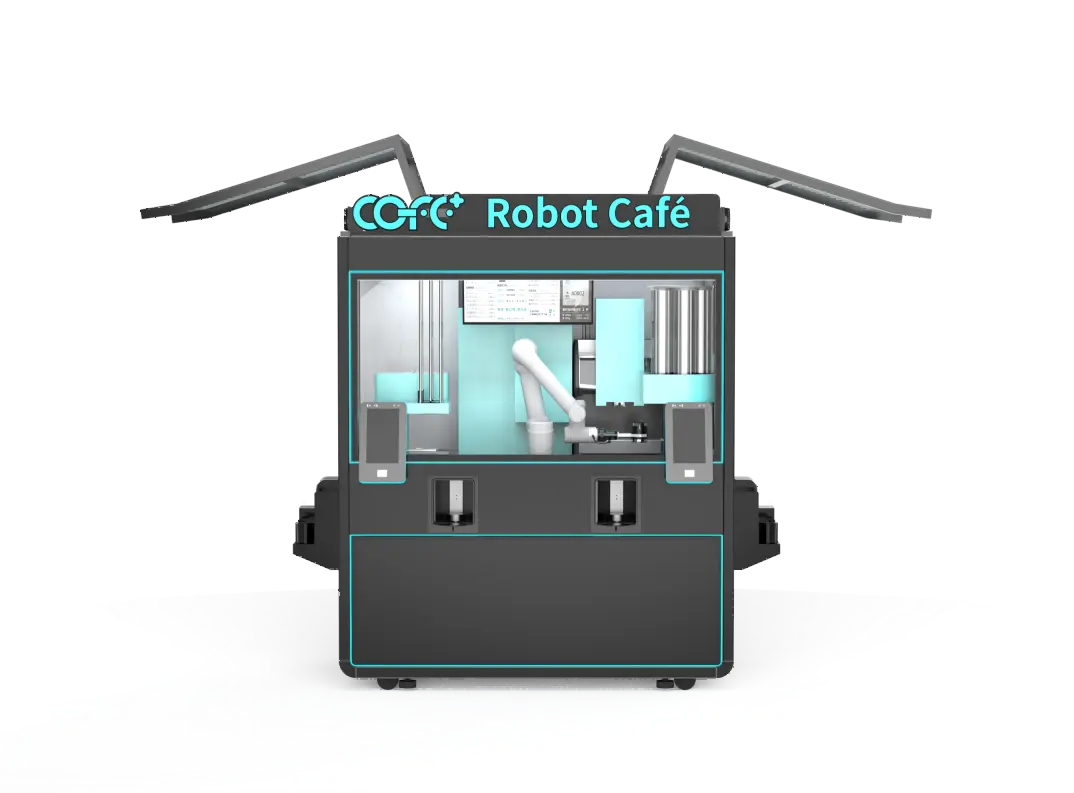
The primary power draw in a robot coffee kiosk comes from the heating element — usually a thermoblock or boiler — that delivers hot water and steam. This heater can consume 1200–1800 watts when active. Add the grinder motor, pump, refrigeration (for fresh milk), and control electronics, and the total continuous load sits between 1500 and 2000 watts in most models. On a 120V circuit, that translates to roughly 12.5–16.7 amps. Inrush current when the heater kicks on can briefly spike to 20 amps or more, which is why a 20A circuit breaker with 12 AWG wiring is the standard recommendation in North America.
For 220–240V installations, the current draw is halved — typically 7–9 amps — and a 10A or 16A circuit with an appropriate plug (Schuko, BS 1363, etc.) suffices. The COFE+ 7th Generation units support 110V and 220V, automatically sensing input voltage, so the facility only needs to provide the correct receptacle and circuit rating for the region. Every model ships with a detailed electrical specification sheet that lists maximum and continuous current, recommended circuit breaker size, and plug type. Ignoring that spec and assuming a standard wall outlet will work is a mistake I see repeated across new deployments. The numbers are non-negotiable; undersized wiring leads to overheating, voltage drop, and breaker trips that halt 24/7 coffee service.
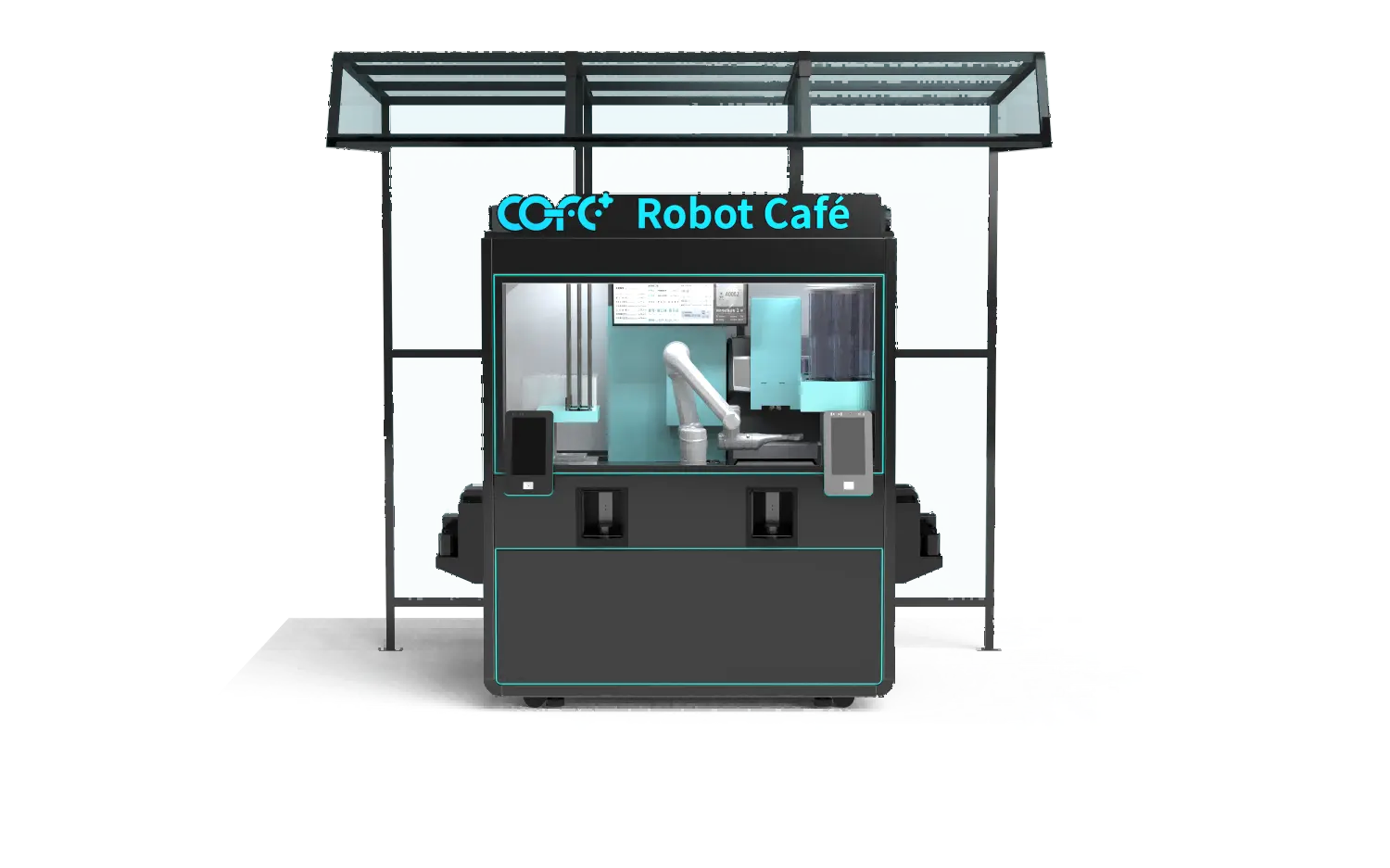
Before scheduling delivery, bring a licensed electrician to the intended site for a targeted survey. The inspection should confirm three things: available breaker slots in the panel, spare ampacity on the main feeder, and proper grounding. I’ve seen indoor shopping-mall locations that appeared ready until the electrician discovered the nearest panel was already fully populated or 50 meters away across finished retail space, making a new circuit run prohibitively expensive.
A dedicated circuit is not optional. A robot coffee kiosk cannot share a branch circuit with other equipment. In one early installation, the kiosk was wired into a circuit that also fed a commercial icemaker; the combined load during the morning rush tripped the breaker every other day. Separating the circuits took two hours and solved the problem permanently. The survey should also measure actual voltage under load at the proposed receptacle location. A reading below 105V on a 120V circuit (or equivalent sag) indicates wiring issues that must be corrected before connecting the kiosk. This preliminary check costs a few hundred dollars but eliminates the risk of discovering power problems on launch day.
Based on the electrical load specifications, the following table summarizes typical circuit requirements for different global voltage standards. Use this as a starting point, then adjust according to the exact spec sheet provided by the kiosk manufacturer.
| Voltage Standard | Typical Kiosk Power Draw | Recommended Circuit Breaker | Common Outlet/Plug |
|---|---|---|---|
| 120V (North America) | 1500–2000W continuous | 20A single-pole | NEMA 5-20R |
| 230V (Europe/Asia) | 1500–2200W continuous | 10A or 16A single-pole | Schuko, BS 1363 |
| 220V (Middle East/SE Asia) | 1500–2000W continuous | 16A | BS 546 or multi-standard |
The National Electrical Code (NEC) requires that continuous loads — those operating for three hours or more — be served by circuits sized at 125% of the load. So a kiosk drawing 16A continuously needs a 20A circuit, not a 15A. Facility teams must also account for the starting current of the compressor (if the kiosk uses a refrigerator for milk). This inrush can trip a standard B-curve breaker; a C-curve breaker may be specified to avoid nuisance trips. Confirm the breaker curve with the manufacturer before purchasing.
If your facility’s electrical survey reveals limited panel capacity, it is worth confirming the kiosk’s exact power profile before making costly upgrades — reach out at sales@hi-dolphin.com with your site details and we’ll send the complete electrical documentation for the model you’re evaluating.
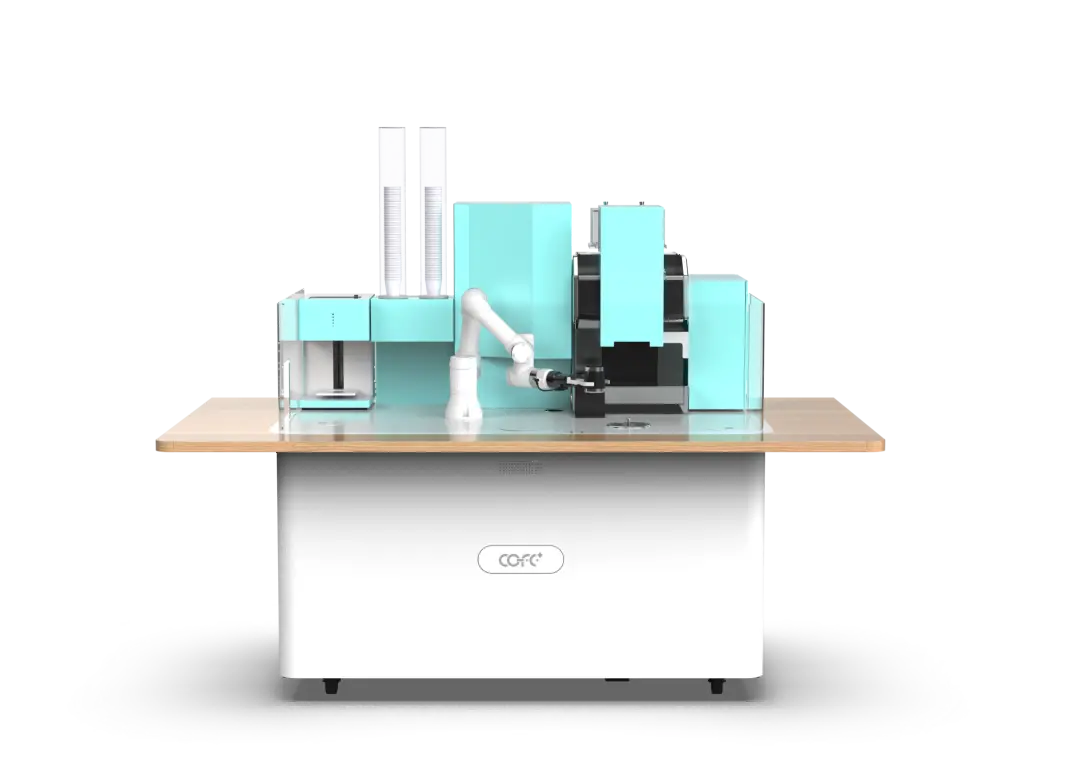
The expectation that a single model will work everywhere used to cause friction, but modern smart coffee kiosks are designed for global power grids. Hi-Dolphin’s COFE+ units, for instance, accept 100–240V, 50/60 Hz without external transformers. This reduces the electrical planning burden for multi-country operators: the engineering team can standardize on one machine while facility managers in each region simply provide the appropriate local outlet and circuit rating.
In practice, a multi-site rollout requires a country-specific electrical plan. For a deployment in France (230V/50Hz), we specify a 16A circuit with a French-standard Type E outlet. For the same model in Japan (100V/60Hz), the current draw rises, necessitating a 20A circuit with a NEMA-compatible or Japanese grounding plug. Having a clearly written, model-specific electrical requirements document — not a generic spec — shortens the coordination loop with local electricians. We’ve found that forwarding the manufacturer’s electrical data sheet directly to the contractor eliminates back-and-forth about plug types and breaker ratings.
Safety is as important as function. Outdoor placements demand GFCI (ground fault circuit interrupter) protection, weatherproof enclosures, and receptacles rated for wet locations. Indoor sites in food-preparation areas may also require GFCI by local code. The robot kiosk’s sensitive control electronics, including the touchscreen, payment module, and onboard computer, need surge protection. A panel-mounted surge protective device (SPD) is ideal; a point-of-use surge strip is the minimum acceptable safeguard. I’ve seen a single lightning-induced surge destroy a main board that took two weeks to replace — a preventive SPD would have cost less than a service call.
Permitting is another step that facility teams sometimes skip. Most jurisdictions require an electrical permit for a new dedicated circuit, and some building inspectors will fail a final inspection without one. The kiosk itself carries international safety certifications (CE, UKCA, FCC), but the building wiring must comply with local code. Schedule the permit and inspection as part of the overall installation timeline. This administrative detail, while unglamorous, keeps the project out of compliance trouble.
Before the kiosk arrives, work through this checklist with your electrician. It ensures nothing is overlooked and gives your operations team confidence to power on.
Working through this list removes the guesswork and reduces the chance of a failed startup to near zero. In our global deployments, sites that follow these steps are operational within hours of the kiosk landing on the dock.
Every robot coffee kiosk deployment sits squarely on the quality of its electrical supply. When facility teams treat power planning as a first-order requirement rather than a post-installation fix, the entire timeline compresses and costs stay predictable. The most effective way to begin is to request the complete electrical documentation from your kiosk supplier, share it with a local electrician, and have a dedicated circuit installed before the unit arrives.
If you are evaluating robot coffee kiosks for a single site or a multi-location rollout, obtaining the accurate electrical load profile early will shape the feasibility of each location. Send your part number and quantity to sales@hi-dolphin.com or call +86 131 6630 1290, and our team will provide the full electrical specification document and a site-planning checklist to support your installation.
It depends on your region’s voltage standard and the model. For 120V installations in North America, the kiosk is typically equipped with a NEMA 5-20P plug, requiring a dedicated NEMA 5-20R receptacle on a 20A circuit. In Europe and much of Asia, the machine ships with a Schuko or region-specific plug for a 230V, 10–16A circuit. The COFE+ units are dual-voltage, so the plug type is set at order time. Confirming the plug standard before running cable avoids the frustration of a mismatched socket on delivery day. If you’re unsure which plug your site needs, share your location and the model you’re evaluating, and we’ll confirm the correct receptacle type.
No. The kiosk’s continuous load plus the inrush from its heater and compressor makes sharing a circuit a guarantee of nuisance tripping. We have never seen a shared circuit work reliably. Even a modest vending machine or refrigerator on the same branch can cause the breaker to trip during the kiosk’s heating cycle. A dedicated circuit is a hard requirement, not a suggestion, and it must be sized for 125% of the continuous load per NEC guidelines.
If the panel is full or near capacity, a sub-panel or service upgrade may be required. The cost varies by building, but in many cases the electrician can consolidate existing circuits or use tandem breakers to free space. The exact cost depends on the main service size and the distance to the panel. Having the kiosk’s precise ampacity and continuous load figure from the manufacturer lets the electrician provide an accurate quote without guesswork. We often guide facility managers through this by sending the electrical spec sheet and amperage requirements so they can move quickly.
Yes. Outdoor sites almost always need GFCI protection, a weatherproof while-in-use receptacle cover, and a dedicated circuit. The kiosk’s internal systems are environmentally sealed (the COFE+ outdoor unit is IP54 rated), but the upstream wiring must be protected from moisture. In areas with frequent thunderstorms, a panel-level surge protector is worth the extra investment to protect both the kiosk and the building’s electrical system. For deployments near the coast or in high-corrosion zones, specifying corrosion-resistant materials for the receptacle and conduit will reduce long-term maintenance.
The manufacturer should supply the relevant certification test reports — CE, UKCA, FCC, or equivalent — along with the electrical specification sheet. These documents demonstrate compliance with safety and electromagnetic compatibility standards. On the facility side, have your electrician issue a certificate of compliance after the dedicated circuit is installed and tested. This paperwork satisfies most local building authorities and property managers. To streamline preparation, send your part number and quantity to sales@hi-dolphin.com, and we will share the complete electrical compliance package for your market.
TL;DR — COFE+ is a fully automated robotic coffee kiosk that grinds fresh beans, brews espresso and lattes, creates latt……
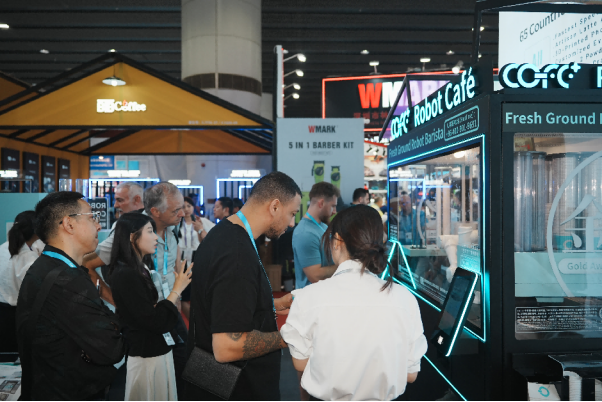
7th-Genertion Smart Robot Coffee Kiosk Arrives at the Belt and Road Core Hub, Ushering in a New Service Era Along t……
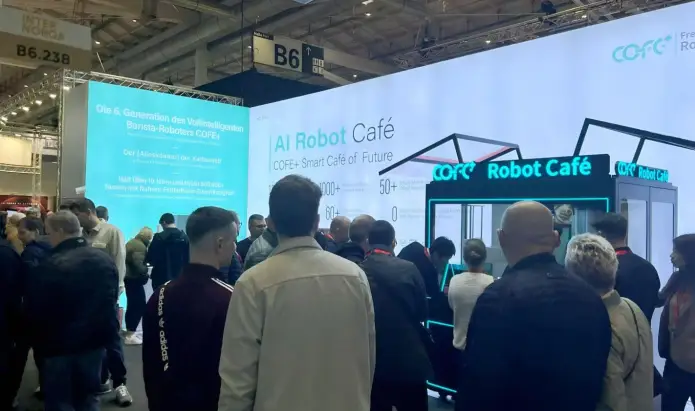
CHICAGO, May 12, 2026 (GLOBE NEWSWIRE) – Shanghai Hi-Dolphin Robot Technology today announced the U.S. debut of its 7th‑……