The Rise of Professional Robotic Café Technology: What COFE+ Is and Why It Matters
TL;DR — COFE+ is a fully automated robotic coffee kiosk that grinds fresh beans, brews espresso and lattes, creates latt……

Deploying a robot coffee kiosk without addressing ventilation and heat buildup is one of the fastest ways to degrade component life and trigger unplanned downtime. Inside a compact 2.35 m² enclosure, the combination of a high-pressure espresso boiler, grinder motors, steam wand, and the main control board can push ambient temperatures well past 40°C in a poorly vented location. We have seen installations in closed shopping mall alcoves where internal sensors tripped thermal warnings within three hours of continuous service, not because the machine was faulty but because the surrounding air was stagnant. Robot coffee kiosk ventilation that works for a climate-controlled office will not necessarily work for a sun-exposed outdoor plaza or an airport corridor with no makeup air. This article lays out the heat sources, the airflow requirements, and the specific ventilation design decisions that separate reliable 24/7 operation from recurring thermal shutdowns.
Every robot coffee kiosk depends on stable internal conditions for both drink quality and hardware reliability. The espresso extraction process relies on water temperature held within a narrow band, typically 90°C to 96°C, while simultaneously the grinder motor, pump, and control electronics generate their own heat. Without adequate ventilation, the refrigeration system for milk and perishable ingredients works against rising ambient temperatures, increasing compressor cycles and power draw. Over months, electronic components operating near their upper thermal limits degrade faster: capacitors age prematurely, solder joints expand and contract more frequently, and power supply efficiency drops. The result is not always a sudden failure. More often it is a drift in drink consistency, more frequent cleaning prompts triggered by temperature sensor warnings, and a gradual rise in maintenance calls. A properly designed robot coffee kiosk ventilation system is not an accessory; it is the thermal backbone that keeps the entire unmanned operation economically viable.
Understanding the heat sources is the starting point for any ventilation plan. In a COFE+ 7th Generation robot coffee kiosk, the primary thermal loads come from the high-pressure pump and boiler assembly that delivers 9-bar extraction, the bean grinder motor that runs multiple times per cup, the steam wand heating element, and the main controller board that manages the robotic arm, touchscreen, and cloud connectivity. All of these are packed into a sealed, hygienic enclosure designed to keep dust, pests, and humidity out, which means heat escapes only if it is actively removed. In addition, the onboard refrigeration unit for milk and syrups rejects heat into the internal compartment. In a peak-hour scenario of 50 cups per hour, the total heat output can exceed 1.5 kW. The key design challenge is that about 60% of this thermal load originates from components located in the upper section of the machine, near the bean hopper and extraction module, while the refrigeration exhaust is typically at floor level. This vertical heat stratification makes simple spot ventilation ineffective.
The most common mistake we see in early installations is treating ventilation as a single exhaust fan on the rear panel. A robot coffee kiosk’s ventilation design must separate the hot zone from the cooler ingredient storage zone and create a directed airflow path that pulls heat from the top of the enclosure and exhausts it outside or into a conditioned return plenum. Ideally, intake air should enter at the bottom front, where ambient air is coolest, and exhaust should exit at the top rear, taking advantage of natural convection. The minimum effective exhaust airflow for a continuously operating indoor kiosk is about 150 to 200 cubic feet per minute, but this number depends on duct resistance and ambient temperature. For ducted installations, any run longer than 3 meters requires a booster fan to compensate for static pressure loss. Below is a comparison of ventilation approaches for different site types.
| Site Type | Ventilation Method | Duct Length Requirement | Recommended Airflow |
|---|---|---|---|
| Indoor mall alcove | Top exhaust to ceiling void, passive intake | None (ambient return) | 150 CFM |
| Outdoor plaza kiosk | Forced intake from front, rear exhaust with weather louver | Direct to outside | 250 CFM (compensate for solar gain) |
| Airport corridor | Ducted exhaust to building HVAC return | Under 3m | 180 CFM |
| Enclosed factory floor | HEPA-filtered intake, top exhaust to outside | 3 to 5m with booster fan | 220 CFM (filter pressure drop accounted) |
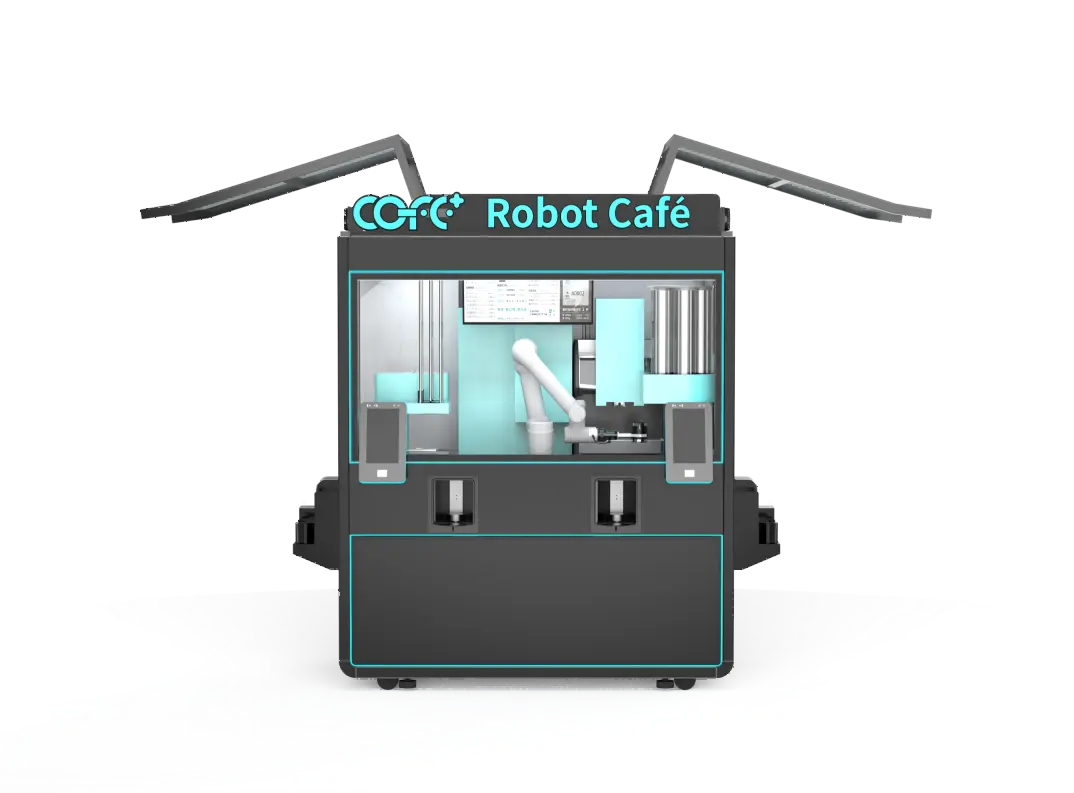
If your proposed site involves a fully enclosed wall-side placement without access to a ceiling void, the intake and exhaust must both be on the front panel, which requires a carefully designed baffle to prevent recirculation of hot exhaust air into the intake. This configuration adds complexity because the temperature gradient across the machine becomes less predictable, and the inbuilt sensors may need recalibration for the specific airflow pattern.
Internal temperature targets for a robot coffee kiosk are stricter than many facility teams assume. The food-contact zone where milk and syrups are stored must remain below 5°C at all times to meet food safety requirements, while the electronics bay should stay under 35°C for the controller board and under 40°C for the power supply. These numbers mean the ventilation system cannot simply aim for an average internal temperature; it must maintain distinct microclimates. The COFE+ outdoor kiosk achieves this through IP54-rated enclosures with dedicated air channels and an anti-condensation heater for cold climates, but indoor installations rely on the external environment to assist. In any installation, we recommend installing at least two remote temperature probes: one near the top of the extraction module and one inside the ingredient chiller compartment. If the differential between these two sensors exceeds 15°C during normal operation, it indicates airflow is not reaching the hottest zone and the duct layout should be reviewed before the system enters a thermal protection cycle.
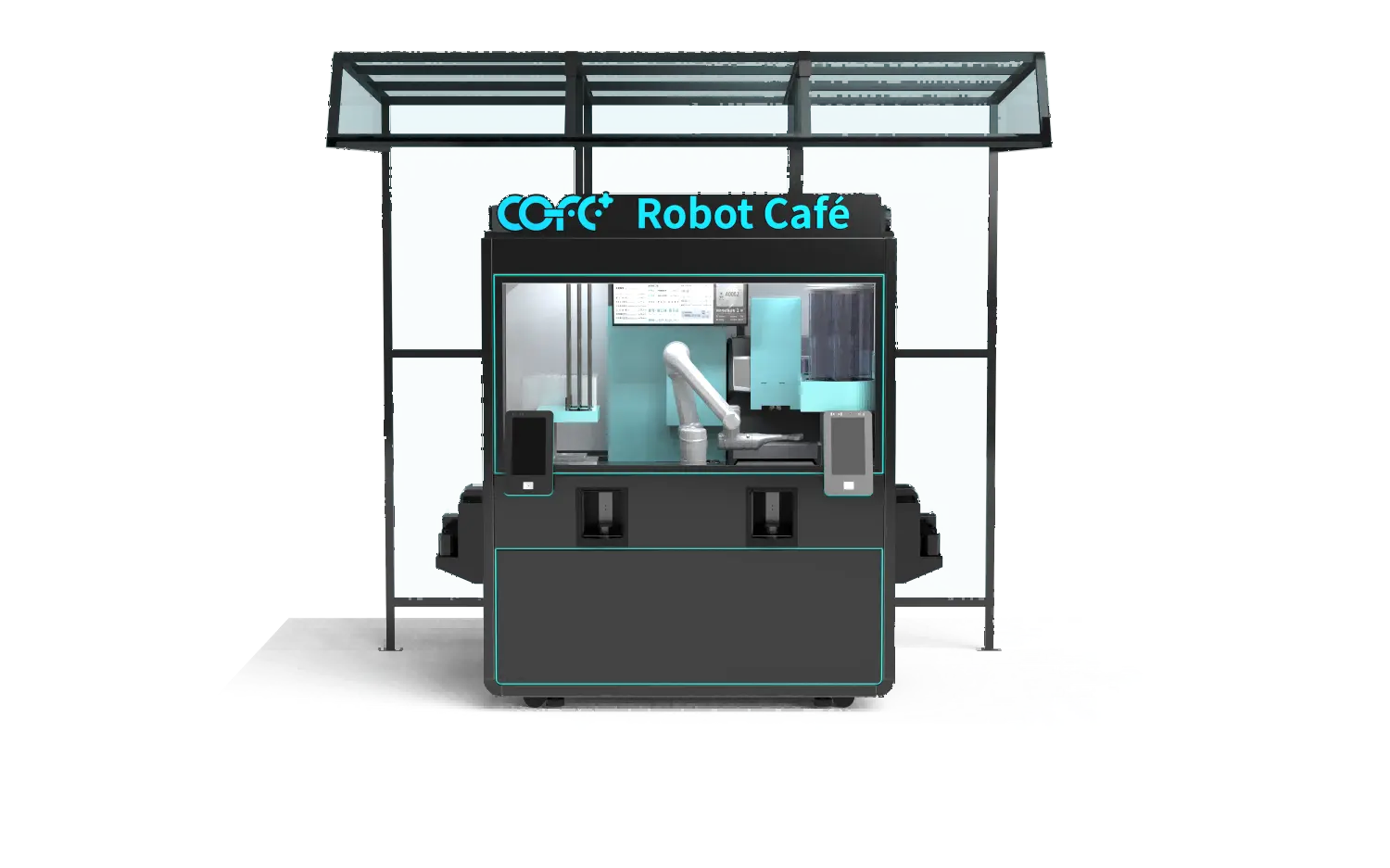
Outdoor deployments expose the robot coffee kiosk to solar radiation, rain, dust, and ambient temperatures that can swing from -20°C to 45°C in extreme climates. The ventilation design for these conditions must handle both heat rejection in summer and condensation prevention in winter. In a desert deployment, the kiosk’s exhaust fan is fighting an ambient temperature already at 45°C, so the driving force for heat transfer is drastically reduced. The solution is to oversubscribe the airflow to at least 250 CFM and use a shade structure that reduces direct solar heat gain on the enclosure surface. The outdoor COFE+ model already incorporates a UV-resistant outer shell and a sealed waste system, but the ventilation intake must still be protected against blowing sand or debris, typically using a labyrinth-style baffle with a mesh pre-filter that can be cleaned monthly. For cold weather, the concern shifts to preventing internal condensation when warm moist air from the steam wand hits cold exterior panels. The built-in anti-condensation heater consumes a small amount of power but prevents moisture from collecting on electronics and grain hoppers, a detail that many first-time outdoor operators overlook until a batch of beans clogs in the chute.
Because robot coffee kiosks operate unattended, the ventilation system’s performance must be monitored remotely with alerts tied to specific thresholds. The cloud dashboard on COFE+ units logs internal temperatures at multiple points continuously. The alerts that matter most are not the emergency overheat shutdowns but the trending warnings: if the exhaust air temperature rises 5°C above the site baseline for three consecutive days, there is likely a filter blockage or a fan bearing degrading. We train local service teams to treat these slow-drift alerts as mandatory service triggers rather than waiting for an operational failure. Additionally, monitoring the compressor duty cycle of the refrigeration unit indirectly signals whether ventilation is failing: if the compressor runtime fraction climbs above 70% during off-peak hours in a previously stable site, it often means heat is building up inside the enclosure. Catching thermal inefficiency early keeps the cost per cup low and avoids surprise downtime that irritates location partners. If your team is managing multiple kiosks across different climate zones, we recommend standardizing the alert templates so that every site’s ventilation data is evaluated against its own baseline, not a generic unit specification.
It depends on the placement. A kiosk in an open mall corridor with high ceilings and active building HVAC can often operate with only the built-in fans exhausting into the surrounding space, as the volume of ambient air is large enough to dissipate the heat. In a small enclosed office pantry or a wall-side alcove, the exhaust air recirculates quickly, causing internal temperatures to rise. In those cases, a short duct run to a ceiling grille or a return air plenum is the minimum requirement. We have seen operators attempt to avoid ducting by adding multiple small computer-style fans, but these lack the static pressure to move air through any restriction and rarely solve the underlying problem.
In a typical indoor location, pre-filters should be vacuumed or washed every two weeks, and the main intake filter checked monthly. Outdoor sites in dusty or coastal areas need weekly pre-filter inspection. A clogged filter increases airflow resistance, so the exhaust temperature rises and the internal fans work harder, drawing more power. Rather than relying on a calendar schedule, the cloud monitoring system can flag when the exhaust temperature trends upward without a corresponding increase in ambient temperature, which strongly indicates filter blockage. Service visits then address cleaning and verification.
It is technically possible but rarely recommended without careful calculations. Café exhaust systems are typically sized for much larger heat loads, and their high airflow can create negative pressure inside the kiosk enclosure, pulling in unfiltered air from gaps around the door seals. If the existing system cannot be throttled down to match the modest 150 to 250 CFM requirement of the robot kiosk, a dedicated duct with its own inline damper and booster fan is a safer approach. Before connecting to any shared system, we ask the facility team to provide the static pressure at the tie-in point and the total airflow capacity; these numbers tell us within minutes whether integration is viable or will cause more problems than it solves.
The machine’s internal safety logic initiates a progressive shutdown rather than an abrupt halt. First, the controller reduces the brewing frequency to lower heat generation. If temperatures continue to climb past 45°C in the electronics bay, the system stops accepting new orders and serves only the cups already in process. Above 50°C, a full thermal shutdown cuts power to the boiler, grinder, and pump, while the refrigeration and cloud module remain active to report the event. The kiosk automatically sends an alert to the operator and logs the temperature timeline, which helps local technicians diagnose whether the cause was a fan failure, a blocked vent, or an external heat source like a nearby HVAC exhaust. If your site is in a region where ambient temperatures regularly exceed 40°C, share the local climate data with the supplier during the site survey; it affects the safety threshold calibration and may warrant a higher-capacity exhaust fan from the start.
TL;DR — COFE+ is a fully automated robotic coffee kiosk that grinds fresh beans, brews espresso and lattes, creates latt……
7th-Genertion Smart Robot Coffee Kiosk Arrives at the Belt and Road Core Hub, Ushering in a New Service Era Along t……
CHICAGO, May 12, 2026 (GLOBE NEWSWIRE) – Shanghai Hi-Dolphin Robot Technology today announced the U.S. debut of its 7th‑……