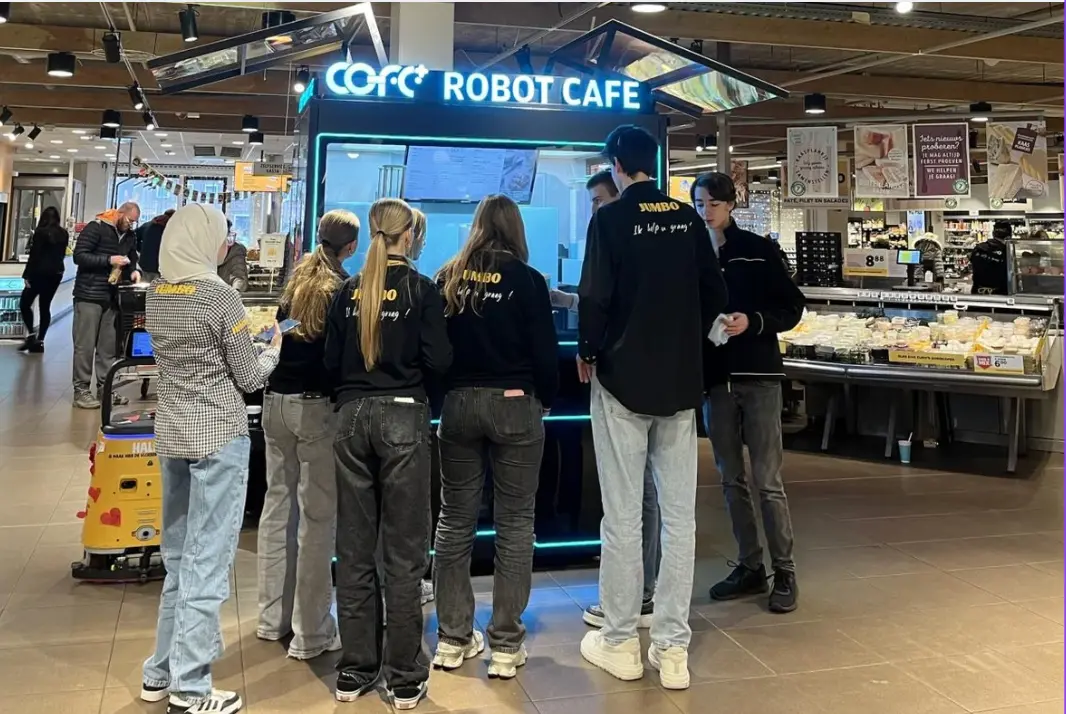
The Rise of Professional Robotic Café Technology: What COFE+ Is and Why It Matters
TL;DR — COFE+ is a fully automated robotic coffee kiosk that grinds fresh beans, brews espresso and lattes, creates latt……

Selecting coffee beans for a robot coffee kiosk is fundamentally different from stocking a traditional café. A barista can adjust grind size, tamping pressure, and extraction time on the fly to compensate for bean variations. An automated kiosk cannot. The COFE+ 7th generation robot barista, for instance, executes a digitized recipe with exacting precision—water temperature, pressure profile, and extraction duration are fixed parameters. If the beans drift from the profile they were calibrated for, cup quality degrades immediately and at scale. Drawing on deployment data from over 65 countries, this guide outlines the technical criteria that determine whether a coffee bean will produce consistent results in an unattended robotic kiosk.
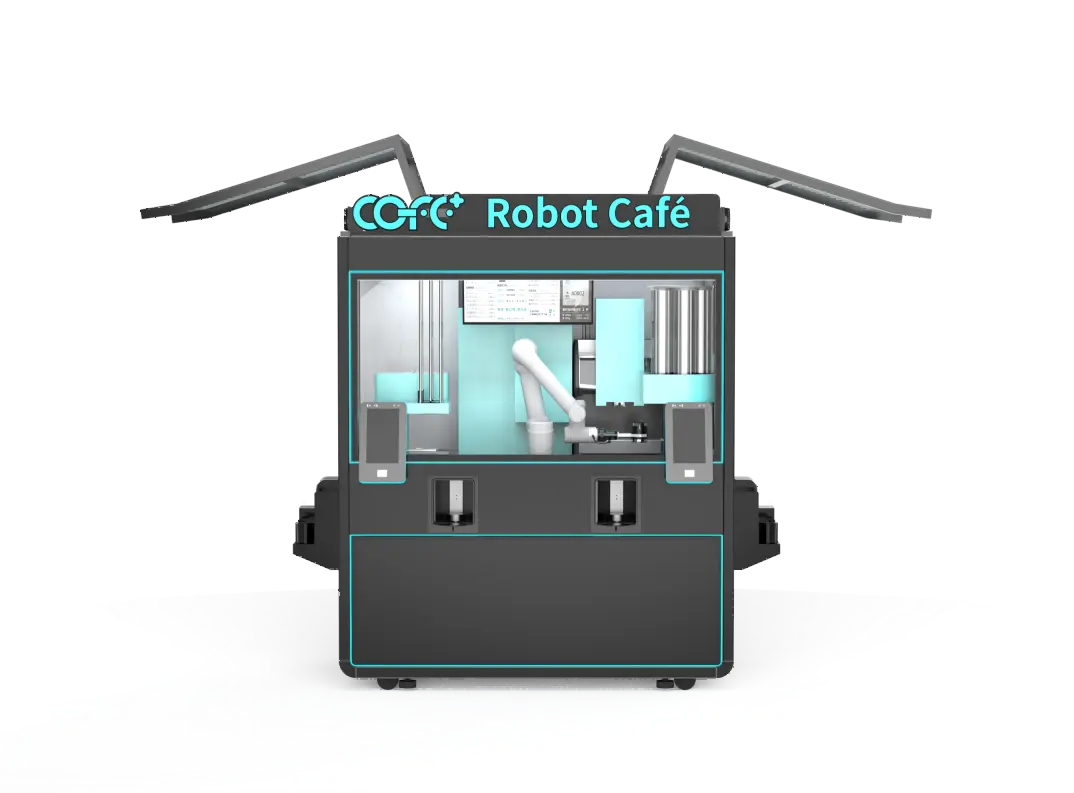
The first difference between a robot kiosk and a manual espresso machine is that the robot never improvises. In a COFE+ unit, the recipe is digitized: grind size, dose weight, water temperature, pre-infusion time, and extraction pressure are all set once and replicated cup after cup. A human barista tastes a shot and makes micro-adjustments. The robot delivers the exact same extraction every time. This means the bean becomes the sole variable in the quality equation.
For operators, the implication is clear: you select beans to fit the machine, not the other way around. If your robotic system runs a fixed 93°C extraction with a 9-bar pressure ramp and a 27-second total contact time, any bean you choose must reach its target extraction yield under those conditions. A bean that tastes balanced at 90°C and a slower flow may taste thin or sour at the robot’s fixed settings. In our product testing with the COFE+ 7th generation indoor and outdoor models, we consistently found that medium-roast Arabica blends from Central America performed well within the standard profile, while darker roasts required a shorter extraction time to avoid bitterness—an adjustment that the system can store as a separate recipe but that still demands the operator match the bean to that recipe from the start.
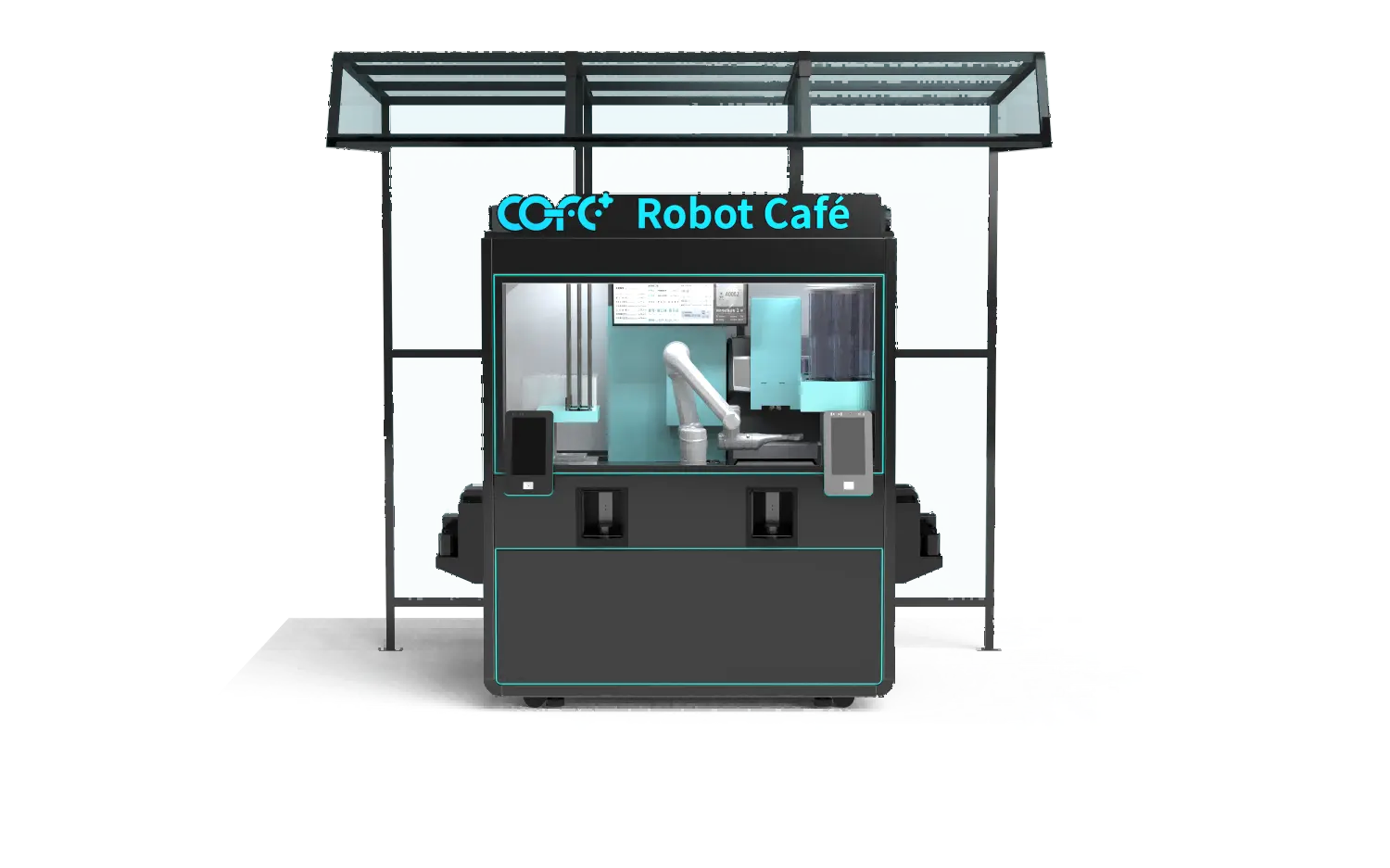
Not every bean that works in a café works in a robot kiosk. Three physical properties matter most: moisture content, bean density, and roast evenness. A robotic grinder cannot automatically compensate for hard, dense beans the way a barista might by applying different tamping pressure. If the bean density varies from batch to batch, the same grind setting will produce different flow rates, leading to inconsistent espresso body and extraction percentage. The COFE+ robots use a conical burr grinder calibrated at the factory for a target particle size distribution. When bean suppliers change their post-roast moisture levels by even half a percent, the shot time can shift by 3–5 seconds, which is enough to alter the cup.
Roast level influences both density and solubility. Here is how two common coffee species compare in an automated extraction context:
| Characteristic | Arabica | Robusta | Implication for Robot Kiosks |
|---|---|---|---|
| Bean density | Lower; softer structure | Higher; harder structure | Robusta requires a finer grind or longer extraction to achieve the same soluble yield; confirm your robot’s grinder can deliver the target particle size before committing. |
| Flavor consistency across lots | More origin-dependent | More consistent across suppliers | For multi-site operators seeking uniform taste, Robusta-based blends reduce calibration changes between bean deliveries. |
| Crema production | Moderate; thinner golden crema | Thick; persistent tan crema | Robusta’s crema enhances visual quality in robotic latte art, which the COFE+ system performs via its 3D printing and robotic arm. |
| Acidity profile | Bright; citrus or floral notes | Low; earthy or nutty | Arabica’s acidity can be appealing but is highly sensitive to extraction temperature consistency—the robot’s temperature control must remain within ±1°C to preserve the intended profile. |
For most robot coffee kiosk operators, a medium-roast Arabica-Robusta blend of 80:20 or 70:30 offers the best balance of aroma, body, and shot-to-shot consistency. Single-origin Arabicas are viable but demand more rigorous lot testing and potentially recipe updates with each new shipment.
Once you understand the bean characteristics your kiosk needs, sourcing shifts from a flavor decision to a supply chain stability challenge. A robot kiosk that serves 500 cups per day consumes roughly 5–7 kilograms of coffee beans daily. That volume means the supplier must deliver consistent lot characteristics month after month. A change in bean origin or even a different roast batch date can alter the extraction behavior enough that the pre-set recipe no longer produces the expected taste. In a manned café, a barista would adjust; in an unmanned kiosk, customers notice immediately.
Operators should specify a target range for roast color (Agtron value), moisture content, and bean density in their supply contracts. Request retained samples from each delivery batch for cupping against your reference profile. Some robot kiosk operators we work with also require their supplier to pack beans in portioned, nitrogen-flushed bags to eliminate exposure to humidity between refills, especially in outdoor kiosks where ambient temperature swings from -20°C to 45°C stress bean integrity.
If your deployment spans multiple locations with different flavor preferences—for example, a sweeter caramel profile in Southeast Asian tourist hubs versus a stronger, darker roast in Northern European transport stations—matching local taste while preserving recipe consistency becomes a system-level challenge. In our experience with Hi-Dolphin’s global deployments, the most successful operators treat bean selection as a coordinated procurement task: they lock in 2–3 approved blends that cover their target markets, then work backward to qualify suppliers who can deliver those blends with minimal lot-to-lot variation.
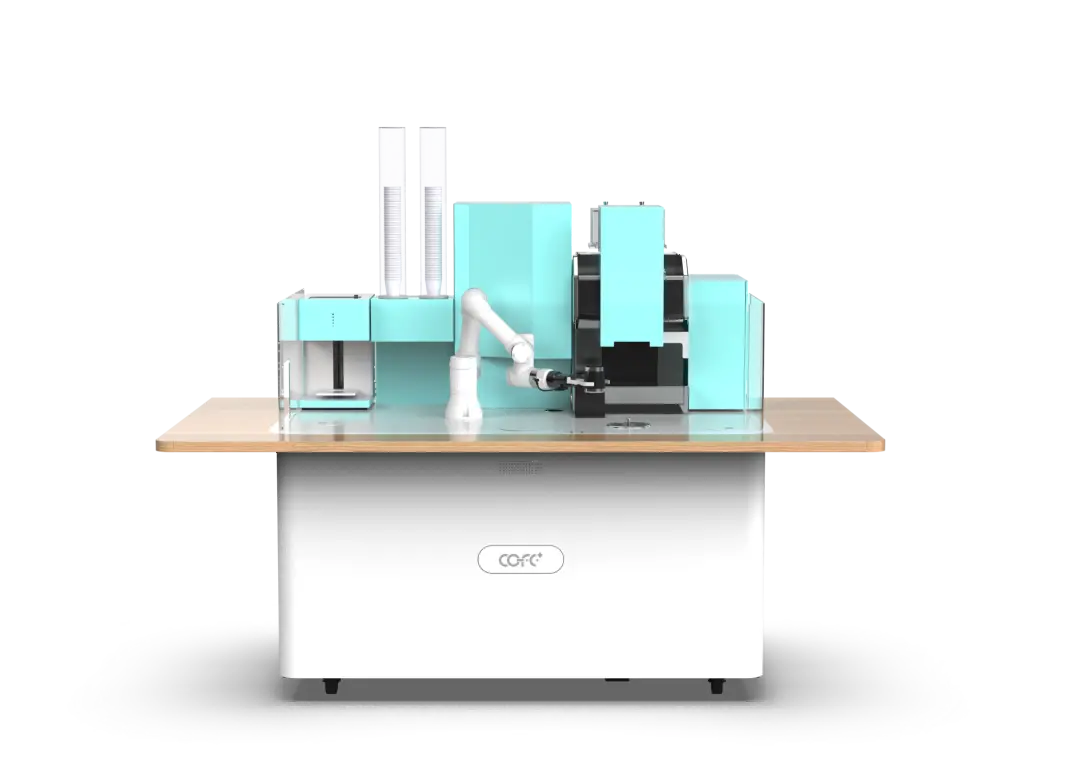
If your program involves high-volume, 24/7 operation with specific taste profiles across diverse climate zones, it is worth confirming your bean supplier’s ability to maintain exact roast and moisture specifications across all shipments before finalizing your BOM—contact us at sales@hi-dolphin.com for specification templates used in our own deployments.
Freshness in a robot kiosk is a function of hopper residence time and environmental protection. The COFE+ indoor model operates in climate-controlled spaces, but outdoor units must protect beans from condensation, UV exposure, and ambient air that accelerates staling. The hopper on COFE+ robots is designed as a sealed chamber with a one-way valve to vent CO₂ while minimizing oxygen ingress. Even so, beans that sit in the hopper for more than 48 hours will begin to lose volatile aromatics, regardless of the machine’s sealing capability.
The most effective strategy we have observed is to right-size the hopper capacity to match average daily demand. For a kiosk selling 400 cups per day, a hopper that holds 10–12 kilograms avoids the trap of overfilling and simplifies the weekly refill schedule. For low-traffic sites that struggle to reach 50 cups daily, switch to smaller, vacuum-sealed bean cartridges that get swapped in every 24–36 hours rather than filling a large hopper that would hold beans for a week. The COFE+ system’s cloud monitoring can be configured to alert when bean weight drops below a threshold and when the hopper has been open for longer than a target freshness window, letting operators manage bean turnover remotely.
Implementing a bean program for an unattended robot kiosk requires a structured trial process, not a one-day tasting. Start with three candidate blends that meet your density and moisture targets. For each blend, run a minimum of 50 consecutive extraction cycles on the actual kiosk that will be deployed, measuring shot time, volume, and total dissolved solids (TDS) every tenth shot using a portable refractometer. If the COFE+ kiosk’s pre-set espresso recipe targets a 20% extraction yield, a bean that produces 18% across the test means it is under-extracting at the machine’s grind setting and will taste sour. A bean that yields 23% will taste bitter. The acceptable window is narrow, typically ±1.5% around the target, which is tighter than many café operations but necessary when every cup is automated.
Once the best-performing blend passes the technical extraction test, run a sensory panel with 10–15 actual customers or team members to validate taste across the full menu—espresso, latte, cappuccino, and any flavored drinks. Beans that taste balanced as espresso may produce a flat latte if the milk ratio overwhelms the coffee flavor. Adjust the recipe settings if the platform allows it: the COFE+ system lets you store separate extraction profiles for each drink type, so the espresso profile can be optimized independently from the milk-based drink profile.
After launch, schedule a 30-day review. Pull cloud data on customer ratings, drink mix, and any negative feedback attributed to taste. If more than 10% of reviews mention bitterness or weakness, the bean may have drifted from the calibration batch and a new tuning cycle should be triggered.
Selecting beans that consistently perform in an automated kiosk is not a one-time exercise—it is a system integration task that connects procurement, engineering, and daily operations. Shanghai Hi-Dolphin Robot Technology’s COFE+ platforms provide the precision extraction control and digital recipe management needed to lock in bean quality at scale, but the bean itself remains the starting point of that quality chain. If you are launching a robot coffee kiosk network and need to define the technical bean specifications that align with your target machine parameters and market preferences, share your location profiles and expected volumes at sales@hi-dolphin.com or call +86 131 6630 1290—our application engineers can provide compatibility data from installations in similar operating environments.
Can the COFE+ system produce quality espresso with single-origin specialty beans?
Yes, but the operator must commit to per-batch calibration. Single-origin lots vary in density and roast development more than commercial blends. For each new shipment, you run a TDS analysis and adjust the grind setting or extraction time within the robot’s recipe editor. The COFE+ platform stores multiple custom profiles, so you can switch between origins without re-entering parameters—as long as the calibration is done initially. In high-volume kiosks, this overhead may not be worth the effort unless the location’s premium positioning justifies the cost.
What is the optimal grind size for beans used in an unattended robot barista?
The COFE+ robot uses an integrated burr grinder with a default setting optimized for medium-fine grind typical of espresso. If you supply a bean with significantly higher density, such as a high-grown washed Arabica from Kenya, the grind may need to be tightened by one or two micro-steps to maintain the target flow rate. Our factory provides grind calibration guidance with each deployment; the operator can access the adjustment interface through the service menu. We recommend running the 50-shot consistency test described above whenever a new bean type is introduced.
How does the outdoor kiosk’s temperature range affect bean storage in extreme climates?
The outdoor COFE+ unit maintains an IP54-rated enclosure with active temperature management for the brewing module, but the bean hopper area relies on insulation and passive heat dissipation. In ambient temperatures above 40°C, the internal hopper temperature can rise enough to accelerate oil migration to the bean surface, which gums up the grinder and shortens flavor life. Operators in hot climates should use beans with a roast level carried only to the start of second crack, avoiding oily dark roasts, and refill hoppers more frequently. In sub-zero conditions, condensation from temperature cycling is the main risk; vacuum-sealed, pre-portioned bean cartridges that are only opened inside the kiosk minimize moisture uptake.
Will flavored beans or pre-ground coffee damage the robot’s grinding and brewing assembly?
Flavored beans coated with syrup-based additives can leave residue on the burrs and clog the dosing chute over time, leading to dose inconsistency and eventual grinder motor strain. The COFE+ system is not designed for such beans unless a dedicated grinder and separate ingredient path are configured—an option that requires consultation with our application team. Pre-ground coffee, when fresh and ground to the correct specification, does not damage the machine but bypasses the built-in grinder, forfeiting the freshness advantage whole-bean storage provides. If you must use pre-ground for a specific local blend, confirm the grind particle size distribution matches the COFE+’s target espresso profile; our engineers can provide a mesh size specification to share with your roaster. Share your specific bean type and packaging format at sales@hi-dolphin.com, and we will confirm compatibility and cleaning interval adjustments for your deployment.
TL;DR — COFE+ is a fully automated robotic coffee kiosk that grinds fresh beans, brews espresso and lattes, creates latt……
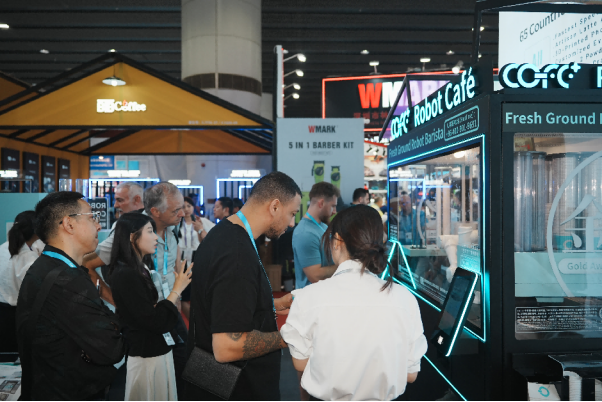
7th-Genertion Smart Robot Coffee Kiosk Arrives at the Belt and Road Core Hub, Ushering in a New Service Era Along t……
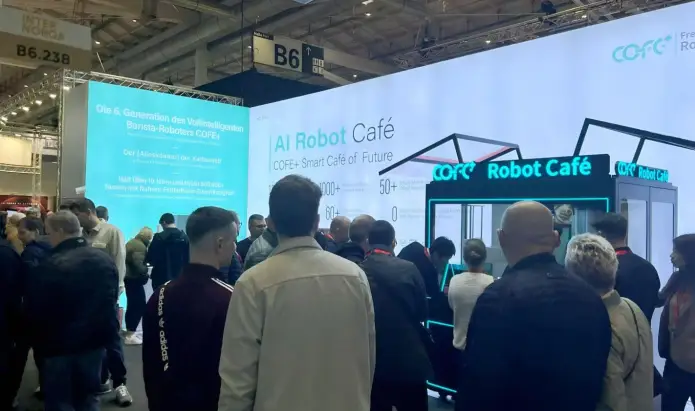
CHICAGO, May 12, 2026 (GLOBE NEWSWIRE) – Shanghai Hi-Dolphin Robot Technology today announced the U.S. debut of its 7th‑……