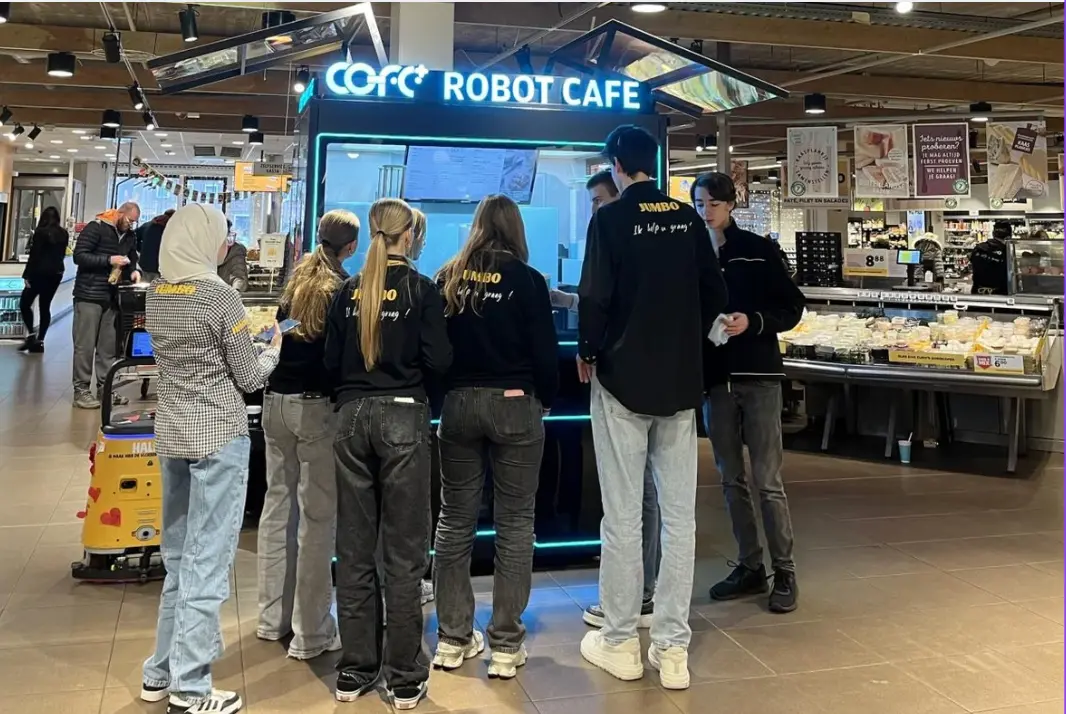
The Rise of Professional Robotic Café Technology: What COFE+ Is and Why It Matters
TL;DR — COFE+ is a fully automated robotic coffee kiosk that grinds fresh beans, brews espresso and lattes, creates latt……

For operators deploying robotic coffee kiosks, the display that shows the menu and preparation status doubles as an advertising platform. Robot coffee kiosk advertising screens turn the short window a customer spends waiting for a coffee into valuable ad impressions, generating revenue beyond cup sales without adding staff or consumables. There is no additional service cost, and with proper setup, the income stream can reach hundreds of dollars per month per kiosk, depending on location foot traffic and the ad model used. Having guided the integration of digital advertising into unmanned retail systems across malls and airports, I’ve seen operators overlook this because they assume screen advertising requires complex infrastructure. It doesn’t, but it does require a specific technical and business configuration that most quick-start guides miss.
A robot coffee kiosk positioned in a shopping center, transit hub, or office lobby sees hundreds to thousands of passersby daily. Many of those people pause near the machine while deciding what to order or watching their drink being made. That dwell time—typically 40 to 60 seconds when the machine is in use, and longer in a queue—is a window where a high-resolution display showing a loop of ads can capture attention that would otherwise drift toward a phone screen.
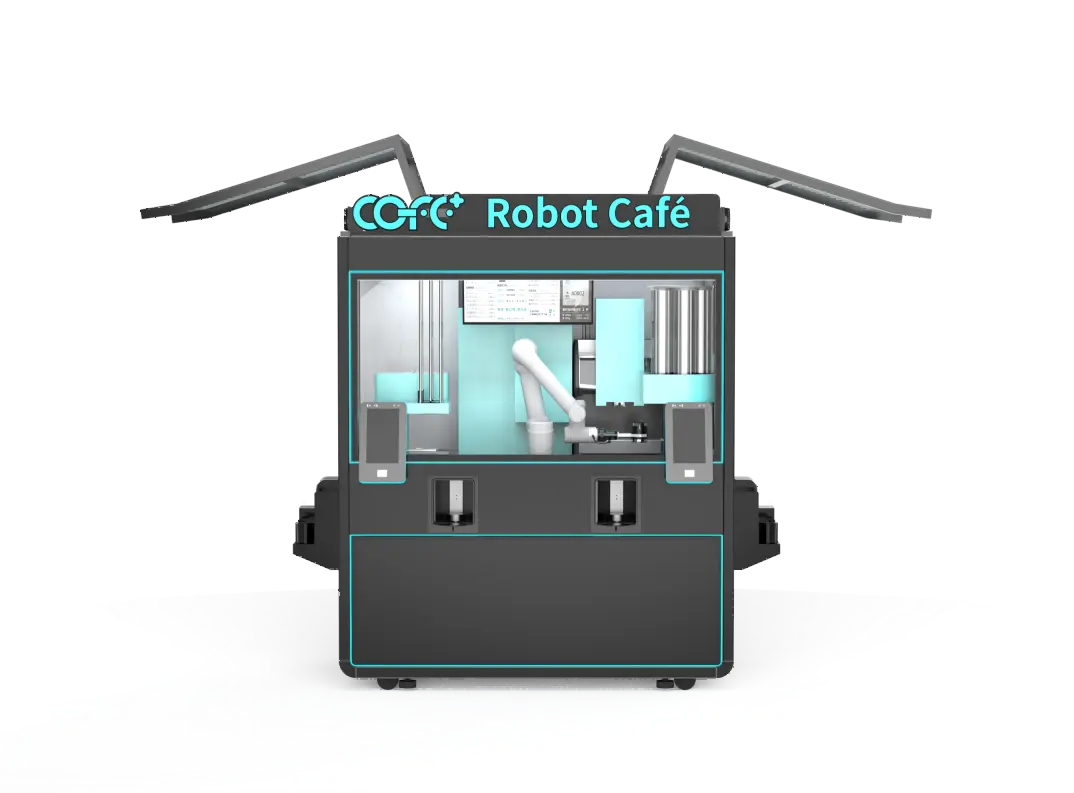
What makes this inventory valuable compared to static posters or small digital signage elsewhere is the context: the viewer is already engaged with the kiosk, and the screen is at eye level, often in a well-lit area. No separate placement, power, or mounting negotiation is required—the screen is already built into the COFE+ 7th Gen kiosk and its variants. Operators already have the hardware. The question is whether they activate the advertising layer.
The revenue is additive. A single kiosk in a moderate-traffic corridor serving 150 cups a day might generate 30,000 to 50,000 monthly screen views. If only 20 percent of those views convert to billable impressions sold at a low CPM, that still produces several hundred dollars a month of margin-rich income. For a network of ten kiosks, the numbers become meaningful without increasing any operational cost category that the coffee business already carries.
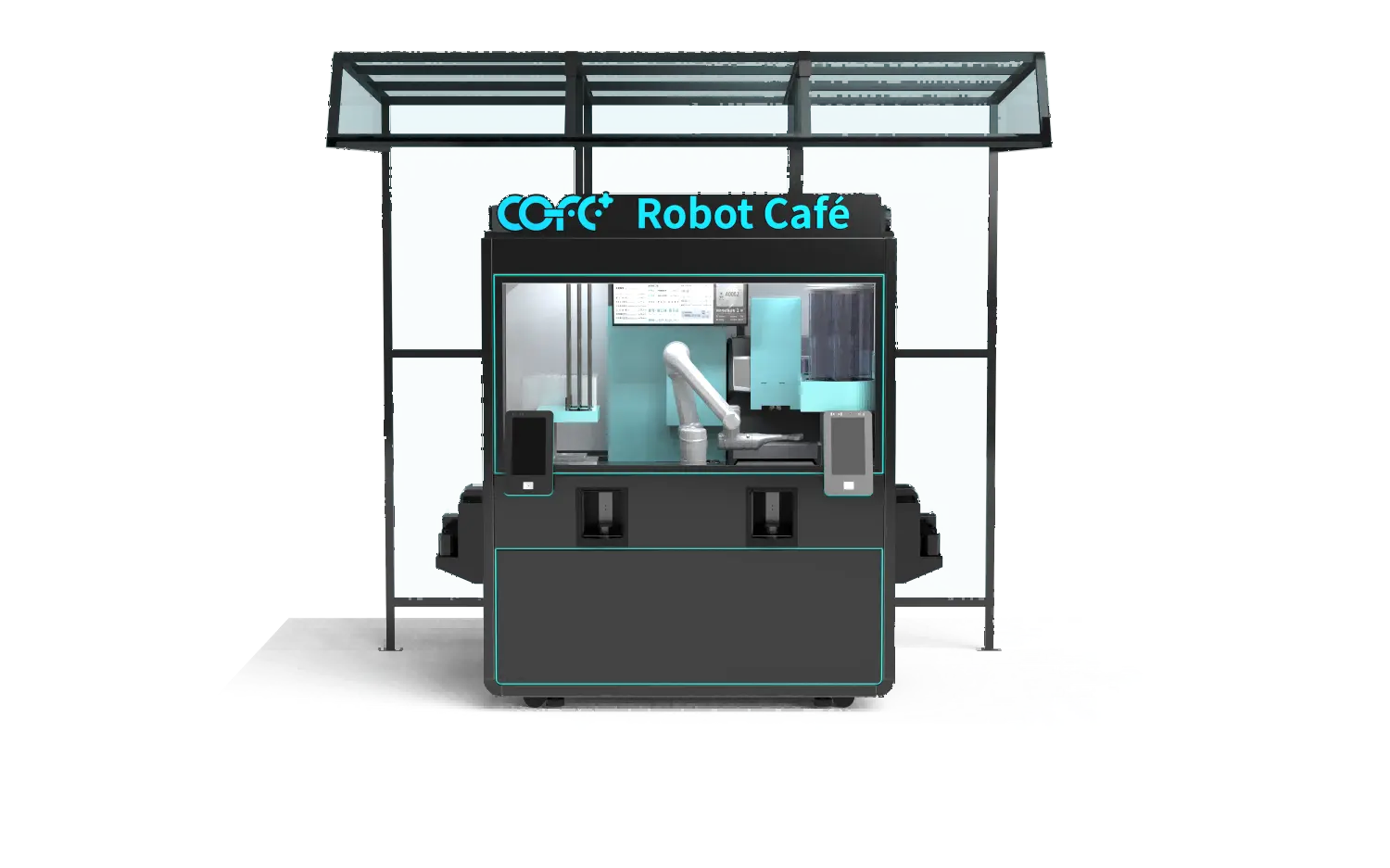
Most kiosk operators already have the basics: a display screen, an internet connection, and a cloud-based management dashboard. But running ads on that screen without disrupting the primary coffee-ordering flow requires a few configuration steps.
First, the screen content must be decoupled from the point-of-sale interface. The COFE+ kiosk display can run a split or time-sliced layout where the menu and order status occupy one portion while a secondary ad layer loops in the remaining area or during idle moments. This requires the kiosk’s content management software to support multi-layer scheduling, which the native smart store brain handles.
Second, the connectivity must support remote creative updates. A single kiosk can be managed by uploading ad files directly. A network of twenty kiosks needs a centralized system that pushes content, schedules, and performance logs. The 4G or Wi-Fi module in the machine is sufficient for video and static ads, but operators should confirm that the network allows enough bandwidth for daily creative refreshes without interfering with transaction data.
Third, screen positioning matters for viewability but not for installation. Indoor kiosks placed at a 45-degree angle to pedestrian flow, with the screen facing the approach path, get approximately 40 percent more visual engagement than those mounted flush against a wall, based on our deployment observations in Asian and European malls. Outdoor kiosks, especially the IP54-rated COFE+ Outdoor model, face additional brightness and glare challenges. Those units are equipped with high-nit displays calibrated for direct sunlight, so ad content designed for indoor use sometimes appears washed out outdoors without punchier color grading.
If your deployment involves mixed indoor-outdoor sites, it is worth confirming the screen brightness specs per location before committing to a single ad creative format—reach out at sales@hi-dolphin.com for a site-by-site compatibility check.
There are three viable ways to turn screen views into dollars, and operators often combine them.
| Model | How It Works | Revenue Levers | Typical CPM Range |
|---|---|---|---|
| Direct sale to local businesses | Operator sells ad slots to nearby shops or mall tenants for a flat monthly fee or per-impression rate | Foot traffic data, proximity, screen position | $8–$15 |
| Programmatic DOOH network | Kiosk inventory is connected to a digital-out-of-home ad exchange that fills slots with geotargeted third-party ads | Impressions volume, audience demographics, bidding density | $3–$8 |
| Brand partnership / sponsored menu | Coffee brand, milk supplier, or syrup company sponsors a themed menu takeover that includes a branded ad loop | Brand alignment, exclusivity period, menu integration | Negotiated flat fee |
Direct sale is the fastest to launch because it requires no ad-tech integration. An operator in a shopping mall can walk into three adjacent stores and offer a 15-second ad loop for a 30-day trial. The pricing is based on daily foot traffic counts from the kiosk’s built-in people counter, giving the advertiser a measurable CPM equivalent. We’ve seen operators close such deals at $200–$400 per month per advertiser in high-traffic locations.
Programmatic advertising requires connecting the kiosk’s display to a supply-side platform (SSP). This is technically a one-time integration handled by the kiosk provider. Once live, the kiosk becomes part of a real-time bidding ecosystem, and ad fill rates typically reach 60 percent within the first month. The tradeoff is lower CPMs but zero sales effort. For a multi-kiosk network, programmatic works as a baseline revenue layer while direct sales provide high-margin overlay.
Brand partnerships are less frequent but higher value. A beverage brand launching a new oat milk line, for instance, might sponsor a “Summer Oat Latte” menu and run a 10-second branded loop on every kiosk in a region. The operator gets a flat sponsorship fee plus the usual coffee margin on any drink sold through the featured menu slot.
The screen is small compared to a street-side billboard, and the viewer’s attention span is measured in seconds. Ad creative that works on a 75-inch lobby screen fails on a 15-inch kiosk display. From our field testing, three formats consistently outperform others.
Short video loops of 6 to 10 seconds with minimal text and a single call to action work best. The viewer rarely watches the entire loop, but the motion catches the eye. A bakery next to a kiosk in a Paris railway station ran a 7-second clip of a croissant being buttered with just the shop name and got a measurable foot traffic lift.
Static ads with QR codes underperform unless the value proposition is immediately obvious. A QR code that says “Scan for 20% off your next coffee” works because the benefit is clear and the action is completed while the customer waits. A generic QR code linking to a brand website gets ignored.
Audio is not used because the kiosk environment already has operational sounds and ambient noise. Ads that rely on background music or voiceover are wasted.
The key is to treat each ad as a glance-medium, not a watch-medium. Design for someone who will see the screen for three to four seconds, not thirty.
A single kiosk’s advertising income is modest. A fleet of ten, twenty, or fifty kiosks becomes a retail media network. At that scale, three operational layers require attention.
Centralized content scheduling prevents the same ad from hitting the same viewer across multiple kiosks in the same mall, which reduces perceived value and annoys both customers and advertisers. The scheduling engine should rotate creatives by location cluster and time of day, assigning higher-value slots to peak hours.
The maintenance overhead is negligible if the kiosk’s existing health monitoring extends to the display subsystem. Screen brightness, content playback status, and network connectivity are already tracked by the smart store brain. Adding a daily log of ad impressions per kiosk and per slot adds no new hardware burden.
Revenue reporting for advertisers can be fully automated. The same cloud platform that logs drink count and ingredient levels can export a white-label report showing daily impressions, fill rate, and estimated CPM by ad slot. When a property owner takes a revenue share from kiosk ads, the report serves as the settlement basis, just as the coffee sales report does.
For operators managing kiosks across different cities or countries, the primary scaling bottleneck is not technology but advertiser relationships. Programmatic fill can handle base inventory, but direct sales require at least one person per region who can walk into local businesses and negotiate. That person does not need technical knowledge, only a foot traffic report and a willingness to walk a mall floor.
A location that serves fewer than 80 cups a day will still generate screen impressions, but the ad revenue may not justify any direct sales effort. Programmatic monetization, however, requires no incremental cost regardless of traffic volume, so activating it is cost-free and produces whatever the fill rate yields. Locations above 150 cups per day are where direct ad sales become economically sensible.
The display processor in the COFE+ 7th Gen kiosk is independent of the transaction engine. Running a video ad loop in a dedicated screen region does not affect touchscreen responsiveness or drink preparation speed. Even during peak hours, the ad layer operates on its own thread, and the system allocates priority to the ordering interface.
Yes. The content management system supports daypart-based scheduling. Breakfast hours can show bakery promotions, afternoon slots can feature nearby retail offers, and late-night programming in locations like highway rest areas can highlight 24-hour services. The scheduling is set once and runs automatically.
Importantly, impression data from the kiosk includes timestamps and slot-level granularity. If an advertiser disputes delivery, the operator can export a log that shows exactly how many loops played and at what times. This data transparency reduces disputes, and in our experience, the issue is more often that the creative underperforms rather than that impressions were not delivered.
The ad area on the screen occupies about one-third of the total display during idle or side-panel mode, while the menu and order status remain prominent. Customers at a robot coffee kiosk are already in a commercial setting—they are buying a product—and a tasteful ad for a nearby offer does not diminish the experience. The threshold we’ve observed is ad frequency: more than three different advertisers in a single 60-second loop starts to look cluttered, so we recommend capping at three per cycle. If you are planning to launch advertising on your kiosk network and want to define the right screen layout for your specific locations, send your floor plan and traffic estimates to sales@hi-dolphin.com and we’ll recommend a content ratio that maintains a clean customer experience.
TL;DR — COFE+ is a fully automated robotic coffee kiosk that grinds fresh beans, brews espresso and lattes, creates latt……
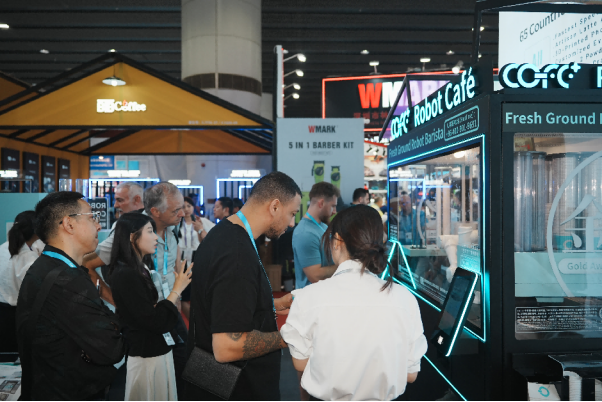
7th-Genertion Smart Robot Coffee Kiosk Arrives at the Belt and Road Core Hub, Ushering in a New Service Era Along t……
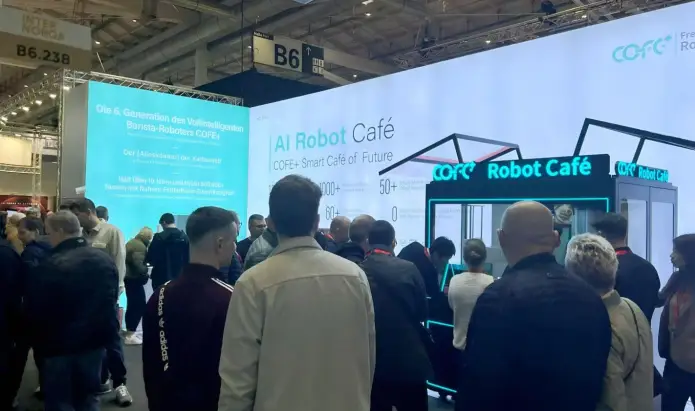
CHICAGO, May 12, 2026 (GLOBE NEWSWIRE) – Shanghai Hi-Dolphin Robot Technology today announced the U.S. debut of its 7th‑……