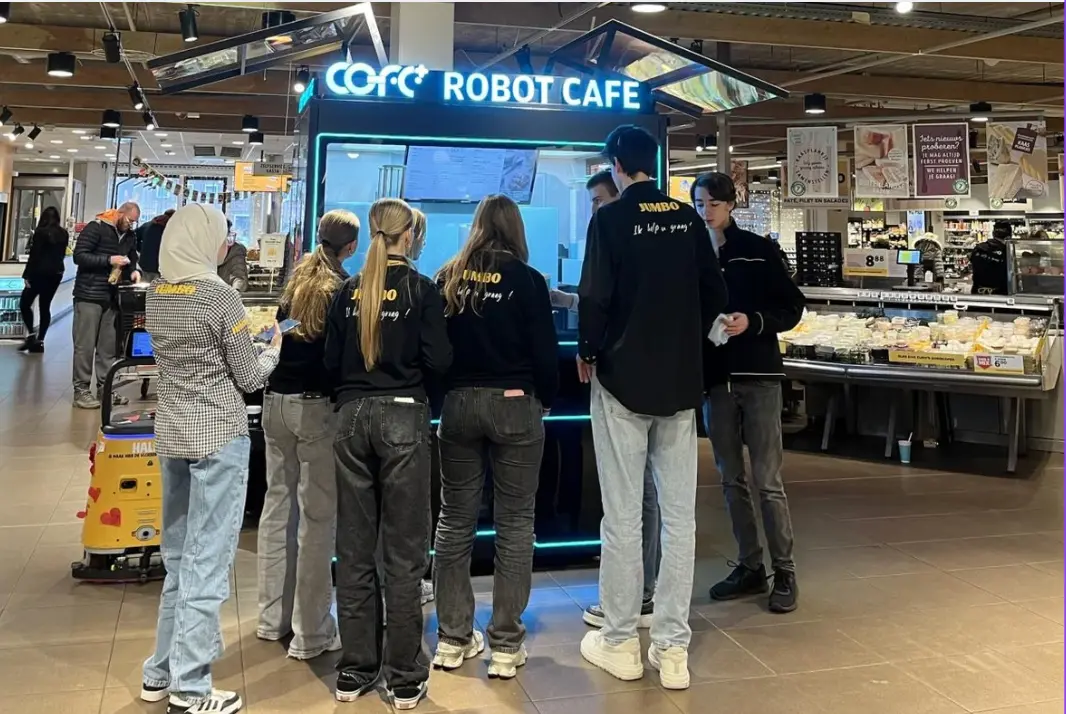
The Rise of Professional Robotic Café Technology: What COFE+ Is and Why It Matters
TL;DR — COFE+ is a fully automated robotic coffee kiosk that grinds fresh beans, brews espresso and lattes, creates latt……

Peak hour demand with multiple robot coffee kiosks is rarely solved by cup speed alone. I have watched operators add a second and third machine to a transit hub, then lose the extra capacity in confused queues and refill overlaps. The real lever is demand shaping, how you split traffic, sequence drinks, and keep every machine visible and busy during the rush. A 7th generation kiosk can pour a cup in 43 to 60 seconds, but that number means little if half the crowd stands in the wrong line. Placement, measurement, and menu design decide whether the fleet answers the rush.
Most operators blame throughput, but the hardware is rarely the first constraint. The COFE+ 7th generation machine turns out a drink in 43 to 60 seconds, so two machines should produce two drinks in that same window. The arithmetic holds only if every customer orders quickly and moves away from the terminal. When a queue forms, the bottleneck shifts to screen dwell time. A customer facing 300 drink options takes longer to decide, and that delay blocks the next person before the robotic arm begins the next cup.
I have seen a busy indoor kiosk in a university building fail this test at the wrong hour. The first unit had a line of eight people while the second unit sat nearly empty because both happened to face the same narrow walkway. The machines were identical. The queues were not.
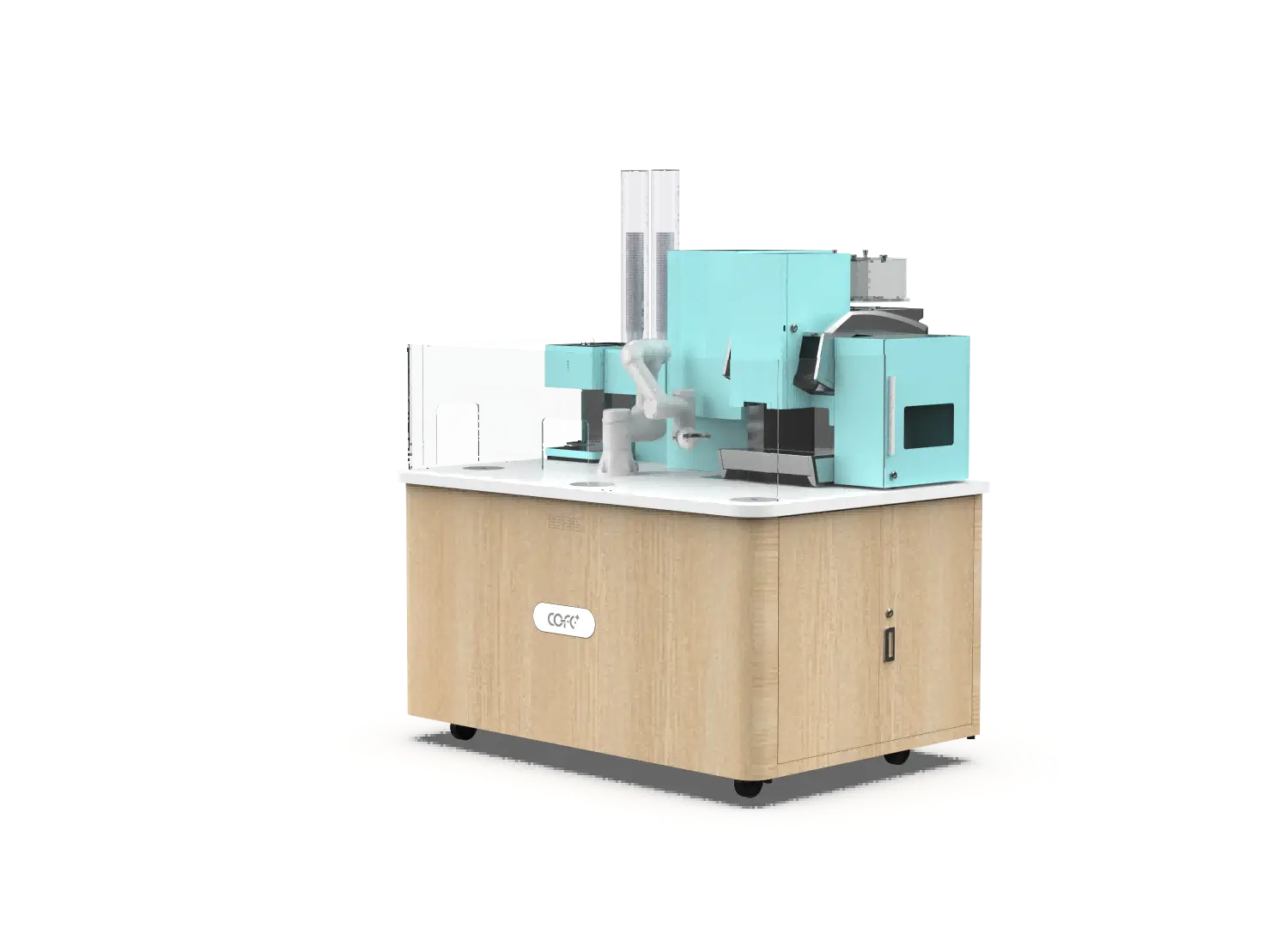
The second failure mode is refill overlap. At peak hour, beans, milk, and cups all run down at roughly the same time if every kiosk opened with the same stock level. Maintenance staff then race between machines while customers watch a paused service, and the pause looks longer than it measures. Starting each kiosk on a staggered refill schedule removes that shared collapse.
Daily sales hide the spike. A kiosk that sells 400 cups in a day may serve 90 of them in one 15 minute interval and 10 in the next. For peak hour demand, the only usable unit is the interval, not the day.
Pull the transaction log in 15 minute blocks for at least two weeks. Note the highest single block and the average of the top five blocks. The highest block tells you the surge to handle; the average tells you the repeat pressure. If the highest block is more than twice the average, the site has a concentrated rush that will not disappear by adding one more kiosk in the same view line.
Service time alone is misleading. If a cup takes 45 seconds but the line still grows, the gap is ordering time, not extraction. Compare the timestamp when a guest reaches the screen with the timestamp when the cup is dispensed. When that gap rises above 90 seconds, a share of potential buyers starts leaving. The exact abandonment rate varies by site, but the warning is visible before the loss shows up in daily revenue. Count abandoned orders as a demand signal, not a technology failure.
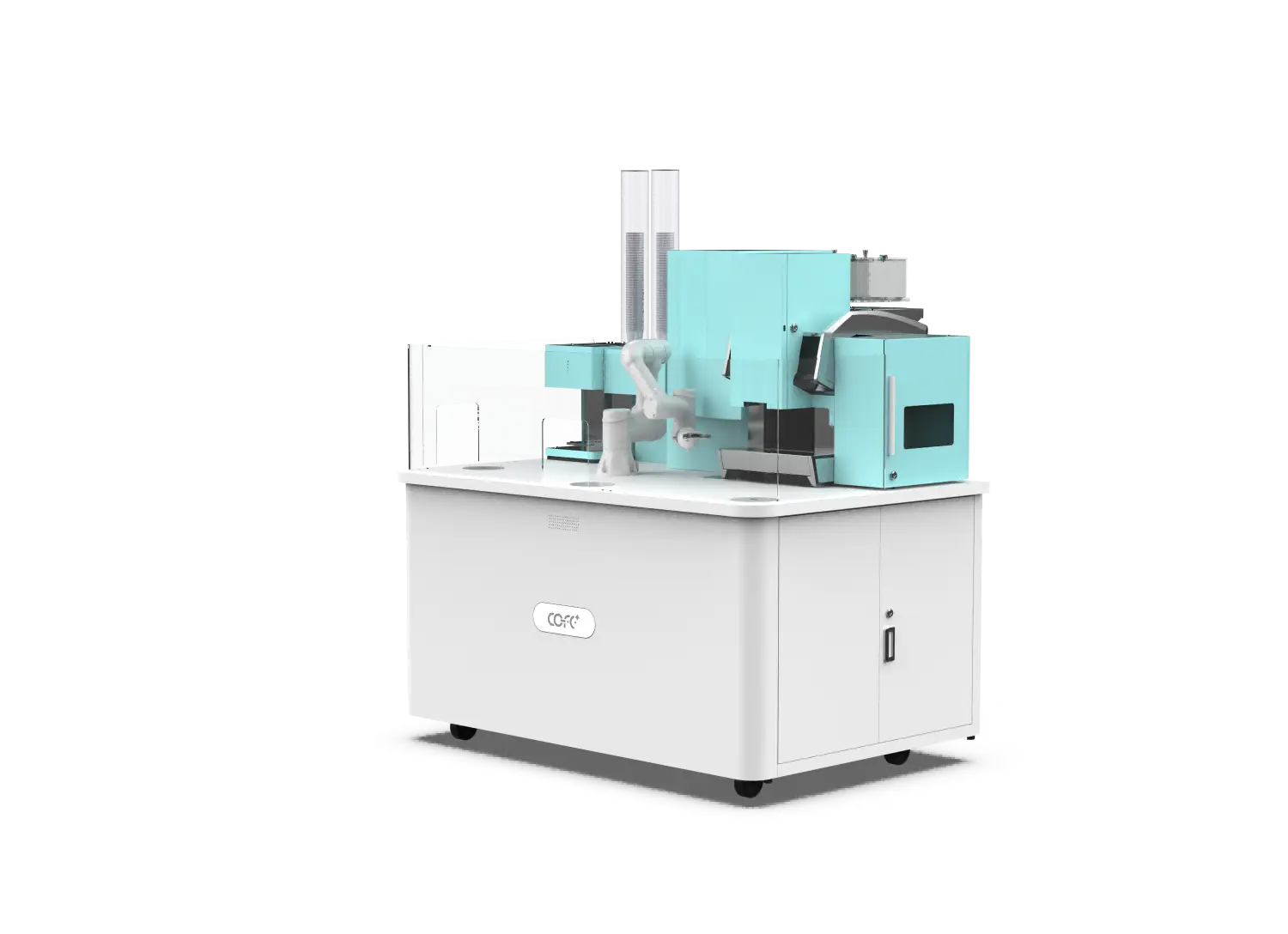
Placement decides whether a second kiosk adds capacity or creates a second crowd. Each configuration works differently depending on how people enter and move.
| Configuration | Best Use | Queue Behavior | Weak Spot |
|---|---|---|---|
| Island | Open atriums and plaza traffic | Approach from both sides, balanced load | Needs clearance around all faces |
| Corner | Entry corridors and gate areas | Single clear line, easy to spot | Fewer approach points |
| Wall side | Long hallways and platforms | Straight queue and simple flow | Can block pedestrian traffic |
| Split zones | Separate entrances and gate clusters | Parallel lines, less cross flow | More refill routes and floor paths |
A 2.35 square meter footprint makes the kiosk easy to place, but that does not mean location can be casual. In peak hour, the most effective multi kiosk arrangement often separates machines by drink role rather than placing identical menus side by side. One unit can carry the high frequency black coffee and cold brew load while another handles milk based specialties. This gives customers two obvious lines and prevents one slow drink from stalling the entire rush.
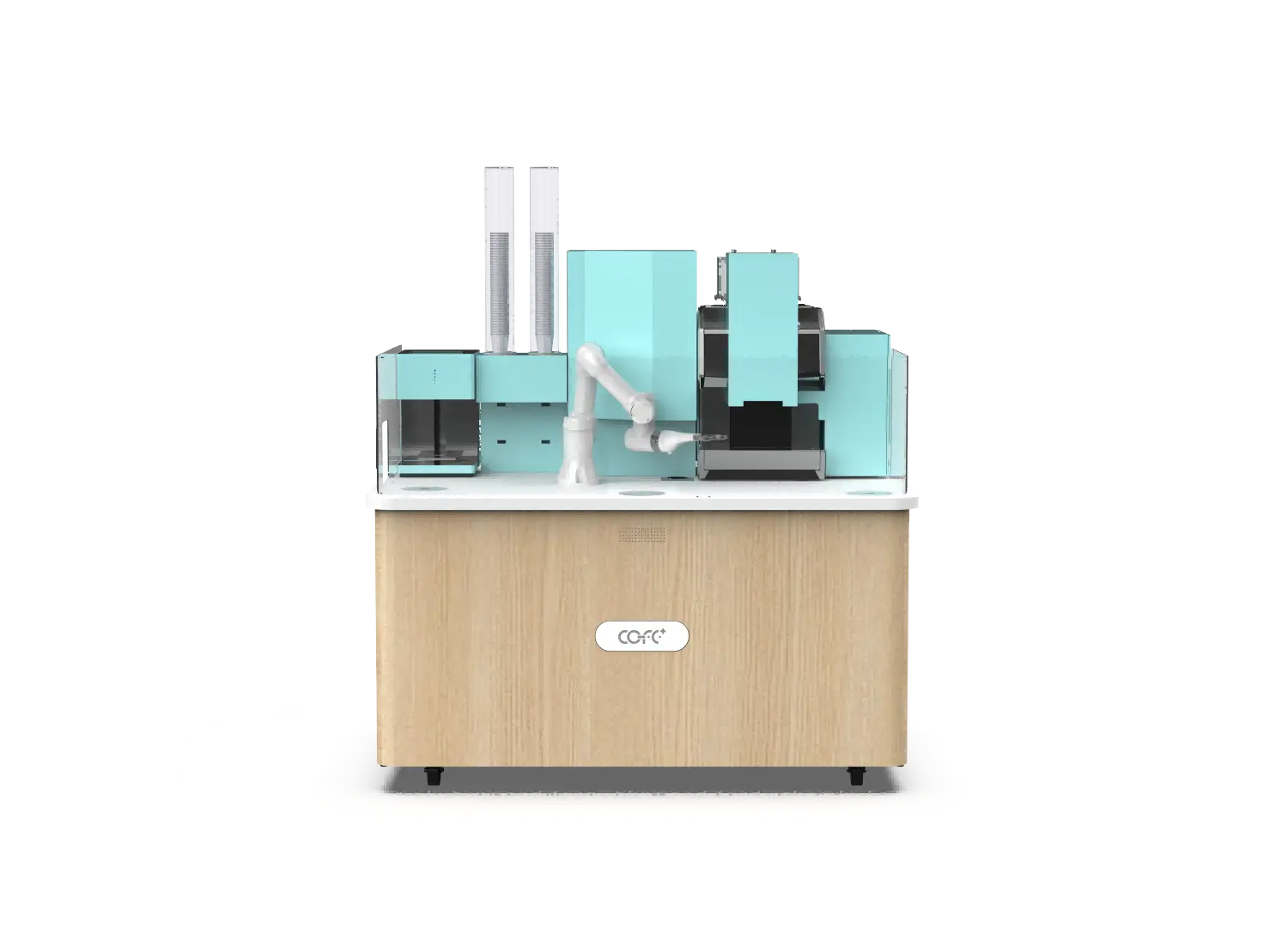
Queue length is a function of arrival rate and service time. If you cannot change the arrival pattern, change the service path so fewer decisions happen at the machine.
A full menu is useful during slow hours, but the peak screen should put the three or four fastest drinks first. If a guest wants a complex layered latte, the screen can show the longer wait before payment. Visitors who see the wait will either accept it or switch to a faster item, and the queue keeps moving while they decide. This is not about limiting choice. It is about making the time cost visible at the point where it matters.
Peak demand is also an inventory moment. Set refill thresholds to trigger before the rush, not when a hopper empties. If the cloud dashboard tracks stock by kiosk, refill teams can visit the high demand unit first and skip the unit still holding 60 percent capacity. This turns maintenance from reactive to interval based, which keeps serving time for customers.
If your peak interval regularly pushes past 40 cups in 15 minutes, the next buying decision is not automatic. You may need a layout change, a menu reframe, or a third unit in a different flow line. Send your transaction data and floor plan to sales@hi-dolphin.com and we can tell you which move fits the site before you order.
Peak hour pressure never disappears. It shifts from cup speed to coordination. The operators who handle it well treat the bank of machines as one service system with shared stock thresholds, staggered refills, and an uncluttered queue pattern. The machines should differ where the crowd differs; high frequency drinks belong on the easiest path, specialty drinks on the slower lane. If you are planning a multi kiosk deployment, send your expected peak transaction count and site dimensions to sales@hi-dolphin.com or call +86 131 6630 1290. We will confirm placement and demand shaping plan before you commit.
A single 7th generation kiosk can serve roughly 60 to 80 cups in a realistic peak hour when ordering is quick. The machine produces a drink in 43 to 60 seconds, so the difference between 60 and 80 comes down to screen speed, pickup behavior, and refill timing. Treat the lower number as the planning base for concentrated rush periods. If your interval data shows sustained demand above that, a single unit will fall behind no matter how fast the extraction runs.
Not automatically. A second kiosk only shortens the line when it creates a second clear queue and a second reason for customers to split. Place two identical machines side by side behind one entry point and the crowd still funnels into the nearest unit. The sequence that works is separate menus, separate approach angles, or separate entrance zones. Capacity is not the same as distribution.
In deployments I have analyzed, the fastest test was a one week interval study followed by a temporary kiosk move. Operators who compared the busiest 15 minute block before and after a repositioning saw whether the change moved waiting time. The test did not require a full site redesign. It required one measurable interval, a clear layout hypothesis, and enough flexibility to move a unit on casters. Kiosks with a 2.35 square meter footprint make that test practical.
It depends on the shape of your peak, not your daily total. If the highest 15 minute block keeps exceeding what two well placed units can serve, and the overflow is concentrated at one entry point, the site likely needs a third unit in a different flow line. If the high period is spread evenly across two separate areas, moving the two existing units may be enough. The tipping signal is queue length during the interval, not revenue after the fact.
Start by answering a narrower question: where do people form lines before they choose a drink? Walk the site during the hour you expect the rush, note the entrance flow, and mark the visible decision points. If those lines collide at a single machine, the kiosk plan is not ready. Prepare the site for split queues first, then place the units. Send your expected peak transaction count and a rough floor plan to sales@hi-dolphin.com or call +86 131 6630 1290, and we can check the layout before you finalize the order.
TL;DR — COFE+ is a fully automated robotic coffee kiosk that grinds fresh beans, brews espresso and lattes, creates latt……
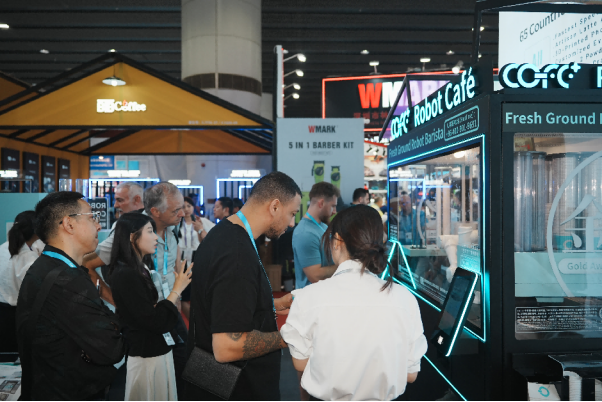
7th-Genertion Smart Robot Coffee Kiosk Arrives at the Belt and Road Core Hub, Ushering in a New Service Era Along t……
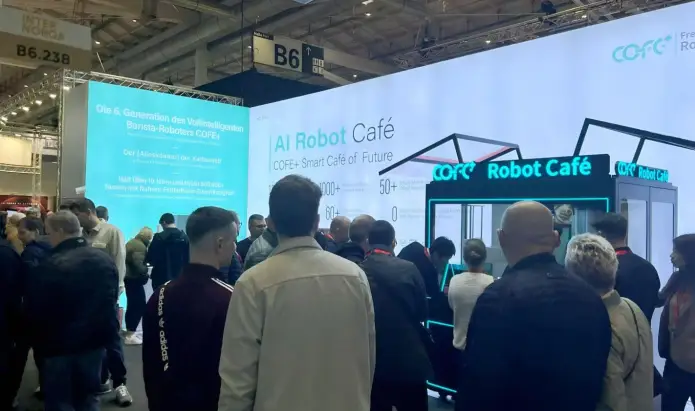
CHICAGO, May 12, 2026 (GLOBE NEWSWIRE) – Shanghai Hi-Dolphin Robot Technology today announced the U.S. debut of its 7th‑……