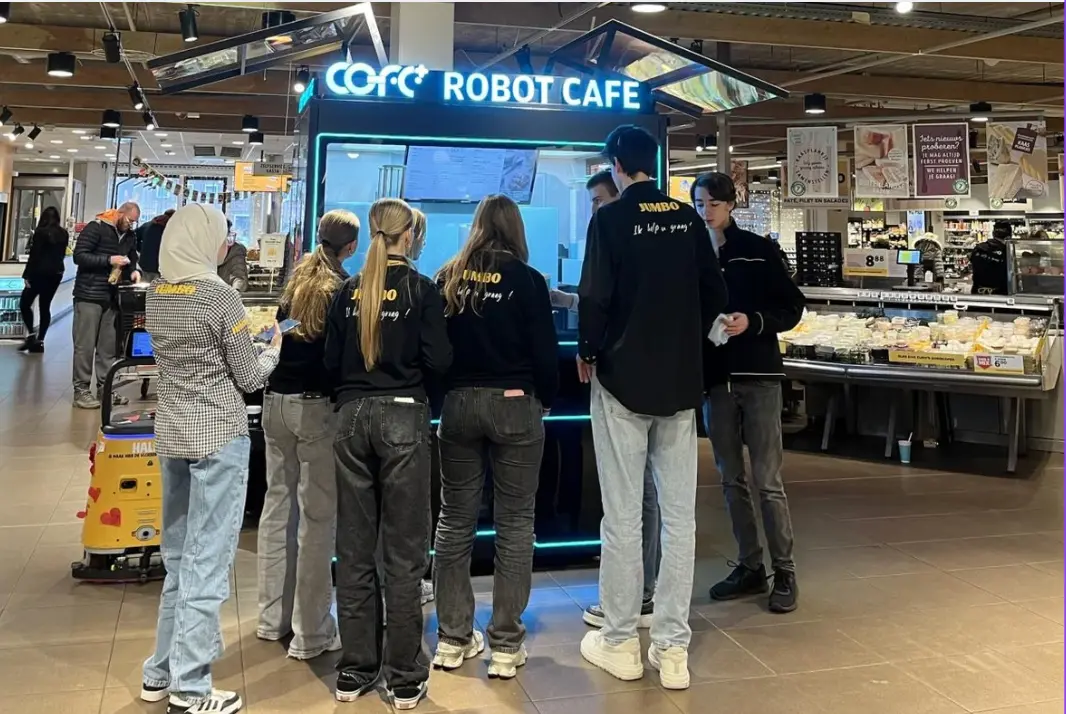
The Rise of Professional Robotic Café Technology: What COFE+ Is and Why It Matters
TL;DR — COFE+ is a fully automated robotic coffee kiosk that grinds fresh beans, brews espresso and lattes, creates latt……

Ingredient refill planning for 24/7 robot coffee operations changes the operator’s job from stocking shelves to reading consumption patterns before they become downtime. A kiosk that sells around 1,000 cups a day drains beans, milk, syrups and cups at very different rates, and a 2:00 a.m. stockout is direct revenue loss with no barista on site to improvise. In the COFE+ systems we deploy, cloud monitoring tracks stock, temperature and system status in real time. The operating question is not whether to refill, but which signal should trigger each refill and which route can complete it before the machine stops serving. That is the planning discipline this article covers.
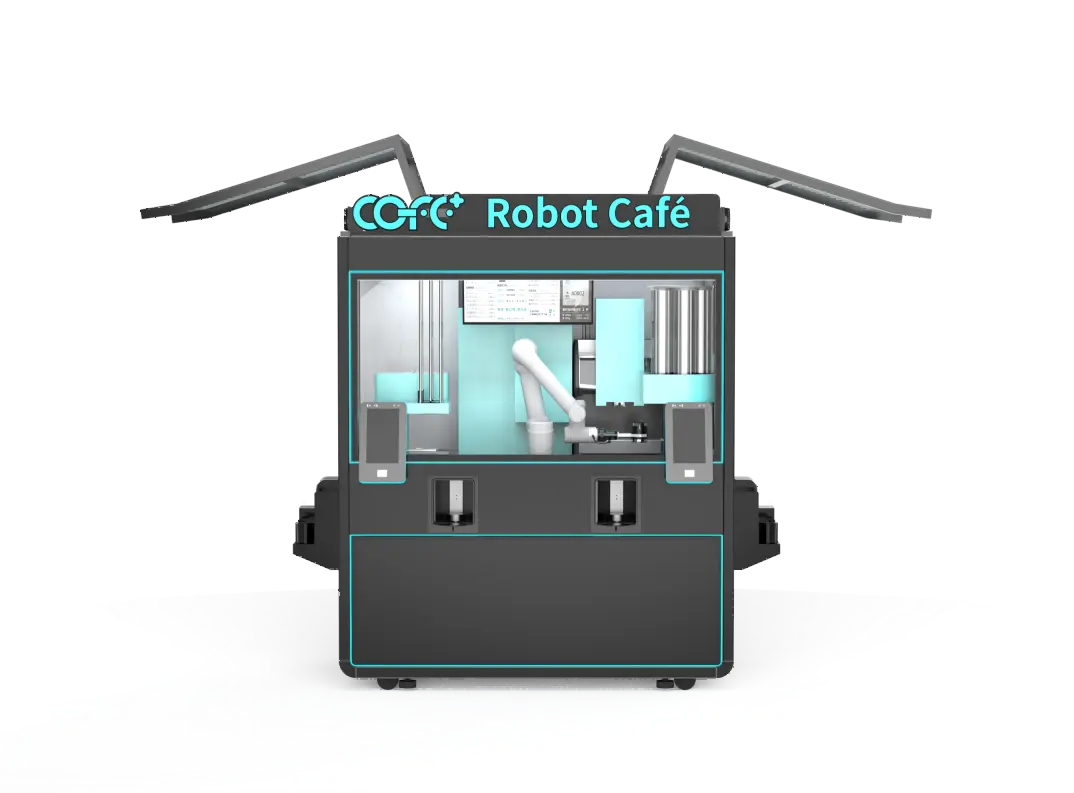
Most refill failures in 24/7 robot coffee operations follow a pattern: an ingredient does not run out because demand was higher than forecast; it runs out because the last refill happened on a fixed schedule that ignored a local demand shift. In multi-site networks, weather, promotions, exams or a nearby event can push one location 30 percent above its baseline while other sites stay flat. The kiosk has no way to stretch a milk line or reuse a cup.
We treat refill planning as a consumption-driven loop rather than a calendar task. The COFE+ outdoor and indoor kiosks both report stock levels to the cloud, so the operator sees not only current volume but the rate of change. Refills are scheduled when a SKU’s projected depletion time crosses the route’s remaining response time. That rule keeps the inventory buffer small without gambling on a stockout.
Each ingredient category has a different drain profile. Coffee beans move with total cup count; dairy and plant milks move with latte and milk tea share; syrup and toppings move with flavoured drink mix; cups move with order count plus waste. At a site serving about 1,000 cups per day, the table below gives a workable planning frame. Adjust the bean and milk figures to your own menu mix.
| Ingredient category | Typical drain at 1,000 cups per day | Reorder rule |
|---|---|---|
| Coffee beans | 8 to 12 kg depending on dose and grinder waste | Refill hoppers before the morning and evening peaks |
| Dairy and plant milks | 120 to 180 L at high latte share | FIFO rotation; temperature log check at each refill |
| Syrup and toppings | 10 to 30 ml per flavoured drink | Par level by SKU velocity, not by category average |
| Cups and lids | 1.05 to 1.10 per order including spills and mispicks | Scan-based count with a buffer for peak day |
| Water and ice | Site-specific based on machine and ambient temperature | Sensor thresholds for pressure, flow and quality |
These reorder points work only if they stay live. A fixed par level for milk fails in winter when hot latte share rises, just as a fixed bean par level fails during exam season on a university campus. The cloud inventory screen on a COFE+ kiosk shows consumption velocity per SKU, so operators can raise or lower trigger points as menu mix shifts.
Alert overload is the most common reason remote monitoring fails in practice. If every low-level status message arrives with the same urgency, operators learn to ignore all of them. The alerts that matter for refill management are the ones that change the next decision: ingredient below reorder point, temperature moving outside the safe band, waste bin nearing capacity, and flow rate trending above baseline.
COFE+ systems include cloud monitoring for stock, temperature and system status, plus remote diagnostics and automatic repair dispatch. That gives a single screen for multi-site inventory where a site turns yellow before the bin is empty, not after. For operations teams, the priority is not to watch the dashboard continuously but to set escalation rules. One alert goes to the route planner; a second goes to the local technician only if the refill cannot arrive within the projected depletion window.
If your program includes sites more than 60 minutes from a service partner, confirm remote diagnostics and refill response time before finalizing your operations plan. Reach out at sales@hi-dolphin.com and share your site count and local service model.
24/7 operation does not mean every site needs a midnight visit. The effective route schedule visits each site in the hours before its own peak demand: early morning for transit hubs and office buildings, late afternoon for residential and gym locations, and before event windows for stadiums and convention centres. Grouping sites by peak curve rather than geography reduces both labour cost and stockout risk.
We plan routes with a simple rule: a refill completes at least 60 to 90 minutes before the site’s busiest hour. If the route cannot meet that window, the site’s reorder point must be raised or extra buffer stock added. This is the tradeoff many first-time operators miss. They route for fuel efficiency and then spend more on emergency restocks because a site went dark during its only profitable period.
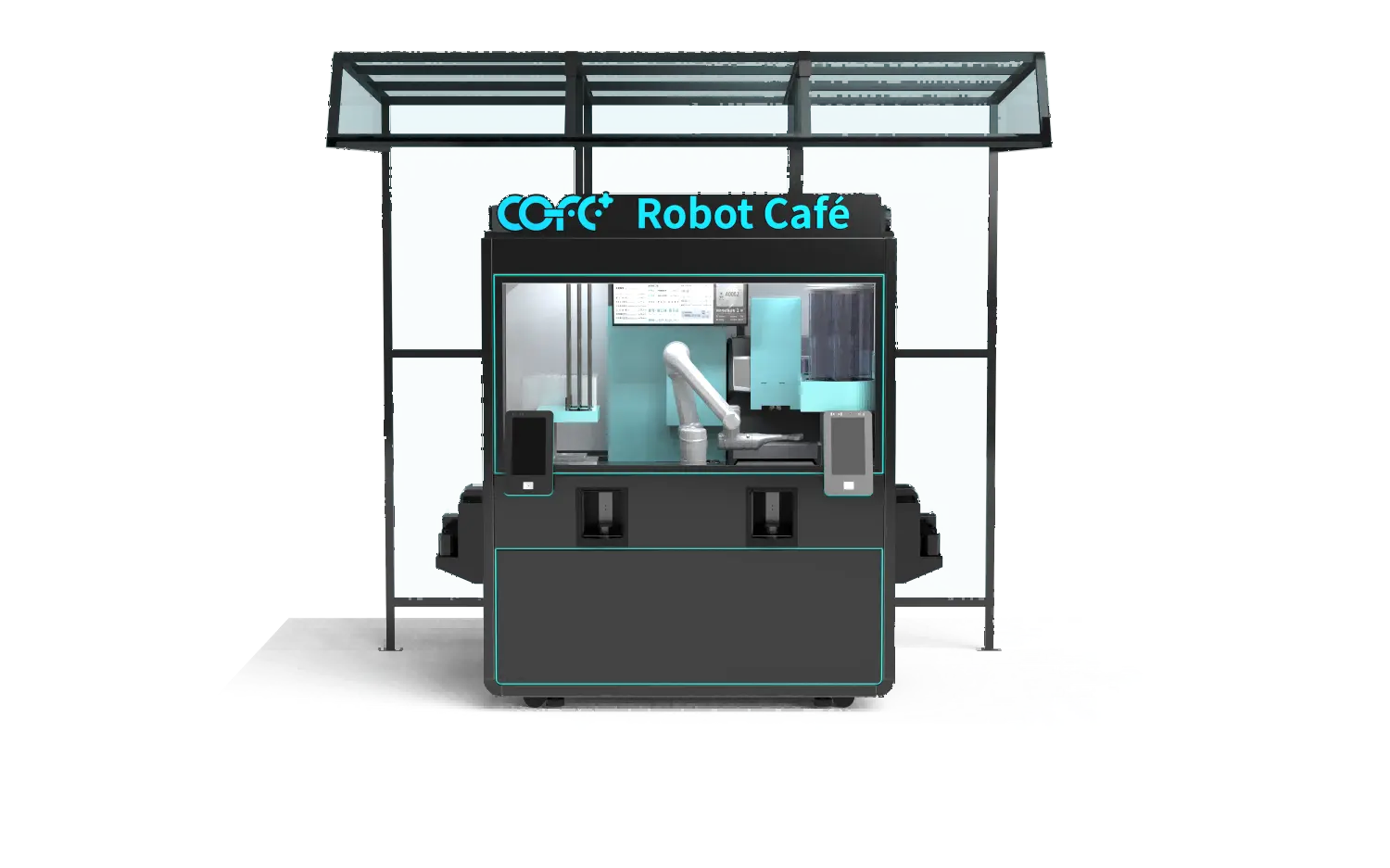
The consolidated playbook moves from reactive refills to scheduled replenishment in three steps. First, set reorder points by SKU velocity and route response time. Second, cluster sites by peak demand window instead of distance alone. Third, use cloud inventory as a decision tool, not just an alert feed. Operators who do this stop treating refills as a variable cost and start treating them as a revenue protection function.
The real cost of a missed refill is not the lost hour of sales. It is the customer who walks up, sees a closed or limited menu, and forms a judgment about the unmanned retail location. One missed refill can consume the margin from dozens of successful cups.
If refill planning keeps coming up as a bottleneck in your robot coffee network, send your site count, daily cup volume and service area to sales@hi-dolphin.com or +86 131 6630 1290. We can confirm how COFE+ cloud monitoring fits your operating model and work with you to set the first refill schedule before a site goes live.
For most high volume COFE+ sites serving close to 1,000 cups a day, a daily refill visit works because it aligns with peak demand protection and prevents any single ingredient from sitting past its freshness window. Low traffic sites may need only two or three visits per week. The deciding variables are cup volume, menu mix, and the machine’s storage capacity. Do not schedule purely by calendar. Use the cloud inventory rate of change for each SKU. If a milk tank drains at 30 percent per day, a Monday and Thursday visit may be enough. If it drains at 40 percent per day, schedule every other day.
The mistake is not running out. It is overstocking perishable ingredients to avoid running out. Operators often load extra milk and syrup because they fear an overnight stockout, then face waste, temperature drift, and blocked FIFO rotation. The better approach is to shrink the buffer and shorten response time through remote alerts. Cold-chain discipline matters more than raw inventory depth. A kiosk with 20 percent extra milk but inconsistent temperature logs carries more risk than a tight inventory plan with active temperature monitoring. Refill accuracy should be measured by waste and stockout frequency together, not by how full the cabinet looks.
It depends on site density and peak windows. In compact urban zones, one technician can often cover four to six sites in a daily route if the sites are grouped by demand peak rather than geography. In spread out regions, two to three sites may be the practical limit. The constraint is not driving time alone. It is the requirement that each refill lands before that site’s busiest hour. If the network grows beyond one route, split territories by morning peak, afternoon peak, and night peak clusters. Test the route with live cloud inventory data for two weeks before locking the schedule.
Better question: which SKUs should be seasonally adjusted and which should remain stable? Seasonal drinks change syrup, topping, and dairy mix more than bean volume. A hot winter menu raises milk and chocolate consumption; an iced summer menu raises ice, cold cup, and plant based milk consumption. The refill plan should hold beans stable while shifting par levels for seasonal SKUs. COFE+ cloud inventory shows the consumption velocity change within days, not weeks. Operators who wait for a month end report will understock seasonal winners and overstock the previous season’s ingredients. Adjust trigger points as soon as the menu changes.
In programs we support, the first thing to confirm is not the kiosk location but the local refill response time. If a site can be reached within 45 minutes, the inventory buffer can stay lean. If the nearest technician is three hours away, set higher reorder points and expand the opening stock plan. Also confirm power, water, and network stability because a refill visit cannot correct a utility failure. Run a five day simulated peak using the cloud dashboard before launch to see which ingredients drain faster than the plan assumes. Share your site count and projected daily cup volume with sales@hi-dolphin.com or +86 131 6630 1290 and we can confirm a realistic refill response time for your first location.
TL;DR — COFE+ is a fully automated robotic coffee kiosk that grinds fresh beans, brews espresso and lattes, creates latt……
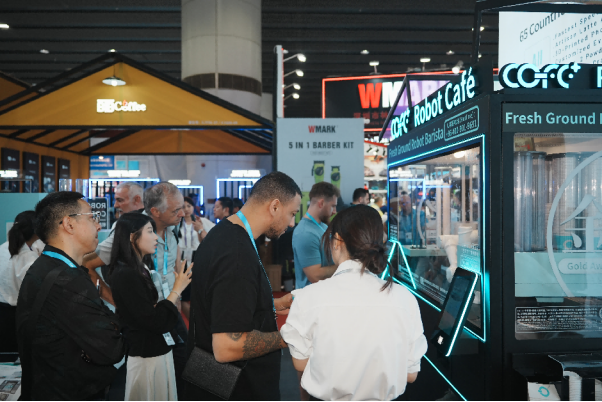
7th-Genertion Smart Robot Coffee Kiosk Arrives at the Belt and Road Core Hub, Ushering in a New Service Era Along t……
CHICAGO, May 12, 2026 (GLOBE NEWSWIRE) – Shanghai Hi-Dolphin Robot Technology today announced the U.S. debut of its 7th‑……