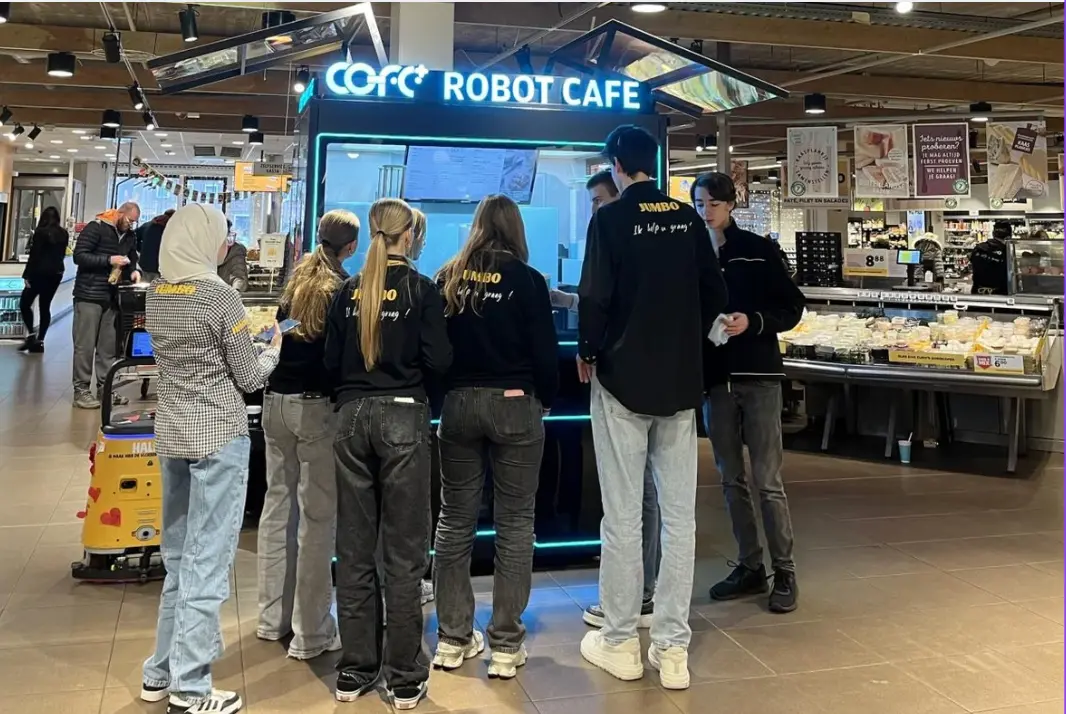
The Rise of Professional Robotic Café Technology: What COFE+ Is and Why It Matters
TL;DR — COFE+ is a fully automated robotic coffee kiosk that grinds fresh beans, brews espresso and lattes, creates latt……

Starting a robot coffee business requires understanding the intersection of automation technology, real estate economics, and consumer behavior patterns that make unmanned retail viable. The investment decision hinges on three factors: initial capital outlay, ongoing operational costs, and revenue potential across different deployment scenarios. Unlike traditional coffee shops where labor represents 25% to 35% of operating expenses, robot coffee kiosks eliminate this variable almost entirely, fundamentally changing the break-even calculation. For entrepreneurs evaluating this market, the question is not whether automation works, but which format, location type, and revenue model aligns with available capital and risk tolerance.
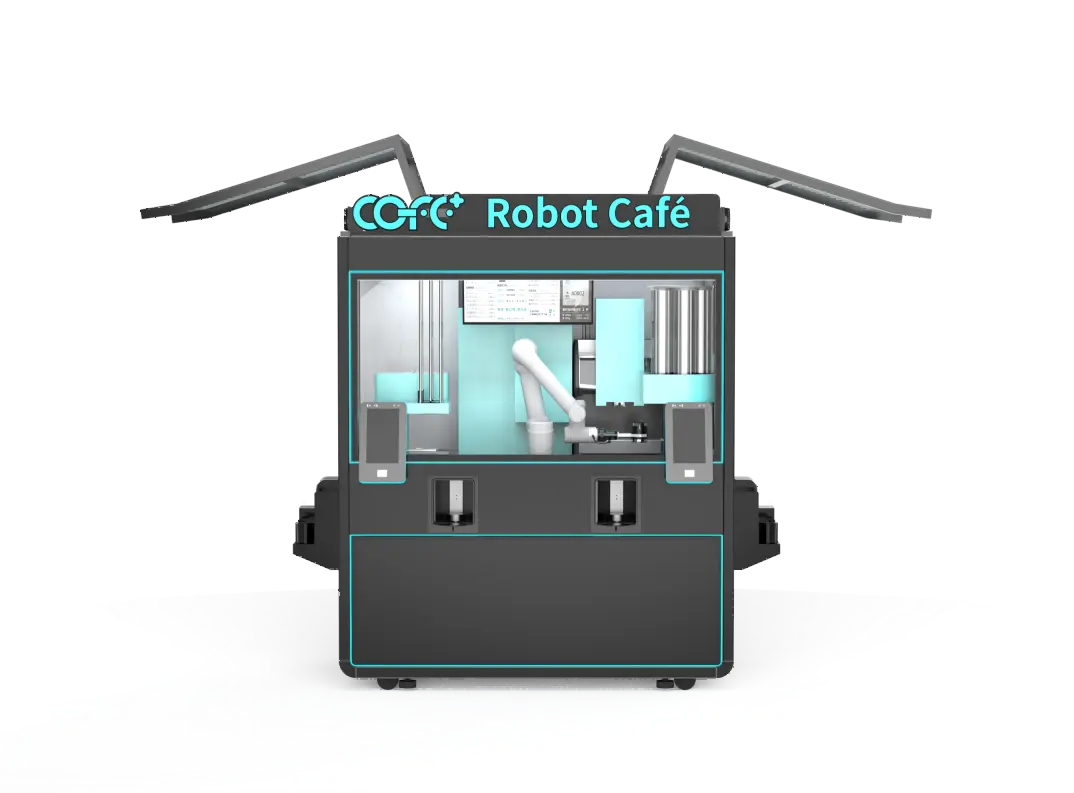
The initial investment for a robot coffee business varies dramatically based on equipment selection, deployment location, and operational scope. A single robot coffee kiosk indoor unit from established manufacturers typically ranges from $25,000 to $60,000, depending on capabilities, menu complexity, and certification requirements for target markets.
Beyond equipment acquisition, launch costs include:
| Cost Category | Typical Range | Notes |
|---|---|---|
| Equipment (single unit) | $25,000–$60,000 | Varies by model and certifications |
| Site preparation | $2,000–$8,000 | Electrical, plumbing, flooring |
| Initial inventory | $1,500–$3,000 | Beans, milk, cups, syrups |
| Permits and licenses | $500–$2,500 | Jurisdiction dependent |
| Installation and training | $1,000–$3,000 | Often included by manufacturer |
The COFE+ 7th Generation indoor unit, for instance, requires approximately 2.35 square meters of floor space and operates on standard 110V/220V electrical systems, minimizing site preparation complexity. This compact footprint means operators can negotiate lower rent or revenue-share arrangements compared to traditional café buildouts requiring 50 to 100 square meters.
I have observed that first-time operators consistently underestimate soft costs: business registration, food handling certifications, liability insurance, and the working capital needed to cover the first three months before revenue stabilizes. Budget an additional 15% to 20% above hard equipment costs for these items.
Traditional coffee shops generate revenue through a combination of beverage sales, food items, and dwell-time monetization (customers staying longer, buying more). Robot coffee kiosks operate on a fundamentally different model: high transaction volume, minimal footprint, and extended operating hours.
The revenue equation for a robot coffee kiosk centers on three variables:
Cups per day: A well-positioned unit can serve 200 to 400 cups daily in high-traffic locations. The COFE+ system is rated for approximately 1,000 cups per day at peak capacity, with each drink produced in 43 to 60 seconds. Actual throughput depends entirely on location foot traffic and demand patterns.
Average ticket price: Robot coffee typically sells at $3.50 to $6.00 per cup in developed markets, positioning between vending machine coffee and specialty café pricing. The 350+ drink customization options (coffee, milk tea, matcha, chocolate, iced beverages) allow operators to capture different price points throughout the day.
Operating hours: This is where the robot model creates structural advantage. A 24-hour unmanned operation captures early morning commuters, late-night workers, and weekend traffic that traditional cafés miss entirely. In airport or hospital deployments, the overnight hours often generate 20% to 30% of total daily revenue.
Consider a conservative scenario: 150 cups per day at an average price of $4.50 generates $675 daily revenue, or approximately $20,250 monthly. With cost per cup running $0.30 to $0.70 for ingredients (depending on drink type and local supply costs), gross margins reach 80% to 90% before fixed costs.
Location selection determines whether a robot coffee business succeeds or fails. The absence of staff means you cannot rely on barista personality or service quality to compensate for poor positioning. The machine must be where customers already are, at the moment they want coffee.
High-performing deployment categories include:
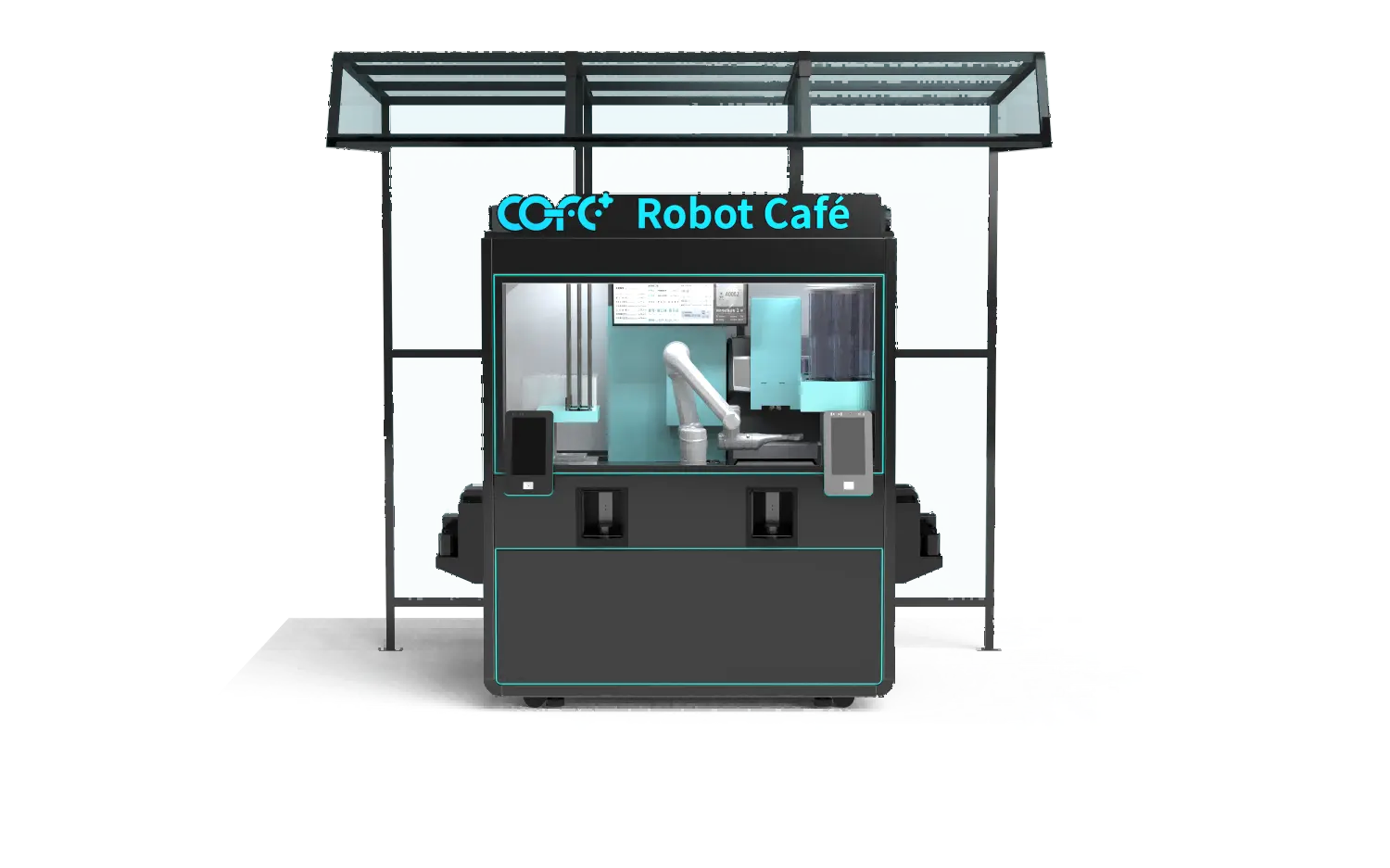
Transportation hubs: Airports, train stations, and metro exits combine high foot traffic with time-pressed customers willing to pay premium prices. The robot coffee kiosk outdoor format handles the environmental challenges of semi-exposed transit locations, operating from -20°C to 45°C with IP54-rated protection.
Office buildings and corporate campuses: Captive audiences with predictable demand patterns. Morning rush, post-lunch slump, and late afternoon peaks create three distinct revenue windows. The robot coffee counter format integrates into existing lobby or break room designs without requiring dedicated retail space.
Universities and hospitals: 24-hour populations with irregular schedules. A campus deployment captures students studying at 2 AM and medical staff on overnight shifts, revenue windows completely inaccessible to traditional operators.
Shopping malls and entertainment venues: Impulse purchase environments where novelty value (watching a robot make coffee, 3D latte art printing) converts foot traffic into transactions.
The worst locations share common characteristics: low foot traffic, price-sensitive customers, or existing coffee saturation. A robot kiosk in a suburban strip mall competing against established drive-through chains faces an uphill battle regardless of technology advantages.
Once deployed, a robot coffee kiosk generates predictable operating expenses that differ substantially from traditional café operations:
| Expense Category | Monthly Range | Traditional Café Comparison |
|---|---|---|
| Rent/revenue share | $500–$3,000 | $3,000–$15,000 |
| Ingredients (COGS) | $1,500–$4,000 | Similar at equivalent volume |
| Maintenance/service | $200–$500 | N/A (replaced by labor) |
| Utilities | $100–$300 | $500–$1,500 |
| Insurance | $100–$300 | $300–$800 |
| Cloud monitoring/software | $50–$150 | N/A |
| Labor | $0 | $8,000–$25,000 |
The labor line represents the structural difference. A traditional café serving 200 cups daily requires two to three staff members across shifts, generating $8,000 to $15,000 in monthly wages plus benefits, training costs, and management overhead. The robot kiosk replaces this entirely with a maintenance contract and remote monitoring subscription.
I have found that operators who budget $500 monthly for unexpected repairs and ingredient waste in the first year avoid cash flow surprises. Machines are reliable (the COFE+ system is tested for 500,000+ cups over a 10-year lifespan), but initial deployment always surfaces site-specific issues: power fluctuations, water quality variations, or customer usage patterns that require recipe adjustments.
Break-even analysis for a robot coffee business follows standard retail math, but the variables differ from traditional food service:
Fixed monthly costs: Sum rent, insurance, maintenance contract, software fees, and loan payments (if financing equipment). For a typical indoor deployment, this ranges from $1,500 to $4,500 monthly.
Variable cost per cup: Ingredients plus payment processing fees, typically $0.40 to $0.90 per transaction.
Average selling price: Your menu pricing strategy, usually $4.00 to $5.50 for specialty drinks.
Break-even cups per day = Fixed monthly costs ÷ [(Average price – Variable cost) × 30]
Using middle-range figures: $3,000 fixed costs ÷ [($4.50 – $0.65) × 30] = 26 cups per day to break even.
This is remarkably low compared to traditional café break-even calculations, which typically require 80 to 150 cups daily just to cover labor costs. The robot model reaches profitability at transaction volumes that would bankrupt a staffed operation.
For investors evaluating ROI timelines, most well-positioned deployments achieve payback within 6 to 12 months. The calculation depends heavily on equipment financing terms: cash purchases accelerate payback but tie up capital, while lease arrangements spread costs but extend the timeline.
The robot coffee market offers multiple form factors suited to different deployment scenarios and investment levels. Understanding these options prevents mismatches between equipment capabilities and business requirements.
Indoor kiosk format: The standard deployment for malls, office lobbies, and controlled environments. The COFE+ 7th Generation indoor unit occupies 2.35 square meters, produces 300+ drink varieties, and includes 3D latte art printing and robotic arm foam art capabilities. This format suits operators seeking premium positioning and maximum menu flexibility.
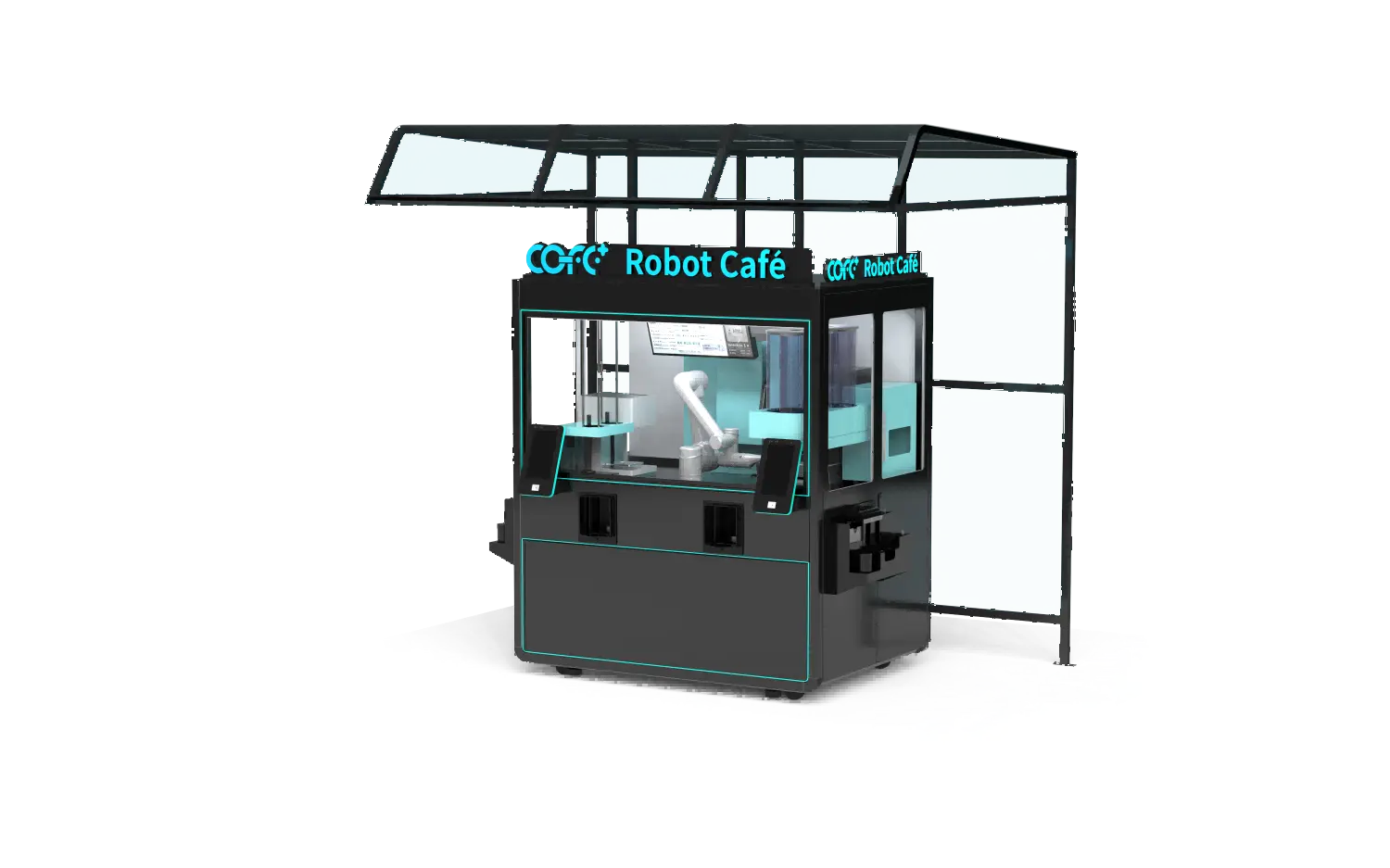
Outdoor kiosk format: Ruggedized units for parks, street corners, gas stations, and transit areas. IP54-rated environmental protection, anti-condensation systems, and UV-resistant exteriors handle weather exposure. Higher upfront cost, but access to locations unavailable to indoor equipment.
Robot coffee bar format: Transformable design that converts from a compact counter to a four-seat social space. Suited for hotels, co-working spaces, and venues where customer dwell time adds value beyond the transaction itself.
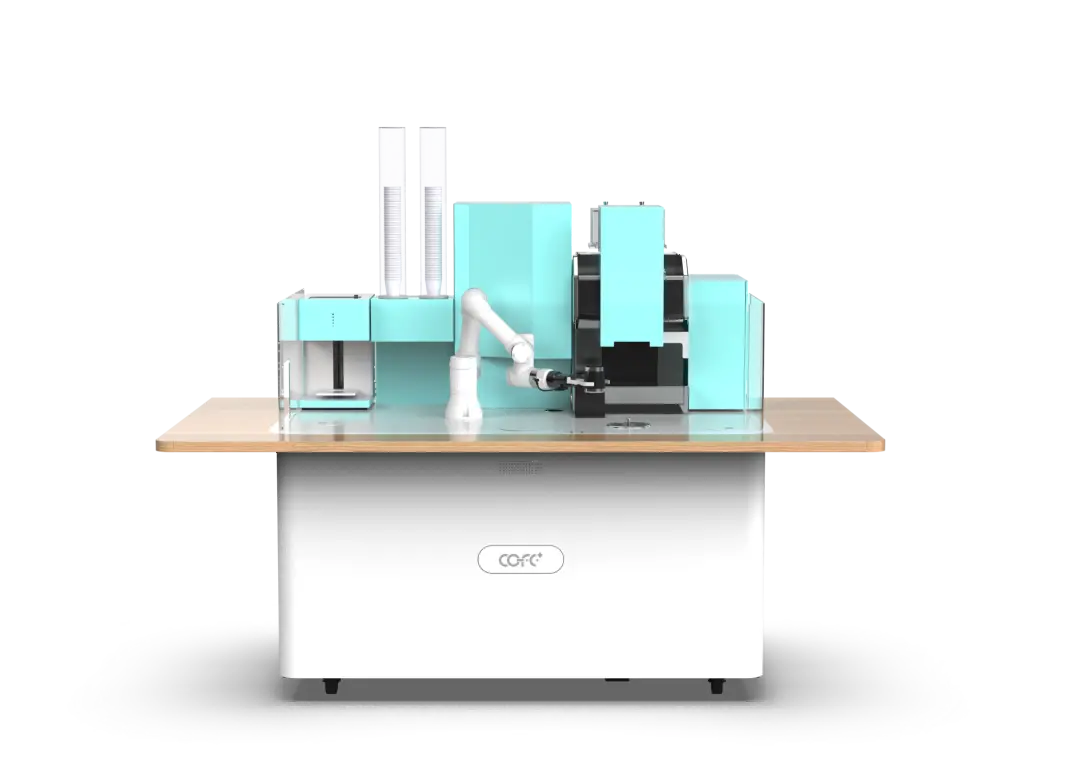
Counter-integrated format: Built-in units designed for premium interiors where the equipment becomes part of the architectural design. Higher installation complexity but creates “coffee theater” experiences in luxury hotels, VIP lounges, and high-end retail environments.
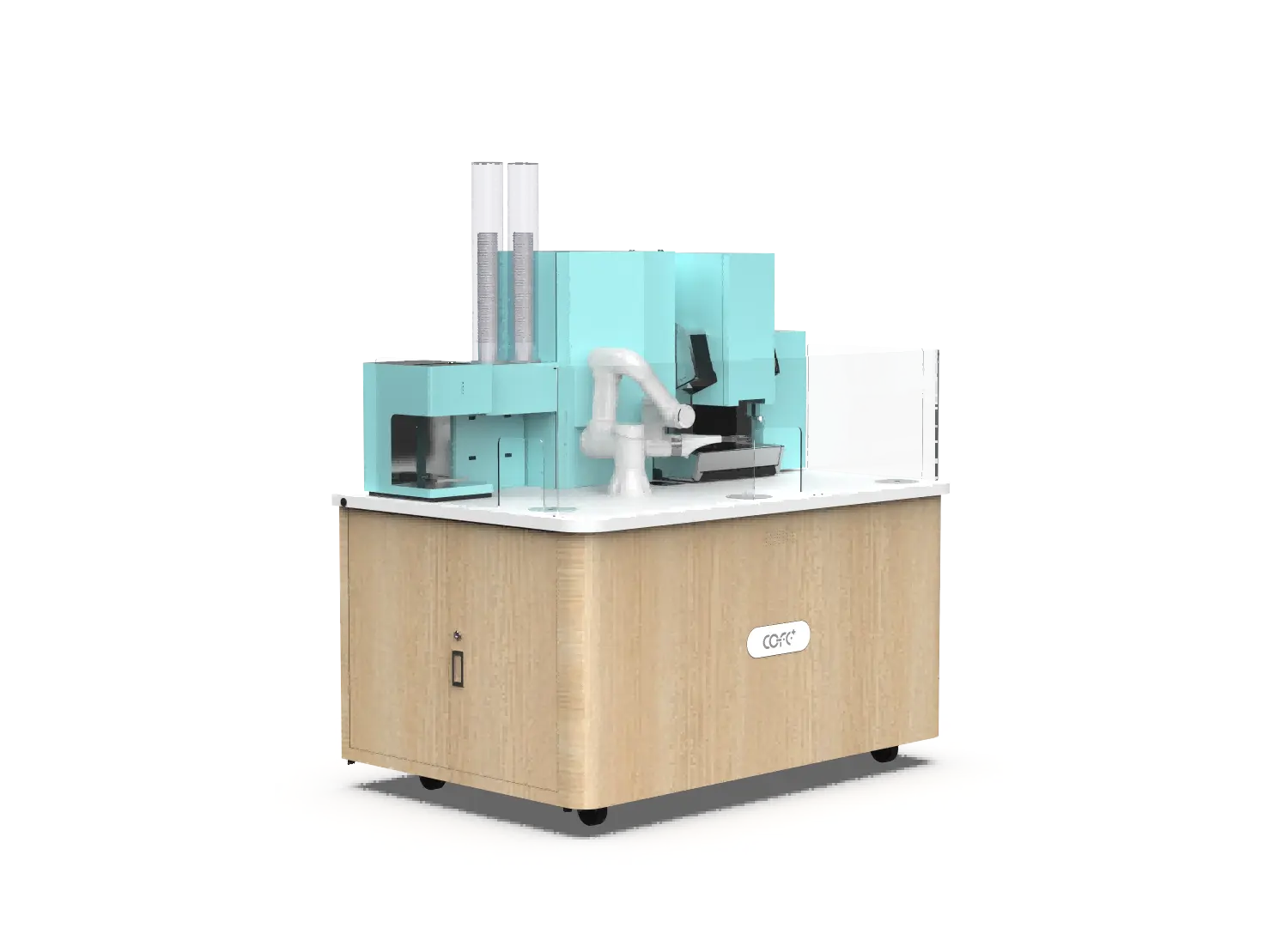
Each format carries different certification requirements. Units destined for international deployment need FDA, CE, UKCA, KC, or SASO certifications depending on target markets. The COFE+ line holds certifications across 18+ developed country standards, simplifying multi-market expansion for operators with global ambitions.
Single-unit operators who achieve stable profitability face a strategic decision: optimize the existing location or expand to additional sites. The robot coffee model favors expansion because the operational complexity does not scale linearly with unit count.
A smart store brain cloud management system allows one operator to monitor inventory levels, sales patterns, and equipment status across dozens of units simultaneously. This centralized visibility means adding a second, fifth, or twentieth location does not require proportional increases in management time.
Expansion strategies typically follow one of three patterns:
Geographic clustering: Multiple units within a single city or region, sharing supply chain logistics and maintenance coverage. This approach minimizes travel time for restocking and repairs while building local brand recognition.
Venue-type specialization: Focusing on a single deployment category (all airports, all universities, all corporate campuses) to develop expertise in that customer segment’s preferences and operational requirements.
Franchise or distribution model: Becoming a regional distributor for equipment manufacturers, earning revenue from both equipment sales and ongoing supply relationships. The distributor wanted programs offered by manufacturers like Hi-Dolphin provide territory rights and support infrastructure for this approach.
The capital requirement for multi-unit expansion can be structured creatively. Some operators negotiate revenue-share arrangements with venue owners, reducing upfront costs in exchange for ongoing percentage splits. Others pursue equipment financing that uses projected revenue from existing units as collateral for new deployments.
Robot coffee businesses carry specific risks that differ from traditional food service investments:
Technology dependence: Equipment failure means zero revenue until repairs complete. Mitigation requires maintenance contracts with guaranteed response times and understanding the manufacturer’s parts availability and service network in your region.
Location volatility: A corporate campus that loses a major tenant, a mall that declines, or a transit hub that changes traffic patterns can devastate a fixed-location deployment. Shorter lease terms and revenue-share arrangements (rather than fixed rent) provide flexibility to relocate underperforming units.
Consumer acceptance variation: Robot coffee performs differently across markets. Urban, tech-forward populations embrace automation readily; traditional or older demographics may resist. Test deployments before committing to multi-unit expansion in unfamiliar markets.
Regulatory uncertainty: Food service automation exists in a regulatory gray area in some jurisdictions. Health department interpretations of unmanned food preparation requirements vary. Confirm local compliance requirements before equipment purchase.
Competitive response: Success attracts competition. Traditional coffee chains are experimenting with automation, and new robot coffee manufacturers enter the market regularly. Sustainable advantage comes from location relationships and operational excellence, not technology alone.
The robot coffee business model suits specific investor profiles better than others. Ideal candidates share several characteristics:
Comfort with technology: You do not need engineering expertise, but you must be willing to learn equipment operation, troubleshoot basic issues, and communicate effectively with technical support teams.
Access to locations: The business is fundamentally a real estate play. Investors with existing relationships in commercial property, hospitality, or institutional facilities have structural advantages in securing high-traffic placements.
Patience for optimization: First deployments rarely achieve maximum performance immediately. Menu adjustments, pricing experiments, and marketing refinements take 3 to 6 months to stabilize. Investors expecting immediate returns will be disappointed.
Capital for contingencies: Budget 20% above projected costs for unexpected expenses. Equipment arrives damaged, permits take longer than expected, initial locations underperform and require relocation. Adequate reserves prevent forced decisions during the learning curve.
If your investment profile matches these characteristics and you have identified specific locations with confirmed foot traffic, the robot coffee model offers compelling unit economics. The combination of 80%+ gross margins, minimal labor requirements, and 24-hour revenue potential creates a business structure fundamentally different from traditional food service.
For operators ready to evaluate specific equipment options and deployment scenarios, sending your target location details and volume projections to sales@hi-dolphin.com or calling +86 131 6630 1290 initiates the site assessment process that determines whether your business case holds up under scrutiny.
Most operators reach monthly profitability within 60 to 90 days of deployment, assuming adequate location foot traffic. Break-even at the unit level requires only 25 to 40 cups daily in typical cost structures, a threshold most viable locations exceed within the first month. Full investment payback (recovering equipment and setup costs) typically occurs within 6 to 12 months for well-positioned units. The timeline extends if you finance equipment rather than purchase outright, or if initial location selection requires adjustment. Operators who relocate underperforming units add 3 to 6 months to their payback timeline but often achieve stronger long-term returns by finding optimal positioning.
The operational model supports part-time management once deployment stabilizes. Daily time requirements typically run 30 to 60 minutes for inventory checks and restocking, plus occasional maintenance coordination. Cloud monitoring systems alert you to issues remotely, and most restocking can be scheduled around your primary work hours. The challenge comes during the initial 2 to 3 months when you are learning the equipment, optimizing recipes, and resolving site-specific issues. Plan for more intensive involvement during this period. If your schedule cannot accommodate this startup phase, consider partnering with someone who can handle initial operations or delaying launch until you have adequate time available.
Equipment reliability has improved substantially in recent generations. The COFE+ system is tested for 500,000+ cups over a 10-year design life, and most failures involve consumable components (grinders, pumps) rather than catastrophic breakdowns. Maintenance contracts typically guarantee 24 to 48 hour response times for service calls. The real question is how you structure your business to handle downtime. Operators with multiple units can redirect customers to nearby locations. Single-unit operators should negotiate maintenance terms that include loaner equipment or expedited parts shipping. Budget for 2 to 3 days of downtime annually in your financial projections, and maintain cash reserves to cover the revenue gap.
Food service experience is not required but accelerates your learning curve. The equipment handles beverage preparation automatically, so barista skills are irrelevant. What matters more: understanding inventory management, customer service basics, and the discipline to maintain consistent quality standards. Operators from retail, logistics, or technology backgrounds often succeed because they approach the business systematically rather than relying on food service intuition. The manufacturer training covers equipment operation; your job is business management. If you have never run any customer-facing business, consider partnering with someone who has, or start with a single unit to build experience before expanding.
Cash purchase maximizes long-term returns but ties up capital that could fund additional units or cover contingencies. Equipment financing spreads costs over 24 to 60 months, preserving liquidity but adding interest expense. Lease arrangements offer the lowest upfront commitment but typically cost more over the equipment lifetime and may restrict your ability to modify or relocate units. The right choice depends on your capital availability, risk tolerance, and expansion timeline. Operators planning rapid multi-unit growth often finance initial units to preserve capital for additional deployments. Single-unit operators with adequate savings frequently prefer outright purchase to maximize per-unit profitability. If you are uncertain which structure fits your situation, share your capital position and growth plans with equipment providers who can model different scenarios.
Grand View Research — Coffee Vending Machine Market Size Report, 2024
TL;DR — COFE+ is a fully automated robotic coffee kiosk that grinds fresh beans, brews espresso and lattes, creates latt……
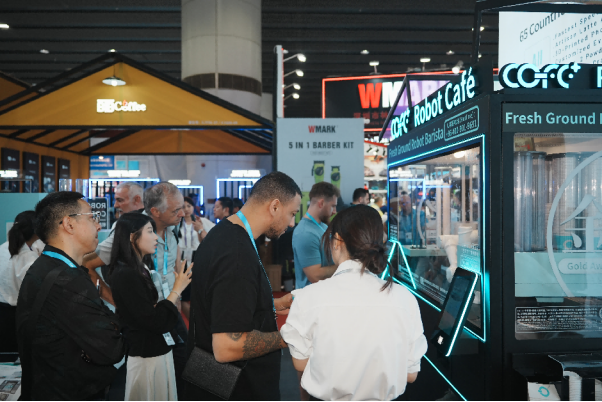
7th-Genertion Smart Robot Coffee Kiosk Arrives at the Belt and Road Core Hub, Ushering in a New Service Era Along t……
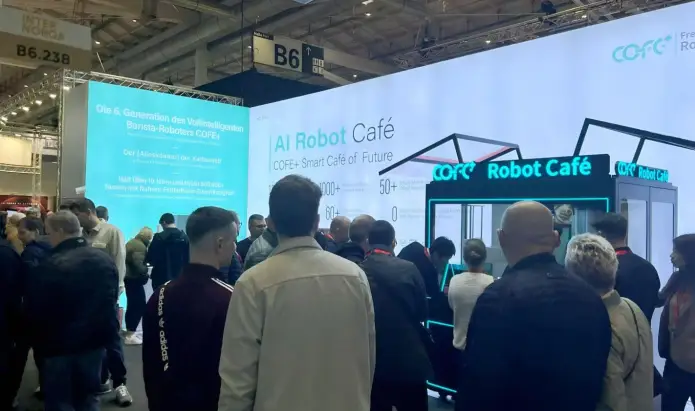
CHICAGO, May 12, 2026 (GLOBE NEWSWIRE) – Shanghai Hi-Dolphin Robot Technology today announced the U.S. debut of its 7th‑……