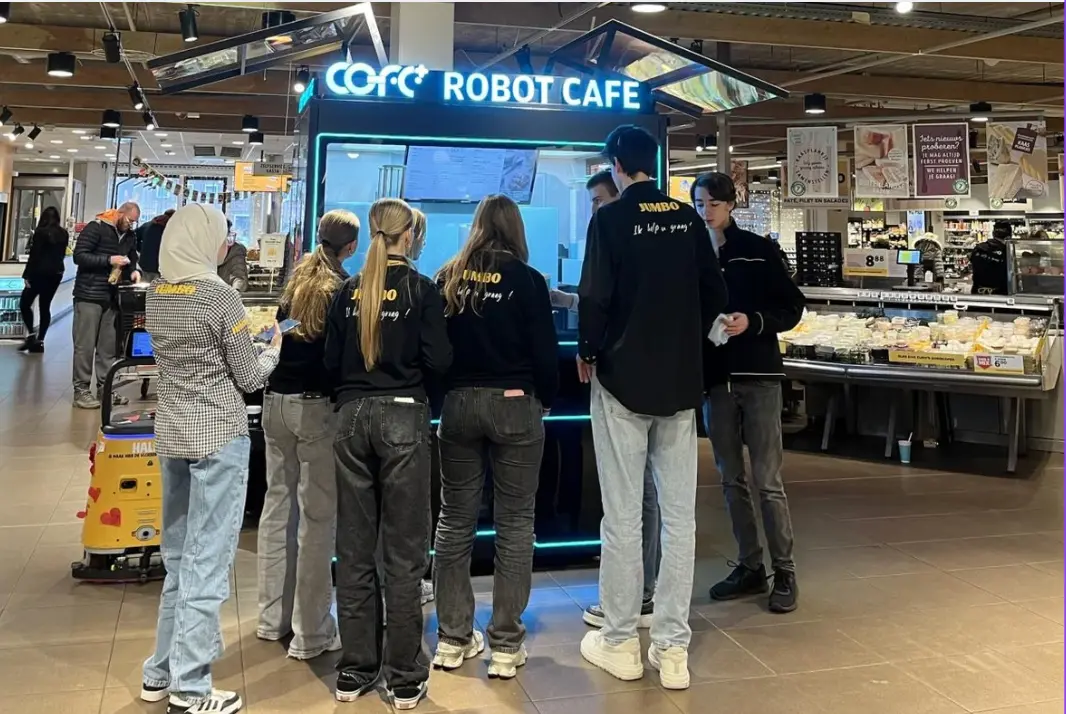
The Rise of Professional Robotic Café Technology: What COFE+ Is and Why It Matters
TL;DR — COFE+ is a fully automated robotic coffee kiosk that grinds fresh beans, brews espresso and lattes, creates latt……

Cold weather drink strategies for robot coffee kiosks are not a seasonal afterthought — they determine whether an unmanned coffee operation turns a solid profit or struggles during the months that can make up 60% of annual revenue. From our deployments in over 35 countries, I have seen the same pattern reappear each autumn: locations that switch to a deliberate hot-sweet-customizable menu see per-cup revenue jump by double digits, while kiosks that keep a generic menu watch sales flatline even as foot traffic holds steady. This article lays out which drink categories work, why robot automation makes complex winter drinks more profitable than manual coffee carts can manage, and how to adjust operations so the kiosk keeps running smoothly even when thermometers hit freezing.
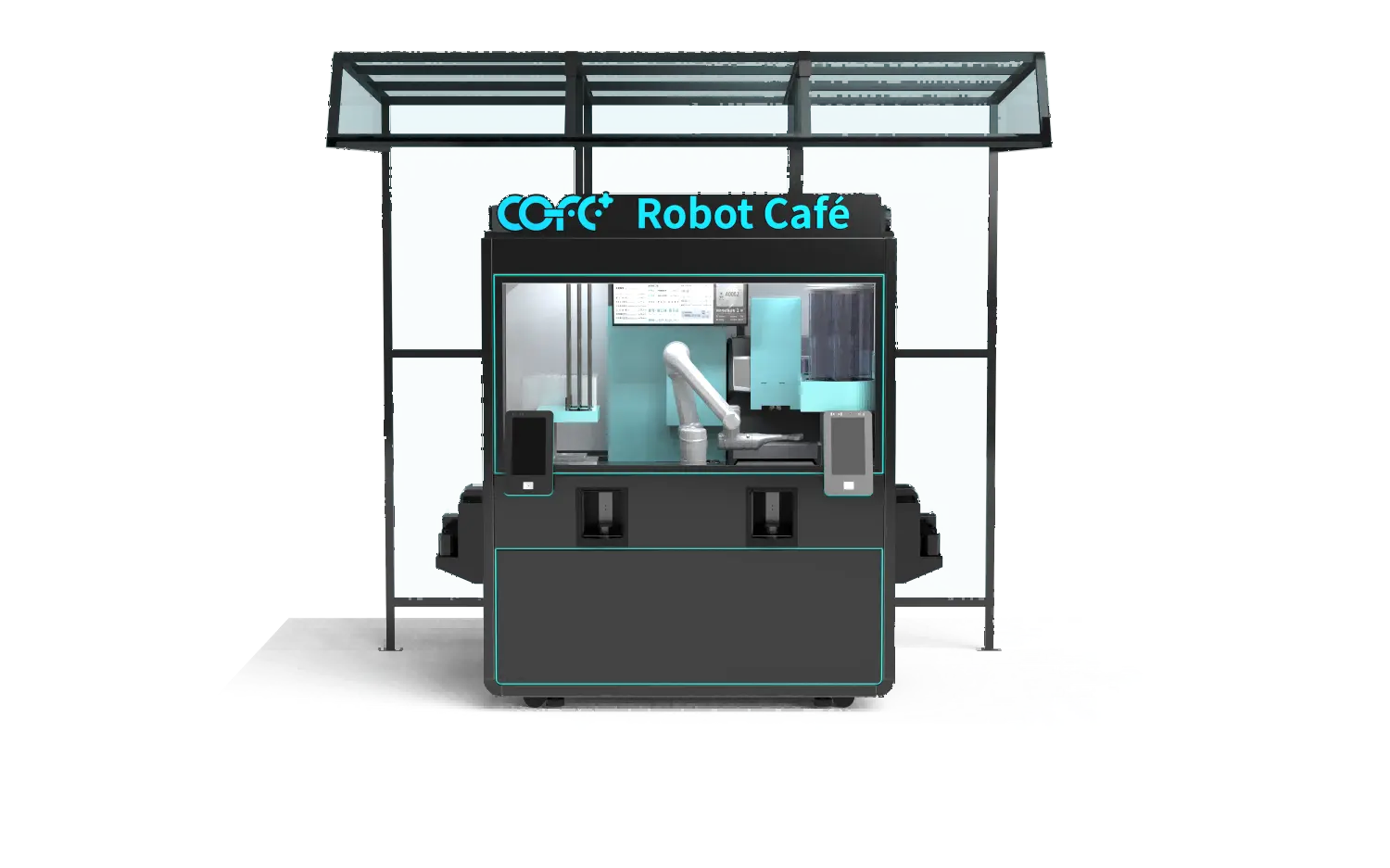
When temperatures drop below 10°C, the primary driver of a purchase decision shifts from refreshment to warmth and energy. This is not subtle. A robot coffee kiosk placed in a shopping center or transit hub during winter will see demand for hot espresso-based drinks rise sharply, while iced and blended items — popular in summer — fall to a fraction of total orders.
The shift happens across all demographic segments, but it is especially pronounced among commuters and early-morning customers. They want a drink that heats them up immediately, often with an added sugar kick. In our experience, the percentage of orders containing at least one syrup or sweetener increases measurably in cold-weather months. The robot’s ability to dose syrups with repeatable precision — every cup identical regardless of whether it’s the 5th or the 500th order of the day — means operators can confidently promote sweet seasonal flavors without worrying about barista training or waste. On a manual coffee cart, adding three seasonal syrups creates complexity; on a COFE+ robot kiosk, it is simply a digitized recipe switch.
Not every hot drink sells well; the successful ones share measurable traits: a hot base, a pronounced flavor (sweet, spiced, or chocolate), and a visual finish that reinforces quality. We have observed four categories that consistently dominate ticket counts in cold-weather locations.
| Drink Category | Typical Price Range | Margin Profile | Robot Advantage |
|---|---|---|---|
| Sweetened lattes (vanilla, caramel, hazelnut) | $3.50–$5.00 | High (syrup cost low) | Automated syrup dosing eliminates over-pour waste |
| Spiced seasonal drinks (pumpkin spice, gingerbread, chai latte) | $4.00–$5.50 | High (limited-time markup) | Recipe library updates remotely, no staff retraining |
| Hot chocolate and mochas with toppings | $3.00–$4.50 | Medium-high | Whipped cream and drizzle dispensed uniformly |
| Comfort teas and matcha lattes | $2.50–$4.00 | Medium | Precise water temperature control every cup |
Sweetened lattes remain the backbone because they are familiar and easily customized. Vanilla latte with oat milk, caramel latte with an extra shot — these modifications are where robots excel. A human barista in a busy airport kiosk might hesitate to offer six syrup options; a robot kiosk with a 300-drink menu does it by default.
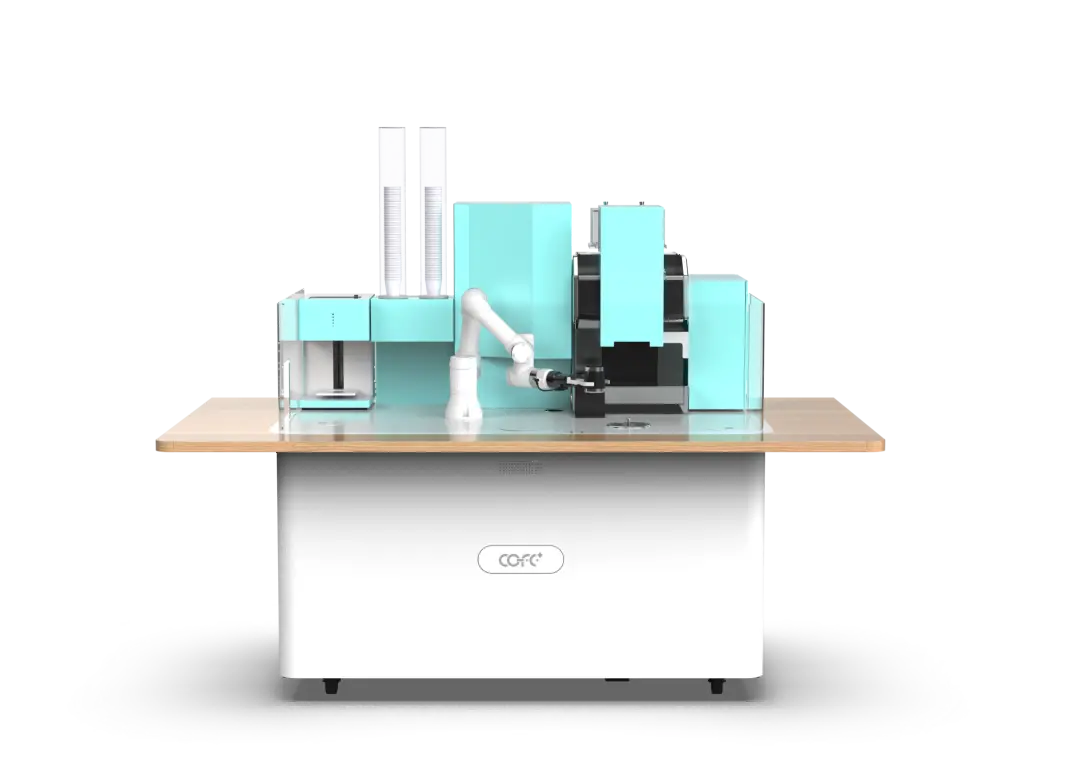
Seasonal drinks deserve special attention. In cold weather, flavours tied to winter holidays — pumpkin spice, peppermint, gingerbread — create a perception of novelty and scarcity that lifts the average order value. Our platform allows an operator to push a seasonal menu to multiple kiosks across a city from a single dashboard. A peppermint mocha that sells well in Chicago can be activated in Prague the same day, with the robot executing the new recipe at identical quality.
Toppings further increase perceived value. Whipped cream, chocolate shavings, and caramel drizzle add less than $0.10 in cost but can support a $0.80 price increase. The robotic dispensing system ensures the same visual presentation every time, which matters for customer photos shared on social media — an organic marketing channel that costs nothing.
Cold-weather customers are less price-sensitive if the drink delivers warmth and indulgence. This creates room for smart pricing and bundling. We have seen operators achieve a 15–25% increase in average ticket value by applying three specific tactics, all of which a robot kiosk can execute without additional labor.
First, bundle a hot drink with a pastry or snack. The kiosk’s touchscreen can prompt “Add a warm croissant for $1.50?” at checkout. Because the robot handles the drink, the operator only needs to stock wrapped pastries; there is no time penalty for cross-selling.
Second, upsell a larger size or an extra espresso shot for a fixed surcharge. The robot’s built-in inventory tracking makes it easy to offer a “$0.75 double shot” upgrade because ingredient costs are precisely known and automatically deducted from stock counts.
Third, create a limited-time combo that ties a seasonal syrup to a premium milk alternative. Oat milk lattes with brown sugar syrup, for example, command a higher price while costing only slightly more in materials. The robot’s simultaneous workload management — grinding, extracting, steaming, and topping — means a complex order does not slow down the queue, a limitation that often discourages manual baristas from pushing time-consuming add-ons during peak hours.
If your kiosk location serves a tourist or mixed-culture audience, menu language localization can lift conversion rates. A kiosk screen that offers “Latte caldo alla vaniglia” in an Italian-speaking region will outperform an English-only menu. This is a simple software change on a robot platform; on a manual cart, it would require multilingual staff.
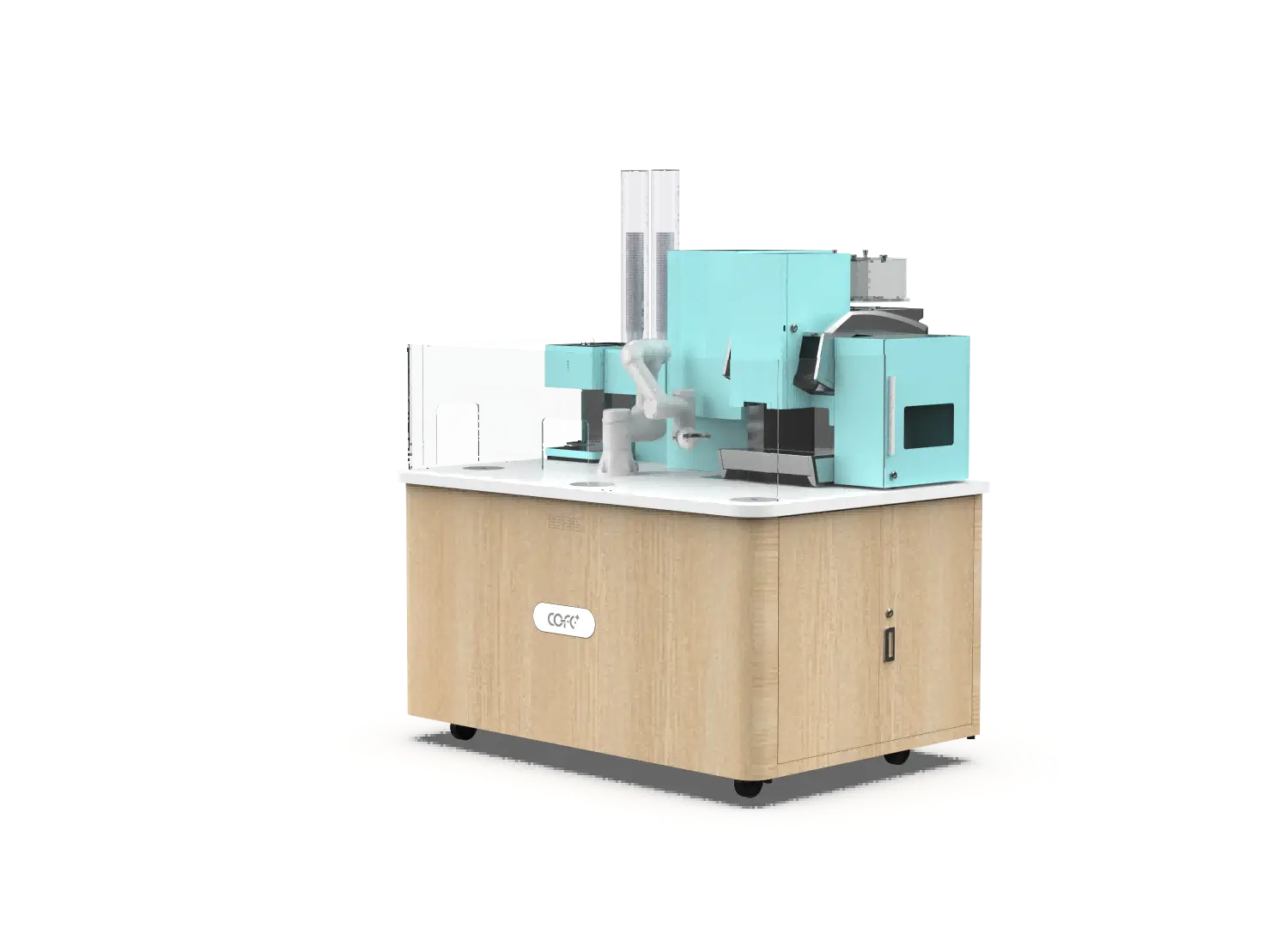
The reason a robot coffee kiosk can offer a wider, more profitable cold-weather menu than a traditional cart comes down to three technical capabilities: programmable recipe precision, 24/7 service without shift limits, and integrated environmental control that protects ingredients in freezing conditions.
Programmable recipes mean that a 300-drink menu does not require any additional training. The robot’s grinder adjusts grind size per drink type, water temperature stays within 1°C of the target, and milk frothing follows a programmed sequence that produces identical microfoam for lattes and dry foam for cappuccinos. A manual barista making a large cappuccino at 6 a.m. in a cold kiosk will struggle to replicate the same quality at 4 p.m. when tired; a robot reproduces it exactly, cup after cup.
Twenty-four-hour operation changes the economics of cold-weather locations. A ski resort parking lot or a train station concourse sees foot traffic at hours — midnight, 5 a.m., late evening — when staffing a coffee counter is financially unworkable. The robot kiosk serves those customers at a cost per cup of approximately $0.30 to $0.70, depending on ingredient choices, with no incremental labor cost for the extra hours. In practice, we have witnessed robots in Nordic outdoor installations generate significant revenue between 11 p.m. and 6 a.m., hours that would be closed in a staffed operation.
Environmental control is the often-overlooked advantage. Our outdoor robot coffee kiosk model is tested to operate from -20°C to 45°C with an IP54-rated enclosure that prevents condensation and freezing inside the mechanism. Ingredients remain at safe, consistent temperatures; the water system has built-in heating to prevent line freezing. A manual cart operator in the same conditions would constantly fight equipment frost and ingredient spoilage, while the robot runs autonomously.
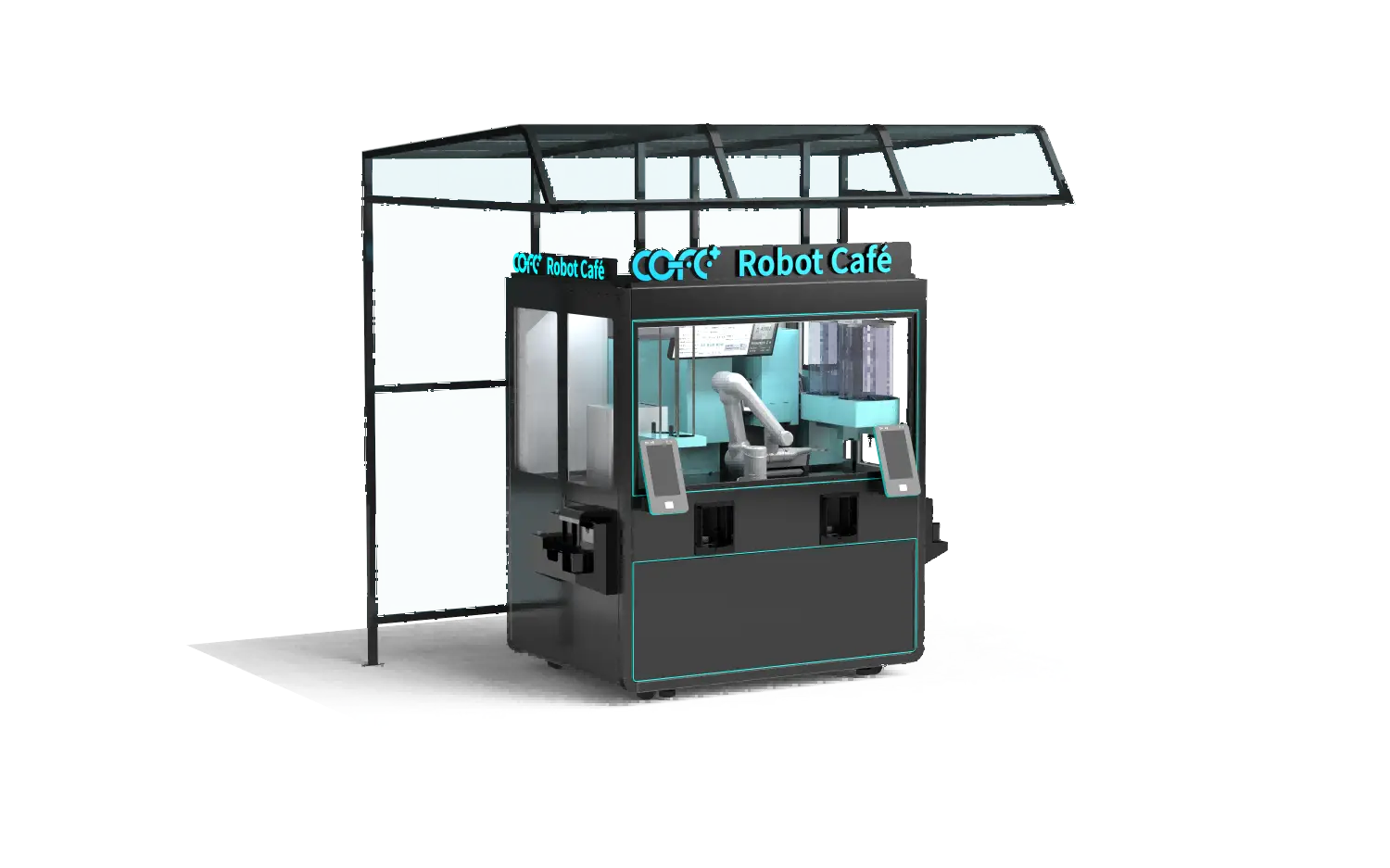
Even the best-automated system needs site-level preparation to handle sustained cold. Three areas matter most: water supply, enclosure integrity, and consumable stocking.
If you use a direct water line, it must be heat-traced and insulated. A frozen supply line can shut down a kiosk for hours, and in an unmanned operation, the outage may not be noticed until a customer reports it. Where possible, pair the kiosk with an internal water tank that is temperature-controlled. This eliminates dependence on site plumbing and allows placement in locations without a plumbed water connection.
Enclosure door seals should be inspected weekly during winter. Warm internal electronics attract condensation, and if cold outside air leaks in, ice can form on the dispensing mechanism. Our remote monitoring platform sends an alert if the interior temperature falls outside the set range, but physical inspection is still wise. Keep a supply of desiccant packs inside non-food-contact compartments.
Ingredient restocking frequency increases in cold weather because hot drink demand rises. Track syrup and milk inventory through the cloud dashboard and set reorder triggers at 30% remaining, not 10%. Running out of peppermint syrup on a Saturday at a Christmas market is a missed revenue stream that does not come back. For operators managing multiple kiosks, consolidating consumable orders across sites improves delivery efficiency.
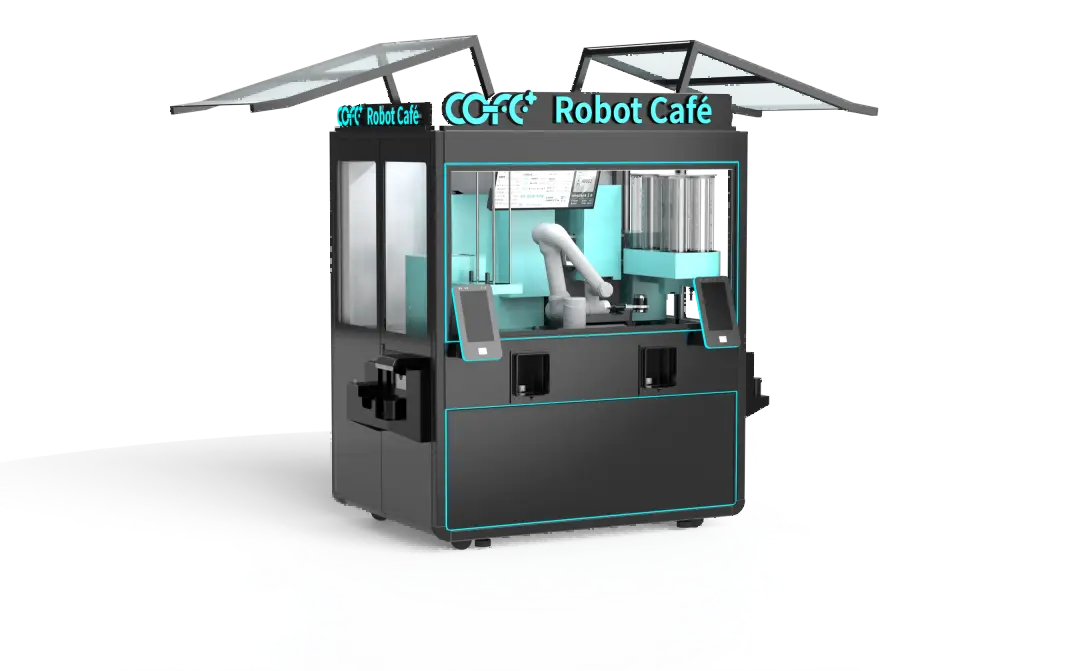
Yes, provided the kiosk has active internal climate control. The COFE+ outdoor model continuously monitors internal temperature and adjusts heater output to keep the brewing components and ingredient compartments within a tight band. Grind size, water temperature, and extraction time are then executed from digitized recipes that do not drift. A human barista working in a cart that alternates between freezing mornings and warmed afternoon sun will unconsciously adjust technique; a robot does not. We have verified cup-to-cup consistency across ambient temperature shifts of 15°C within a single eight-hour period.
New recipes can be programmed into the kiosk’s library remotely. If a distributor in Norway finds that cardamom-infused lattes outsell vanilla, that recipe — specifying the coffee-to-milk ratio, syrup volume, temperature, and foam texture — can be added within hours through the cloud management system. The local operator does not need to fly a technician out or train any staff. This capability is especially useful for adapting to regional winter specialties, such as mulled spice lattes in Central Europe or sweetened condensed milk coffee in Southeast Asian winter tourism spots.
The answer depends on the model and drink mix, but as a practical benchmark, a fully stocked indoor robot coffee kiosk can produce up to approximately 1,000 cups before requiring a consumable refill. In a high-traffic cold-weather setting — a major commuter rail station, for instance — heavy demand for milk-heavy drinks may shorten that to around 700–800 cups because milk reservoirs deplete faster. Operators who pre-stage extra milk cartridges and cup stacks inside the kiosk’s lockable storage compartment can swap them in minutes during a scheduled visit. We recommend planning daily mid-morning restock visits for sites that exceed 500 cups per day.
No, if the machine is specified for outdoor use. The outdoor-rated version undergoes accelerated life testing equivalent to 500,000 cups and includes hardened seals, anti-condensation systems, and stainless-steel internals resistant to corrosion from road salt or humidity. Maintenance costs are actually lower in cold weather because the ambient temperature helps keep electronics cool, reducing thermal wear. The autoclave-style cleaning cycle that runs at high temperature neutralizes bacteria and prevents milk-line blockages. We have seen a 10-year design life hold true across installations in Scandinavia, Canada, and alpine regions with only routine preventive service.
If you are planning a robot coffee kiosk deployment in a cold-weather market and want to review which drink lineup, pricing strategy, and outdoor enclosure specifications will maximize your first winter’s revenue, share your target region and expected daily traffic volume with our team. We can supply a site-specific menu simulation and a full commercial quote. Reach out at sales@hi-dolphin.com or call +86 131 6630 1290 to start the conversation.
TL;DR — COFE+ is a fully automated robotic coffee kiosk that grinds fresh beans, brews espresso and lattes, creates latt……
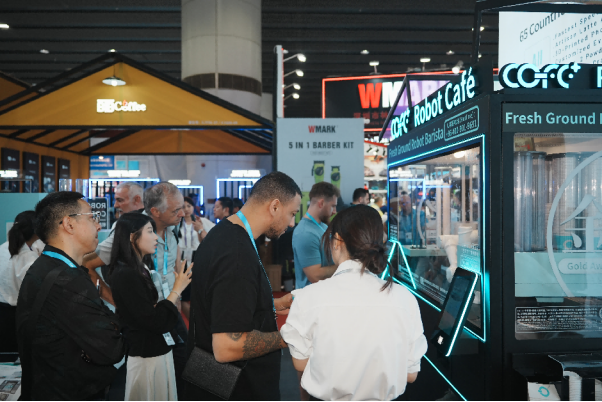
7th-Genertion Smart Robot Coffee Kiosk Arrives at the Belt and Road Core Hub, Ushering in a New Service Era Along t……
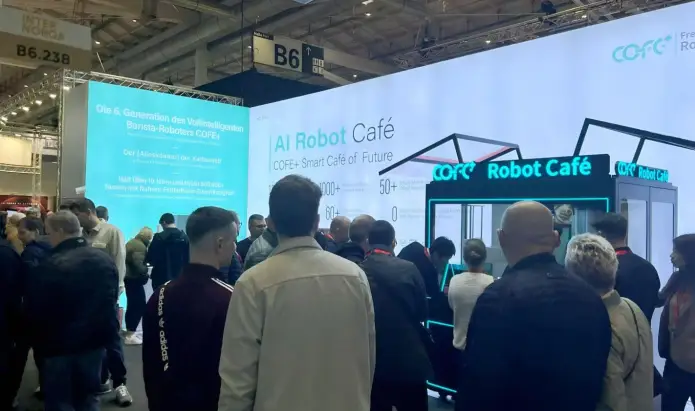
CHICAGO, May 12, 2026 (GLOBE NEWSWIRE) – Shanghai Hi-Dolphin Robot Technology today announced the U.S. debut of its 7th‑……