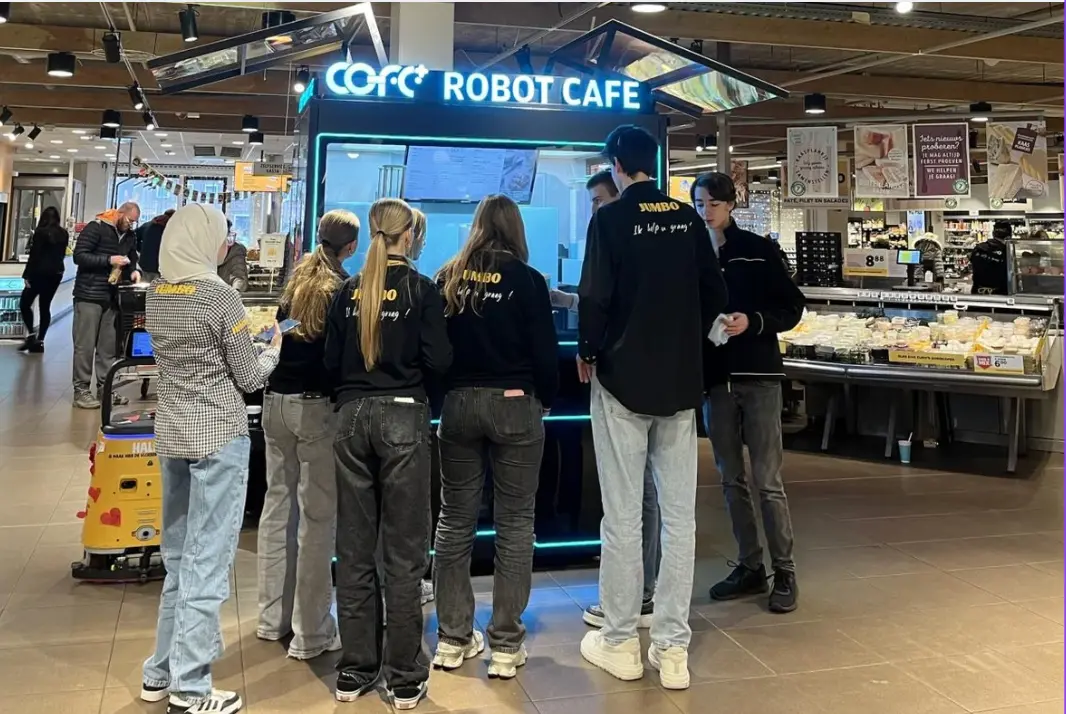
The Rise of Professional Robotic Café Technology: What COFE+ Is and Why It Matters
TL;DR — COFE+ is a fully automated robotic coffee kiosk that grinds fresh beans, brews espresso and lattes, creates latt……

Robot coffee kiosk partnership models offer shopping mall operators a practical path to monetize underused corners while strengthening the visitor experience. These compact automated units serve fresh espresso based drinks, milk teas, and iced beverages without barista staffing, but the financial and contractual structures that govern their placement vary considerably. A partnership that aligns technical reliability with revenue incentives can turn a 2.35 m² footprint into a high margin amenity. This article examines the partnership frameworks, the due diligence that separates durable providers from early stage prototypes, and the infrastructure and financial terms that determine whether a deployment becomes a repeatable mall program or a single site disappointment.
Shopping malls face a persistent staffing crunch in food service. Traditional café operators struggle to fill barista shifts, especially during extended evening and weekend hours when foot traffic peaks. A robot coffee kiosk from a mature provider circumvents that problem entirely. The COFE+ 7th generation indoor kiosk, for instance, serves 300 plus drink varieties, operates 24/7, and holds the capacity to dispense around 1,000 cups per day. It replaces roughly six baristas per machine while maintaining drink consistency across hundreds of consecutive pours. For a mall operator, that translates into reliable coffee service during every open hour without dependence on a tenant’s staffing schedule.
Beyond labor, the economics shift in favor of the landlord. A robot kiosk costs roughly $0.30 to $0.70 per cup in ingredients, electricity, and consumables. With mall coffee prices often falling between $3.50 and $6.00 per cup, the margin is substantial, and the partnership structure determines how that margin is split. Because the kiosk occupies roughly 2.35 m², it can be placed in foot traffic corridors, near cinema entrances, or adjacent to escalator landings where a full café would never fit. This turns dead zones into revenue generating assets.
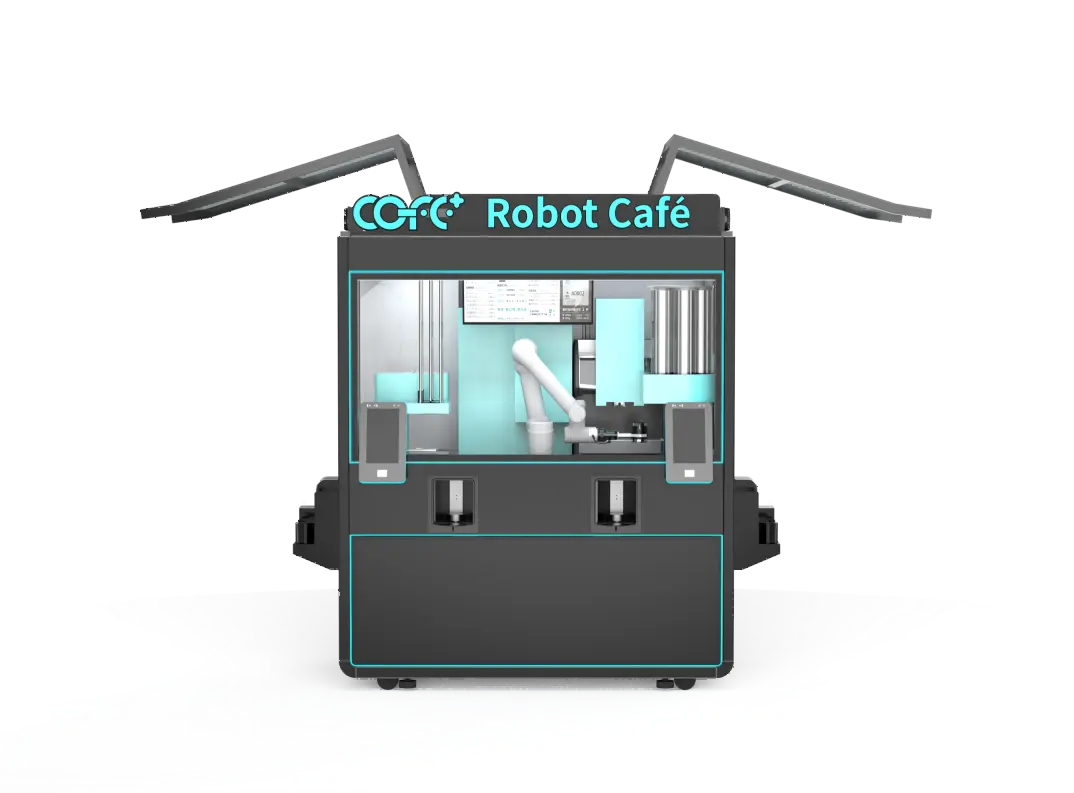
Mall operators typically encounter three distinct partnership frameworks when evaluating a robot coffee kiosk deployment. Each shifts operating responsibility, capital exposure, and revenue in a different direction.
| Partnership Model | Capital Investment | Daily Operations | Revenue to Mall | Best For |
|---|---|---|---|---|
| Revenue sharing | Provider funds kiosk purchase and installation | Provider manages restocking, remote monitoring, and maintenance | 15% to 30% of gross sales | Operators who want passive income with no upfront cost |
| Lease based | Mall contributes site preparation, kiosk is leased from provider | Mall manages consumable refills with provider support | 100% of sales minus fixed lease payment | Operators who want full revenue upside after covering lease cost |
| Hybrid concession | Shared capital arrangement, often with a guaranteed minimum | Provider handles technical maintenance, mall handles daily consumables | Base rent plus percentage over a sales threshold | Operators seeking downside protection with upside participation |
Revenue sharing remains the most common starting point for malls testing automated coffee service. The provider absorbs the hardware cost, ships a certified kiosk, and trains a local service partner. The mall receives a transparent percentage of sales while learning how shoppers respond to the format. Lease based models work best after the concept has proven itself, giving the mall operator the confidence to capture a larger share of the margin.
Price per unit matters less than a kiosk’s uptime record and the provider’s ability to support it across multiple locations. I look at three factors when qualifying a technology partner for a mall program.
First, the kiosk should carry certifications recognized in the mall’s geography. The COFE+ platform, for example, holds FDA, CE, UKCA, KC, and SASO certifications, meaning it has passed food contact material testing and electrical safety reviews in over 18 countries. Shopping malls with international brand tenants or high insurance scrutiny benefit from equipment that arrives pre certified rather than requiring local re inspection.
Second, the kiosk must demonstrate durability validation beyond marketing claims. The indoor robot coffee kiosk we position in malls has been tested to 500,000 plus cups and is designed for a 10 year service life. That engineering margin matters when a kiosk sits in a high traffic corridor serving 300 to 500 cups per day. An inadequately tested machine will accumulate downtime that erodes shopper trust and mall revenue within the first quarterly review.
Third, remote diagnostics capability separates a manageable deployment from a logistical burden. A mall operator should confirm that the provider’s cloud platform can push error alerts for ingredient shortages, module failures, and temperature anomalies before the kiosk stops serving. The smart store brain architecture that manages our COFE+ fleet auto dispatches maintenance tickets and allows remote recipe updates, so a site visit is needed only for physical restocking or major module swaps. This operational backbone is what makes scaling from one kiosk to five feasible without tripling the management load.
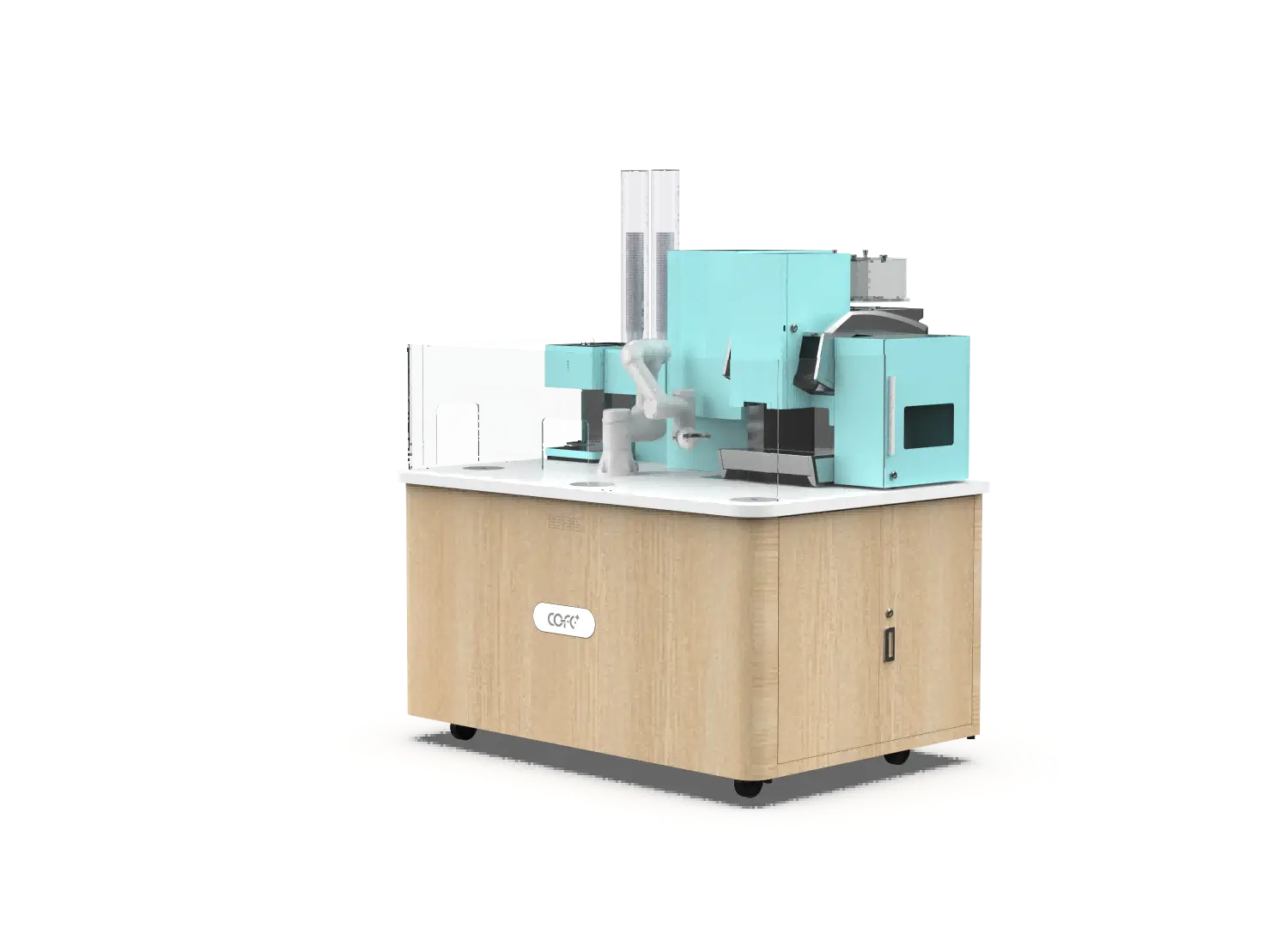
Deploying a robot coffee kiosk inside a shopping mall involves more than assigning a vacant spot. The site must meet specific utility requirements, and the kiosk form factor must match the environment.
Standard indoor kiosks occupy approximately 2.35 m² and require a single phase electrical connection, typically 220V. A water supply line and a drainage point are necessary for the brewing system and automatic cleaning cycle. Where a direct water connection is impractical, some providers offer an internal water tank configuration that extends refill intervals to a full day or more. Reliable 4G or Wi Fi connectivity is non negotiable because the cloud management platform depends on real time data for inventory tracking and remote diagnostics.
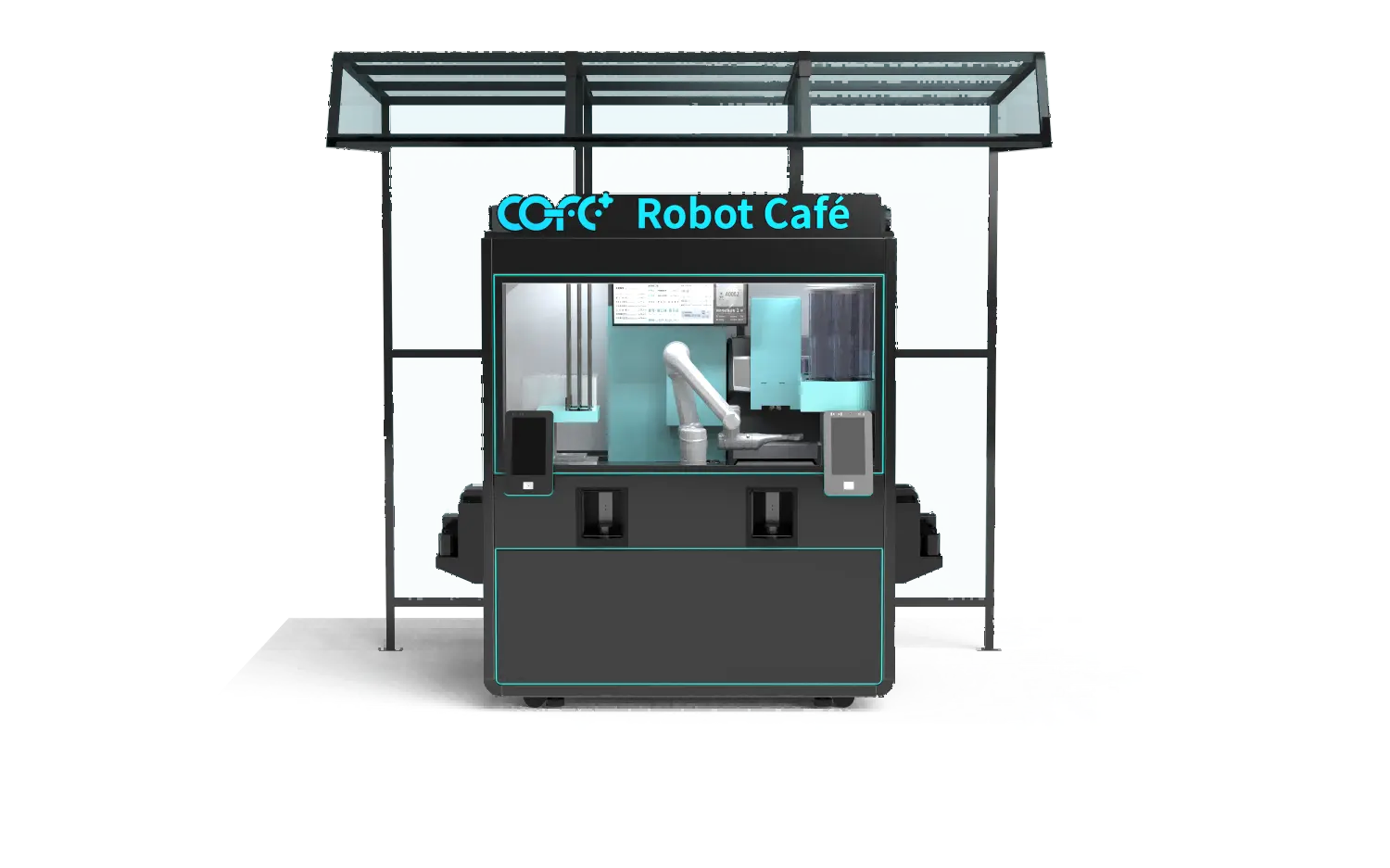
Outdoor placements introduce additional complexity. An outdoor robot coffee kiosk must handle ambient temperatures from minus 20°C to 45°C, resist dust and water ingress at IP54 or higher, and incorporate anti condensation systems to protect electrical components. The COFE+ outdoor model is built to these specifications and adds UV resistant enclosure materials and a fully sealed waste system that prevents odor and pest intrusion. Malls with open air plazas, rooftop restaurants, or exterior facing storefronts can use an outdoor kiosk to capture foot traffic that never enters the main building, but the site preparation cost and weatherproofing requirements must be factored into the partnership agreement upfront.
The financial terms that keep both parties aligned over a multi year agreement go beyond the headline revenue share percentage. I recommend mall operators negotiate three specific provisions.
The first is a performance floor. The provider should guarantee a minimum machine uptime percentage, typically 95% or higher, with defined service response times. If a kiosk repeatedly fails to meet the uptime target, the mall should have the right to reduce revenue share or terminate the agreement without penalty. This aligns the provider’s maintenance investment with the mall’s revenue continuity.
The second provision concerns consumable cost allocation. In a revenue sharing model, the provider usually bears the cost of coffee beans, milk, syrups, and cups because they directly impact drink quality and brand consistency. In a lease model, the mall operator may purchase consumables from the provider at an agreed rate. Clarifying who forecasts and funds the consumable supply chain prevents disputes when weekly cup volumes exceed initial projections.
The third is a menu customization clause. Robot coffee kiosks with broad recipe libraries, such as the COFE+ system’s 300 plus drinks and 197 country inspired recipes, allow mall operators to tailor offerings to local demographics. A kiosk near a cinema benefits from iced latte and frappe options. One near a luxury wing may emphasize single origin espresso and 3D printed latte art. The agreement should specify who controls the menu and how often it can be refreshed without added cost.
If your mall has an outdoor plaza or a high humidity atrium, it is worth confirming the kiosk’s environmental hardening specifications before finalizing the partnership terms. Climate resilience requirements can affect the upfront site preparation budget and the long term maintenance schedule.
A single kiosk pilot is the lowest risk way to validate shopper acceptance and operational fit. The operator should select a high visibility, high footfall location where coffee demand is already observable, perhaps near a busy entrance or a cinema concourse. Track daily cup counts, average order value, uptime percentage, and customer dwell time around the kiosk for the first 90 days. This data forms the basis for expanding to additional malls in the portfolio.
Once the pilot validates the model, scaling across locations benefits from a provider that can support multi site remote management. The cloud based smart store brain platform centralizes inventory tracking, sales analytics, and maintenance alerts, so a regional operations manager can oversee five kiosks from a single dashboard. Aligning expansion with a provider that already holds international certifications also simplifies entry into malls across different countries, avoiding redundant regulatory hurdles.
For mall groups and property operators evaluating robot coffee kiosk partnerships, the most durable arrangements pair a technically proven kiosk with a contract structure that rewards uptime and foot traffic conversion. To discuss how a COFE+ robot coffee kiosk can be tailored to your mall’s specific layout, footfall patterns, and target demographics, contact Shanghai Hi Dolphin Robot Technology at sales@hi-dolphin.com or call +86 131 6630 1290. Share your site dimensions and expected daily traffic range and we will prepare a site specific feasibility assessment and a proposed partnership framework.
What is a realistic revenue share percentage for a robot coffee kiosk in a shopping mall?
Revenue share percentages typically fall between 15% and 30% of gross sales when the provider funds the hardware and manages daily operations. The exact figure depends on foot traffic, projected cup volume, and whether the mall contributes to site preparation costs. Higher traffic locations with proven demand can sometimes negotiate lower percentages, as the total revenue pool is larger.
How much space does a robot coffee kiosk actually need around the machine?
The kiosk footprint itself is about 2.35 m², but operators should plan for an additional 2 to 3 m² of clearance in front for queuing and order pickup. This prevents bottlenecks in corridors and keeps passenger flow moving. Placement near a wall or in a recessed alcove works well, and island placements require bilateral access that adds slightly more circulation space.
Can a robot coffee kiosk work outdoors at a shopping mall?
Yes, if the kiosk is purpose built for outdoor conditions. The COFE+ outdoor model is IP54 rated for dust and water resistance, operates in temperatures from minus 20°C to 45°C, and uses a sealed waste enclosure to maintain hygiene. Outdoor sites still need a power connection and a drainage path, and the mall must confirm that the placement does not conflict with fire access routes or local outdoor vending regulations.
What certifications should I look for when comparing robot coffee kiosk providers?
At a minimum, confirm that the kiosk holds CE and FDA certifications for food contact and electrical safety. If the mall is in a region with additional requirements, such as Korea’s KC mark or Saudi Arabia’s SASO certification, verifying that the provider already holds those credentials streamlines the approval process. Manufacturers with 50 plus international certifications have already addressed the most common regulatory objections from mall safety committees.
How do I move from a trial to a long term program across multiple malls?
Start with a single kiosk pilot in a high traffic location and measure cup volume, uptime, and customer feedback over 90 days. Share that performance data with the provider to negotiate volume based incentives for additional units. Choose a provider with cloud based fleet management so that adding a second or third kiosk does not multiply the monitoring workload. If your pilot results show strong daily sales and minimal downtime, reach out to Shanghai Hi Dolphin at sales@hi-dolphin.com with your expansion timeline and we will propose a multi site partnership structure calibrated to your portfolio.
TL;DR — COFE+ is a fully automated robotic coffee kiosk that grinds fresh beans, brews espresso and lattes, creates latt……
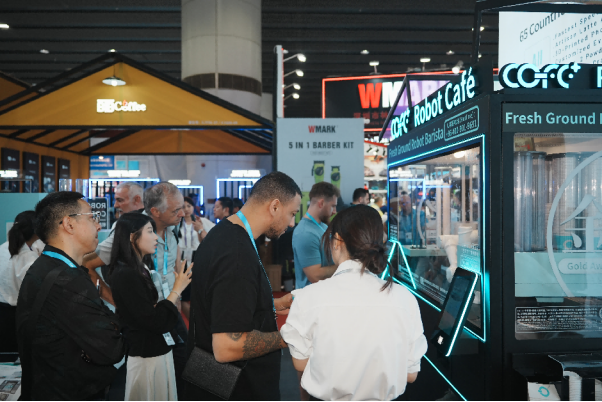
7th-Genertion Smart Robot Coffee Kiosk Arrives at the Belt and Road Core Hub, Ushering in a New Service Era Along t……
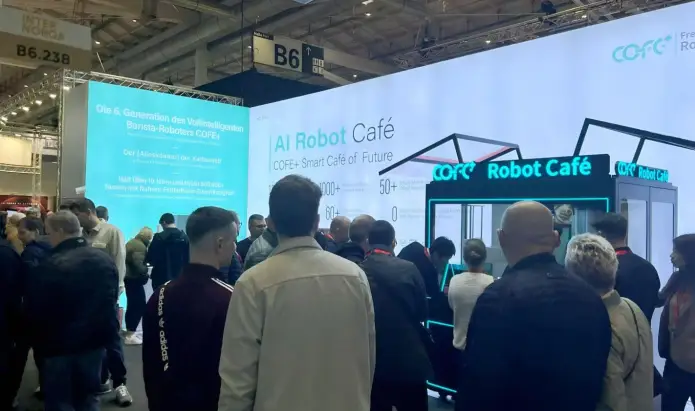
CHICAGO, May 12, 2026 (GLOBE NEWSWIRE) – Shanghai Hi-Dolphin Robot Technology today announced the U.S. debut of its 7th‑……