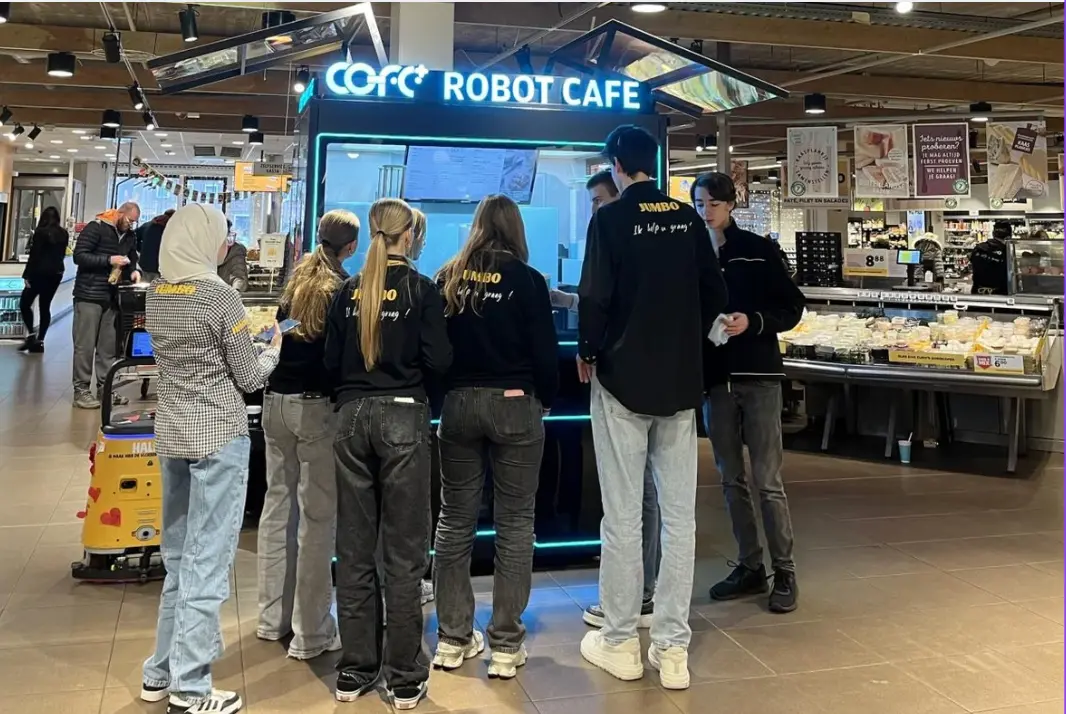
The Rise of Professional Robotic Café Technology: What COFE+ Is and Why It Matters
TL;DR — COFE+ is a fully automated robotic coffee kiosk that grinds fresh beans, brews espresso and lattes, creates latt……

Achieving champion-level coffee across multiple locations or shifts remains one of the more persistent operational challenges in food and beverage service. The variables are numerous, the margins for error are slim, and customer expectations continue to rise. Robot baristas have emerged as a practical response to this challenge, combining precision engineering with programmable brewing parameters to deliver consistent quality at scale.
Champion-level coffee is not a marketing phrase. It refers to a specific set of measurable sensory attributes and technical conditions that professional cuppers and competition judges evaluate. A cup that meets this standard exhibits complex aroma development, balanced acidity and sweetness, appropriate body for the roast profile, and a clean finish without off-notes.
The extraction process is where most quality failures occur. Espresso extraction requires water temperature held within a narrow band, typically 90-96°C depending on roast level. Pressure must remain stable throughout the shot, usually at 9 bars. Grind size determines extraction rate, and even small deviations produce noticeable differences in flavor. These parameters interact with each other, so adjusting one often requires compensating adjustments elsewhere.
| Coffee Quality Metric | Description |
|---|---|
| Aroma Intensity | Strength and complexity of fragrance. |
| Flavor Balance | Harmony between sweetness, acidity, bitterness. |
| Body/Mouthfeel | Tactile sensation on the palate. |
| Aftertaste | Lingering flavors post-consumption. |
| Extraction Uniformity | Consistent dissolution of coffee solids. |
| Temperature Stability | Precise water temperature during brewing. |
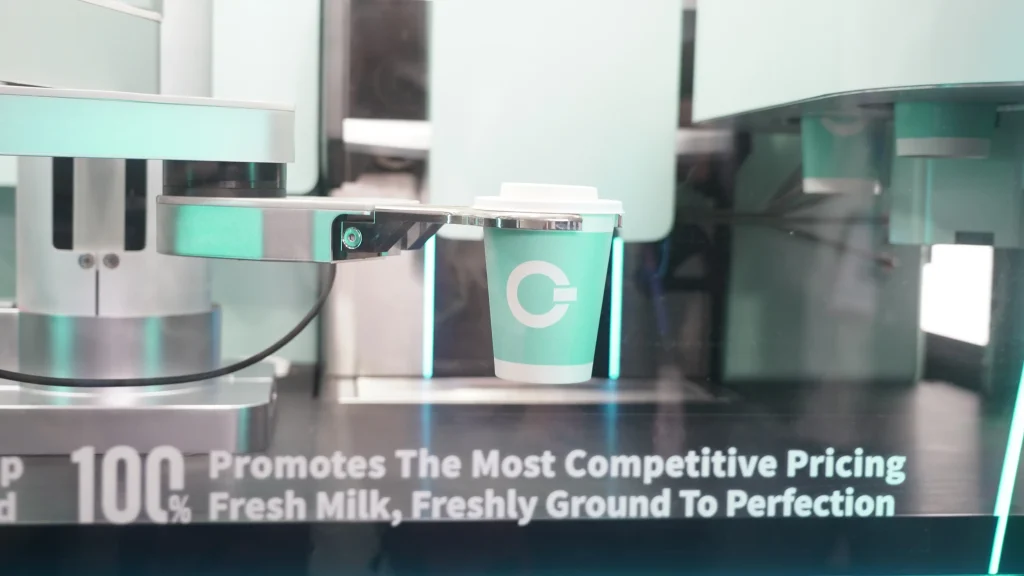
The engineering behind robot baristas addresses each variable in the brewing process through closed-loop control systems. Grinders integrated into these machines measure particle size distribution and adjust automatically. Water heating systems maintain temperature stability within fractions of a degree. Pressure profiling during extraction follows programmed curves that can be modified for different bean origins or roast levels.
Automated milk frothing presents its own technical challenges. Milk texture depends on steam pressure, wand position, and timing. Robot systems use sensors to monitor foam density and temperature, stopping the process at predetermined targets rather than relying on visual or auditory cues that vary between operators.
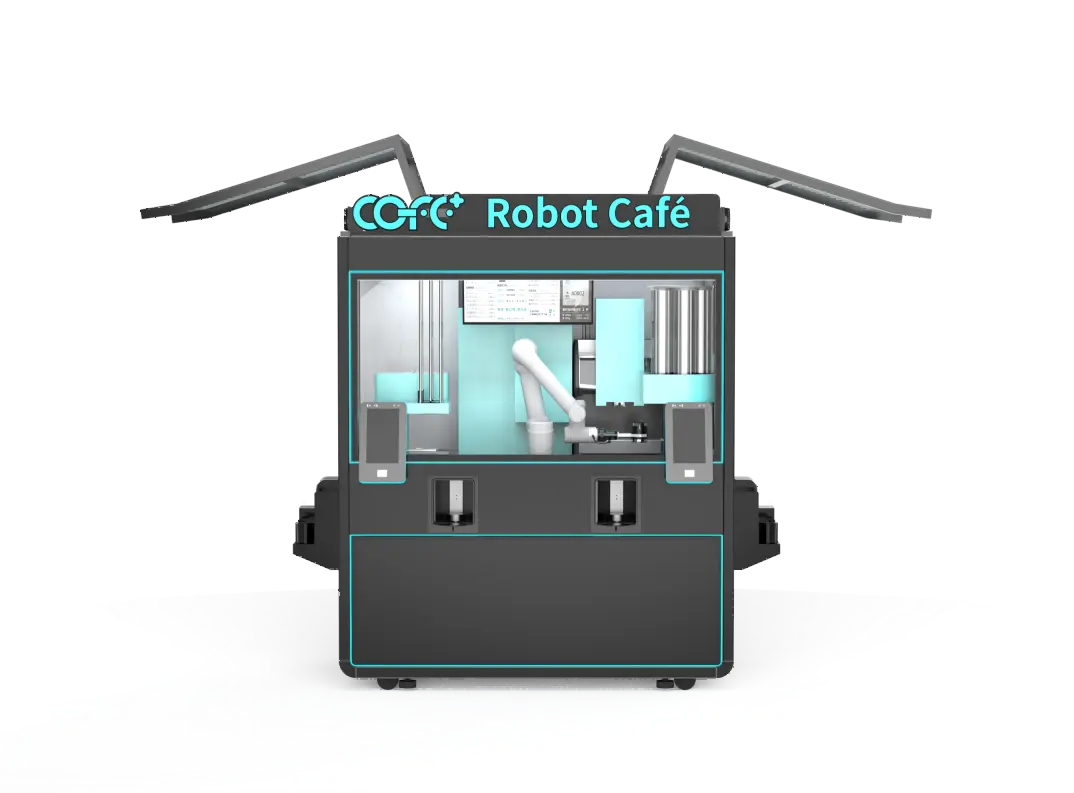
During development testing of the COFE+ 7th Generation Smart Coffee Robot Kiosk, we ran 300+ consecutive cups and measured taste profiles across the entire batch. The variation was within measurement error. This result comes from digitizing every step of the process and removing the points where human judgment typically introduces drift.
Human champion baristas bring something that current automation cannot fully replicate: adaptive judgment. An experienced barista notices when beans from a new shipment extract differently and adjusts grind or dose accordingly. They read subtle cues in crema color or flow rate and make corrections mid-service. This intuitive calibration comes from thousands of hours of practice and sensory training.
Robot baristas operate differently. They execute programmed parameters with high fidelity but do not yet possess the real-time adaptive capability of an expert human. What they do offer is elimination of the variability that comes from fatigue, distraction, or inconsistent training across staff members. The hundredth cup of a shift matches the first.
| Feature | Human Barista | Robot Barista |
|---|---|---|
| Consistency | Variable, skill-dependent | Highly consistent, precise |
| Customization | Intuitive, personal interaction | Data-driven, extensive options |
| Latte Art | Artistic, unique | Precise, replicable designs |
| Operational Hours | Limited by shifts | 24/7 unattended service |
| Error Rate | Potential for human error | Minimal, system-controlled |
| Speed | Dependent on skill/volume | Fast, predictable per cup |
The practical question for most operations is not whether robots can match the best human baristas on their best days. It is whether robots can deliver better average quality across all cups served, including those made during rush periods, late shifts, or by recently hired staff still learning the equipment.
Labor represents the largest variable cost in most coffee operations, and staffing reliability has become increasingly difficult in food service. Automated systems address both issues directly. A robot barista does not call in sick, does not require benefits, and does not need to be scheduled around availability constraints.
The COFE+ 7th Generation Smart Coffee Robot Kiosk delivers cups in 43-60 seconds, which translates to throughput capacity that would require multiple human baristas to match during peak periods. This speed comes without the quality degradation that often accompanies high-volume human operation.
Hygiene management shifts from a training and supervision problem to an engineering problem. Enclosed brewing chambers prevent contamination. Automated cleaning cycles run at programmed intervals regardless of how busy the shift has been. These systems generate logs that document compliance, which simplifies regulatory inspections.
For operations considering expansion, the scalability calculation changes significantly. Opening a new location does not require finding and training skilled baristas in that market. The same programmed recipes deploy to any unit, producing identical results from day one.
If your operation serves high volumes or runs extended hours, the ROI calculation on automated systems often shows payback within 6-12 months. The math depends on your specific labor costs and volume, but the fixed cost structure of robotic systems tends to favor high-utilization deployments.
The current generation of robot baristas executes programmed recipes with precision. The next development phase involves systems that learn and adapt. Machine learning models trained on extraction data can begin to predict how parameter adjustments will affect cup quality, potentially approaching the adaptive capability that distinguishes expert human baristas.
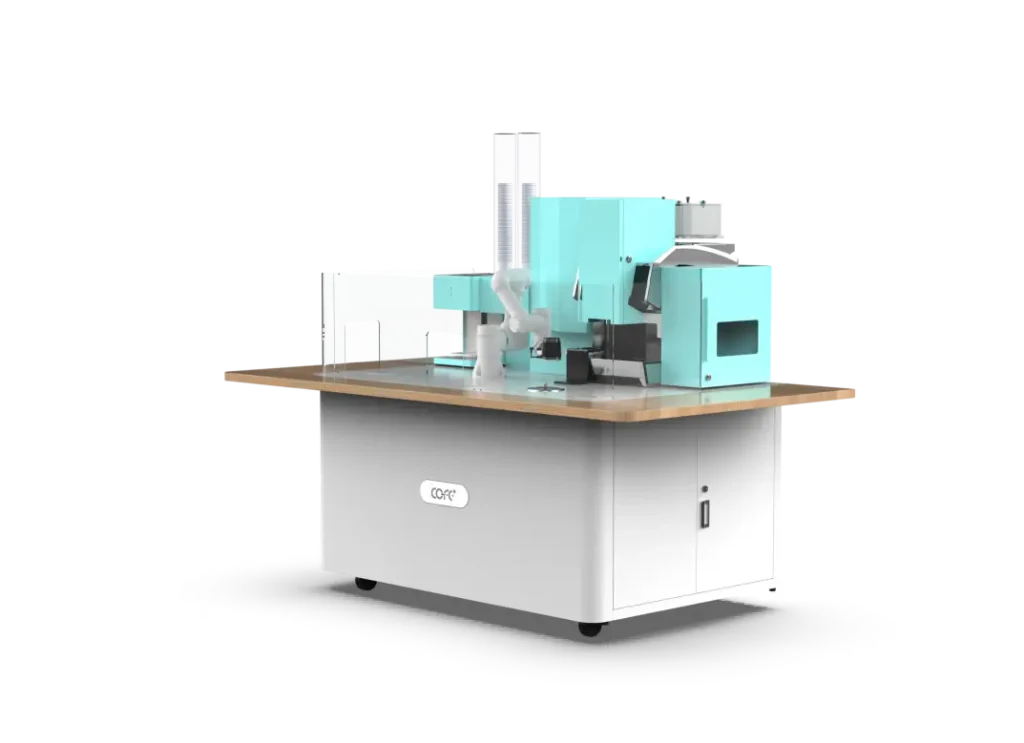
Menu breadth continues to expand. Current systems already handle plant-based milk alternatives, which require different frothing parameters than dairy. Regional beverage preferences can be programmed into units deployed in different markets. The COFE+ 7th Generation Robot Coffee Bar transforms from a compact counter configuration into a full social coffee bar setup, creating flexibility for different venue types and traffic patterns.
The integration of these systems into broader retail technology ecosystems is also advancing. Payment processing, loyalty programs, and inventory management connect through IoT infrastructure, providing operational visibility that manual systems cannot match.
How do robot baristas maintain consistent quality across thousands of servings?
Consistency comes from closed-loop control of every brewing variable. Sensors monitor water temperature, pressure, grind size, and extraction time continuously. The system compares actual values to programmed targets and makes corrections in real time. Automated cleaning cycles prevent buildup that would affect taste, and diagnostic routines flag equipment issues before they impact cup quality.
Can a robot barista truly replicate the nuanced taste of a human champion barista?
Robot baristas can precisely execute complex brewing parameters that produce high-quality results. What they cannot yet do is adapt in real time to subtle variations in bean characteristics the way an experienced human can. The gap is narrowing as sensor technology and machine learning improve, but current systems are best understood as highly consistent executors of known-good recipes rather than adaptive experts.
What are the primary advantages of integrating robot baristas into retail environments?
The main advantages are labor cost reduction, extended operating hours without staffing constraints, and elimination of quality variability between operators. Automated cleaning protocols improve hygiene compliance. Scalability becomes simpler because new locations do not require finding and training skilled staff. These factors combine to produce faster ROI than traditional staffing models in most high-volume applications.
Are robot baristas capable of handling diverse coffee menus and customization requests?
Current systems support extensive menu variety and customization options. Customers can adjust strength, temperature, milk type, and flavor additions through touchscreen interfaces. The underlying brewing parameters adapt automatically based on these selections. Menu updates deploy remotely, so seasonal offerings or new recipes can roll out across all units simultaneously.
What is the typical return on investment for implementing a robot barista system?
ROI depends on labor costs in your market, operating hours, and volume. Operations running extended hours or serving high volumes typically see payback within 6-12 months. The calculation favors automated systems more strongly in markets with high labor costs or staffing difficulties.
How do robot baristas ensure hygiene and food safety standards?
Enclosed brewing chambers prevent external contamination during preparation. Automated cleaning cycles run at programmed intervals and cannot be skipped or shortened by busy staff. Food-grade materials and sealed ingredient storage meet regulatory requirements. Systems generate compliance logs automatically, simplifying documentation for health inspections.
To discuss how these hygiene capabilities would work in your specific regulatory environment, contact our team at sales@hi-dolphin.com or +86 131 6630 1290.
TL;DR — COFE+ is a fully automated robotic coffee kiosk that grinds fresh beans, brews espresso and lattes, creates latt……
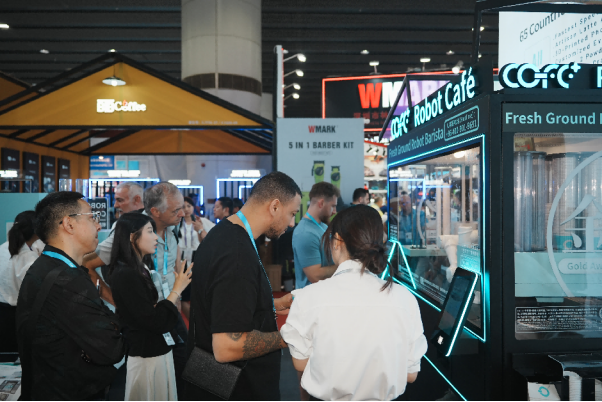
7th-Genertion Smart Robot Coffee Kiosk Arrives at the Belt and Road Core Hub, Ushering in a New Service Era Along t……
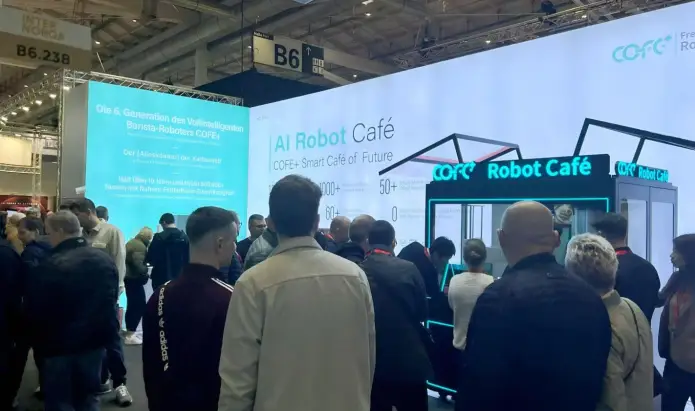
CHICAGO, May 12, 2026 (GLOBE NEWSWIRE) – Shanghai Hi-Dolphin Robot Technology today announced the U.S. debut of its 7th‑……