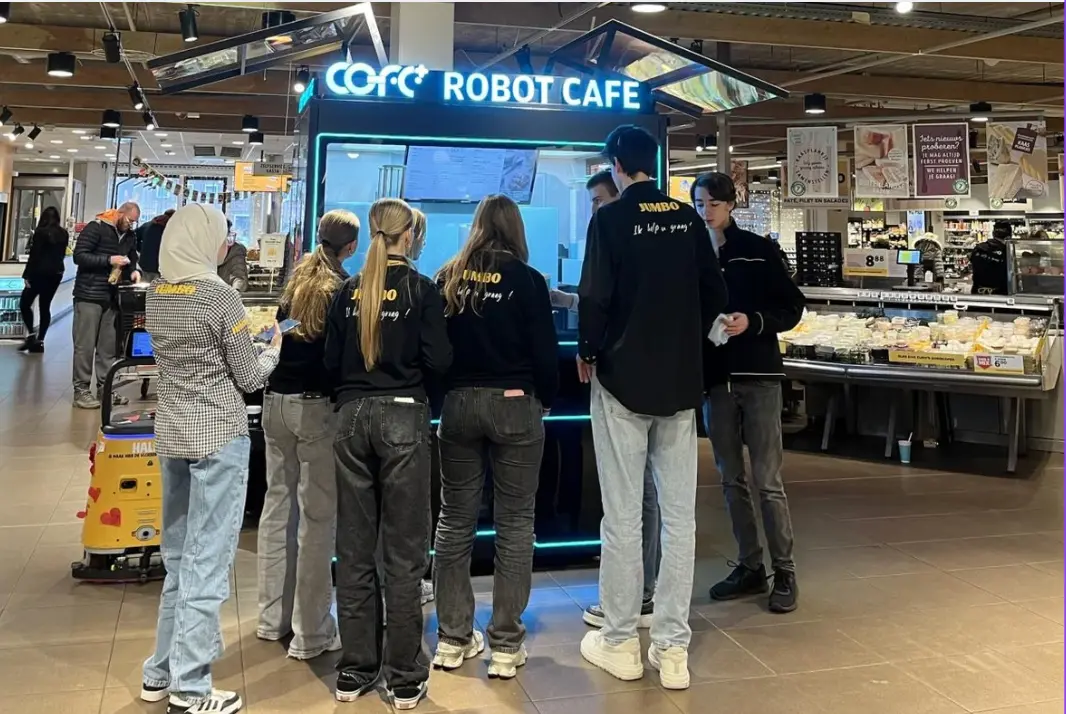
The Rise of Professional Robotic Café Technology: What COFE+ Is and Why It Matters
TL;DR — COFE+ is a fully automated robotic coffee kiosk that grinds fresh beans, brews espresso and lattes, creates latt……

A robot coffee kiosk sales pitch for hotels, offices and campuses fails when it leads with hardware. Facility buyers and operations directors are not purchasing a robot barista because it is novel; they are trying to solve a predictable problem: staffed coffee service that is inconsistent, limited to certain hours, or too expensive to run in mid-size locations. The pitch works when it starts with the buyer’s operating constraints and then shows how unattended coffee service removes them. The strongest opening line is not about 350 flavors or robotic arms. It is about what the venue gets when coffee runs without a labor schedule.
Hotel buyers are usually trying to close a service gap between breakfast and the bar, or extend lobby service after the kitchen closes. A robot coffee kiosk changes the conversation when it removes that gap without adding a shift. Office facility managers tend to care less about coffee theater and more about whether the unit fits a small footprint, runs on standard power, and does not create a housekeeping burden. Campus auxiliary directors face a different pattern: extreme peaks between classes, long idle windows, and pressure to keep prices student-friendly.
Across all three venue types, the buyers share one need: predictable service without a labor dependency. The kiosk matters only to the extent that it fits the existing traffic pattern. A pitch that asks the buyer to imagine a new use case is weaker than one that names the hours the current option misses.
Different roles in the same building reject the same proposal for different reasons. A hotel general manager hears risk in a lobby full of guests and asks about appearance, noise and service recovery. An office facilities manager hears risk in electrical load, water supply and cleaning. A campus dining director hears risk in throughput and health inspection. Structuring the pitch around those concerns changes the tone from equipment sales to operational planning.
| Buyer Role | Primary Concern | Strongest Pitch Point |
|---|---|---|
| Hotel General Manager | Guest experience and late-night service | Fresh coffee 24/7 with no barista shift |
| Office Facility Manager | Space and utility requirements | 2.35 square meters, standard 110V/220V |
| Campus Auxiliary Director | High-volume peak throughput | Up to 1,000 cups a day, 43 to 60 seconds per cup |
| Property Owner | Return on idle space | Revenue share or lease model with payback in 6 to 12 months |
The technical detail should not be softened. I have found that facility teams respect a pitch that names exact utility loads and certification coverage. The COFE+ kiosk carries FDA, CE, UKCA, KC and SASO certifications, which matters when a campus or corporate buyer has compliance reviews. Saying the machine is safe is less persuasive than listing the certifications and the automatic high-temperature cleaning cycle.
One caution: if your target location is an older building or an outdoor plaza, confirm electrical load, water supply and drainage before you present a price. A site-specific technical note is more useful than a generic brochure. Share the site plan with sales@hi-dolphin.com to get a pre-check before the next meeting.
Not every position needs the same form factor. Hotels and premium offices often respond better to a built-in counter that looks like part of the interior rather than a machine on the floor. Campuses and high-volume student centers usually need a standalone indoor kiosk that can absorb a queue. Outdoor plazas and stadium-style settings need an all-weather outdoor kiosk. The same core robot sits in each format, but the purchase decision shifts with the space.
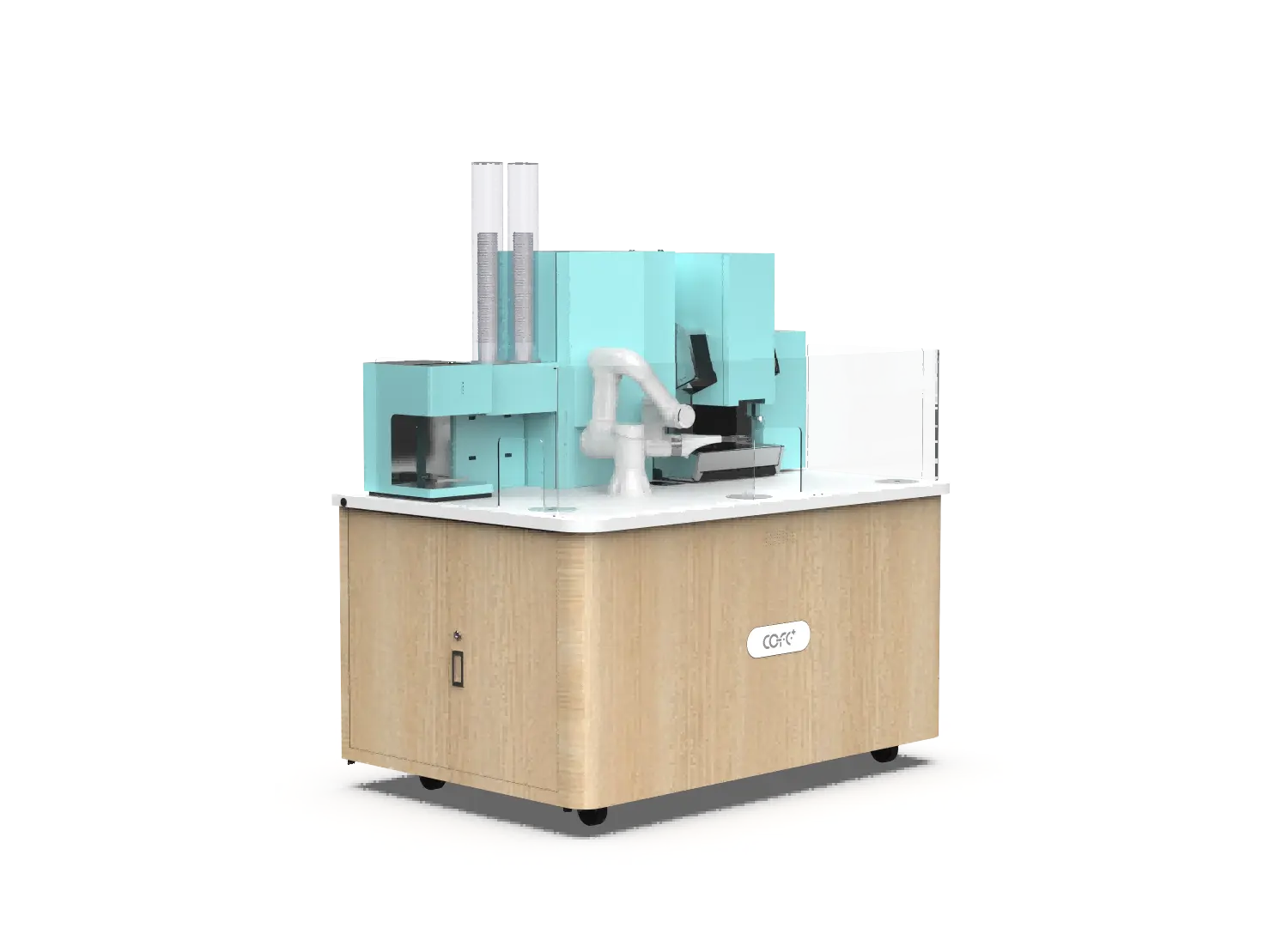
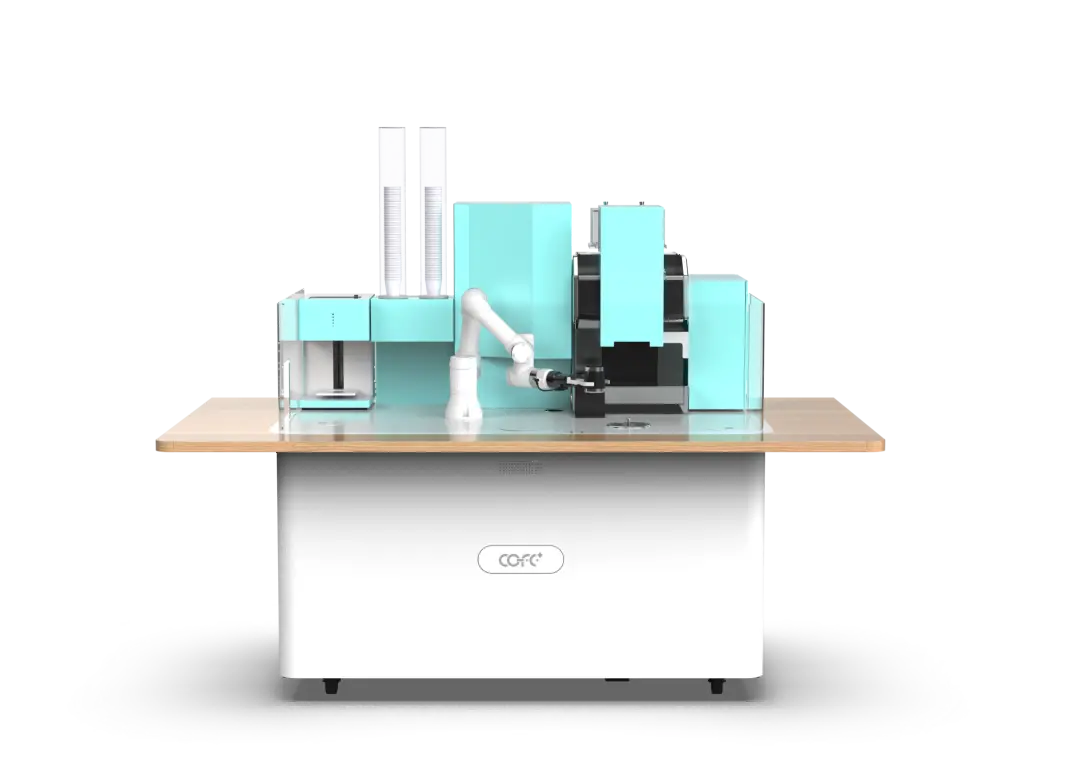
Use a counter when the venue wants coffee to feel like a permanent amenity, not a vending add-on. A robot coffee counter occupies about 2 square meters and integrates into a lobby, lounge or reception bar. Guests watch the grinding and latte art, which gives hotel lobbies a visual anchor. The form factor also works in corporate lounges where the buyer is trying to raise the quality of the employee coffee moment without assigning staff.
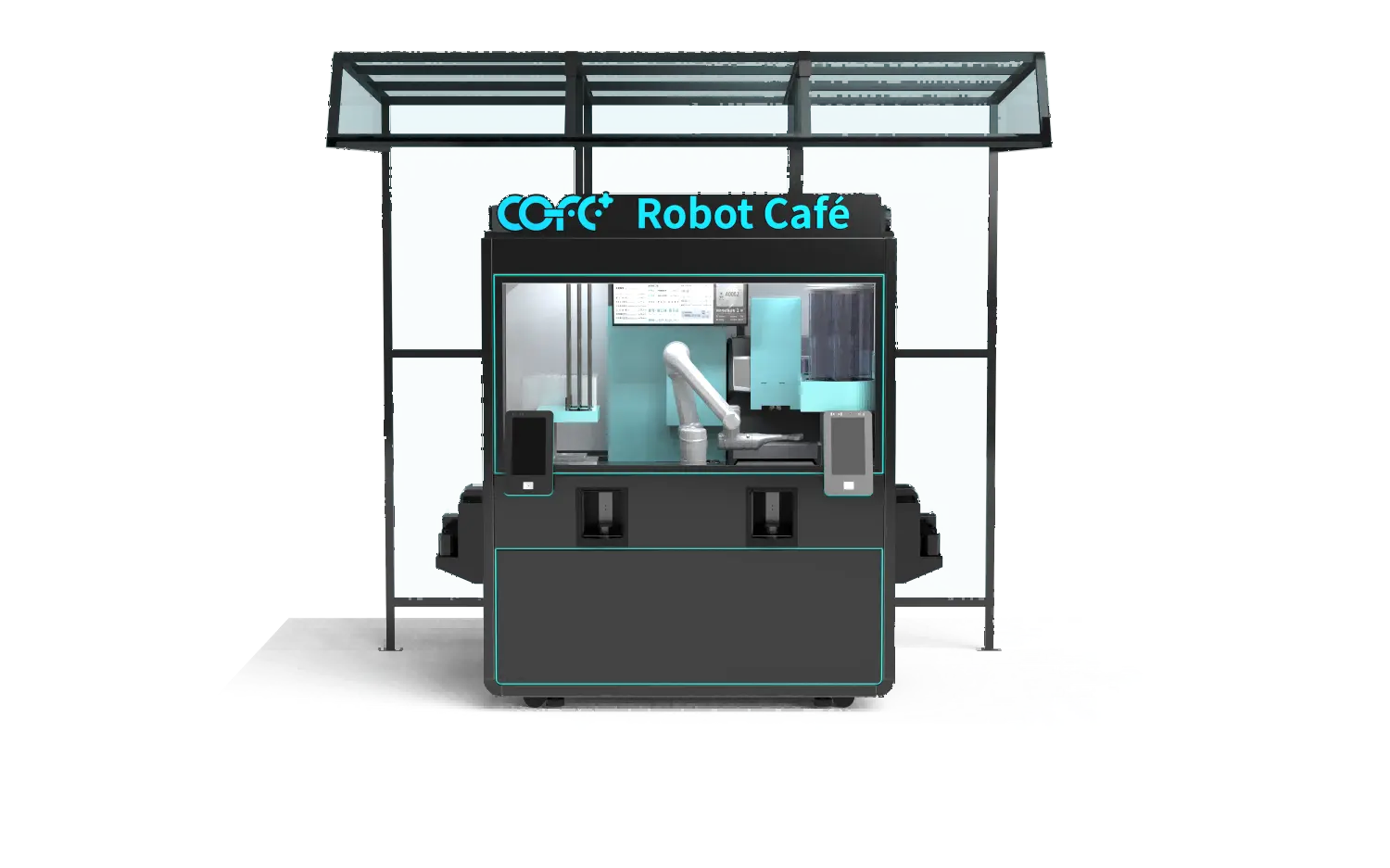
Outdoor and semi-outdoor locations need a different conversation. A covered campus walkway, a hotel pool deck or an office plaza without interior space all favor an outdoor kiosk rated for all-weather operation. The outdoor model runs from minus 20 to 45 degrees Celsius, carries IP54 protection and uses UV-resistant panels. In warm markets, that becomes the foundation of an iced coffee and cold drink pitch because the machine can stay in place while the weather changes.
For interior high-traffic zones, the indoor kiosk’s 2.35 square meter footprint and 24/7 operation do the heavy lifting. The key is to match the right model to the buyer’s existing space, not to present every model and let the prospect choose.
Buyers in hotels, offices and campuses see a lot of equipment pitches. The ones that survive attach the machine to a specific daily transaction count. I use three numbers: cups per day, cost per cup, and payback window. The COFE+ platform works on a cost per cup of $0.30 to $0.70, and typical return windows run 6 to 12 months. Those figures come from the hardware economics, not from a promise of steady demand. Demand has to be estimated site by site.
| Venue Type | Assumed Daily Cups | Assumed Price per Cup | Daily Gross Profit at $0.50 Cost |
|---|---|---|---|
| Hotel lobby and breakfast | 80 to 120 | $3.00 | $200 to $300 |
| Corporate office | 100 to 160 | $2.50 | $200 to $320 |
| University campus | 250 to 400 | $2.00 | $375 to $600 |
The purpose of this table is not to guarantee revenue. It is to show the buyer how the model works and which variable drives the result. For a campus, volume does the work. For a hotel, price per cup and late-night capture do the work. For an office, consistency and participation matter more than peak speed. When the buyer can see which lever they control, the sales conversation becomes a business planning conversation.
Most proposals stall because they leave the buyer holding an equipment sheet and no path to a site decision. The proposal that moves forward includes four items: the specific kiosk format, the utility requirements for the intended location, a conservative daily cup scenario, and a clear ownership or revenue-share structure. When those four items are tied to the buyer’s own traffic data, the remaining question is operational, not emotional.
At Hi-Dolphin, we prepare that proposal from a short set of inputs. Send your site address, estimated daily foot traffic, and preferred format to sales@hi-dolphin.com or call +86 131 6630 1290. We will return a site-specific configuration, utility checklist and payback model for your hotel, office or campus. Tell us the hardest service hour, not just the total traffic; that is where the kiosk earns its keep.
A kiosk removes the barista shift but not all human touch. Ingredient refills, cup restocking and cleaning remain, and the frequency depends on volume. A high-volume campus unit may need a 20-minute daily visit for consumables plus a weekly cleaning pass. The machine manages automatic cleaning and high-temperature sterilization, which reduces the labor burden compared with a full coffee bar. If you are planning labor, treat it as a replenishment task, not a service shift.
A common assumption is that an unattended kiosk becomes a dead asset when something fails. The actual operating model relies on remote diagnostics first. The kiosk reports stock levels, temperature and module status through cloud monitoring. Many faults are corrected by remote reset or by a local technician following a specific instruction. For international deployments, spare parts planning matters more than the fault itself. Ask the supplier for tiered response times before signing.
It depends on the peak length and the average transaction speed. A 7th-generation unit produces a cup in 43 to 60 seconds and can run continuously through the morning. If the expected rush is 200 cups inside 90 minutes, one kiosk may not be enough, and a dual-machine or split menu configuration makes sense. For most hotel and office peaks, one unit is sufficient. For campus exam periods or conference breaks, plan the queue first and add machines only after the queue math says so.
In projects I advise, food safety is usually the first technical filter. The kiosk uses enclosed ingredient storage, automatic high-temperature sterilization above 85 degrees Celsius and antimicrobial stainless steel on the outdoor model. Certification coverage includes FDA, CE, UKCA, KC and SASO, which shortens the approval process in multi-country and corporate environments. Ask the supplier to share the food contact material documentation before the site inspection.
The sensible first move is a pilot in the location with the clearest traffic pattern, not the highest visibility. A hotel breakfast corner, a campus library entrance or an office lobby with long hours all work because demand is predictable. Share the site address, foot traffic estimate and space photos with sales@hi-dolphin.com, and we will confirm the technical fit and payback scenario before you commit to a full rollout.
TL;DR — COFE+ is a fully automated robotic coffee kiosk that grinds fresh beans, brews espresso and lattes, creates latt……
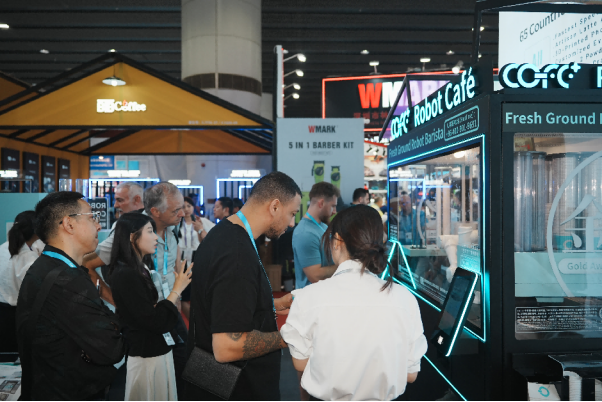
7th-Genertion Smart Robot Coffee Kiosk Arrives at the Belt and Road Core Hub, Ushering in a New Service Era Along t……
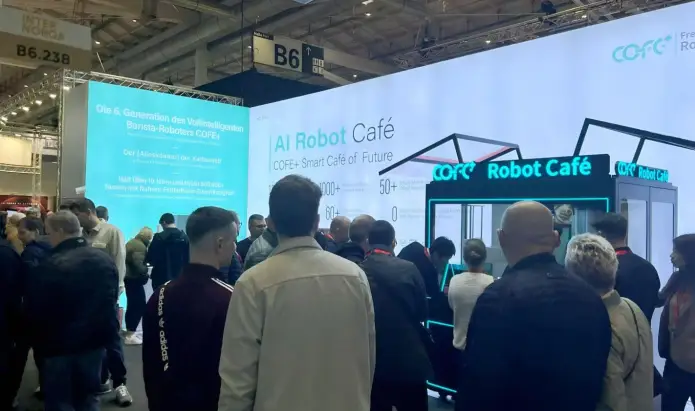
CHICAGO, May 12, 2026 (GLOBE NEWSWIRE) – Shanghai Hi-Dolphin Robot Technology today announced the U.S. debut of its 7th‑……