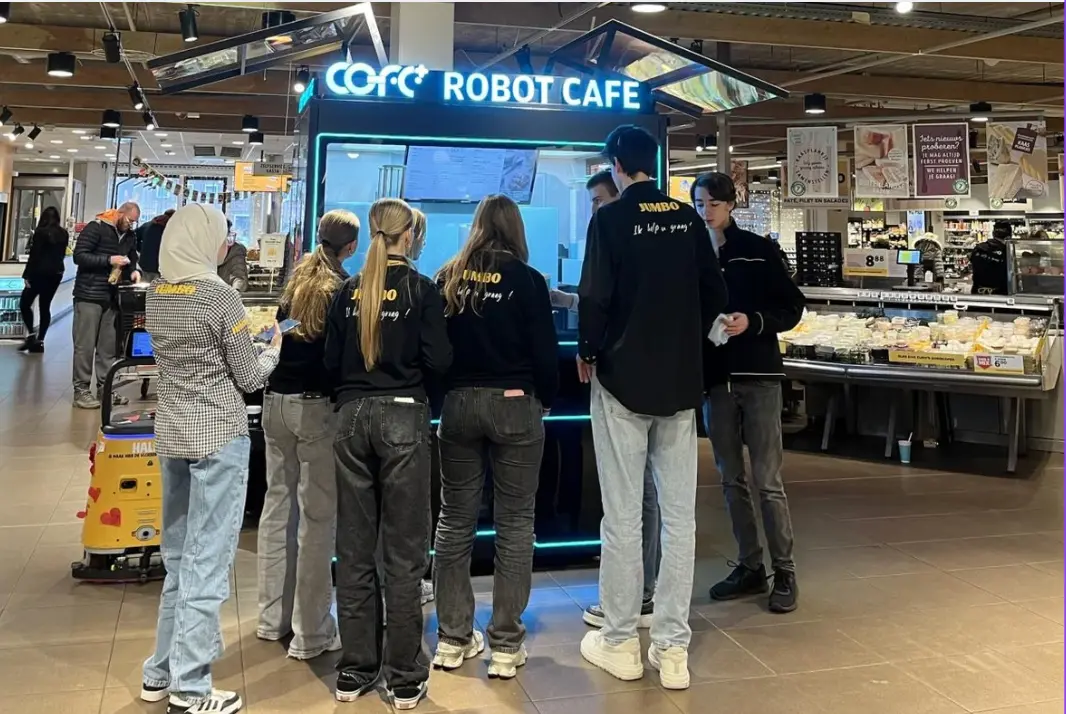
The Rise of Professional Robotic Café Technology: What COFE+ Is and Why It Matters
TL;DR — COFE+ is a fully automated robotic coffee kiosk that grinds fresh beans, brews espresso and lattes, creates latt……

When a tourist faces a coffee kiosk with unfamiliar script, hesitation replaces impulse. For robot coffee kiosk operators in high-traffic tourist zones, language barriers directly suppress conversion. A multilingual menu isn’t an optional add-on, it’s a core mechanism that bridges the gap between curiosity and transaction. For unmanned coffee kiosks in tourist destinations, this means the difference between a missed opportunity and a scalable revenue stream. Our deployments show that dynamically adapting menu language and offering culturally relevant drink suggestions turns walk-by visitors into paying customers, unlocking consistent revenue from international footfall.
A tourist who cannot read the menu is unlikely to order. This isn’t a theory; it plays out every day at unmanned coffee kiosks in airports, city squares, and resort zones. When the interface language is locked to one option, international visitors default to the familiar chain café they know, even if your coffee is better and faster. The cognitive friction of trying to decode an unfamiliar menu in a self-service environment pushes many to walk away.
The cost stacks up. Consider a tourist-heavy location with 2,000 daily passers-by. Even a modest 10% interaction rate and a 30% conversion drop due to language mismatch means missing 60 sales per day. With an average ticket of $3, that’s $180 daily, over $65,000 annually per kiosk. This estimate isn’t inflated; it reflects the reality we’ve observed when operators first deploy without language adaptation.
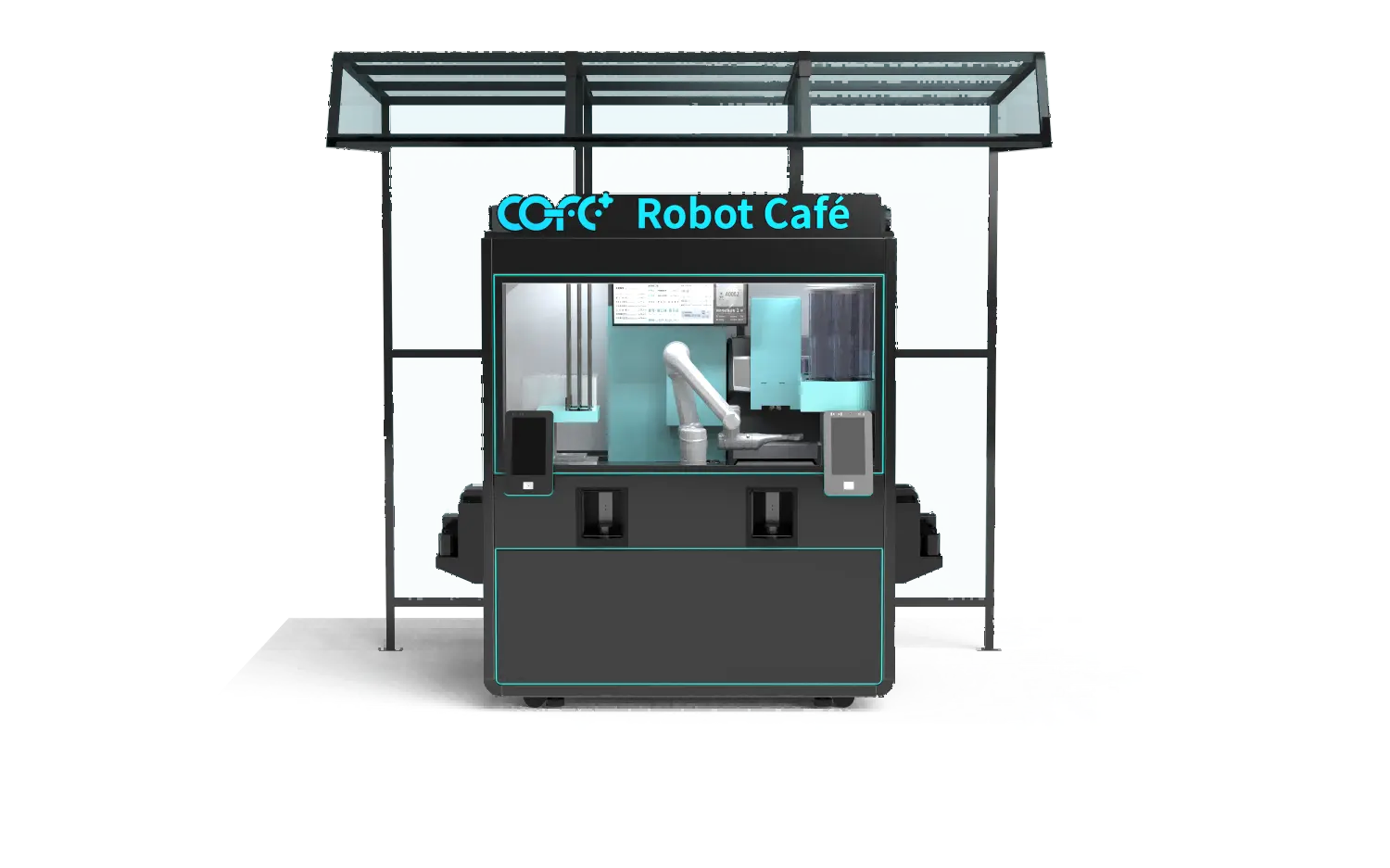
When a display switches to a user’s native language, the ordering experience flips from intimidating to intuitive. The user can skim, recognize favorites, and explore new options without second-guessing. This familiarity accelerates the decision process and raises confidence, which in turn lifts both conversion and average order size. Someone who can read “Iced Matcha Latte” in their own script is more likely to add a syrup or upgrade to a large size than someone guessing from pictures.
Robot coffee kiosks have a structural advantage here. Unlike static printed menus, their digital screens can present language-specific interfaces instantly. A platform like the COFE+ 7th generation robot coffee kiosk, for instance, already stores recipes inspired by 197 countries. Displaying drink names in a tourist’s language becomes a natural extension of that global recipe library, making the menu feel curated rather than simply translated.
Language selection shouldn’t be a guess. Operators need a data-driven approach grounded in the tourist mix at each site. The language strategy for a kiosk in a Dubai airport terminal will differ sharply from one in a Bali beachfront resort, even if both handle international crowds.
Start with local tourism statistics: annual arrivals by country, top source markets, and hotel guest nationality data if available. Then look at immediate surroundings, hotels, tour operators, and nearby attractions frequented by specific language groups. This practical triangulation yields a shortlist of 3 to 5 languages that will cover the bulk of foreign visitors.
| Tourist Source Country | Recommended Menu Language | Typical Coverage Gain |
|---|---|---|
| China | Chinese (Simplified) | 95% of Chinese tourists |
| Japan | Japanese | 90% of Japanese tourists |
| Germany | German | 85% of German tourists |
| France | French | 80% of French tourists |
| GCC countries | Arabic | 85% of GCC tourists |
| Russia | Russian | 90% of Russian tourists |
Adding four languages can cover over 70% of the typical international tourist flow in most global destinations. The key is updating this set seasonally, since tourist demographics shift with flight schedules and holiday periods.
Determining the right language mix requires analyzing local tourist arrival data and testing acceptance rates. If your program involves multiple kiosks across different tourist zones, it’s worth confirming language deployment strategies that are tailored to each site before locking in a deployment plan, reach our team at sales@hi-dolphin.com for guidance on your specific locations.
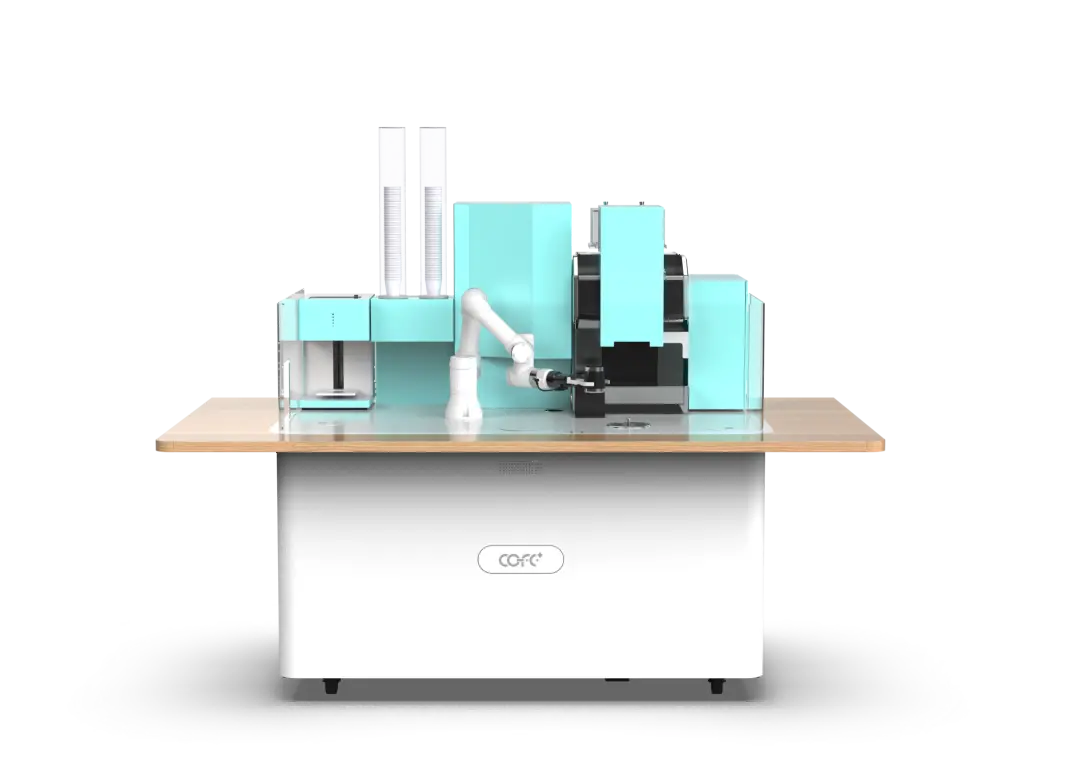
Language selection does more than translate text; it triggers a smarter product recommendation engine. In an AI-powered robot coffee kiosk, when a user selects Chinese, the interface can reorder the menu to highlight matcha drinks, hot milk tea, and less sweet espresso options that align with regional taste preferences. An Italian language choice can prioritize espresso, cappuccino, and macchiato at the top, while hiding syrupy variations. This is not a generic sort, it’s a conversion lever built on cultural consumption data.
Our COFE+ platform supports over 300 drink types and thousands of customization combinations, which means the recommendation logic can be granular. Over time, the system learns which language-drink pairings drive the highest conversion at each location and automatically adjusts rankings. For a tourist, this feels like a personalized café, not a one-size-fits-all machine. And for the operator, it raises revenue per session because the most likely purchases appear first.
Without tracking, the investment is invisible. Operators should measure three metrics: interaction-to-order conversion rate, average order value by language, and session duration. Many kiosk management systems already capture language selection, so segmenting performance by language becomes straightforward.
Comparing a week with multi-language enabled versus a week with a single default language quickly reveals the lift. In deployments we’ve monitored, sites that activated even two additional languages saw conversion climb by 12–20% among the target tourist segments, with average order value rising 8–15% because users explored premium options they previously wouldn’t attempt to order. These aren’t small gains; they compound heavily over a year of 24/7 operation.
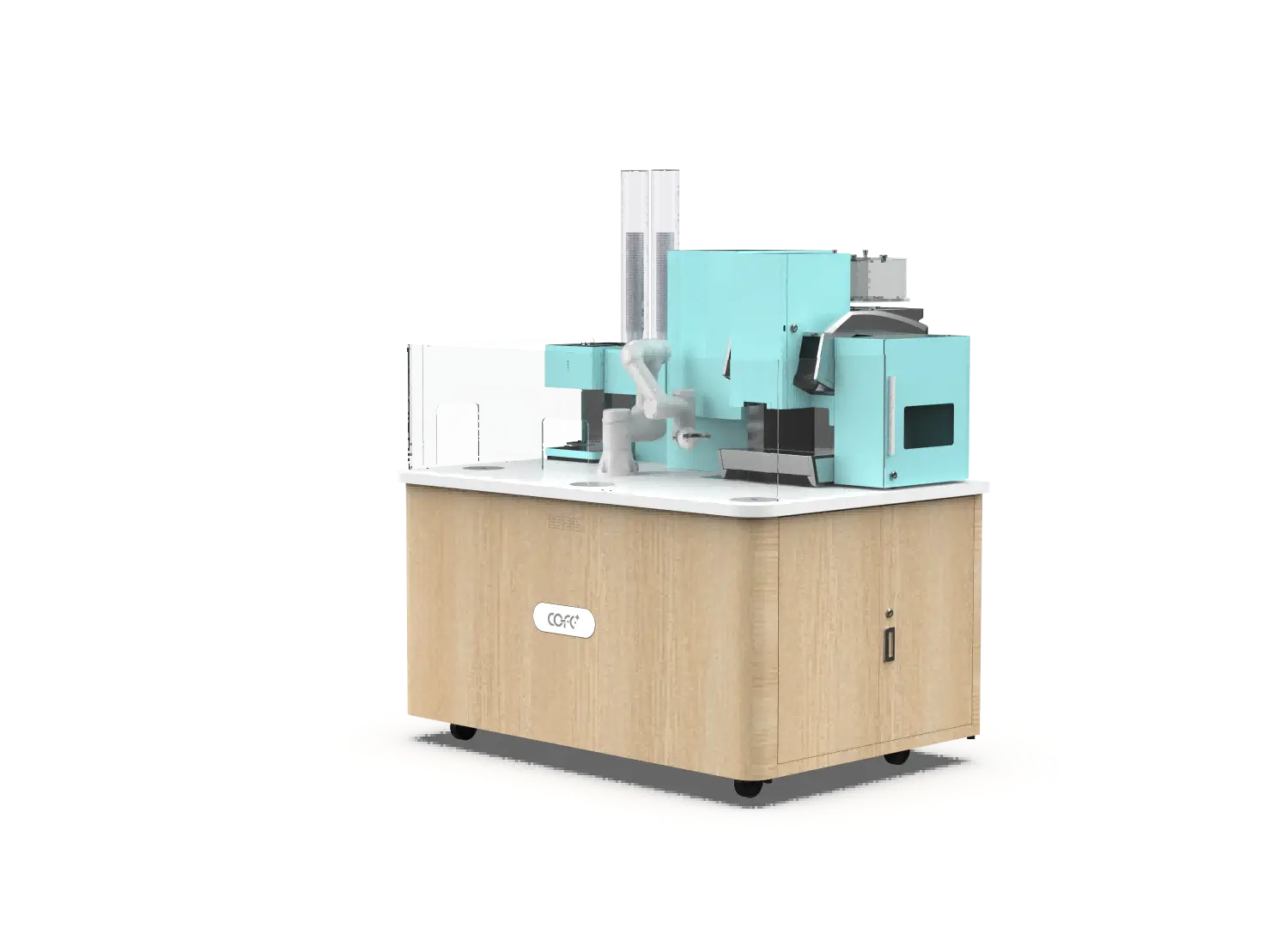
Execution matters as much as the feature itself. First, menu translation must be done by native speakers familiar with coffee terminology, machine translation often botches drink names (e.g., “flat white” has no literal equivalent in many languages). Second, the language selection interface should be prominent but not intrusive; a flag icon or a dropdown on the home screen works better than a separate setup page. Third, confirm that all system messages, from payment prompts to completion alerts, are fully localized; a multilingual menu that breaks into English at checkout undermines trust.
Finally, run a soft launch with at least two native speakers from each target language group. Ask them to order three different drinks and watch for confusing terms or layout issues. Adjust immediately. A robot coffee kiosk’s screen real estate is valuable; use it to make the path from language selection to drink in hand as frictionless as possible.
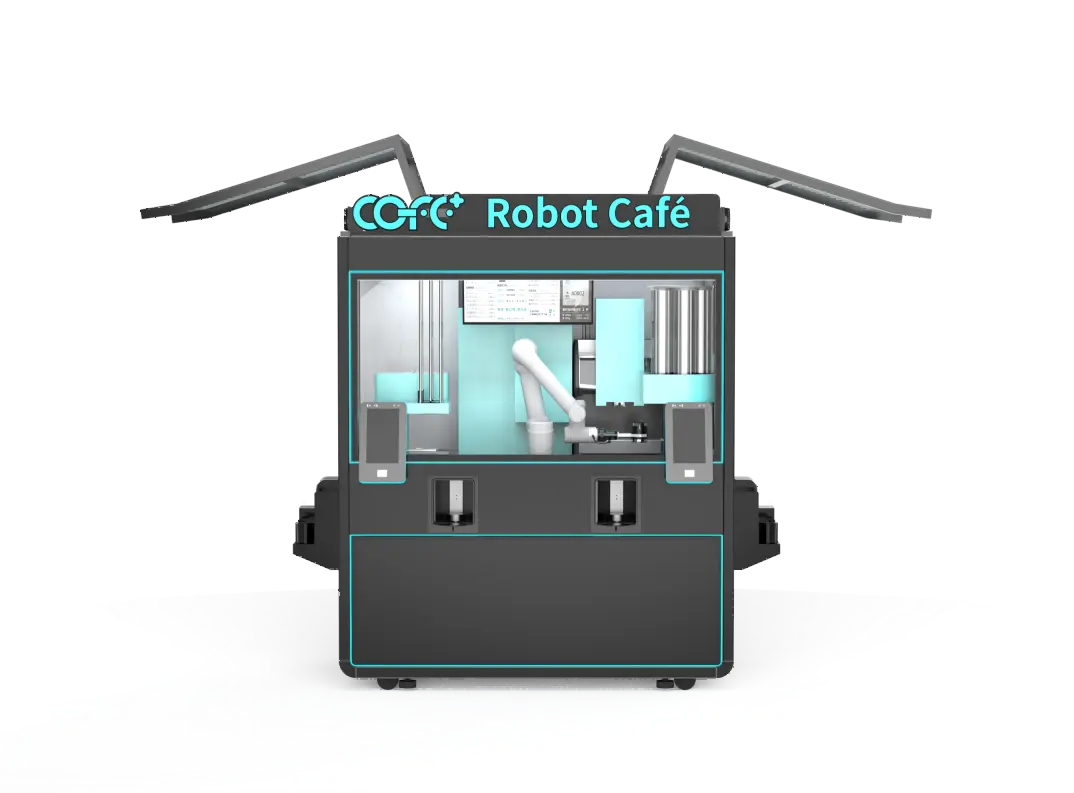
For robot coffee kiosk operators targeting tourist-dense locations, multilingual menus are a direct revenue driver, not a cosmetic add-on. The capability already exists within platforms like COFE+, where a 197-country recipe library aligns seamlessly with multi-language interface deployment. The next step is building your language strategy around real tourist data and measuring the conversion gains to prove the investment.
If you’re planning a deployment in a tourist zone or want to discuss how to integrate language-specific drink recommendations into your kiosk network, contact our team at sales@hi-dolphin.com or call +86 131 6630 1290. Send us your target location profiles and we’ll outline a language implementation plan matched to your tourist demographics.
No. Start with the top three to four source markets for your location based on tourist arrival data. A kiosk in Phuket might need Chinese, Russian, and English initially; a kiosk in Barcelona might prioritize Chinese, German, French, and English. Adding more languages later takes minutes on a cloud-managed kiosk because it’s a software update, not a physical change. Our recommendation is to launch lean and expand based on actual usage metrics.
Not reliably. Terms like “flat white,” “ristretto,” or “cortado” often have cultural definitions that machine translation misses or garbles. We’ve seen menu entries where “espresso” translated literally became something unrecognizable. Always use human translators who understand coffee culture in both source and target languages. The COFE+ system stores drink names in localized form so operators can preload region-correct translations.
If well designed, it doesn’t. The default screen should show the dominant local language or the last selected language, with a clear language-switching icon. Tourists who need a different language will actively look for the selector; local users skip it. The extra tap to change language is far less disruptive than the cognitive load of ordering in an unknown language. In our deployments, the language selection step adds negligible time to the overall transaction.
Review quarterly against tourist arrival statistics and your own kiosk usage data. Seasonal shifts matter: a Swiss mountain resort kiosk may need German and French in winter and a broader set in summer. If your kiosk’s management dashboard shows a language that never gets selected, replace it with one that matches current foot traffic. Operating a smart kiosk means keeping the menu aligned with who is actually standing in front of the screen. If your current deployment isn’t leveraging language-specific analytics or you’re considering your first multilingual rollout, share your site details with us at sales@hi-dolphin.com and we’ll help you set up a data-driven update cadence.
TL;DR — COFE+ is a fully automated robotic coffee kiosk that grinds fresh beans, brews espresso and lattes, creates latt……
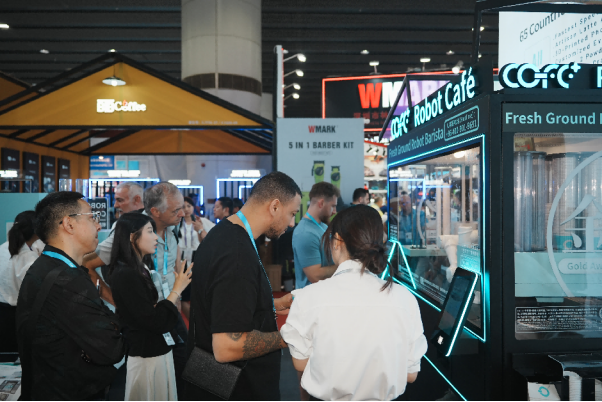
7th-Genertion Smart Robot Coffee Kiosk Arrives at the Belt and Road Core Hub, Ushering in a New Service Era Along t……
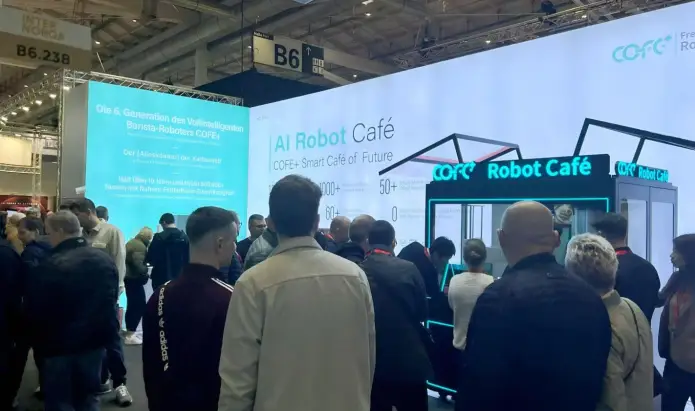
CHICAGO, May 12, 2026 (GLOBE NEWSWIRE) – Shanghai Hi-Dolphin Robot Technology today announced the U.S. debut of its 7th‑……