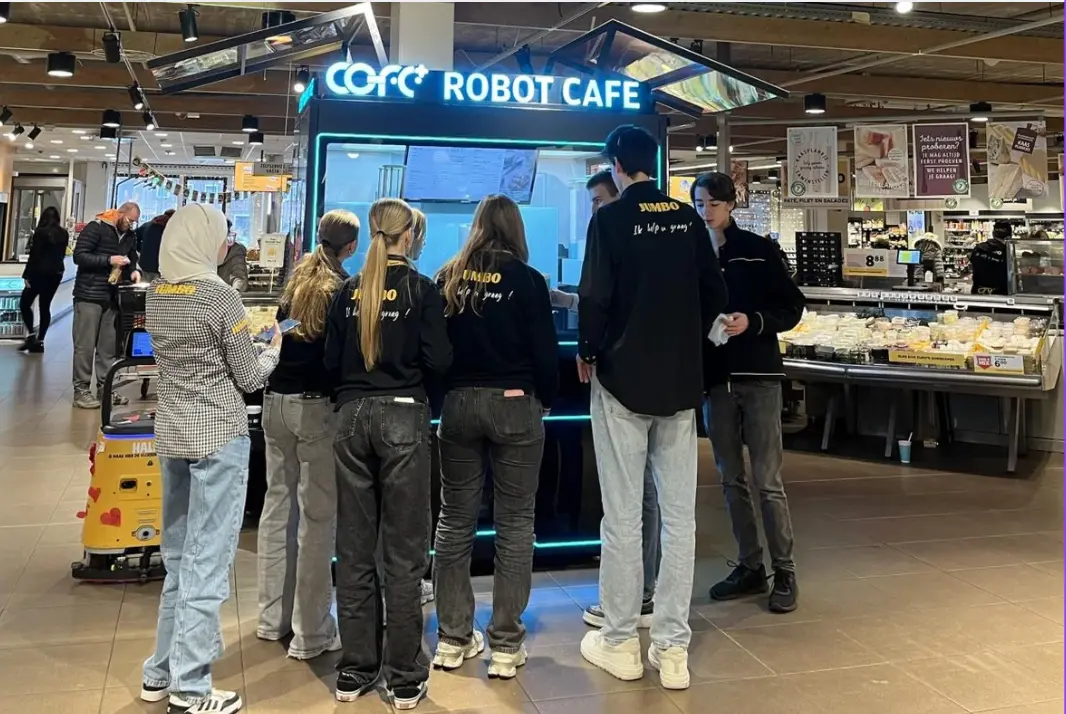
The Rise of Professional Robotic Café Technology: What COFE+ Is and Why It Matters
TL;DR — COFE+ is a fully automated robotic coffee kiosk that grinds fresh beans, brews espresso and lattes, creates latt……

An indoor robot coffee kiosk can turn an underused lobby, building concourse, or office atrium into a 24/7 coffee amenity without barista hiring, fixed shift coverage, or a full café renovation. The right installation supports tenant experience, visitor dwell time, and incremental on-site revenue, but only when the machine and the building are matched correctly. This checklist focuses on the decisions a property manager controls before purchase: available space, utility access, daily traffic, food safety requirements, operating cost assumptions, and vendor verification. Use it to move from a product demonstration to a defensible site-level recommendation.
Start with the physical envelope. The referenced indoor robot kiosk uses a compact footprint of about 2.35 m², roughly 25 sq ft, but that measurement describes the machine itself. A property manager also needs clearance for queuing, ingredient refills, waste access, and maintenance. Measure the open floor area, door widths, lift capacity, and the route from the loading dock to the installation point. Next, confirm whether the location can support power, water, drainage, and a stable network connection.
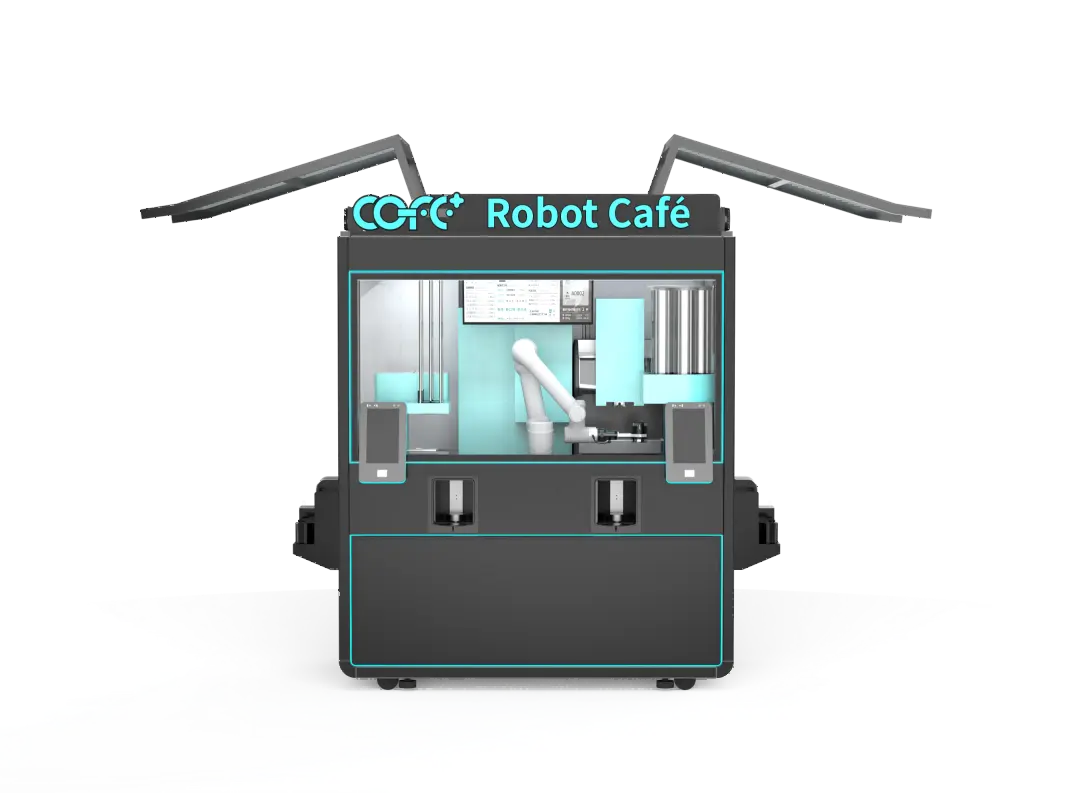
The front view shows the ordering screen, cup pickup area, and main customer interface. The side views show the service and access areas that matter during preventive maintenance. Keep those panels reachable even when the kiosk is placed against a wall.
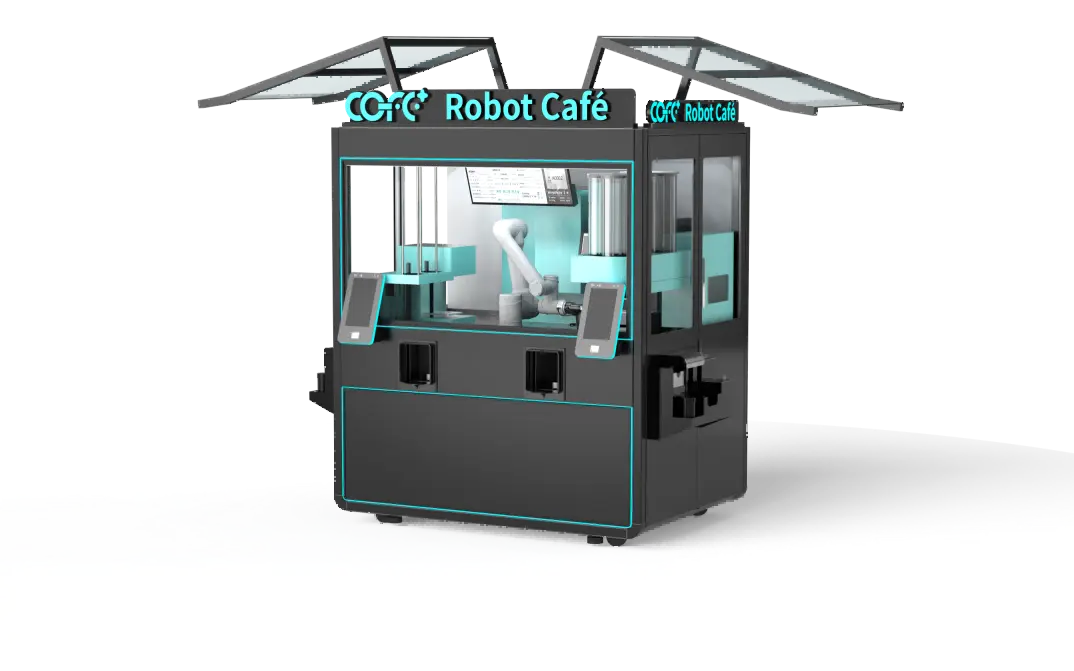
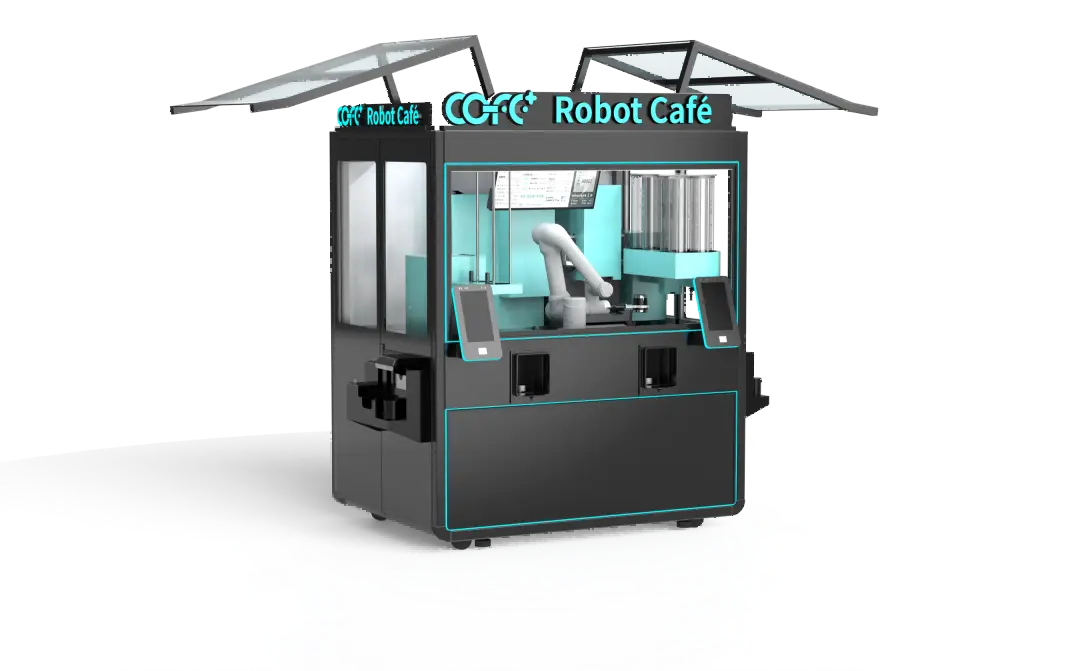
For a high-traffic lobby or concourse, a freestanding indoor kiosk is usually the fastest option because it can be positioned without major millwork. If the property includes a luxury lounge, a built-in counter may integrate more cleanly with the existing reception area. A sit-down robot coffee bar can work where the building wants to increase dwell time, while a counter format preserves the visual openness of a premium interior.
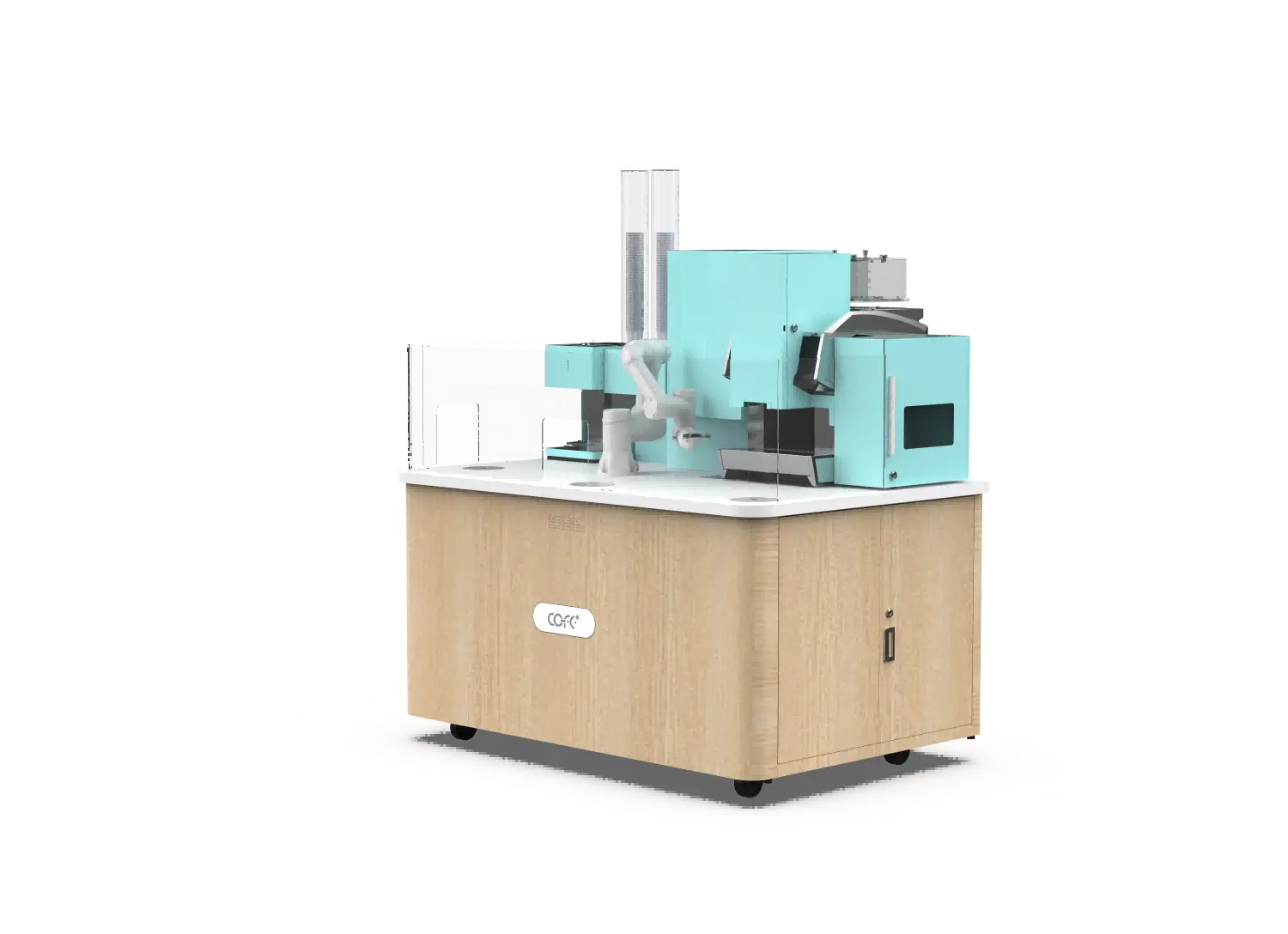
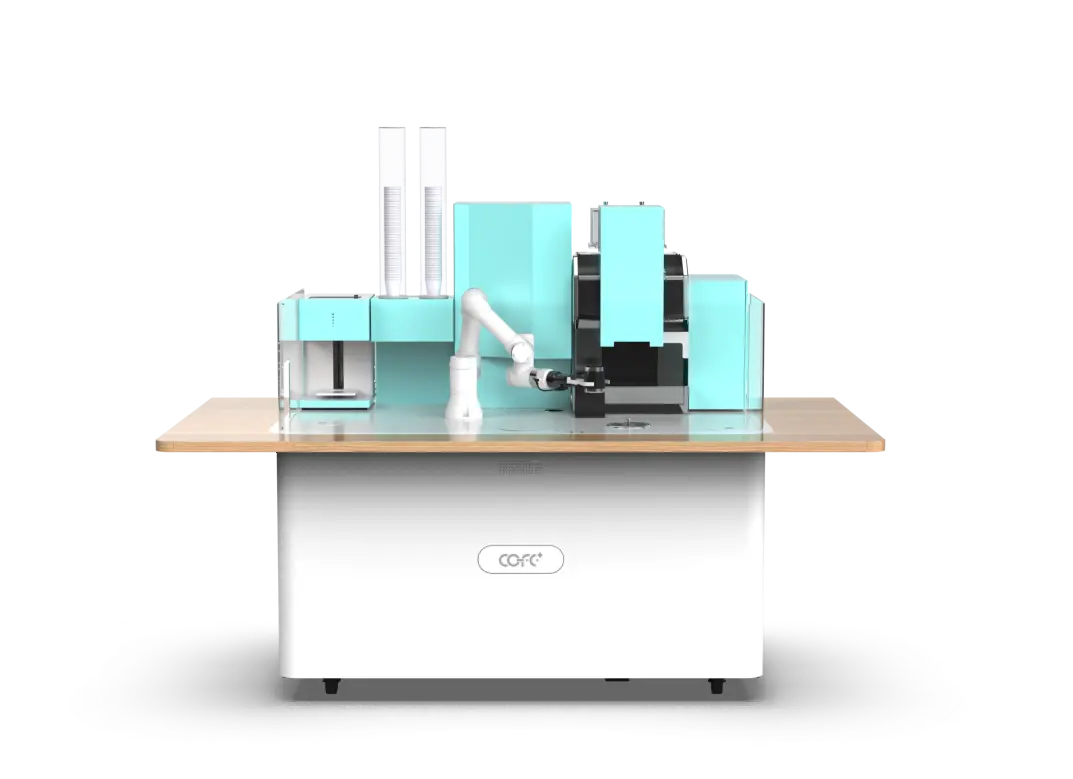
Confirm which format best matches the building’s traffic path, available footprint, and amenity strategy before making the final choice.
Spec sheets often lead with peak output. The COFE+ 7th Generation indoor kiosk from Shanghai Hi-Dolphin Robot Technology Co., Ltd. is specified to prepare a cup in 43 to 60 seconds and support about 1,000 cups per day in continuous operation. In a property setting, that is a planning ceiling rather than an automatic sales result. The table below separates what each supplied figure supports from what the property team should still verify.
| Supplied specification | What it supports | What to verify | Do not infer |
|---|---|---|---|
| 43 to 60 seconds per cup | Queue planning for peak periods | Test conditions and drink types used | Every recipe will fall in that range |
| About 1,000 cups per day | Sizing for high-traffic lobbies | Refill frequency, cup storage, waste capacity | The building will automatically generate that demand |
| 300+ drinks and 5,000+ combinations | Tenant and visitor variety | Menu constraints, ingredient slots, cleaning cycle per recipe | Every location needs the full menu loaded |
| Consistent taste across 300+ consecutive cups | Multi-tenant standardization | How consistency is measured and maintained | No local water or ingredient variation needs adjustment |
| $0.30 to $0.70 per cup | Pro forma margin modeling | Which consumables are included, local prices | Cost is fixed across all recipes and markets |
| ROI of 6 to 12 months | High-level payback discussion | Site traffic, pricing, and operating assumptions | ROI is an assured outcome for every property |
Indoor unattended equipment needs a stronger food safety review because no employee is present to notice a spill or a temperature drift. The referenced indoor kiosk is specified with automatic cleaning, cloud monitoring, and remote diagnostics. Its certification list includes FDA, CE, UKCA, KC, and SASO. For a property manager, the key step is to confirm which certificate applies to the exact model and configuration, and what additional local electrical, plumbing, and food service approvals the building still requires. Ask for certificate copies, the scope of coverage, and any recertification or inspection intervals.
Robot coffee economics should be modeled from local inputs. The product data estimates a cost per cup of roughly $0.30 to $0.70 and a payback period of 6 to 12 months. Those figures are useful for a first screen, but they depend on the menu mix, local consumable prices, pricing strategy, payment fees, utility costs, and captured demand. Build a simple pro forma using daily cups, average ticket, cost per cup, and revenue share if a landlord or operator splits income. If the direct cash flow is marginal, treat tenant retention or visitor experience as a separate benefit rather than hiding it inside the payback estimate.
Power, water, drainage, and data connections are common sources of delay. The indoor model supports 110V and 220V systems, but the site still needs a confirmed circuit and outlet location. Record the following checks during the first site survey so the installation plan is based on the building, not the sales drawing.
| Check | What to record | Why it matters |
|---|---|---|
| Electrical capacity | Voltage, circuit rating, outlet location | Prevents overload or last-minute panel work |
| Water and drainage | Potable water, drain access, filtration | Coffee machines need regulated supply and waste path |
| Network | Wired or Wi-Fi stability | Enables payment and remote monitoring |
| Clearance | Doorway, lift, final footprint, service access | Protects installation timeline and maintenance |
| Refill access | Route for beans, milk, cups, syrups | Longer refill routes raise operating friction |
| Local approval | Building, electrical, plumbing, food service permits | Avoids completion delays after equipment arrival |
Compare suppliers on the evidence that affects a multi-year indoor operation: factory acceptance test scope, local service response, spare parts availability, remote diagnostics access, warranty terms, and training. Before committing to multiple units, run a pilot in one location. Track cups per day, peak queueing, refill frequency, alarm types, cleaning time, and tenant feedback for the first 30 to 90 days. Use that operational data to decide whether to expand within the building or across the portfolio.
To move from a general buying question to a specific site plan, send a short site brief to sales@hi-dolphin.com or call +86 131 6630 1290. Include available floor area, daily traffic estimate, utility access, target menu, certification requirements, and expected launch date. Those inputs are enough to start a configuration review and identify any site constraints before purchase.
Plan for the unit footprint, roughly 2.35 m² on the referenced model, plus access clearance for refills and maintenance. The exact clearance depends on which side panels must open, so confirm it during the site survey.
It depends on the configuration. Models that prepare fresh milk-based drinks usually need a potable water supply and a drain or a controlled waste path. Some installations may use refillable water and waste tanks, but property managers should confirm this before committing the location. A building without plumbing access is not automatically disqualified, but the operating model changes.
Yes, unattended operation is the core design. The referenced kiosk uses remote monitoring, automatic cleaning, and remote diagnostics. However, property managers still need a local plan for ingredient refills, waste removal, preventive maintenance, and escalation if an alarm requires physical intervention.
Vendor product data for the referenced indoor model estimates payback in roughly 6 to 12 months, but that is a planning figure based on assumptions about traffic, pricing, and consumable costs. Build a property-specific pro forma using measured foot traffic, average ticket, and operating expenses. If the kiosk also improves tenant retention or building amenity value, include that benefit separately from direct cash flow.
TL;DR — COFE+ is a fully automated robotic coffee kiosk that grinds fresh beans, brews espresso and lattes, creates latt……
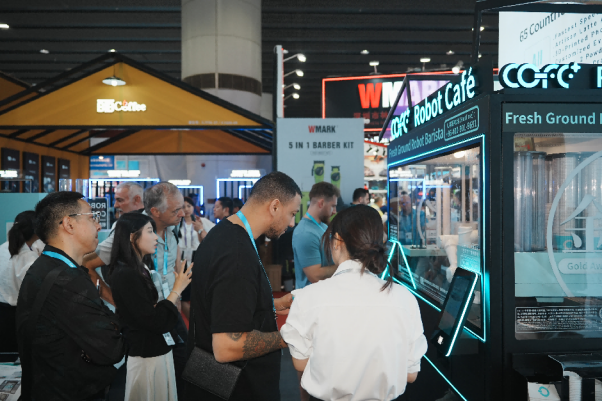
7th-Genertion Smart Robot Coffee Kiosk Arrives at the Belt and Road Core Hub, Ushering in a New Service Era Along t……
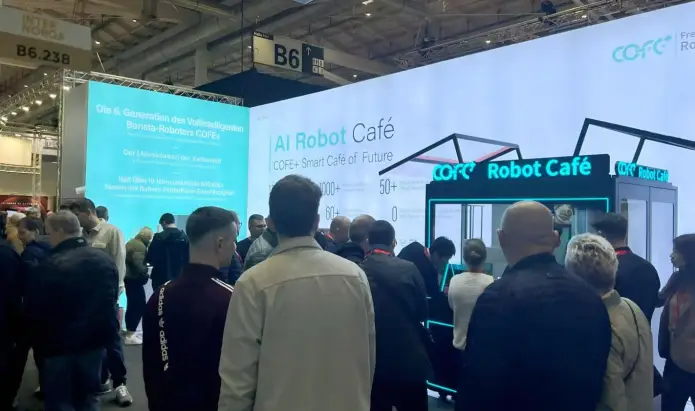
CHICAGO, May 12, 2026 (GLOBE NEWSWIRE) – Shanghai Hi-Dolphin Robot Technology today announced the U.S. debut of its 7th‑……