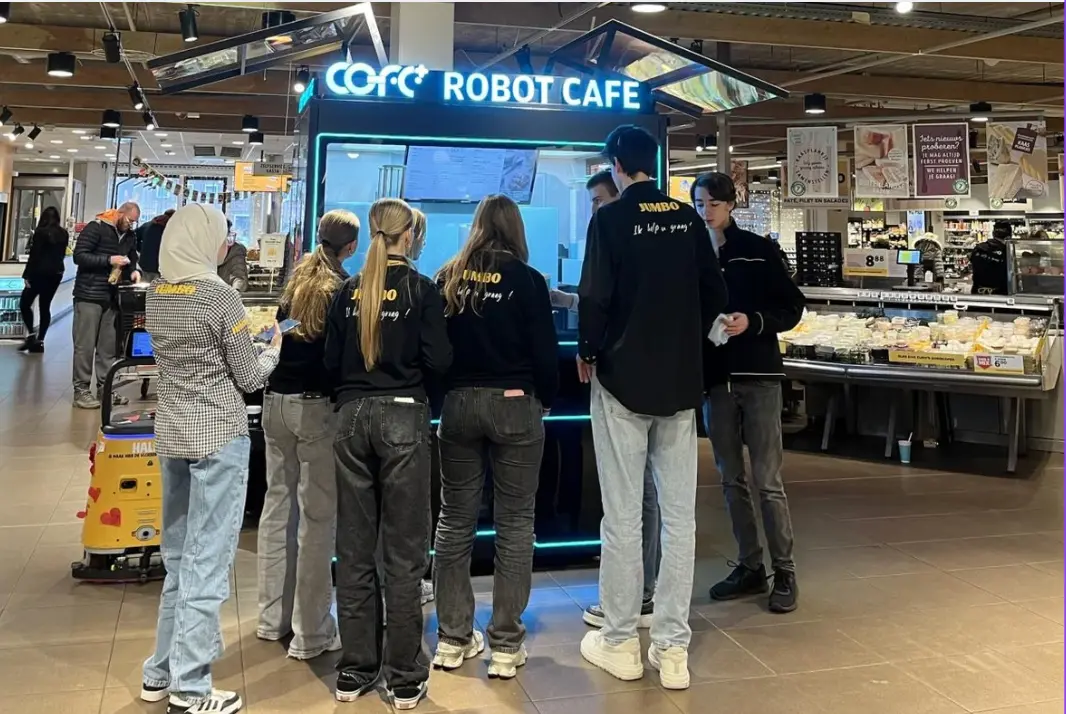
The Rise of Professional Robotic Café Technology: What COFE+ Is and Why It Matters
TL;DR — COFE+ is a fully automated robotic coffee kiosk that grinds fresh beans, brews espresso and lattes, creates latt……

Walk into any coffee shop today and you will hear the same story—shifts unfilled, experienced baristas leaving the industry, and managers pulling double duty just to keep the doors open. Staff shortages are not a seasonal blip. They are the new operating reality for coffee businesses worldwide, driving up labor costs and capping revenue growth. Robot barista technology does not just patch the problem; it removes the staffing bottleneck entirely by putting a 24/7 autonomous coffee-making system into the same floor space a human barista occupies, with zero scheduling headaches and consistent output that a human team cannot match.
The financial damage of a vacant barista position is far higher than most operators calculate. Beyond the advertised salary, a missing staff member forces you to close early during peak hours, turn away orders, and burn out remaining employees who then quit faster. In markets with tight labor supply, one unfilled role can reduce a coffee shop’s daily revenue by 30% or more, because the shop simply cannot serve everyone during rush periods. For multi-location chains, the cost multiplies. A single understaffed branch often drags down region-level profitability. Add training costs, recruitment fees, and the quality inconsistency that comes with revolving-door hiring, and the real annual cost of one unfilled barista position commonly exceeds $35,000—before you account for lost repeat business from customers who got tired of waiting. This is the environment robot barista technology was designed for.
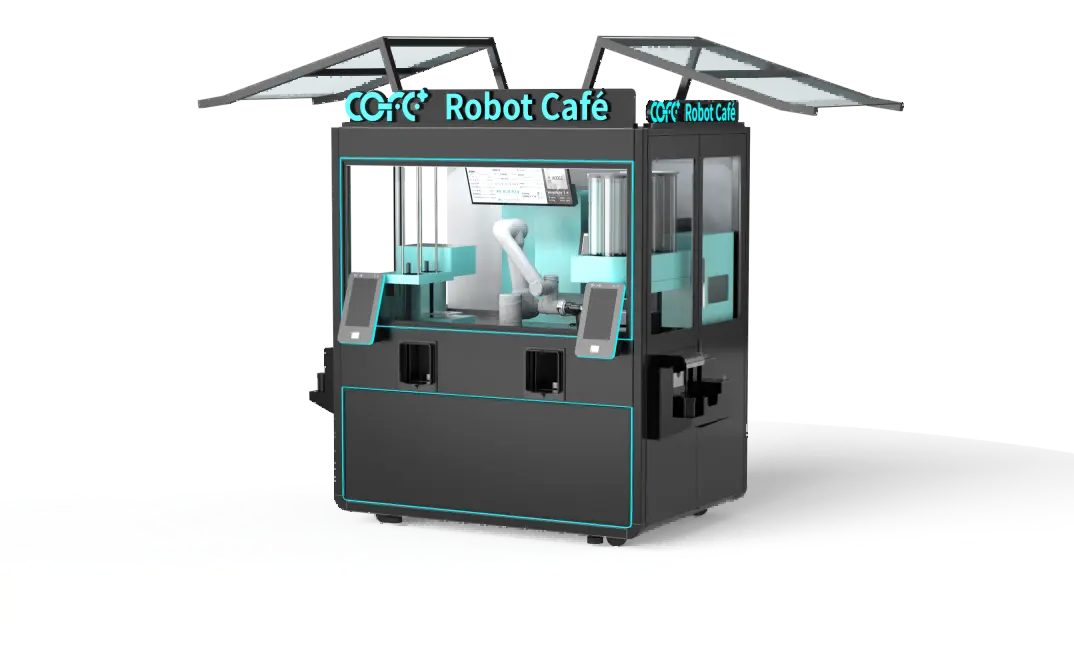
A robotic barista does not call in sick or quit without notice. The machine grinds fresh beans, steams milk, pours espresso, and prints 3D latte art in under 60 seconds per cup, exactly the same every time. From a staffing perspective, this matters because it decouples output from headcount. One COFE+ kiosk can serve roughly 1,000 cups a day across a 24-hour cycle—equivalent to what six full-time baristas produce across overlapping shifts, but with no payroll, no scheduling conflicts, and no drop in quality at 3 a.m. The entire coffee-making workflow is digitized, meaning recipe consistency survives beyond any single employee’s tenure. For the operator, that shifts the labor conversation from “how many people do I need on Sunday morning” to “how many kiosks do I place to capture all the demand.”
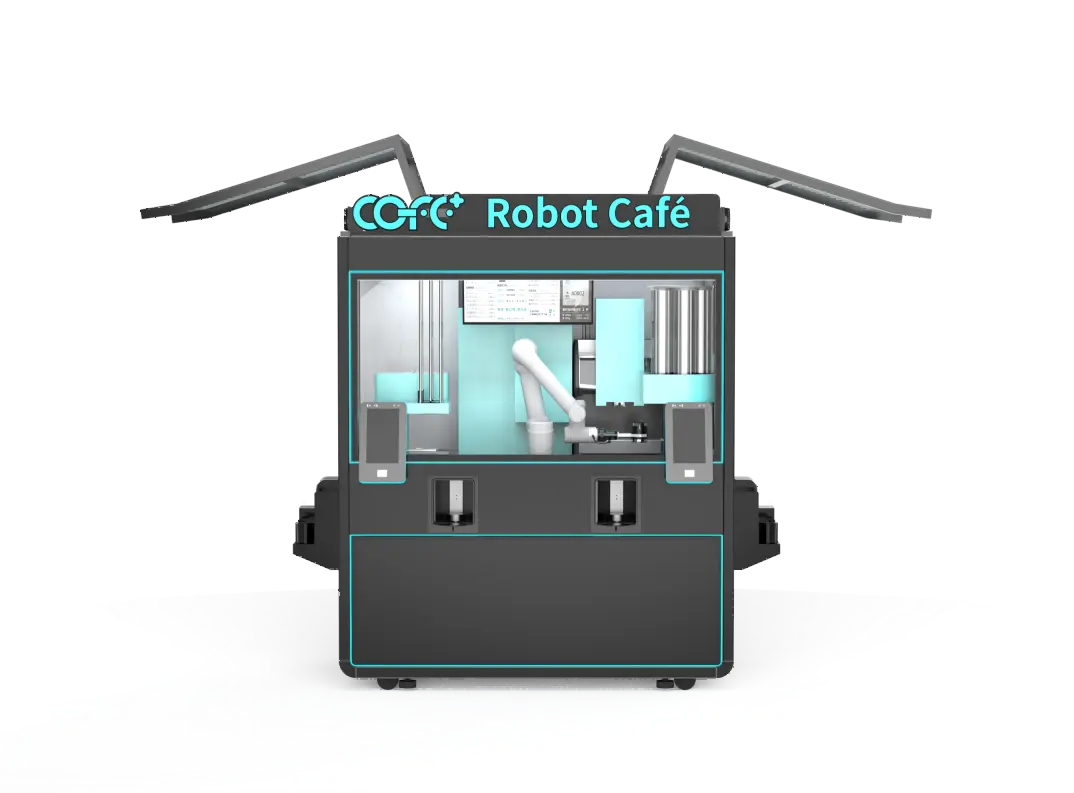
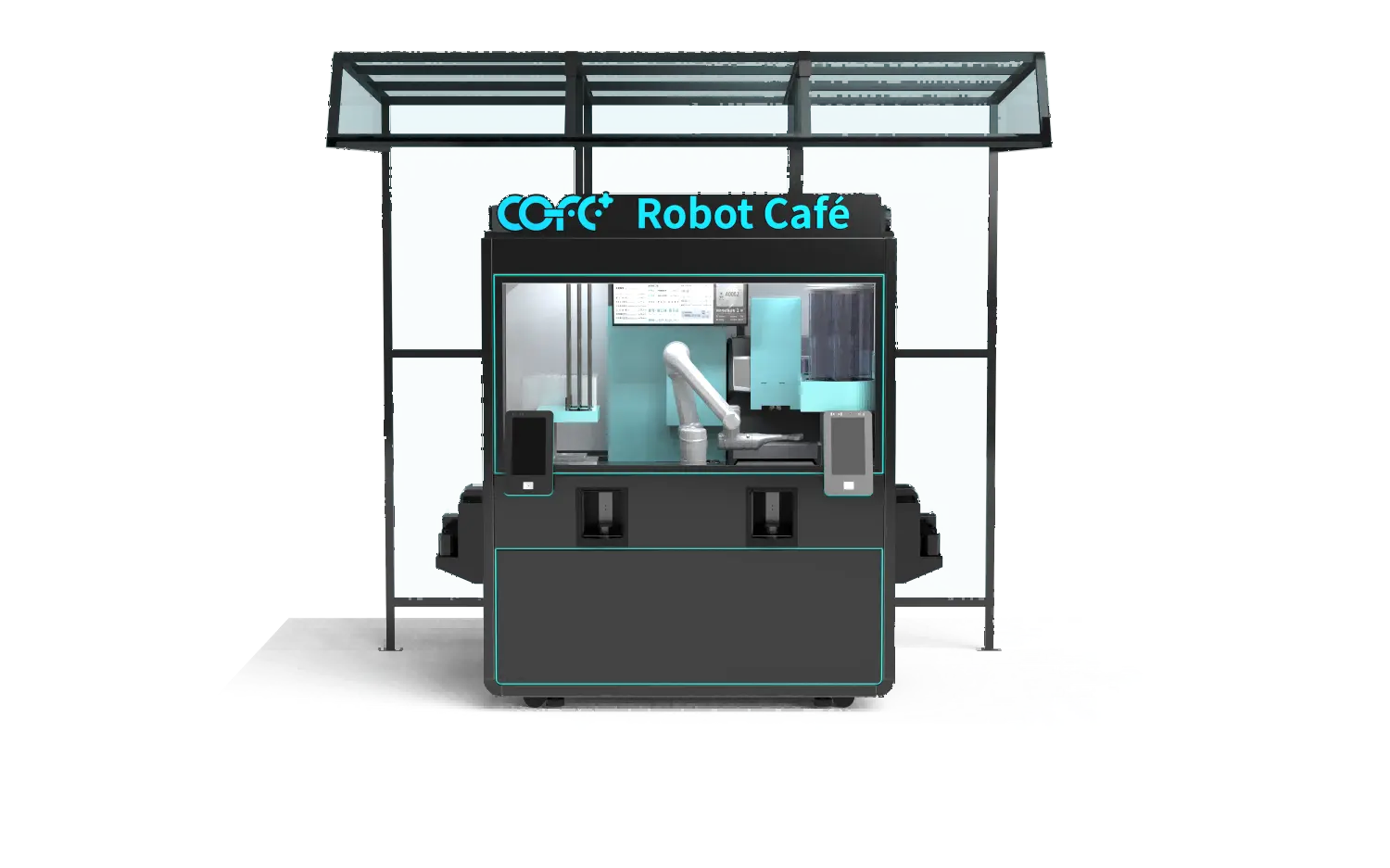
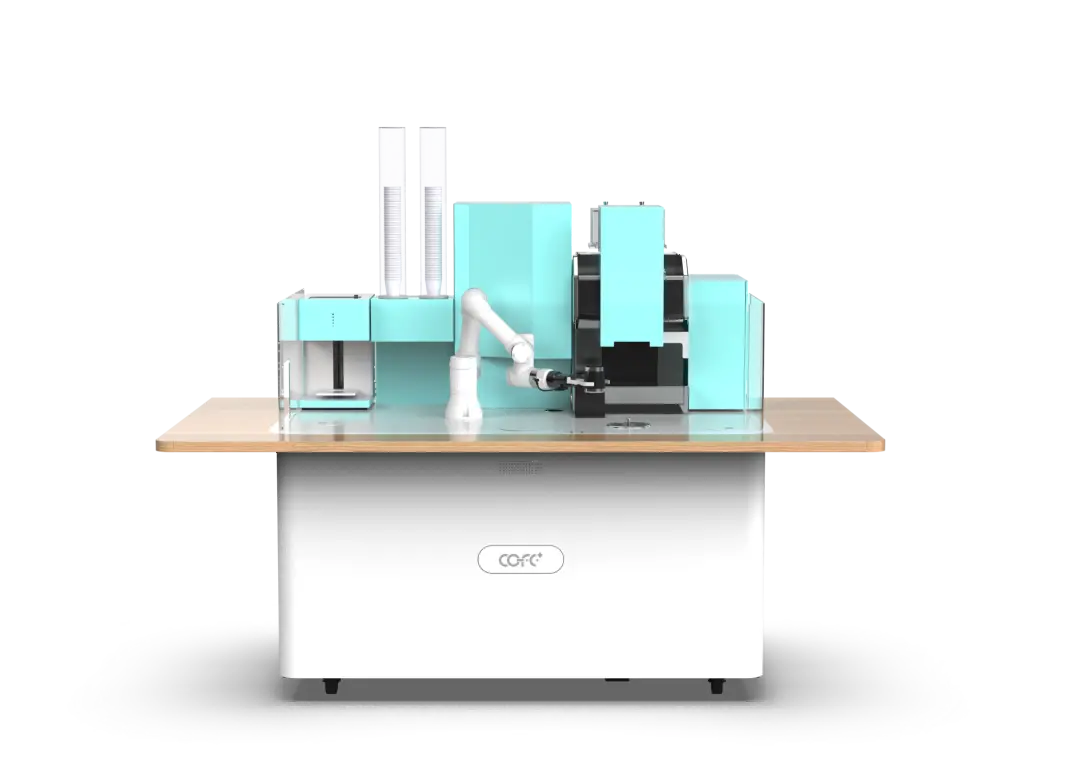
Not every robot coffee solution is a one-size-fits-all kiosk. The deployment decision hinges on your physical space, customer flow, and the experience you want to create. Three primary formats are available today:
A quick comparison makes the decision easier:
| Model | Footprint | Capacity (cups/day) | Best Location |
|---|---|---|---|
| Indoor Kiosk | ~2.35 m² | ~1,000 | Indoor high-traffic zones |
| Outdoor Kiosk | ~2.35 m² | ~1,000 | Open-air public areas |
| Robot Coffee Bar | ~2 m² (folded) | ~1,000 | Guest-facing social spaces |
| Robot Coffee Counter | ~2 m² | ~1,000 | Built-in bar integrations |
If your location demands a built-in solution that blends into an existing high-end interior, the robot coffee counter format integrates directly into a bar or reception surface, maintaining the premium look while removing the barista requirement.
The per-cup cost with a robotic barista runs between $0.30 and $0.70 depending on ingredients, electricity, and local pricing. Compare that to a human-staffed coffee shop where labor alone often accounts for $1.00 to $2.00 per cup once you factor in benefits, taxes, training time, and idle hours. The difference is not marginal—it typically recovers the hardware investment within six to twelve months. But the more interesting number is the revenue you stop leaking. A kiosk that runs 24 hours captures early-morning commuters, late-night shift workers, and weekend foot traffic that a staffed shop would miss because no one wants to pay three baristas to sit through a slow Tuesday midnight. It also eliminates the revenue risk of a key employee calling in sick on a holiday weekend. Those recovered sales alone can accelerate payback to under six months in a reasonably high-traffic location.
From my work with international deployments, the sites that reach breakeven fastest are not necessarily the busiest—they are the ones that previously could not staff reliably. When a university café was open 18 hours a day but could only recruit baristas for eight of them, the unlocked 10 extra hours of sales were pure contribution margin that required zero additional labor.
The timeline from decision to first served cup is shorter than most operators expect. Based on our rollout experience across 35 countries, the process typically moves in three stages. First, you confirm electrical and water access, which for indoor units is usually a standard 110V or 220V outlet. Outdoor kiosks require weatherproofing checks and occasional permits, but the structural work is minimal because the kiosk is a self-contained unit, not a renovation. Second, you configure the menu—bean selection, milk type, syrup combinations, and even 3D latte art images—to match your brand. Third, you run a three-day calibration and staff familiarization before opening. After that, the kiosk operates around the clock with remote cloud monitoring handling stock alerts, temperature regulation, and routine diagnostics. Most on-site maintenance visits are triggered by the system before you ever notice a problem.
The machine does not rely on a barista’s palate. Grind size, extraction time, water temperature, and milk steaming are digitally profiled for each recipe and repeated within tight tolerances regardless of ambient conditions. In our testing across 500,000+ cups, the shot-to-shot variation is narrower than what you get from even an experienced human barista working a ninth hour of a shift.
In my experience, acceptance depends on the experience design. When the robotic arm is visible through glass performing handcrafted latte art—tulips, hearts, custom logos—the interaction becomes a novelty that customers film and share. Gen Z, in particular, prefers the transparency and speed. The days when automation felt cold are over.
Remote diagnostics catch most issues before they become failures. If a critical component triggers an alert, the system can auto-dispatch a service partner in the local area. The kiosk also runs a self-cleaning and sterilization cycle multiple times per day, which prevents many common coffee machine problems that arise from residue buildup. For operators, this means far fewer emergency calls than a traditional espresso machine and staff combination.
No. Single-location coffee shops, family-run restaurants, and independent retail stores are deploying them precisely because they cannot afford to compete with chains on staffing. A small operator who cannot justify a third full-time barista but still wants to serve fresh specialty coffee during dinner hours can do so with a kiosk without adding any headcount.
If you are managing a location where staffing is the primary constraint on growth, a robot barista is not a future concept—it is an active solution that pays for itself within a year. Share your space details and expected daily cup volume with us at sales@hi-dolphin.com or call +86 131 6630 1290, and we will walk you through a pro forma ROI for your site.
TL;DR — COFE+ is a fully automated robotic coffee kiosk that grinds fresh beans, brews espresso and lattes, creates latt……
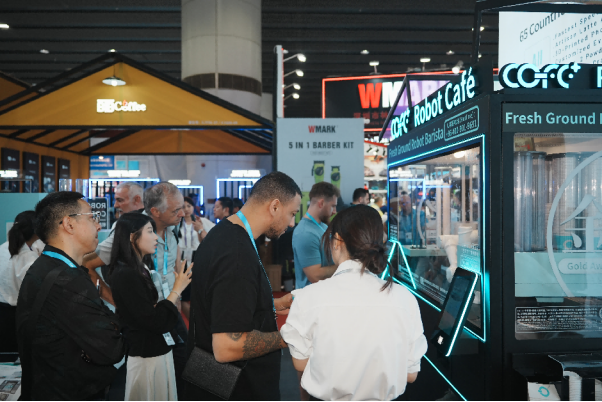
7th-Genertion Smart Robot Coffee Kiosk Arrives at the Belt and Road Core Hub, Ushering in a New Service Era Along t……
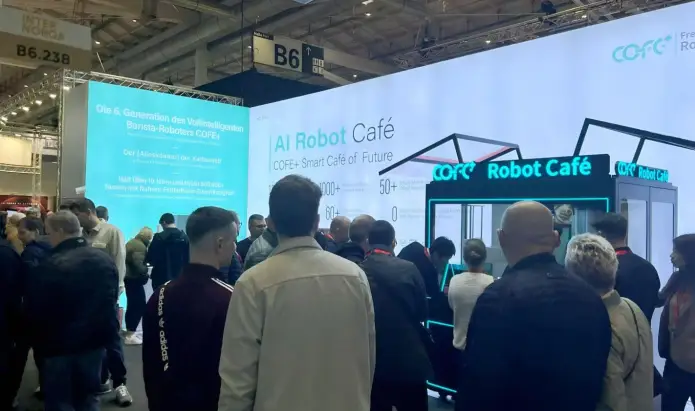
CHICAGO, May 12, 2026 (GLOBE NEWSWIRE) – Shanghai Hi-Dolphin Robot Technology today announced the U.S. debut of its 7th‑……